

52W Mark IV – Week 41: Card L2 Michael Lerner

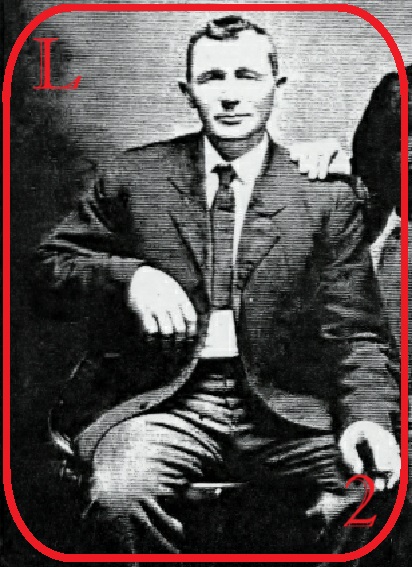
Michael Lerner (1862-1947)

My Michael (“Mike”) Lerner, my Great Great Grandfather, his wife Barbara Schmidt, and their family were the first of my Germans from Russia ancestors to leave the German colonies in the Russian Empire for North America. He spent about a third of his life in Russia, a third in Texas, and a third in Canada, and was a citizen of all three.

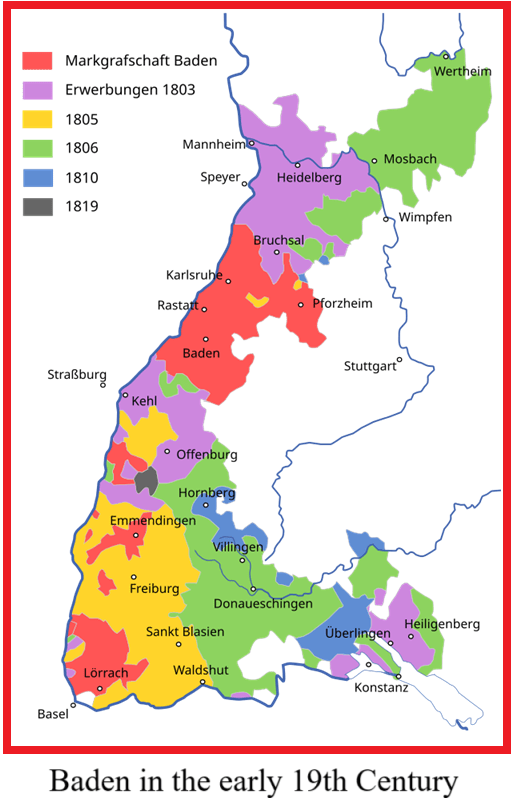
Mike was born on May 2, 1862 in Rastadt, a German colony in the Beresan district of what is now Ukraine, which at the time was part of the Russian Empire. Mike’s paternal line originated in the Karlsruhe area of Baden. In fact, the capital of Baden at the time the Lerners left for Russia was Rastadt.

I don’t know much about Mike’s life in Russia, particularly his childhood. He married Barbara Schmidt in February 1883. Nine months later, they had their first of 14 children. Until the family emigrated in 1893, Mike was a farmer in Rastadt. He may have actually owned his land, as a map of Rastadt in Joseph Height’s book Paradise on the Steppe shows several pieces of land which belonged to individuals with the surname Lerner.

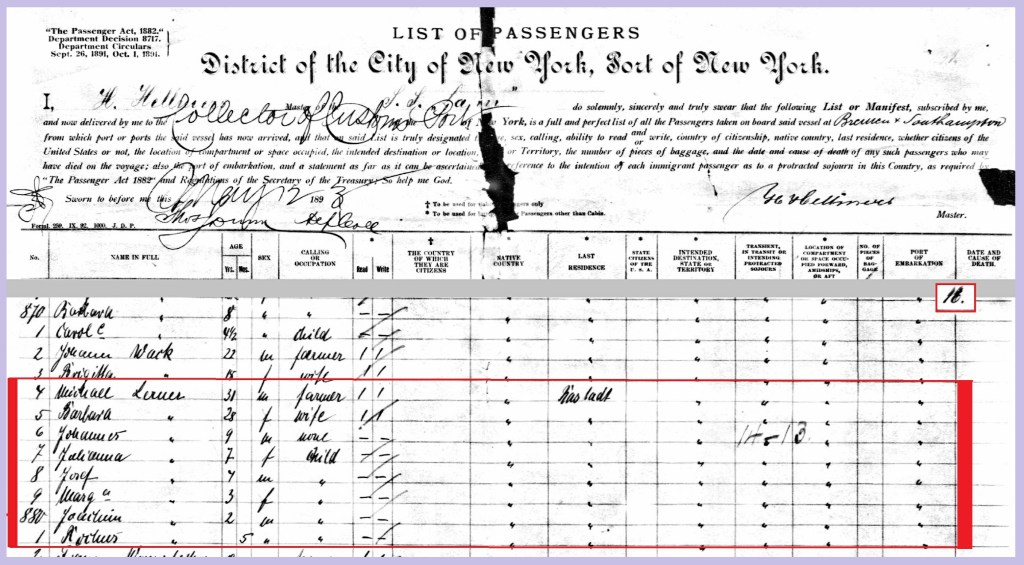
The family departed Bremen aboard the S.S. Lahn in the spring of 1893. By that time, they had six children. Four of those children were aged five and under (the listed age for Joseph is likely incorrect), with the youngest, Rochus, being about five months old at the time. The ship landed at Ellis Island on May 12, 1893. From there, the family made their way to Clay County, Texas, arriving there by June 1893.
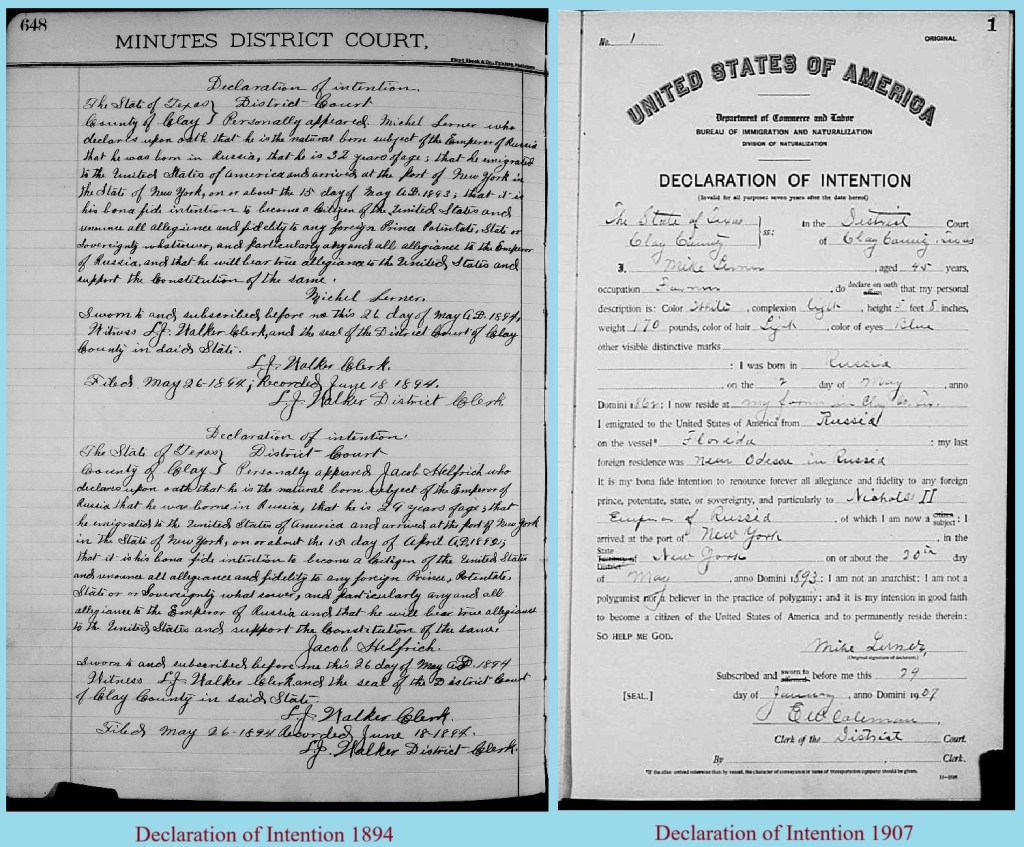
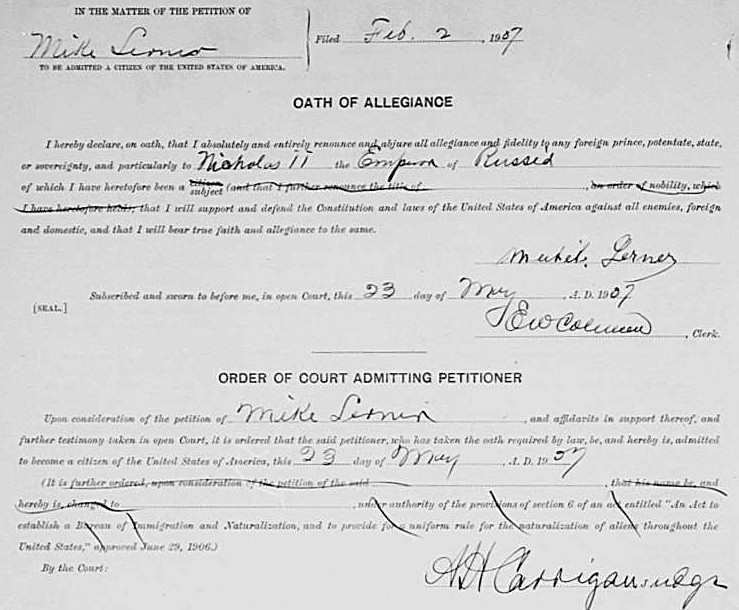
A year later, on June 18, 1894, at the Clay County District Court, Mike made a Declaration of Intention to become an American citizen. However, it seems that he was in no hurry to follow through. Mike did not take any further steps towards citizenship until January 29, 1907, when he filed a new Declaration of Intention. Soon after, on May 23, 1907, Mike took an Oath of Allegiance and became an American citizen.
Also shortly after arriving in Clay county, and no later than 1894, Mike had established himself as a farmer. By 1910, Michael owned his farm, free of any mortgage, on Jacksonboro Road. In that time, he and Barbara had eight more children.

In 1912, Mike’s son Joseph had migrated to Maple Creek, Saskatchewan. Sons Rochus and Jerome (my Great Grandfather) followed suit, in 1913 and 1917, respectively. In 1918, Mike made the move to Canada and began farming outside Fox Valley, Saskatchewan. He continued farming there well into his 60s. When Mike became a Canadian citizen on December 5, 1929 when he was 67, he was still farming.

In fact, Mike was still farming into his 80s. After his son Jerome (my Great Grandfather) separated from his wife Emelia (my Great Grandmother), he moved in with Mike. Sometime around 1944, Jerome’s daughter, Adeline Lerner, came to live with Mike and her grandfather. Mike was a widower by then, as Barbara passed away in 1936. According to Adeline, her grandfather was still running the farm at the time. Adeline told me that her grandfather generally spoke German, but could speak English as well.

Mike died in Fox Valley on January 16, 1947. He is buried at the Fox Valley Cemetery, next to Barbara.
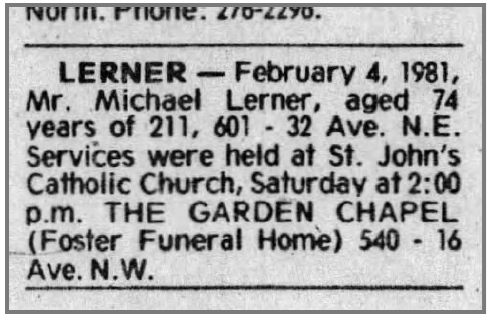
Calgary Herald, February 9, 1981, page 45
  • Baden in the early 19th Century” image attribution: Creative Commons Attribution 2.5 Generic license via Wikimedia Commons. Author: ziegelbrenner.
52 W Mark III – Week 16: Step

A “steppe” is a geographic and ecological region consisting of grassy plains. Some steppes are referred to as savanna and prairie. The largest steppe in the world, the Great Steppe or Eurasian Steppe, stretches from Ukraine to China. The Canadian prairies and the American great plains are other examples of of steppes.

My maternal ancestors originated in the western German states that formed part of the Holy Roman Empire, which came to an end with Napoleon’s conquest of the region. In the nineteenth century, my German ancestors sought a paradise on the steppe, first in Imperial Russia and later in North America. I wrote about these Germans from Russia only a few weeks ago, in Week 7.

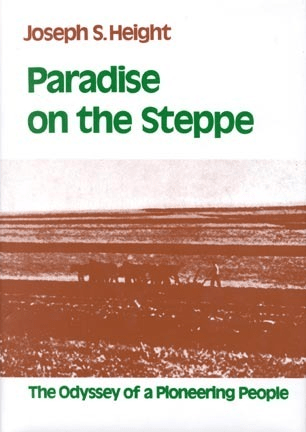
A seminal work documenting the history and culture of these Germans is Paradise on the Steppe by Dr. Joseph S. Height. Dr. Height’s book is well-known amongst family historians who trace their roots to Germans from Russia.

Dr. Height was born in Tramping Lake, Saskatchewan in 1909. In university he specialized in foreign languages. He spent three years in Germany studying philosophy and German. He attended the University of British Columbia and earned degrees in those two disciplines. Dr. Height spent the last fifteen years of his career as a professor at Franklin College in Indiana. Dr. Height passed away in Indianapolis in 1979.

In addition to his academic works, Dr. Height published several books about the history of the Germans from Russia. In addition to Paradise on the Steppe, his works on this topic include Homesteaders on the Steppe, Memories of the Black Sea Germans, and Folksongs of our Forefathers. Dr. Height also translated a portion of The Emigration from Germany to Russia in the Years 1763 to 1862, by Karl Stumpp, another book of great importance to genealogists researching this area of family history.

Based upon twenty years’ research, Paradise on the Steppe sets out the historical, economic, social, and political forces that pushed these Germans from their homelands and pulled them to the Russian and Ukrainian steppe starting in the late 18th century. Dr. Height tells of the hardships the colonists faced from the moment they left their homes through to the hardships they faced in the late 19th and early 20th centuries, with growing oppression by the last Czars, the Bolshevik Revolution, Stalinist suppression, and Nazi invasion.

Dr. Height also details the colonists’ successes, joys, and achievements. He includes chapters about language, folksongs, festivals, holidays, courtship and marriage, food, school life, and church life. Dr. Height also goes into great detail about how the colonists governed themselves. Of course, the book would have been incomplete without its extensive look at the colonists agricultural activities.

While Paradise on the Steppe provides a look at the collective whole, it also provides important information about the founding colonists of the first colonies and their “daughter” colonies. For example, several of my direct ancestors and related families are included in the lists for the Beresan colonies of Rastadt and Karlsruhe.

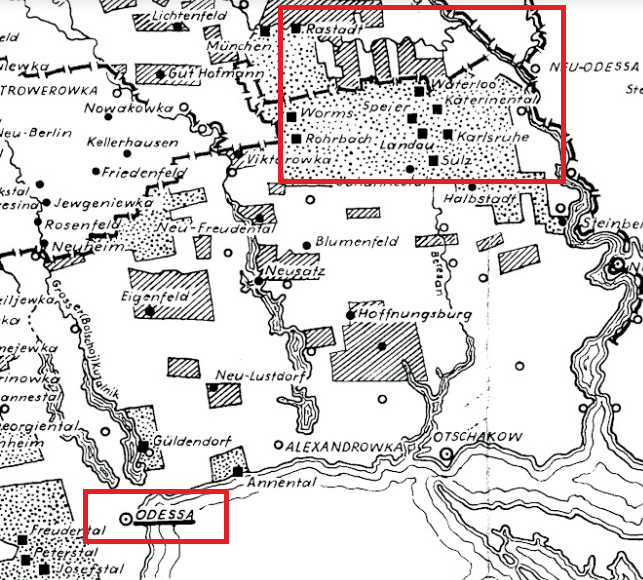
The German colonies in the Beresan district in 1890, as seen in relation to Odessa. All four of my maternal grandmother’s grandparents came from Rastadt and Karlsruhe, located in the upper right-hand corner.

By the 1950s, little was left of the German colonies, through decades of emigration or exile to the Soviet Union’s holdings in central Asia and Siberia. Many of the emigrants relocated in places with similar geography and environment – the American great plains, the Canadian prairie, and the pampas of Argentina, to name a few. My grandmother’s paternal line left the Russian Empire in 1893, first settling in Texas and later in Saskatchewan. My grandmother’s mother left Russia with her parents and siblings in 1912.

Paradise on the Steppe is available at many libraries, especially family history libraries. It is also available for loan through the Internet Archive.