Happy New Year! It’s time for another trip around the sun and another year of Amy Johnson Crow’s “52 Ancestors in 52 Weeks“! We’re starting off the year on the theme of “I’d Like to Meet”.
I’m grateful that the challenge is not which ancestor we would “most like to meet”, but simply an ancestor we’d “like to meet”. For anyone who has been doing genealogy for a while, it would be hard to narrow it down to just one. Rather than choose a single ancestor, I’ve selected a category of ancestor: my great grandparents.
While I would love the opportunity to meet ancestors further back in my tree, they seem so much more remote and abstract than my great grandparents, who seem more tangible and real. I know people who knew them, and I even had many visits with one of them. My great grandparents would be able to shed a lot of light on things I don’t know about them and their immediate families. It would open a gateway to improving and expanding my research.
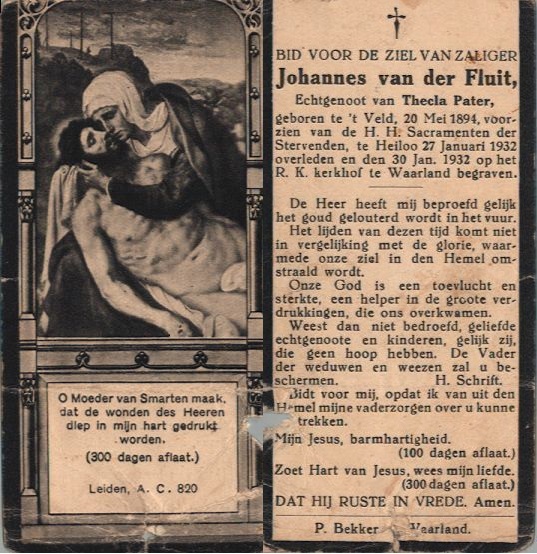
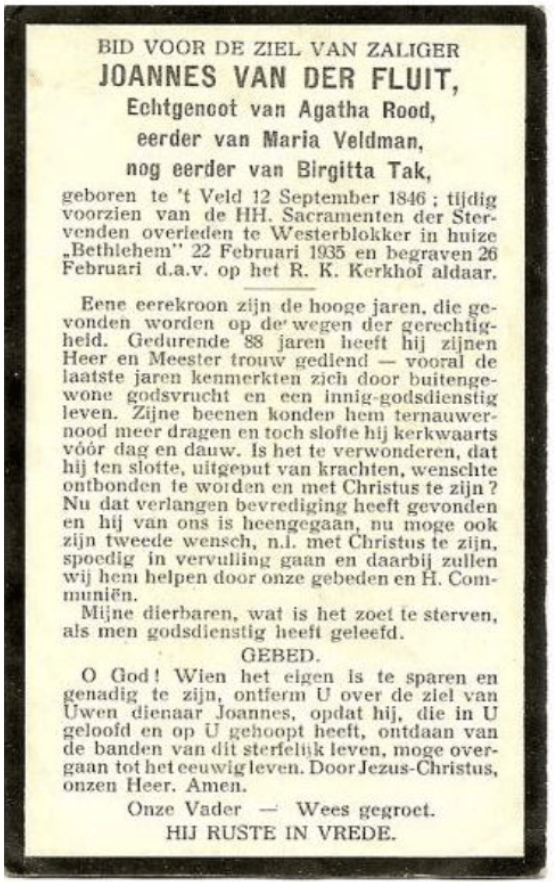
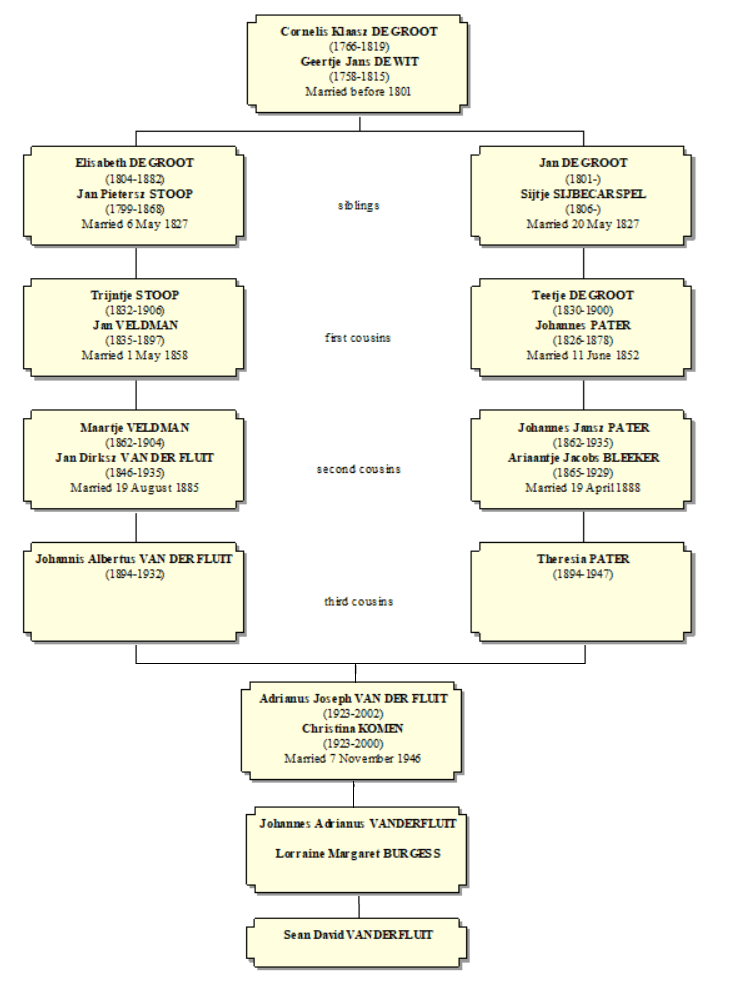
1. Johannis Albertus van der Fluit (my father’s paternal grandfather)
Johannis was born in ‘t Veld, North Holland, in 1894. He was an agricultural worker most of his short life. While I don’t have a lot of the details, he sustained a head injury that resulted in a mental disorder. He spent the following years suffering from delusions and passed away in a sanitorium in 1932. My grandfather was eight years old.
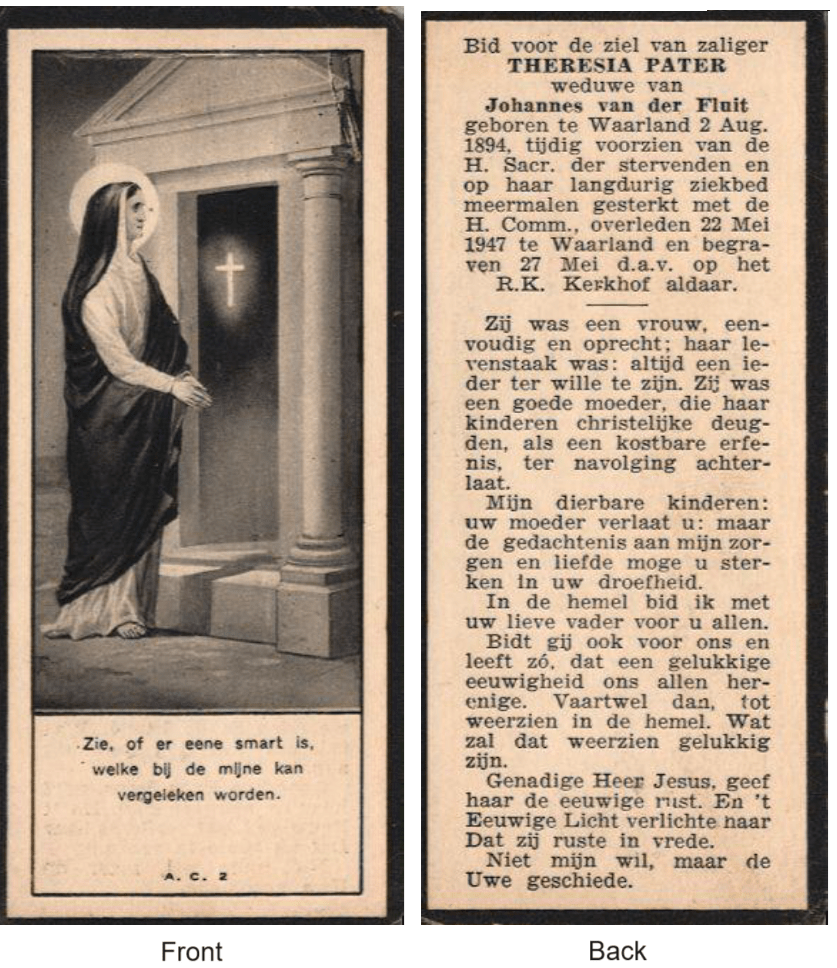
2. Theresia “Teetje” Pater (my father’s paternal grandmother)
Teetje was born in Waarland, North Holland in 1894. That is the same village where my father was born. Teetje was 37 when she was widowed and was left to raise eight children on her own, the youngest of whom was one year old at the time. I don’t know how she supported herself or the family. She passed away in 1947, a few months before my father was born, so he never knew her.
3. Adrianus “Arie” Komen (my father’s maternal grandfather)
Arie was born in Zuid-Scharwoude, Noord Holland in 1888. Arie spent his whole life as an agricultural labourer. Arie was only 59 years old when he passed away in January 1948, when my father was only a few months old. I don’t recall my grandmother ever speaking about her father, so most of what I know about Arie is from the documentary evidence I have found over the years.
4. Elizabeth Bakker (my father’s maternal grandmother)
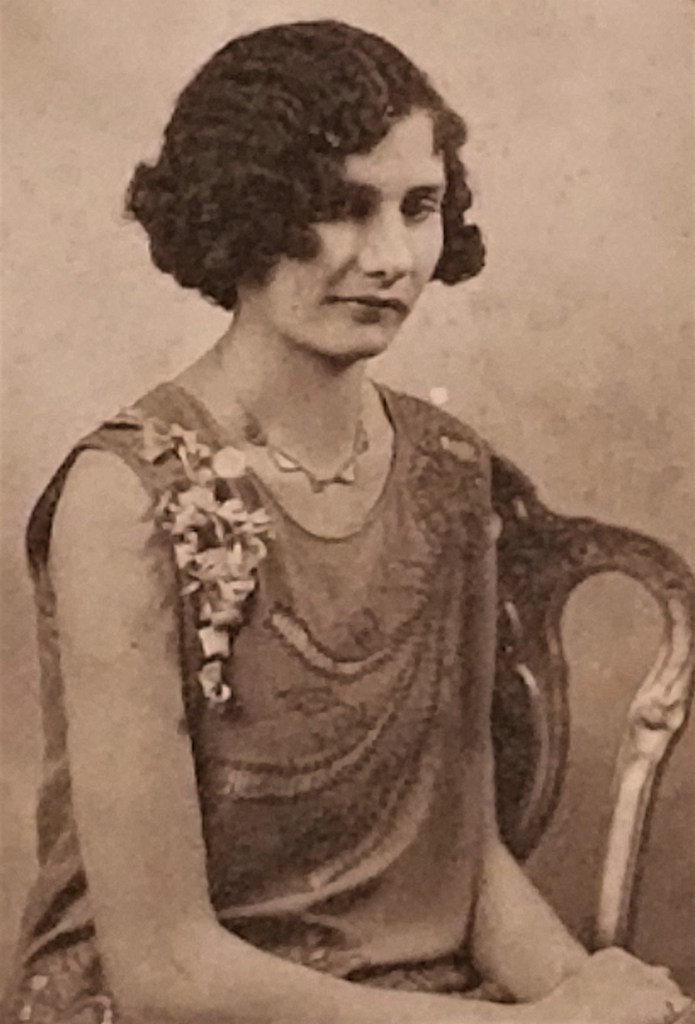
Elizabeth was born in Den Helder, North Holland, in 1888. I have little information about her prior to her 30s. Prior to marrying Arie Komen in 1921, when she was 32, she had worked as a domestic servant in Den Helder and Amsterdam. While Elizabeth died in 1976, when I was in grade four, I never met her, but I was quite familiar with “Oma Komen”. She wrote often to my parents and every December she would send us a package of goodies for Sinterklaas and Christmas. My father remembers her well. During a trip to the Netherlands in 2017, my father showed me where she had lived.
5. Milton Leo Burgess (my mother’s paternal grandfather)
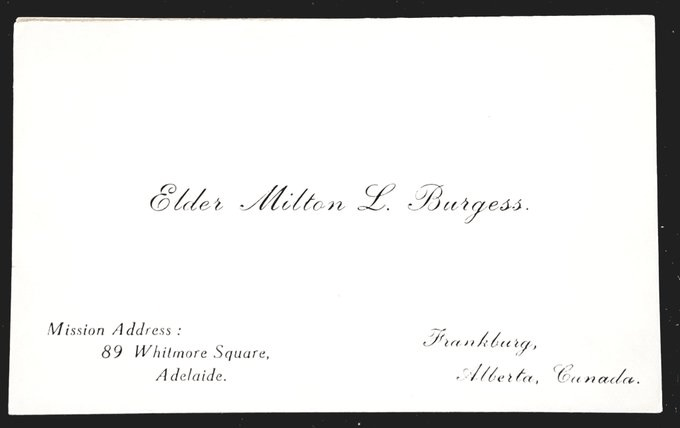
Milton was born in Vernal, Utah, in 1891. He came to Canada with his parents when he was 14. Milton was Mormon, so when he was 20 he spent two years in Adelaide, Australia on a mission. Even today with air travel, Australia is pretty far away, so it must have felt even more so when Milton went there. A few years ago, someone reached out to me on FamilySearch and said that he had some of Milton’s calling cards from his time on the mission. I was quite surprised and very grateful when he sent me one of the cards through the mail!
In his 20s and 30s Milton was a farmer. Later in life he had several other occupations. Sometime before 1941 he as a plumber. He worked in a woolen mill, where he lost a finger of his left hand due to a work injury. Milton also worked for a short time as a grave digger around 1950.
Milton died in 1964, a few years before I was born. My mother has told me many stories about Milton over the years. I also have a small cache of letters he wrote to my grandfather in the 1940s. Most of them were gentle admonishments, such as disapproving of my grandfather working in establishments that served alcohol, coffee, and tea, or telling him that it was time to stop seeing the Catholic girl he had been dating and to find a nice Mormon girl to settle down with. Fortunately for me, my grandfather did not follow that advice, as that Catholic girl became his wife and my grandmother!
6. Hazel Nelson (my mother’s paternal grandmother)
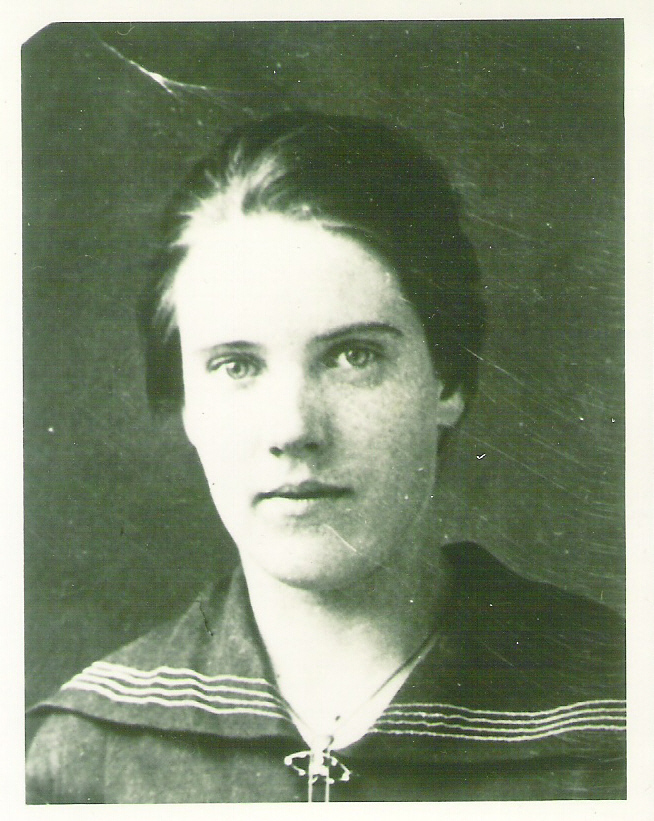
I’ve written a lot about Hazel in this blog (in particular, in this post about “Sisters”). She and her sister Irene were twins, born in 1899, and were the first twins to be born in Cardston, Alberta. Sadly, Irene died a little over a month after she was born. Hazel passed away in 1967, three days before I was born. While she might not have met me, she knew I was coming. My mother literally went from her grandmother’s funeral to the hospital to give birth to me. As far as I’ve been able to determine, I was Hazel’s first great grandchild. I’ve often asked my mother about what Hazel might have thought about her approaching status as a great grandmother. My mother has lots of stories about Hazel. It sounds like she was the quintessential grandmother.
7. Heronimus Michael “Jerome” Lerner (my mother’s maternal grandfather)
Jerome Lerner was born in Henrietta, Texas in 1895. His parents were Germans from Russia and Jerome was the first of their children to be born after they emigrated. Jerome immigrated to Canada when he was 22, where he took up farming outside Fox Valley, Saskatchewan. Many of his siblings, as well as his parents, followed Jerome to Saskatchewan over the following few years.
Jerome developed a mental health condition in later life, which contributed to the breakdown of his marriage. Nevertheless, Jerome managed to continue farming until he died in 1954. My mother never met her grandfather. Fortunately, I had the foresight to interview my great aunt about her father.
8. Emelia Anton (my mother’s maternal grandmother)
Emelia was born on January 1, 1903; however, I don’t know if that was by the Julian or Gregorian calendar. Emelia’s parents were Germans from Russia, who lived in one of the many German colonies in Imperial Russia, in what is now part of Ukraine. Sometime in 1900, Emelia’s parents and older siblings moved to Selo Suchoi, Veronesch, Russia, where Emelia was born. The family emigrated to Canada in 1912 and settled in Rastadt, Saskatchewan, just outside Fox Valley.
Emelia lived to be 94, outliving my grandmother by 13 years, so I knew her quite well. When I was a kid we visited her every time we were in Lethbridge, Alberta, which was at least once or twice a year. To this day, I am perplexed as to why I did not ask her more about her family and her life story, given my interest in genealogy since childhood.
I will never forget my amazement when I learned that she was German. During a visit when I was in grade eight, my mother said, “Grandma, guess what? Sean is taking German in school!” My first thought was to wonder why great grandma would care. To my great surprise, her reaction was to start speaking to me in German. Until that time (for many good reasons), I thought she was English!
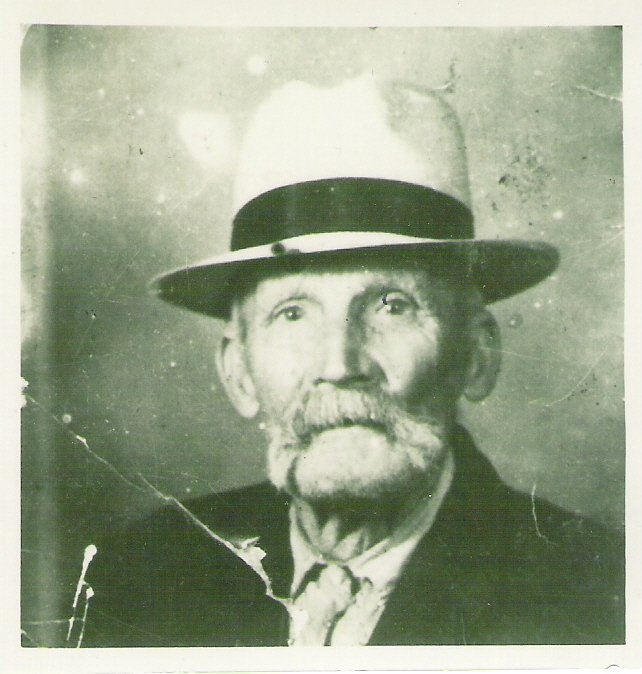
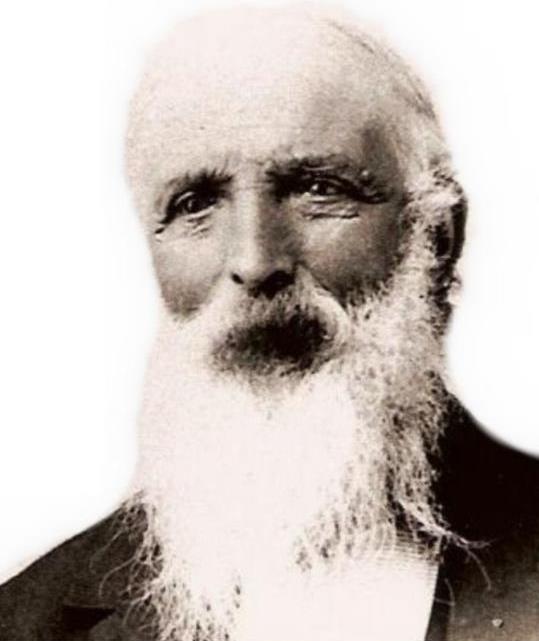
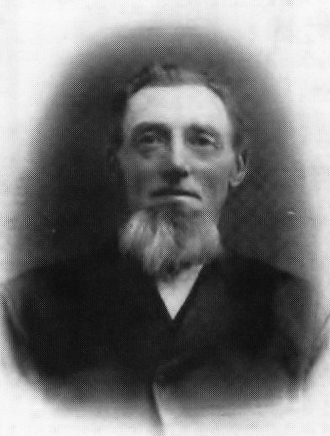
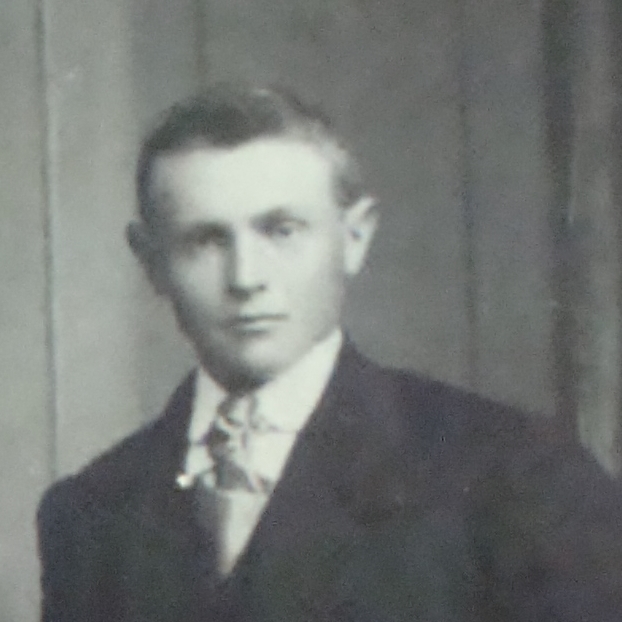
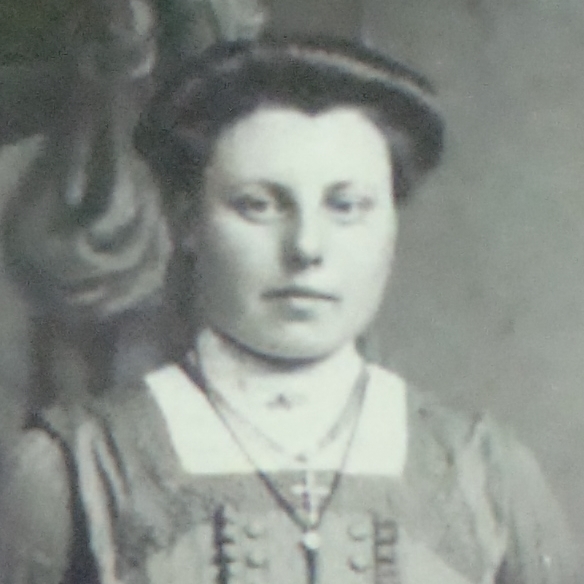
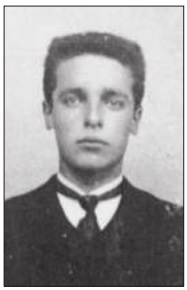
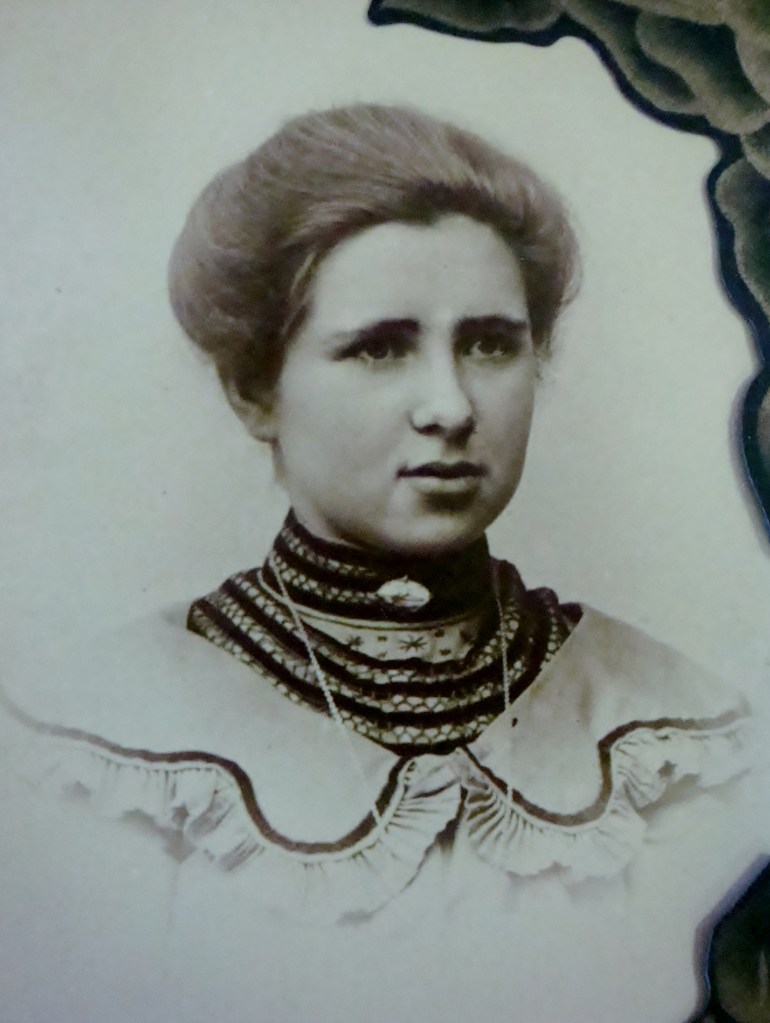
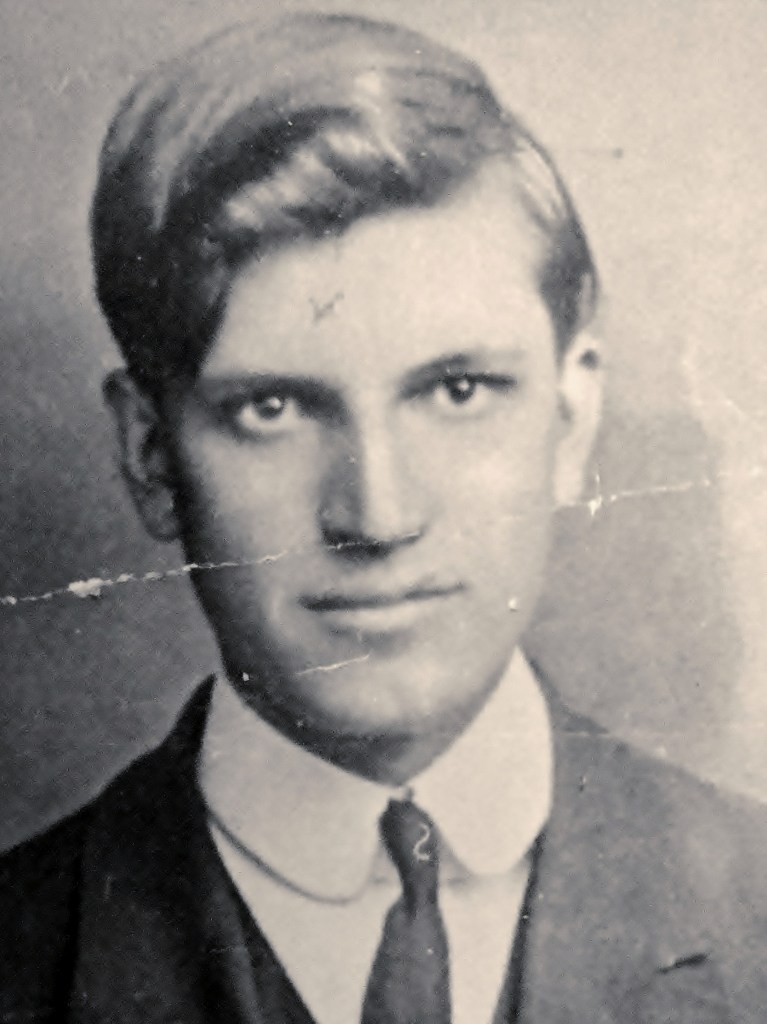
 A Deck of Ancestors