
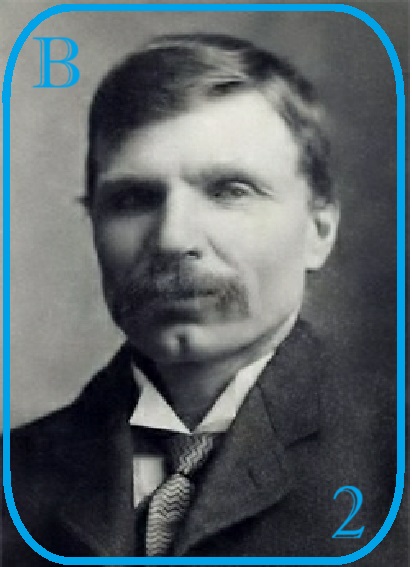
Horace Conrad Liggett Burgess (1854-1940)
What can I say about my Gx2 Grandfather Horace Burgess that I haven’t said before? It seems like I’ve written about or mentioned him many times in the four years that I’ve been participating in the 52 Ancestors Challenge.
Horace was born in 1854 in Lehi, Utah. As far as I can find, he was named Horace Liggett Burgess. His middle name reflects the Mormon custom of giving their children their mother’s maiden names as middle names. Census and marriage records show he was still using Liggett as his middle name in his late 40s. It was not until after he moved to Canada in 1903 that he began to use Conrad. The family lore I’ve found suggests he adopted the middle name Conrad later in life in order to add support to his claim in a dispute over his ownership of some land. Horace dropped Liggett from his full name when he applied for homesteads in Alberta in the first decade of the 20th Century. The name Liggett does not appear on his death certificate or headstone.
Horace was the only child of William Burgess and Charlotte Elizabeth Liggett, who married in 1852. The union was polygamous, as William was still married to his first wife, Maria Pulsipher. William and Maria had been married for 12 years at the time and had six children; they remained married until Maria died in 1892. Moreover, William was more than twice Charlotte’s age when they married – he was 30, she was 14. Based on my research, this was typical of polygamous Mormon marriages of the time.
Charlotte left William sometime around when Horace was three. Apparently she did not get along with Maria. Horace went with his mother when his parents separated. Charlotte remarried in 1857, entering into another polygamous marriage. By the time Horace was 17, he had five half-siblings through his mother and step-father. William married his third wife in 1858 – another polygamous marriage for him, too. William had three more children with Maria and four with his third wife. In all, Horace had 19 half-siblings.
Horace had no memories of his biological father during his childhood and teens. Based upon the 1860 and 1870 censuses, Horace went by his step-father’s surname. According to his half-brother George, Horace was 18 when he learned the identity of his biological father from his mother. Horace then sought out his father and began using the surname Burgess.
Horace married his first wife, Sarah Florilla (“Rilla”) Cook, in Goshen, Utah on March 3, 1876. He was 21 and she was 18. Together they had nine children – seven boys and two girls. Six children survived childhood and into adulthood. By 1887 the family had moved to Lawrence, Utah. As of 1891 they had relocated to Vernal, Utah.
I don’t know how Horace earned a living at the time he married or when his first two children were born. However, by 1880, he was working in Goshen as a teamster. It appears that he worked at this occupation in one form or another for the next twenty years.

1880 United States census, Utah Territory, Utah County, Goshen Precinct, Enumeration District 35, page 3.
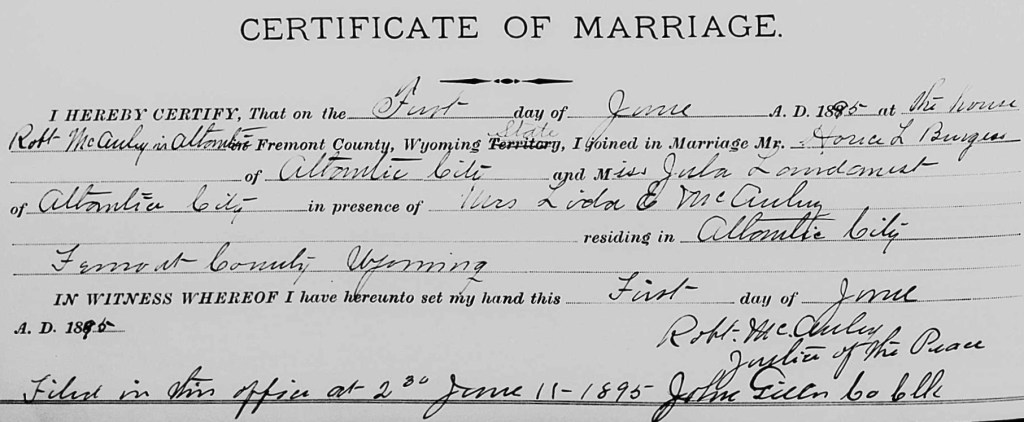
Rilla passed away in January 1894, a few weeks after giving birth for the ninth time. Just over a year later, on June 1, 1895, Horace married Julia Josephine Lundquist in Atlantic City, Wyoming. It is neither a city nor located by the Atlantic. In fact, the village is well more than twice as far from the Atlantic as it is from the Pacific. Apparently it takes its name from the fact it’s on the eastern (Atlantic) side of the Continental Divide.
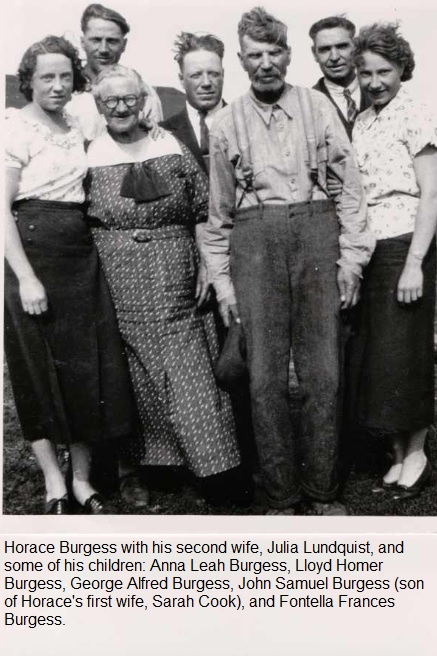
Horace was 13 years Julia’s senior. It was her third marriage. Julia was born in Sweden and immigrated to the United States when she was 16. Horace and Julia had nine or ten children. I say nine or ten because I cannot find much evidence regarding their first child, said to have been born sometime in 1895. Even his name is unconfirmed. I have it as Lewiston Leon Burgess, other places it’s James Harvey Lewiston Leon Burgess. If he in fact existed, Horace and Julia had five children in the United States and five in Canada.
Based on the records I have, how Horace came to be in Wyoming is little more than an exercise in speculation. I suspect it was related to Horace’s occupation of transporting freight.
Horace is included twice in the 1900 census, in Freemont and Sweetwater counties, both in Wyoming. For both, his occupation was entered as “freighter”. Since records for other times show Horace as a teamster, it’s likely that his work as a freighter meant he transported cargo. The fact he was listed in the 1900 census at two different locations, it may be that his transport work involved travel between the two counties.
The Freemont County census shows three of Horace’s sons as being with him in that county, with their occupations listed as sheepherder. One of those sons, John, is also listed in both census records. Together, this suggests that Horace’s transport work might have been related to agricultural products.
Horace and family moved to Canada in 1903, when Horace made the first of two attempts at homesteading. In August of that year he settled on a piece of land near Grassy Lake, Alberta, which is midway between Lethbridge and Medicine Hat. The venture did not last long, because he had returned to the United States the following year. In a subsequent application for a homestead at another location, Horace reported that he had forfeited his claim to this land.
The family came back to Canada soon afterwards and made a second attempt as a homesteader on a piece of land near Brant, Alberta, about 60 kilometers southeast of Calgary.
Horace obtained entry for the land on June 19, 1905. He built a home on the land and began continuous occupation in April 1908. That was the same year Horace was naturalized as a Canadian national (at that time, a British subject domiciled in Canada). According to the homestead application Horace filed in June 1908, on two occasions after entering the land he spent several months working in British Columbia. On this homestead, Horace had seven horses and ten head of cattle. The land was granted to him on August 22, 1912. Horace remained here until 1916. I do not know his ownership status there after that time.
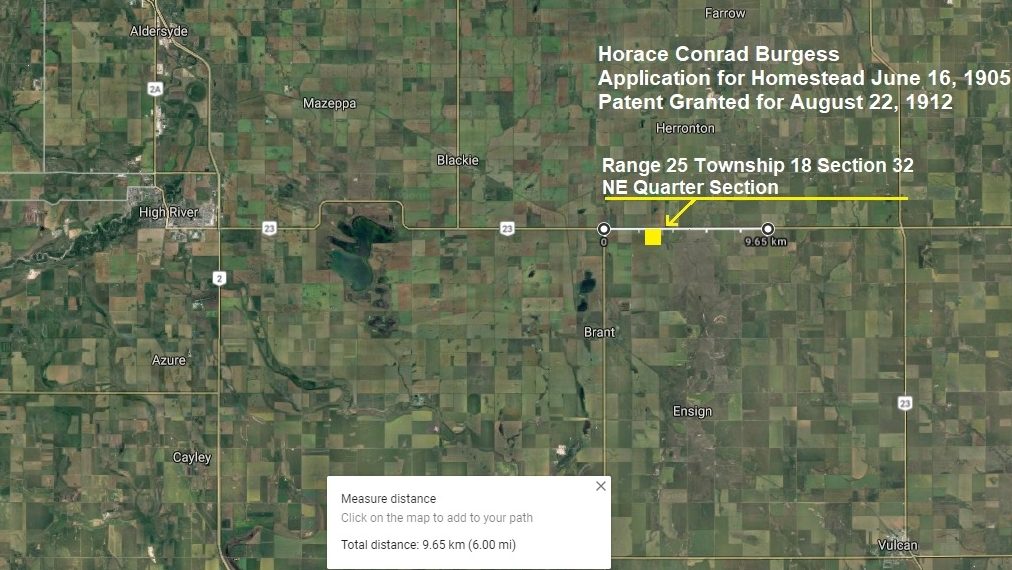
The yellow square marks the land granted to Horace Burgess, upon which he was a homesteader – not far from Vulcan!
Sometime in 1916, Horace and family relocated to a farm at Glenwood (at the time, “Glenwoodville”), north of Cardston. Sometime after 1916, Horace and family moved several times, to places in Utah and Idaho, but they did not sell their home in Glenwood. Horace, Julia, and their two youngest children moved back to Glenwood in September 1924. It appears that from up to 1930, Horace divided his time between Glenwood and Cherry Grove, which is midway up the province close to the Saskatchewan border.
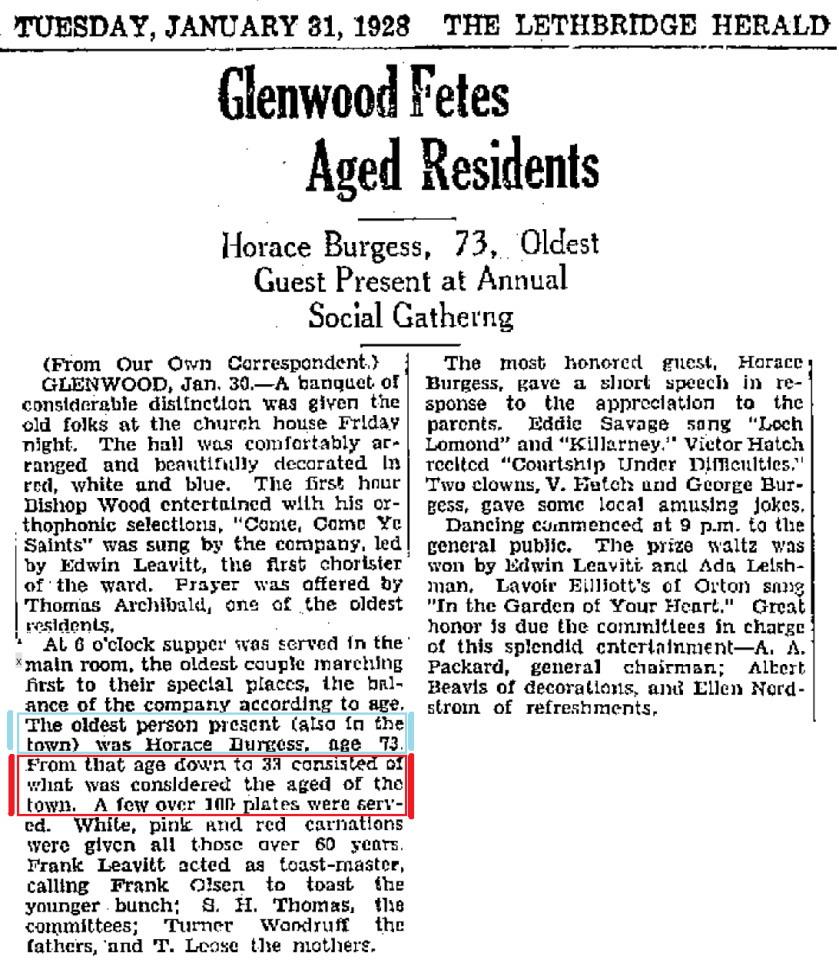
Two years before Horace left Glenwood the last time, the village honoured its oldest residents at a banquet in January 1928. At age 73, Horace was the oldest of those honoured. However, the bar for what was considered “aged” was pretty low. According to the newspaper account of the event, from age 72 “down to 33 consisted of what was considered the aged of the town.” I suppose midlife crises in Glenwood occurred when people were in their teens.
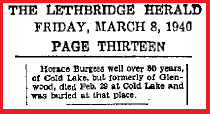
Horace ultimately retired in 1930 and remained in Cherry Grove from that time on. His hobbies included vegetable gardening. Horace passed away at age 85, on February 25, 1940. While the cause of death was due to kidney problems, the registration of his death said it was secondary to “senility”, amongst other health problems. Horace is buried at the Cherry Grove Cemetery.
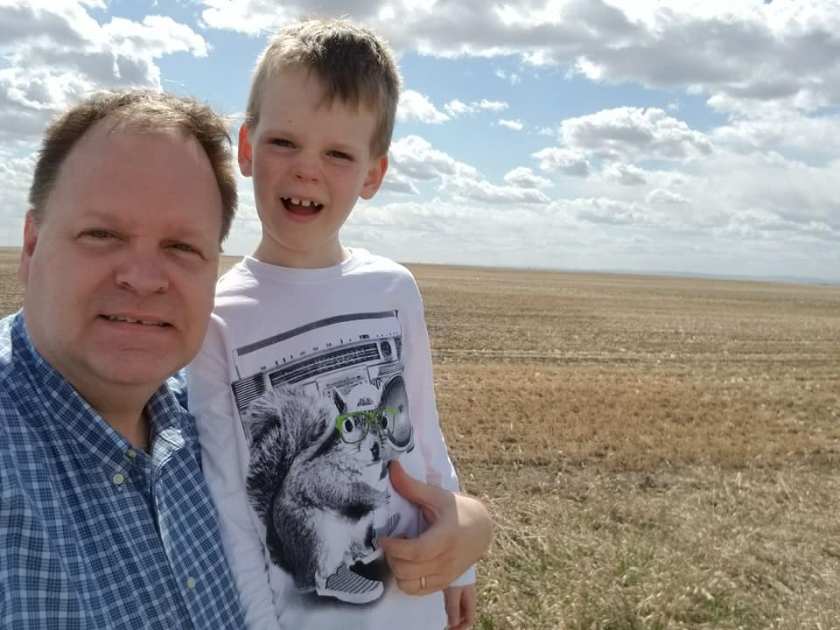
Horace’s Gx3 and Gx4 grandsons, visiting the land he farmed just over 100 years ago.
 A Deck of Ancestors