52W Mark III – Week 30: Boats

Like many immigrants, my father came to Canada on a boat; in his case, the M.S. Sibajak.
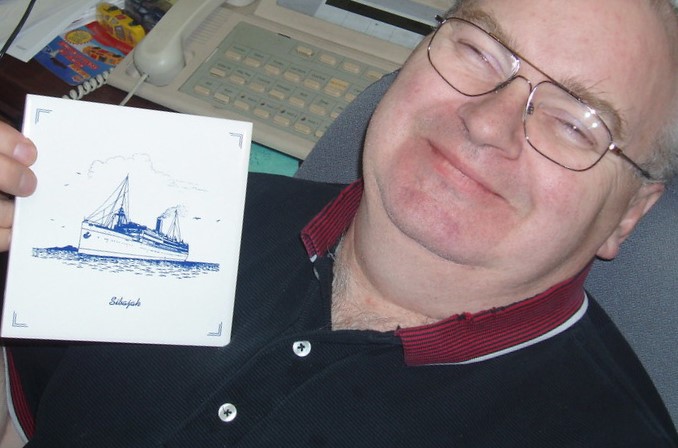
My father holding a Delft tile of the Sibajak, the ship on which he immigrated to Canada in 1954. This one is actually a replacement, as the original one I gave him had chipped. I was lucky to find this, as these tiles are no longer available.

The Sibajak was named after a volcano in Sumatra. it was built for Koninklijke Rotterdamsche Lloyd (Royal Rotterdam Lloyd) at the De Schelde shipyards in Vlissingen, Zeeland. Construction began in 1926 and completed in 1927. Royal Rotterdam Lloyd received the Sibajak in January 1928. At launch, it could carry 527 passengers and had a crew of just over 200. It departed on its maiden voyage on February 8, 1928, leaving Rotterdam for Batavia, Dutch East Indies (now Jakarta, Indonesia).
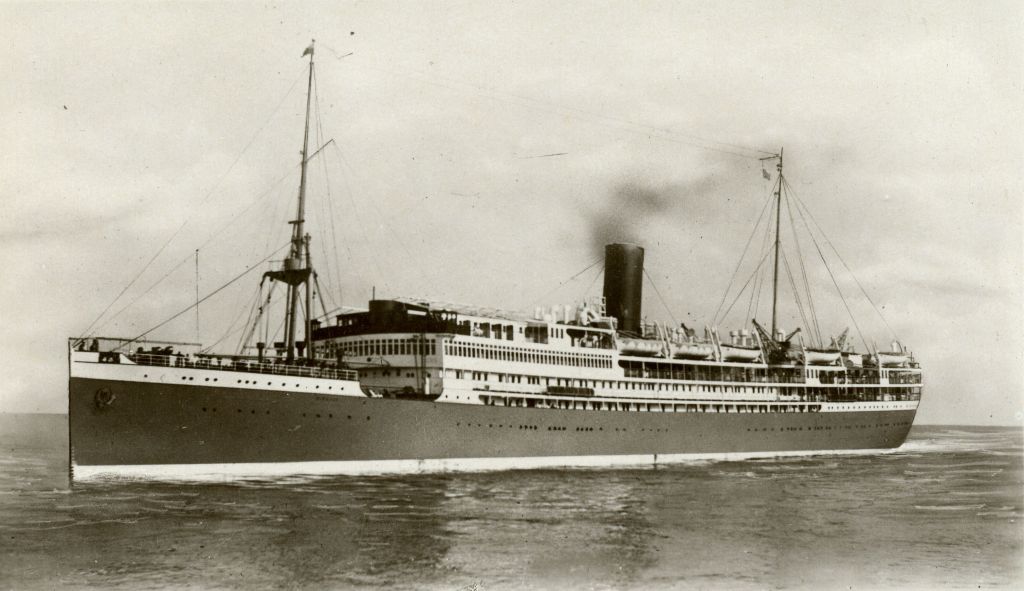
The M.S. Sibajak when it launched in 1927.

During World War II, the Sibajak ended up in Liverpool after the Dutch fell to the Nazis at home and to the Japanese in the East Indies. The Dutch government in exile seized the ship, which was re-registered in Curaçao. The British navy took control of the Sibajak, but its Dutch and Indonesian crew continued to operate the ship. After modifications were made in Singapore, the Sibajak served as a troop ship during the war. It was capable of carrying up to 2,300 troops. The British returned control of the ship back to the Dutch in 1946.
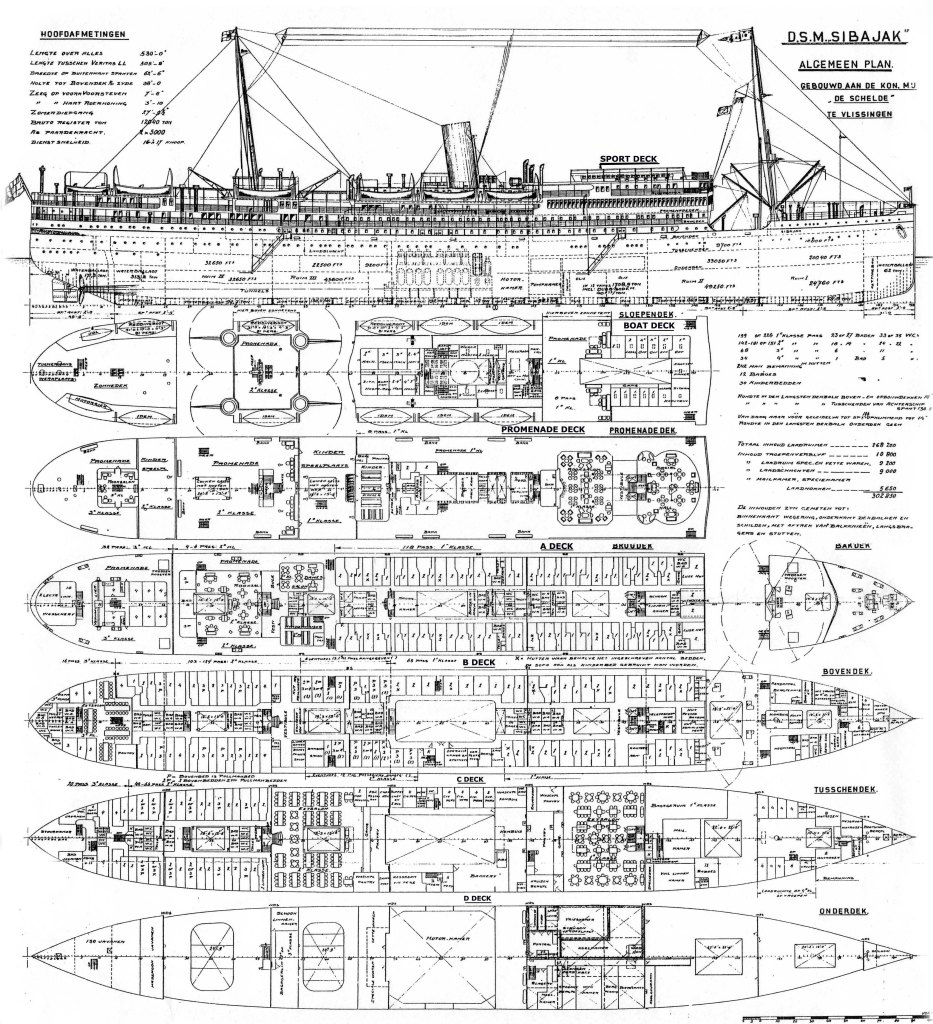
The original plans for the Sibajak.
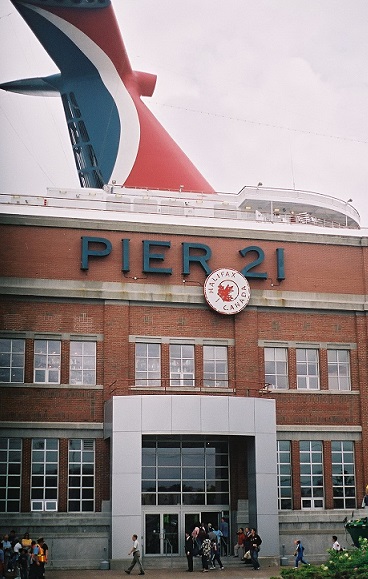
Pier 21 in Halifax, which is now a museum that I have visited twice.

The Sibajak was converted back into a passenger ship in 1950. It had the capacity to carry 956 passengers. Its first voyage after the retrofit was in April 1950, transporting Dutch emigrants departing from Rotterdam for Melbourne, Australia. It also served to repatriate Dutch citizens after Indonesia’s independence. In 1952, the Sibajak also carried passengers to New Zealand, Canada, and the United States.

In 1959, Royal Rotterdam Lloyd sold the Sibajak to a company in Hong Kong. The Sibajak’s last voyage as a passenger ship ended in July 1959, travelling from Rotterdam to Melbourne via Curaçao, the Panama Canal, Wellington, New Zealand and Sydney, Australia. In August 1959, the new owners transported the ship to Hong Kong, where it was stripped of all salvageable materials and scrapped. My understanding was that the remains were scuttled somewhere in the waters around Hong Kong. When I visited the city in 1996, I wondered how close I had come to it on the many different boats and ferries I rode on at the time.
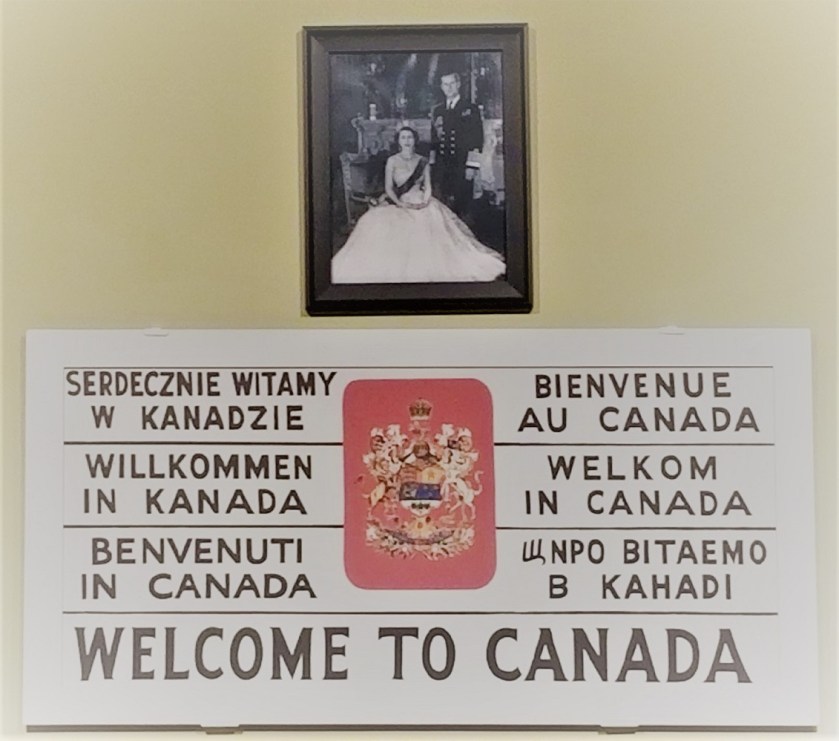
This hangs on the wall in front of the seating area in Pier 21 where immigrants waited to be interviewed by immigration officials.

My father and his family departed Rotterdam on May 5, 1954 and arrived at Pier 21 in Halifax, Nova Scotia on May 13, 1954. Pier 21 is analogous to Ellis Island in the United States. My father’s aunt and uncle came over four months earlier, in January 1954 on the Groote Beer, while another aunt and uncle followed in late May 1954, on board the Castel Felice.
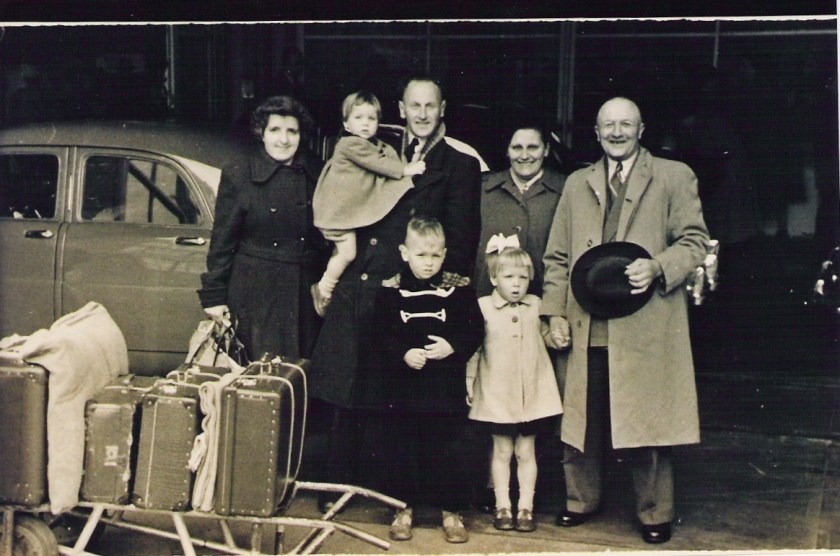
My father with my grandparents and his sisters at the Rotterdam pier on the day of their departure for Canada aboard the Sibajak. My father is standing in the centre, in front of my grandfather. The couple on the right are family friends who drove my family to the pier. At the time, my grandmother was two months pregnant with my father’s youngest brother!
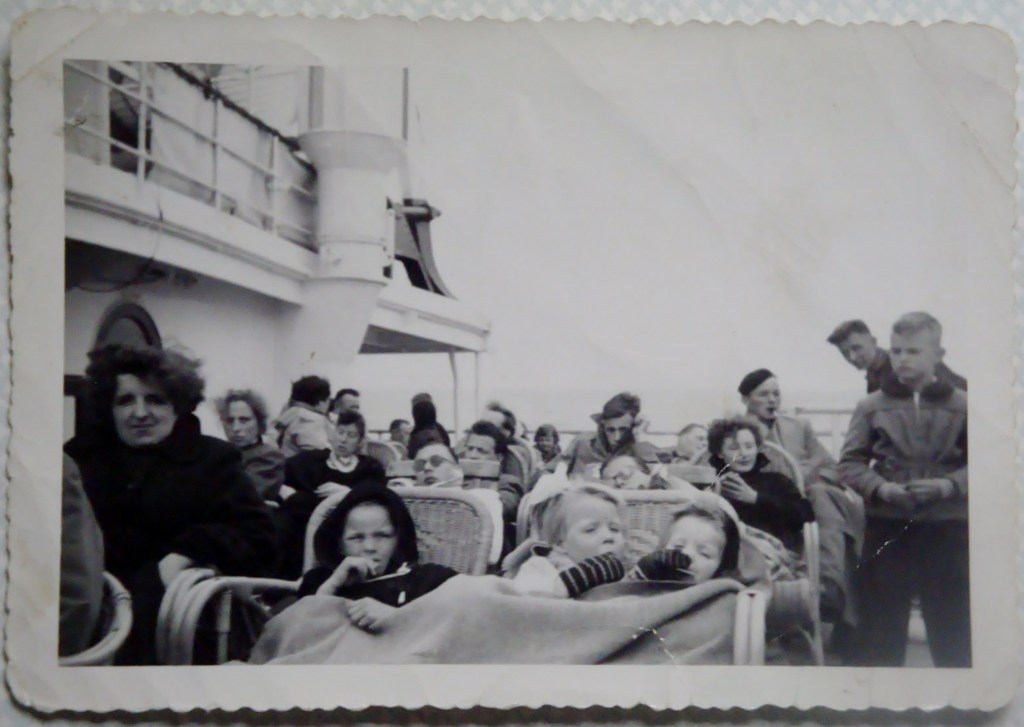
My grandmother, my father, and his two sisters seated on the deck of the Sibajak somewhere on the Atlantic Ocean between the Netherlands and Canada.

From Halifax the family took the train from Halifax to Alberta. On often-told story recounts my grandmother becoming separated from the family and lost during a stop in Montreal. Happily, she found her way back to the train before departure. he train went through Maine, U.S.A., and through Montreal. My grandfather originally planned on settling in Manitoba. However, his sister encouraged him to continue on to Alberta, where she and my great uncle had settled.
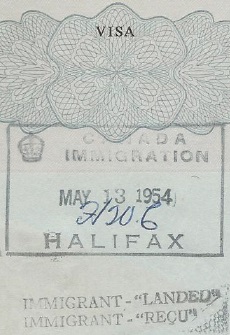
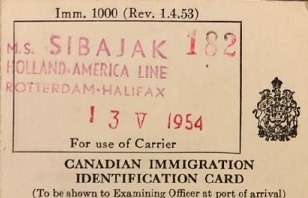
They made it!

In the late 1990s, my parents went on an Alaskan cruise on a Holland America ship. During the trip, my father, who loves to talk to people, fell into a conversation with one of the older hands on deck. My father mentioned having come to Canada on the Sibajak. After a few questions from the crew member, my dad learned that the man had been on the Sibajak during my father’s trip, in his first year or two of service.
This is a fascinating short documentary about a voyage the Sibajak made to Australia carrying Dutch emigrants. The video is in Dutch, but the images convey a lot of meaning. My father recognized many of the scenes in this video.

52W Mark III – Week 29: Automobiles

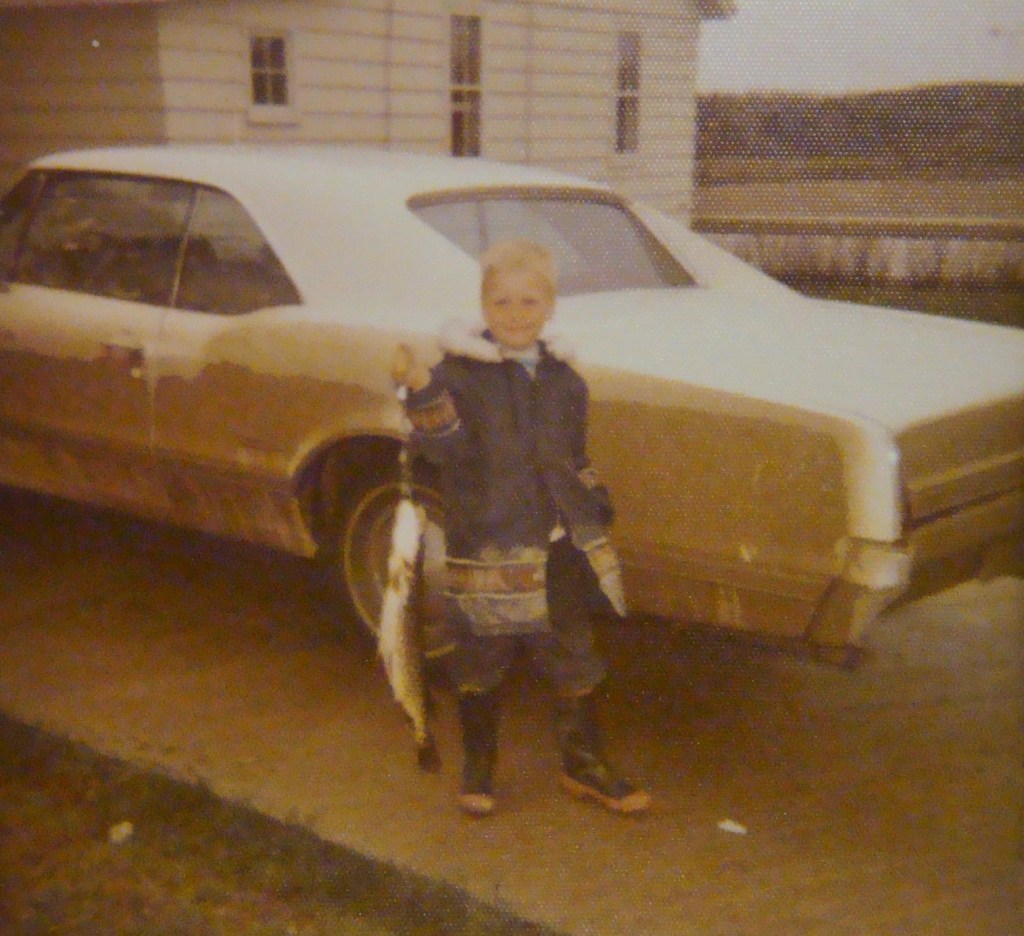
I don’t know if my father acquired it before or after I was born, but for us the first family car was a 1966 Oldsmobile Cutlass. Or, as my father called it, The Hutless Cutlass.

Me in front of the Hutless Cutlass a month before my fifth birthday, in Creighton, Saskatchewan. My father often took me fishing. When we lived in Creighton, we usually went fishing at the lakes and rivers right over the border in Manitoba. Here I’m holding a jackfish (northern pike), but what I really preferred to catch were pickerel (walleye).

My father bought it when we were living in Lethbridge, Alberta. The Hutless Cutlass travelled all over western Canada, both as we moved around the country and for many family road trips. With my youngest sister, it meant that there were six people packed into that car (dad sold it before my youngest brother was born). Invariably, whether we were in Creighton, Saskatchewan (on the border with Manitoba, next to Flin Flon) or Duncan, British Columbia, the road trip was to Lethbridge to visit family. Since my dad loves exploring, that car has probably driven over nearly every primary, secondary, and tertiary highway from the Pacific to Manitoba.

The Hutless Cutlass was old school – no power steering, no power brakes, no air conditioning. I remember it had a choke. From time to time, while checking under the hood, he’d have me open or close the choke, or rev the engine.

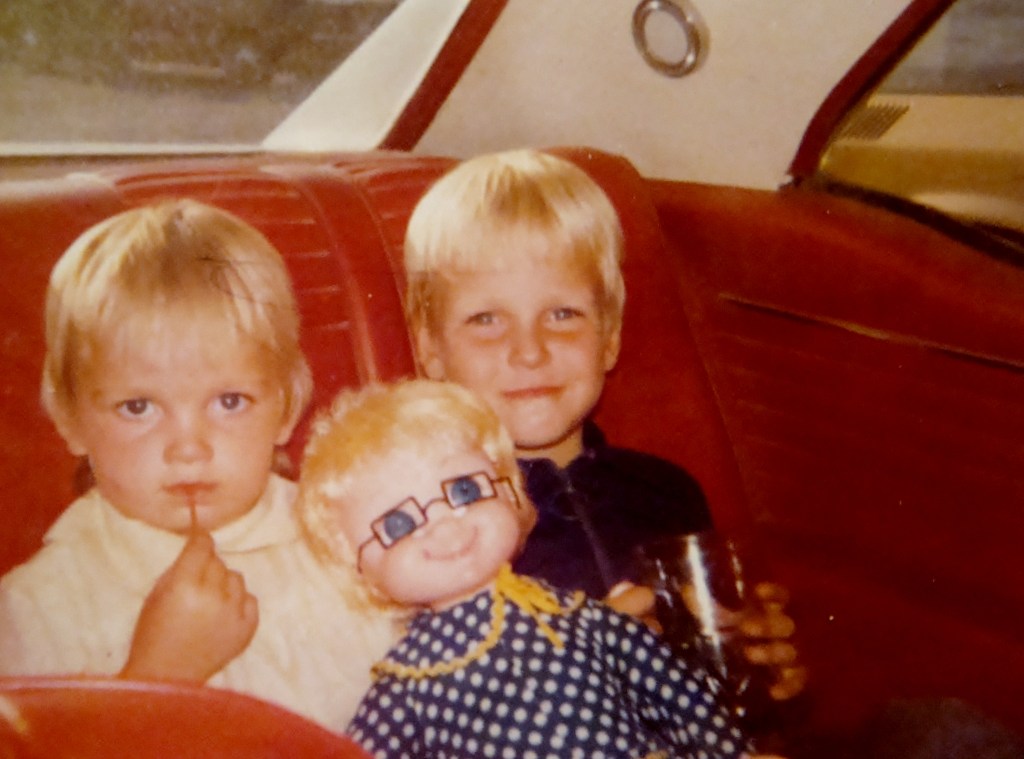
At the A&W Drive In in Terrace, British Columbia, with my sister and Mrs. Beasley.

One night, when I was about 13, my dad and I went to a hockey game in the small prairie town where we were living at the time. We got home pretty late. We didn’t pull into the driveway. Instead, we parked in front of the house, with the engine running. If memory serves, we were listening to the sports highlights on the radio. Somehow the conversation turned to me telling my dad what I knew about operating a car. I then bragged that I probably could even drive it. Dad doesn’t let it slide; rather, he says show me. So we switch seats and I drove very slowly and tentatively down our empty street at the edge of town.

Sometime when I was 13 or 14, my father traded the Hutless Cutlass in for an Oldsmobile Delta 88. It was a real land yacht, and the car in which I learned to drive and took my driving test. (I am always quick to point out I took my driving test during a blizzard – how Canadian!) When I was in grade eight or nine, sometime after my dad traded it in, I saw our old Hutless Cutlass parked downtown. Of course, I had to check it out. The interior had been completely redone in some sort of heavy metal decor. I particularly remember that the steering wheel had been replaced with a metal chain with the links welded together so that it formed a circle. That poor car.

52W Mark III – Week 28: Trains

My grandfather, Leo Burgess (1920 – 1995), worked for the Canadian Pacific Railway for 32 years. I’ve written about various aspects of his time with the railway, such as the fact he was a proud member of his union and his brushes with Hollywood, including meeting his movie idol Glenn Ford.

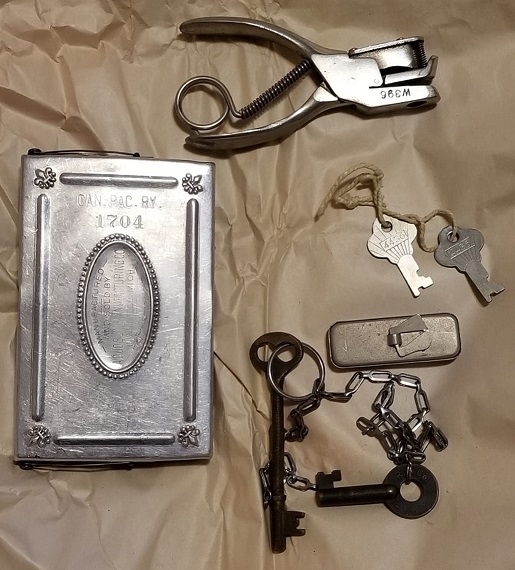
Some of the items my grandfather used as a conductor, which are now in my possession

Leo was based out of Lethbridge, Alberta. He started as a brakeman and worked through the ranks, later becoming a yard manager. Early on, because of winter layoffs, he chose to work for the CPR in Cranbrook because there was more work there during the winter to provide a steady income. In 1972 he became a conductor, performing that role until his retirement in 1982.

One of my earliest memories was travelling on the train from Medicine Hat to Lethbridge. I’m sure my mother would correct me if I’m wrong, but in that memory I am sure my grandfather was travelling with us.

My grandfather often brought me to the train station in Lethbridge when I was little. Of course, the highlight was always getting to go on to the caboose. Of course, I’m showing my age in being able to recall a caboose as an everyday working part of a train and not just as a museum piece.

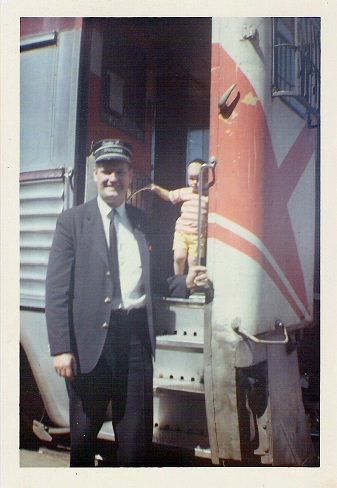
One of my favourite photos, showing me with my grandfather. If there’s any doubt, he’s the one on the left.

The station building still exists and has been designated with heritage status. In the 1980s, the railyard was relocated a few kilometers west of the city and the tracks were removed from central Lethbridge. In 1987, the station building was converted into the Lethbridge Community Health Centre and it still serves in that capacity.

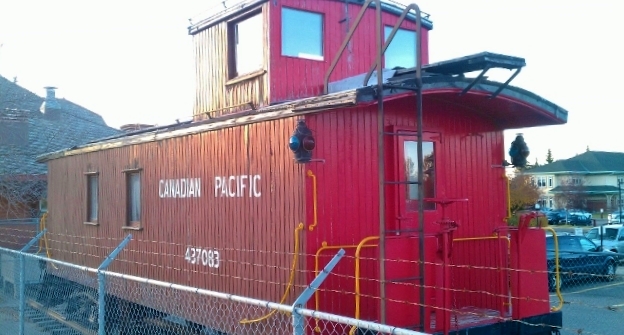
The former train station in Lethbridge is now the Community Health Centre. This caboose remains preserved beside the former station building. I wonder if my grandfather ever worked on this specific railcar. Heck, I wonder if this is one of the cabooses that he took me on!

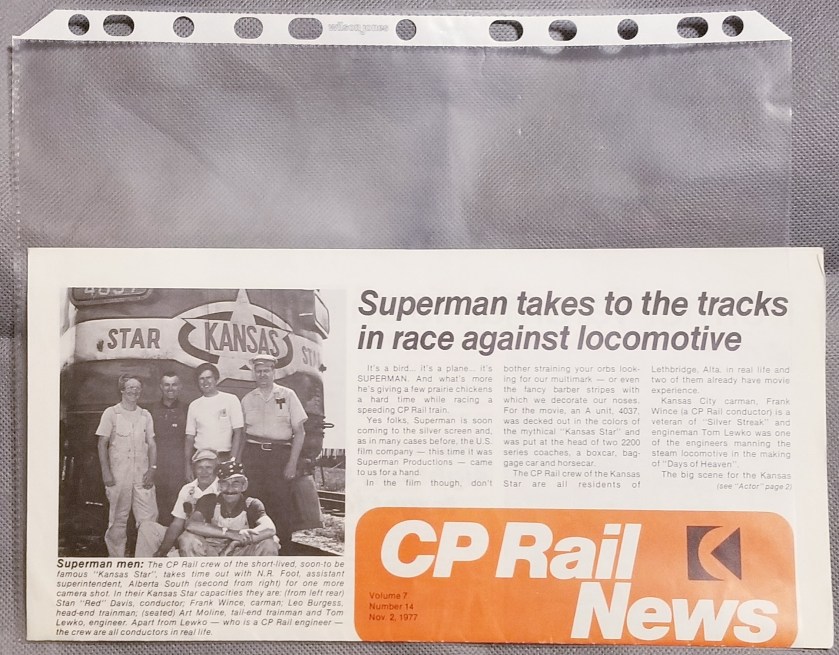
Of course, I would be remiss if I did not repeat the fact that working on the train crew for Superman: The Movie was one of the highlights of his time with the CPR. During the eulogy at my grandfather’s memorial service, one of his friends told an anecdote that suggests my grandfather felt that he had gotten familiar with the cast and crew. The scene took six days to shoot. Apparently during a break in filming, Ford was talking to a group of railway workers when my grandfather sauntering up, put his arm around the actor, and said, “How’s it going, Glenn?”

My grandfather was working in the engine during the filming of this scene. My parents live about a 30 minute drive from where this was filmed. The tracks are gone, but the memories live on.
My grandfather is the man wearing a cap standing on the right side of the photo.

52W Mark III – Week 27: Planes

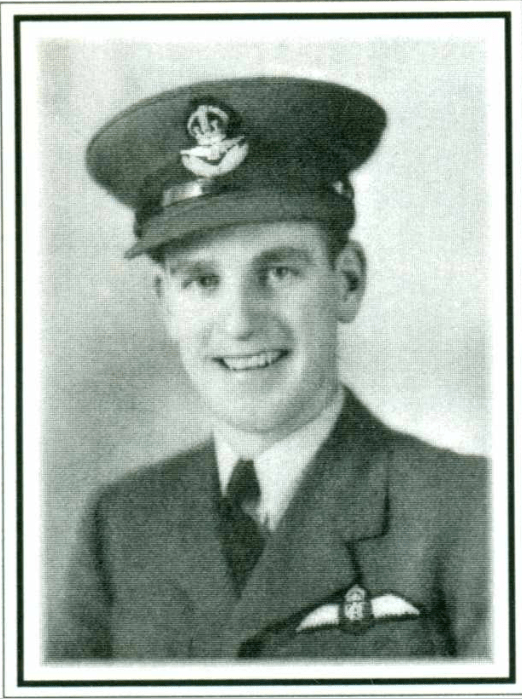
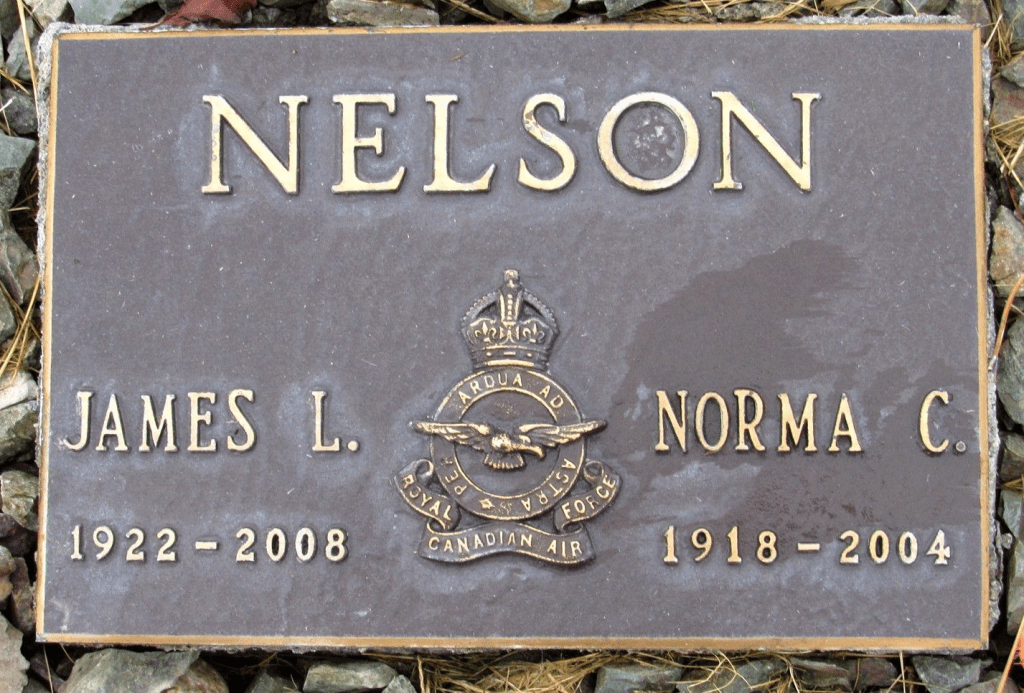
James Lorenzo Nelson (1922 – 2008) was my grandfather Leo Burgess’s cousin. James had a distinguished career as a Royal Canadian Air Force pilot, which included a four-year stint assigned to the Royal Air Force. During his career, he served on 16 different kinds of aircraft and logged 8334 flying hours.

James Lorenzo Nelson

James was the second of the nine children of Lorenzo Snow Nelson and Mary Ireta Turner. However, James’s older sister Clea died within weeks of birth, so James essentially grew up as the eldest child.

When he was 20, James joined the Royal Canadian Air Force during World War II, in October 1942. After training, James was transferred to Bomber Command in Leeming, Yorkshire, flying Halifax and Lancaster bombers. After the war, he remained in England as part of the post-war demobilization. During that time, he transported soldiers out of Italy, cleared armament dumps, disposed of unused bombs and ammunition by dropping them into the Irish and North Seas, and flew old aircraft to the “junk yard”. James was part of the last Canadian-crewed Lancaster flight.

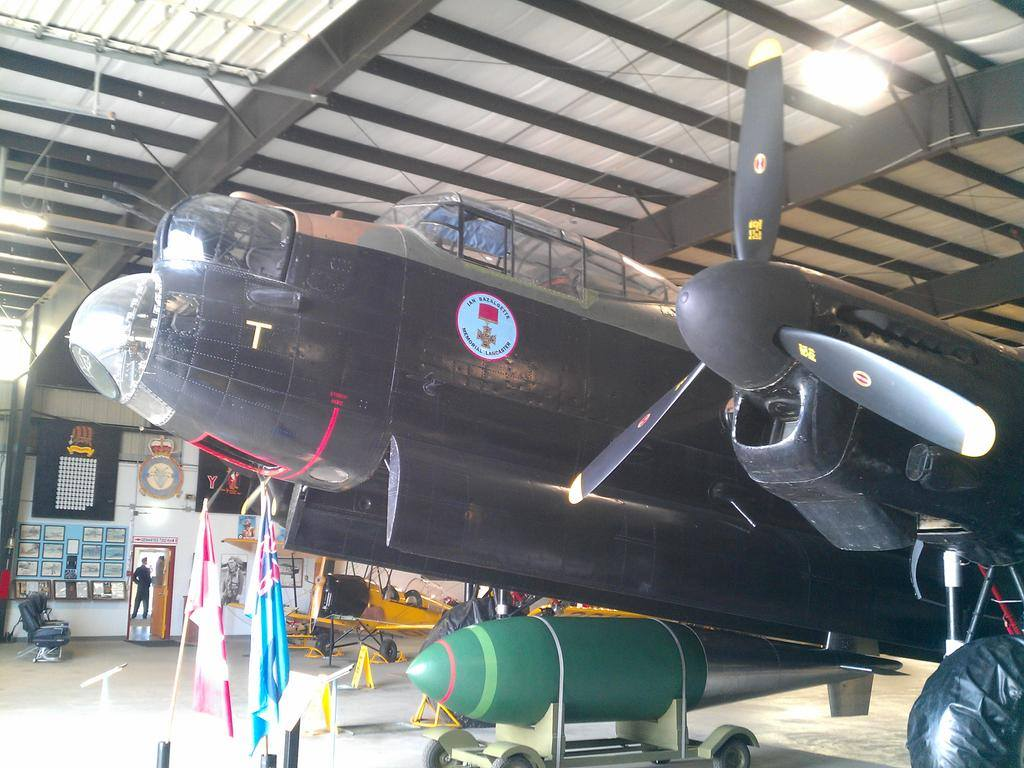
This Lancaster is on display at the Bomber Command Museum of Canada in Nanton, Alberta. It is one of 17 remaining Lancasters in the world. It is also one of four Lancasters that can taxi under its own power. We were lucky enough to see the engines in operation during a test in 2016.

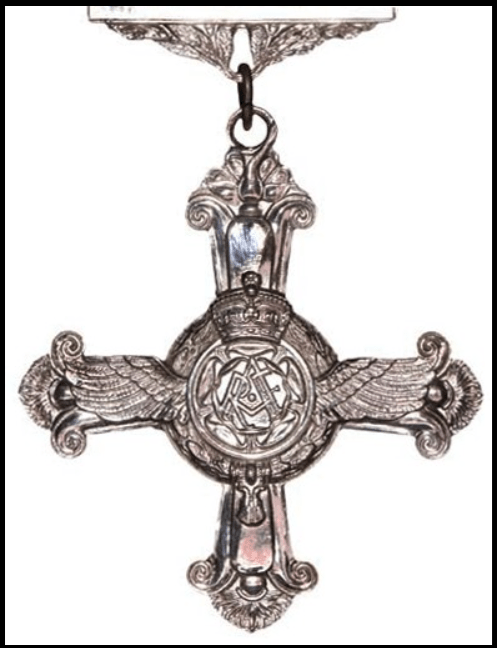
After the war, James returned home to Alberta and briefly spent some time as a grain buyer. Clearly the land was not where James’s heart laid, as he joined the Royal Air Force in 1947. James served with the #224 Squadron in Belfast, Ireland and with a detachment in Gibraltar. His duties included long-range meteorological reconnaissance. King George VI awarded James the Distinguished Flying Cross at Buckingham Palace on October 31, 1951. The commendation read:

This officer has served with No. 224/269 Squadron at Aldergrove and Gibraltar for two and a half years from March 1948 to 1951. During this time he has flown one hundred meteorological sorties, and on nine occasions he has experienced engine failure in flight. He has coped with these problems coolly and with exceptional skill, proving an excellent leader under most adverse conditions.

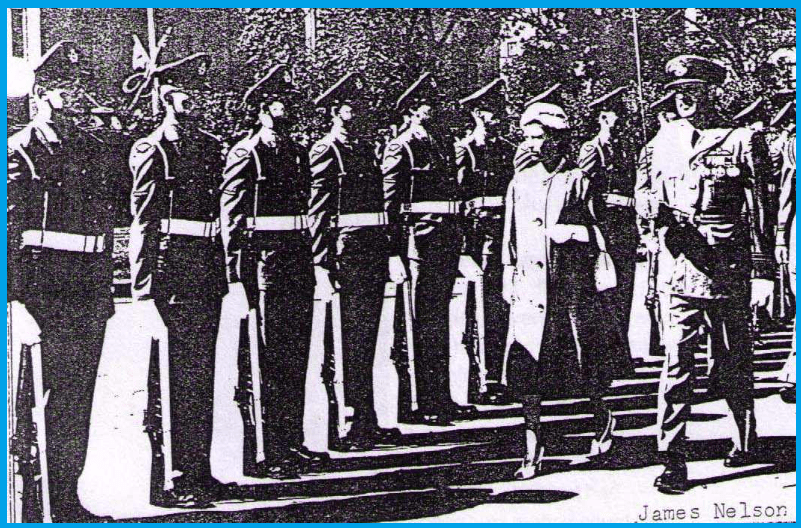
James completed his service with the Royal Air Force in 1951. He returned to Canada and immediately reenlisted in the Royal Canadian Air Force. James was initially posted in Calgary and then later in Edmonton. During his time in Edmonton, James was awarded the Air Force Cross by Governor General Vincent Massey for his service. After four years in Edmonton, James was transferred to Training Command. In 1959, James served as Guard Commander during Queen Elizabeth’s visit to Regina. In 1967, James was transferred back to Edmonton to serve as Provincial Air Cadet Liaison Officer.

James serving as The Queen’s Guard Commander during her Royal Visit in 1959.

In 1953, while stationed in Calgary, James married Norma Dunford (1918 – 2004). Together they had two children, one of whom was a dentist. I am pretty sure he worked on my teeth, but I didn’t discover the familial connection until well after the fact.

After James left the military, he and Norma relocated to Penticton, British Columbia. James owned and operated a picture-framing business there from 1971 to 1976, when he sold the business. James spent his retirement in Oliver, British Columbia, spending his time golfing, fishing, hunting, and caring for a small fruit orchard. He died in 2008, at the age of 86.