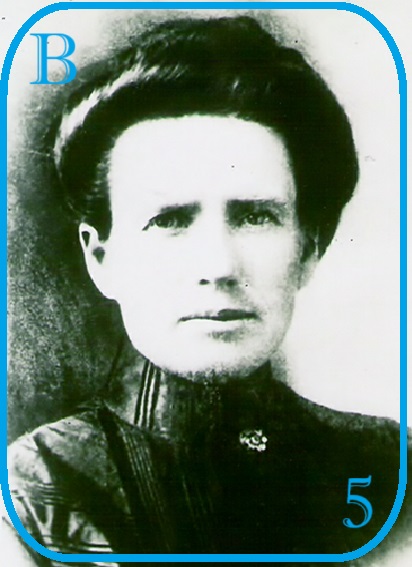
52W Mark IV – Week 31: Card B5 Ella Elizabeth Thomas

Ella Elizabeth Thomas (1859-1941)

My Gx2 Grandmother, Ella Elizabeth Thomas, is a rarity amongst my direct female ancestors, as she was one of the few with an occupation outside of the home. Ella was a midwife and nurse for about 40 years, serving the town of Cardston, Alberta and the surrounding community.

Ella was born in Lehi, Utah on October 9, 1859. Her father, Preston Thomas, was originally from North Carolina. Her mother, Maria Hadlond, was from England and emigrated to the States with her family when she was a teen.

When Ella was about 18 months old, her family moved nearly 200 kilometers north to Franklin, Idaho, which is located right on the Utah border. It was the first non-Indigenous settlement in Idaho. In fact, when the town was founded, the original settlers thought they were within the boundary of Utah. Another fun fact about Franklin is that its county, also named Franklin, is the only county by that name in the United States that is not named after Benjamin Franklin. Rather, it was named after Franklin Richards, a Mormon leader.

Somehow, by 1879, when she was 19, Ella was living in Salt Lake City. It is not clear what events in her life led her to be there. Salt Lake City is a fair distance south of Franklin. Her father died in 1877, so it may have been that her mother relocated to the city after becoming a widow. That’s a matter for further research.
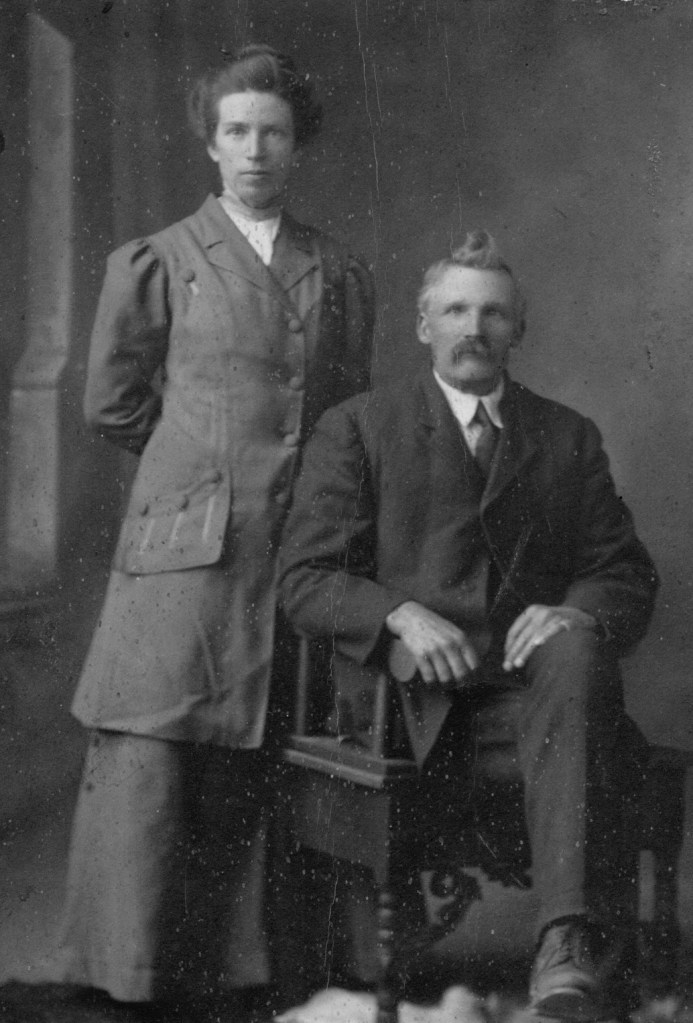
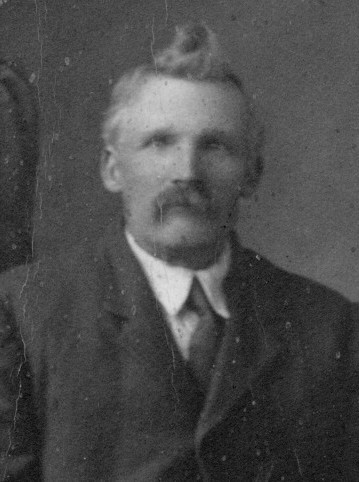
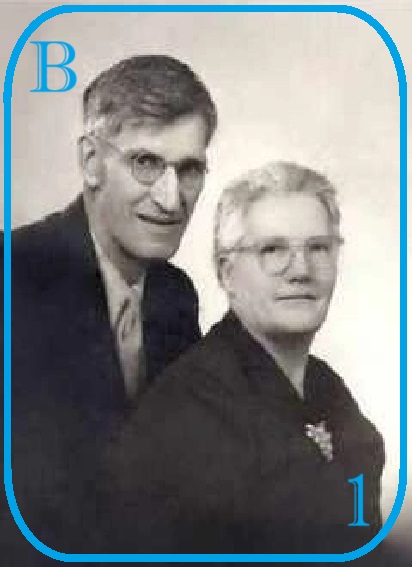
Ella and John. One source I’ve seen says this is their wedding photo, but I have a hard time seeing a 19-year-old and a 24-year-old. Of course, the stern expressions, style of dress, and fact it’s black and white all serve to age them.

In Salt Lake City, Ella married John Alexander Nelson on January 9, 1879. After marrying, the couple relocated to Smithfield, Utah, which is relatively close to Franklin. They remained there for about ten years, where Ella gave birth to the first six of their twelve children. In September 1890, the family moved to Canada. They were part of the earliest wave of Mormons to settle Cardston, Alberta after it was founded in 1887.

While John was kept busy by a multitude of endeavors, Ella was soon called to a profession of her own after the family settled in Canada. As a new community, Cardston did not have any physicians or other kind of healthcare providers. The closest doctor would have been in Lethbridge, 80 kilometers away. Today that’s under an hour’s drive; in 1890, it was a long and difficult journey by horse or wagon.

The accounts of Ella’s training as a midwife differ. They all agree that Ella was called to study nursing and obstetrics in her early 30s and was sent to Salt Lake City for training. Several sources say that Cardston’s founder and stake president, Charles Ora Card, issued the direction himself. However, the various sources are inconsistent as to when Ella received her training.

An article about Ella in the Lethbridge Herald following her death said that she left her five eldest children at home, taking with her “a six months old baby”. Given there were five older children left at home, that baby would have been Seth Henry Nelson, who was born October 1891. Another article in an annual family newsletter, Nelson Talk, stated that the baby Ella brought with her was her son Cleveland, who was born in March 1893. Chief Mountain Country: A History of Cardston suggests that Ella “left behind seven small children for John to care for and run the home, only to find she was expecting another child.”
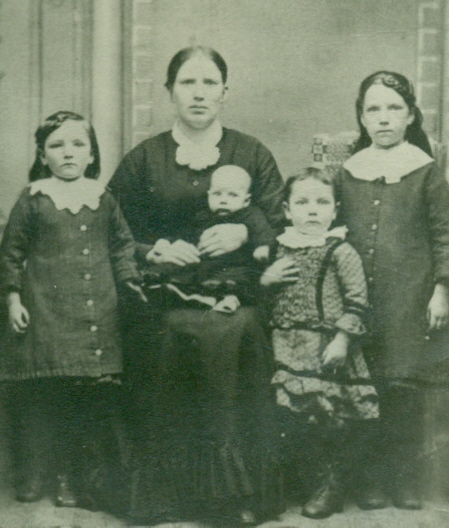
Ella with her four eldest children, Ella, Rachel, Lileth, and Maria. This photo would have been taken in Utah shortly before the family moved to Canada.

Together, these accounts are most consistent with Ella having attended her studies in Utah in 1892. Seth would have been about six months old at the time, and the child Ella learned she was expecting was most likely Cleveland. Of course, Nelson Talk most likely nailed it when it said that John and Ella’s eldest child, Maria, who was about 12 at the time, primarily took care of the other children in the family during their mother’s absence.

In Salt Lake City, Ella trained under a Dr. Shipp for about six months. When Ella returned, she was the only medical help that Cardston and area had for many years. The Herald article says that Ella “answered every call from 1892 to the time when the district was supplied with medical men, and after that time when there was more work than one doctor could do”.

Chief Mountain Country indicated that Ella often received no payment for her services, or would sometimes be paid in goods, such as produce. In a short biography of his mother’s life, Seth wrote that Ella’s regular fee for the delivery was $5 and $1 per day for nursing services after the delivery. However, she would often not receive anything for nursing.

Nevertheless, it seems that Ella did not forego payment easily. Seth said that her sons were often sent to collect on outstanding accounts, which sometimes required repeated trips. An account from another of Ella’s sons was that one woman deducted fifty cents on her own volition because she was paying in cash. Ella promptly sent her son back to get the full $5, who told the woman, “mother is not a storekeeper and does not give discounts!”

All the while, Ella had five more children after becoming a midwife. I have no idea who, if anyone, attended to her for those births. However, Seth wrote that at the time Ella began her service there were “a partially trained midwife or two” in Cardston.

Ella assisted in the delivery of hundreds of babies in her 40 years of service. According to Seth, his mother lost track after 400. Seth proudly said that Ella never lost a mother and rarely lost a baby.

When physicians first set up shop in Cardston, Ella would sometimes act as their nurse. Ella also helped those suffering from diphtheria, typhoid, and childhood diseases. Seth wrote that Ella continued to provide midwife services after physicians had established themselves in Cardston. However, Seth stated that after the Alberta “Medical Professional Act” came into effect, Ella was not permitted to charge a fee for her services.

This was most likely a reference to the Alberta Health Insurance Act enacted in 1935, when Ella was 76. She had already largely retired from working as a midwife and healthcare provider a few years earlier, when she was 73. By that time, Ella was not only a grandmother, but a great grandmother.

Ella passed away on October 30, 1941, almost a month after her 82nd birthday. The funeral service was held at the Latter Day Saints tabernacle in Cardston and Ella was interred at the Cardston Cemetery. Ella’s pallbearers were all grandsons: Leo Burgess (my grandfather), Grant Lamb, Rulon Lamb, Grover James, and Wilbur Nelson. Her granddaughters Ella Burgess, Julia Burgess, Fontella Burgess, Jean Nelson, Dorothy Nelson, Kathleen Nelson, and Jane Nelson all served as flower girls.
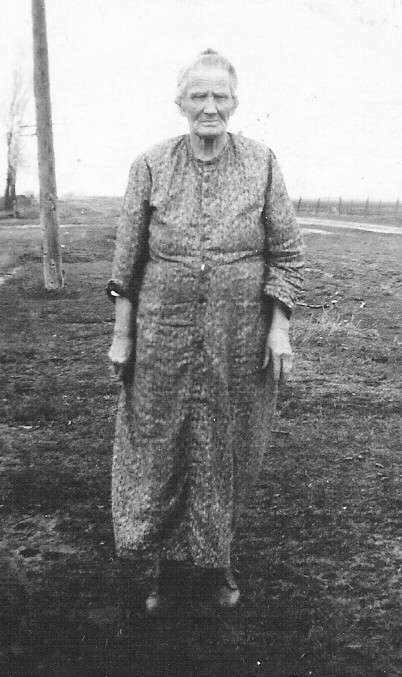
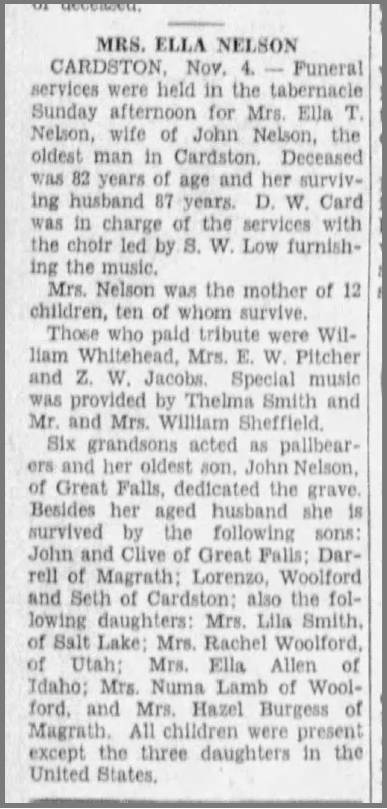
Ella is one of those ancestors for whom I have a lot of respect. When people query which of your ancestors you’d like to meet, Ella certainly comes to mind. It is somewhat strange and special to think of my personal connection with my grandfather, born over 100 years ago, who had a personal connection with someone born in the middle of the 19th Century. While musing over this, I also remembered that just as my grandfather was a pallbearer for his grandmother, I was one of his.
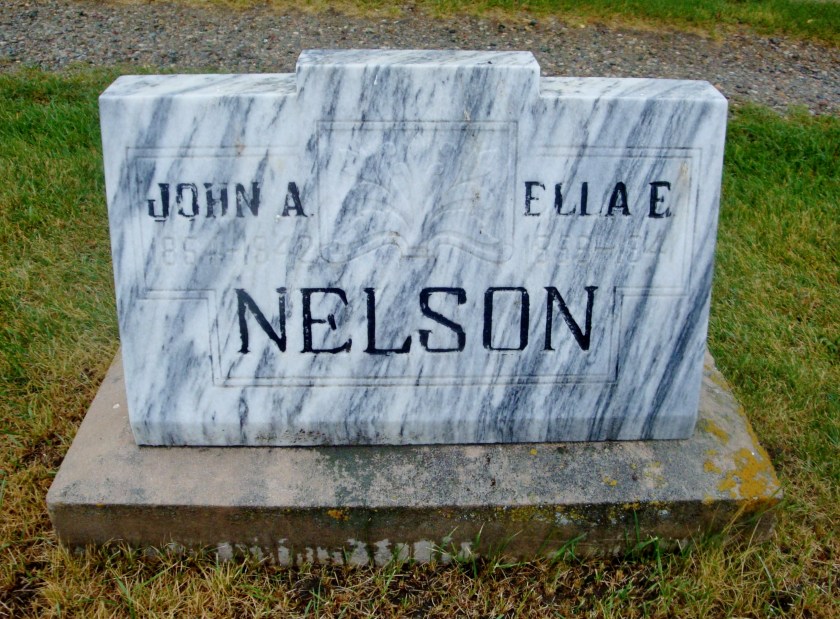
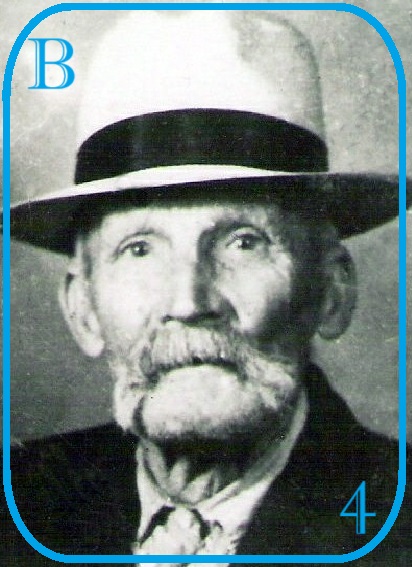
52W Mark IV – Week 30: Card B4 John Alexander Nelson

John Alexander Nelson (1854-1942)

When I was 13, we went to Montana for a family reunion of the descendants of John Alexander Nelson, my Gx2 Grandfather. Of course, we were also the descendants of his wife Ella, but there wasn’t a lot of talk of her that weekend, but there certainly seemed to be a lot of reverence and awe when people spoke about John.

The event made an impression on me in many ways. It was the first (and pretty much only) organized family reunion I’ve ever been too. While it wasn’t my first time to the States, at that time I had not been there many times, and it had never been to see relatives. At the time I didn’t really have much connection to or knowledge about my American relatives, nor were they particularly close to me – lots of second or third cousins, once or twice removed. As well, it was my first real exposure to my Mormon relatives. John was my grandfather Leo Burgess’s grandfather, and my grandfather really wasn’t much of a practicing Mormon. He had pretty much left the church and didn’t follow any of its practices, so I didn’t really know much about it at the time.

John was born in Farmington, Utah, on October 17, 1854 to Irish immigrant parents, Robert Nelson and Elizabeth Joseph, who had spent some time in Scotland before they joined the Mormon church and moved to America with their first three children. After arriving in the States, the Nelsons lived in Missouri for a couple years before continuing on to Utah in 1852. While he was Robert and Elizabeth’s second child born in the United States, John was the first of their children born in Utah.

Sometime between 1860 and 1862, when John’s youngest siblings were born, the family moved to Smithfield, Utah, almost 100 kilometers to the nouth of Farmington. While he married his wife, Ella Elizabeth Thomas, in Salt Lake City on January 9, 1879, he continued to reside in Smithfield, apparently until the family emigrated for Canada.

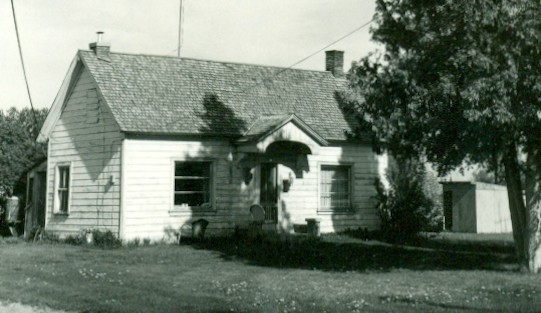
The house John built in Smithfield in 1879

It appears that John might have flirted with the polygamous practices of the Mormon church. On March 19, 1885, he was “sealed” (a Mormon ritual meant to bind familial relationships for eternity) to two sisters, Matilda Jane and Eliza Rankin. Sometime in 1892, John was sealed to Frances Rebecca Purser.

I received this information from my great aunt Fon Hogg (née Burgess), John’s granddaughter. Fon was an avid and proficient genealogist. As a member of the Mormon church, Aunt Fon had access to information that is not available to non-adherents. Fon stated that they were “only sealed,” suggesting there was no civil marriage. In any event, as a polygamous marriage, these unions would not be recognized by the civil authority. Fon also informed me that the sealing between John and Frances was “cancelled” in 1896.

In 1887, Charles Ora Card, a significant Mormon leader, founded the settlement that became Cardston. In part, Card was seeking to avoid arrest for bigamy and was hoping Canada would be more accepting of plural marriage. The Canadian government quickly quelled that prospect, but the settlement flourished. In 1889, he returned to Utah to recruit more settlers.

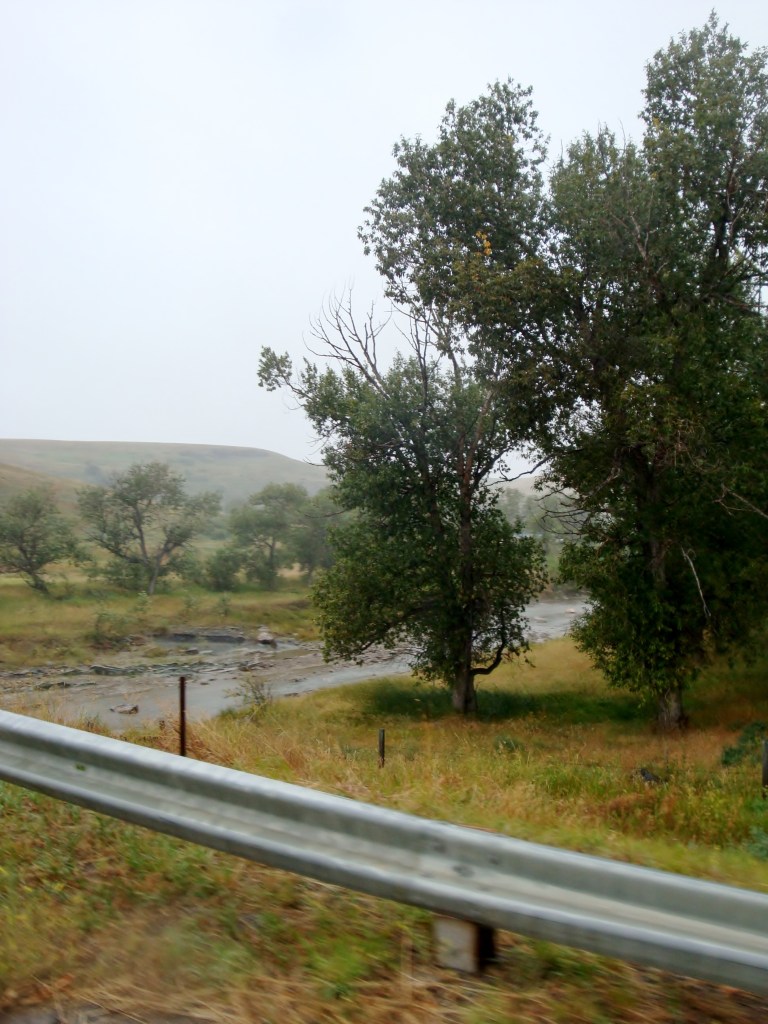
Lee Creek and the land John settled in 1890.

John and Ella answered the call, so they and their five children moved to Canada in September 1890. They travelled by covered wagon and brought 13 horses, 7 cows, 7 “other horned cattle”, and a pig. Upon arrival, John constructed a sod dugout on a 160 acre homestead on Lee Creek, which ran though the land and on to Cardston. The land is located on what is now Alberta highway 501. John and Ella were nationalized as British subjects domiciled in Canada in 1896 (there was no “Canadian” citizenship until 1947).

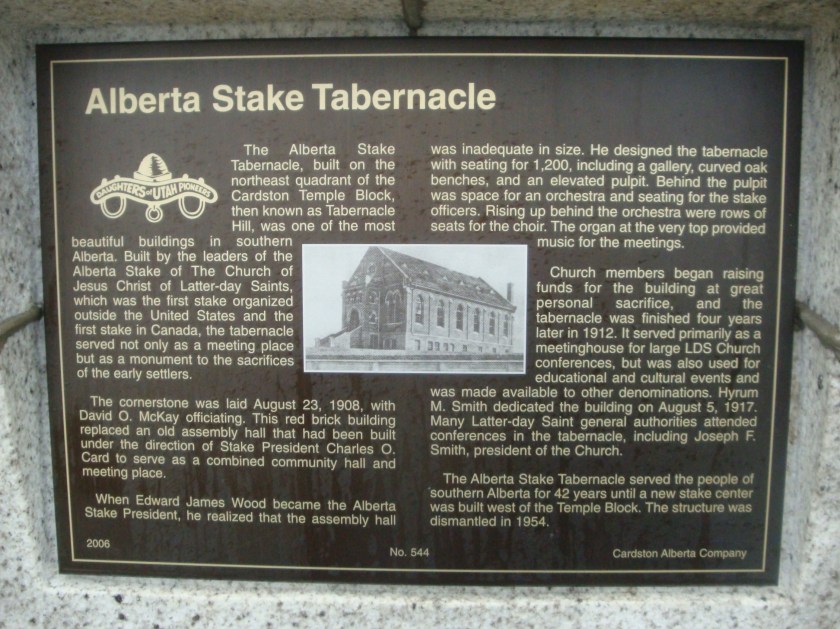
John’s land also had a quarry. Rock from his quarry helped build, among other things, included the Cardston courthouse and, reputedly, the Alberta Stake Tabernacle that stood from 1912 to 1954. The one structure for which John definitely did not supply the stone was Cardston’s first saloon. As if farming and operating a quarry was not enough, John was also a carpenter and operated the first lime kiln in the region. He also served as a school trustee in 1907.

In 1906, John and Ella moved to nearby Woolford, Alberta, where John continued farming. They briefly returned to Utah in the early 1920s, where John operated an orchard or fruit farm, but they returned to Woolford in 1924. John continued farming there for the rest of his working life.

John died on September 29, 1942, a year after Ella passed away. At the time of his death, John had 10 children, 54 grandchildren, and 25 great grandchildren, on both sides of the Canadian-US border. No wonder there were so many people at that family reunion in Montana!

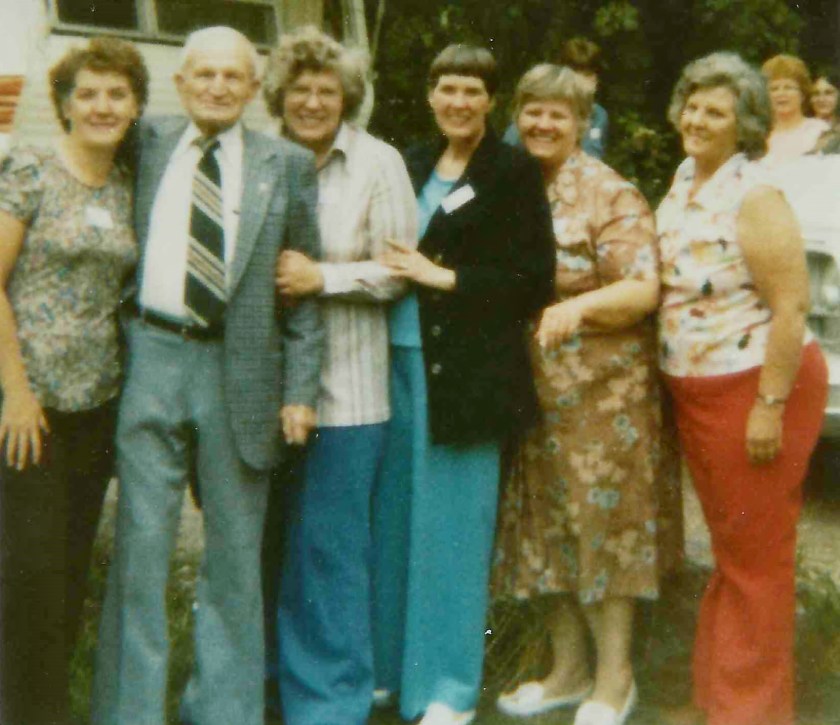
One of the big stars at the Nelson family reunion was Cleveland Nelson (1893-1982) , the last living child of John and Ella. He’s with five of his nieces, my grandfather Leo Burgess’s sisters: Fon, Cleve, Julia, Ella, Molly, and Irene. You can also see my mother over Irene’s shoulder.

52W Mark IV – Week 28: Card B2 Horace Conrad Liggett Burgess

Horace Conrad Liggett Burgess (1854-1940)

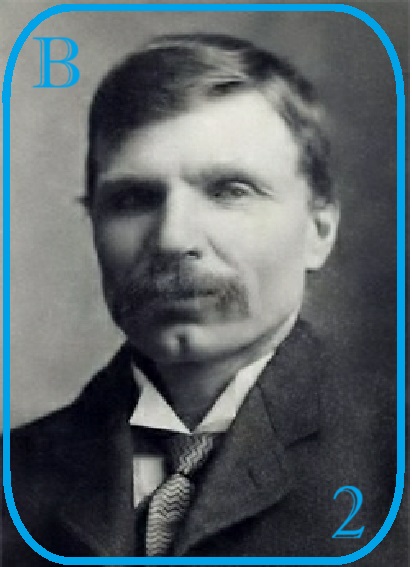
What can I say about my Gx2 Grandfather Horace Burgess that I haven’t said before? It seems like I’ve written about or mentioned him many times in the four years that I’ve been participating in the 52 Ancestors Challenge.

Horace was born in 1854 in Lehi, Utah. As far as I can find, he was named Horace Liggett Burgess. His middle name reflects the Mormon custom of giving their children their mother’s maiden names as middle names. Census and marriage records show he was still using Liggett as his middle name in his late 40s. It was not until after he moved to Canada in 1903 that he began to use Conrad. The family lore I’ve found suggests he adopted the middle name Conrad later in life in order to add support to his claim in a dispute over his ownership of some land. Horace dropped Liggett from his full name when he applied for homesteads in Alberta in the first decade of the 20th Century. The name Liggett does not appear on his death certificate or headstone.

Horace was the only child of William Burgess and Charlotte Elizabeth Liggett, who married in 1852. The union was polygamous, as William was still married to his first wife, Maria Pulsipher. William and Maria had been married for 12 years at the time and had six children; they remained married until Maria died in 1892. Moreover, William was more than twice Charlotte’s age when they married – he was 30, she was 14. Based on my research, this was typical of polygamous Mormon marriages of the time.

Charlotte left William sometime around when Horace was three. Apparently she did not get along with Maria. Horace went with his mother when his parents separated. Charlotte remarried in 1857, entering into another polygamous marriage. By the time Horace was 17, he had five half-siblings through his mother and step-father. William married his third wife in 1858 – another polygamous marriage for him, too. William had three more children with Maria and four with his third wife. In all, Horace had 19 half-siblings.

Horace had no memories of his biological father during his childhood and teens. Based upon the 1860 and 1870 censuses, Horace went by his step-father’s surname. According to his half-brother George, Horace was 18 when he learned the identity of his biological father from his mother. Horace then sought out his father and began using the surname Burgess.

Horace married his first wife, Sarah Florilla (“Rilla”) Cook, in Goshen, Utah on March 3, 1876. He was 21 and she was 18. Together they had nine children – seven boys and two girls. Six children survived childhood and into adulthood. By 1887 the family had moved to Lawrence, Utah. As of 1891 they had relocated to Vernal, Utah.

I don’t know how Horace earned a living at the time he married or when his first two children were born. However, by 1880, he was working in Goshen as a teamster. It appears that he worked at this occupation in one form or another for the next twenty years.

1880 United States census, Utah Territory, Utah County, Goshen Precinct, Enumeration District 35, page 3.

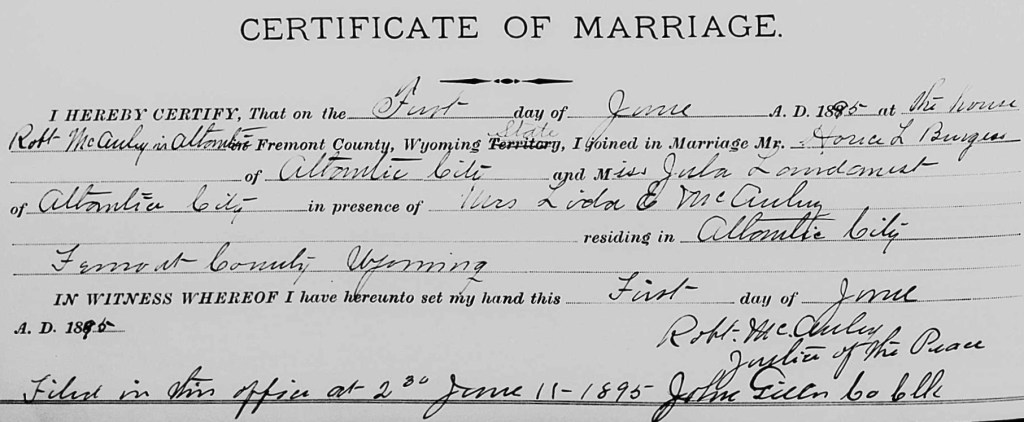
Rilla passed away in January 1894, a few weeks after giving birth for the ninth time. Just over a year later, on June 1, 1895, Horace married Julia Josephine Lundquist in Atlantic City, Wyoming. It is neither a city nor located by the Atlantic. In fact, the village is well more than twice as far from the Atlantic as it is from the Pacific. Apparently it takes its name from the fact it’s on the eastern (Atlantic) side of the Continental Divide.

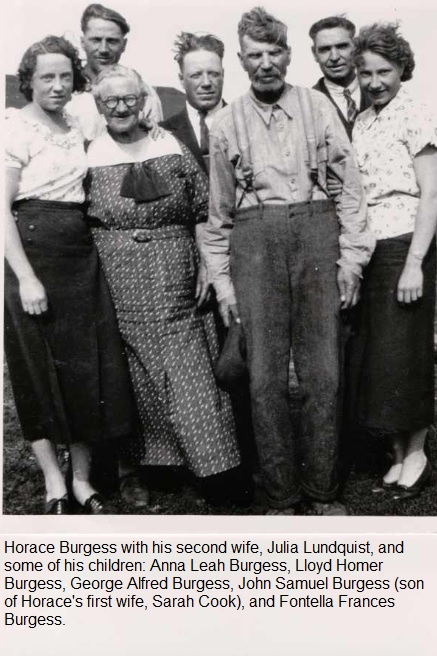
Horace was 13 years Julia’s senior. It was her third marriage. Julia was born in Sweden and immigrated to the United States when she was 16. Horace and Julia had nine or ten children. I say nine or ten because I cannot find much evidence regarding their first child, said to have been born sometime in 1895. Even his name is unconfirmed. I have it as Lewiston Leon Burgess, other places it’s James Harvey Lewiston Leon Burgess. If he in fact existed, Horace and Julia had five children in the United States and five in Canada.

Based on the records I have, how Horace came to be in Wyoming is little more than an exercise in speculation. I suspect it was related to Horace’s occupation of transporting freight.

Horace is included twice in the 1900 census, in Freemont and Sweetwater counties, both in Wyoming. For both, his occupation was entered as “freighter”. Since records for other times show Horace as a teamster, it’s likely that his work as a freighter meant he transported cargo. The fact he was listed in the 1900 census at two different locations, it may be that his transport work involved travel between the two counties.

The Freemont County census shows three of Horace’s sons as being with him in that county, with their occupations listed as sheepherder. One of those sons, John, is also listed in both census records. Together, this suggests that Horace’s transport work might have been related to agricultural products.

Horace and family moved to Canada in 1903, when Horace made the first of two attempts at homesteading. In August of that year he settled on a piece of land near Grassy Lake, Alberta, which is midway between Lethbridge and Medicine Hat. The venture did not last long, because he had returned to the United States the following year. In a subsequent application for a homestead at another location, Horace reported that he had forfeited his claim to this land.

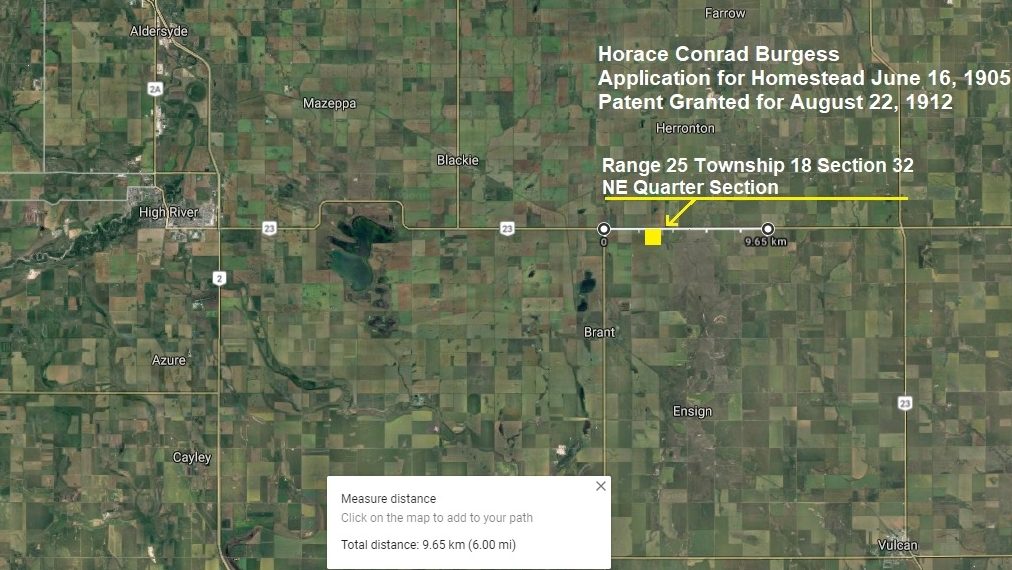
The family came back to Canada soon afterwards and made a second attempt as a homesteader on a piece of land near Brant, Alberta, about 60 kilometers southeast of Calgary.

Horace obtained entry for the land on June 19, 1905. He built a home on the land and began continuous occupation in April 1908. That was the same year Horace was naturalized as a Canadian national (at that time, a British subject domiciled in Canada). According to the homestead application Horace filed in June 1908, on two occasions after entering the land he spent several months working in British Columbia. On this homestead, Horace had seven horses and ten head of cattle. The land was granted to him on August 22, 1912. Horace remained here until 1916. I do not know his ownership status there after that time.

The yellow square marks the land granted to Horace Burgess, upon which he was a homesteader – not far from Vulcan!

Sometime in 1916, Horace and family relocated to a farm at Glenwood (at the time, “Glenwoodville”), north of Cardston. Sometime after 1916, Horace and family moved several times, to places in Utah and Idaho, but they did not sell their home in Glenwood. Horace, Julia, and their two youngest children moved back to Glenwood in September 1924. It appears that from up to 1930, Horace divided his time between Glenwood and Cherry Grove, which is midway up the province close to the Saskatchewan border.

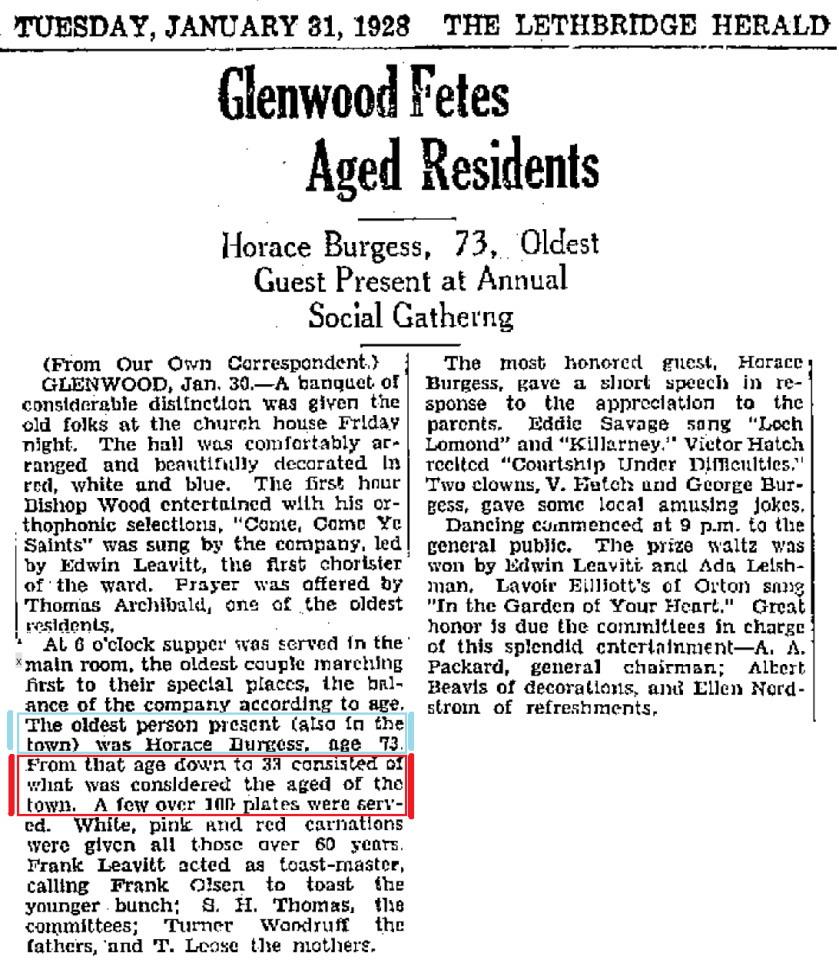
Two years before Horace left Glenwood the last time, the village honoured its oldest residents at a banquet in January 1928.  At age 73, Horace was the oldest of those honoured. However, the bar for what was considered “aged” was pretty low. According to the newspaper account of the event, from age 72 “down to 33 consisted of what was considered the aged of the town.” I suppose midlife crises in Glenwood occurred when people were in their teens.

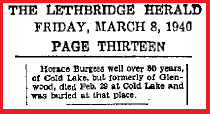
Horace ultimately retired in 1930 and remained in Cherry Grove from that time on. His hobbies included vegetable gardening. Horace passed away at age 85, on February 25, 1940. While the cause of death was due to kidney problems, the registration of his death said it was secondary to “senility”, amongst other health problems. Horace is buried at the Cherry Grove Cemetery.

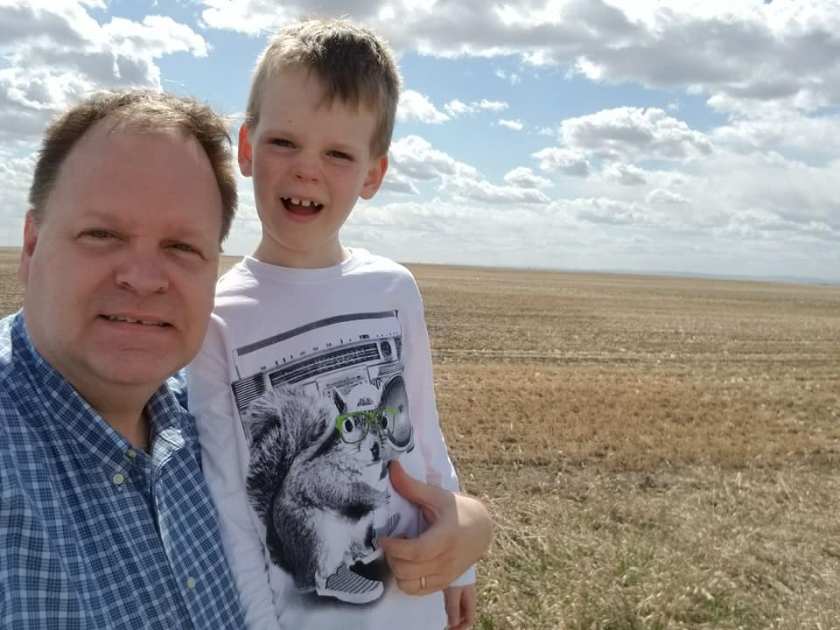
Horace’s Gx3 and Gx4 grandsons, visiting the land he farmed just over 100 years ago.

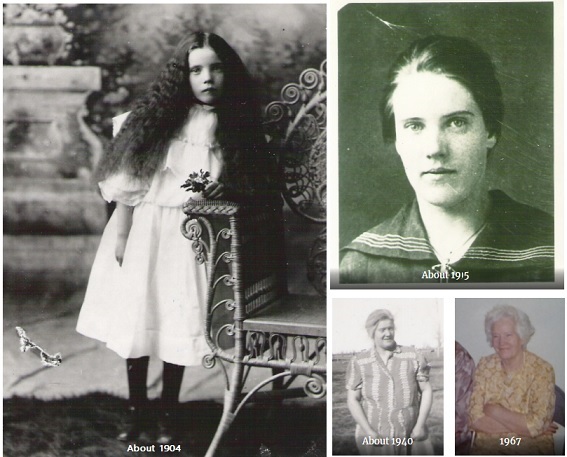
52W Mark IV – Week 27: Card B1 Milton Leo Burgess and Hazel Nelson

Milton Leo Burgess (1891-1964)
Hazel Nelson (1899-1967)

We’re halfway through the 2025 edition of my take on Amy Johnson Crow’s 52 Ancestors in 52 Weeks Challenge. With it I start the maternal side of my family and a new suit involving my mother’s paternal line. It’s also my Mormon lineage. In fact, my  Gx4 Grandfather, William Burgess (1794-1880), joined the church in 1832, two years after it had been founded. Moreover, all eight of my maternal grandfather’s great grandparents joined the church in the 1830s and 1840s.

However, after five generations, that came to an end with my grandfather, Leo Burgess, as none of his four children were members of the church or raised Mormon. In fact, my grandfather was pretty much a lapsed Mormon, if there is such a term, by his late teens. He only returned to the church after my grandmother, Helen Lerner, passed away.

Leo’s parents, and the subject of the first card of this suit, were Milton Leo Burgess and Hazel Nelson.

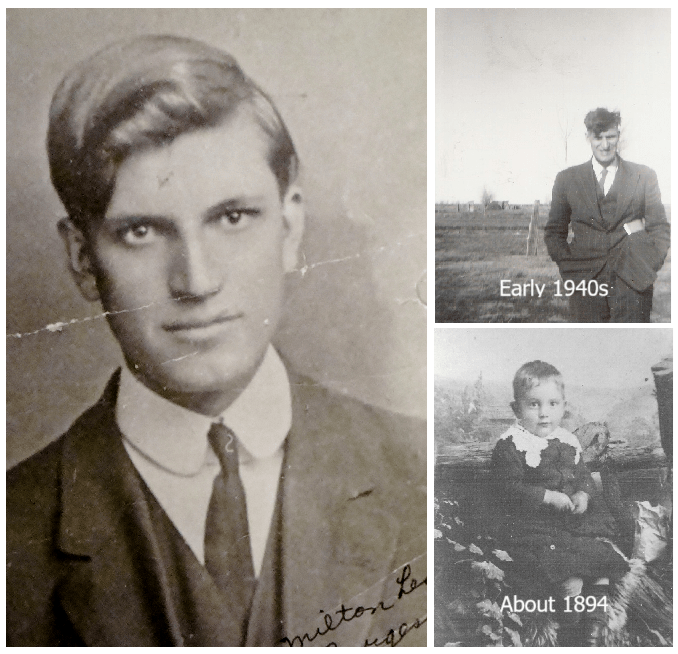
Milton was born in Vernal, Utah, on September 9, 1891, the eighth of nine children born to Horace Conrad Liggett Burgess and Sarah Florilla Cook. Florilla passed away in January 1894, a few weeks after her last child, also named Sarah Florilla (“Rilla”), was born. Milton was only two years old at the time. Horace remarried shortly afterwards, to Julia Josephine Lundquist, with whom he had at least another eight or nine children. The family moved Canada when Milton was 14. They settled in Vulcan County, Alberta.

After completing a two-year mission to Australia in 1915, Milton settled in Glenwood, Alberta, which is about 22 kilometers from Cardston as the crow flies. There he worked as a farm labourer. Sometime afterwards, he met Hazel Nelson, who he married in Cardston on April 13, 1919.

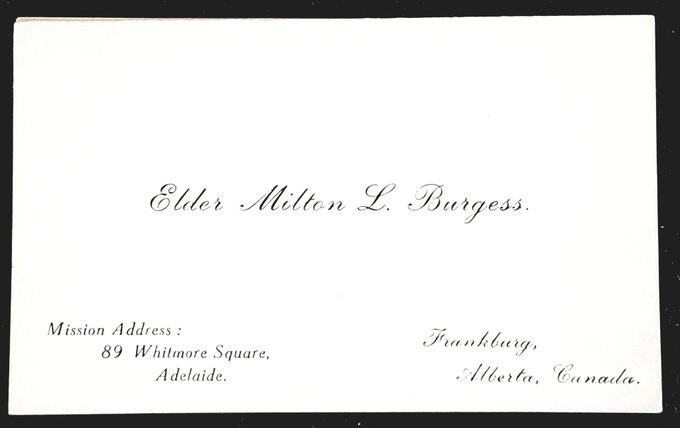
Calling card of Milton Leo Burgess from his time as a Mormon missionary in Adelaide, Australia

Milton’s calling card from his time as a Mormon missionary in Adelaide, Australia

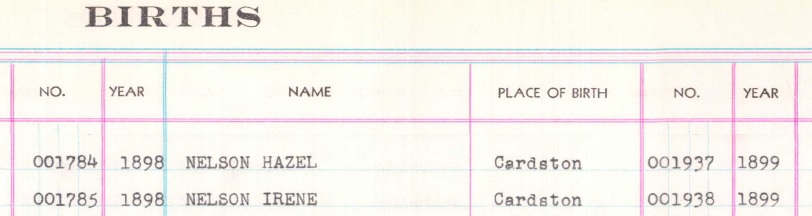
Hazel’s family was amongst the earliest settlers of  Cardston, Alberta, which Mormon immigrants from the United States founded in 1887. Her parents, John Alexander Nelson and Ella Elizabeth Thomas settled there in 1890. Six of their 12 children were born in Utah; the other six were born in Canada. Hazel and her sister Irene were born on December 15, 1899. They were the first twins born in Cardston. Sadly, Irene passed away five weeks later, but Hazel lived to be 67.

Because Hazel is listed first, I take it to mean that she was born first.

The year after they married, Milton and Hazel had the first of their nine children, my grandfather Leo. Shortly afterwards, the family moved to Nampa, Idaho, where Milton worked at an orchard with his in-laws. In Nampa they had three more children before permanently returning to Canada in 1924.

By 1927, the family had settled in Magrath, where Milton and Hazel spent the rest of their lives. While he continued to do farm work over the decades, Milton had a wide variety of jobs. In the early 1940s he worked as a plumber. Milton later worked in a woolen mill, where he lost a finger of his left hand in a work injury. Milton also worked for a short time as a grave digger around 1950. By 1958, when he was 67, Milton retired.

My mother has told me many stories about him over the years. One story that she has recounted many times is that her grandfather would often talk about how, according to the bible, no man was meant to live more than 72 years. Milton died on September 10, 1964, the day after he turned 73.

I also have a small cache of letters Milton wrote to my grandfather in the 1940s. Most of them were gentle admonishments, such as disapproving of my grandfather working in establishments that served alcohol, coffee, and tea, or telling him that it was time to stop seeing the Catholic girl he had been dating and to find a nice Mormon girl to settle down with. Fortunately for me, my grandfather did not follow that advice, as that Catholic girl became his wife and my grandmother!

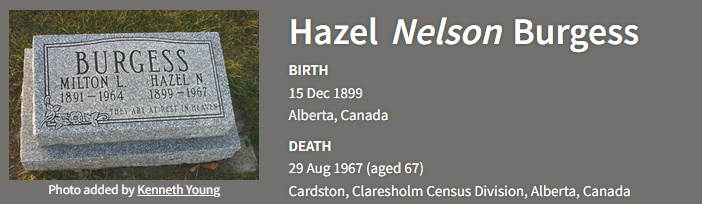
Screenshot of the entry for Hazel at Find a Grave, showing the headstone she shares with Milton.

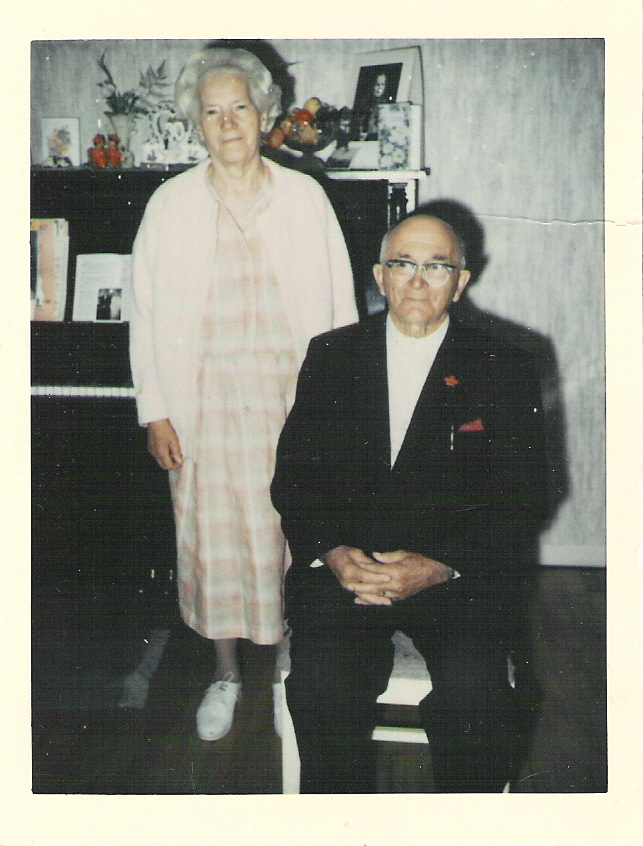
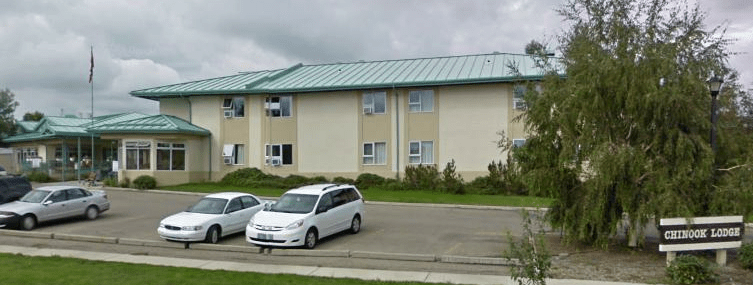
Hazel was 64 when Milton passed away. Around that time she moved to a seniors’ home in Cardston, which she derisively called “the old fools’ home”. There she met a widower, Albert Beaves, who she married in July 1967. Eight weeks later, Hazel passed away. My mother literally went from the funeral to the hospital, where I was born.

The newlyweds, Hazel Nelson and Albert Beaves, about July 5, 1967.

“The Old Fool’s Home” – Chinook Lodge in Cardston, Alberta