Like many immigrants, my father came to Canada on a boat; in his case, the M.S. Sibajak.
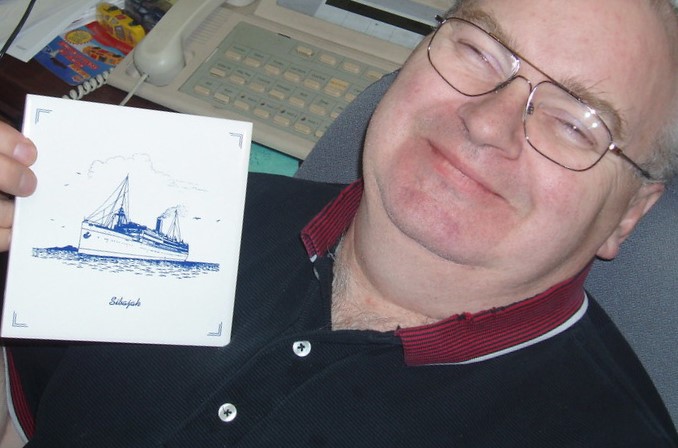
My father holding a Delft tile of the Sibajak, the ship on which he immigrated to Canada in 1954. This one is actually a replacement, as the original one I gave him had chipped. I was lucky to find this, as these tiles are no longer available.
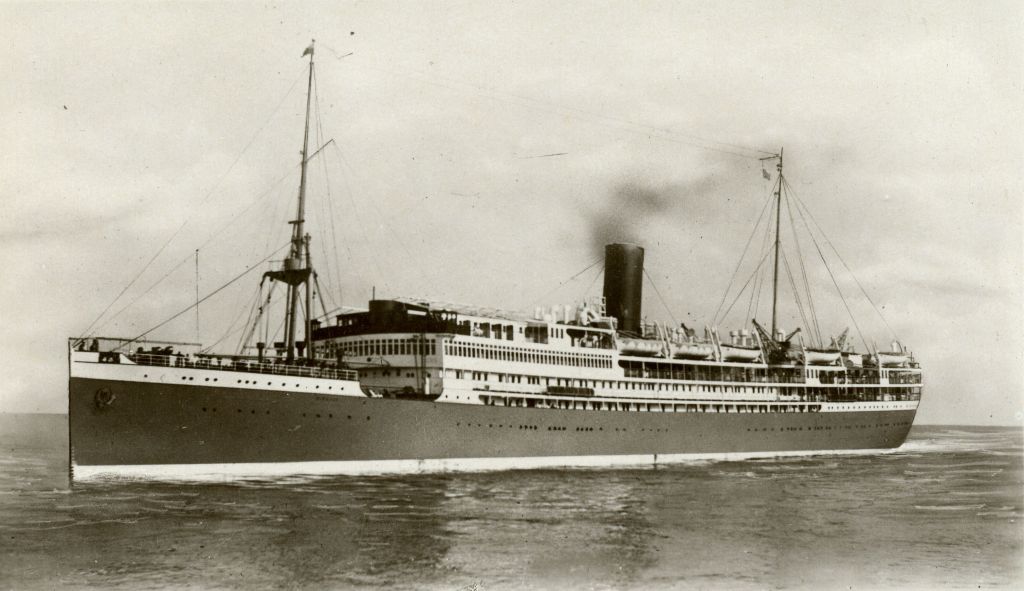
The Sibajak was named after a volcano in Sumatra. it was built for Koninklijke Rotterdamsche Lloyd (Royal Rotterdam Lloyd) at the De Schelde shipyards in Vlissingen, Zeeland. Construction began in 1926 and completed in 1927. Royal Rotterdam Lloyd received the Sibajak in January 1928. At launch, it could carry 527 passengers and had a crew of just over 200. It departed on its maiden voyage on February 8, 1928, leaving Rotterdam for Batavia, Dutch East Indies (now Jakarta, Indonesia).
The M.S. Sibajak when it launched in 1927.
During World War II, the Sibajak ended up in Liverpool after the Dutch fell to the Nazis at home and to the Japanese in the East Indies. The Dutch government in exile seized the ship, which was re-registered in Curaçao. The British navy took control of the Sibajak, but its Dutch and Indonesian crew continued to operate the ship. After modifications were made in Singapore, the Sibajak served as a troop ship during the war. It was capable of carrying up to 2,300 troops. The British returned control of the ship back to the Dutch in 1946.
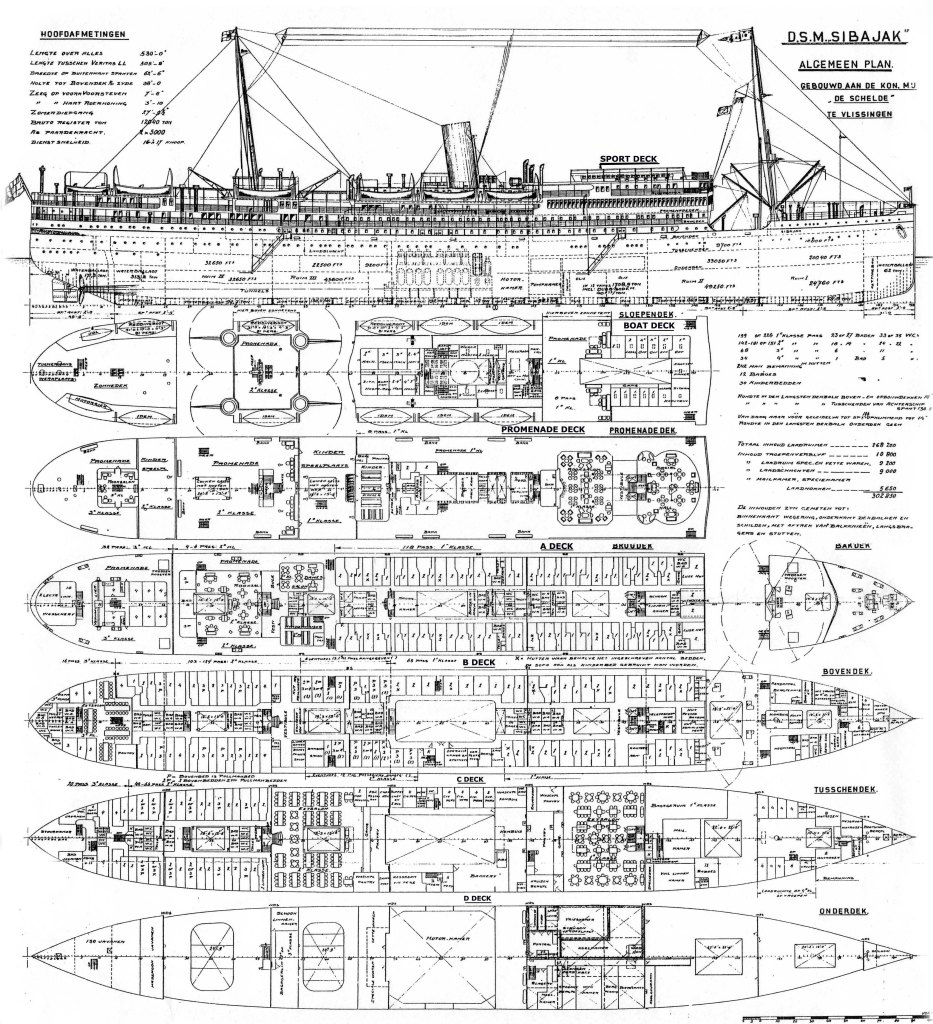
The original plans for the Sibajak.
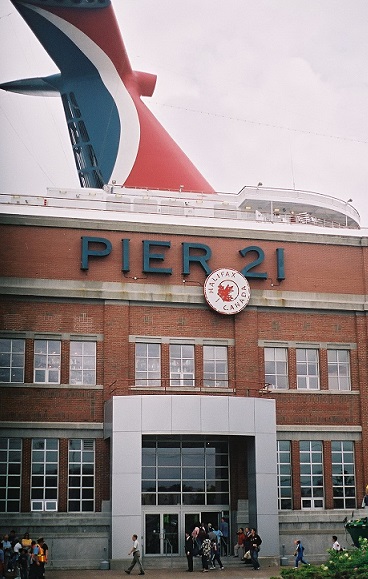
Pier 21 in Halifax, which is now a museum that I have visited twice.
The Sibajak was converted back into a passenger ship in 1950. It had the capacity to carry 956 passengers. Its first voyage after the retrofit was in April 1950, transporting Dutch emigrants departing from Rotterdam for Melbourne, Australia. It also served to repatriate Dutch citizens after Indonesia’s independence. In 1952, the Sibajak also carried passengers to New Zealand, Canada, and the United States.
In 1959, Royal Rotterdam Lloyd sold the Sibajak to a company in Hong Kong. The Sibajak’s last voyage as a passenger ship ended in July 1959, travelling from Rotterdam to Melbourne via Curaçao, the Panama Canal, Wellington, New Zealand and Sydney, Australia. In August 1959, the new owners transported the ship to Hong Kong, where it was stripped of all salvageable materials and scrapped. My understanding was that the remains were scuttled somewhere in the waters around Hong Kong. When I visited the city in 1996, I wondered how close I had come to it on the many different boats and ferries I rode on at the time.
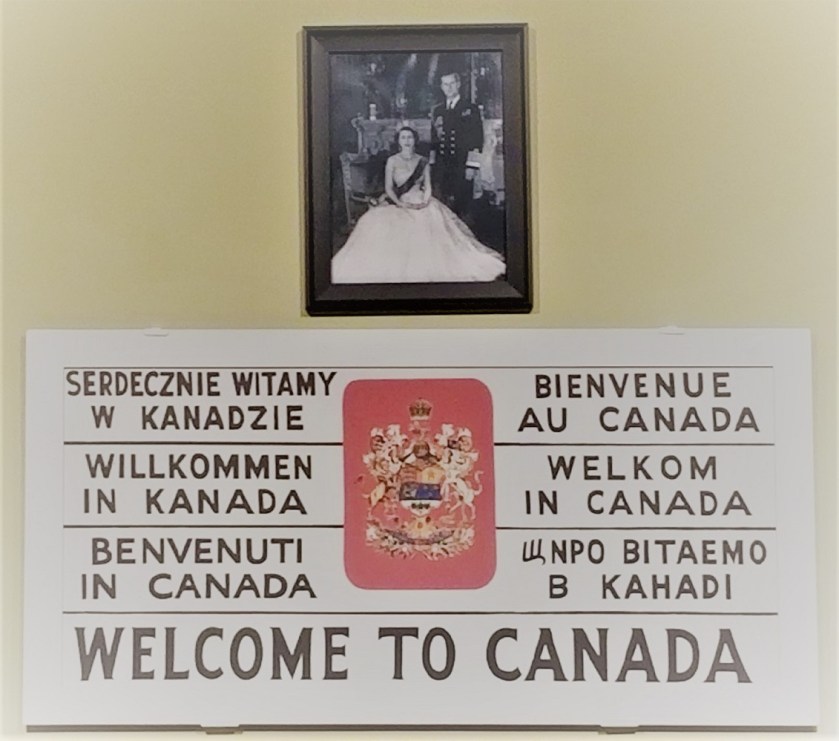
This hangs on the wall in front of the seating area in Pier 21 where immigrants waited to be interviewed by immigration officials.
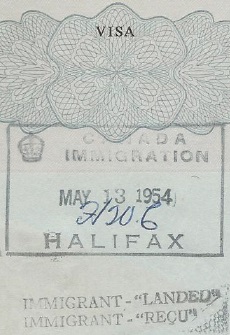
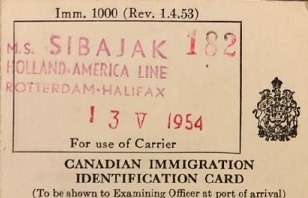
My father and his family departed Rotterdam on May 5, 1954 and arrived at Pier 21 in Halifax, Nova Scotia on May 13, 1954. Pier 21 is analogous to Ellis Island in the United States. My father’s aunt and uncle came over four months earlier, in January 1954 on the Groote Beer, while another aunt and uncle followed in late May 1954, on board the Castel Felice.
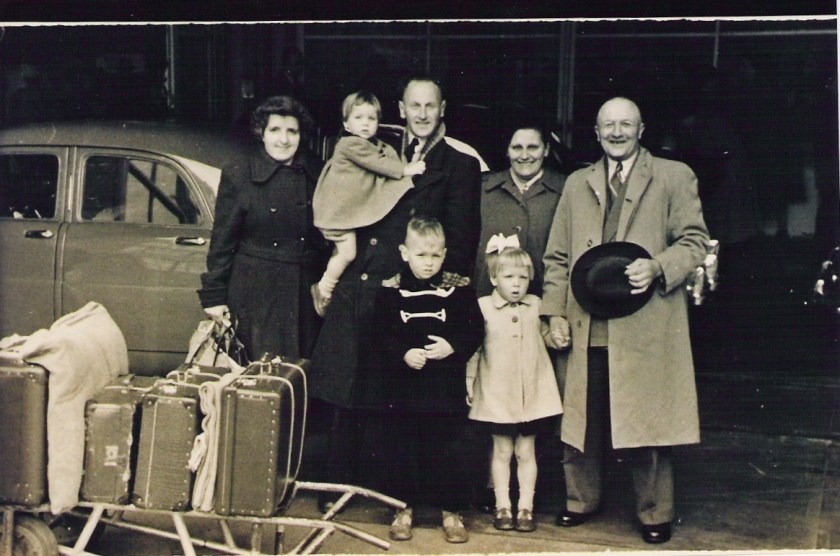
My father with my grandparents and his sisters at the Rotterdam pier on the day of their departure for Canada aboard the Sibajak. My father is standing in the centre, in front of my grandfather. The couple on the right are family friends who drove my family to the pier. At the time, my grandmother was two months pregnant with my father’s youngest brother!
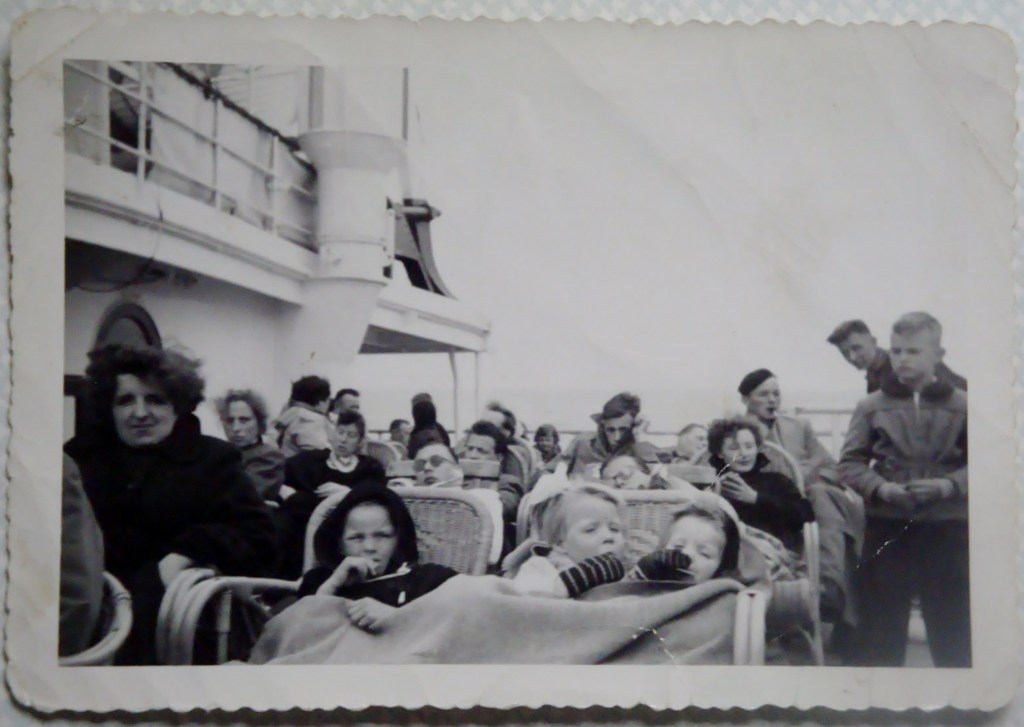
My grandmother, my father, and his two sisters seated on the deck of the Sibajak somewhere on the Atlantic Ocean between the Netherlands and Canada.
From Halifax the family took the train from Halifax to Alberta. On often-told story recounts my grandmother becoming separated from the family and lost during a stop in Montreal. Happily, she found her way back to the train before departure. he train went through Maine, U.S.A., and through Montreal. My grandfather originally planned on settling in Manitoba. However, his sister encouraged him to continue on to Alberta, where she and my great uncle had settled.
They made it!
In the late 1990s, my parents went on an Alaskan cruise on a Holland America ship. During the trip, my father, who loves to talk to people, fell into a conversation with one of the older hands on deck. My father mentioned having come to Canada on the Sibajak. After a few questions from the crew member, my dad learned that the man had been on the Sibajak during my father’s trip, in his first year or two of service.
This is a fascinating short documentary about a voyage the Sibajak made to Australia carrying Dutch emigrants. The video is in Dutch, but the images convey a lot of meaning. My father recognized many of the scenes in this video.
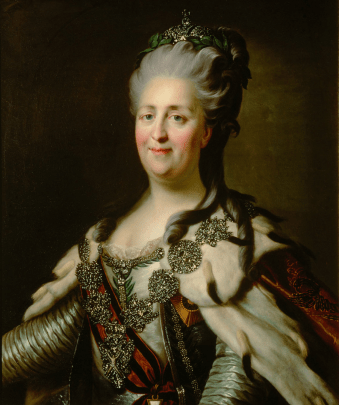
My mother’s maternal line are all Germans from Russia. The Russian Empire expanded significantly during the 18ths century. When Catherine the Great came to power in 1763, she encourage immigration, partly to re-establish farming in regions that had laid fallow during periods of warfare, modernize the country, and to populate regions the Empire had absorbed.
Catherine the Great
Catherine’s manifesto inviting settlers bears some resemblance the homestead schemes introduced in the United States and Canada over a century later.
Among other things, she promised land, free transportation to Russia, and economic incentives (including freedom from taxes for a period of time and interest-free loans for the purchase of equipment). As well, settlers were promised that they could freely practice their religion, retain their language, and be free from military service. The settlers were also promised a degree of self-government.
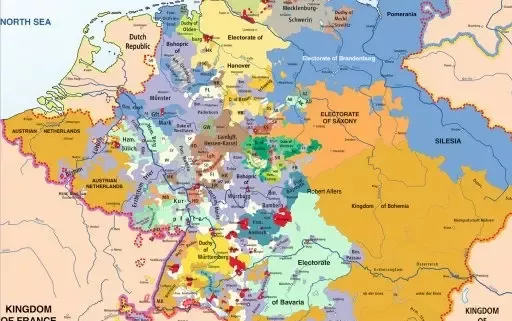
While settlers came from several places in Europe, a majority were Germans. At the time, there was no “Germany”. Rather, the region was primarily composed of a multitude of principalities, dutchies, and other small states. While Catherine’s promises provided a significant pull, economic and political conditions in the German states provided a significant push.
Germany in 1789
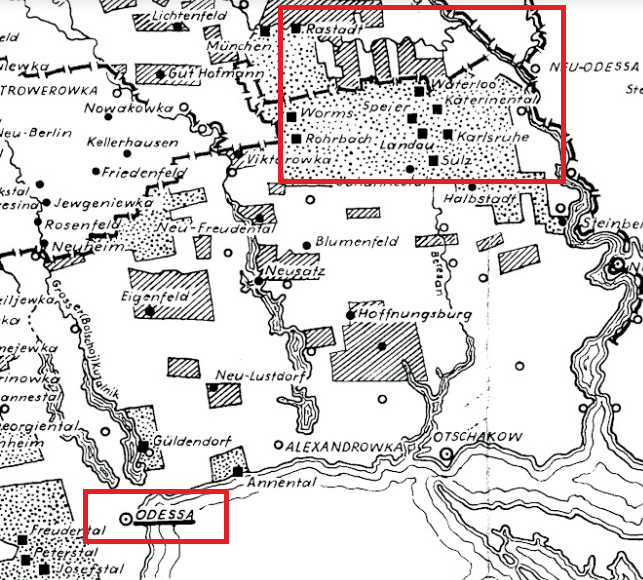
The first wave of settlers formed colonies in the Volga region (“Volga Germans”). The next wave occurred after Catherine’s grandson, Alexander I, issued a similar manifesto with many of the same promises. My ancestors were part of this wave of settlers, who formed colonies in what is now southern Ukraine, particularly in the area north of Odessa (“Black Sea Germans”).
The German colonies in the Beresan district in 1890, as seen in relation to Odessa. All four of my maternal grandmother’s grandparents came from Rastadt and Karlsruhe, located in the upper right-hand corner.
The German colonies were usually composed of members of the same religion. The main colonies were Catholic, Lutheran, and Mennonite. These colonies thrived for decades. However, in 1871, Czar Alexander II repealed the manifestos of Catherine and Alexander I. The German colonists lost many of their privileges. Shortly afterwards, they lost their exemption from military service. The next Czar, Alexander III, took further steps to incorporate the German population into general Russian society, which included discouraging the German language and encroaching on the school system established by the colonists.
Needless to say, this immediately sparked waves of emigration of the German colonists, many of whose families had been in Imperial Russia for decades. Many of these Germans left for the United States and Canada, relocating to the plains stretching from Texas to Saskatchewan. Other colonists left for Argentina and Brazil.
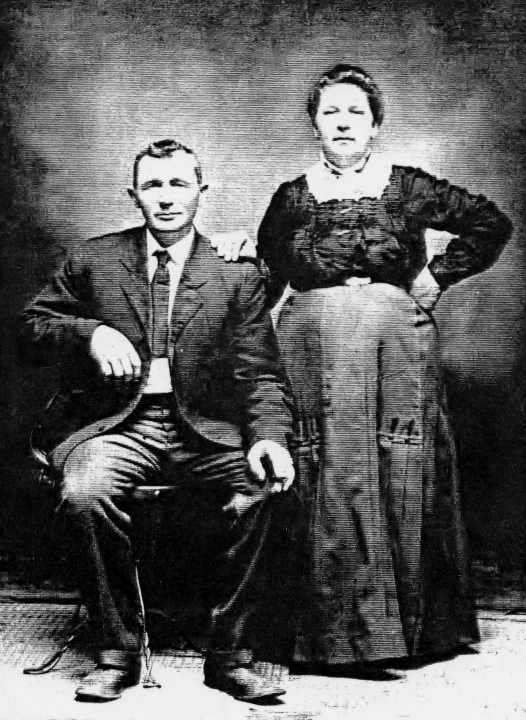
My grandmother’s paternal line originally settled in Texas, starting with my great great grandparents, Michael Lerner and Barbara Schmidt and their six children. They came over in 1893 on the S.S. Lahn, which landed at Ellis Island – less than 18 months after it had opened. Michael and Barbara had six more children after settling in Texas, the first of whom was my great grandfather, Heronimus “Jerome” Lerner. Over time, many of their children relocated to Saskatchewan, including Jerome. Michael and Barbara ultimately made the same move themselves, leaving behind several of their adult children.
My grandmother’s maternal grandparents, Jacob Anton and Margaretha “Margaret” Heck, came directly to Canada in 1912 with all their children and settled in Saskatchewan. This included my great grandmother, Emelia Anton, who was nine years old at the time. She lived to be 94 and I knew her well.
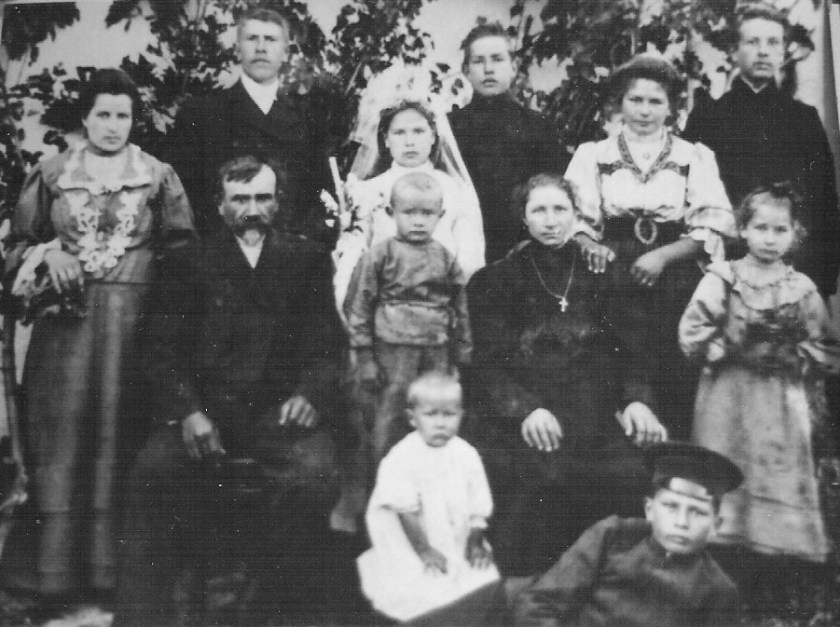
The Anton family, circa 1910. Likely taken in Selo Suchoi, Veronesch, Russia. My great grandmother, Emelia, is the little girl standing at the edge of the right side of the photo.
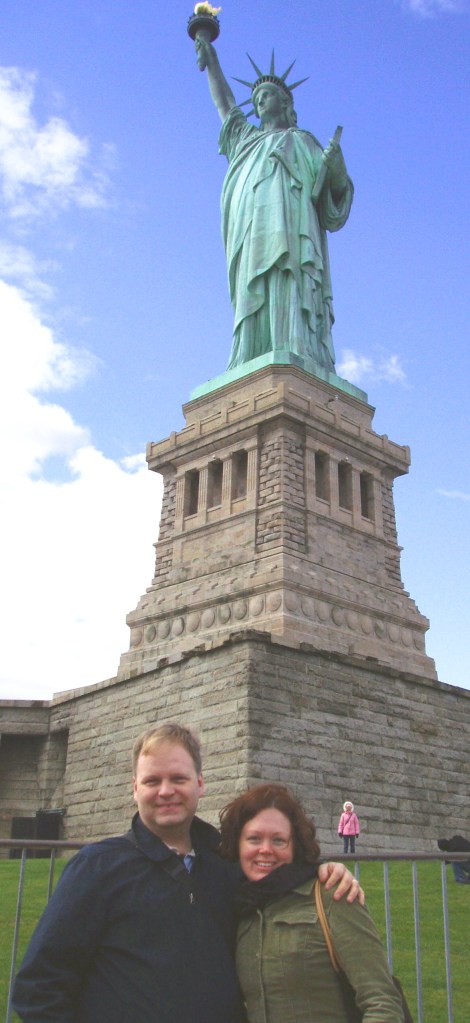
Emelia had not had much schooling before coming to North America, but was very religious. She said that she was frightened and nervous during the journey, as she did not know anything about where she was going and did not fully understand what was going on. However, on reaching New York, she said her fears subsided when she saw “the Madonna”. When she saw that, she knew she would be safe and all would be well. Of course, the “Madonna” was the Statue of Liberty. As she had never heard of it before, she thought it was a statue of the Virgin Mary.
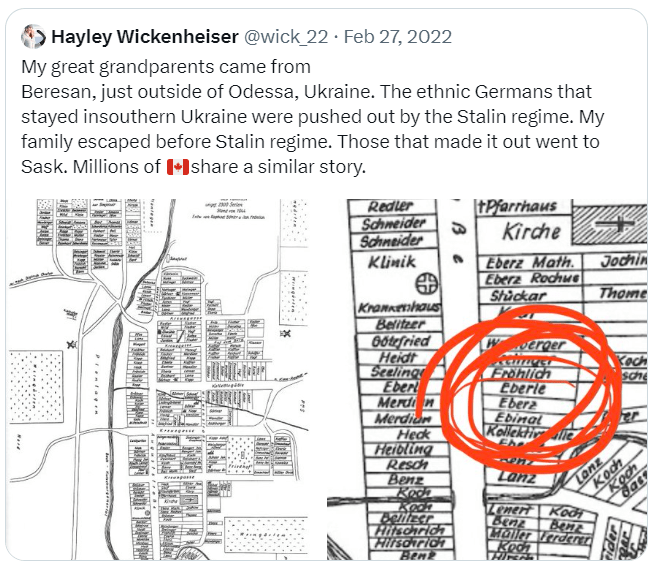
There are many well-known descendants of the Germans from Russia. They include Lawrence Welk, who married my grandmother’s fourth cousin. While I am generally disinterested in celebrity, I was excited to learn that Hayley Wickenheiser is a descendant of Germans from Russia. Her great grandparents lived in Rastadt, where Mike and Barbara had lived before emigrating. However, her family was there decades after mine left, as the did not leave until they fled Stalin’s regime.
I originally wrote this for Week 1: Family Lore. Shortly after posting, I went through some draft posts I had written weeks ago and realized that the story about my great x3 grandparents, Robert Nelson and Elizabeth Joseph, was a much better fit for that prompt. So I deleted the original Week 1 post, replaced it with Robert and Elizabeth’s story, and repurposed this story for Week 9: Changing Names.
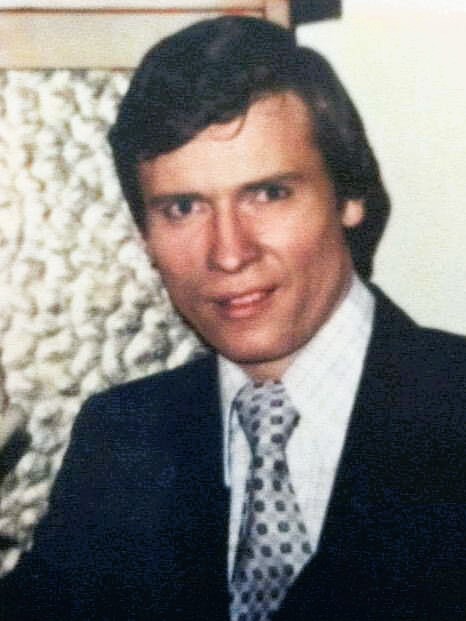
Schulor Barry McGene (formerly John Warkentin)
When I was a kid, sometimes I’d hear talk about one of my mother’s first cousins, John Warkentin (1942-2003). The family referred to him as “Hollywood Jack”. The family lore was that he had always dreamed of moving to Hollywood and becoming a star. My mother said that when Jack was still a teenager, he left home for California and changed his name.
When I was a kid, the stories left me with the impression that Hollywood Jack was never heard from again. When I was older, I learned that John had remained in contact with his family, they knew his whereabouts, and knew his new name.
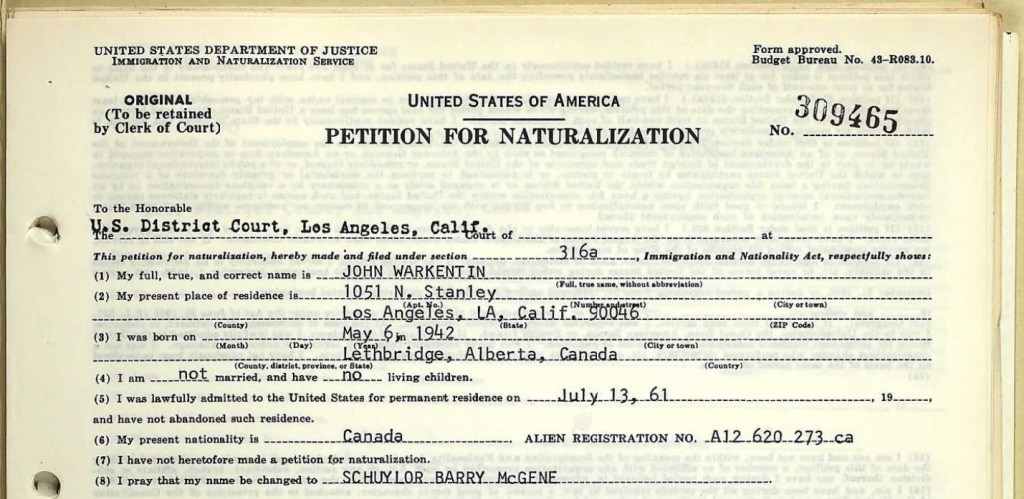
John’s Petition for Naturalization filed with the U.S. District Court in Central California shows that he landed in the United States on July 13, 1961, shortly after he turned 19. The Petition showed that John was living in Los Angeles, half a block from Santa Monica Boulevard. That area is now part of West Hollywood, which separated from Los Angeles and incorporated as a city in 1984. John was granted U.S. citizenship on November 21, 1969. He married for the first time one month later.
What I was surprised to discover was that in the United States – at least at the time John moved there – you can apply for a legal change of name in your Petition for Naturalization. (However, they did not change your ancestor’s name at Ellis Island!!) In his Petition, John asked for his name to be changed to “Schuylor Barry McGene”. It seems he also went by “Skyler”, which is how he was named in his brother Frank’s obituary. I have no idea why John chose that name, but I would love to know the story behind it. (For ease of reference, I will continue to refer to him as John.)
For the life of me I still can’t figure out why WordPress won’t centre an image even when it is marked as centred.
Another fascinating aspect of John’s Petition are the affiants who were witnesses to John’s Petition. What caught my eye is that one affiant, Luthor Lindstrom, lived near John, on North Sweetzer Avenue in West Hollywood, while the other affiant was named Chase Sweetser. Chase lived about 25 kilometers away from John, in Redondo Beach. It should be no surprise that one affiant lived in John’s neighbourhood; it is a complete mystery to me how John knew Chase.
I spent a very brief amount of time trying to find out more about the affiants to see if this coincidence might be something other than happenstance. I also did do in hope of learning more about John. Always remember to research the FAN (“Friends, Associates, and Neighbours”) club! While I know John married twice and had children with both wives, I know nothing about what he did for work or how he otherwise spent his life.
I have not find anything on Luthor Lindstrom.
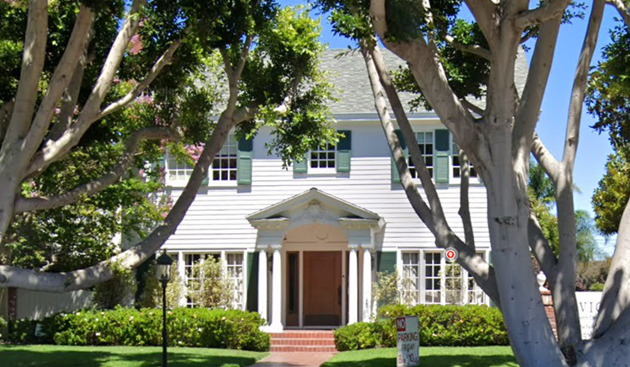
However, I found a newspaper article from 1988 about the address Chase Sweetser provided. The house at that address was built in the American Colonial Revival style by Chase Sweetser Sr. Since this person died in 1947, I assumed that he must be the father of the Chase Sweetser who swore the affidavit in support of John’s Petition. Further research confirmed that suspicion.
Chase Sr. apparently made his fortune as a “grocer”, provisioning ships in the nearby harbour. Chase Sr. also built his fortune through shares he owned in Coca-Cola as one of its early investors; he was also on its board of directors. The article said that his son Chase Jr. had been the president of the local Coca-Cola bottler.
The house went up for sale in the 1980s, after Chase Jr. died. It was newsworthy because it was listed on the National Register in 1985. The article noted that despite being on the National Register, there were no restrictions on tearing the house down and redeveloping the property. The house was listed for US$1.275 million (US$3.14 million in 2024 dollars).
Other articles I found show that the house was never torn down and still stands. Rather, the property sold a number of times (first in 1989 at well below the asking price) and currently serves as the offices of a wealth management firm. The firm’s website even provides a photo and brief history of the house.
417 Beryl St, Redondo Beach, California
My next thought was to research how Sweetzer Avenue in West Hollywood got its name. On top of that idea, my wife suggested that maybe Chase Sweetser was John’s landlord and Sweetzer Avenue was named as such because the Sweetsers owned property there. It turns out that Sweetzer Avenue is likely named after Edward Healey Sweetser. While my search was brief, I found no connection between Chase Sweetser and Edward Healey Sweetser. However, there still remains the possibility that Chase Sweetser was John’s landlord.
Another possibility is that John worked for Chase; however, I have not yet found any information as to what John might have done for a living in Los Angeles. Other than his marriages, the only other thing I know about John is that he died in July 2003 – in La Cañada Flintridge, California. Born in Canada, died in La Cañada!
I have a couple other theories about John (and his FANs) to research, but as of yet they’re speculative. While sites like Ancestry and FamilySearch do not include living persons, some of the records available there do identify living people, which provide some clues for research. As well, bits and pieces I’ve gathered through Google and other search engines have given me a few bits of additional details about John. However, given that they involve living persons, I will simply leave it at that.
Needless to say, in trying to answer a few questions about the family lore, I am left with many more than I started with!
Addendum
For the brief period of time this was live someone posted a comment asking about John’s choice of new name. In the time since I posted this and took it down, I asked my mother what she knew. Bear in mind John’s mother – my mom’s aunt – passed away when my mother was two months old and she never had much contact with her Warkentin relations.
Most of what my mother knows came from a mutual aunt of John and my mother’s. My mother said that when John first left home, he went to live with this aunt.Their aunt had a son who is also named John, so that’s when they started using “Jack”. Since Jack spoke so often of going to Hollywood, they started calling him Hollywood Jack.
My mom says that John wanted to be an actor and thought Schuylor Barry McGene would be a great name for an actor. He also wanted to make a break from his father, with whom he did not get along. My mom says John remained in contact with their aunt for about a year after he moved to California. After a period of no contact, my mother’s aunt contacted the Red Cross to help track him. About a year or two later John called the aunt. Apparently she was quite shocked when she learned about the name change. My mom tells me that sometime well afterwards John came back to Canada to visit his aunt, at least once, but he otherwise remained in California.
Additional – November 5, 2025
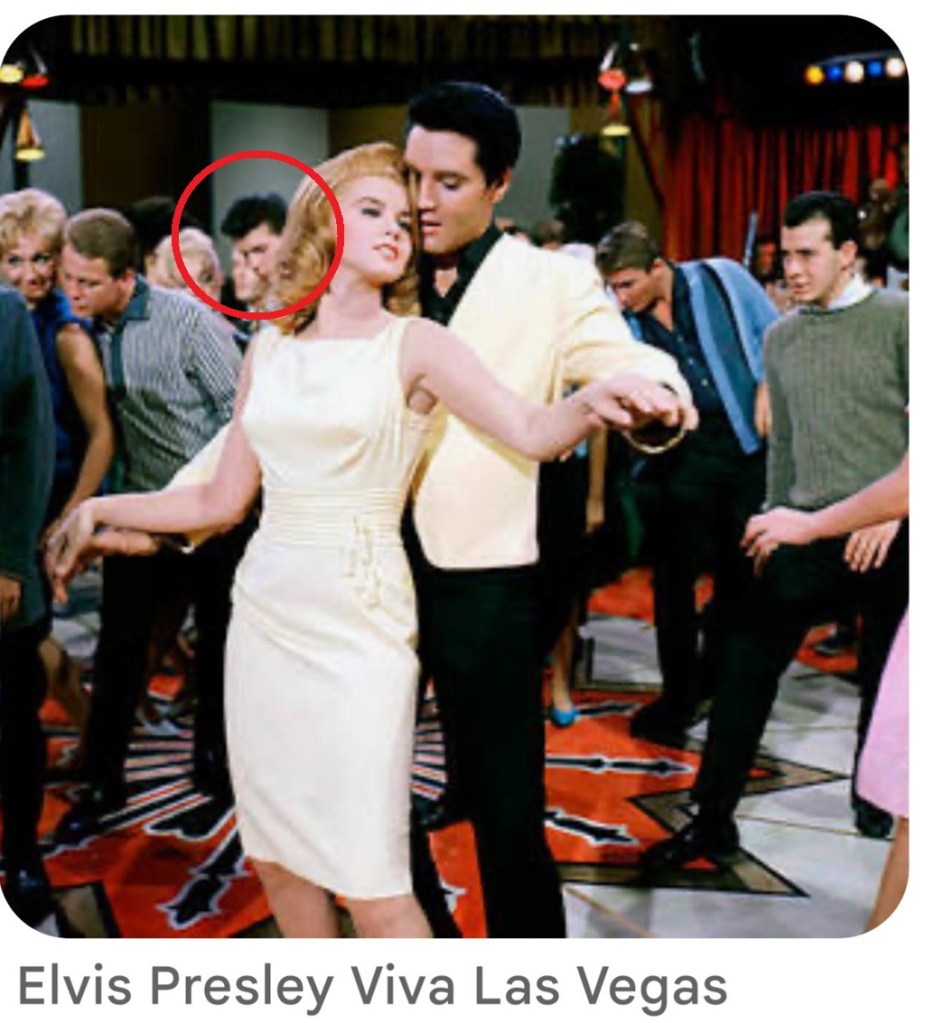
In the last six months, a distant relative came across this post and contacted me. We entered into correspondence and exchanged a fair amount of info. All I will say about it is that Hollywood Jack made it into show business. While not his biggest foray into the industry, one thing he did was to appear on screen with Elvis and Anne Margaret!
This week’s theme for the week’s 52 Ancestors Challenge is “Flew The Coop”. I’m making a real stretch of the phrase to write about my recent visit to Pier 21, where my father and his family arrived in Canada after emigrating from the Netherlands. They arrived on board the Sibajak in early 1954. My father’s aunt and uncle had arrived at Pier 21 four months earlier, in January 1954 on the Groote Beer, while another aunt and uncle followed in late May 1954, on board the Castel Felice.
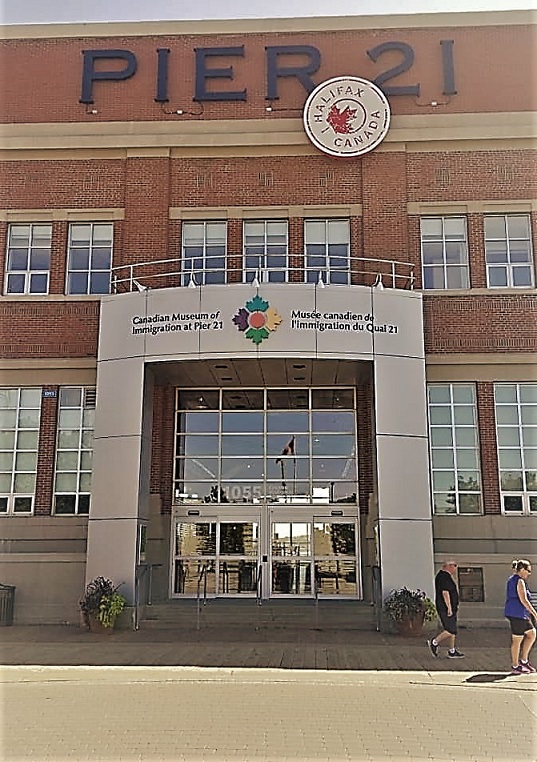
Entrance to Pier 21
This was not my first visit to Pier 21 (analogous to Ellis Island in the United States), but it had been many years since my last visit. The displays are significantly different; moreover, the museum has strictly implemented privacy rules that means they don’t display ship passenger lists like they used to. I find their policy a little illogical, because the researchers on site will happily use other sources for the same information that aren’t subject to the same rules.
We began with watching in Canada/au Canada. It’s an excellent and moving short film weaving together the stories of many immigrants from countries all around the world and who have settled in all sorts of places, big and small, across Canada. We then participated in a guided tour. The tour was available in English and French. I felt bad for the fellow offering the tour in French – he had no takers at that time. I told him that my wife and kids would have gone with him if it weren’t for my lack of proficiency in French.
Our tour guide began by asking if anyone had family or friends who had come through Pier 21. Most of us on the tour raised our hands. One woman in our group had come through herself, at 18 months old, with her mother who was a war bride. The tour guide immediately welcomed her back and gave her a gold “Alumni” sticker to wear.
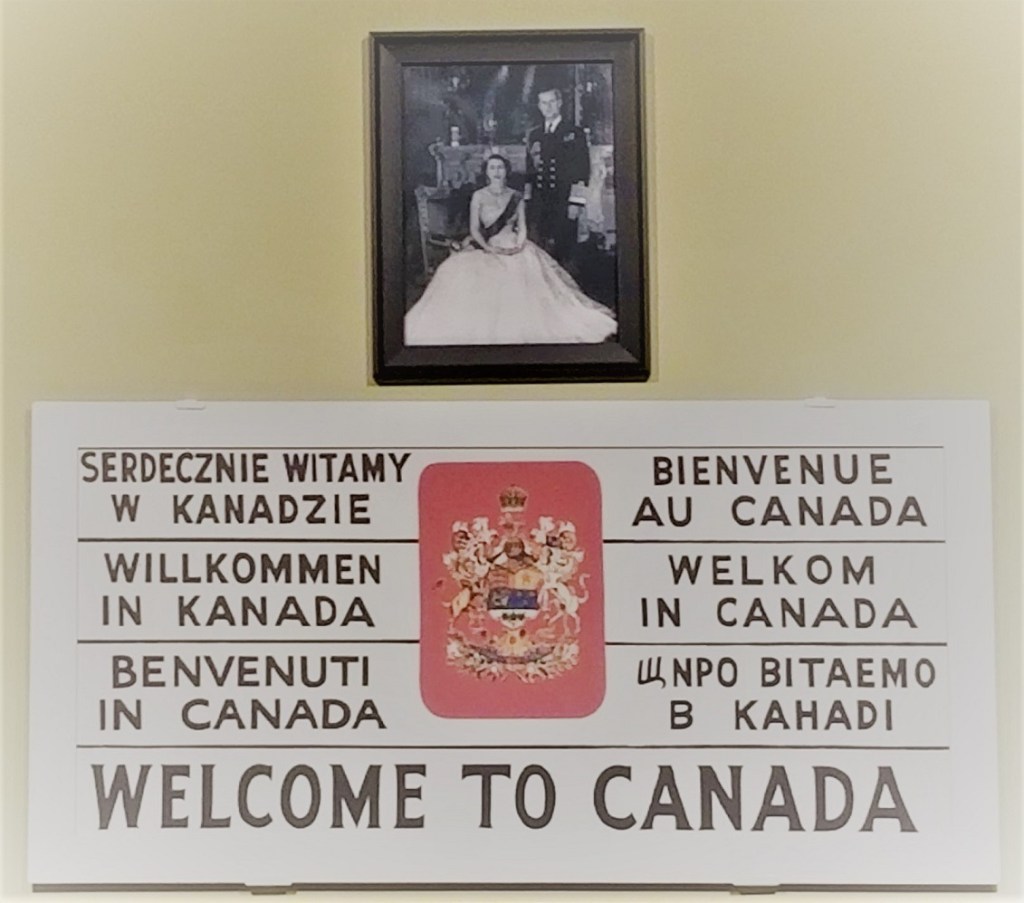
This hangs on the wall in front of the seating area where immigrants waited to be interviewed by immigration officials.
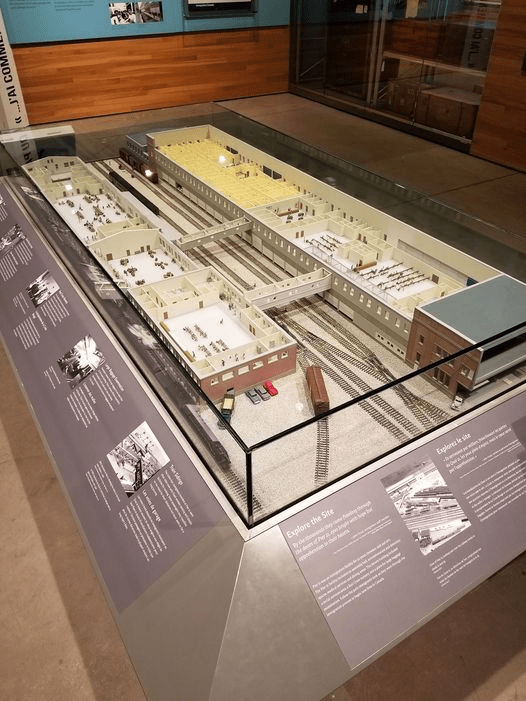
The tour began with at this model of Pier 21 as it was at the time it was in operation. The building on the left no longer exists. The guide showed the path of the immigrants as they disembarked from the ship and the steps they went through before being able to leave. We were told that if everything went without a hitch, people could be off the ship and on the train in four to six hours. However, most people were usually in and out within a day.
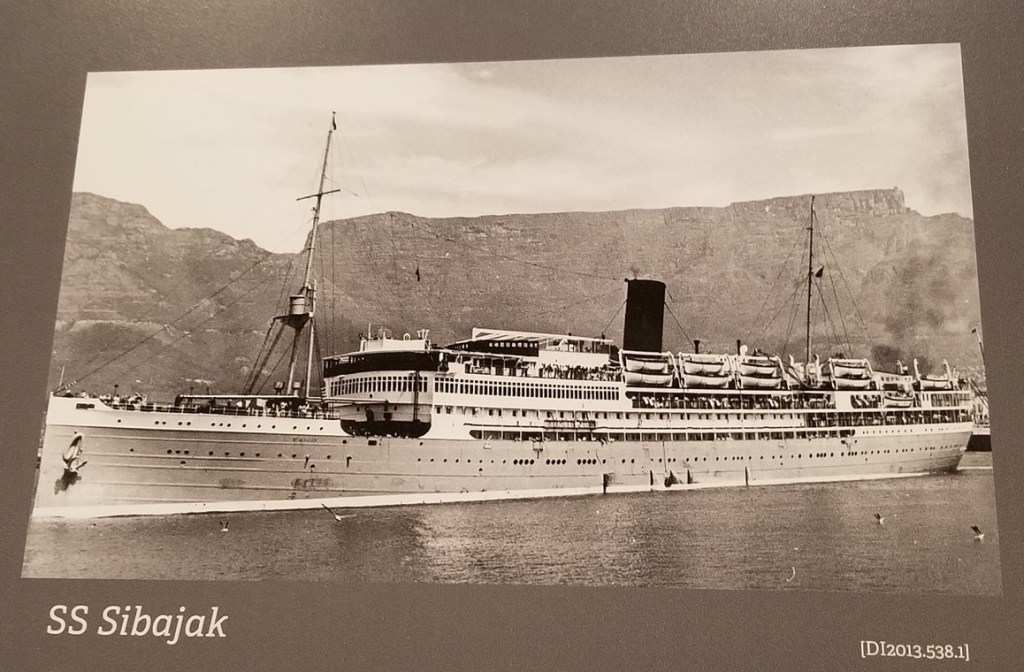
There were many displays recreating the immigrant experience. One was of the interior of typical tourist class accommodations and amenities. On the opposite wall were photos of many of the immigrant ships that landed at Pier 21.
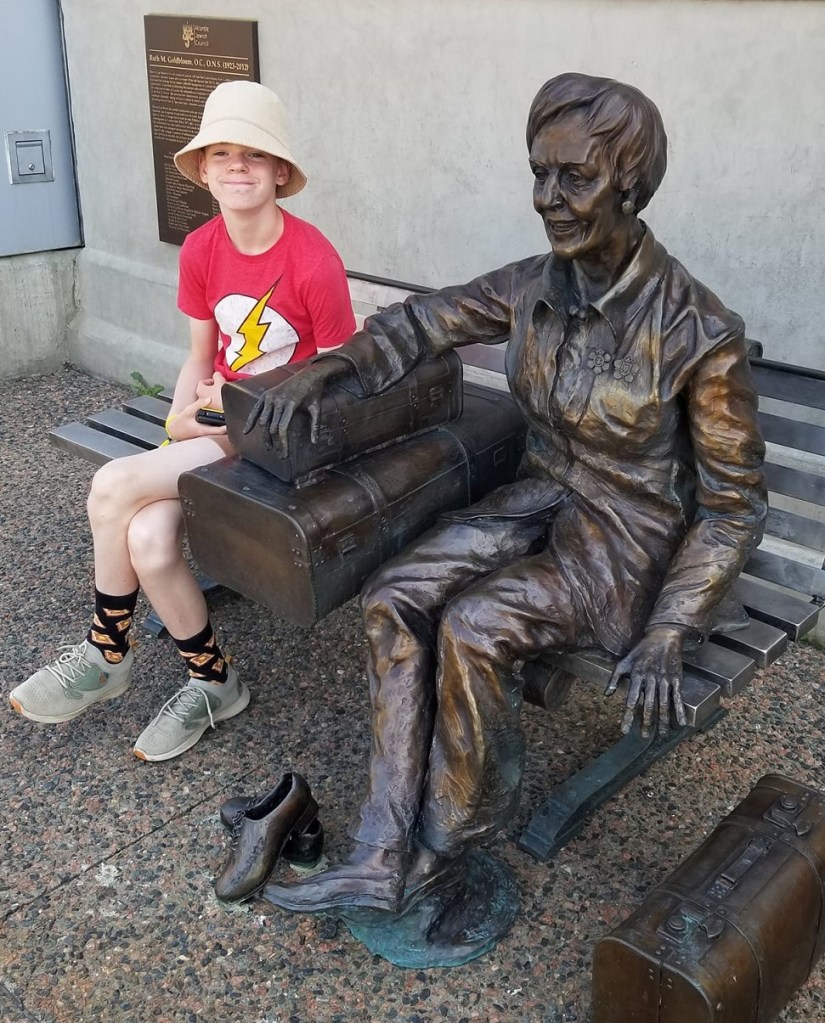
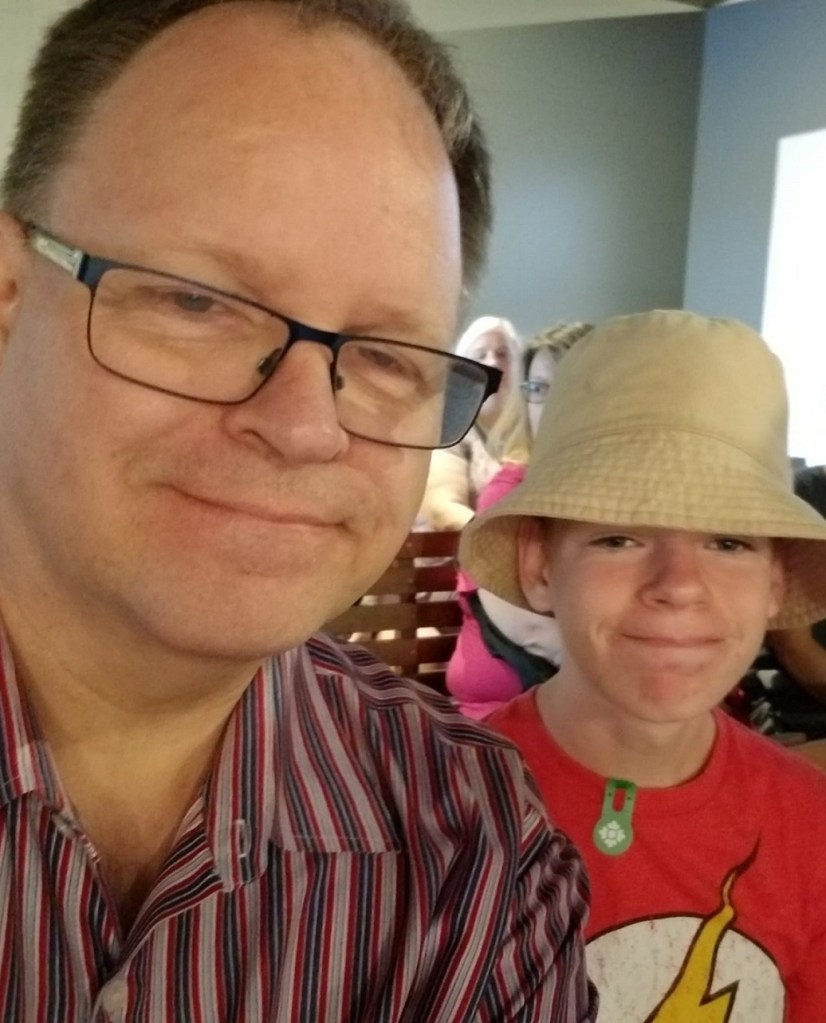
My son and I sitting on the benches in the waiting room where my father would have sat with his family upon arriving in Canada almost 70 years ago.
The museum has something for visitors of all ages, with lots of interactive and immersive displays. I think our youngest must have watched every video that accompanied the exhibits. There were also lots of crafting and other hands-on activities for the kids.
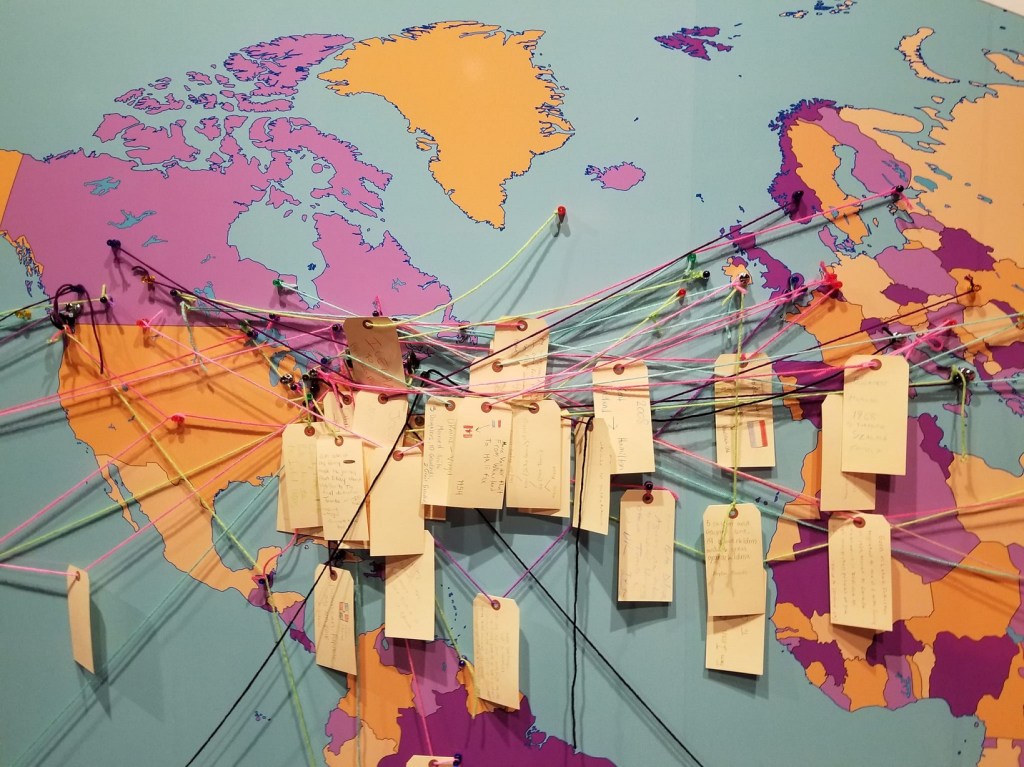
One of the activities was to decorate a baggage tag showing the name of your immigrant family member and stringing it from their point of origin to their destination. Our youngest made one honouring his grandfather.
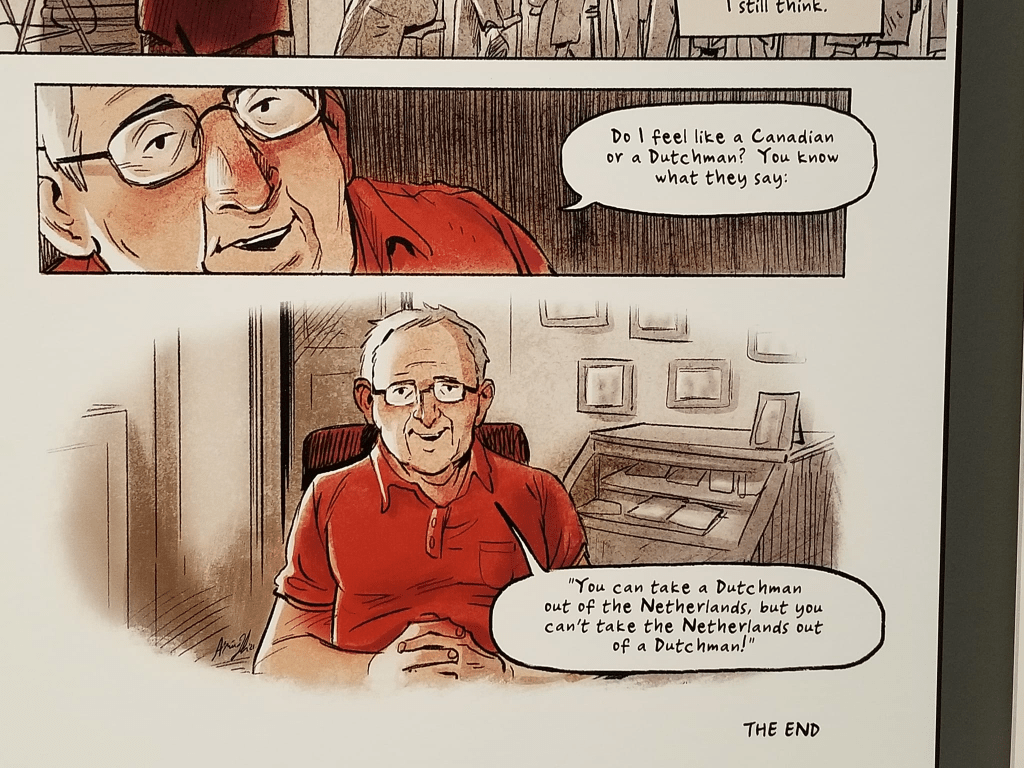
A temporary exhibit we were lucky to see was “Destination: Canada”:
In 2022, the Consulate General of the Kingdom of the Netherlands published a graphic novel called “Destination: Canada”, telling the story of ten Dutch immigrants, illustrated by ten comic book artists. The Museum has adapted two of these stories for a special exhibit, presenting the story of George Zwaagstra, a Pier 21 immigrant and volunteer, and Tayebeh Farooqi-Wahedi, a refugee from Afghanistan and immigrant from the Netherlands.

 A Deck of Ancestors