52W Mark II – Week 10: Translation

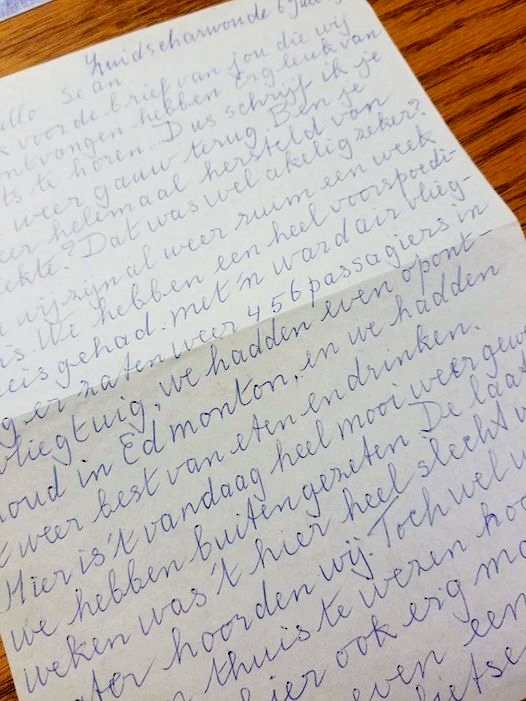
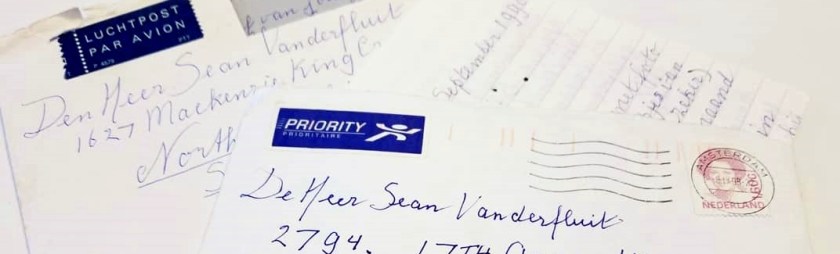
I had a 20-year “pen pal” relationship with my great aunt, Anny van Kleef (née Komen). This is the first letter I received from her. She wrote about returning home from her trip to Canada, as well as the weather.

I have been trying to teach myself Dutch since I was 12. I’ve had a modicum of success.

I was about five-years-old when I first learned that English was not my father’s first language. I begged him to teach me something in Dutch. All he taught me was the word “groen”, meaning “green”. However, the Dutch “g” was not yet familiar to my ear, so I though he was saying “zoom”. I was more than thrilled to run around saying “Zoom! Zoom!, I’m speaking Dutch!”

While that’s all the Dutch he has imparted to me, my father is more than happy to teach his grandchildren the very useful Dutch phrase “grote blote billen.” When our youngest son was a toddler, he somehow learned to tell me “je bent gek.” Thanks, dad. I’ll leave you to use Google Translate to figure out those phrases.
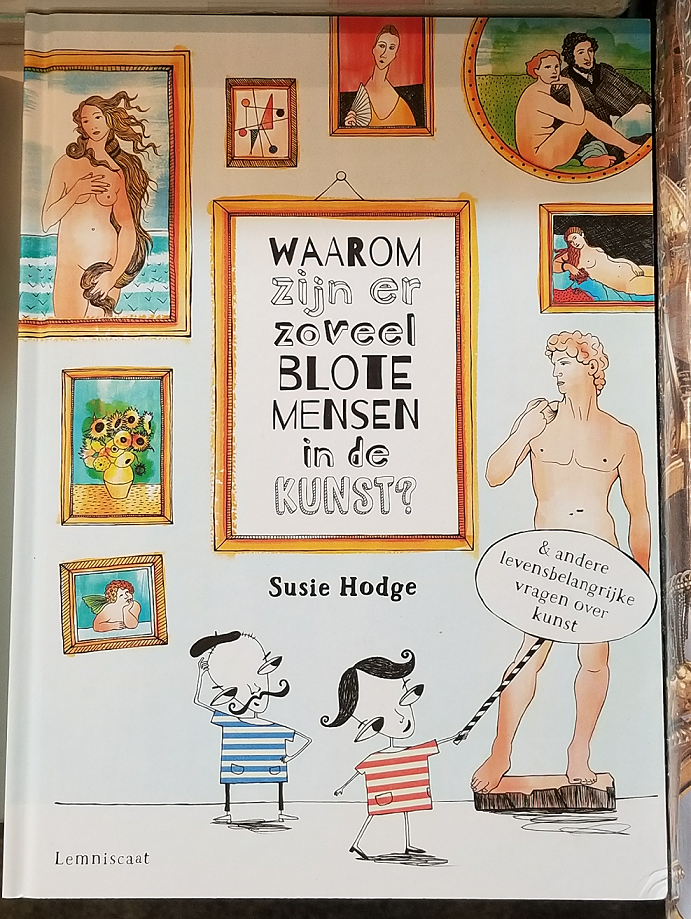
Speaking of grote blote billen…

When I was in grade school, the principal often asked me if I was Belgian. I couldn’t figure out why, so I asked my mother. “Because you have a Dutch last name.” That made no sense to me. At the time, I didn’t know that Belgium was bilingual, and thought they only spoke French. I also was confused about her answer that suggested that surnames had ethnic and linguistic connections and meaning. There were few Anglo-Saxon surnames in our town, so to me surnames were just random collections of letters – mine included. I had no idea they had meaning. Mom’s answer was yet another of the many sparks that sparked my interest in genealogy and in learning Dutch.
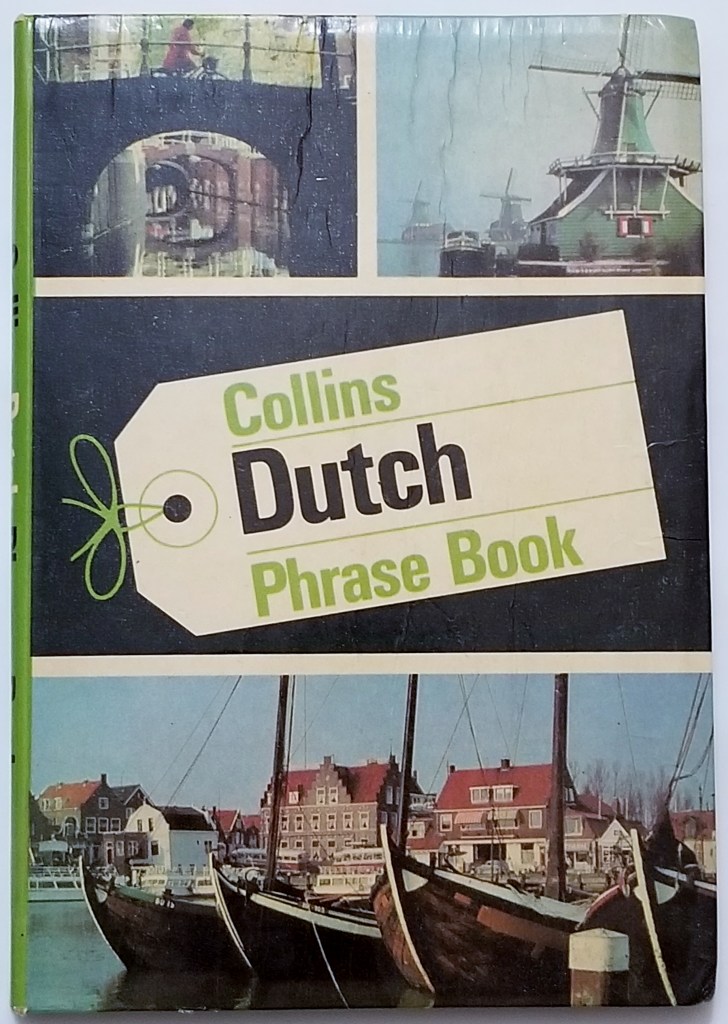
I bought this when I was 12 and still have it.

When I was 12, an aunt and uncle of my father came to Canada for a visit, Tante Anny and Ome Nic. Tante Anny was one of my grandmother’s sisters. I was so excited. I knew we had family in the Netherlands, but I had never met any of them before. I was even more fascinated when I was told they only spoke Dutch. I took some of my spending money and ran to the bookstore to buy myself a Dutch phrase book.

I remember my father being really intrigued by it. He came to Canada as a small boy, so his Dutch never progressed beyond an elementary school level. “So that’s what my mother was saying all those years!”, he said more than once. I still have that book.

Despite the language barrier, Tante Anny and I connected right away during her visit. Shortly after she arrived, I came down with a small cold. She sat with me for hours, chatting to me in Dutch, me answering in English. There was a lot of hand gesturing. After a while, I started to pick up a few bits and pieces. Nothing much, but it was a start.
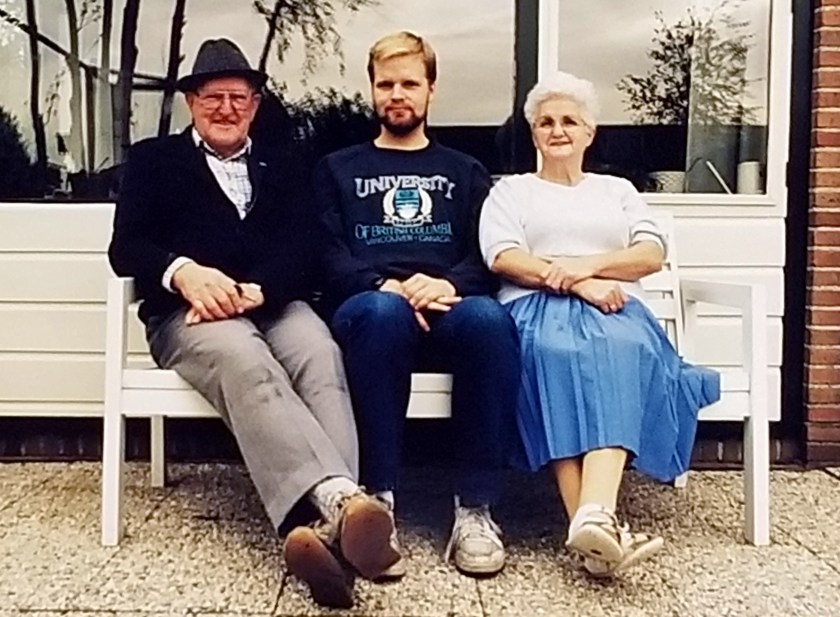
Me with Ome Nic and Tante Anny in October 1990.

After Tante Anny returned to Canada, we entered into an ongoing correspondence that continued until she passed away twenty years later. I wrote to her in English and her children translated for her. She wrote in Dutch, and my father translated for me. However, I’d pore over those letters, trying to figure them out for myself.

When I moved away from home to start university, I continued my correspondence with Tante Anny, but had to fend for myself with the translation. I bought myself a Dutch-English dictionary (which I still have!) and painstakingly translated each letter on my own. Fortunately, being related languages, some words were not so difficult to work out. As well, after you look up the same word dozens and dozens of times, it starts to sink in. My greatest problem was with idiomatic terms and some of the more informal constructions. Once in a while I’d phone my dad for help, but I had very little grasp of how to pronounce the written words. He enjoyed some gentle teasing at my expense after hearing me mangle the language.
My first trip to Europe was in 1990, with a university friend. Our itinerary had us in the Netherlands for two weeks and we were staying with Tante Anny and Ome Nic. To supplement what I had learned on my own, I enlisted a couple of my Dutch-speaking friends to give me a crash course. One of them loaned me a Dutch translation of a Richard Scarry book. It might have been humbling, but it was a great learning tool.

My family in the Netherlands were very encouraging as I tried to prattle on in Dutch. What surprised me the most was that they all kept saying that I spoke Dutch like my father. That made no sense to me – Dutch was his first language! I finally asked why they kept telling me that. They answered it was because I kept saying “Mijn nederlands is niet zo goed,” which apparently what my father kept saying when he visited the Netherlands a few years earlier. I was also told I spoke Dutch like a book, or an old lady, which was true, because that’s how I had learned.
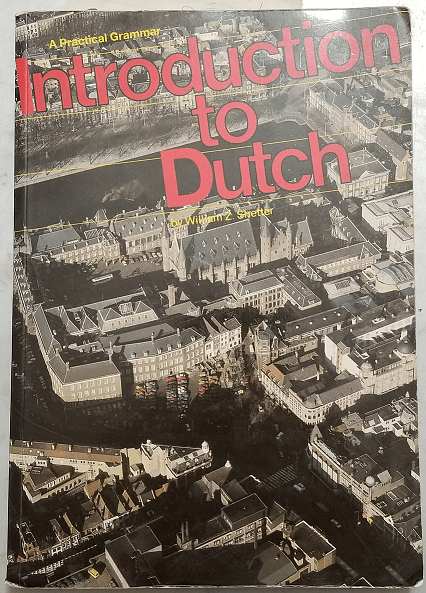
A year or two after my trip, I took a night course in Dutch offered through the local school board. It was the only time I had formal training in the language. I still have my textbook to this day! It was also my introduction to the famous aap-noot-mies leesplankje (“ape nut mouse reading board”). It was developed at the end of the 19th century and generations of Dutch children had it as a tool as they began to learn to read. I still have my textbook from that class, and my photocopy of the leesplankje is still tucked inside.
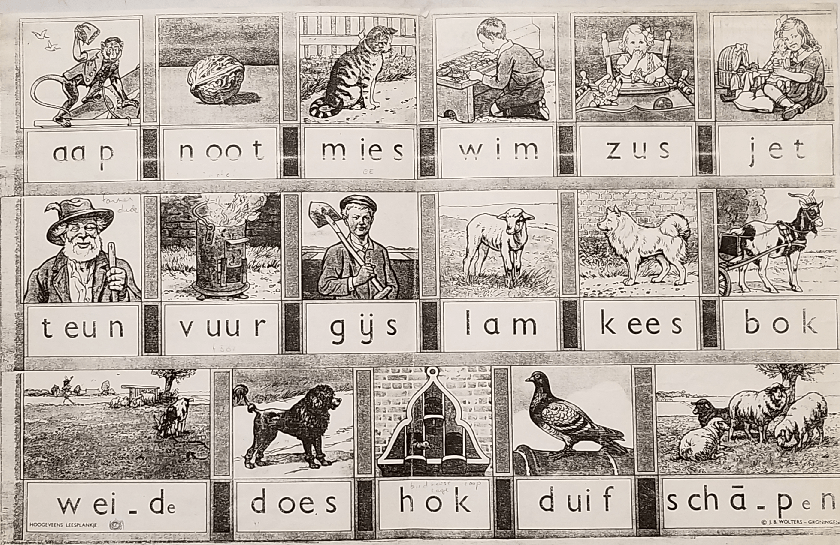
My decades-old photocopy of the aap-noot-mies leesplankje

By the mid-1990s, I began to acquire some of family history records from sources in the Netherlands. If memory serves, one of the first documents I ever obtained was the death registration for my great great grandmother, Ariaantje Jacobs Bleeker, born February 15, 1865. Other records followed, including the persoonskaart (“persons card”) for my father and his family. Personal privacy rules weren’t what they are today, so it was easier to obtain records like that, given that at the time everyone named on the persoonskaart was still alive. I also became familiar with the burgerlijke stand (“civil register”). Unlike some unfortunate researchers, I knew right away it was not a village in the Netherlands.
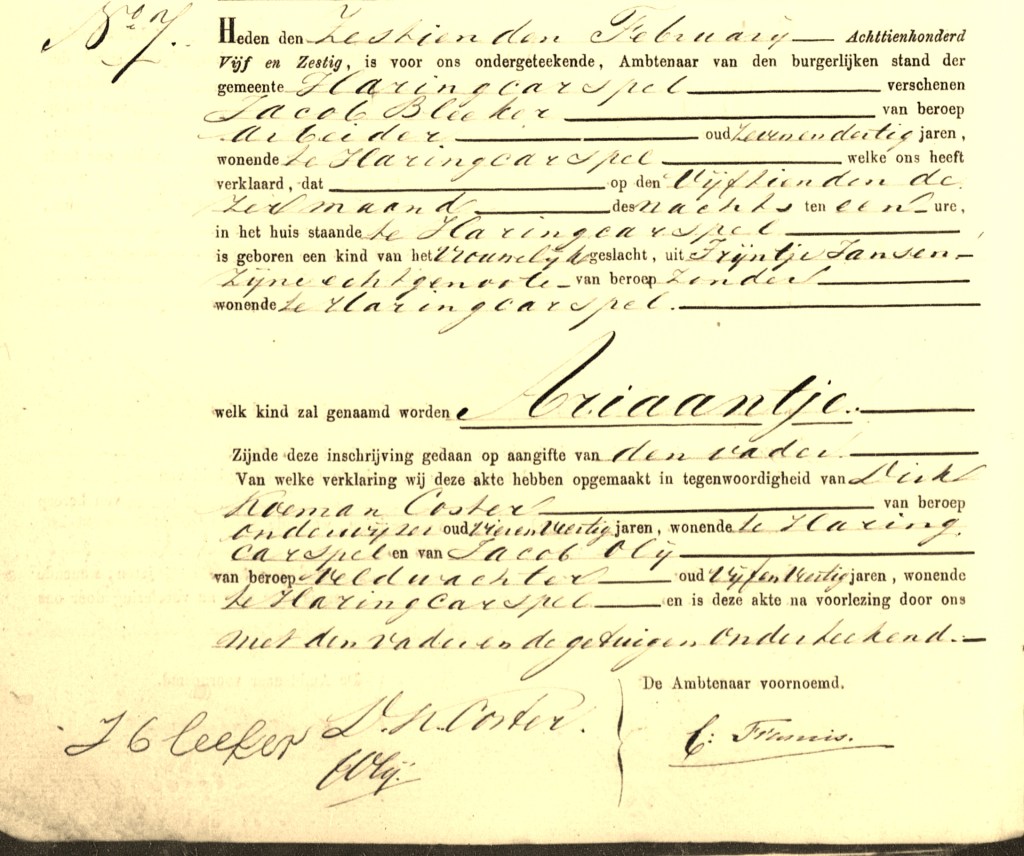
Birth registration for my great great grandmother, Ariaantje Bleeker (1865 – 1929). It took me forever to translate this when I first obtained it. I have now read hundreds of similar birth, marriage, and death registrations, so I am well versed in this vocabulary.

I also used my correspondence with Tante Anny to further my genealogy research. I created a simple questionnaire and a pedigree chart that I spent a lot of time writing in Dutch, in order to make it easier for her to respond. I figured the easier I made it for her, the more likely it was that she’d fill them out. She did, although in her reply letter she queried why I’d want to know about something that was so uninteresting as family history. I often amuse myself by thinking she said that only because there is something interesting worth knowing that she didn’t want me to find. However, in the 25 years since she wrote that, I have not found anything that would support that idea.

Between my genealogical pursuits and correspondence with Tante Anny, there were some subjects I could understand with ease. The last time Tante Anny came to Canada, we watched my sister’s wedding video, and I was able to speak about the people and relationships without too much trouble. I was also very good with talking about cabbage farming.
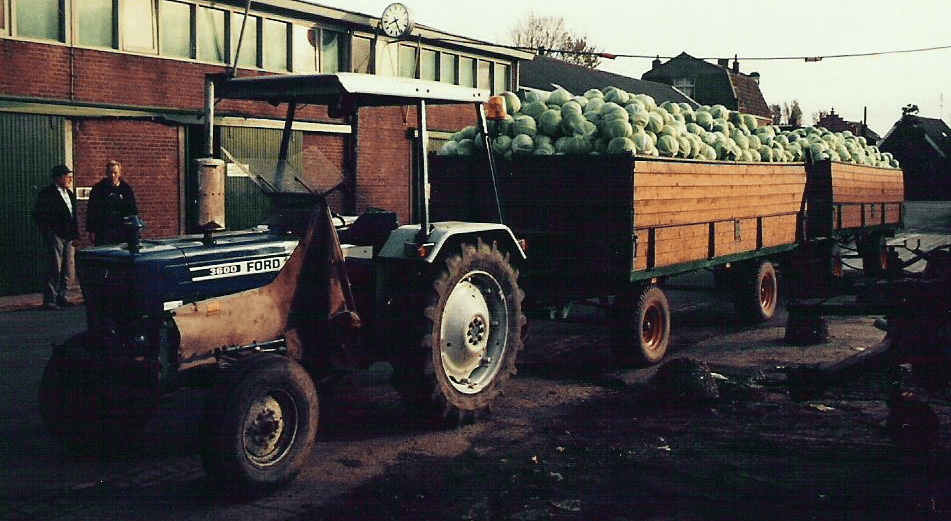
Twee spoorwagens kool bij de zuurkoolfabriek.
(“Two carts of cabbage at the sauerkraut factory.”)
(Yes, I know “spoorwagen” is a “railway car”, but that’s what my family in the Netherlands calls these.)

This is at the Kramer sauerkraut factory in Zuid-Scharwoude, North Holland. My Ome Nic took us there for a tour at the crack of stupid in the morning, because of a query my dad made about possibly importing it to Canada. It was actually a pretty cool (or “kool”) experience! My Ome Nic is the person on the left, in the hat.

Over the years, I’ve tried different ways to teach myself Dutch. Just before my last trip to the Netherlands, I started using Duolingo. It was an amazing tool at the time, and my knowledge of Dutch improved rapidly. I even used it every day during my stay in the Netherlands. Unfortunately, Duolingo is not what it once was, and it has changed a lot for the worse in recent years. With its latest changes, I find it is not a good learning tool at all. I’m inclined to quit the site altogether, but for the fact I’ve got an amazing streak going on there. One of the stereotypes of the Dutch is that they’re stubborn, and I am stubbornly hanging on if only to see how far I can take this streak.
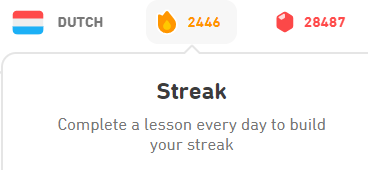
My Duolingo streak as of March 5, 2023.

The other great resource I’ve taken advantage of are the free courses offered by FutureLearn. Again, this was a much better resource in the past, but I have taken a number of courses through this program. I have taken their basic Introduction to Dutch course several times. I’ve also taken some genealogy courses through FutureLearn, including one in genetic genealogy that I’ve stalled out on due to sheer lack of free time.

There are now also so many great YouTubers and Instagrammers who provide some wonderful, fun, and educational videos that have been invaluable. These include Learn Dutch with Kim (YouTube, Instagram), JeDutchy (YouTube, Instagram), and Learn Dutch with Bart de Pau (YouTube).

While my proficiency in Dutch is now barely conversational, I have excelled in learning what I need to know of the language to conduct meaningful research in that language. The Netherlands is one of the non-English speaking countries with the highest degree of English-language proficiency in the world and many of their online genealogy resources are offered in English. As well, the “translate” feature of browsers like Chrome can be invaluable, as is Google Translate. However, while there may be transcriptions of the source documents in English, the original records are in Dutch only, and knowing the language allows me to squeeze out so much more information than I might be able to get otherwise. I’m also able to carry out very basic chats in Dutch with cousins in the Netherlands.

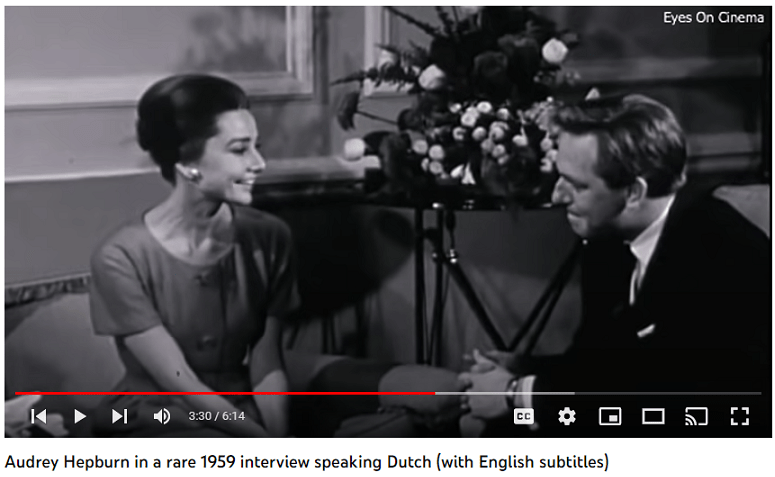
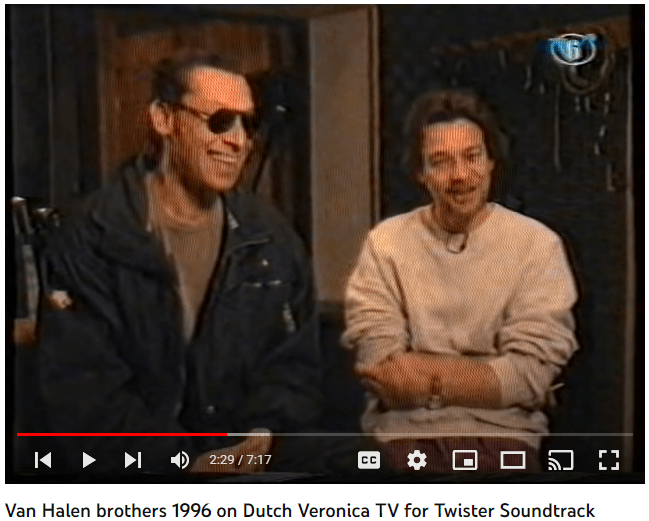
Before leaving, I’d like to share two videos I’ve watched countless times in trying to improve my Dutch. The first is an interview of Audrey Hepburn. Her Dutch is so beautiful and easy to understand. The other is an interview of Eddie and Alex van Halen, who were born in the Netherlands and whose first language was Dutch. I’ve seen her repeat this same interview with the same interviewer in French, and it is equally eloquent and easy to follow. You can click on the images to watch the videos.
52W Mark II – Week 6: Social Media

Needless to say, most of our ancestors were never on what we now consider to be social media. There were forms of communication and systems of social connection that we can consider to be the “social media” of their time. Minstrels, troubadours, and jongleurs were the social media influencers of medieval times. Ham radios and party lines are more recent pre-internet examples of what could be analogous to modern social media.

This is not an ad. Welcome to the olden days of the internet.

Of course, nowadays when people think of more modern forms of social media, things like Facebook and Twitter readily come to mind. I’ve made great use of both of those for genealogical purposes.

However, if you think about it, social media as we know it is getting somewhat long in the tooth, and the internet has been around so long that we no longer capitalize the word. The World Wide Web – another term that’s not used so much any more – made its debut to the general public in 1991. Thousands of genealogy websites were in existence more than 25 years ago. When Cyndi’s list made its debut in 1996, it had thousands of links by the end of that year.

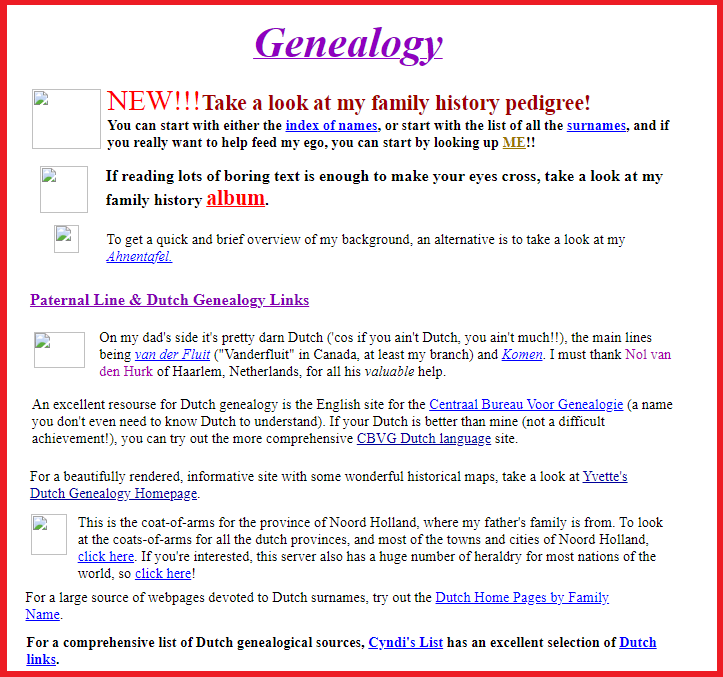
The late 90s was also the heyday of Geocities, which I used for genealogy, among other things.

Here’s a part of the genealogy section of my Geocities site as it was in February 1999. Unfortunately, the background design and images have been lost.

I am amazed to see how many of the links on my old Geocities page still work. Of course, I made several mentions of Cyndi’s List. In fact, my genealogy page ended with this:

I also would be remiss if I didn’t give a shout out to Yvette’s Dutch Genealogy Homepage, which you’ll see is one of the hyperlinks on my old Geocities page. It is now Dutch Genealogy and I still make use of it all the time. Given that 15 years ago Yvette marked its 15th anniversary, this site has now been around in one form or another for thirty years!

Yes, I acknowledge that websites aren’t necessarily social media. However, while the term “social media” was many years in the future, I would argue that message boards, bulletin boards, IRC (internet relay chat), and Usenet were all early forms of social media. Looking through my digitized documents, I am surprised by how many items I saved through those sources as far back as 1995, along with scores of emails I exchanged with other genealogists using good old Pine. Other websites from back in the day that were forms of social media included Classmates.com and SixDegrees.com.

Even blogging easily pre-dates the turn of the century. THIS century, not 1900 as might come to mind to many older people when they hear the term. Blogging networking platforms such as Open Diary and LiveJournal originated in the late 90s.

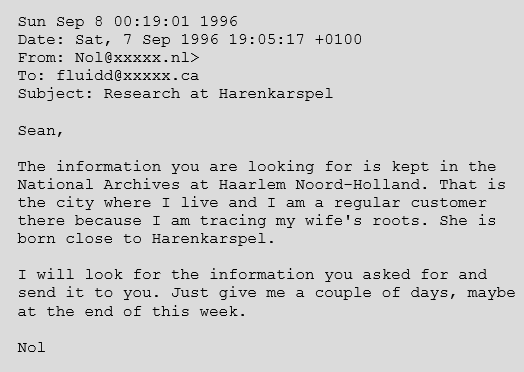
I still have connections with some of the people I met through those venues, especially Nol, a fellow genealogist from Haarlem. I can’t even remember which bulletin board or Usenet group I met him on, but I have every email we exchanged since 1995. His help over the years has been invaluable. My only regret is that after all this time, I have yet to meet him in real life. The last time I was in Haarlem, Nol was in the United States! I promise we’re not deliberately trying to avoid each other.

My first email from Nol after we moved off the message boards. Not long after we started our correspondence, I learned that the family line of Nol’s wife intersected with mine.

The internet and social media isn’t as new as it’s sometimes made out to be, and it has always been a great tool for genealogists!

52 Weeks – Week 50: Traditions

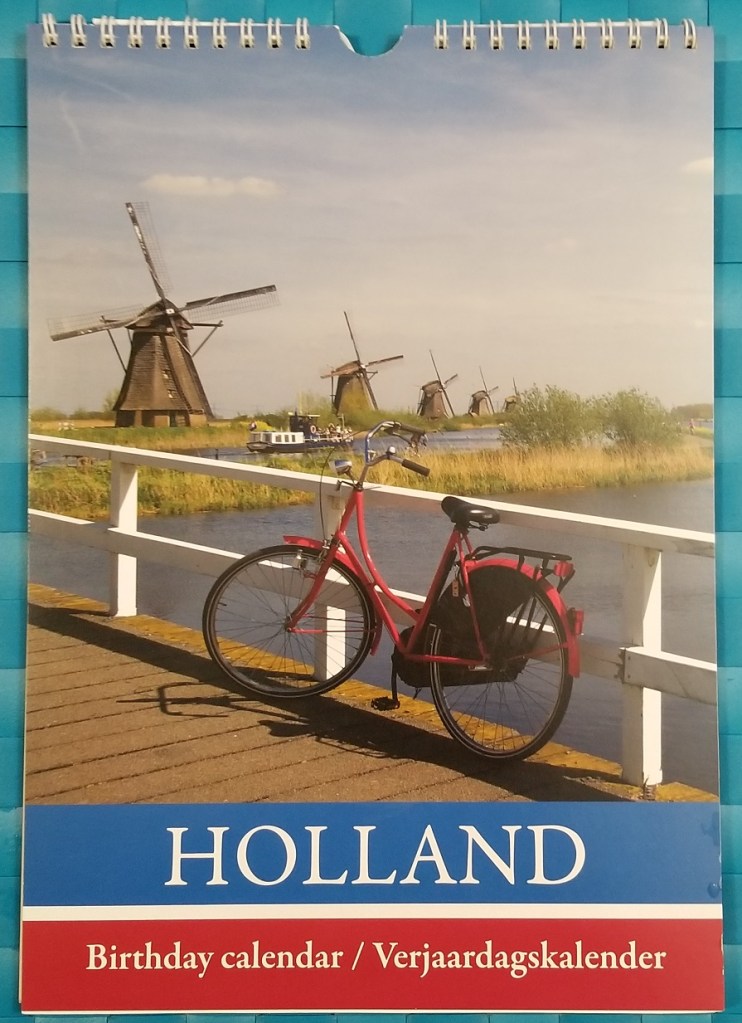
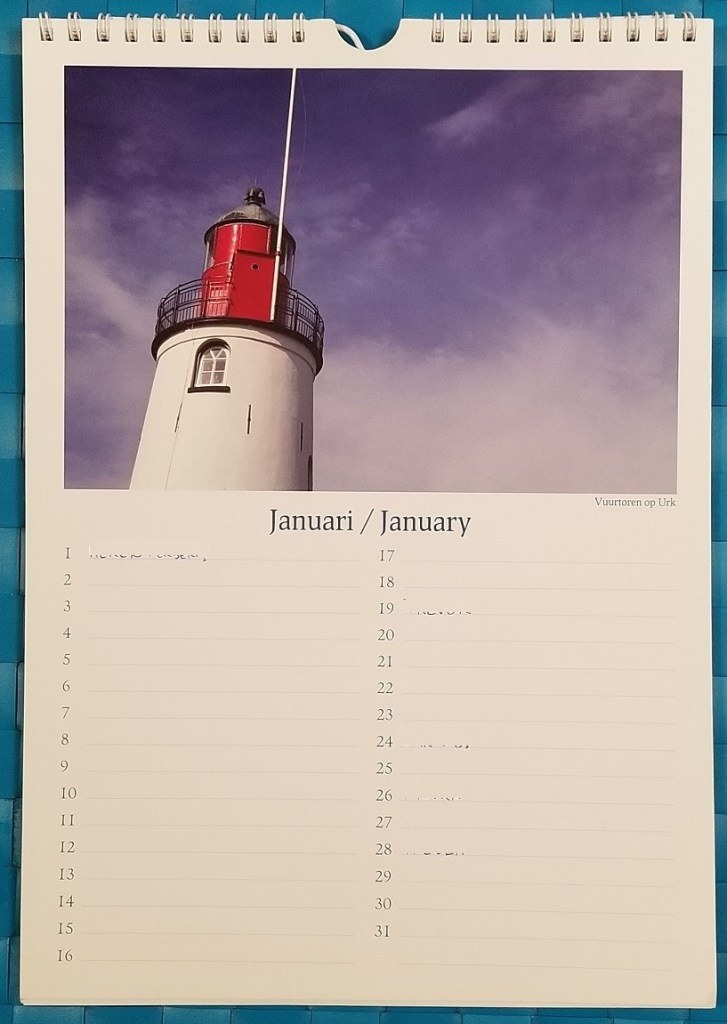
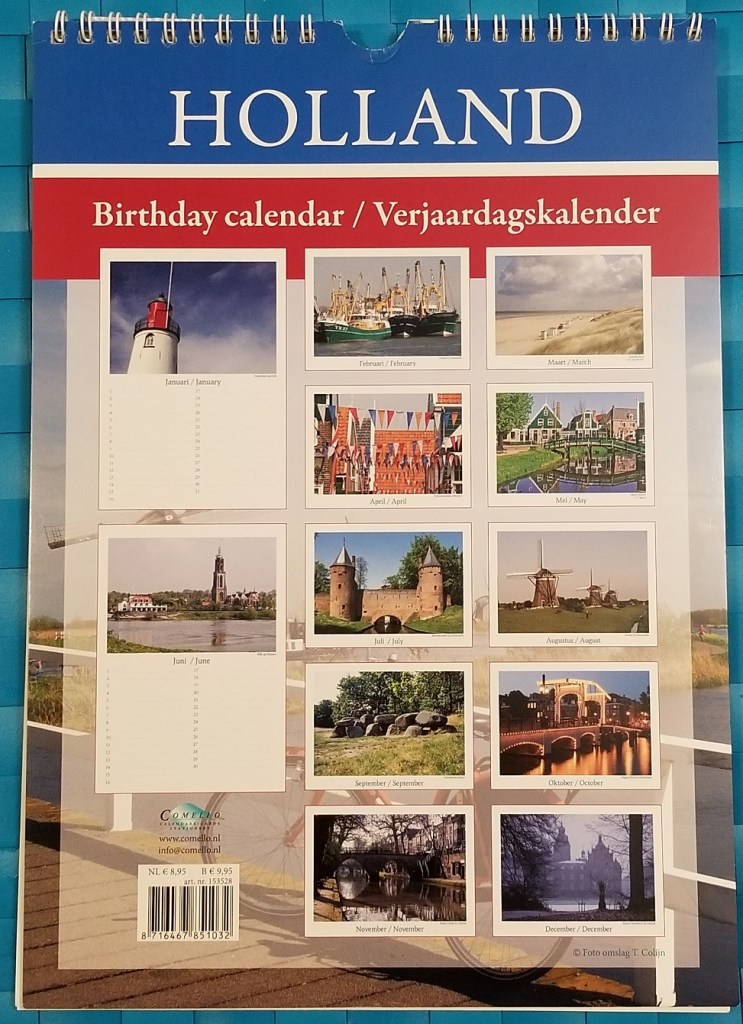
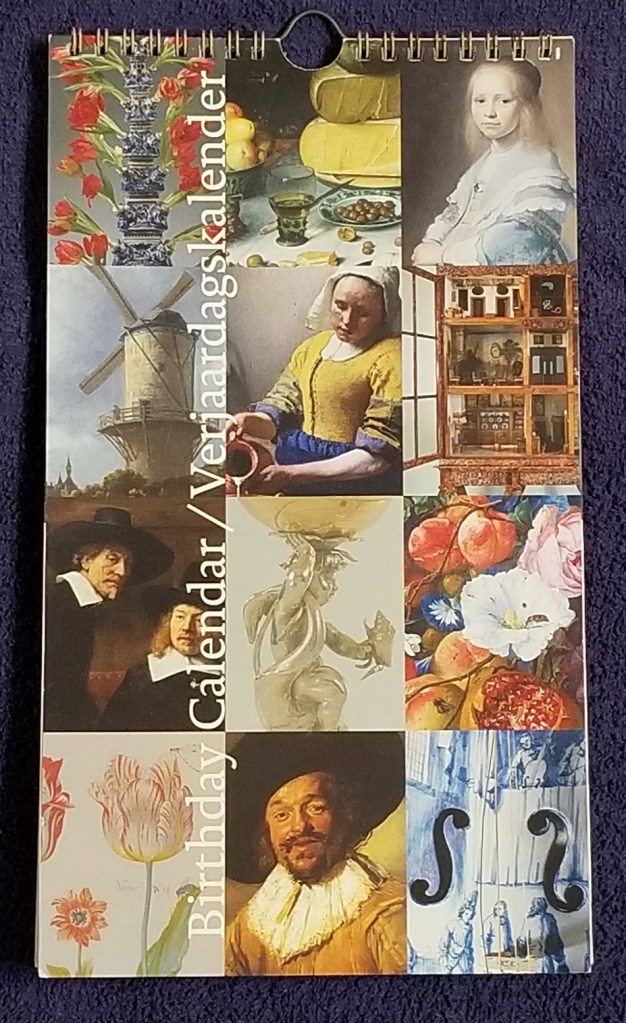
I know what my mother is getting me for Christmas – a verjaardagskalender! I know this because I was there when she bought it. She even let me pick it out. Now I’ll have one for each of our bathrooms.

Week 50 of the 52 Ancestors Challenge is “Traditions”. While it might be described more as a custom than a tradition, with a new year bearing down on us I’d like to think of a verjaardagskalender (“birthdays calendar”) as a tradition.

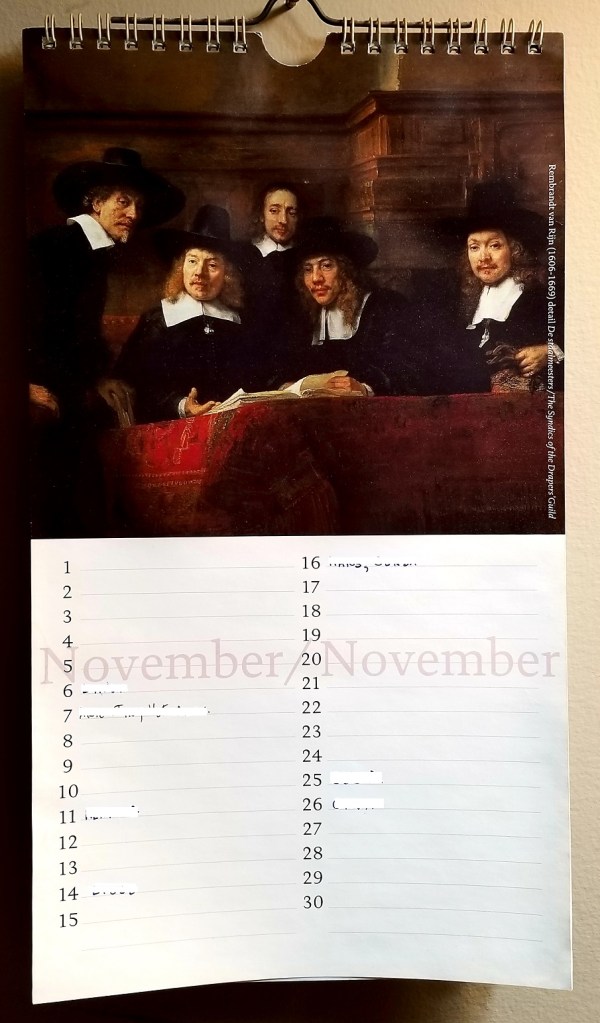
A typical Dutch bathroom isn’t complete without a verjaardagskalender, a perpetual calendar that is used for keeping track of birthdays and anniversaries. Why is it hung in the bathroom? Because it’s a place where you’ll always see it, so you’ll never forget or miss an important family milestone.

When I visit my Dutch relatives in the Netherlands and Canada, I always take note to look at their verjaardagskalendars. I’ve even photographed all the pages of a few (with permission!). It’s a great way of finding those elusive birthdays, and finding out who is part of the extended family.

Just be forewarned – if you ever see a verjaardagskalender when visiting a Dutch friend, do not add your own name! It would be the height of rudeness and impropriety to do so. And if you see your name on it, consider it an honour – you’re considered one of the family!

52 Weeks – Week 42: Lost

The theme for this week’s 52 Ancestors Challenge is “Lost”. Given that it’s Week 42, I suppose what has been lost is the answer to the Ultimate Question of Life, The Universe, and Everything. Since I don’t have access to Deep Thought, I will have to consider a much simpler matter.

I began researching my family tree when I was about nine years old.

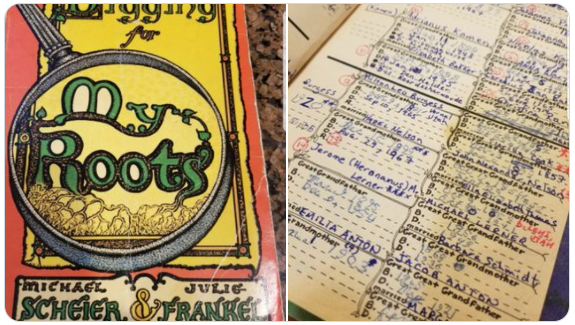
My first genealogy book, which I got through Scholastic Book orders when I was in Grade 4 or 5. Fortunately, it’s not lost and I still have it to this day.

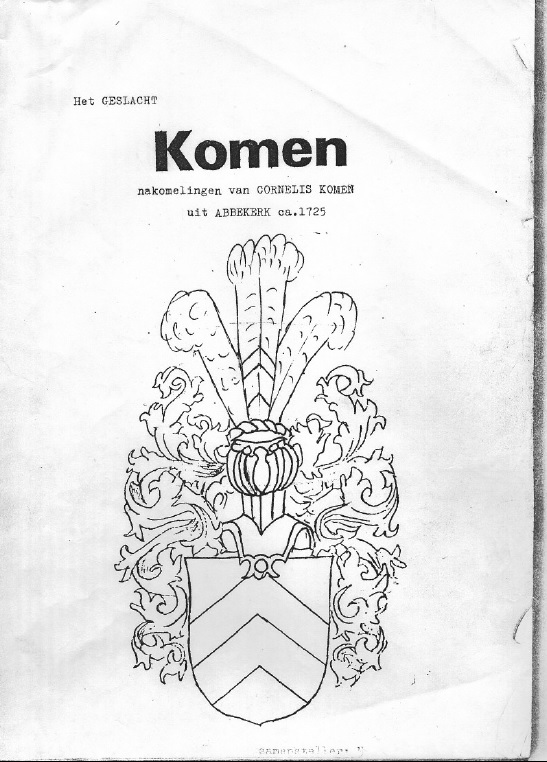
One of the earliest genealogical resources I had was a book my grandmother, Christina Komen, had about her family history, Het Geslacht Komen: Nakomelingen van Cornelis Komen uit Abbekerk ca. 1725 (“The Komen Line/Lineage: Descendants of Cornelis Komen from Abbekerk circa 1725”).

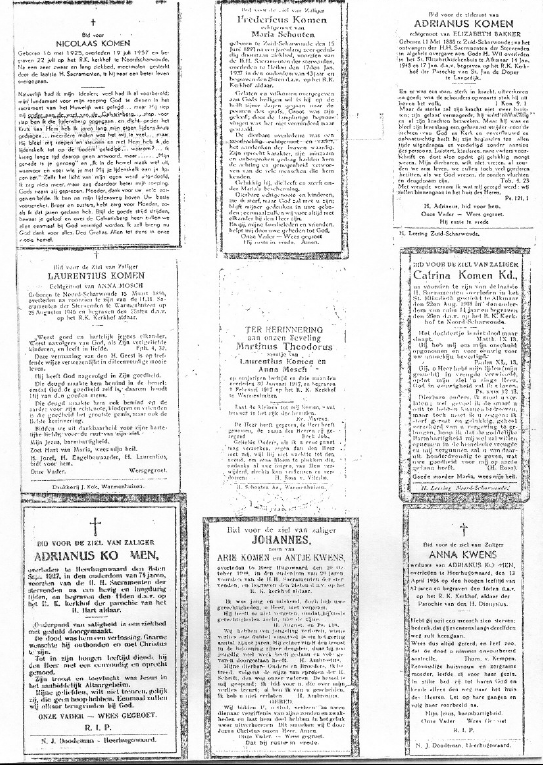
Cornelis Komen is my great 6x grandfather. It attempts to show all of his known descendants up to the time it was published. In addition to 36 pages consisting of a descendants’ narrative, additional pages include illustrations, interesting statistics, maps, numerous photos, and many “bidprentjes” (“prayer cards”, which could also be called funeral cards) and “familieberichten” (“family notices”). The quality of the image reproductions in the book were fairly poor, but they were discernable nonetheless. As well, the book includes a name index.

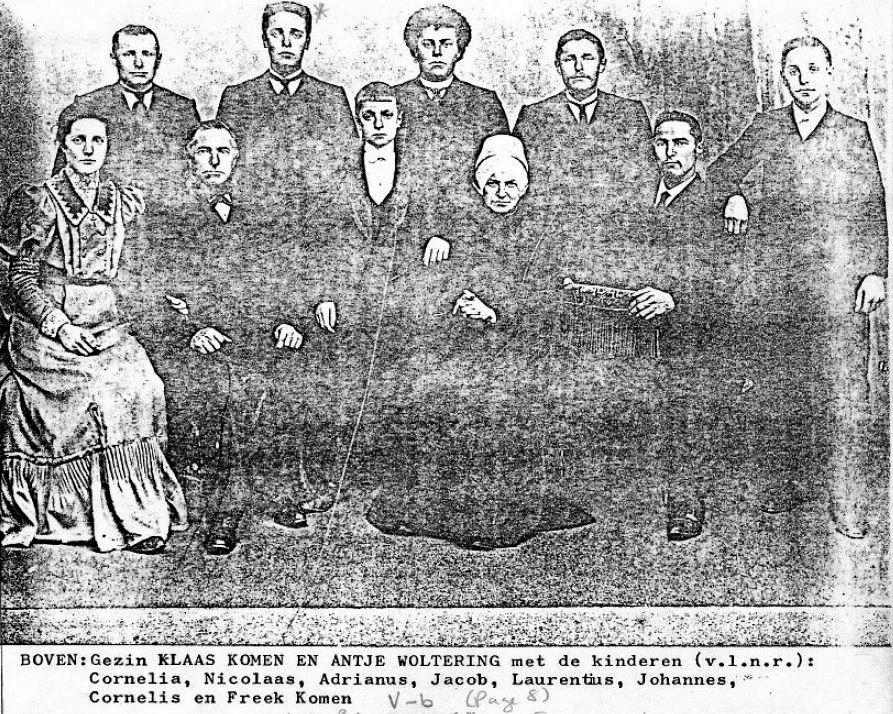
From page 8: “Above: Family KLAAS KOMEN and ANTJE WOLTERING with the children (from left to right: Cornelia, Nicolaas, Adrianus, Jacob, Laurentus, Johannes, Corenlis, and Freek [a diminutive of Frederik].”
Klaas and Antje are my great x2 grandparents (my grandmother’s grandparents).

My grandmother showed the book to me soon after she received it. Needless to say, it was fascinating to me. At the time, it was the furthest back I had ever seen documented for any branch of my family. I think back then, the furthest back ancestors I knew of were probably some of my second great x2 grandparents, and here was a book going four generations back from that. The book was one of the earliest texts I have in Dutch, which started me on a decades-long journey of trying to learn the language. It was also the one of the earliest detailed exposures I had to the geography of the area where my father was born.

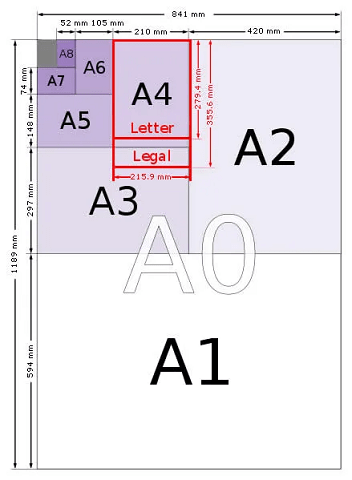
European paper sizes are so much more logical.

Years later, sometime in my late teens or early twenties, my grandmother loaned the book to me. Luckily, one of the first things I did was photocopy it. It wasn’t easy, because it was printed on A3 or A4 sized paper, which are different from the letter and legal sizes commonly used in North America. Today’s computerized photocopiers can easily adapt the size of the copy to fit the original, but such a thing did not exist at the time. Despite the quality of photocopiers at the time, I think the copy turned out fairly well. Many years later, I scanned the photocopies. I know I made the scans when Geocities was still a thing, so I am surprised by the quality of the scans.

By the time I copied the book, I had moved to Vancouver. Going through it, I was amazed to see that there were other Komen descendants in Canada, all located in British Columbia. Some were in the Okanagan, in south-central B.C., some were on Vancouver Island, and some were in the suburbs of Vancouver, within 25 kilometers of where I was living at the time.

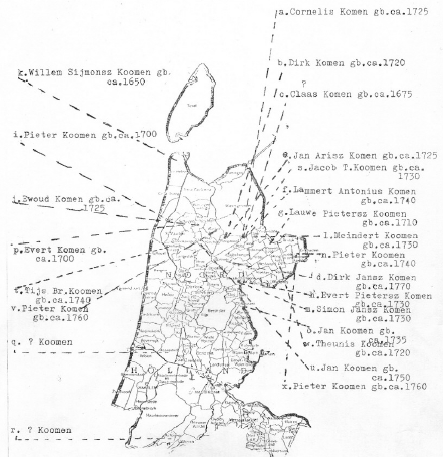
Page iv, showing the locations of various members of the Komen family in Noord Holland (North Holland).

It was fortunate that I copied the book. Years later, my grandmother misplaced it. She spent years looking for it. There might be copies of the book in a Dutch archive, and I am sure that there is – or was – a copy in the holdings of the CBG Centrum voor familiegeschiedenis (“Center for Family History”, formerly the “Centraal Bureau voor Genealogie”, hence “CBG”). However, as far as I knew at the time, the only extant copy of the book was the photocopy I had made.

Page 11, showing the bidprentjes for my great grandfather and his siblings.

After my grandparents passed away, many of the family photos and other items of interest to genealogists ended up in the possession of my father’s youngest sister. She is not really a family historian or genealogist, but she has shown or loaned many of those items with me over the years. While writing this, it crossed my mind that I should ask her if she found the book and has it in her collection. It would be nice to know whether it is still around.