52W Mark II – Week 6: Social Media

Needless to say, most of our ancestors were never on what we now consider to be social media. There were forms of communication and systems of social connection that we can consider to be the “social media” of their time. Minstrels, troubadours, and jongleurs were the social media influencers of medieval times. Ham radios and party lines are more recent pre-internet examples of what could be analogous to modern social media.

This is not an ad. Welcome to the olden days of the internet.

Of course, nowadays when people think of more modern forms of social media, things like Facebook and Twitter readily come to mind. I’ve made great use of both of those for genealogical purposes.

However, if you think about it, social media as we know it is getting somewhat long in the tooth, and the internet has been around so long that we no longer capitalize the word. The World Wide Web – another term that’s not used so much any more – made its debut to the general public in 1991. Thousands of genealogy websites were in existence more than 25 years ago. When Cyndi’s list made its debut in 1996, it had thousands of links by the end of that year.

The late 90s was also the heyday of Geocities, which I used for genealogy, among other things.

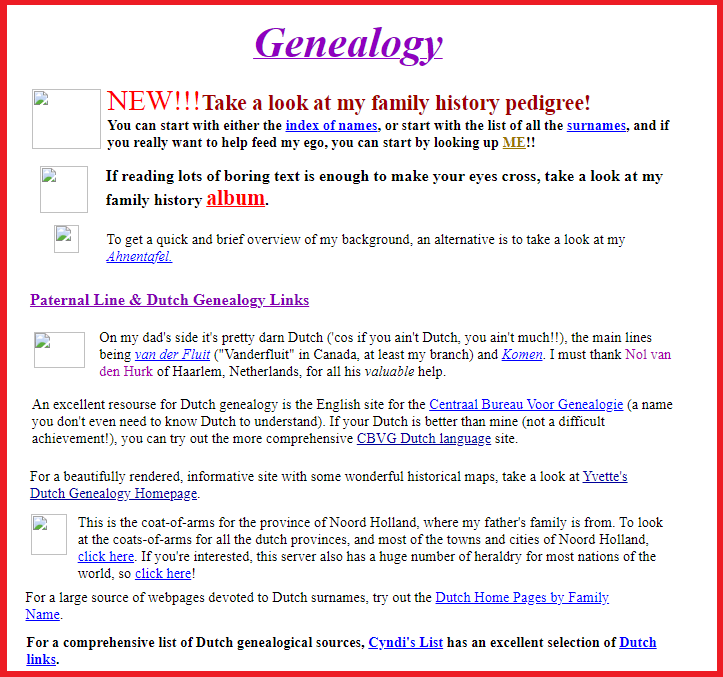
Here’s a part of the genealogy section of my Geocities site as it was in February 1999. Unfortunately, the background design and images have been lost.

I am amazed to see how many of the links on my old Geocities page still work. Of course, I made several mentions of Cyndi’s List. In fact, my genealogy page ended with this:

I also would be remiss if I didn’t give a shout out to Yvette’s Dutch Genealogy Homepage, which you’ll see is one of the hyperlinks on my old Geocities page. It is now Dutch Genealogy and I still make use of it all the time. Given that 15 years ago Yvette marked its 15th anniversary, this site has now been around in one form or another for thirty years!

Yes, I acknowledge that websites aren’t necessarily social media. However, while the term “social media” was many years in the future, I would argue that message boards, bulletin boards, IRC (internet relay chat), and Usenet were all early forms of social media. Looking through my digitized documents, I am surprised by how many items I saved through those sources as far back as 1995, along with scores of emails I exchanged with other genealogists using good old Pine. Other websites from back in the day that were forms of social media included Classmates.com and SixDegrees.com.

Even blogging easily pre-dates the turn of the century. THIS century, not 1900 as might come to mind to many older people when they hear the term. Blogging networking platforms such as Open Diary and LiveJournal originated in the late 90s.

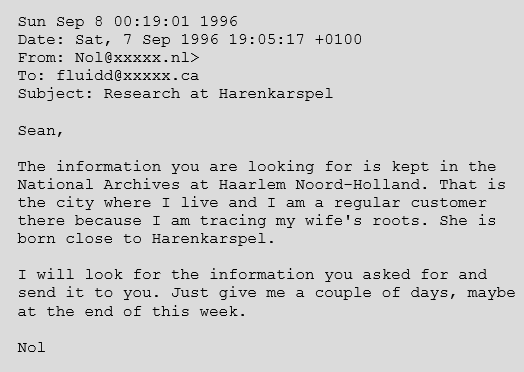
I still have connections with some of the people I met through those venues, especially Nol, a fellow genealogist from Haarlem. I can’t even remember which bulletin board or Usenet group I met him on, but I have every email we exchanged since 1995. His help over the years has been invaluable. My only regret is that after all this time, I have yet to meet him in real life. The last time I was in Haarlem, Nol was in the United States! I promise we’re not deliberately trying to avoid each other.

My first email from Nol after we moved off the message boards. Not long after we started our correspondence, I learned that the family line of Nol’s wife intersected with mine.

The internet and social media isn’t as new as it’s sometimes made out to be, and it has always been a great tool for genealogists!

52W Mark II – Week 5: Oops

This week’s theme for the 52 Ancestors Challenge is “Oops”. A true “oops” does not readily come to mind, although I know I’ve had a few over the last many years. This is about more of a mistaken conclusion based upon incomplete information than it was an actual “oops”, but it was a misleading error nonetheless.

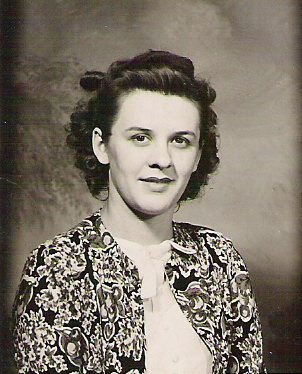
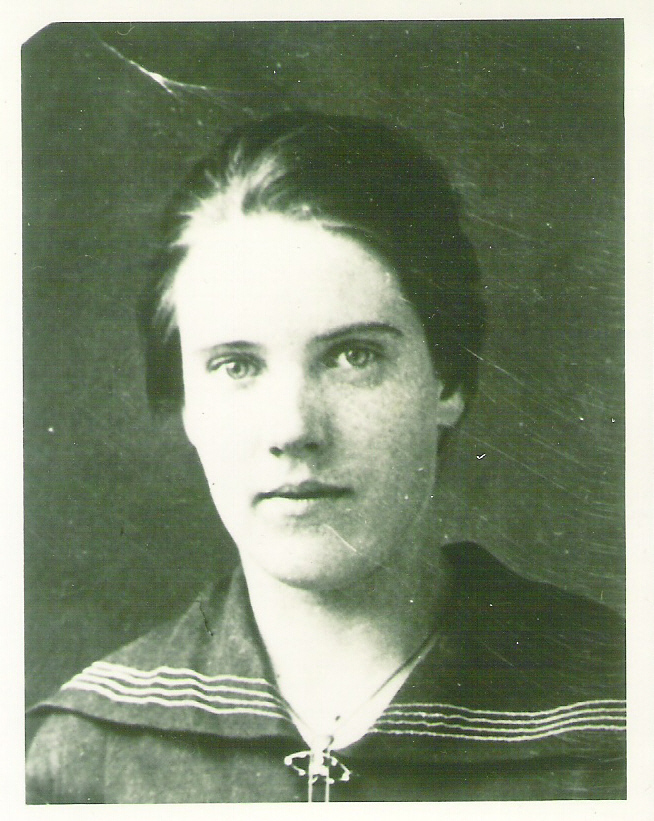
Helen Lerner, about 1945.
Not English.

When I was about four or five, my maternal grandmother, Helen Lerner, went to England. At the time, my mother told me that grandma was going over to visit relatives. To me, it seemed reasonable to conclude that grandma must have been English. On top of that, at that young age I had no idea what my grandmother’s surname at birth had been, I just knew her as “Grandma Burgess”, and Burgess sounded like it could be English (spoiler alert: it wasn’t).

Meanwhile, I only knew Helen’s mother, my great grandmother, as “Grandma Wright”. Again, I had no idea what her surname at birth might have been or that she had previously been married. Wright also seemed pretty English to me, which only reinforced my belief that Grandma Burgess was English.

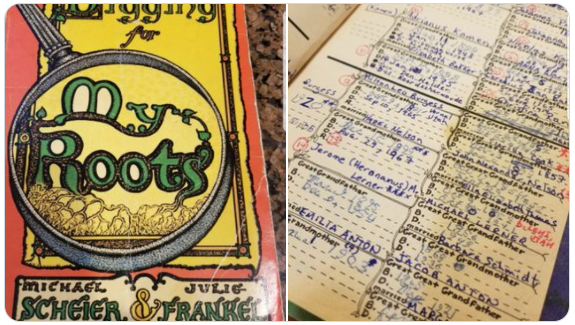
By eight or nine I developed my interest in genealogy. I even bought a book to help me along, Digging for My Roots, by Michael Scheier and Julie Frankel, which I still have to this day. When I started, I unknowingly did what one is supposed to do as a beginner in genealogy: ask your parents or other close family members. In addition to asking my mom some questions, I also copied what she had written in the family bible. In doing so, I learned my grandmother and great grandmother’s surnames at birth; however, I didn’t realize that “Lerner” and “Anton” were German. It seemed to me that those surnames could also be English. Moreover, my mother had not entered the place of birth for either of her maternal grandparents. When filling out the pedigree in my book, I can’t recall asking my mom where her grandparents were born. However, what little space there was to write place of birth remains blank. (Needless to say, it is recorded in my desktop database!)

My copy of Digging for My Roots, which I still have. On the right, you can see that I don’t have a place of birth for my great grandmother Ameilia Anton.

When I was in grade seven, I started taking French in school. However, when I started high school in grade eight, there were many other language options. I decided to drop French and take German. By that time, I had already begun trying to teach myself Dutch, so I figured studying German would help me with that goal. I also knew that, for some reason, my Grandma Burgess knew German. How or why she did, I had no clue. It clearly didn’t cross my mind to ask. It seems pretty daft in hindsight, but there you go.

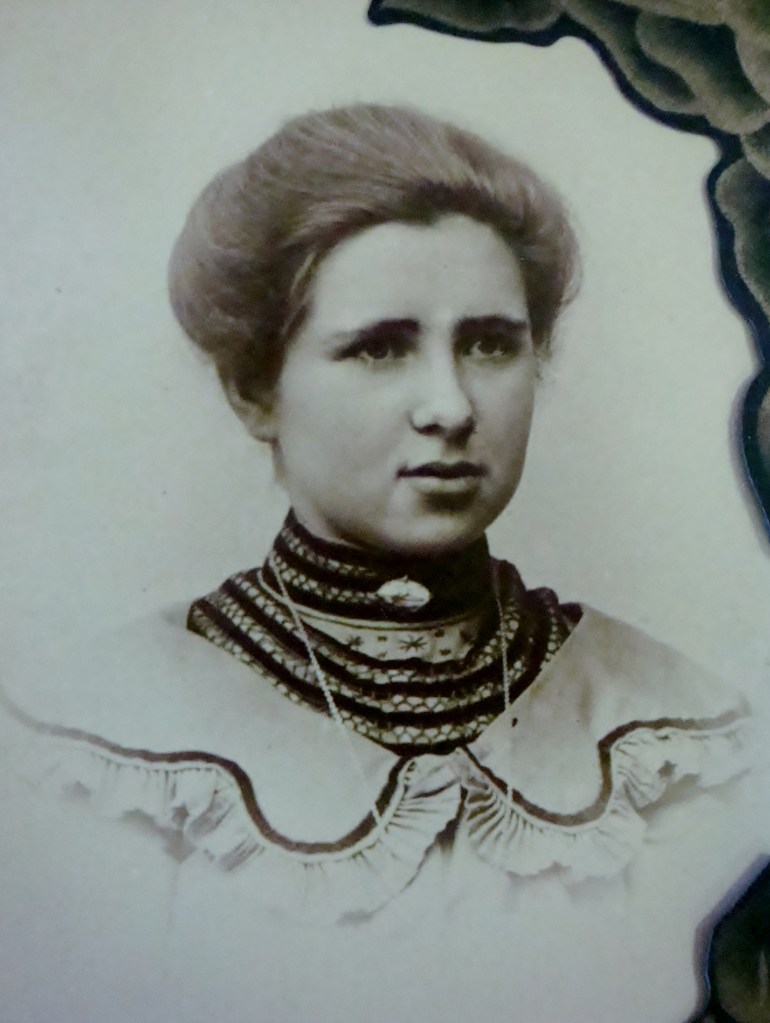
Emelia Anton, around 1920. Also not English.

During Christmas break in grade eight, we visited Grandma Wright. During the visit, my mom said, “Grandma, guess what? Sean is studying German in school!” My first thought was to wonder why great grandma would find that particularly interesting, but my train of thought was quickly interrupted by my great grandmother immediately starting to speak to me in fluent German. I’m sure you could have knocked me over with a feather, I was so surprised. (I was also pleased with myself that I understood some of what she was saying.)

After we left, I asked my mom how it was that great grandma spoke German. My mother responded, “Because she’s German.” She was?!?

Later on, my mother told that my great grandmother was born in Russia. Of course, that confused me further. My mother then explained that her grandmother’s family was actually from Ukraine, but weren’t Ukrainian. That is when I learned about the Germans from Russia, who were colonists who settled in territory held by the Russian Empire in the 18th and 19th centuries.

Fortunately, none of these misunderstandings resulted in me wandering aimlessly down the garden path. Rather, learning the correct facts sparked my interest and put me on the correct path.

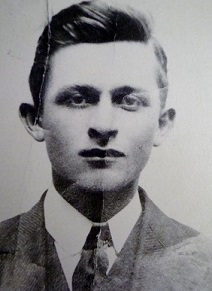
52W Mark II – Week 1: I’d Like to Meet

Happy New Year! It’s time for another trip around the sun and another year of Amy Johnson Crow’s “52 Ancestors in 52 Weeks“! We’re starting off the year on the theme of “I’d Like to Meet”.

I’m grateful that the challenge is not which ancestor we would “most like to meet”, but simply an ancestor we’d “like to meet”. For anyone who has been doing genealogy for a while, it would be hard to narrow it down to just one. Rather than choose a single ancestor, I’ve selected a category of ancestor: my great grandparents.

While I would love the opportunity to meet ancestors further back in my tree, they seem so much more remote and abstract than my great grandparents, who seem more tangible and real. I know people who knew them, and I even had many visits with one of them. My great grandparents would be able to shed a lot of light on things I don’t know about them and their immediate families. It would open a gateway to improving and expanding my research.

1. Johannis Albertus van der Fluit (my father’s paternal grandfather)

Johannis was born in ‘t Veld, North Holland, in 1894. He was an agricultural worker most of his short life. While I don’t have a lot of the details, he sustained a head injury that resulted in a mental disorder. He spent the following years suffering from delusions and passed away in a sanitorium in 1932. My grandfather was eight years old.

2. Theresia “Teetje” Pater (my father’s paternal grandmother)

Teetje was born in Waarland, North Holland in 1894. That is the same village where my father was born. Teetje was 37 when she was widowed and was left to raise eight children on her own, the youngest of whom was one year old at the time. I don’t know how she supported herself or the family. She passed away in 1947, a few months before my father was born, so he never knew her.

3. Adrianus “Arie” Komen (my father’s maternal grandfather)

Arie was born in Zuid-Scharwoude, Noord Holland in 1888. Arie spent his whole life as an agricultural labourer. Arie was only 59 years old when he passed away in January 1948, when my father was only a few months old. I don’t recall my grandmother ever speaking about her father, so most of what I know about Arie is from the documentary evidence I have found over the years.

4. Elizabeth Bakker (my father’s maternal grandmother)

Elizabeth was born in Den Helder, North Holland, in 1888. I have little information about her prior to her 30s. Prior to marrying Arie Komen in 1921, when she was 32, she had worked as a domestic servant in Den Helder and Amsterdam. While Elizabeth died in 1976, when I was in grade four, I never met her, but I was quite familiar with “Oma Komen”. She wrote often to my parents and every December she would send us a package of goodies for Sinterklaas and Christmas. My father remembers her well. During a trip to the Netherlands in 2017, my father showed me where she had lived.

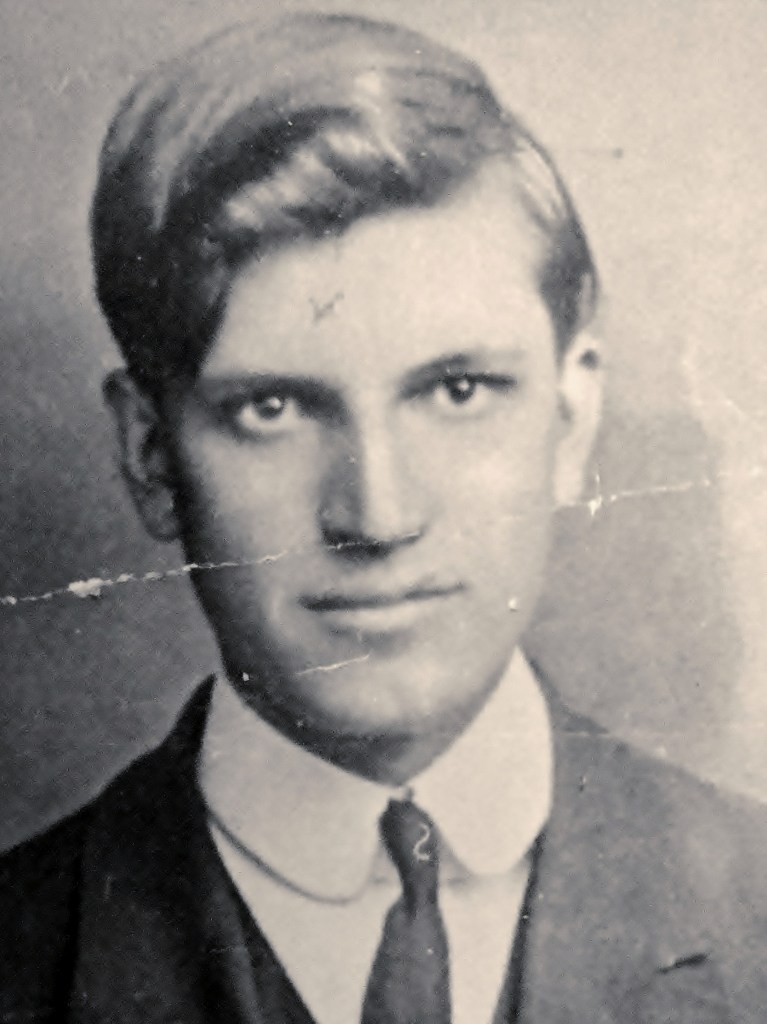
5. Milton Leo Burgess (my mother’s paternal grandfather)

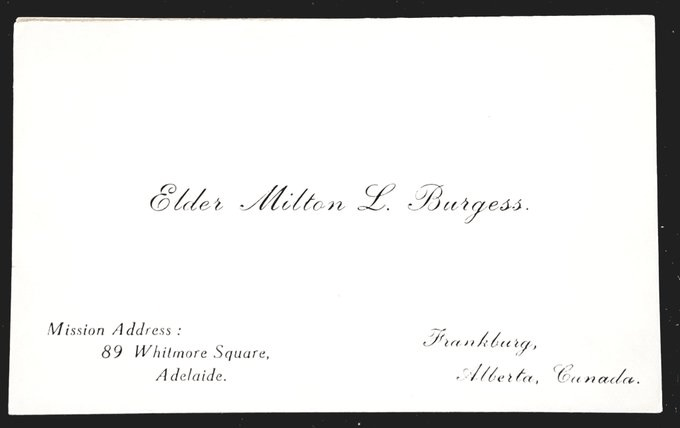
Milton was born in Vernal, Utah, in 1891. He came to Canada with his parents when he was 14. Milton was Mormon, so when he was 20 he spent two years in Adelaide, Australia on a mission. Even today with air travel, Australia is pretty far away, so it must have felt even more so when Milton went there. A few years ago, someone reached out to me on FamilySearch and said that he had some of Milton’s calling cards from his time on the mission. I was quite surprised and very grateful when he sent me one of the cards through the mail!

In his 20s and 30s Milton was a farmer. Later in life he had several other occupations. Sometime before 1941 he as a plumber. He worked in a woolen mill, where he lost a finger of his left hand due to a work injury. Milton also worked for a short time as a grave digger around 1950.

Milton died in 1964, a few years before I was born. My mother has told me many stories about Milton over the years. I also have a small cache of letters he wrote to my grandfather in the 1940s. Most of them were gentle admonishments, such as disapproving of my grandfather working in establishments that served alcohol, coffee, and tea, or telling him that it was time to stop seeing the Catholic girl he had been dating and to find a nice Mormon girl to settle down with. Fortunately for me, my grandfather did not follow that advice, as that Catholic girl became his wife and my grandmother!

6. Hazel Nelson (my mother’s paternal grandmother)

I’ve written a lot about Hazel in this blog (in particular, in this post about “Sisters”). She and her sister Irene were twins, born in 1899, and were the first twins to be born in Cardston, Alberta. Sadly, Irene died a little over a month after she was born. Hazel passed away in 1967, three days before I was born. While she might not have met me, she knew I was coming. My mother literally went from her grandmother’s funeral to the hospital to give birth to me. As far as I’ve been able to determine, I was Hazel’s first great grandchild. I’ve often asked my mother about what Hazel might have thought about her approaching status as a great grandmother. My mother has lots of stories about Hazel. It sounds like she was the quintessential grandmother.

7. Heronimus Michael “Jerome” Lerner (my mother’s maternal grandfather)

Jerome Lerner was born in Henrietta, Texas in 1895. His parents were Germans from Russia and Jerome was the first of their children to be born after they emigrated. Jerome immigrated to Canada when he was 22, where he took up farming outside Fox Valley, Saskatchewan. Many of his siblings, as well as his parents, followed Jerome to Saskatchewan over the following few years.

Jerome developed a mental health condition in later life, which contributed to the breakdown of his marriage. Nevertheless, Jerome managed to continue farming until he died in 1954. My mother never met her grandfather. Fortunately, I had the foresight to interview my great aunt about her father.

8. Emelia Anton (my mother’s maternal grandmother)

Emelia was born on January 1, 1903; however, I don’t know if that was by the Julian or Gregorian calendar. Emelia’s parents were Germans from Russia, who lived in one of the many German colonies in Imperial Russia, in what is now part of Ukraine. Sometime in 1900, Emelia’s parents and older siblings moved to Selo Suchoi, Veronesch, Russia, where Emelia was born. The family emigrated to Canada in 1912 and settled in Rastadt, Saskatchewan, just outside Fox Valley.

Emelia lived to be 94, outliving my grandmother by 13 years, so I knew her quite well. When I was a kid we visited her every time we were in Lethbridge, Alberta, which was at least once or twice a year. To this day, I am perplexed as to why I did not ask her more about her family and her life story, given my interest in genealogy since childhood.

I will never forget my amazement when I learned that she was German. During a visit when I was in grade eight, my mother said, “Grandma, guess what? Sean is taking German in school!” My first thought was to wonder why great grandma would care. To my great surprise, her reaction was to start speaking to me in German. Until that time (for many good reasons), I thought she was English!
52 Weeks – Week 52: Looking Ahead

I did it! With this post, I’ve completed Amy Johnson Crow’s “52 Ancestors in 52 Weeks“!

Last week I took a look back over this past year and the current 52 Ancestors challenge. This week I will be “Looking Ahead”. And what’s ahead? Another 52 Weeks challenge! In a December 8, 2022 email to her email subscribers, Amy Crow Johnson announced that the 52 Ancestors Challenge would be returning for 2023.

As I write this [I wrote this in early December and scheduled an autopost, because we were travelling for the holidays], Amy hasn’t posted the weekly prompts for 2023. I am both excited and nervous to see what they’ll be. The hardest part of this challenge has been thinking of fresh and new things to discuss, explore, and share. It’s amazing how much ground you can cover in 52 weeks. While it did not seem like much in electronic form here in the blog, I discovered that I have written a massive amount in 2022.

One of the key goals of the challenge is writing more about your family history, something I felt I had not done much of in the decades in which I have been researching my family history. I had the idea that the blog posts could easily be adapted to some sort of family history book. I’ve undertaken that task, which essentially involves turning each week’s post into document form. I was amazed to learn how many pages I’ve written. As of now, the total number of pages is approaching 200. While I originally intended to print out my work to share it, now I’m thinking the best way to share my “book” with my family is through a pdf.

Postscript: Amy has now posted the themes for 2023! Some weeks look like they’ll take a lot of thought. A few topics bring to mind things I’ve already written about from various angles. No one said it would be easy, but I think it sure will be fun.

Happy New Year and all the best for 2023!