Happy birthday to my mother on her 75th birthday, or, as she marks it, the 56th anniversary of her being perpetually 19.
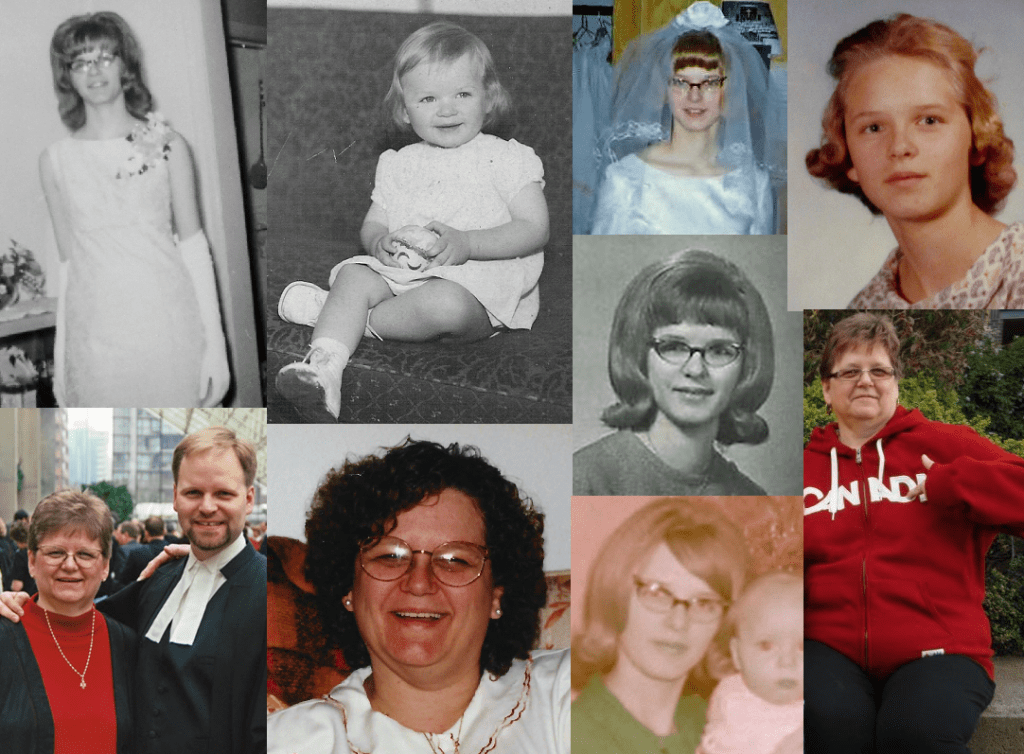
Happy birthday to my mother on her 75th birthday, or, as she marks it, the 56th anniversary of her being perpetually 19.
I have been trying to teach myself Dutch since I was 12. I’ve had a modicum of success.
I was about five-years-old when I first learned that English was not my father’s first language. I begged him to teach me something in Dutch. All he taught me was the word “groen”, meaning “green”. However, the Dutch “g” was not yet familiar to my ear, so I though he was saying “zoom”. I was more than thrilled to run around saying “Zoom! Zoom!, I’m speaking Dutch!”
While that’s all the Dutch he has imparted to me, my father is more than happy to teach his grandchildren the very useful Dutch phrase “grote blote billen.” When our youngest son was a toddler, he somehow learned to tell me “je bent gek.” Thanks, dad. I’ll leave you to use Google Translate to figure out those phrases.
When I was in grade school, the principal often asked me if I was Belgian. I couldn’t figure out why, so I asked my mother. “Because you have a Dutch last name.” That made no sense to me. At the time, I didn’t know that Belgium was bilingual, and thought they only spoke French. I also was confused about her answer that suggested that surnames had ethnic and linguistic connections and meaning. There were few Anglo-Saxon surnames in our town, so to me surnames were just random collections of letters – mine included. I had no idea they had meaning. Mom’s answer was yet another of the many sparks that sparked my interest in genealogy and in learning Dutch.
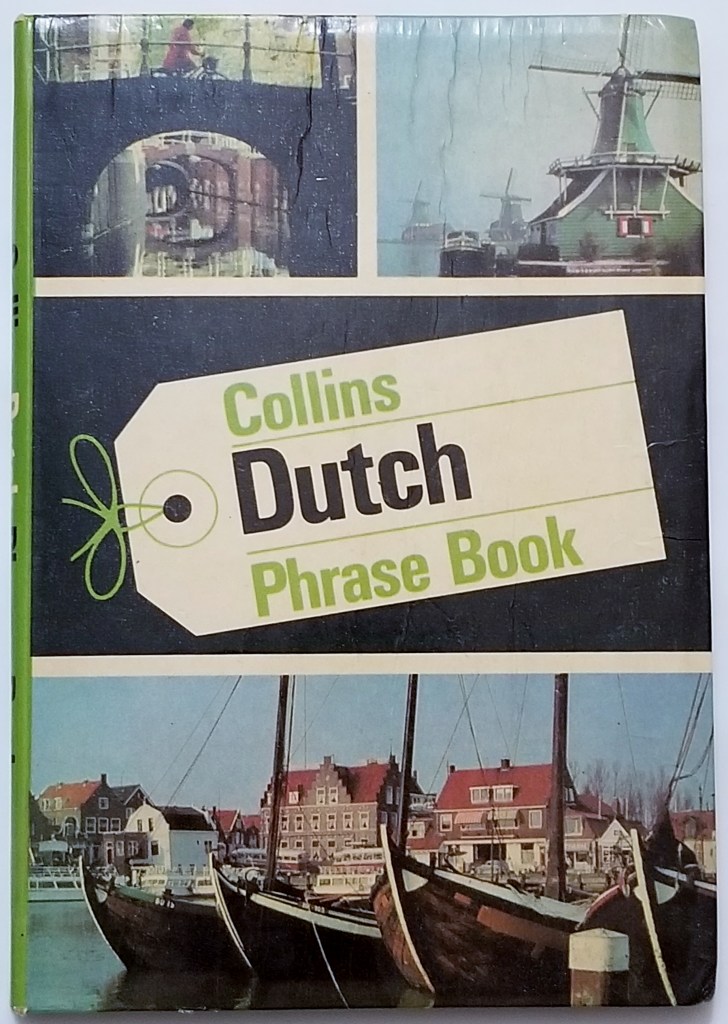
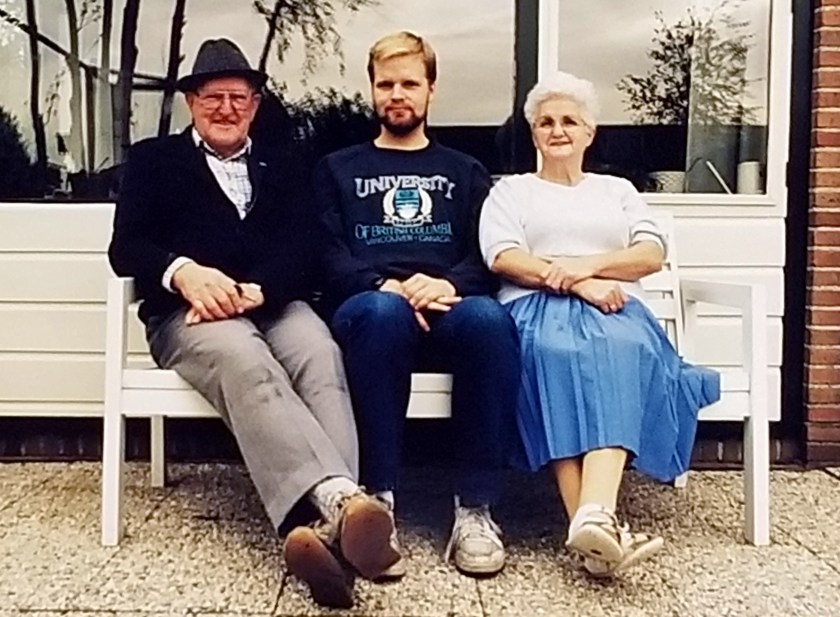
When I was 12, an aunt and uncle of my father came to Canada for a visit, Tante Anny and Ome Nic. Tante Anny was one of my grandmother’s sisters. I was so excited. I knew we had family in the Netherlands, but I had never met any of them before. I was even more fascinated when I was told they only spoke Dutch. I took some of my spending money and ran to the bookstore to buy myself a Dutch phrase book.
I remember my father being really intrigued by it. He came to Canada as a small boy, so his Dutch never progressed beyond an elementary school level. “So that’s what my mother was saying all those years!”, he said more than once. I still have that book.
Despite the language barrier, Tante Anny and I connected right away during her visit. Shortly after she arrived, I came down with a small cold. She sat with me for hours, chatting to me in Dutch, me answering in English. There was a lot of hand gesturing. After a while, I started to pick up a few bits and pieces. Nothing much, but it was a start.
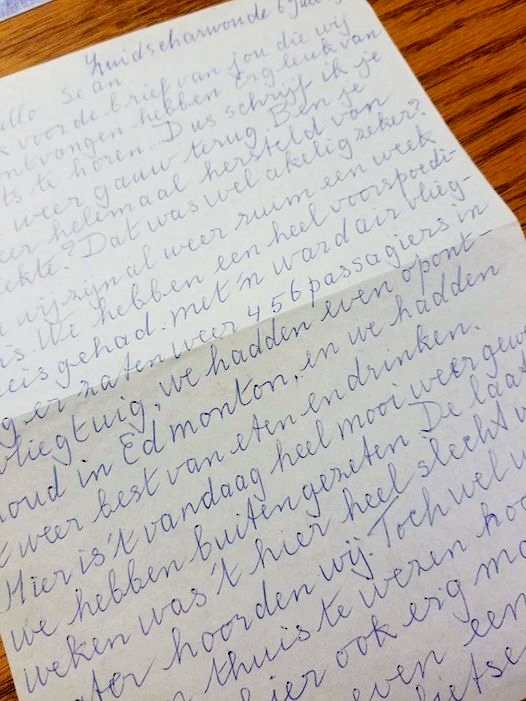
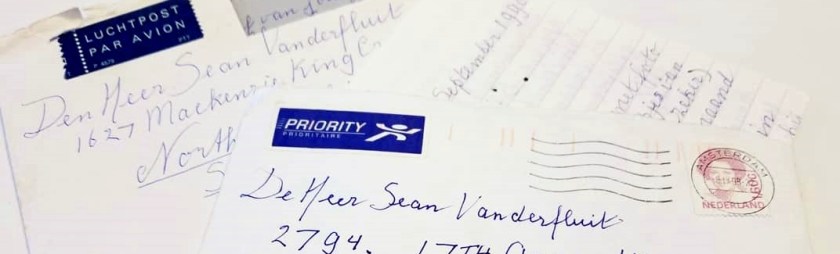
After Tante Anny returned to Canada, we entered into an ongoing correspondence that continued until she passed away twenty years later. I wrote to her in English and her children translated for her. She wrote in Dutch, and my father translated for me. However, I’d pore over those letters, trying to figure them out for myself.
When I moved away from home to start university, I continued my correspondence with Tante Anny, but had to fend for myself with the translation. I bought myself a Dutch-English dictionary (which I still have!) and painstakingly translated each letter on my own. Fortunately, being related languages, some words were not so difficult to work out. As well, after you look up the same word dozens and dozens of times, it starts to sink in. My greatest problem was with idiomatic terms and some of the more informal constructions. Once in a while I’d phone my dad for help, but I had very little grasp of how to pronounce the written words. He enjoyed some gentle teasing at my expense after hearing me mangle the language.
My first trip to Europe was in 1990, with a university friend. Our itinerary had us in the Netherlands for two weeks and we were staying with Tante Anny and Ome Nic. To supplement what I had learned on my own, I enlisted a couple of my Dutch-speaking friends to give me a crash course. One of them loaned me a Dutch translation of a Richard Scarry book. It might have been humbling, but it was a great learning tool.
My family in the Netherlands were very encouraging as I tried to prattle on in Dutch. What surprised me the most was that they all kept saying that I spoke Dutch like my father. That made no sense to me – Dutch was his first language! I finally asked why they kept telling me that. They answered it was because I kept saying “Mijn nederlands is niet zo goed,” which apparently what my father kept saying when he visited the Netherlands a few years earlier. I was also told I spoke Dutch like a book, or an old lady, which was true, because that’s how I had learned.
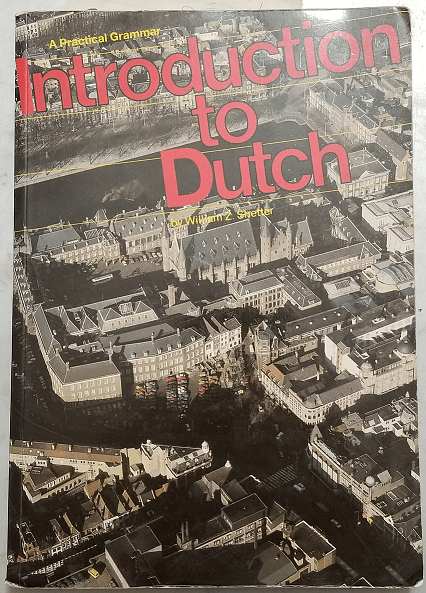
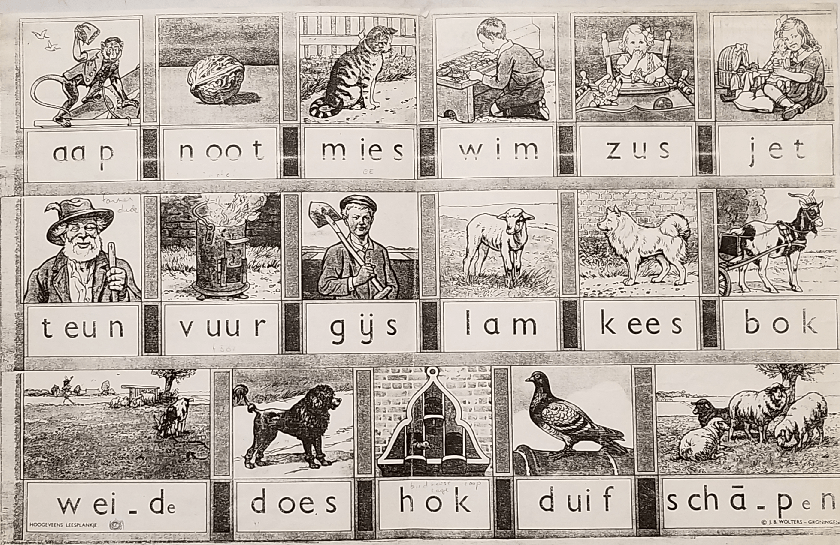
A year or two after my trip, I took a night course in Dutch offered through the local school board. It was the only time I had formal training in the language. I still have my textbook to this day! It was also my introduction to the famous aap-noot-mies leesplankje (“ape nut mouse reading board”). It was developed at the end of the 19th century and generations of Dutch children had it as a tool as they began to learn to read. I still have my textbook from that class, and my photocopy of the leesplankje is still tucked inside.
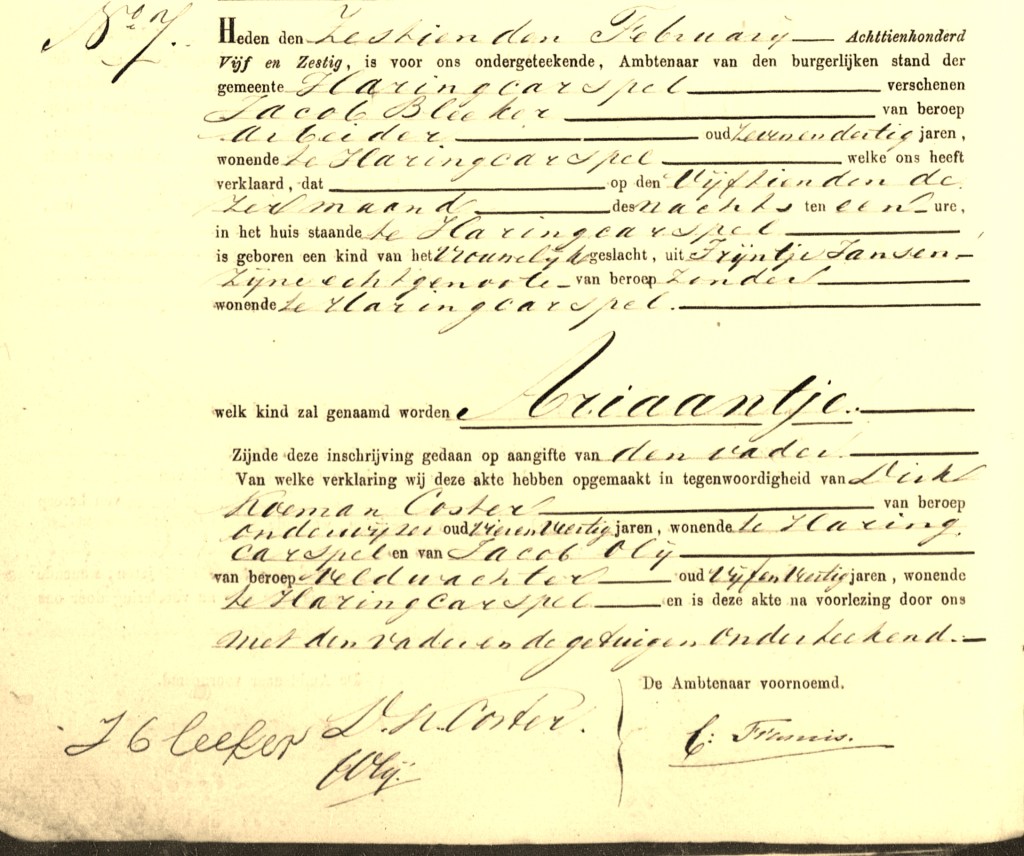
By the mid-1990s, I began to acquire some of family history records from sources in the Netherlands. If memory serves, one of the first documents I ever obtained was the death registration for my great great grandmother, Ariaantje Jacobs Bleeker, born February 15, 1865. Other records followed, including the persoonskaart (“persons card”) for my father and his family. Personal privacy rules weren’t what they are today, so it was easier to obtain records like that, given that at the time everyone named on the persoonskaart was still alive. I also became familiar with the burgerlijke stand (“civil register”). Unlike some unfortunate researchers, I knew right away it was not a village in the Netherlands.
I also used my correspondence with Tante Anny to further my genealogy research. I created a simple questionnaire and a pedigree chart that I spent a lot of time writing in Dutch, in order to make it easier for her to respond. I figured the easier I made it for her, the more likely it was that she’d fill them out. She did, although in her reply letter she queried why I’d want to know about something that was so uninteresting as family history. I often amuse myself by thinking she said that only because there is something interesting worth knowing that she didn’t want me to find. However, in the 25 years since she wrote that, I have not found anything that would support that idea.
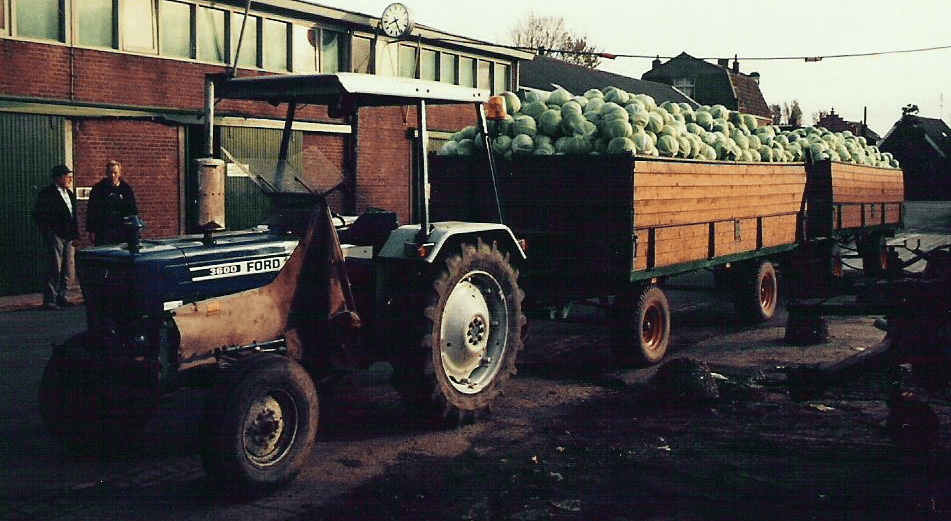
Between my genealogical pursuits and correspondence with Tante Anny, there were some subjects I could understand with ease. The last time Tante Anny came to Canada, we watched my sister’s wedding video, and I was able to speak about the people and relationships without too much trouble. I was also very good with talking about cabbage farming.
Over the years, I’ve tried different ways to teach myself Dutch. Just before my last trip to the Netherlands, I started using Duolingo. It was an amazing tool at the time, and my knowledge of Dutch improved rapidly. I even used it every day during my stay in the Netherlands. Unfortunately, Duolingo is not what it once was, and it has changed a lot for the worse in recent years. With its latest changes, I find it is not a good learning tool at all. I’m inclined to quit the site altogether, but for the fact I’ve got an amazing streak going on there. One of the stereotypes of the Dutch is that they’re stubborn, and I am stubbornly hanging on if only to see how far I can take this streak.
The other great resource I’ve taken advantage of are the free courses offered by FutureLearn. Again, this was a much better resource in the past, but I have taken a number of courses through this program. I have taken their basic Introduction to Dutch course several times. I’ve also taken some genealogy courses through FutureLearn, including one in genetic genealogy that I’ve stalled out on due to sheer lack of free time.
There are now also so many great YouTubers and Instagrammers who provide some wonderful, fun, and educational videos that have been invaluable. These include Learn Dutch with Kim (YouTube, Instagram), JeDutchy (YouTube, Instagram), and Learn Dutch with Bart de Pau (YouTube).
While my proficiency in Dutch is now barely conversational, I have excelled in learning what I need to know of the language to conduct meaningful research in that language. The Netherlands is one of the non-English speaking countries with the highest degree of English-language proficiency in the world and many of their online genealogy resources are offered in English. As well, the “translate” feature of browsers like Chrome can be invaluable, as is Google Translate. However, while there may be transcriptions of the source documents in English, the original records are in Dutch only, and knowing the language allows me to squeeze out so much more information than I might be able to get otherwise. I’m also able to carry out very basic chats in Dutch with cousins in the Netherlands.
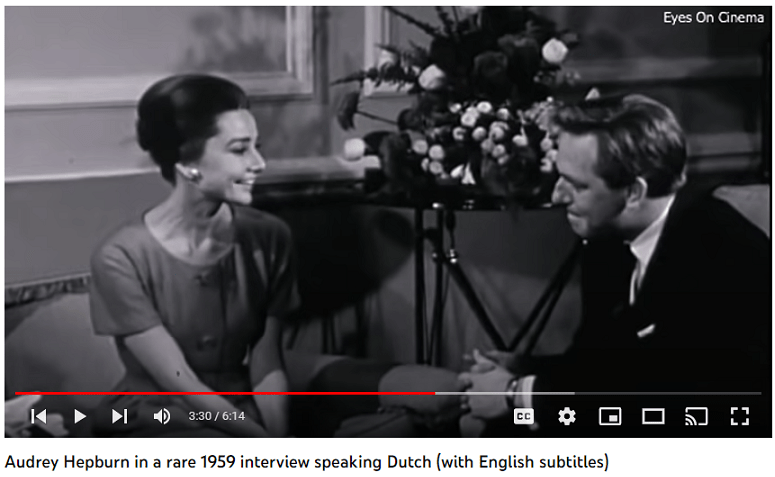
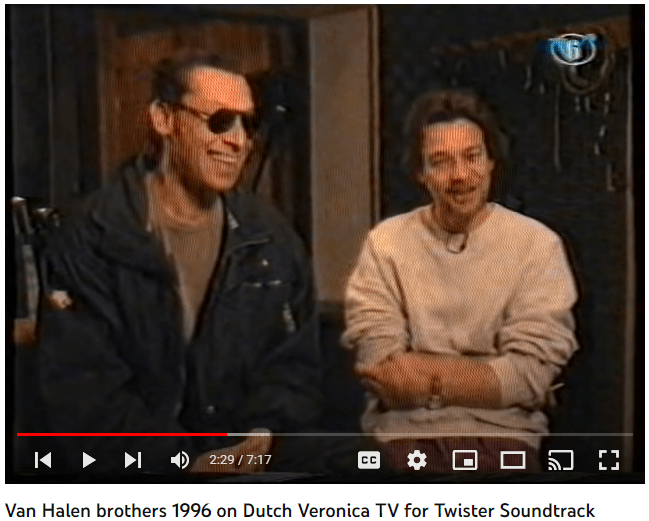
Before leaving, I’d like to share two videos I’ve watched countless times in trying to improve my Dutch. The first is an interview of Audrey Hepburn. Her Dutch is so beautiful and easy to understand. The other is an interview of Eddie and Alex van Halen, who were born in the Netherlands and whose first language was Dutch. I’ve seen her repeat this same interview with the same interviewer in French, and it is equally eloquent and easy to follow. You can click on the images to watch the videos.
I’ve written many times about my aunt, Helen Diana Burgess. Coincidentally, I wrote a significant piece about her for Week 9 of the 2022 52 Ancestors Challenge. Sadly, she left us too soon, at age 48. Despite the short period of time I had her in my life, Aunt Diana made an incredible impact on me. Even though she died 23 years ago, it is rare for a day to go by in which I do not think of her. Whether it’s a favourite book, a memento, or piece of art, there is always something that brings back fond memories of my aunt. I am frequently sharing stories of her with my wife and children.
Moreover, as an avid genealogist, I frequently see queries on social media asking about paper preservation and proper storage of family heirlooms. Diana was a leading conservation scientist, whose expertise included paper, so these queries always remind me of her. I wrote about this last year in Week 40, “Preservation”.
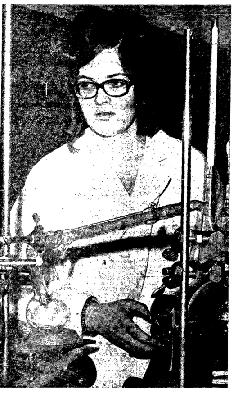
Unfortunately, in the early 1990s, when she was at the height of her career, Diana developed lupus. She was a senior conservation scientist at the Canadian Conservation Institute at the time, but was forced into early retirement by the effects of the disease in 1998. Aunt Diana passed away a year later. At the annual conference of the Western Association for Art Conservation following her death, several of the presentations were dedicated to her memory.
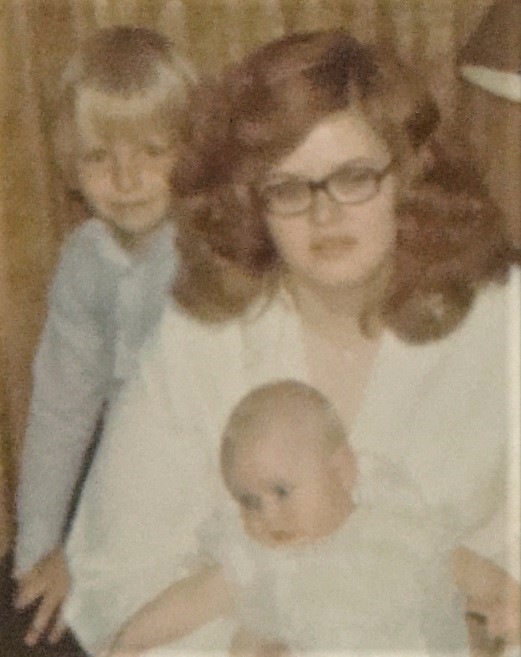
Many of my interests that Aunt Diana nurtured in me I have passed on to our children. Some of the most treasured books I have from my childhood were gifts from her. I still have those books and my kids have read and re-read them voraciously. While Diana could not have known it, not only did she foster my development as a person, but that of my kids as well.
It’s funny how you can feel so bereaved at the passing of someone you’ve never met in real life. Nevertheless, today I feel a profound sense of loss over the passing of someone I consider to be a dear friend.
Arnoldus (“Nol”) van den Hurk passed away today. He was 87. I’ve known him for almost thirty years. Nol was a police officer in Haarlem, Netherlands who, like me, was an avid genealogist. I met him online 28 years ago, probably through Usenet, when he posted an offer to do archival lookups. I messaged him with one name, my great grandfather. He responded with information for many more of my ancestors in addition to my great grandfather. Over the next two years and over 50 emails, he provided me with information about scores of my Dutch family.
Over the years, our relationship expanded beyond genealogy, particularly with the advent of Facebook. Many times over the years I forgot about our connection through genealogy. I very much enjoyed his posts about his daily life and his many travels. Nol was also a great help to me as I tried to teach myself Dutch, answering my questions about word meanings, phrases, and idioms.
I knew Nol had been in the hospital for an extended period last year, but he was home before Christmas. He had been planning on visiting the United States this summer.
I wrote about Nol in a post last summer, which you can read here: https://deckofancestors.wordpress.com/2022/08/01/52-weeks-week-31-help/
My biggest regret is that I never met Nol in person. Despite that, he made an incredible impact in my life. You will be missed, Nol.
 A Deck of Ancestors