It has taken me most of the week to get to completing this week’s theme for the the 52 Ancestors Challenge, “Negative”, because that’s mostly the reaction I had to it.
The first example given in the description for the theme – and the first thing that came to my mind – was “discovering something ‘negative’ about an ancestor”. That brought to mind the ancestors that I really don’t admire. As one branch of my family tree goes back to almost the very beginning of the Latter Day Saint movement, I have a few polygamists as direct ancestors. It was an offensive, oppressive, and misogynistic practice, begun in secret likely because its proponents knew how reprehensible it really was. My least favourite of these ancestors is the one who started as a slave owner and ended up as a polygamist. I might not like these people, but I still research them because it helps in finding out more about the ancestors who I do like.
However, I had neither the bandwidth or the patience this week to write about those men any further. So how else to spin “negative” without delving into the things that weigh us down, cause us to complain (ugh – writing up source citations!), or simply “yuck our yum”, as my kids might say? Unfortunately, while I have many tradespeople in my lineage, none of them were electricians, short-circuiting that idea for further discussion.
I know that for this challenge a lot of people are writing about photo negatives, but it seems to be a well-worn path of discussion. Nevertheless, here is an attempt I made many years ago to turn some negatives I found into a positive, without really having the kind of equipment that I really needed or that was even practical. Years later, I came across prints that were made from those same negatives. This is an example of but one of those photos.
Me with my Aunt Diana, who I wrote about on Week Nine.
Meanwhile, for this week’s theme another participant in the 52 Ancestors Challenge, Karen McPherson of I Seek Dead People, posted about a pair of father-and-son rouges, both named Robert Cross. The elder was born in 1613 and the younger was born in 1642. I am also descended from Robert the elder, through his daughter Anna. I have done absolutely no research on this branch of the family since the mid-1990s. My other lines have been of much greater interest to me and I’ve just never come back to the Crosses. After reading Karen’s story, I don’t think I’m in any more of a hurry to get back to them. That said, I now know more about an ancestor that I didn’t know before. (You’ll want to see Karen’s blog post for the cartoon, which I found exceptionally funny.)
What I’d like to do is end this week’s theme on a note of positivity – with a negative! While I hope I don’t jinx things by pointing this out, our family has managed to get through more than two years of pandemic without coming down with a single case of COVID. We’ve all gone in for testing at various points in time over the last two years, and fortunately the result has always been negative. Today we tested our youngest again and, happily, the result was once again negative.
A swimming pool with my name on it, located on Fluitpolderplein in Leidschendam, Zuid Holland. I thought this would be of interest to one of my sisters, who has practically lived in a swimming pool since childhood.
When I was in elementary school, the principal always asked me if I was Belgian. One day I asked my mom why he kept asking that. “Because you have a Dutch last name”, she answered.
That was no help.
While I had already started working on my family tree, and knew that my dad was Dutch, I had no idea that surnames had any ethnic or cultural significance. We lived in a small prairie town with lots of Ukrainian and Francophone surnames, all of which seemed to be unintelligible jumbles of letters. I included my surname in that regard, as it too seemed to be a meaningless concoction of letters. I had no idea that they had meanings in other languages. To add to my confusion, at the time I thought that they only spoke French in Belgium. I had not yet learned that more than half the country spoke Dutch.
Like many surnames, mine has undergone many changes over the generations: van der Fleuyt, van der Fluijt, van der Fluit, and for many of us in Canada, Vanderfluit. For a while people would misspell my name as Vander Fluit, following the pattern used by a prominent Dutch-Canadian politician in British Columbia named Bill Vander Zalm. In addition, in the Netherlands, the tussenvoegsel (the “van der” part) is often disregarded when sorting names alphabetically, such as for a directory. You might also see it abbreviated as “vdFluit”.
Before proceeding further, there is a myth to address. For Dutch genealogy, it’s one that’s as common as the one that would have you believe that immigration officials changed your surname at Ellis Island: people in what is now the Netherlands did not have a surname until forced to do so by Napoleon in 1811. On the contrary, while some people did not have one, surnames were common in many places well before 1811, although in some provinces patronymics and farm names prevailed until that time. Every branch of the Dutch side of my family tree that I have traced into the 18th century had well-established hereditary surnames by that time. The big change that occurred in 1811 was mandatory civil registration, requiring everyone to register a fixed surname.
That said, my direct ancestors tried out a few surnames for size before settling on the general “v d F”. My great x10 grandfather, who was likely born in the 16th century, does not appear to have a hereditary surname. Rather, his name – Dirck Jansz – is suggestive of a patronymic (“Jansz” = “Jan’s son”). Dirck and his wife, Maritgen, had at least two sons. The elder son, Jan, adopted the surname “Sieren”, which he passed on to his children. The younger son, my great x9 grandfather Johannes, adopted the surname “Goeman” or “Goetman”, which he passed on to all his children. I like to think that I am descended from John Goodman.
However, one of Johannes’s sons, Pieter, chose not to retain the surname his father bestowed upon him. Notarial and judicial records show a number of land transactions showing that Pieter was using the surname “van der Fleuyt” by the end of the 1660s. A land transaction after Pieter died involving some of his sons and his second wife used the surname van der Fleuyt.
So how did the name “Fleuyt” originate?
There is a street in Leidschendam, Zuid Holland named Fluitpolderplein, in an area that was a once a separate village called Veur. The website for the municipality of Leidschendam-Voorburg used to have information about all the street names in the community. It is no longer on the municipal website, but it is still accessible through the Wayback Machine/Internet Archive. The old municipal website provides this explanation, which I have translated from the Dutch:
The square and adjacent street between Prinsensingel, Noordsingel, de Amstelweg, and de Graaf Willem de Rijkelaan is called Fluitpolderplein. This was decided in 1970. But where does the “fluit” in “Fluit Polder” come from anyway? According to a historian of Veur, Hendrik Brouwer Schut, it may have something to do with the whistle of the grinding mills, or possibly the “fluitenkruid” (“cow parsley” or “Queen Anne’s lace” in English). [The Dutch name of the plant refers to the fact a flute or whistle can be made from the stem.] However, there may be a better explanation. In 1648 a large part of the territory of the polder already belonged to a certain Jan Dirckxz, who also went by the name “Fluijt”.
According to the street sign for Fluitpolderplein, the polder was located alongside the “Fluijtermolen” (Fluit Windmill), which was built around 1641. So the question I have is: what was named first, and for what? Were the windmill and polder named for Jan Dirckxz, or the other way around? Was the whistle the sound of the mill or the wind through the foliage?
With the next generation, the name became “van der Fluijt”. The spelling remained that way until the time of my great x3 or x4 grandfathers, Dirk and Pieter. Interestingly, that was around the time of mandatory civil registration. I have not yet found a “naamsaanneming” (“name taking”) record for the name that would have been completed at the time of mandatory civil registration. However, given that the family had used the surname for generations, it is unlikely that Pieter had to register. I also note that the change in spelling coincided with Pieter’s curious move from South Holland to North Holland. The family he left behind continued with the “Fluijt” spelling.
Visiting my cousin in the Netherlands, whose house is on “‘t Fluitnpad”. Which is actually the name he gave his driveway. In English, it says “The Fluit Path”.
When my grandparents came to Canada with my father and his sisters, they initially used the traditional Dutch spelling, with lower case letters for the tussenvoegsel and the spaces in between. Over time, the name came to be Canadianized, with it written as one word with a capital “V”. However, the spelling remained fluid for many years.
As for me, both my first name and surname pose problems and are frequently misspelled and mispronounced. Many of my relatives in the Netherlands have difficultly pronouncing my clearly not Dutch first name, with the alien “sh” sound at the beginning. To be fair, I find the Dutch pronunciation of my surname difficult, as the “ui” sound in Dutch doesn’t quite exist in English. In fact, I never heard it pronounced in proper Dutch until I started university and had a Dutch-Canadian history professor who used it my first day of class. What I find mindboggling is how my name is continuously misspelled by people who have only ever seen it in writing. I have a fun collection of the most amusing misspellings I gathered from correspondence I received in the course of the job I had many years ago.
Ta dah!
I have to say, it is both really cool and very strange to visit a place where people can spell your surname without asking or being corrected.
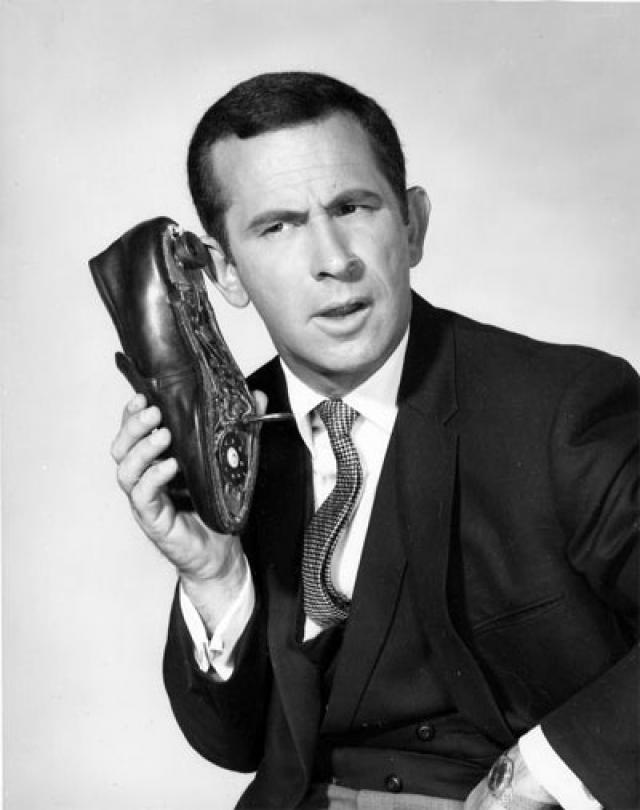
Check It Out was a gawd-awful Canadian sitcom that ran on CTV in the mid-80s. When it first aired, I only watched it because it starred Don Adams, better known for his role on Get Smart as Agent 86 Maxwell Smart. Get Smart was my absolute favourite show when I started watching it in reruns when I was four. My mother tells me that in kindergarten I would not respond to my teacher unless she called me “Max”, something I can actually remember doing. I own the entire series on DVD. Unfortunately, Check It Out was as terrible as Get Smart was terrific. How Check It Out got Don Adams is beyond me. Not every Canadian sitcom can be Corner Gas or Schitt’s Creek.
“Check it Out” is also the theme for Week 14 of the 52 Ancestors Challenge. Like the Flowers theme of Week 11, this week’s theme didn’t really inspire me at first. However, in the Facebook post introducing the theme, “check it out” could be a direction to look at something that might be “something neat”. This reminded me of something I was thinking of posting to this blog outside of the 52 Ancestors Challenge.
In a Twitter post six years ago, David Allen Lambert, Chief Genealogist at New England Historic Genealogical Society, suggested creating a “longevity pedigree”, a pedigree chart showing the ages ancestors lived to rather than their names. I thought that was pretty neat, so I created my own. At the time most people, myself included, simply created hand-written charts that we tweeted. For this blog, I tidied it up.
Shortly afterwards, the idea was adapted for birthplace. Here is mine.
It’s interesting how homogenous it is on my father’s side compared to my mother’s. While it is much more varied on my mother’s side, the variety increases as you go back along my paternal grandfather’s line.
Of course, looking only at a person’s birthplace can be deceptive. For my ancestors born in the Russian Empire, they were neither Russian nor Ukrainian. They were Germans who settled in what is now Ukraine in the 19th century, forming part of a larger group known as Germans from Russia. I have mentioned these ancestors in this blog several times before.
For fun, I did a birthplace pedigree for our kids.
There are all sorts of other kinds of pedigrees like these that you can make. One example I’ve seen is people creating pedigrees for their ancestors’ religions. Another I’ve seen is an occupation pedigree. Then there was this mysterious pedigree Yvette Hoitinkposted to Twitter:
It was her introduction of the Level-Up Challenge, which involves improving the evidentiary foundation for each ancestor in your family tree. While I haven’t “officially” undertaken the Level-up Challenge, I find I’ve been sort of doing it for a few of my lines without actually setting out to do so.
What kinds of interesting variations of a pedigree chart have you created?
My mother has told me, several times, that before I was born my father had hoped to have five daughters. As the first born, I quickly put paid to that. It was probably in my father’s best interest. Back in my teens when my father had hair, I liked to tell him that all the grey ones were entirely due to his daughters and none of his sons.
Hazel and Irene Nelson in the Alberta Birth Index
When I saw the topic for this week’s 52 Ancestors Challenge, the first sisters who immediately came to mind were my great grandmother and her sister. They are amongst the very few twins I actually have in my family tree. Unfortunately, they were sisters who never had the opportunity to know each other or to share a childhood together.
Hazel and Irene Nelson were born to John Alexander Nelson and Ella Elizabeth Thomas on December 15, 1899. The girls were the tenth and eleventh of twelve children. Given that Hazel was registered first, I take it that she was born first.
John and Ella were amongst the earliest settlers of Cardston, Alberta, which was founded in 1887 by members of the Latter Day Saints (Mormons). The Nelsons arrived in 1890 and began farming nearby.
This is where my great great grandparents, John and Ella Nelson, first farmed when they settled in Cardston, Alberta
Hazel and Irene Nelson were the first twins born in Cardston. Sadly, Irene passed away five weeks later. I’ve been to the cemetery where she is buried. Unfortunately for me, I only discovered where she is interred after my trip. While I did not realize it at the time, Irene is buried next to her parents. The grave marker is damaged. Information for the Cardston Cemetery on the Town of Cardston website confirms that Irene’s grave is the one beside her parents. Irene’s brother is interred in the plot below hers.
Irene Nelson is buried beside her parents John and Ella, whose grave marker is the white one in the foreground. Irene’s grave is the one with the damaged headstone. The black marker on the left is Irene’s brother Seth Henry Nelson and his wife Mabel.
Hazel Nelson, about 1904
Hazel, on the other hand, lived to be 67. She and her husband, Milton Leo Burgess, had nine children, the oldest of whom was my grandfather, Leo. Milton died in 1964. Eight weeks before she died, Hazel married a widower, Walter Beaves. They met in the seniors’ home where they both lived, which Hazel called “the old fools’ home”.
Hazel passed away three days before I was born. My mother pretty much went from her grandmother’s funeral to the hospital for my arrival.