This week’s 52 Ancestors Challenge theme is a difficult one: “Shadows”. It has taken me a while to think of anything relating to this theme. If only I had an ancestor who was a spy. Or maybe I do, and don’t know it, they were that good!
After pondering the theme for a while, I began to consider that what often lies in the shadows are those skeletons in the closet and other parts of family histories that people don’t want to talk about. These things are not always misdeeds or scandals or salacious affairs. Sometimes they are things out of our control that have a cultural or societal stigma, such as mental health. The stories, or even existence, of family members afflicted with mental health problems were often deliberately kept in the shadows.
Two ancestors of mine who most likely had some form of psychological condition come to mind. While the fact they may have had a mental health condition was not entirely kept hidden, I have very little information about their circumstances because their stories came to me second or third hand, with little detail. From the accounts, it seems clear that the lack of detail is due to the hushed nature of the way their circumstances were recounted by those who knew them best.
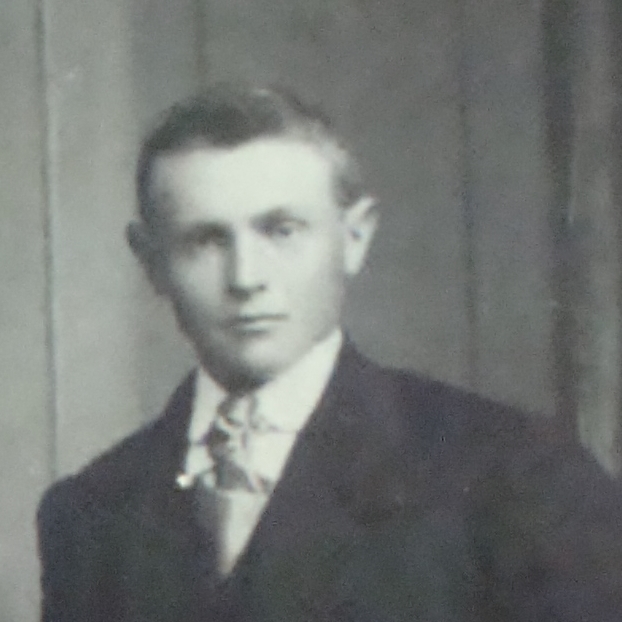
I will start with my great grandfather, Johannis Albertus van der Fluit. He died when my grandfather was eight years old. I really never had any contact with anyone else who knew Johannis personally or was old enough to remember him. However, over the years I heard passing references to his mental health and related problems.
I do know that my grandfather could recall some of the circumstances of his father’s mental health. Apparently, Johannis sustained some sort of head injury after an accidental blow to the head and began to exhibit strange behavior afterward. He suffered from delusions, which were very unsettling to him. According to one account of a delusional episode, it took my grandfather’s two older brothers and some neighbours to restrain him. From what I know of the story, Johannis was placed in a sanitorium, where he continued to suffer from delerium. However, shortly before his death, he experienced a period of rational thought. At that time, my great grandmother was summoned to see him, which occurred close to the time Johannis died.
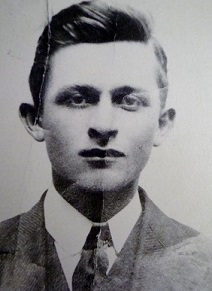
Another ancestor who, I believe may have had mental health problems was my mother’s maternal grandfather, Heronimus Michael “Jerome” Lerner. This is based upon things some of my relatives mentioned, briefly, over time. My mother never knew him; her grandparents separated long before she was born. However, my mother believes, based on what she heard from her mother, that Jerome had some sort of mental health condition.
Apparently Jerome’s mental health was a significant factor in the breakdown of his marriage. My mother says that a rift developed between the Lerners and my great grandmother over the separation. It seems there was some sort of expectation that my great grandmother should have remained with Jerome despite his troubles.
Whatever mental health problems my great grandfather may have had, I do not know what they were or how long they persisted. I know Jerome was farming in the 1940s. When my grandmother’s younger sister was in her teens, she went to live with her father on his farm for some time. As well, the record of his death noted that he was a farmer at the time of his death; it also made no mention of any mental health conditions. I spoke to my great aunt at length about her time living with her father, but she never really spoke of his mental health.
Finally, a mental health problem that may have affected a number of my female ancestors was postpartum depression. Again, I have no solid evidence of this. Rather, brief and cryptic conversations and speculation about the circumstances of some ancestors’ experience after childbirth certainly sounds consistent with what was likely postpartum depression.
In recent years, the stigma around mental health has diminished, although it still may be a difficult thing to talk about. Fortunately, there are now many more resources available for people who need help. In Canada, one can start with this “Get Help” resource page.
 A Deck of Ancestors