52W Mark IV – Week 13: Card V13 Trijntje Jans(en)

Trijntje Jans (1830-1915)

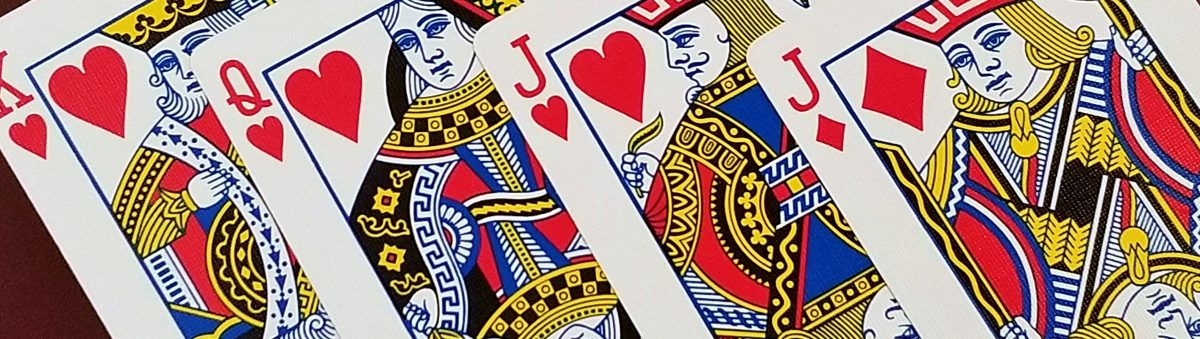
With Week 13, we have reached the last card of the first suit of this year’s deck of ancestors! I am really enjoying the different approach I have taken with the 52 Ancestors Challenge this year. I thought it might be less work, but as I worked through each card, I realized that my research hadn’t been as thorough or complete as I thought it had been. So I’ve spent much more time researching than writing as part of this year’s challenge. In essence, it has turned into Yvette Hoitink‘s Level-Up Challenge!

My Gx3 Grandmother, Trijntje Jans, is featured in this final card. For decades, I’ve had her entered in my database as “Trijntje Jansen”, with “Jans” as an alternate surname. However, quite recently, I’ve reversed things, and now have “Jans” as Trijntje’s surname with “Jansen” as an alternative.

As anyone who has done genealogy for enough time knows, a fixed consistent spelling of names is a relatively recent thing, so the fluidity of Trijntje’s surname is not surprising.

I first used “Jansen” because it was how I first encountered Trijntje. In the marriage registration for Ariaantje Bleeker, my Gx2 Grandmother and Trijntje’s daughter, Trijntje’s surname was recorded as “Jansen”. It was also entered as “Jansen” in the marriage registration of Ariaantje’s younger sister, Aagje Bleeker.

However, in records specifically about Trijntje herself, her surname was recorded as “Jans”. Most significantly, the name entered in the registration of her birth was “Jans”. Trijntje’s marriage and death registrations also named her as “Jans”. To me, that’s a compelling reason to use “Jans” as her “actual” surname and “Jansen” as the alternate.

So what do all these records tell us?

Trijntje was born on January 4, 1830 in Oude Niedorp, Noord Holland. She was the first of 13 children born to Cornelis Janz Jans(en) and Ariaantje Noordstrand. Fewer than half the children survived infancy or childhood.

Trijntje’s full birth registration

Oddly enough, the youngest of the 13 children was also named Trijntje. The elder Trijntje was 19 years old when her younger namesake was born and was likely still living at home. There are many reasons why parents would give two or more of their children the same name, but I cannot think of any that would have applied in this case.

Trijntje married Jacob Bleeker on May 12, 1855 in Oude Niedorp. Together they had four children. Sometime between the birth of their second and third children (1859 to 1865), Trijntje and Jacob moved to Harenkarspel, Noord Holland. Harenkarspel is about 10 kilometers west of Oude Niedorp. That strikes me as a huge move, given that even today that seems to be a long distance for some of my relatives who live in Noord Holland. I don’t know why they moved. It’s possible there was significant event in their lives, which might go to the five and a half year age gap between their second child, Cornelis, and third child, Adriana (my Gx2 Grandmother).

Jacob died in 1890, when Trijntje was 60 years old. However, she did not remain in Harenkarspel after he died. According to her death registration, Trijntje died in Medemblik, Noord Holland, on November 8, 1915. I do not know when or why she moved to Medemblik, which is on the coast of the Zuiderzee (“South Sea”), a saltwater bay. With the completion of the Afsluitdijk in 1932, the Zuiderzee became a freshwater lake, the IJsselmeer.

This was also a significant move, because Medemblik is almost 30 kilometers east of Harenkarspel and 10 kilometers east of Oude Niedorp. I don’t know of any contemporaneous family who lived in Medemblik at the time that might explain why Trijntje moved there. I will have to check the bevolkingsregisters (population registers) and Trijntje’s FAN club (“Friends, Associates, and Neighbours”) to see if I can solve this mystery.

Trijntje’s death registration.

52W Mark IV – Week 8: Card V8 Jan Gerritsz Veldman

Jan Gerritsz Veldman (1835-1897)

I generally think of my Dutch ancestors – particularly the paternal side of my father’s family – as labourers, farmers, domestic workers, or similar. I suspect that the maternal side of my father’s family might have been better off, although by how much I cannot say. With a couple exceptions, I have to go five or six generations back to find something other than farmer or labourer, such as a cordwainer and a cobbler, a harbour pilot, or a sailor. Of those who worked the land, I doubt few of them actually owned their farms.

One exception is my Gx3 Grandfather, Jan Gerritsz Veldman. During the 52 Ancestors Challenge in 2023 , I described him and his wife Trijntje Stoop as “prosperous“. However, at one point in time he may have been even better off than I had previously thought.

Jan was born on November 27, 1835 in Nieuwe Niedorp, Noord Holland. He was the eighth of twelve children born to Gerrit Veldman and Maartje Cornelis Zijbecarspel. In 1855, when he was 20, he was drafted for the militia, as the Netherlands had mandatory military service until the 1990s. Many conscripts never actually served; rather, they were largely on-call, like a reserve. However, according to his marriage registration, Jan had “bought” himself a replacement.

According to my late friend Nol van den Hurk, this was a common practice “if you had money.” I asked if this meant Jan was well off, Nol responded:

Whether Jan was well to do or not I can’t tell you. The archives hold papers you had to show when you wanted to marry. One of the papers is an official document that showed that you had fulfilled your duty in the Army. In Jan’s case I saw a document, signed by the Queens commissioner’s clerk in the Province North Holland (who was responsible for those things in those days) that said that Jan had his military duties done by a replacement. This was not uncommon in those days, but it never stated who paid for it. It might have been the bride’s father, the groom’s father, the groom himself…. When he was the only son of a farmer, he did not have to join the army. If so, it was stated so in the document.

The passage from Jan and Trijntje’s marriage registration that speaks of Jan having discharged his obligation for military service.

Jan and Trijntje married on May 1, 1858 in Nieuwe Niedorp. I have a copy of their marriage registration, but unfortunately I have not yet found a copy of their huwelijksbijlagen (marriage supplements) online. The marriage supplements are a set of documents the couple had to provide before they could marry, such as birth extracts and other vital records. As well, it used to include a record confirming that the groom had satisfied his mandatory military service. It would be nice if I could visit the Dutch archives in person, but I doubt I’ll be in the Netherlands in the foreseeable future.

The opening portion of Jan and Trijntje’s marriage registration, showing their names, ages, occupations, places of birth, residence, and parents, among other things.

At the time he married Trijntje, Jan was working as a farmer in Nieuwe Niedorp; however, their eldest child, Gerrit, was born in Harenkarspel in 1859. It is likely that Jan actually lived and worked in ‘t Veld, a village within gemeente (municipality) Nieuwe Niedorp, as reflected in the bevolkingsregister (“population register”) of Nieuwe Niedorp for 1860-1870. There was a subsequent bevolkingsregister for ‘t Veld for 1870–1880, which also listed Jan and his family. As for ‘t Veld, it later became part of gemeente Oude Niedorp. It is now within gemeente Hollands Kroon.

It appears that Jan and Trijnte did very well for themselves while living in ‘t Veld. I recently discovered that they were prosperous enough to have domestic servants in the late 1860s. The first, Jansje, worked for Jan and Trijntje until January 1868, but I do not yet know how long she had been there before leaving. The second, Brigitta, worked from February to December 1868.

I love seeing the signatures of my ancestors from so long ago. Here are my Gx3 Grandparents, along with the bride’s parents, my Gx4 Grandparents, 167 years ago.

Jan and Trijntje had eight more children who were born in Nieuwe Niedorp. It appears that all but two children survived infancy and childhood. In May 1872, Jan, Trijntje, and their children moved to Barsingerhorn, which is about five kilometers north of ‘t Veld. There they had the last of their ten children, Aantje, born in 1873.

Upon relocating to Barsingerhorn, Jan and Trijntje began to acquire several pieces of farm properties, which together formed two separate properties. One property consisted of two lots in Oude Niedorp of about 0.157 hectares (about 0.4 acres), on which there was a house. The other property was a farm consisting of 20 lots in Barsingerhorn, totalling about 11.9 hectares (just under 3o acres). The farm property included a farmhouse, pastures, farmland, and a boat.

Approximate size of the total amount of land Jan and Trijntje owned: 24 American football fields (FYI, Canadian football fields are longer.)

When Jan died on May 21, 1897, these pieces of property passed to Trijntje. Within a year after she died, on January 27, 1906, these properties were put up for auction. The auction noticed valued the first property at ƒ835, while the second property was valued at ƒ17,152.66. Together, they amounted to about CDN$427,958.27 in 2025 dollars.

Schager Courant, June 20, 1897, page 3: “Overleden” (Deceased), 21 May, Jan Veldman, age 61, husband of Trijntje Stoop
Schager Courant, Schagen, Noord Holland, Netherlands, November 11, 1906, page 4.
“Openbare Verkooping” (“Public Sale”). This is an itemized list of Jan and Trijntje’s two properties that went up for public auction after Trijntje died.

52W Mark IV – Week 5: Card V5 Ariaantje Jacobs (Adriana or Jaantje) Bleeker

Ariaantje Jacobs (“Adriana” or “Jaantje”) Bleeker
(1865-1929)

When I first started tracing my Dutch line further back further than my great grandparents, I started coming upon some very clearly Germanic and feminine sounding names but did not sound cute in any way. Then again, what should I expect from a language where the word for “cute” is “schattig” – definitely not a cute sounding word to an Anglo ear, especially with that Dutch “g”!

One of the standouts of these was my second great grandmother, Ariaantje Jacobs Bleeker. Ariaantje did not easily roll off the tongue when I first encountered it, but it came to me quickly. Like most people in the Netherlands, she did not go by Ariaantje on a daily basis. She is often referred to as “Adriana” or “Jaantje” in the records.

Adriana was born on February 15, 1865 (160 years ago this month!) in Harenkarspel, Noord Holland. For the longest time, I have had Adriana as the third of three children born to Jacob Bleeker and Trijntje Jansen. However, given the age gap between Adriana and her older brother, Cornelis, I suspected there might have been some other children in between.

Mind the gap!

I’ve done some digging to fill the gap. One strategy I’ve employed is looking at Adriana’s FAN club: her “Friends, Associates, and Neighbours”. So far I haven’t found any missing siblings. It’s still on my research to-do list, although it has not been a priority.

Marriage Registration for Jan Pater and Ariaantje Bleeker (top and bottom)

It appears that Adriana lived with her parents in Harenkarspel until she married Jan Pater on April 19, 1888. The Bevolkingsregister (population register) for Harenkarspel shows that she relocated to Heerhugowaard on April 20, 1888. Jan and Adriana had four children: Johannes (who only lived two weeks), Jacob, Teetje (my great grandmother), and Jan. Only Jacob and Teetje married. Jan worked on his parents’ farm for many years after reaching adulthood.

Adriana died on July 8, 1929, at home in Slootgaard, a village in gemeente Harenkarspel.

Death registration for Adriana.

The bidprentje (prayer card or in memoriam card) for Adriana’s funeral states that she was buried at the church cemetery in Waarland, which at the time was part of gemeente Heerhugowaard. This would be St. Wulfram’s Church (left), which I drove past the last time I was in the Netherlands. However, there would have been no point in stopping to look for her grave, because graves in the Netherlands are usually cleared within thirty years. A quick check of Online Begraafplaatsen (a database of Dutch cemeteries) shows no entries for Adriana at the St. Wulfram cemetery, which is consistent with her grave having been cleared.

Adriana’s bidprentje, front and back.

52W Mark IV – Week 2: Card V2 Jan Dirksz van der Fluit

Jan Dirksz van der Fluit (1848-1935)

Jan Dirksz van der Fluit was born in Oude Niedorp, Noord Holland, Netherlands on September 14, 1846 to Dirk Pietersz van der Fluit and Aaltje Klaasse Stroet.

While I have a significant amount of information and source material for Jan, the one great mystery is whether the man seen in the image above is, in fact, Jan Dirksz van der Fluit. In an email, the person who provided it to me questioned whether he had correctly identified Jan as the person in the photo. He indicated that it is possible that the man is actually Jan’s brother-in-law, Klaas Dekker (1832 – 1912). Klaas was married to Jan’s sister Geertje (1841-1928). My correspondent did not indicate where he acquired the image. So this card is either Jan van der Fluit or Klaas Dekker.

The other mystery about Jan is how he spent his life between the day he was born and his first marriage to his first wife, Bregtje (also “Brechtje” or “Brigetta”) Tak, who he married on April 9, 1880. That’s a 33 year gap in time for which I have no information. At most, at the time of his marriage to Bregtje, Jan had been a farmer and a labourer, most likely in Oude Niedorp or Niuewe Niedorp.

[Update February 20, 2025: Today I found a Bevolkingsregister for Oude Niedorp for 1860-1885, with an entry for Jan’s mother, Aaltje Stroet and all her children. This was after Jan’s father had died. It indicates that up to age 15, Jan was most likely living with his mother in ‘t Veld. From age 15 to 18, Jan lived in Heerhugowaard. I will have to look for a Bevolkingsregister for Heerhugowaard to see if I can learn more. In February 1865, Jan moved back home with his mother and siblings in ‘t Veld.]

Bregtje was born in Oude Niedorp in May 20, 1855. She was 24 when she married Jan, who was 33 at the time. Jan and Bregtje had three children: Dirk, Geertruida, and Petrus. It was not a long marriage, as Bregtje died on December 8, 1884, nine days after Petrus was born. Given the close connection in time, it may be that it had been a difficult childbirth that ultimately resulted in Bregtje’s demise.

Jan married for a second time nine months later, to Maartje Veldman (1862-1904), in Barsingerhorn, Noord Holland on August 19, 1885. Maartje was 22 when she married Jan, who was then 38. I am descended from Maartje, who is Card V3 – so more on her next week. Jan’s marriage to Maartje lasted almost 20 years, ending when Maartje passed away.

Heldersche en Nieuwedieper Courant, September 9, 1885, page 4.
“Engaged and Married: Jan van der Fluit, widower of Brechtje Tak, 38 years old, and Maartje Veldman, never married, 22 years old.

Jan and Maartje had seven children together, although the first two did not survive infancy. Their fourth child was my great grandfather, Johannis Albertus van der Fluit. Jan outlived Johannis by three years. Maartje passed away on August 5, 1904, exactly one month after the birth of her youngest child, Brigettha.

Jan married for a third time, to Aagje Rood in Oude Niedorp on January 24, 1907. Aagje was born on December 20, 1863, in Heerhugowaard, Noord Holland, making her 43 when she married Jan. Aagje was a widow at the time she married Jan, having been previously married to Arie Pater. I have not done much research into Arie, but would not be surprised if he is somehow related to me given that my father’s maternal line is Pater. However, to date I have yet to find any connection between Arie and my Paters. Unlike Jan’s previous wives, Aagje outlived Jan – by two and a half months. She died on May 4, 1935.

Bevolkingsregister for Oude Niedorp for 1931 to 1938

At the time of his second marriage, Jan was a merchant and shopkeeper. I know he was involved in that line of work until at least 1894, but I do not know the extent or details of that occupation. By 1904, he had returned to work as a labourer, which he apparently did until a year before he died. Since he died in 1935, that would mean he was still working when he was 87. The Bevolkingsregister (population register) for Oude Niedorp for 1910 to 1930 shows that he was a labourer during that entire time. The Oude Niedorp Bevolkingsregister for 1931 to 1938 indicated that he was still a labourer, at least until June 1934 when he moved to Westerblokker, which is about 16 kilometers from Oude Niedorp.

Jan’s bidprentje

However, I doubt that was so. It seems unlikely that he would still be working as a labourer in his mid-80s. The bidprentje (prayer card or in memoriam card) given out when he died. It indicated that in his last years “his legs could barely carry him”, yet he was still able to “shuffle” or “trudge” to church every day before dawn. His death registration also clearly indicated he was no longer working at the time he died.

Jan’s work was not limited to being a labourer during this period. In 1907, he was also working as a milkman; in July 1917 he was once again doing some form of work as a merchant.

On June 6, 1934, Jan and Aagje moved to Westerblokker. I still have to find the Bevolkingsregister for Westerblokker from that time. It’s on my to-do list; however, it is not yet available to the public because it includes a time period that is restricted under privacy laws. Jan died seven months later, on February 22, 1935. His bidprentje says that he passed away in “Bethlehem” house. Bethlehem was a monastery, which must have had some sort of palliative or care home. Jan was buried in Westerblokker.

UPDATE!

February 15, 2025: Late last week I was able to verify that yes, indeed, this is a photo of Jan Dirksz van der Fluit! Not only that, but it resulted in finding a photo of his wife Maartje Veldman!

Jan Dirksz van der Fluit!!