Just because it’s written in stone doesn’t mean it’s correct.
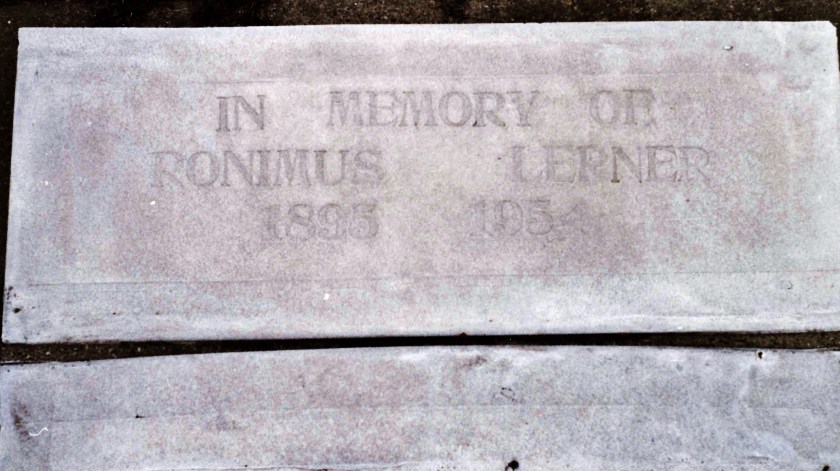
A prime example in my tree is the headstone for my mother’s maternal grandfather, Heronimus Michael Lerner (1895 – 1954), who went by Jerome. However, the headstone on his grave is in memory of “Ronimus Lerner”. It’s clear that there had not been a preceding “Je” that wore away or that had been otherwise removed.
Headstone for Heronimus “Jerome” Lerner, Fox Valley Cemetery, Fox Valley, Saskatchewan
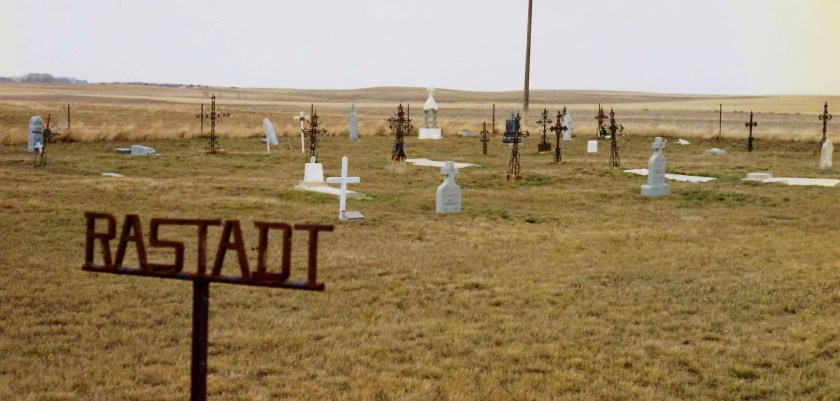
Another example is in the nearby Holy Trinity Roman Catholic Cemetery in Rastadt, Saskatchewan, where a number of my mother’s ancestors and relatives are interred. The marker for my mother’s great aunt, Marianne Roeder, says she died “6/21/29” (June 21, 1929). However, church records show that she died on June 2, 1921 and was buried July on 1, 1921.
Holy Trinity Roman Catholic Cemetery at Rastadt, Saskatchewan, April 1, 1997.
While there are several other examples in my tree, my wife’s maternal line has a significant number of tombstone typos.
The headstone for my wife’s Gx2 grandmother, Ellen Sophie Butcher Dwyer (1867 – 1952), puts her year of birth as 1866 or 1867, but the record of her marriage puts her year of birth as 1865. The 1921 census puts her birth in 1867. The headstone for Ellen’s grandmother, Agnes Pellow (1794 – 1869) erroneously states that she died in 1879.
Other apparent errors might not actually be so. For example, my wife’s Gx11 grandfather, Thomas Newman. Thomas most likely lived from about 1560 to 1649, dying at age 89. His headstone says that he was was “over eighty years old” at the time of his death. If he died at 80, Thomas would have been 15 years old when his third child, Richard, was born. However, it was more likely that Thomas was age 20 when his first child was born. While it might seem that Thomas’s headstone may have been incorrect, if Thomas died at age 89 then it was correct to say he was over 80 years old at the time of his death.
These examples underscore the importance of at least two of the elements of the Genealogical Proof Standard: the need for reasonably exhaustive research and to resolve any contradictory evidence.
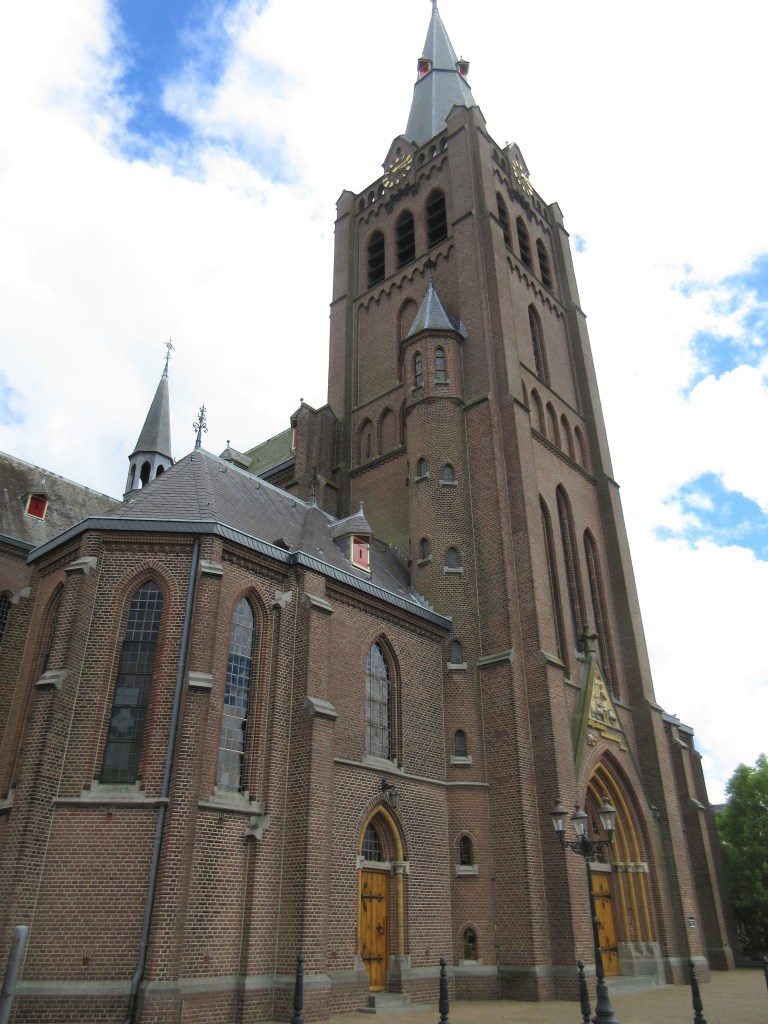
Kerk van Sint-Joannes de Doper, Noord-Scharwoude, Noord Holland, Netherlands
I was staying with a cousin whose home is only a few hundred metres from the Kerk van Sint-Joannes de Doper (Church of Saint John the Baptist – link is in Dutch). I walked past it every day. One afternoon my father and I, along with a few of our cousins, explored the church and the adjacent graveyard, Het Parochiële Kerkhof Sint Jan de Doper (The Parish Cemetery of Saint John the Baptist – link is to Find a Grave).
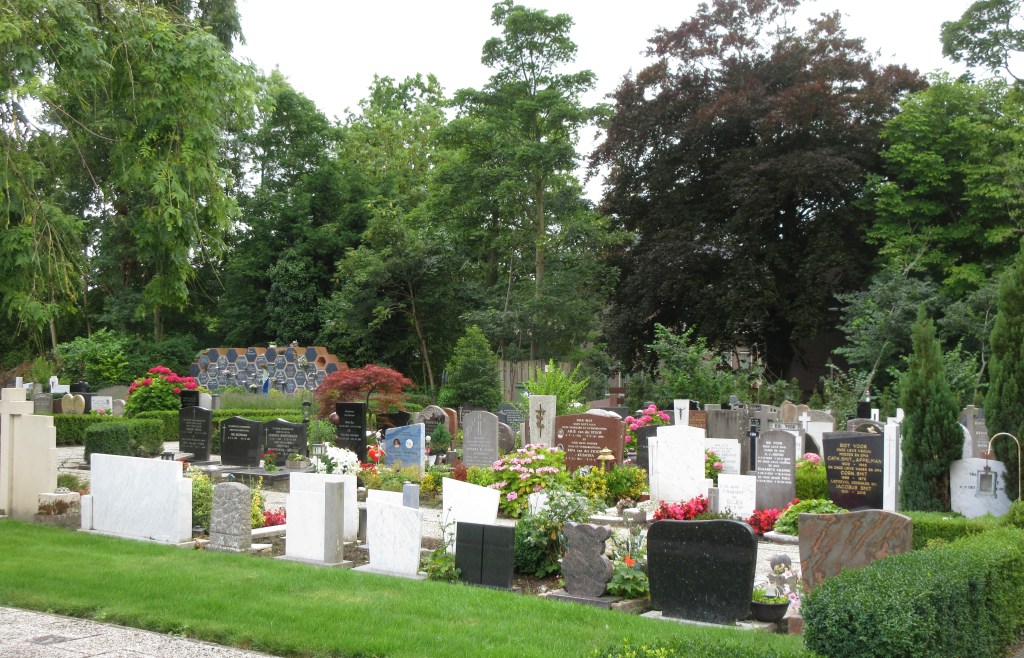
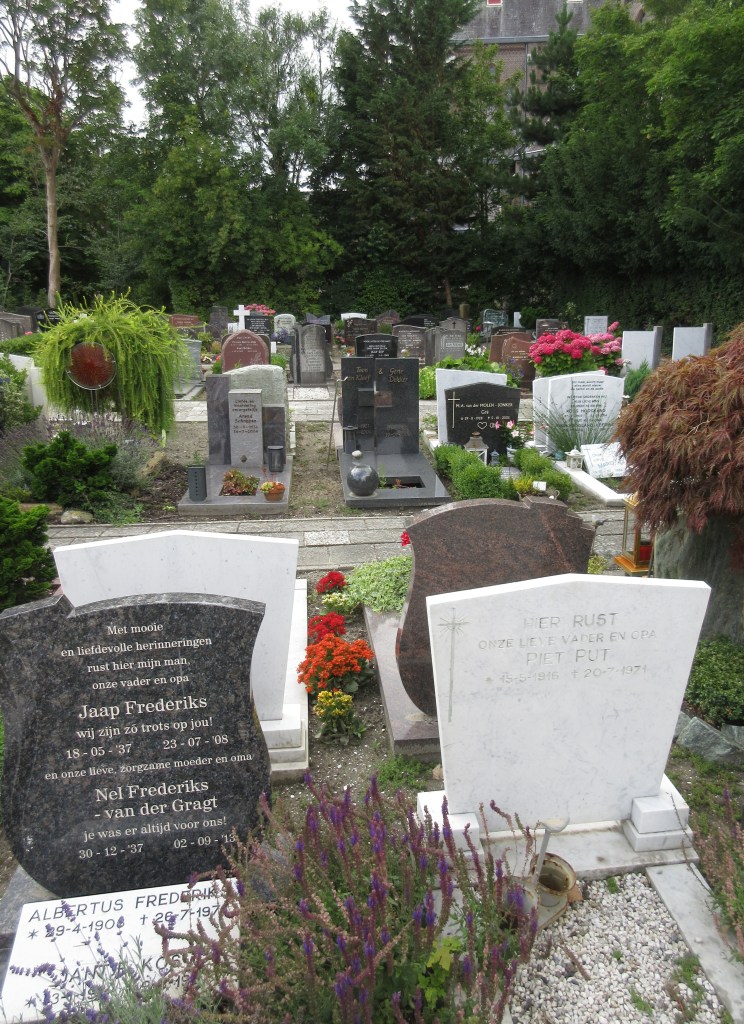
Het Parochiële Kerkhof Sint Jan de Doper (The Parish Cemetery Saint John the Baptist), Noord Scharwoude.
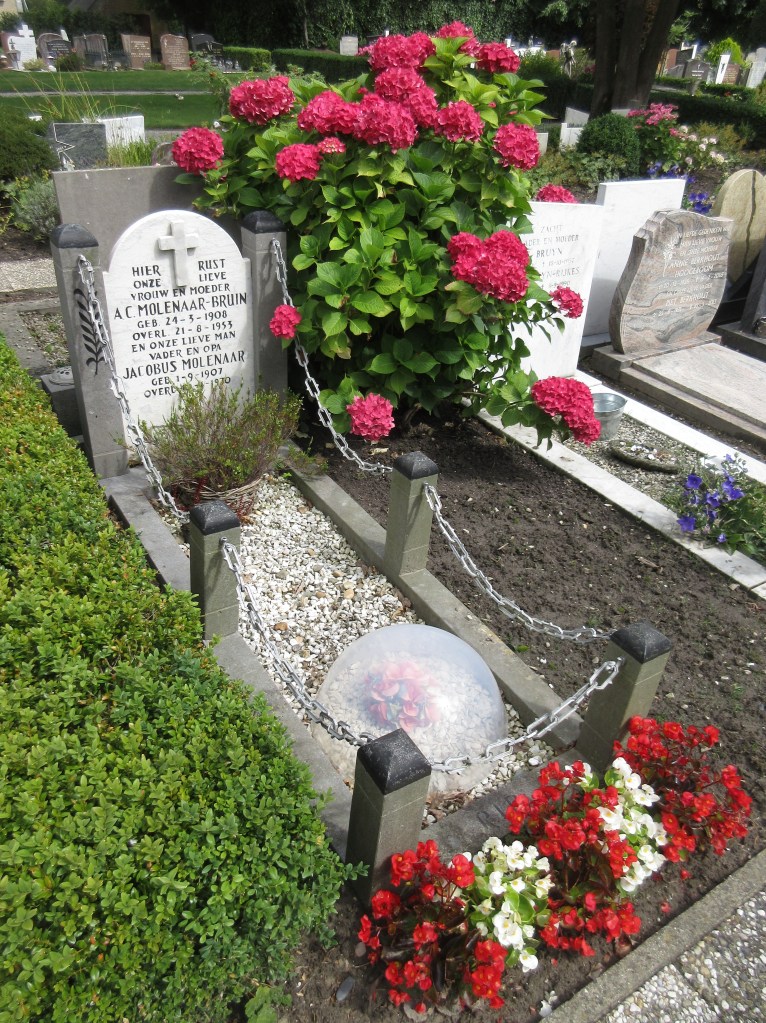
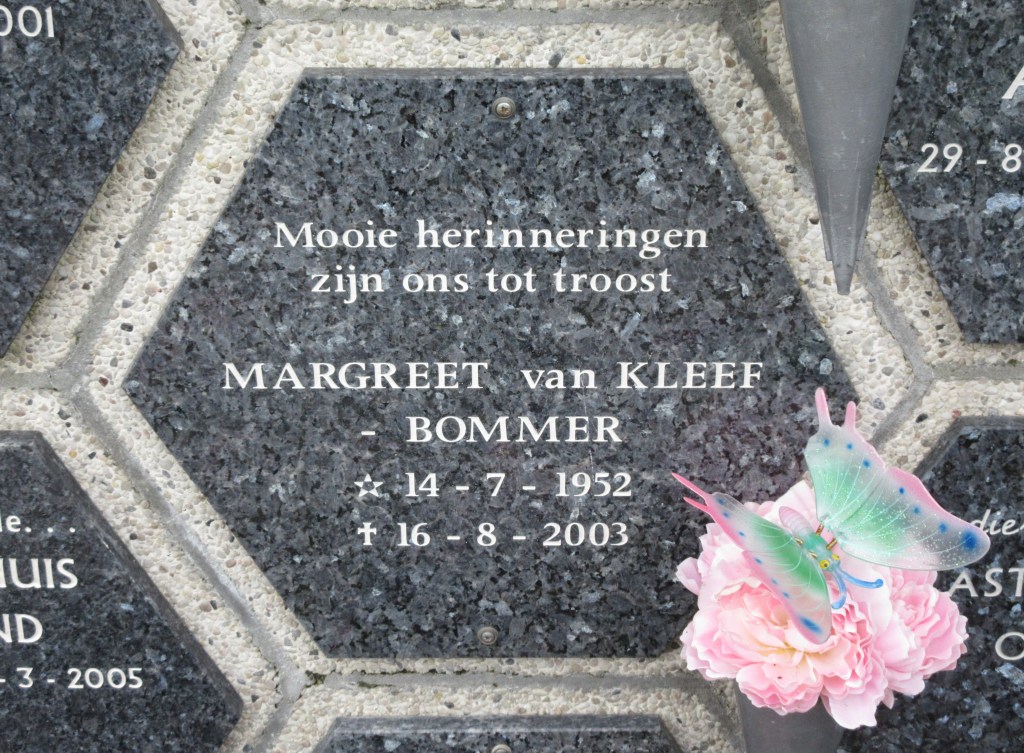
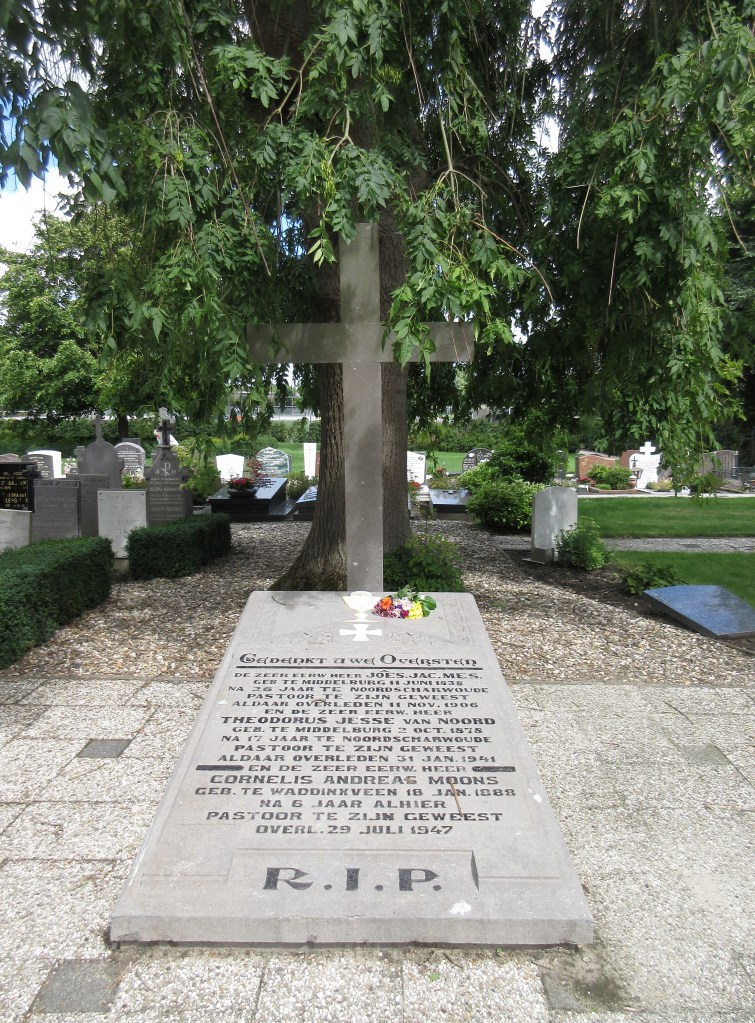
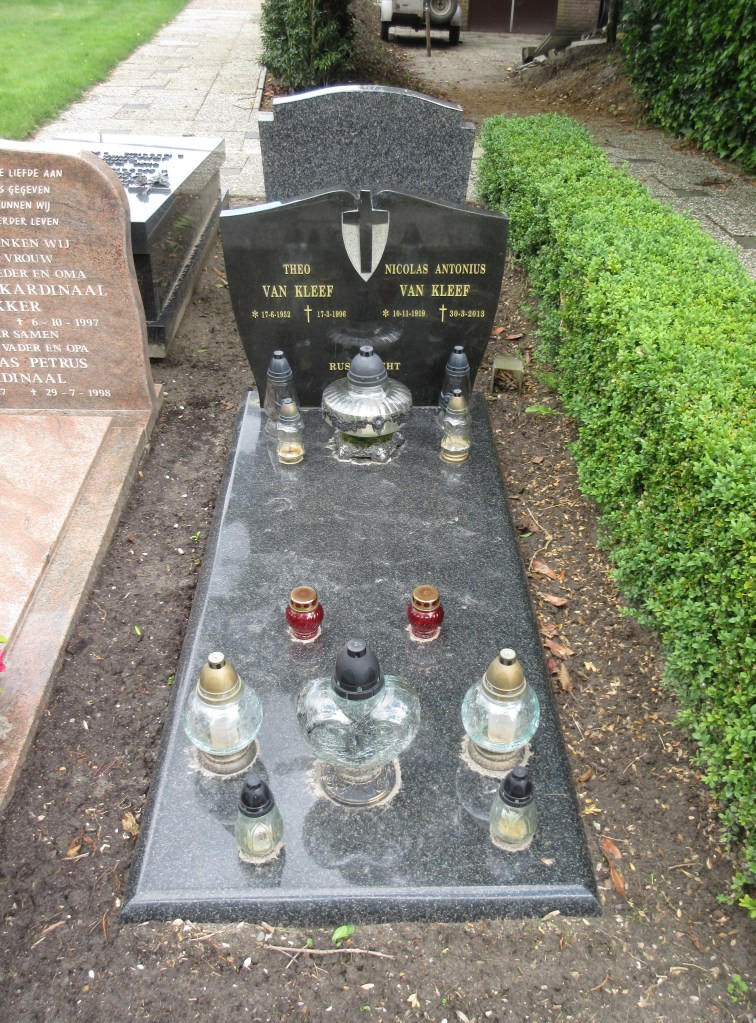
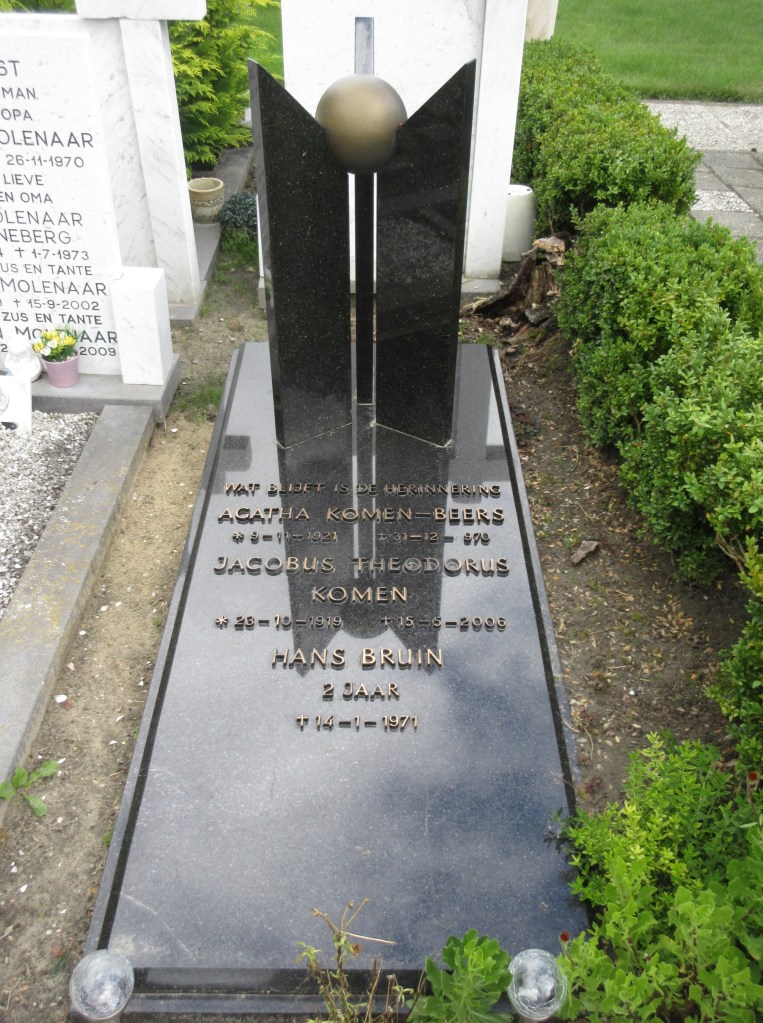
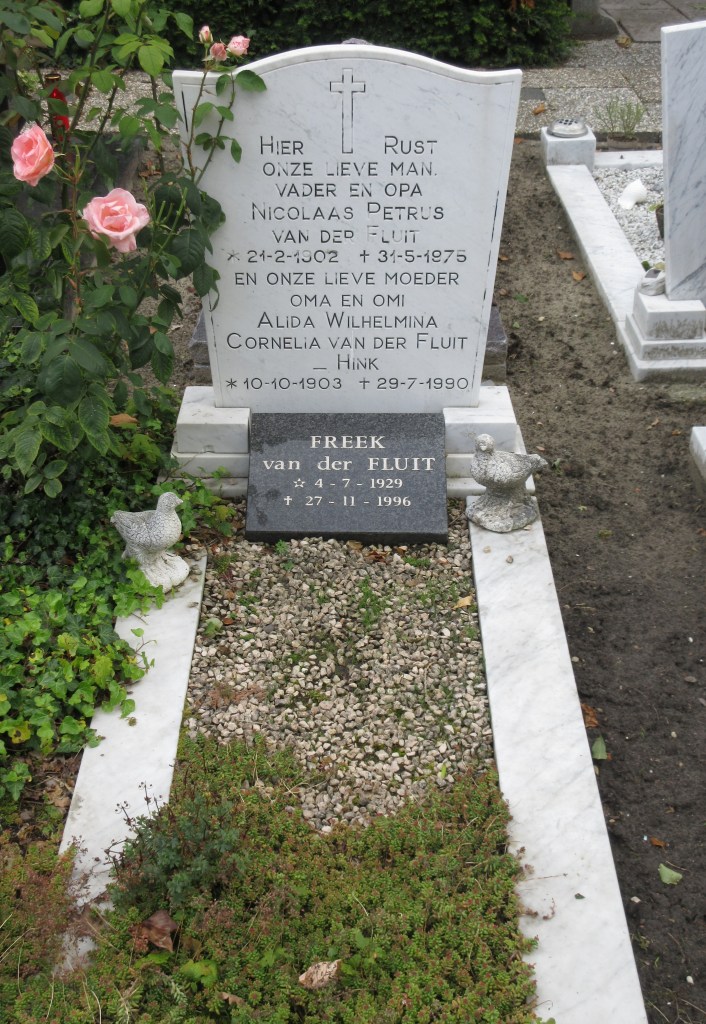
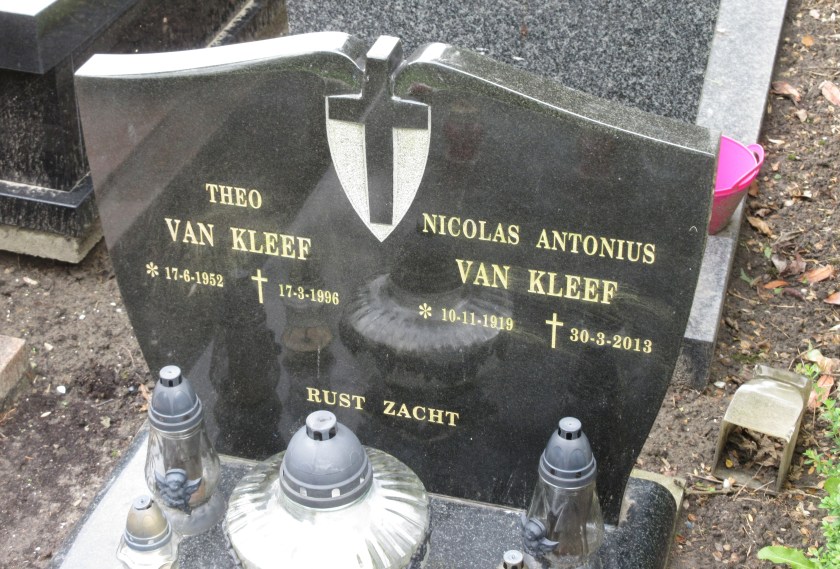
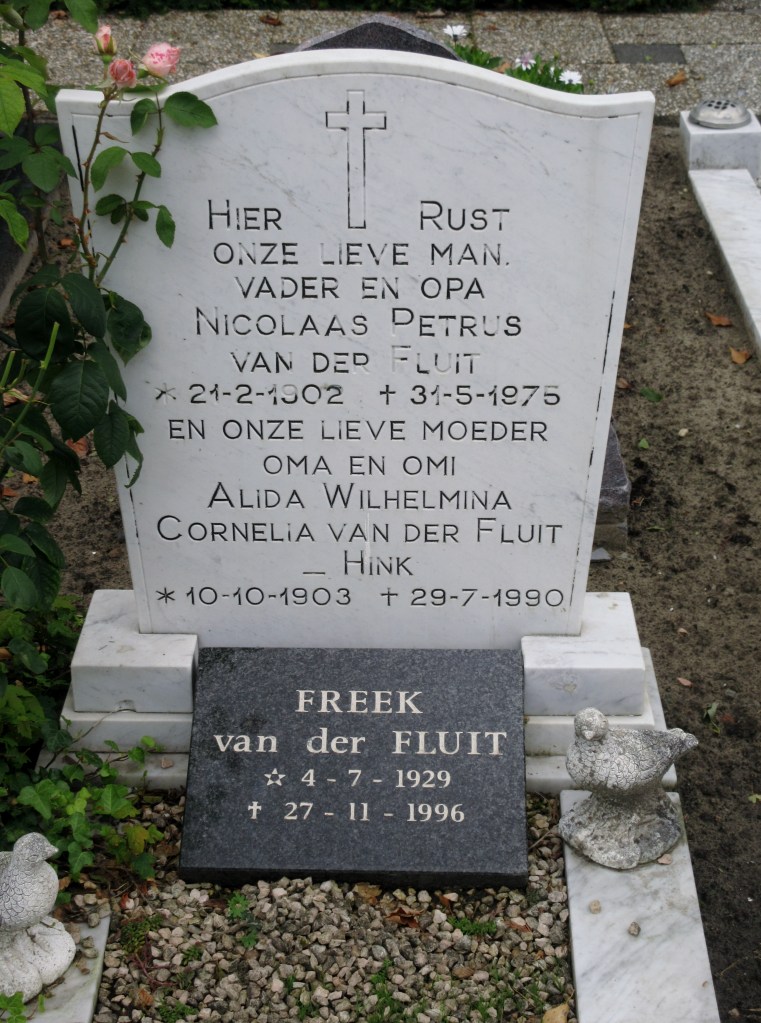
Here are a few of the graves of some of some of my extended family, several of whom I had the pleasure of knowing, including my great uncle, Nic van Kleef.
(As cemeteries are a big part of genealogy, it should come as no surprise that it forms a common theme for the 52 Ancestors Challenge. For Week 46 of the challenge in 2022, the theme was “Tombstones“.)
I have really struggled with this week’s 52 Ancestors Challenge theme, “Solitude”. Everything that came to mind was something I wrote about in last year’s challenge, and didn’t need repeating for a second, third, or even fourth time. I also could not think of a creative way to bend the theme to suit some other purpose.
However, two days ago, well after this week’s theme was posted, we had a death in our extended family. Tomorrow is the funeral. It will be at a cemetery I used to pass often, when I lived in a different part of the city. Planning my route for tomorrow, the solitude of the location of the cemetery came to mind. It also reminded me of the quiet solitude of most cemeteries I’ve been to, whether in a remote rural location or in the middle of a bustling urban centre.
Solitude is often characterized by descriptions of melancholy, sadness, misery, and unhappiness. I don’t think that’s accurate. To me, that’s loneliness, the opposite of solitude. Solitude is more a description of the contentment or joy one can experience with being in a quiet place or on your own. It’s descriptive of what we wish for our deceased loved ones when we say, “rest in peace”.
So, to our late family member, rest in peace. May your memory be a blessing.
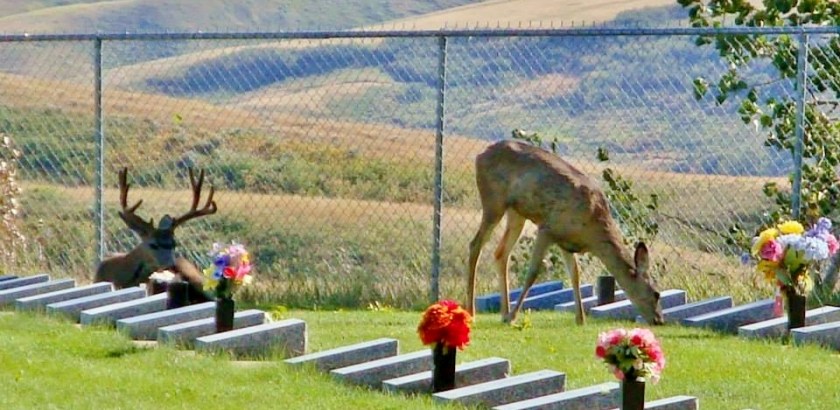
A couple of visitors enjoyng the quiet solitude of Mountain View Cemetery in Lethbridge, Alberta.
It’s Week 49 of the 52 Ancestors Challenge. As we approach the horizon of a new year, this week’s theme is “New Horizons”.
I’ve written before about my mother’s maternal lineage, who are all Germans from Russia. This is the story of my mother’s immigrant great grandparents, Michael Lerner and Barbara Schmidt, who sought new horizons in not one, but two countries.
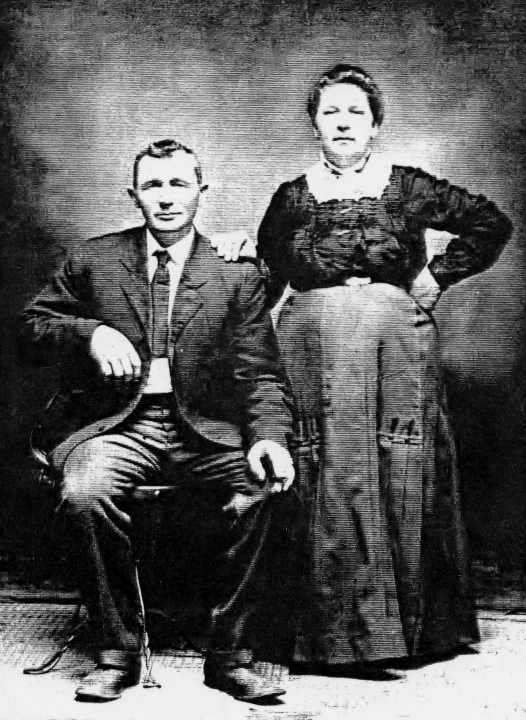
Michael Lerner (1862 – 1947) Barbara Schmidt (1865 – 1936)
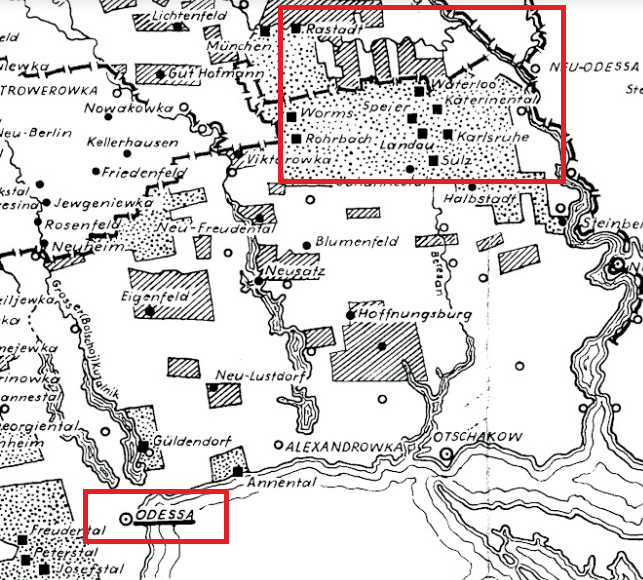
Michael and Barbara were both born in the Beresan district of Kherson province in what is now Ukraine, but which at the time was part of the Russian Empire. Michael was born in Rastatt and Barbara was born in nearby Karlsruhe. As should be apparent, the colonies were generally named after the cities and towns in what is now Germany from where the colonists came.
The German colonies in the Beresan district in 1890, as seen in relation to Odessa.
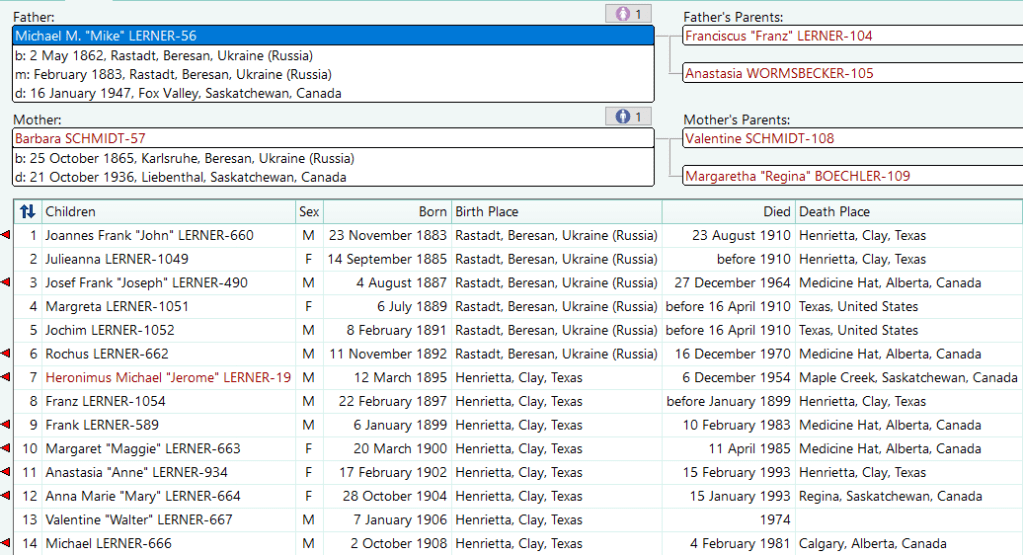
Michael and Barbara married in Rastatt in February 1865. They lived there for the next ten years, where Michael was engaged in farming. Michael and Barbara had six children together during this time.
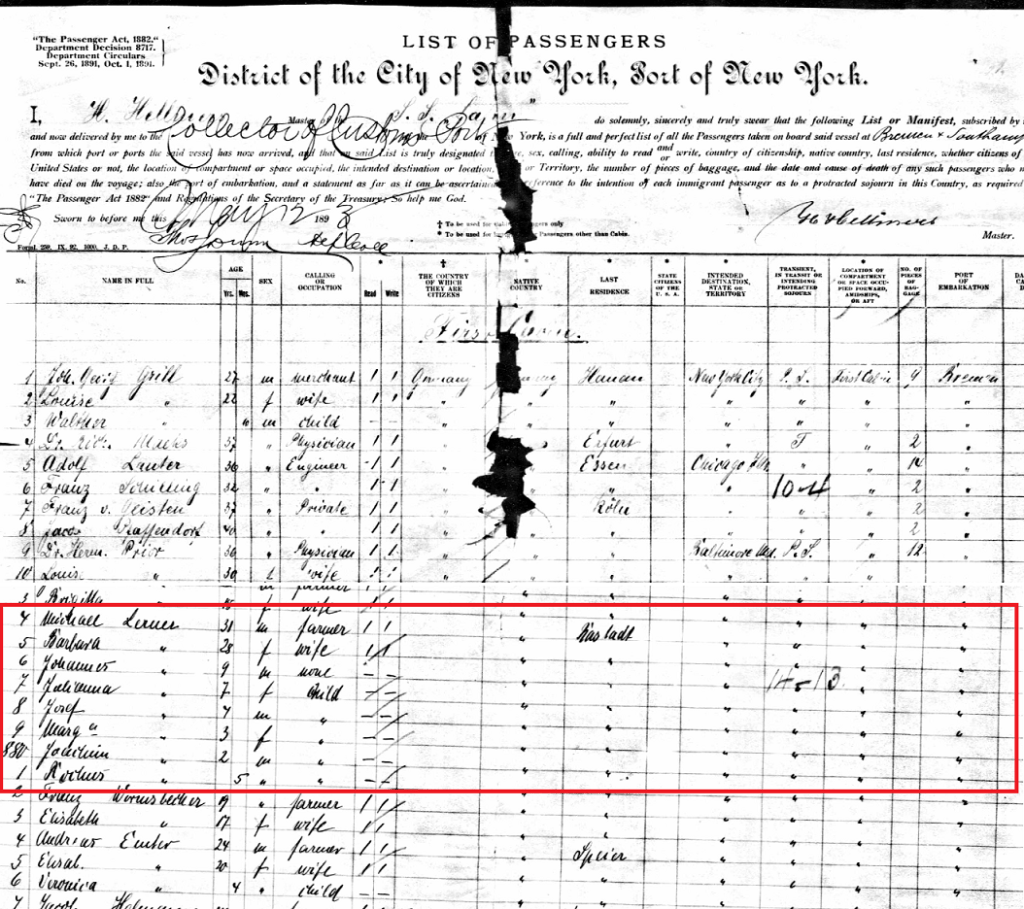
The family emigrated from the Beresan to the United States in 1893. They travelled across the Atlantic on the S.S. Lahn, landing at Ellis Island on May 12, 1893, where immigration officials did not change their surname.
The passenger list for the S.S. Lahn showing the Lerner family.
A brief editorial comment.
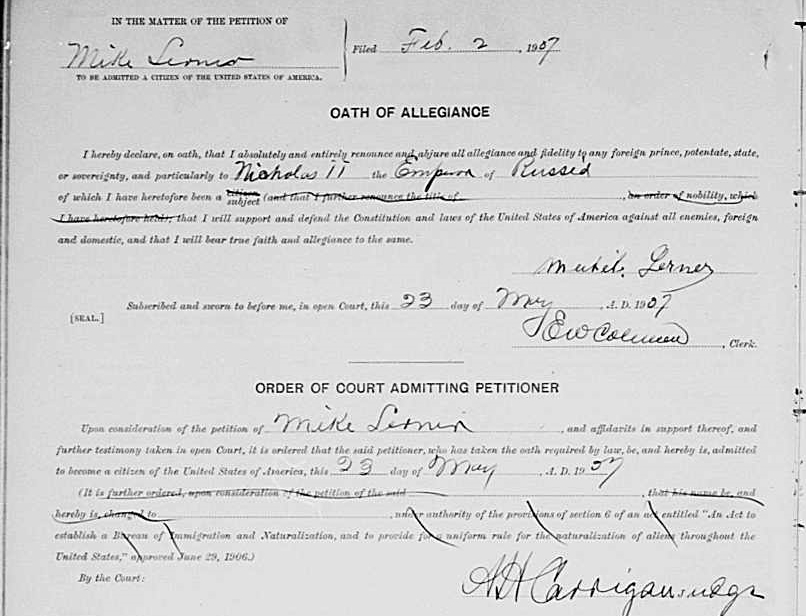
The family settled in Henrietta, Clay County, Texas, where Michael continued farming. Census records show that he farmed on Jacksonboro Road. The name must have changed over the years, as I cannot find it on any map. Michael did not waste any time in applying for American citizenship, as he filed a Declaration of Intention in 1894. However, he took no further steps towards that goal for another thirteen years, in 1907, when he filed a new Declaration of Intention. Michael and Barbara became naturalized American citizens on May 23, 1907.
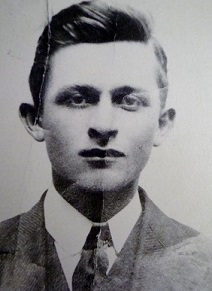
Heronimus (“Jerome”) Lerner (1895-1954)
From 1895 to 1908, Michael and Barbara had eight more children while living in Henrietta. My great grandfather, Heronimus (Jerome) Lerner, born March 12, 1895, was the first of their children born in the United States.
However, most of the family did not stay there for long after the youngest child was born. In 1913, Michael and Barbara’s son Rochus (1892-1970) moved to south-west Saskatchewan, where there were many other settlements of Germans from Russia. Rochus took up farming near Fox Valley, Saskatchewan. According to my mother, Rochus sent word back to Texas saying that there was a lot of good farmland available in Saskatchewan.
My great grandfather, Jerome, followed the call and moved to Fox Valley in 1917. Michael and Barbara followed in 1918, where they settled on land just outside of Fox Valley, near Rastadt. (See how the names followed the settlers around?) Most of the family ended up in Saskatchewan, but a few of Michael and Barbara’s children remained in Texas. As well, some of the family who moved to Saskatchewan later returned to Texas.
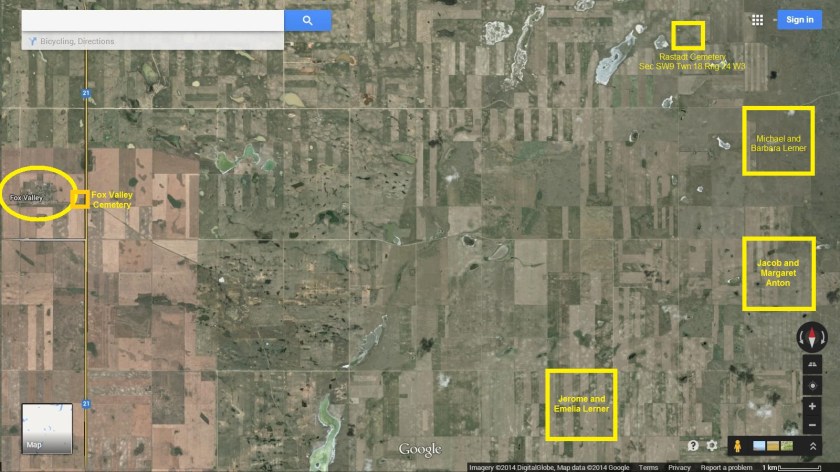
Fox Valley, Saskatchewan is in the oval on the left. The land Michael and Barbara farmed is to the east, marked in the box on the upper right. The smaller nearby box shows where Rastadt once stood.
Michael and Barbara became naturalized British subjects domiciled in Canada in 1896 (there was no “Canadian” citizenship until 1947).
Naturalization of Michael and Barbara Lerner in the Canada Gazette 1929-1930, page 692
Barbara died on October 21, 1936. Michael died just over ten years later, on January 16, 1947. Michael is buried at the Fox Valley Cemetery. There is some insistencies in the records as to where Barbara was interred.
Records show that “Barbara (Schmidt) Lerner” is buried in both Rastadt Cemetery and the Fox Valley Cemetery. It may be more likely than not that Fox Valley is the correct location. The record for that cemetery gives her plot as W23-2, which is right beside where her husband, Michael, is buried (plot W23-3). As well, other close Lerner family members are buried in Fox Valley Cemetery, including their son Jerome Lerner (plot W13-1). On the contrary, there are no other Lerners buried in the Rastadt cemetery. As well, there appears to be inconsistency in the plot in which she is supposedly interred in Rastadt. An older listing (ca. 1997) indicated plot 61; in 2004, it was said to be plot 70. This inconsistency is consistent with the conclusion that her being buried in Rastadt is less likely to be reliable.

 A Deck of Ancestors