52 Weeks – Week 46: Tombstones

Pretty much anyone who has been doing genealogy for a significant period of time has likely visited their fair share of cemeteries. So it’s no surprise that one of this year’s weekly themes for the 52 Ancestors Challenge is “Tombstones”.
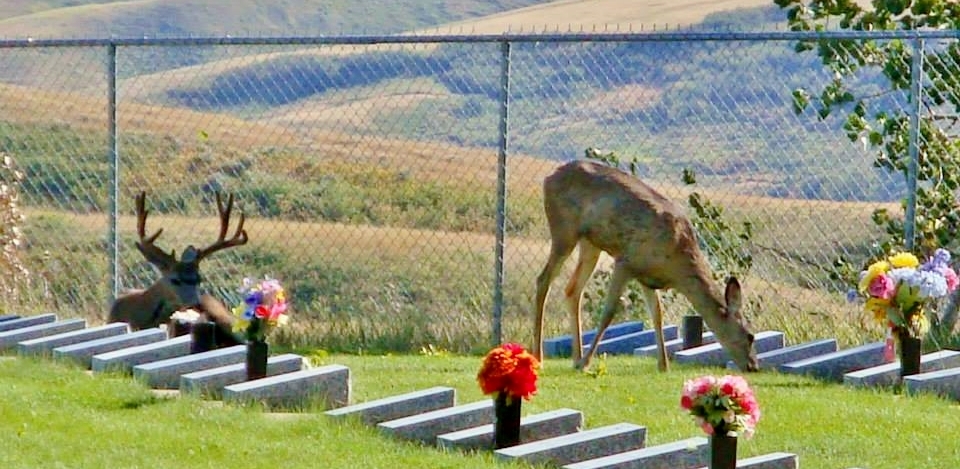
A couple of visitors I ran into at Mountain View Cemetery in Lethbridge, Alberta.

On Week 14, “Check it Out“, I considered some unique ways to consider my pedigree. For this week’s theme, I thought about my pedigree in terms of whose tombstone/headstone/grave marker I have visited.

What I was surprised to realize is that I’ve visited the final resting place of more of my great great grandparents than my great grand parents. I’ve been to where two of my great grandparents are buried, but to the site of three of my great grandparents. Granted, it’s a matter of three to two, but still, it seems like an odd statistic.

None of these include my Dutch ancestors. In general, Dutch graves are cleared after a few decades. I’ve only been to one church graveyard in the Netherlands, the Parochiële Kerkhof of St Jan de Doper (St. John the Baptist) in Noord Scharwoude, North Holland. My father has at least one aunt and uncle buried there, as well as a number of cousins of varying degrees.
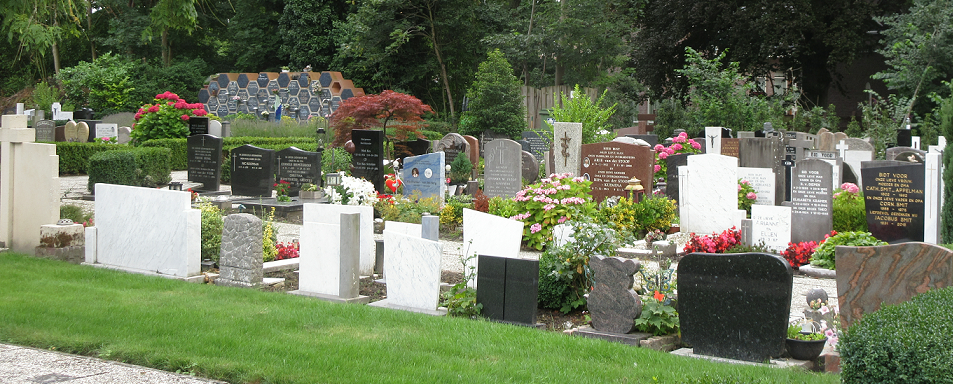
Parochiële Kerkhof of St Jan de Doper

I’ve written several times about my road trip to Fox Valley, Saskatchewan with my mother, where we visited the Rastadt and Fox Valley cemeteries. My great great grandfather Jacob Anton is buried at Rastadt, while his son-in-law (my great grandfather) Heronimus (“Jerome” or “Jerry”) Lerner is buried in Fox Valley.
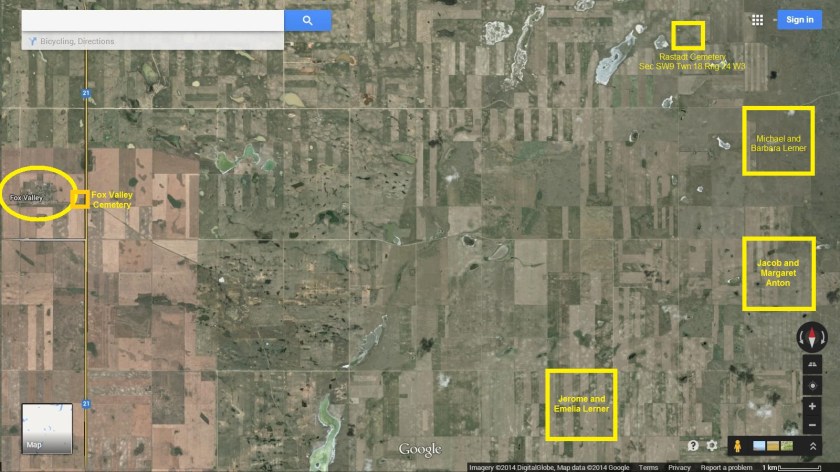
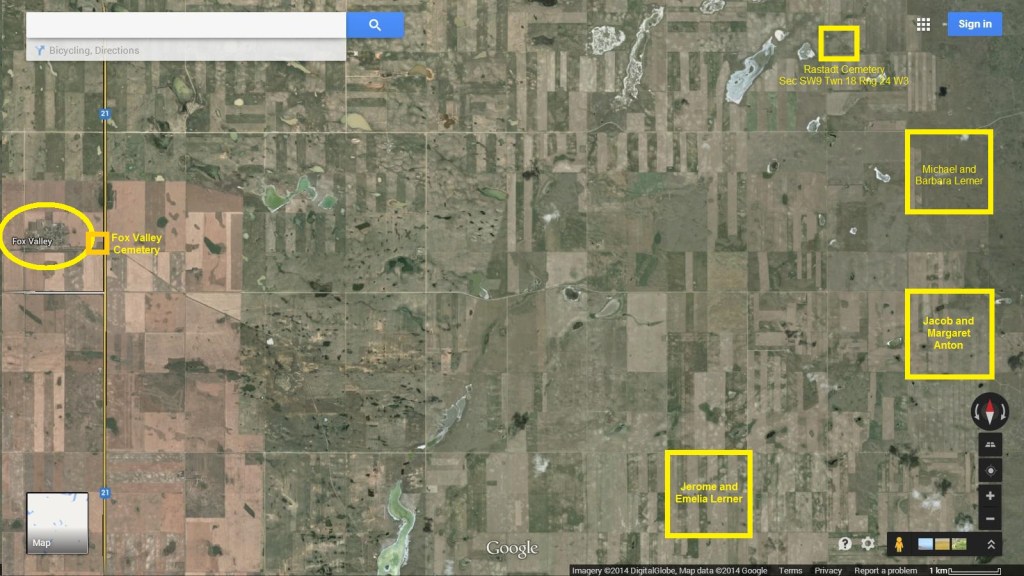
Fox Valley is the oval on the left, with the Fox Valley cemetery immediately to the east. The Rastadt cemetery is located in the upper right hand corner.
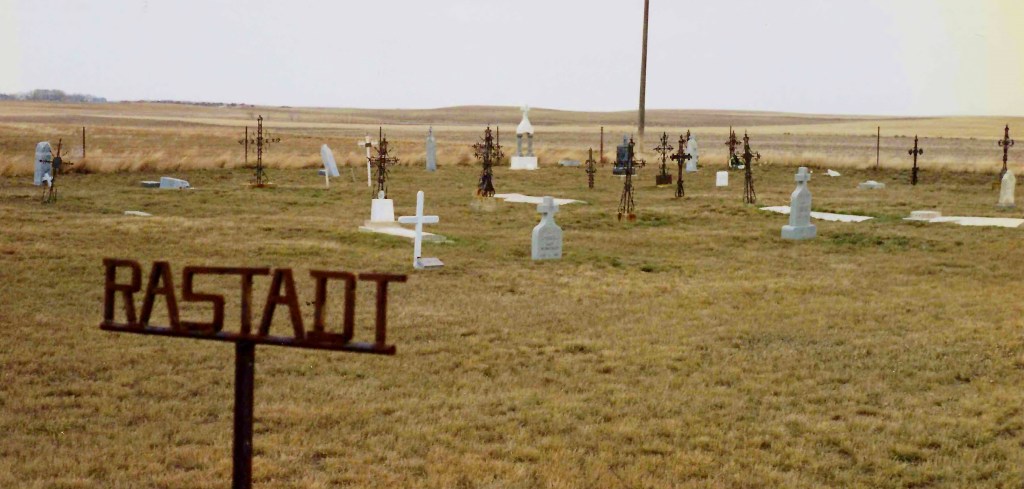
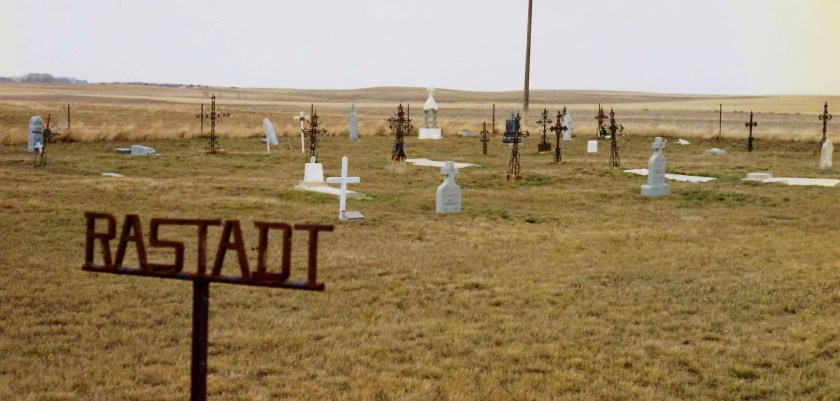
Rastadt, Saskatchewan Cemetery, April 1, 1997. Located at 50°30’00.9″N 109°15’32.3″W
You can find the cemetery listing here.
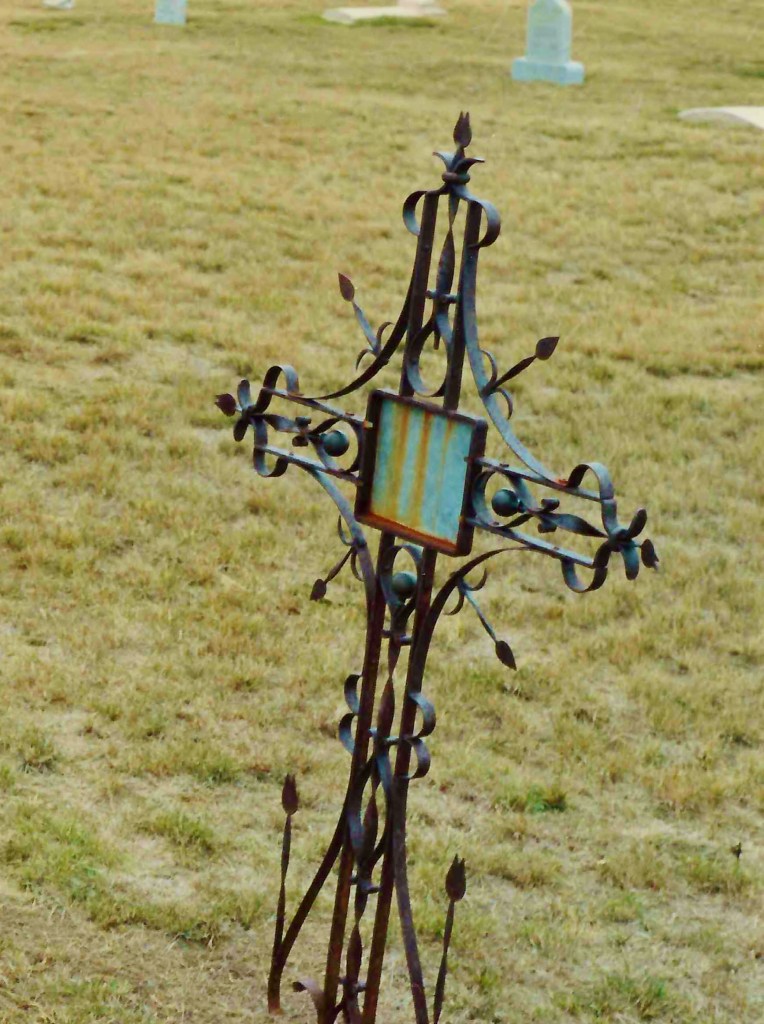
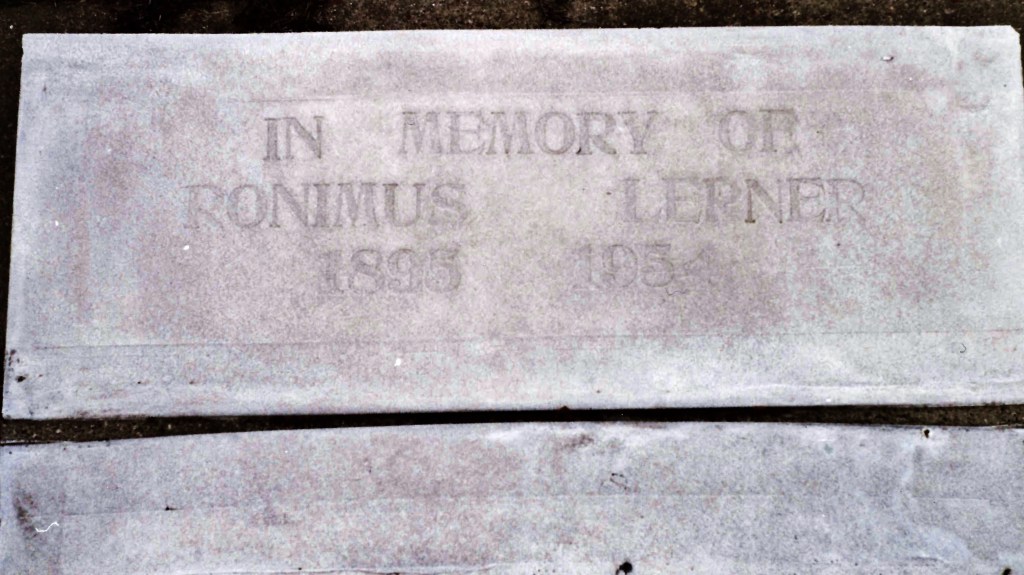
There’s an error on the headstone. I guess you could say that it’s a grave mistake.

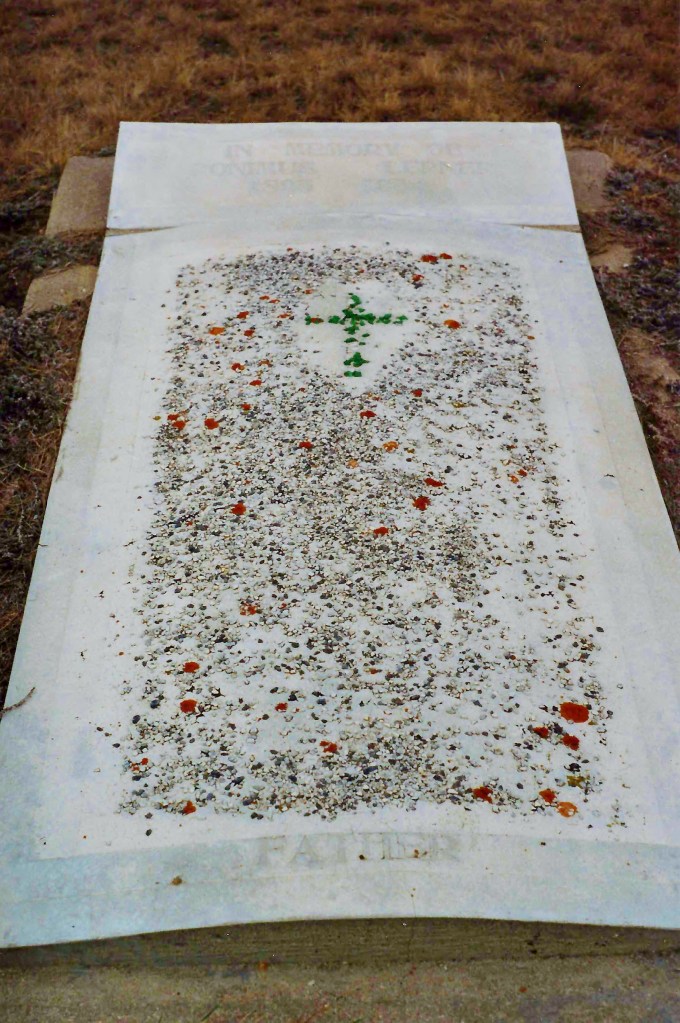
The inscription on my great grandfather’s headstone is wrong. It should read “Heronimus” rather than “Ronimus”. During our visit, we tried to determine if the first two letters (“HE”) had worn off the headstone or if it had been deliberately written this way. Because of the centering of the text, it appears to have been deliberate. The Medicine Hat News, of December 20, 1954, page 4 states, “Jerome Lerner, of Fox Valley, Sask., who died at Maple Creek December 6. Interment was in Fox Valley cemetery.”

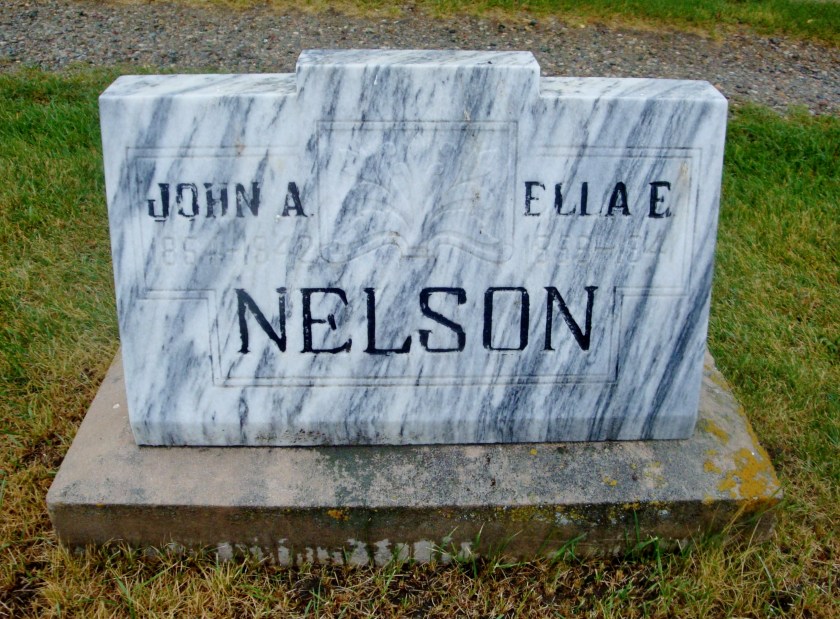
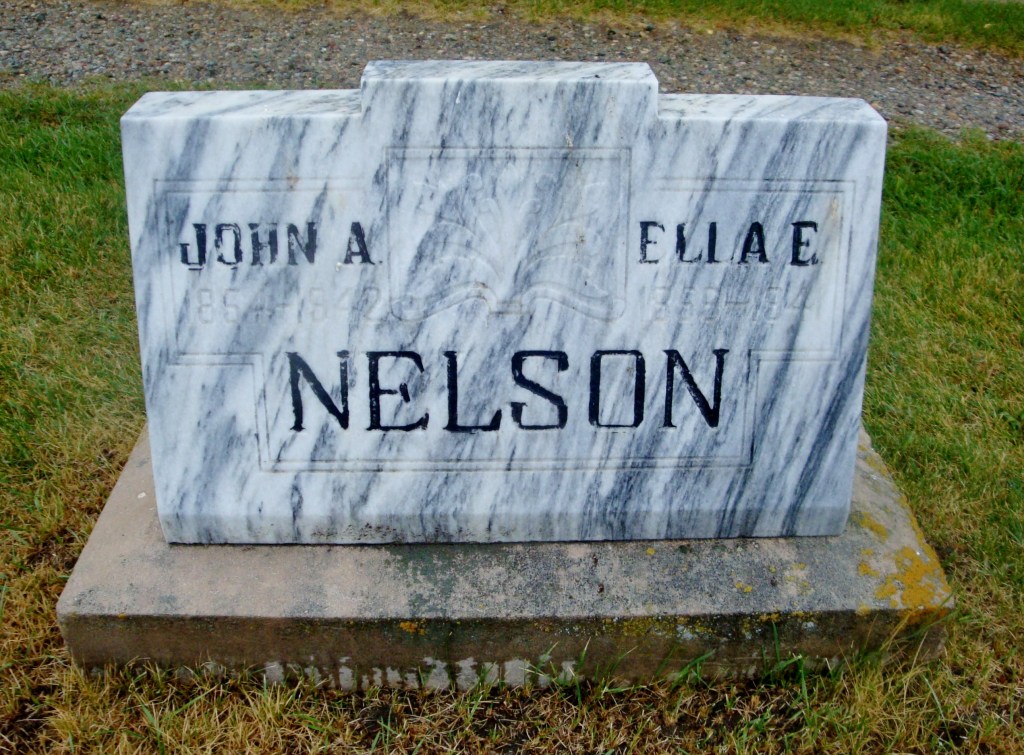
The other great great grandparents whose grave I’ve visited are John Alexander Nelson and Ella Elizabeth Thomas. They’re buried at the Cardston Cemetery. I wrote about my visit there on Week 36.

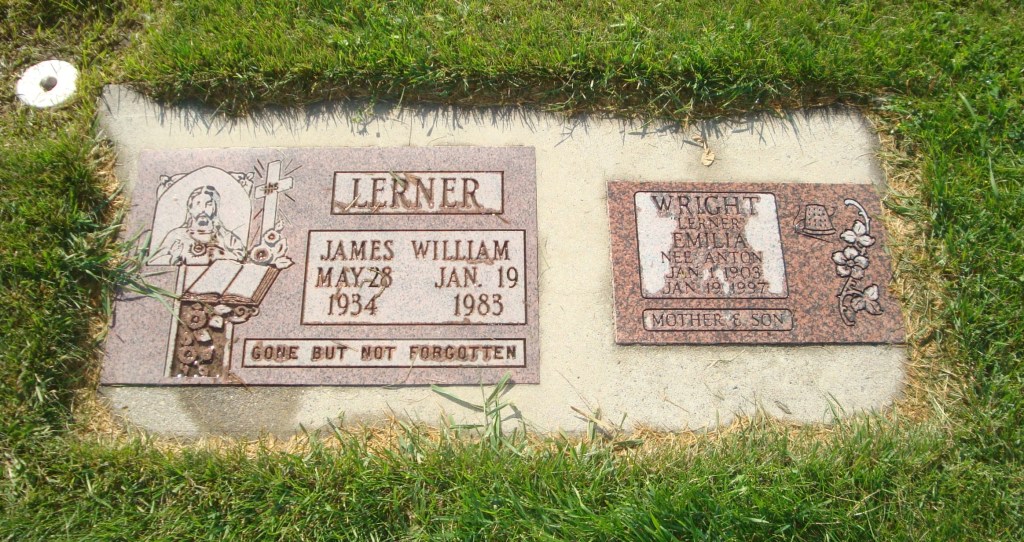
Besides Jerome, the only other great grandparent whose grave I have visited is that of his wife, Emilia Anton. She is buried at Mountain View Cemetery in Lethbridge, Alberta, along her son (my great uncle) Jim Lerner.

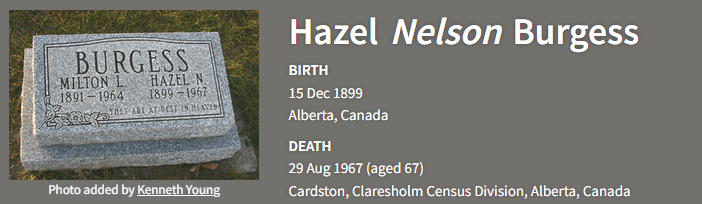
Then again, for what it’s worth, my mother was at the burial of her grandmother Hazel Nelson the day before I was born. She was buried at the Magrath, Alberta cemetery alongside my great grandfather, Milton Burgess, so in a way I’ve been to the burial site of four of my great grandparents. I’ve been to Magrath many times, just never to the cemetery.

Screenshot of the entry for Hazel Nelson at Find a Grave. The headstone is for both Hazel and her husband, Milton Burgess.

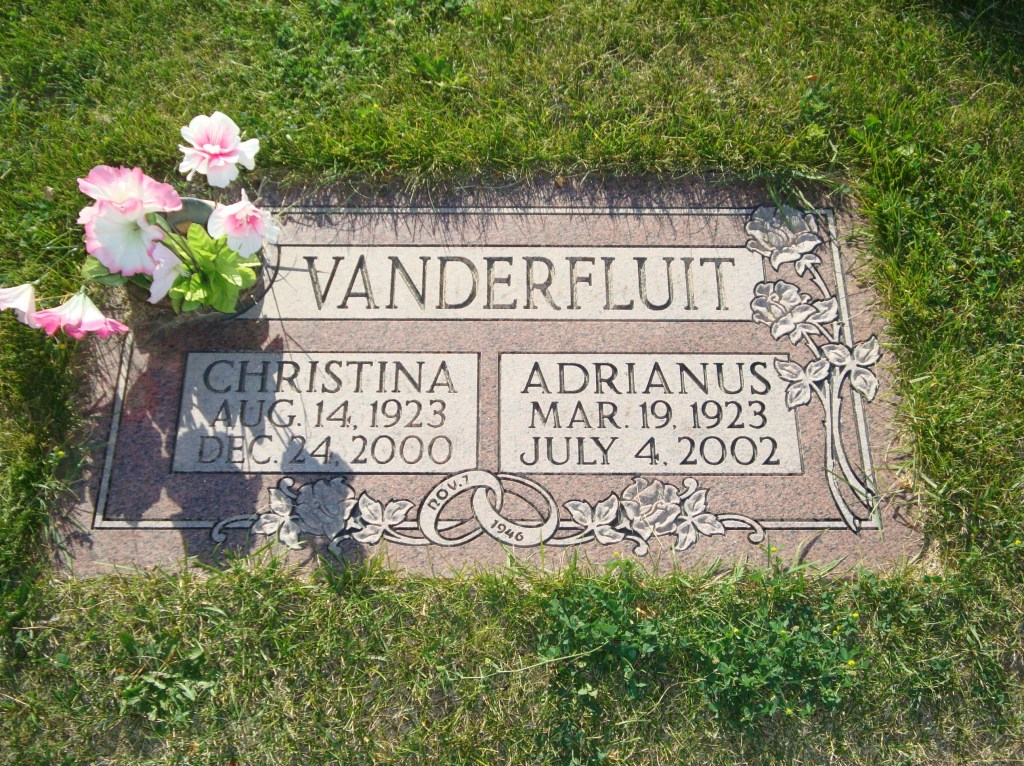
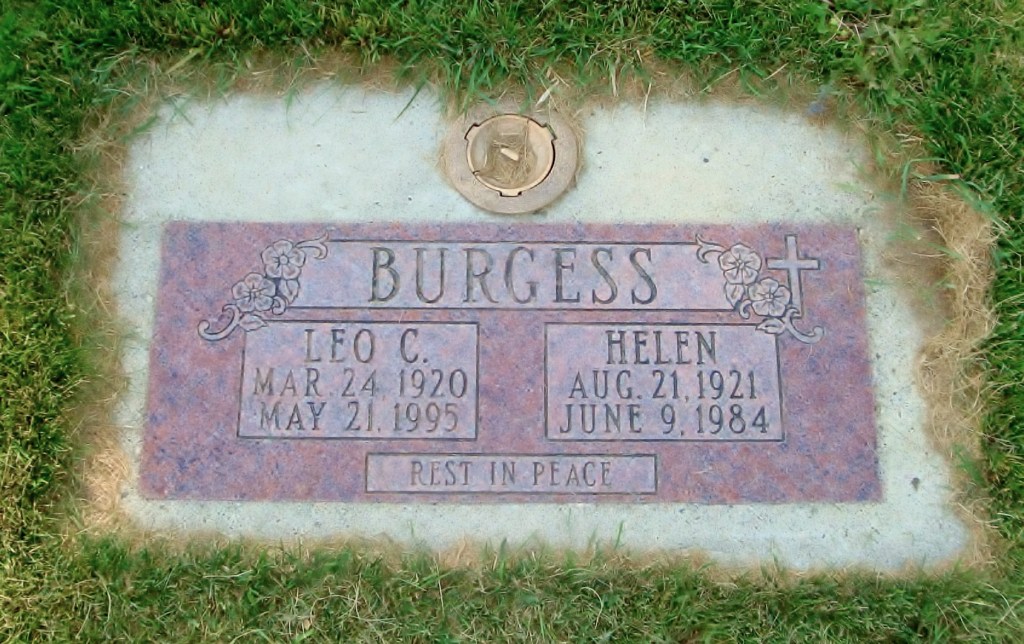
However, I should add that I’ve been to where all four of my grandparents are interred, although I was only present for three of their funerals. I was in high school and writing final exams when my grandmother, Helen Burgess, passed away. Both pairs of my grandparents are buried in close proximity to each other at Mountain View Cemetery in Lethbridge. Among others, they’re also close to Emelia, as well as my aunt Helen Diana Burgess.

52 Weeks – Week 36: Exploration

Looking back over past posts, I have come to realize that writing this blog as part of the 52 Ancestors Challenge has been an exercise in exploration. I also realized that I have written a lot about exploration, both my own and my ancestors’. In this post, I will be recounting my exploration of Cardston, Alberta in 2015, when I visited my great aunt Fon Hogg (née Burgess) and her husband Dave. Aunt Fon, who passed away in early 2021, was my maternal grandfather’s youngest sister and a dedicated genealogist.

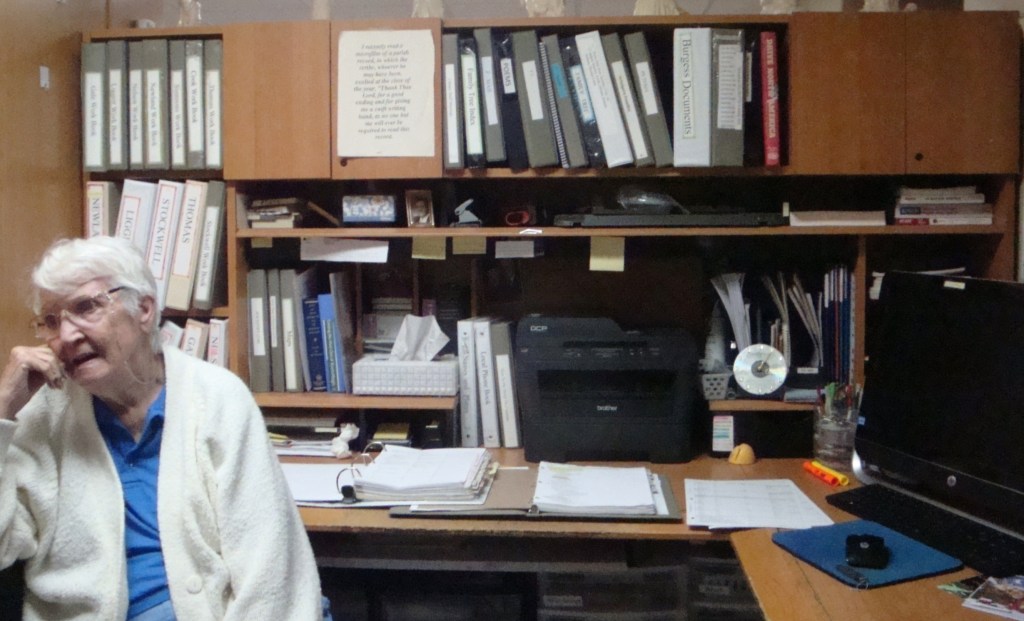
My aunt Fon in her amazing home office, which was primarily dedicated to genealogy and crafting.

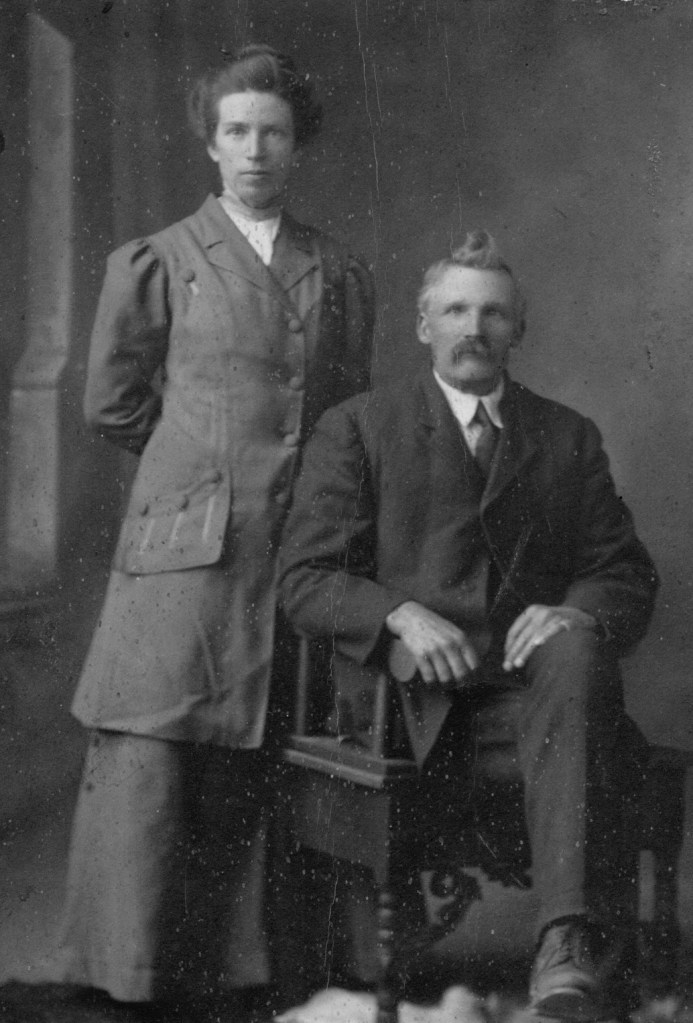
I don’t often get the opportunity to visit ancestral homelands, so I was excited to undertake my adventure. One of the goals of my visit was to learn more about my great great grandparents – Aunt Fon’s grandparents – John Alexander Nelson and Ella Elizabeth Thomas. They were amongst the earliest settlers of Cardston, which was founded in 1887 by members of the Latter Day Saints (Mormons). John and Ella were both born in Utah a few short years after it became a territory of the United States.

Ella Elizabeth Thomas (1859 – 1941)
John Alexander Nelson (1854 – 1942)

John was born in 1854 to Irish immigrant parents. Ella was born in 1859. Her father was originally from North Carolina and her mother was from England. John had worked as a farm labourer in Utah before he married. John and Ella married in Salt Lake City in 1879. Shortly afterwards, John and Ella moved to Smithfield, Utah, where John continued to work in farming.

John and Ella came to Canada in September 1890. John and Ella had five children at the time. The family travelled to Canada by covered wagon. Their eldest daughter, Maria, said that she often drove the wagon team while her father managed the cattle. The family first settled in a sod dugout at “Lee’s Creek”, west of Cardston. They arrived with 13 horses, 7 cows, 7 “other horned cattle”, and a pig.

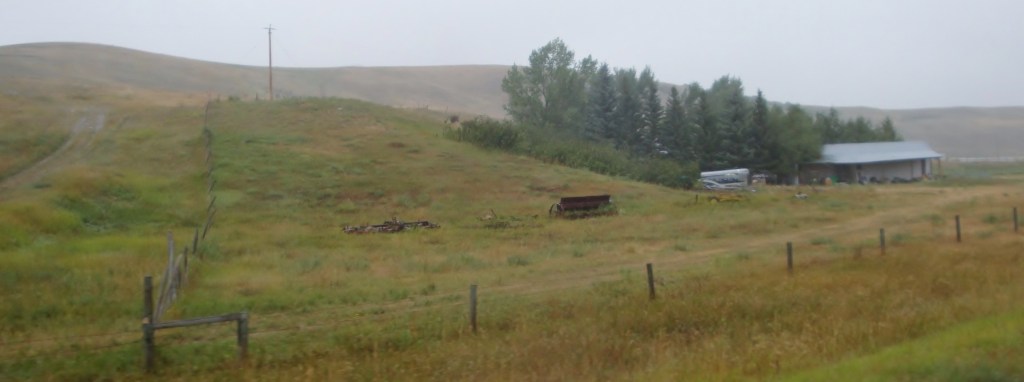
Aunt Fon told me that this was the land where John and Ella first settled in Canada, just west of Cardston, where the prairies meet the foothills of the Rockies.

The book, Alberta Past and Present, states that upon moving to Canada, John homesteaded on 160 acres of raw land. The homestead was located on Lee Creek, which ran through the property and into the centre of Cardston. The farmhouse was about four kilometers southwest of the town centre and is located on what is now Alberta highway 501.

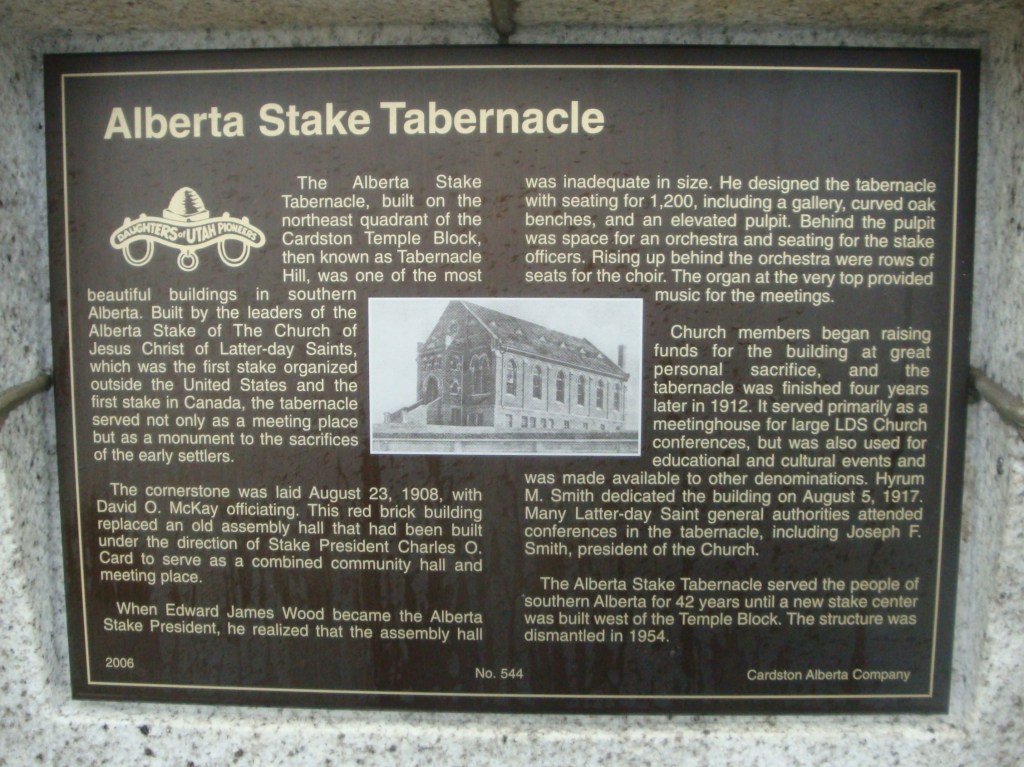
There was a quarry on the land, which supplied the stone for many of the buildings in Cardston, which, according to Alberta Past and Present, included the courthouse. According to John’s obituary, one building in Cardston built not using stone from his quarry was the first saloon built there – John refused to supply stone for that purpose. Aunt Fon told me that stone from the quarry was also used to build the foundation of the Alberta Stake Tabernacle. The Tabernacle stood from 1912 to 1954. Uncle Dave said that when the Tabernacle was demolished, people in Cardston used the stone for other projects. In fact, Uncle Dave told me that their first house originally had a fence built with stone from the Tabernacle.

In addition to farming, John also worked in carpentry. As well, John and a partner, John Turner, constructed and operated the first lime kiln in this part of the country. In 1906, John and Ella moved to nearby Woolford, Alberta, where John continued farming. John and Ella briefly returned to Utah in the early 1920s, where John operated an orchard or fruit farm, but they returned to Woolford in 1924. John continued farming the rest of his working life.

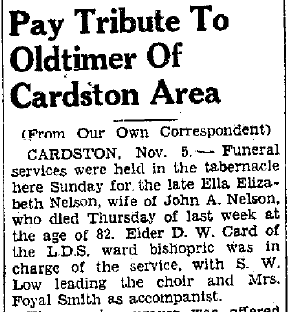
The Lethbridge Herald, November 5, 1941, page 11.

Meanwhile, Ella did not simply bide her time in the background as a farm wife and mother. According to a Lethbridge Herald article published after her death, in 1892 Charles Ora Card, Cardston’s founder and stake president, called to on Ella to study nursing and obstetrics. She was sent to Salt Lake City to study under the tutelage of a Dr. Shipp.  Ella left her five eldest children at home, taking with her “a six months old baby”. Based upon this timeline, the baby would have been Seth Henry Nelson, who was born in October 1891.

However, another source stated that Ella went to Utah in 1893 and that the baby she brought with her was her son Cleveland, who was born in March 1893. After six months’ training, Ella returned to Cardston and started her service. The Herald article says that Ella “answered every call from 1892 to the time when the district was supplied with medical men, and after that time when there was more work than one doctor could do”. Ella continued as a midwife until 1932, when she was 73.

John and Ella were nationalized as British subjects domiciled in Canada in 1896 (there was no “Canadian” citizenship until 1947).

Together, John and Ella had twelve children, two of whom died in infancy. This included my great grandmother, Hazel Nelson, and her twin sister, Irene, who died at one month old. Ella died in October 1941. John died almost a year later, in September 1942. After I left Fon and Dave’s house, I drove to the Cardston Cemetery, where John and Ella are buried, along with other close relatives.

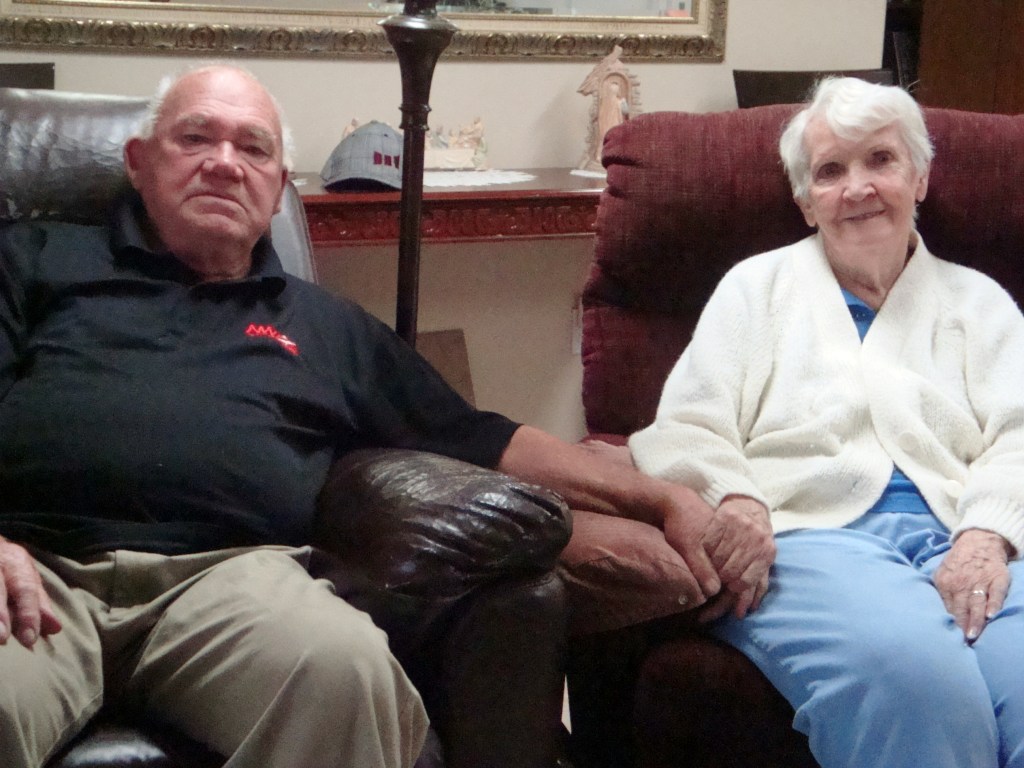
Unfortunately, while I often emailed Aunt Fon, my trip to Cardston was the last time I saw Fon and Dave. Dave passed away in October 2020 and Fon passed away five months later, in March 2021.

Dave and Fon Hogg, August 21, 2015.

52 Weeks – Week Thirteen: Sisters

My mother has told me, several times, that before I was born my father had hoped to have five daughters. As the first born, I quickly put paid to that. It was probably in my father’s best interest. Back in my teens when my father had hair, I liked to tell him that all the grey ones were entirely due to his daughters and none of his sons.

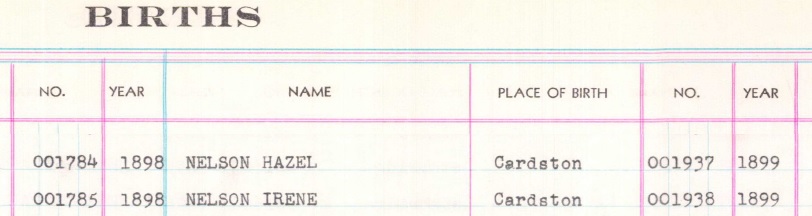
Hazel and Irene Nelson in the Alberta Birth Index

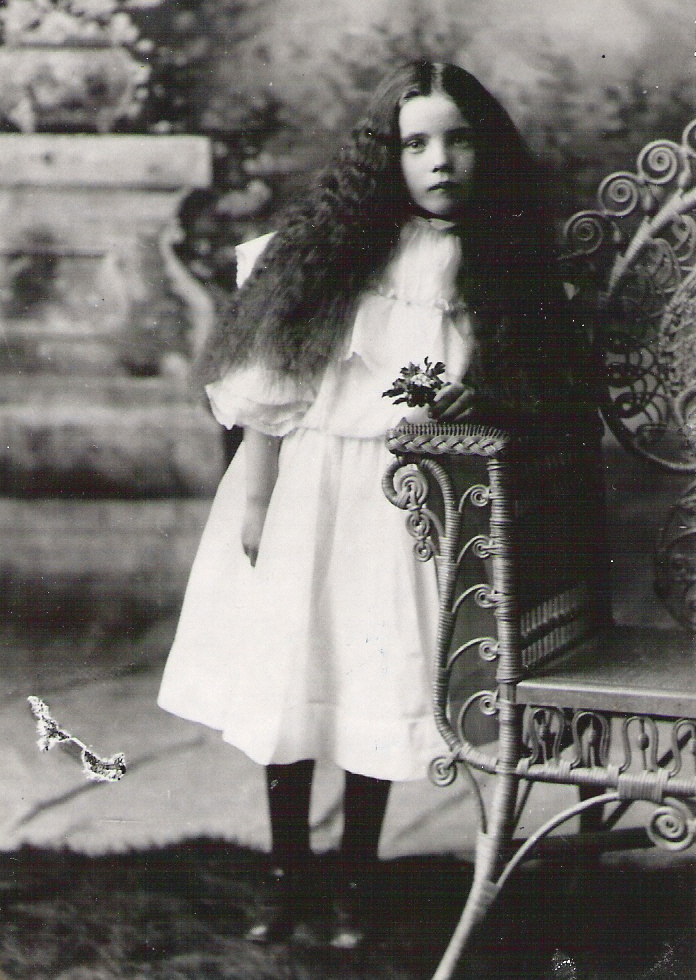
When I saw the topic for this week’s  52 Ancestors Challenge, the first sisters who immediately came to mind were my great grandmother and her sister. They are amongst the very few twins I actually have in my family tree. Unfortunately, they were sisters who never had the opportunity to know each other or to share a childhood together.

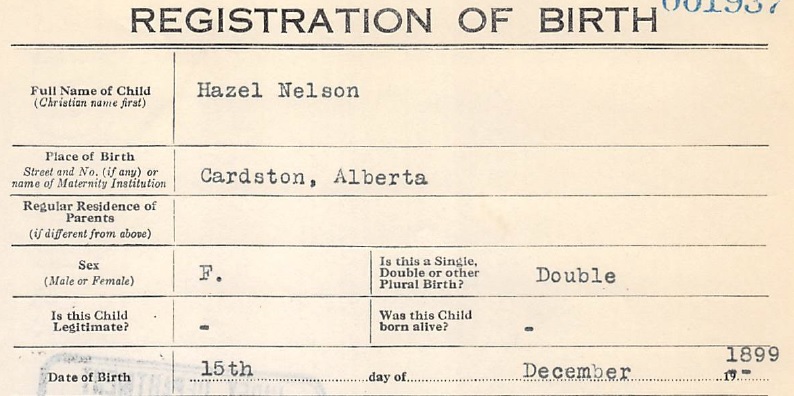
Hazel and Irene Nelson were born to John Alexander Nelson and Ella Elizabeth Thomas on December 15, 1899. The girls were the tenth and eleventh of twelve children. Given that Hazel was registered first, I take it that she was born first.

John and Ella were amongst the earliest settlers of Cardston, Alberta, which was founded in 1887 by members of the Latter Day Saints (Mormons). The Nelsons arrived in 1890 and began farming nearby.

This is where my great great grandparents, John and Ella Nelson, first farmed when they settled in Cardston, Alberta

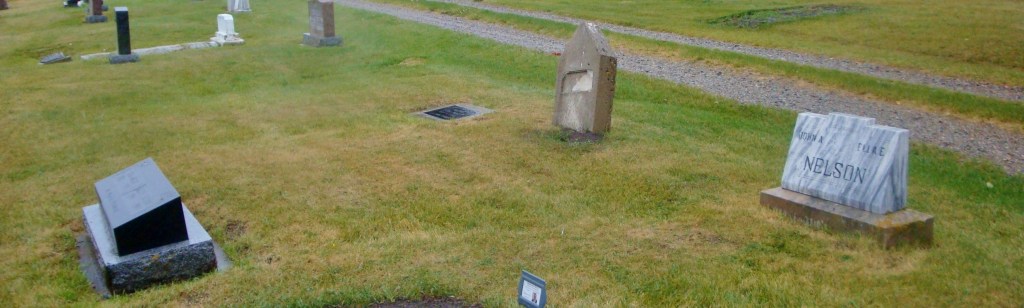
Hazel and Irene Nelson were the first twins born in Cardston. Sadly, Irene passed away five weeks later. I’ve been to the cemetery where she is buried. Unfortunately for me, I only discovered where she is interred after my trip. While I did not realize it at the time, Irene is buried next to her parents. The grave marker is damaged. Information for the Cardston Cemetery on the Town of Cardston website confirms that Irene’s grave is the one beside her parents. Irene’s brother is interred in the plot below hers.

Irene Nelson is buried beside her parents John and Ella, whose grave marker is the white one in the foreground. Irene’s grave is the one with the damaged headstone. The black marker on the left is Irene’s brother Seth Henry Nelson and his wife Mabel.
Hazel Nelson, about 1904

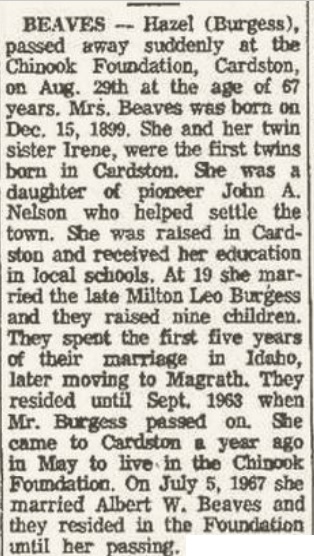
Hazel, on the other hand, lived to be 67. She and her husband, Milton Leo Burgess, had nine children, the oldest of whom was my grandfather, Leo. Milton died in 1964. Eight weeks before she died, Hazel married a widower, Walter Beaves. They met in the seniors’ home where they both lived, which Hazel called “the old fools’ home”.

Hazel passed away three days before I was born. My mother pretty much went from her grandmother’s funeral to the hospital for my arrival.

Hazel’s obituary in The Lethbridge Herald

52 Weeks – Week Six (Part One)

Maps – Part One

Week six of the 52 Ancestors Challenge has us navigating maps. Like the Favourite Photo challenge, I had a hard time choosing. So this week I’ll be doing two entries.

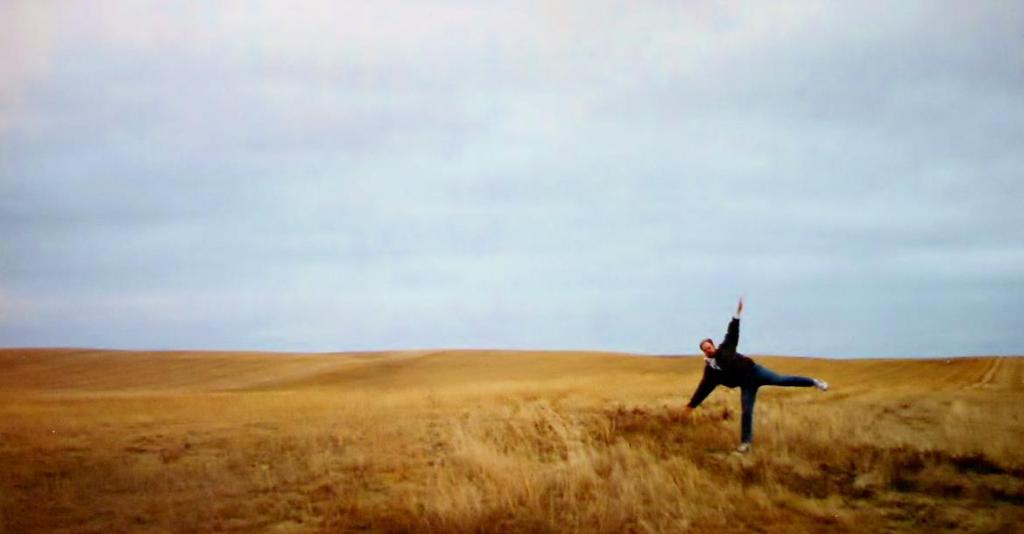
Where I stand once stood the farmhouse where my maternal grandmother was born.
Beautiful downtown Rastadt, Saskatchewan. If the middle of nowhere has a middle of nowhere, this is it.
(Actually, this is suburban Rastadt, but no one really is counting.) Where I am standing once stood the farmhouse where my maternal grandmother, Helen Lerner, was born.
(Section 7, Township 17, Range 24, West 3)

My maternal grandmother, Helen Lerner, was born at the family farmhouse near Rastadt, Saskatchewan, which is about 16 kilometers (10 miles) east of Fox Valley. It’s where her her parents and grandparents – Germans from Russia – settled upon moving to Canada. There’s nothing left of Rastadt now other than the old schoolhouse and the cemetery.

Rastadt, Saskatchewan Cemetery, April 1, 1997. Located at 50°30’00.9″N 109°15’32.3″W
You can find the cemetery listing here.
In early 1997, I had a few months off after having left a job for a new endeavor. I visited my folks, who live in southern Alberta, during that time off. I had not been to Fox Valley since I was a kid, so while visiting my folks I thought it might be a fun family history road trip to do with my mother.

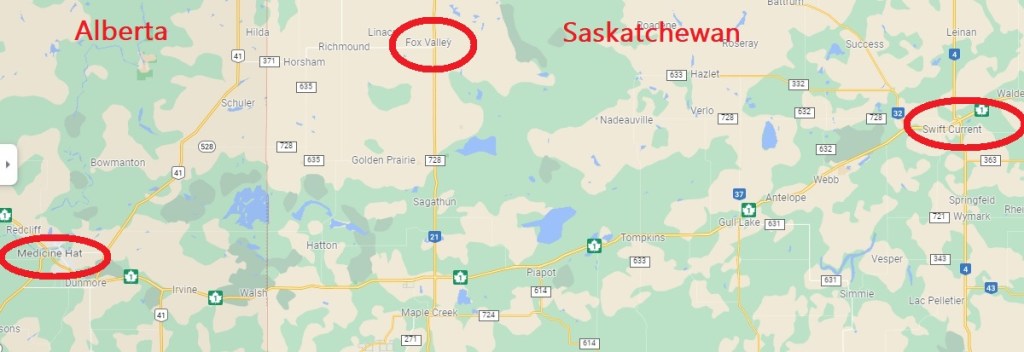
Fox Valley is about midway between Medicine Hat, Alberta and Swift Current, Saskatchewan.

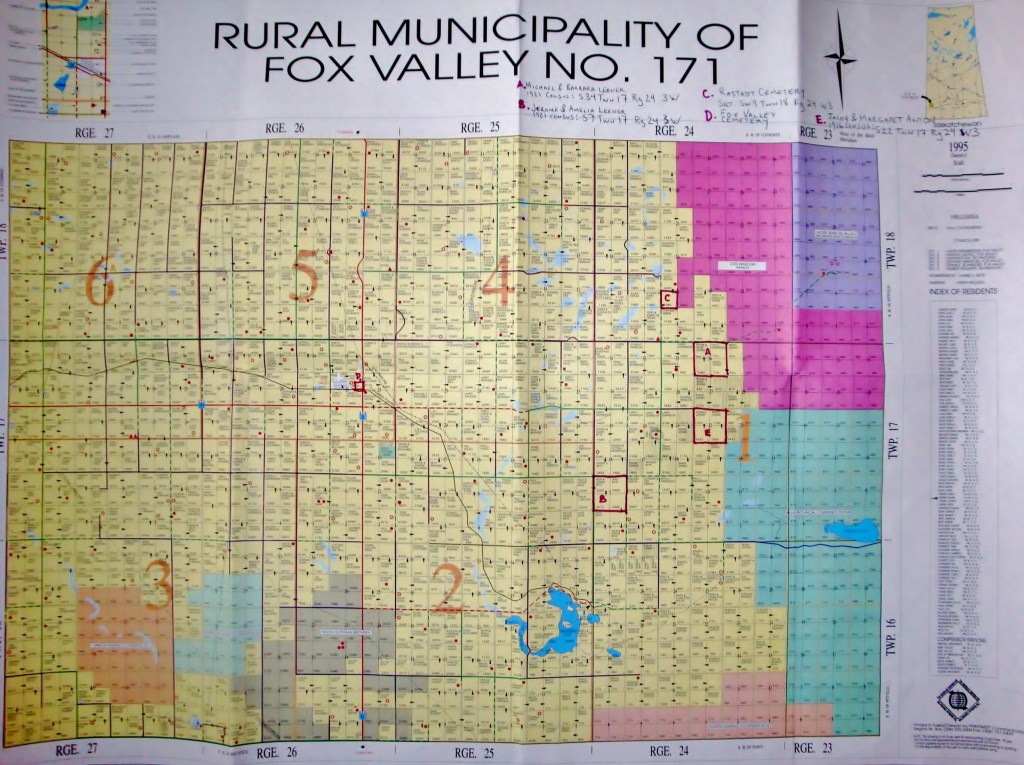
One of the first things I did upon arriving at Fox Valley was visit the village hall. It was a wise decision. Not only were the staff extremely helpful, they had maps of all the farms in the district, labelled with the current owners and occupants of each section of land. It was an amazing thing to see, because many of the surnames on the map were in my family tree database.

Map of the farms and residents surrounding Fox Valley, Saskatchewan as of 1997. Fox Valley is just below and to the right of the large number “5”. While not easy to see, the Fox Valley Cemetery is marked with a small red box labelled “D”. The larger boxes to the east are where my great grand parents and great great grandparents farmed, along with the Rastadt Cemetery.
The same area, as seen on Google Maps. Fox Valley is in the oval on the left. My ancestors’ farms are on the right, along with the Rastadt Cemetery.

A history of Fox Valley was published in 2004, Fox Valley and Liebenthal, Saskatchewan: Remember When… In addition to the family history of the village’s residents, this extremely useful book includes a section in which it records all the residents of these parcels of land throughout most of the 20th Century. In conjunction with this map, the book, and census records, I’ve been able to plot out where my ancestors lived and farmed.

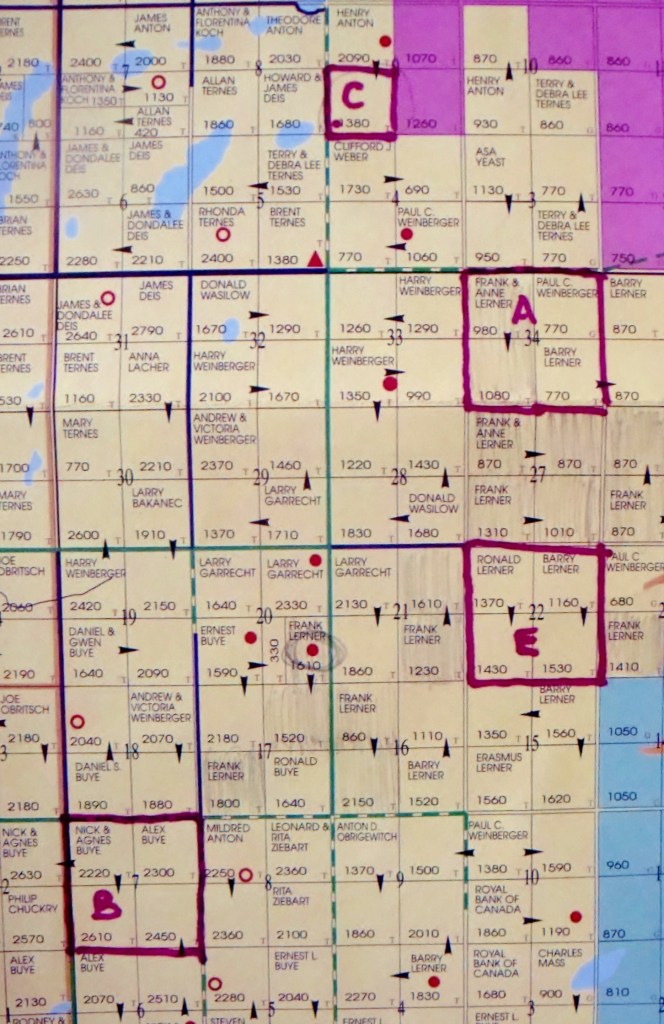
Detail from the map above.

The locations I’ve marked are based upon the 1921 census, except for Jacob Anton, who died a month before that census was taken. For him I used the 1916 census. My grandmother’s parents were Jerome and Emelia Lerner, whose farm is the southernmost one marked on the map.

A: Michael Lerner and Barbara Schmidt (my grandmother’s paternal grandparents)

B: Heronimus “Michael” Lerner and Emelia Anton (m grandmother’s parents, and where my grandmother was born.

C: The Rastadt Cemetery. (D, not seen in the detail, is the Fox Valley Cemetery.)

E: Jacob Anton and Margaretha (“Margaret”) Heck, my grandmother’s maternal grandparents.

Serendipity

My mother and I used this map to visit the schoolhouse, cemetery, and plot of land where my grandmother’s house had once been. After taking the photo of me, we drove a bit down the road where I used a driveway of a farmhouse to turn around. The farmer who lived there saw me and came out, thinking anyone he didn’t know who was out there must be lost.

After explaining that I actually meant to be in his part of the world, we got to talking. It turned out he was a cousin of my grandmother’s. He and his wife invited us in for coffee and they showed us all sorts of interesting family photos and mementos. Talk about serendipity! He even told me the farmhouse my grandmother was born in still existed – a farmer had bought the building and moved it to his land.

Even more fortuitous, he told me that a family history was being put together of the Boechler family, the Boechler Family History. Barbara Schmidt’s mother was a Boechler. The farmer gave me the contact information for the author. My timing was another stroke of luck. I made the call not long afterward and learned that the book was being finalized and would be going to press in a matter of days. It also turned out that Emelia’s branch of the family – from which I am descended – was a huge mystery. I was able to supply most of the information about Emelia and her descendants in time for publication.

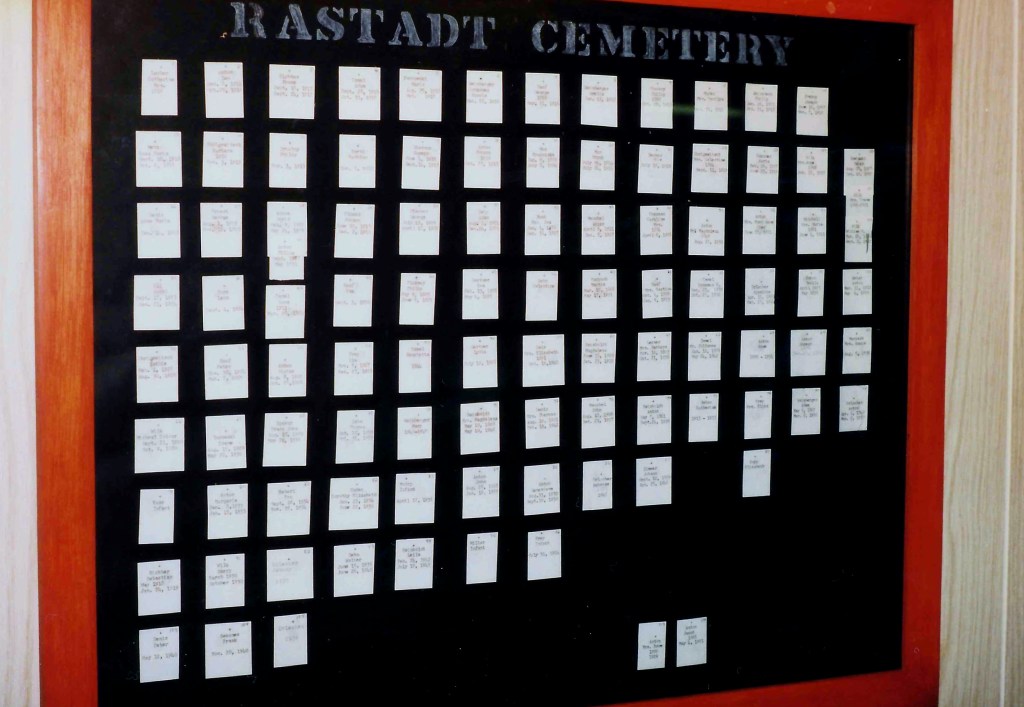
Another form of map. This was taken inside St. Mary’s Church in Fox Valley, showing the location of each person interred at the Rastadt Cemetery.

In Part Two, I’ll be looking at another piece of prairie farmland, this time in Alberta on my mother’s paternal side.