52W Mark III – Week 43: Lost Contact

This week’s prompt for the 52 Ancestors Challenge is “Lost Contact”. Losing contact is one way of losing a connection. Sometimes losing the connection might be necessary.

There are countless ways as to why a tree is such an excellent metaphor for genealogy. One comparison that might not be considered so often is that, like a tree, sometimes one’s family history might need some pruning.
As our research progresses over time and we add to our trees, we might discover that there are branches that no longer belong, which should never have been there in the first place. They might have been grafted to our trees early on, when we were new to genealogy, and did not realize that the connection was not supported by the evidence. There might be branches that seemed to be supported by the evidence that was available at the time, but new evidence comes to light that disproves the connection. When this happens, we have to cut that branch and end contact with the false connection.

I know that sometimes many genealogists have had a hard time making the cut. After all, until the connection was disproved, the individuals on the branch were considered family.

Over the years, I’ve made cuts now and again. Some small, some big. A few years ago I found a significant cut I had to make for my 6xG Grandfather, James Turner (1715-1773). James is on a branch of my tree for which I’ve had less interest than others over the years. He was the great grandfather of my 3xG Grandfather, Preston Thomas (1814-1877). While I’ve done quite a lot of research on Preston – and written about him here many times – I have not done much research on his lineage. Most of what I have is names and dates I gathered in the mid-90s during my earliest visits to the Family History Centre in Burnaby, and never really looked at again very seriously. It comes as no surprise to me when I have to prune some of the branches on Thomas’s line, including the parents of James Turner (which I wrote about on Week 8 of the 2023 52 Ancestors Challenge).

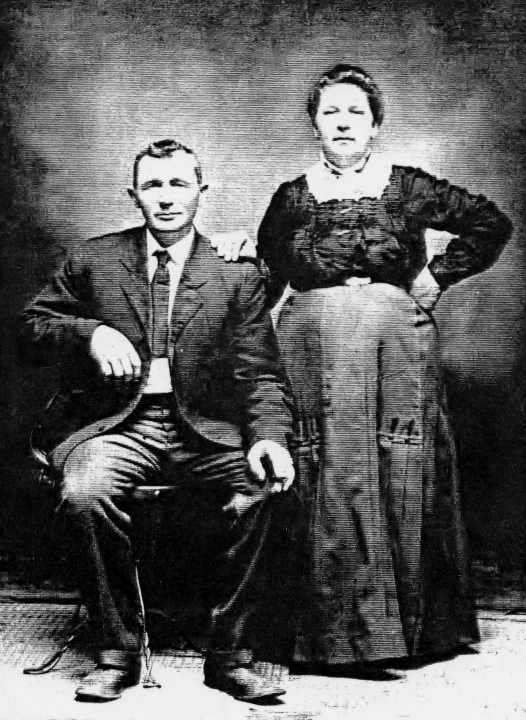
The other branches of my tree that I know need some more serious research and that might result in some pruning, or at least some revision, are the paternal lines of my maternal grandmother, Helen Burgess (1921-1984). I have great confidence in the information I have for Helen’s grandparents and her attachment to them. However, I have doubts about the lineage of her great grandfather Franciscus “Franz” Lerner (b. bet. 1835-1840 – d. 1876 or 1877) and her great grandfather Georg Jacob Anton (1843-1908).

My grandmother’s is a descendant of Germans from Russia, which I have written about here quite often. Those ancestors are my most difficult branches to research, for many reasons.

For Franz, I am confident in the identity of his paternal grandfather [Franz Ignaz Lerner (1759-abt 1816 or later)]. The main problem is identifying his father. Franz’s father is one of either two individuals:

  • Michael Lerner born 11 Jul 1793 in Malsch, Karlsruhe, Baden, wife Maria Eva Eberle born 1793 in Pleisweiler, Bergzabern, Pfalz (although possibly Eva Eberle), or
  • Bernard Lerner born 27 Feb 1798 in Malsch, Karlsruhe, Baden, wife Barbara Heil born abt 1799 in Niederlustadt, Germersheim, Pfalz.

As for Georg Jacob, he might not actually be Georg Jacob. It is possible he is actually simply just Jacob. As for Georg Jacob’s father, the name I have is Johannes Anton; however, he might actually have been Peter Johannes Anton. Not only are the names I have slightly off from some other indicators, the birthdates I have for both is in question. Interestingly, the identity of their spouses does not seem to be as dubious. This leads me to believe that there is no mistaken branch here; rather, it is simply a matter of properly identifying Georg Jacob and Johannes.

I will add that even when I prune a branch, I keep a record of it. If large enough, I create a separate database for it; if not, I keep notes in my research logs or in the notes for the child whose parents I ended up cutting. That way I don’t retrace my steps or fall into old traps. Moreover, should it turn out the information actually was correct, I have it handy and can graft the branch back onto my main tree.
52 W Mark III – Week 16: Step

A “steppe” is a geographic and ecological region consisting of grassy plains. Some steppes are referred to as savanna and prairie. The largest steppe in the world, the Great Steppe or Eurasian Steppe, stretches from Ukraine to China. The Canadian prairies and the American great plains are other examples of of steppes.

My maternal ancestors originated in the western German states that formed part of the Holy Roman Empire, which came to an end with Napoleon’s conquest of the region. In the nineteenth century, my German ancestors sought a paradise on the steppe, first in Imperial Russia and later in North America. I wrote about these Germans from Russia only a few weeks ago, in Week 7.

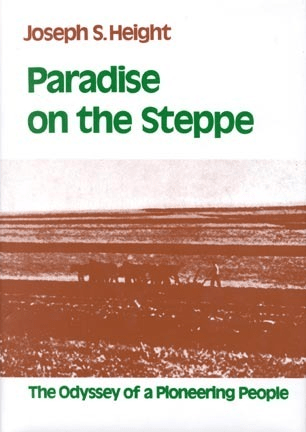
A seminal work documenting the history and culture of these Germans is Paradise on the Steppe by Dr. Joseph S. Height. Dr. Height’s book is well-known amongst family historians who trace their roots to Germans from Russia.

Dr. Height was born in Tramping Lake, Saskatchewan in 1909. In university he specialized in foreign languages. He spent three years in Germany studying philosophy and German. He attended the University of British Columbia and earned degrees in those two disciplines. Dr. Height spent the last fifteen years of his career as a professor at Franklin College in Indiana. Dr. Height passed away in Indianapolis in 1979.

In addition to his academic works, Dr. Height published several books about the history of the Germans from Russia. In addition to Paradise on the Steppe, his works on this topic include Homesteaders on the Steppe, Memories of the Black Sea Germans, and Folksongs of our Forefathers. Dr. Height also translated a portion of The Emigration from Germany to Russia in the Years 1763 to 1862, by Karl Stumpp, another book of great importance to genealogists researching this area of family history.

Based upon twenty years’ research, Paradise on the Steppe sets out the historical, economic, social, and political forces that pushed these Germans from their homelands and pulled them to the Russian and Ukrainian steppe starting in the late 18th century. Dr. Height tells of the hardships the colonists faced from the moment they left their homes through to the hardships they faced in the late 19th and early 20th centuries, with growing oppression by the last Czars, the Bolshevik Revolution, Stalinist suppression, and Nazi invasion.

Dr. Height also details the colonists’ successes, joys, and achievements. He includes chapters about language, folksongs, festivals, holidays, courtship and marriage, food, school life, and church life. Dr. Height also goes into great detail about how the colonists governed themselves. Of course, the book would have been incomplete without its extensive look at the colonists agricultural activities.

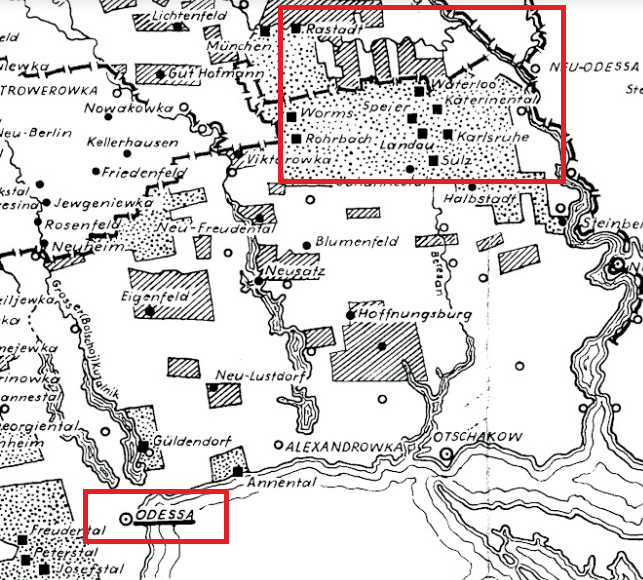
While Paradise on the Steppe provides a look at the collective whole, it also provides important information about the founding colonists of the first colonies and their “daughter” colonies. For example, several of my direct ancestors and related families are included in the lists for the Beresan colonies of Rastadt and Karlsruhe.

The German colonies in the Beresan district in 1890, as seen in relation to Odessa. All four of my maternal grandmother’s grandparents came from Rastadt and Karlsruhe, located in the upper right-hand corner.

By the 1950s, little was left of the German colonies, through decades of emigration or exile to the Soviet Union’s holdings in central Asia and Siberia. Many of the emigrants relocated in places with similar geography and environment – the American great plains, the Canadian prairie, and the pampas of Argentina, to name a few. My grandmother’s paternal line left the Russian Empire in 1893, first settling in Texas and later in Saskatchewan. My grandmother’s mother left Russia with her parents and siblings in 1912.

Paradise on the Steppe is available at many libraries, especially family history libraries. It is also available for loan through the Internet Archive.

52W Mark III – Week 14: Favourite Recipe

The topic of food is one of the prompts that shows up in the  52 Ancestors Challenge every year. This makes it a difficult topic to write about, since I covered it broadly in the first and second year I participated in the challenge. However, as Amy often reminds participants, the prompts are merely suggestions and we can interpret them as broadly as we want. Which I’ve done, writing about pets when the prompt was flowers, and vice versa!

With this week’s prompt, I’ve not stretched the topic as far as pets to flowers. Rather, I am looking at the favourite treats of my ancestors.

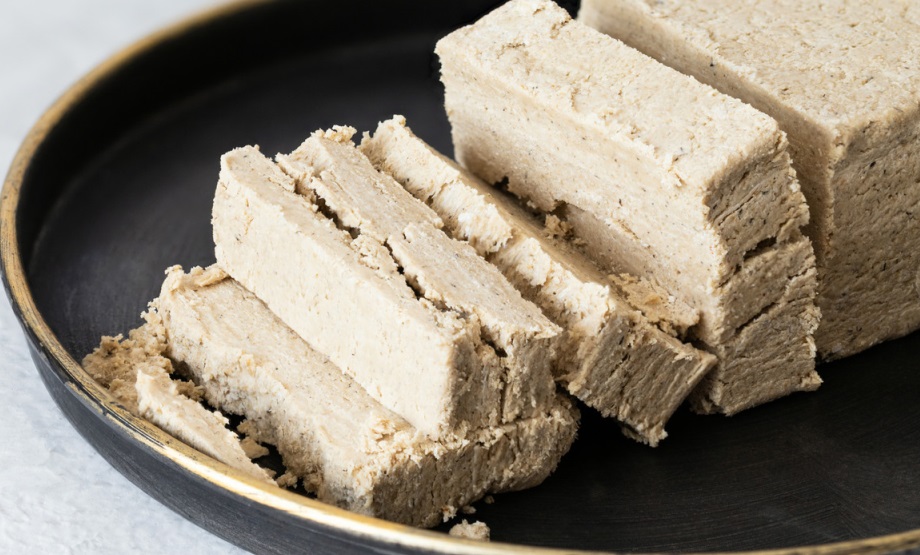
I’ll start with my mother’s maternal line. As I’ve often written about here, that branch of the family are Germans from Russia. One of their favourite treats is halva. It’s a confection that originated in Persia (now Iran) that spread throughout the Middle East and, later, throughout the Ottoman Empire. While halva was originally made with a variety of different ingredients, such as flour and dates, the traditional Turkish version is usually made with sesame seeds and most often sweetened with honey or sugar. You can find halva in many varieties. Halva with pistachios, chocolate, or vanilla is quite common.

Many German settlements in the Russian Empire were in what is now the Ukraine, which the Russians had taken from the Ottoman Turks in a series of wars in the 17th and 18th centuries. While the German population was originally introduced to the Turkish version of halva, they most likely learned of the sweet treat from the local Jewish population that had been in Ukraine for centuries, including the time of Ottoman rule. However, the Germans soon modified the recipe using sunflowers, which are abundant in Ukraine and that are a symbol of that country. I’ve heard that many German-Russians prefer the sunflower variety, but I’ve never seen it. My grandmother and mother always bought the traditional Turkish version. While not a traditional Christmas food, that is the time of year my mother would most often buy it. My mother often spread it on toast, which is quite delicious.

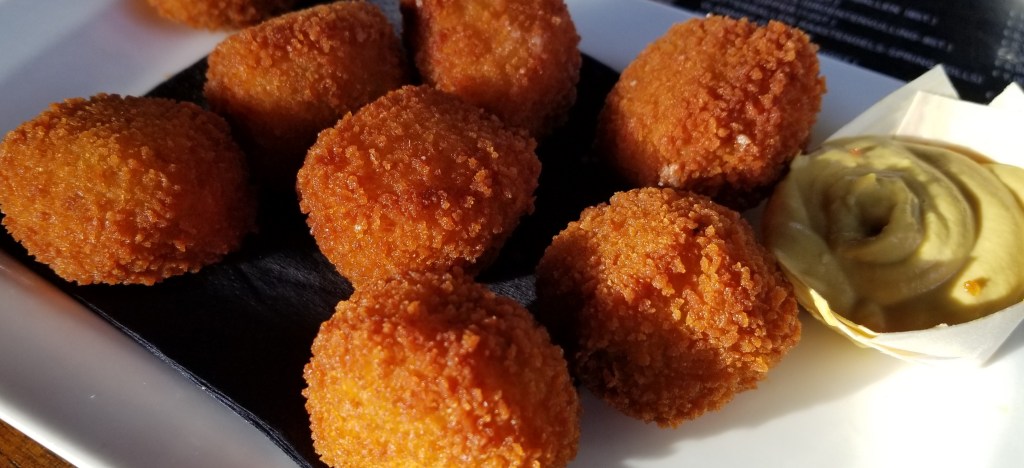
Turning to my father’s side of the family, I’ll admit that Dutch cuisine is not world-famous for many good reasons. That said, there are many delicious treats that make up for it. One of my favourites, bitterballen, is commonly found as a bar snack. They are somewhat similar to croquettes, but are smaller and rounder. They are made of a mixture of minced beef, roux, onions, and seasonings, breaded, and fried. They’re addictive little snacks. There is a chain of cafes and coffee shops in the Netherlands called The Bulldog. In the 1990s, they had a location in Vancouver. I often went there for lunch with a friend and we always started with bitterballen.

Bitterballen are traditionally served with mustard. Lekker!

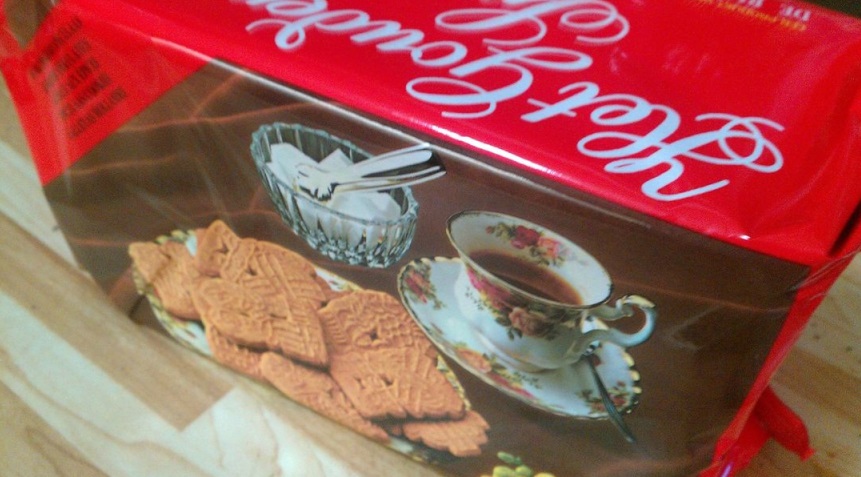
The Dutch also have many sweet treats. Almond-based treats (including marzipan) and baked goods made with warm spices are quite popular. The one I can remember having ever since I was little is speculaas. They always contain ginger, along with spices such as cinnamon, nutmeg, cloves, cardamom, anise, allspice, and white pepper. With those flavours, they were a common Christmastime treat, but now it is common to enjoy them year-round. They are particularly good with coffee. While speculaas might have been obscure outside the Netherlands and its former colonies, they’ve always been relatively easy to find in Canada. I’ve also noticed them popping up on baking and cooking shows in recent years.

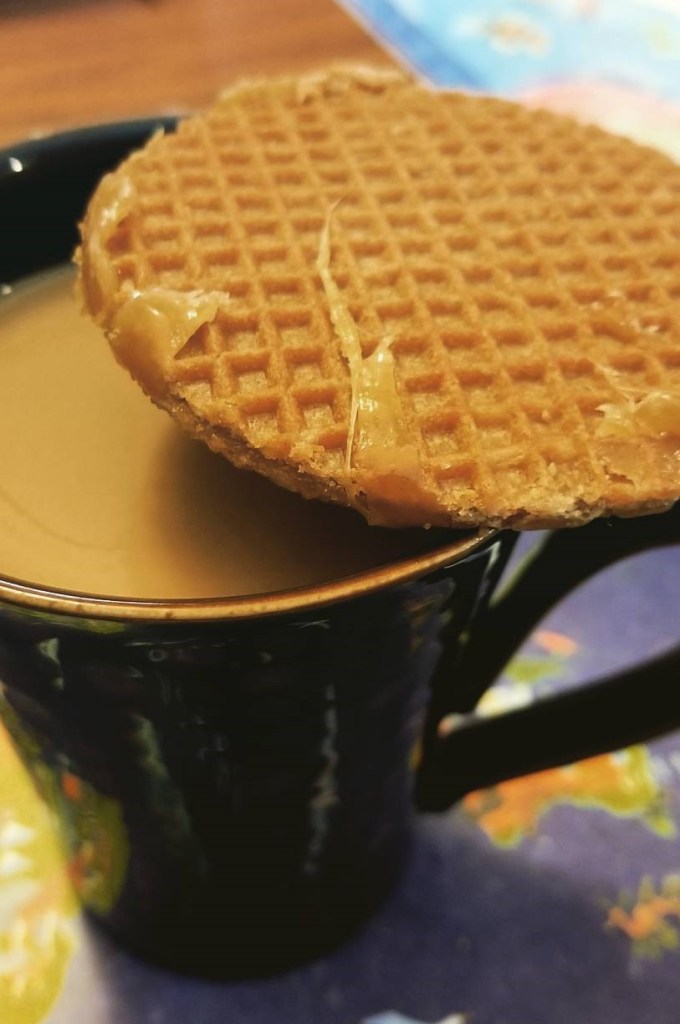
Another delicious treat that is also good with coffee are stroopwafels. They’re made up of thin waffle-like wafers with a thin layer of caramel sandwiched in the middle. (“Waffle”, by the way, is an English word of Dutch origin.) They originated in the city of Gouda as a means for bakers to repurpose crumbs and scraps. You can get them freshly made from street vendors in the Netherlands, as well as bakeries and cafes. The availability of stroopwafels in Canada seems to wax and wane, although they’re always available in Dutch specialty stores. They were also featured as the technical challenge during “Caramel Week” on Season Eight of The Great British Bake Off (airing as The Great British Baking Show in the United States and Canada). It’s common to place them on top of a hot cup of coffee, which warms and softens them. So delicious!

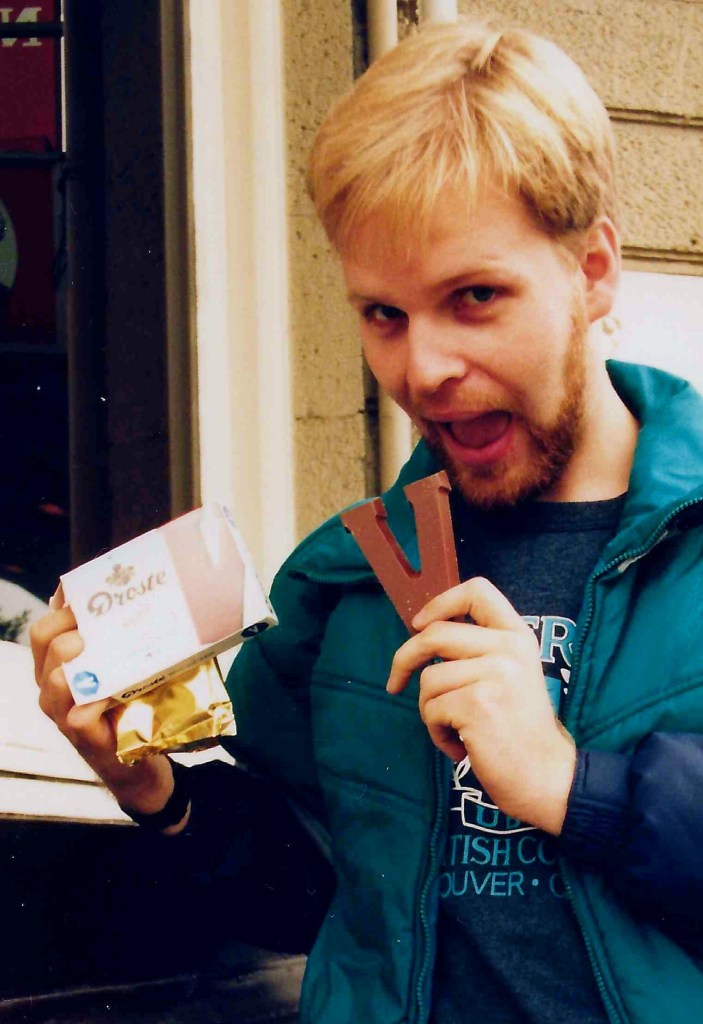
Finally, many people know that the Netherlands is famous for its chocolate. During Sinterklaas, a favourite treat is chocoladeletters (“chocolate letters”). Centuries ago they originated as baked goods, but are now almost exclusively made of chocolate. It is traditional to receive a chocolate letter of the initial of your first name. My great grandmother, Elizabeth Bakker, always included chocolate letters in the box of goodies she sent us every Christmas. When we were children, there was always an argument that some letters were bigger than others so they had more chocolate. The truth is, while the surface area of each letter might differ, they are manufactured in different thicknesses so that every letter contains the same amount. The other problem is finding letters that are uncommon initials for names in the Netherlands, although that is less of a problem than it used to be.

Chocolate letters are another item for which, outside the Netherlands, the availability seems to change over time. When I was a kid, they seemed to be available everywhere. Purdy’s made their own for a while, but I haven’t seen them there in a long time. In recent years, the only place I could find them were in Dutch stores. Even then, I could not find Droste letters – the absolute best ones, bar none – anywhere. You could only find the secondary brands. I once asked a vendor if Droste no longer shipped to Canada, and was told they were simply too expensive to carry. Luckily, a couple years ago I found Droste chocoladeletters in a Dutch store in Lethbridge.

Fortunately, chocolate letters seem to be getting easier to find again, as I saw them being sold in many mainstream supermarkets and shops last Christmas. I first noticed them showing up a couple years ago in a local independent grocery store that specializes in Asian foods and ingredients of all places. Plus, in our neighbourhood of Steveston, there is a chocolatier that makes them – in every letter!

During my first trip to the Netherlands, I discovered a Droste store directly across from the Amsterdam Centraal Station. I enjoyed being able to buy any letter I wanted, well out of season! Sadly, the last time I was in Amsterdam, the store was gone.

52 Weeks Mark III – Week 7: Immigration

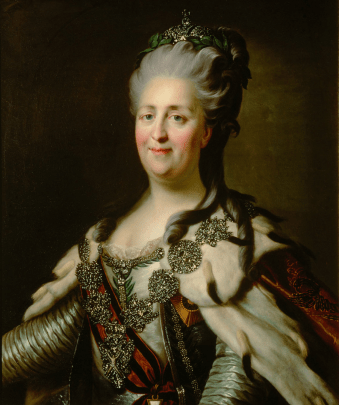
My mother’s maternal line are all Germans from Russia. The Russian Empire expanded significantly during the 18ths century. When Catherine the Great came to power in 1763, she encourage immigration, partly to re-establish farming in regions that had laid fallow during periods of warfare, modernize the country, and to populate regions the Empire had absorbed.

Catherine the Great

Catherine’s manifesto inviting settlers bears some resemblance the homestead schemes introduced in the United States and Canada over a century later.

Among other things, she promised land, free transportation to Russia, and economic incentives (including freedom from taxes for a period of time and interest-free loans for the purchase of equipment). As well, settlers were promised that they could freely practice their religion, retain their language, and be free from military service. The settlers were also promised a degree of self-government.

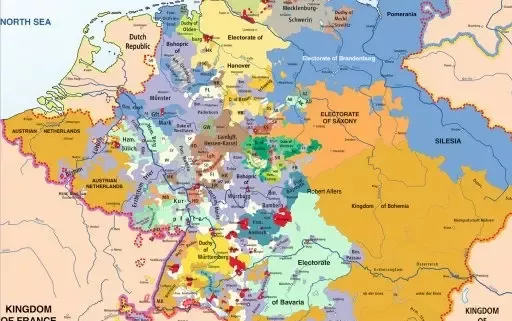
While settlers came from several places in Europe, a majority were Germans. At the time, there was no “Germany”. Rather, the region was primarily composed of a multitude of principalities, dutchies, and other small states. While Catherine’s promises provided a significant pull, economic and political conditions in the German states provided a significant push.

Germany in 1789

The first wave of settlers formed colonies in the Volga region (“Volga Germans”). The next wave occurred after Catherine’s grandson, Alexander I, issued a similar manifesto with many of the same promises. My ancestors were part of this wave of settlers, who formed colonies in what is now southern Ukraine, particularly in the area north of Odessa (“Black Sea Germans”).

The German colonies in the Beresan district in 1890, as seen in relation to Odessa. All four of my maternal grandmother’s grandparents came from Rastadt and Karlsruhe, located in the upper right-hand corner.

The German colonies were usually composed of members of the same religion. The main colonies were Catholic, Lutheran, and Mennonite. These colonies thrived for decades. However, in 1871, Czar Alexander II repealed the manifestos of Catherine and Alexander I. The German colonists lost many of their privileges. Shortly afterwards, they lost their exemption from military service. The next Czar, Alexander III, took further steps to incorporate the German population into general Russian society, which included discouraging the German language and encroaching on the school system established by the colonists.

Needless to say, this immediately sparked waves of emigration of the German colonists, many of whose families had been in Imperial Russia for decades. Many of these Germans left for the United States and Canada, relocating to the plains stretching from Texas to Saskatchewan. Other colonists left for Argentina and Brazil.

My grandmother’s paternal line originally settled in Texas, starting with my great great grandparents, Michael Lerner and Barbara Schmidt and their six children. They came over in 1893 on the S.S. Lahn, which landed at Ellis Island – less than 18 months after it had opened. Michael and Barbara had six more children after settling in Texas, the first of whom was my great grandfather, Heronimus “Jerome” Lerner. Over time, many of their children relocated to Saskatchewan, including Jerome. Michael and Barbara ultimately made the same move themselves, leaving behind several of their adult children.

My grandmother’s maternal grandparents,  Jacob Anton and Margaretha “Margaret” Heck, came directly to Canada in 1912 with all their children and settled in Saskatchewan. This included my great grandmother, Emelia Anton, who was nine years old at the time. She lived to be 94 and I knew her well.

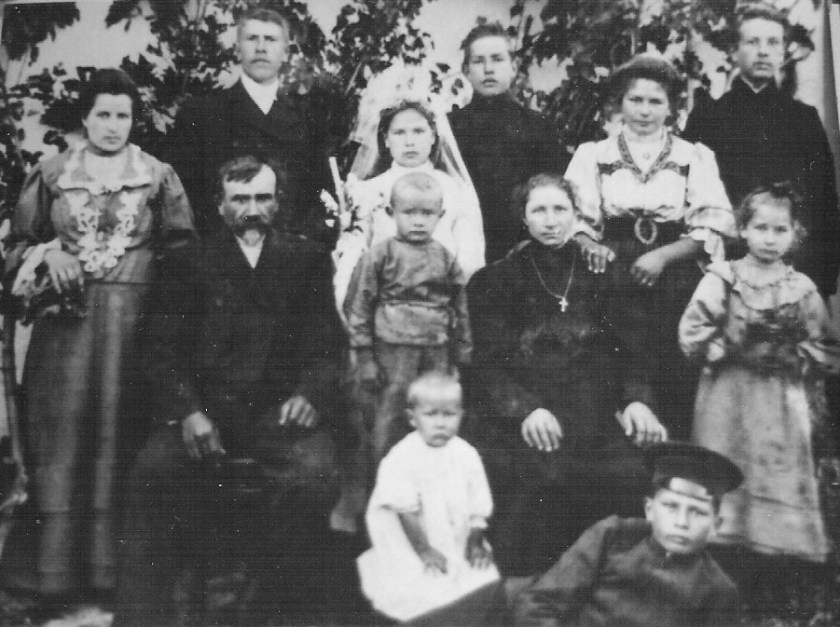
The Anton family, circa 1910. Likely taken in Selo Suchoi, Veronesch, Russia. My great grandmother, Emelia, is the little girl standing at the edge of the right side of the photo.

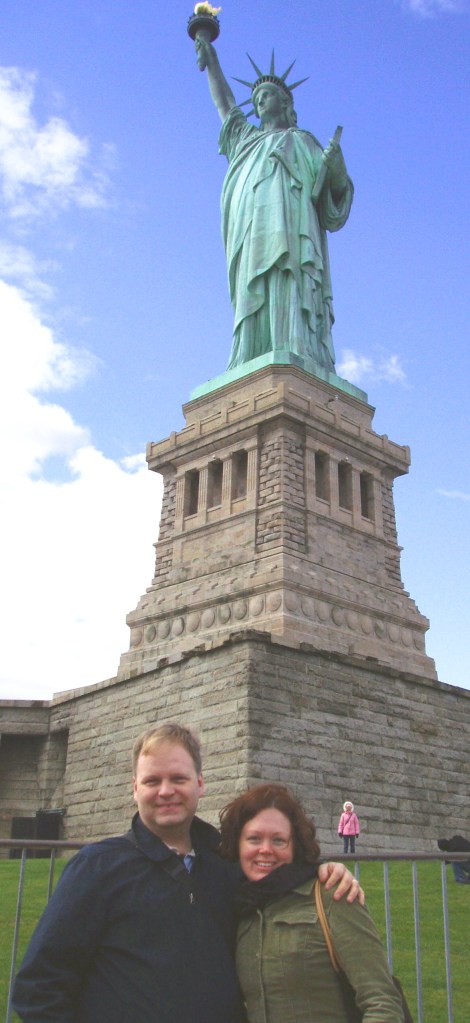
Emelia had not had much schooling before coming to North America, but was very religious. She said that she was frightened and nervous during the journey, as she did not know anything about where she was going and did not fully understand what was going on. However, on reaching New York, she said her fears subsided when she saw “the Madonna”. When she saw that, she knew she would be safe and all would be well. Of course, the “Madonna” was the Statue of Liberty. As she had never heard of it before, she thought it was a statue of the Virgin Mary.

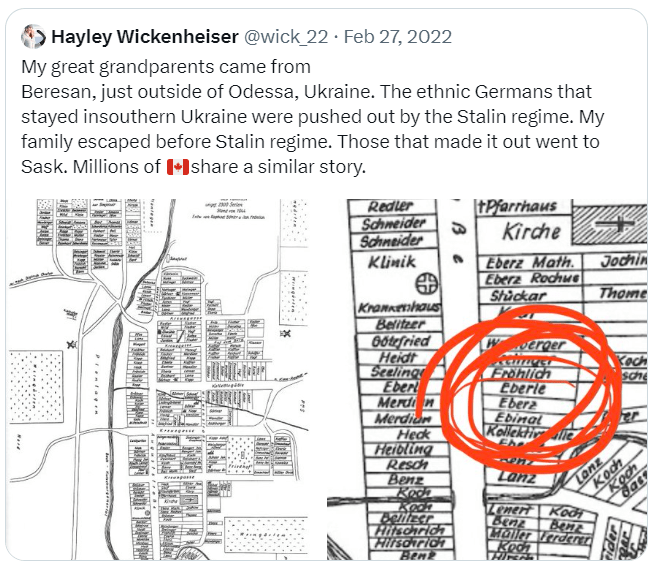
There are many well-known descendants of the Germans from Russia. They include Lawrence Welk, who married my grandmother’s fourth cousin. While I am generally disinterested in celebrity, I was excited to learn that Hayley Wickenheiser is a descendant of Germans from Russia. Her great grandparents lived in Rastadt, where Mike and Barbara had lived before emigrating. However, her family was there decades after mine left, as the did not leave until they fled Stalin’s regime.