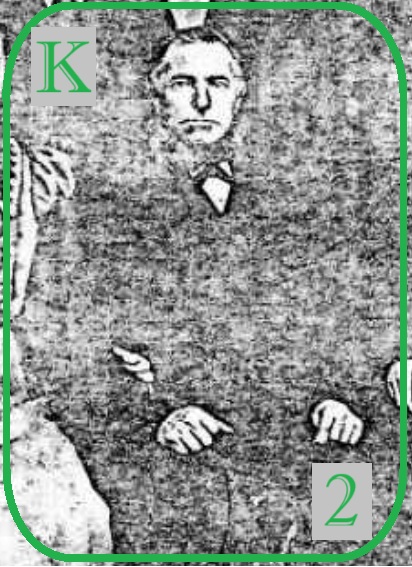
Nicolaas “Klaas” Komen, my Gx2 Grandfather, was born on May 17, 1852 in Heerhugowaard, Noord Holland. He was the eldest of two sons born to Cornelis Komen and Maartje Meetes.
Like most young men of his time, Klaas began his adult life by fulfilling his mandatory military service. In practice, most conscripts never really served in active duty; rather, their service was more like a reserve militia or national guard.
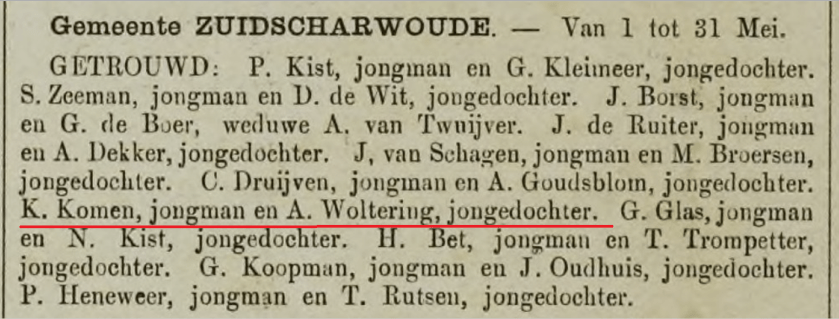
Klaas’s true adult life story began in Zuid-Scharwoude, in the gemeente (municipality) of Langedijk, where he worked as a labourer and began a family of his own. On May 19, 1878, Klaas married Antje “Anna” Woltering, who was born and lived in that town. Over the years, Klaas and Anna had ten children, all but two who lived to adulthood.
Notice of Klaas and Anna’s marriage in the Heldersche en Nieuwedieper Courant, June 16, 1878, page 3
From 1878 until 1900, the family lived in Zuid-Scharwoude. During this period, Klaas continued working as a labourer. In March 1900, Klaas and his family moved to the adjacent town of Noord-Scharwoude, which was also part of Langedijk. It was there that Klaas transitioned into work farming.
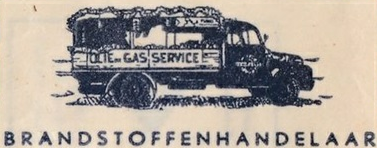
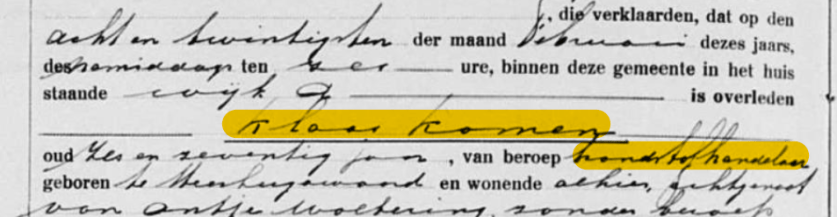
Around 1914, in his early 60s, Klaas embarked on a new occupational path as a “brandstoffenhandelaar” (“fuel dealer” or “fuel merchant”), operating out of Zuid-Scharwoude. It was a profession he carried out for many years, possibly even until his death in 1929. However, work as a brandstoffenhandelaar was not his sole occupation, as records show that he continued to work as a labourer, horticulturalist, and farmer at various times in the 1920s.
An extract from Klaas’s death registration, noting his occupation as a brandstoffenhandelaar.
I had been intrigued by his role as a brandstoffenhandelaar ever since I first learned of it, first because of the mouthful of a compound noun that it is, and then by the questions I had about it. Needless to say, the direct translation of the word into English doesn’t mean or tell much. In fact, it took me a while to learn that much, since I discovered the term long before Google and the word wasn’t in any of my Dutch-English dictionaries, although I was able to break down the component parts.
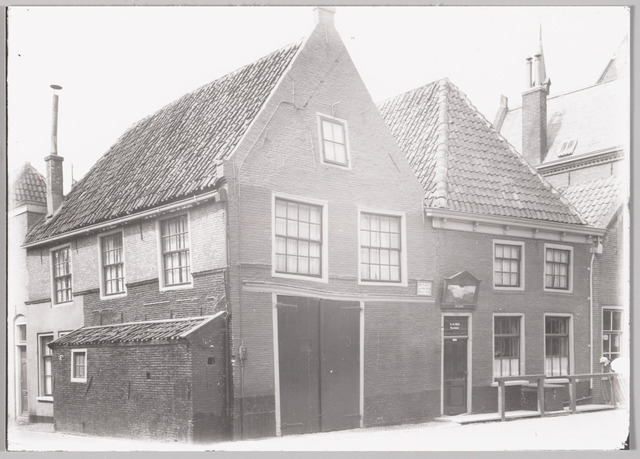
I found this photo in the collection of Regionaal Archief Alkmaar. It was the warehouse of Dirk Veer, a brandstoffenhandelaar in Alkmaar, which is only a couple kilometers from Zuid-Scharwoude. The image was taken in 1925, so it’s possible Klaas might have known of this place.
It is a common term still in use today, especially in the petroleum industry. However, it could have meant many different things in the early decades of the twentieth century. I have no idea what kind of fuel Klaas worked with, whether he was the vendor or if he worked for someone else, and where he carried out that work. It could have been that he transported fuel, such as coal, oil, or peat, by cart, wagon, or truck. I also do not know who his customers might have been, that is, commercial or domestic.
Klaas passed away in Zuid-Scharwoude on February 28, 1929, at the age of 76. Anna survived him by another six years.
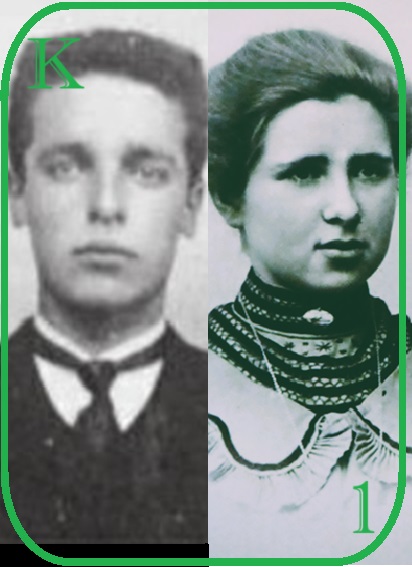
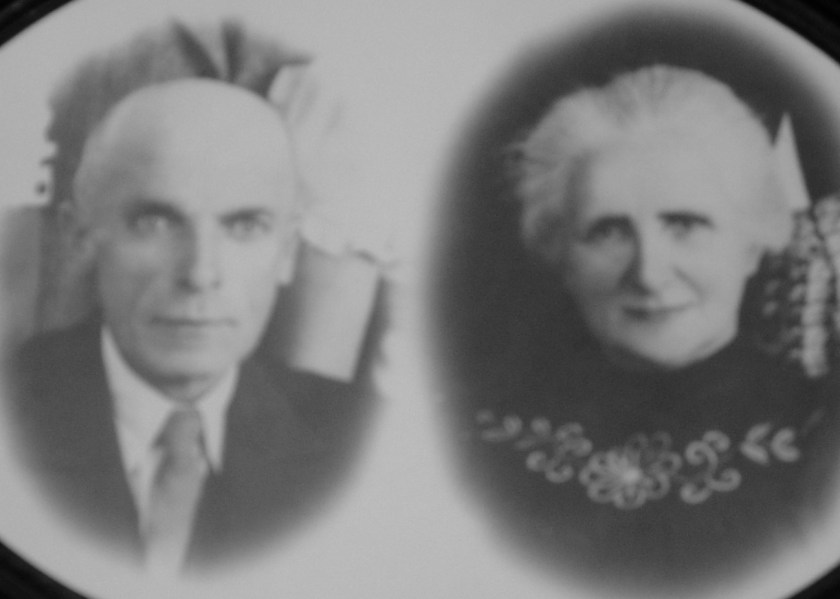
Adrianus Komen (1888 – 1948) Elizabeth Bakker (1888 – 1976)
It’s the second fiscal quarter of 2025 and time to start the second suit of my Deck of Ancestors. This suit involves my father’s maternal line, starting with his grandparents, Adrianus (“Arie”) Komen (1888 – 1948) and Elizabeth Bakker (1888 – 1976). They were born only a few months apart; Arie was born on May 11 and Elizabeth was born on September 12. They were both 32 when they married and spent 27 wedded years together, but Elizabeth spent more years than that as a widow.
Arie was born in Zuid-Scharwoude, Noord Holland, while Elizabeth was born in Den Helder. I have no idea how they met, as their home towns are 30 kilometers apart – a significant distance at the time. (Heck, it still is for a lot of my Dutch relatives!) Arie spent almost his entire life in Zuid- and Noord-Scharwoude (both part of what was then gemeente Langedijk). In her 20s, Elizabeth worked as a domestic servant. She spent some time in that job in Amsterdam, but from 1918 to when she married in 1921, Elizabeth worked in Den Helder.
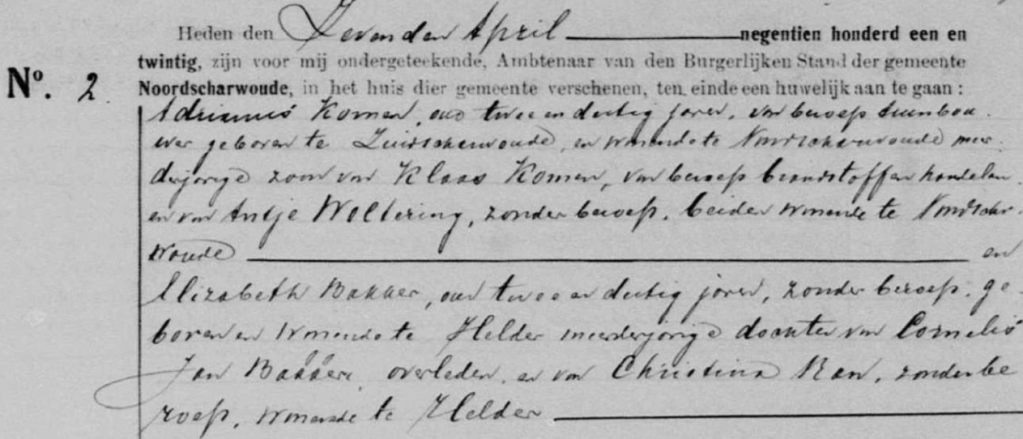
First part of the registration of Arie and Elizabeth’s marriage.
It might be that they met during Arie’s military service. The Netherlands used to have mandatory military service. In practice, most conscripts never really served in active duty; rather, it was more like a reserve militia or national guard. In fact, Arie spent his whole life as an agricultural worker.
Arie initially sought an exemption from service due to poor eyesight. On December 24, 1907, the military deemed him fit for service. Arie was assigned to the 4e Regiment Vesting-Artillerie (4th Regiment Fortress Artillery) based out of Den Helder. Like many conscripts, Arie was never in active service, but likely had to report in or attend training from time to time. Perhaps he met Elizabeth during one of those times.
Arie Komen and Elizabeth Komen
Arie and Elizabeth married on April 7, 1921 in Noord-Scharwoude. (This coming Monday will be their 104th wedding anniversary!) They had seven children together, with my grandmother being the eldest – or so I thought. I was surprised to discover through WieWasWie that Arie and Elizabeth had a daughter one year after they were married, who did not live the day. I doubt my grandmother even knew.
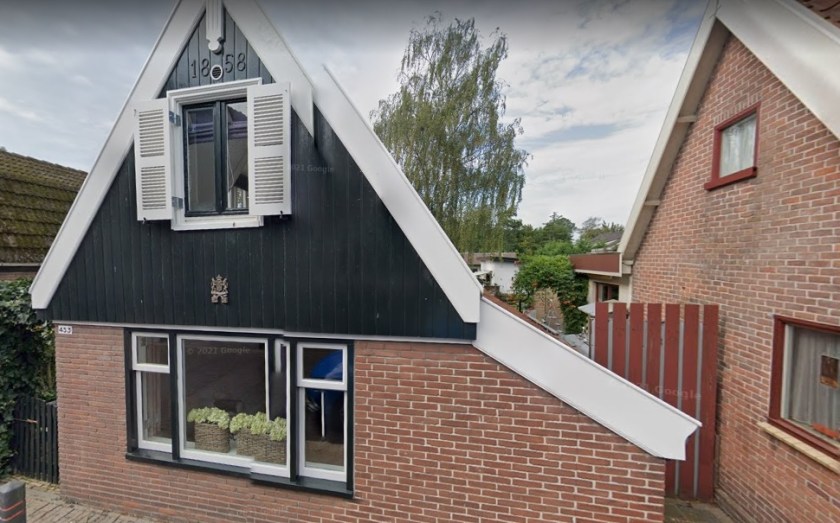
For the first seven years of their marriage, Arie and Elizabeth lived on Dorpstraat in Zuid-Scharwoude. The history of their house is documented in a October 2004 article in Van Otterplaat tot Groenveldsweid (now Otterplaat) magazine:
…the newly married couple Adrianus (Arie) Komen and Elisabeth Bakker moved there, on June 10, 1921 to be precise. Three of their children were born here. The house passed into the hands of Maarten Verweel Voorn in 1928, who lived in the neighboring house (now number 451).
The house on Dorpstraat where Arie and Elizabeth lived, and where my paternal grandmother Christina Komen was born. I saw this house during my first visit to the Netherlands.
They then moved to Pikstraat (now Werfstraat), where they lived together for the next 20 years. Arie died on January 14, 1948. Arie was only 59 years old when he passed away. My father was only a few months old at the time, so he has no recollection of his grandfather. I don’t recall my grandmother ever speaking about her father, but she rarely spoke about the past. To be fair, I never asked her about him, either.
Arie was buried in the parish churchyard of St. Jan de Doper Katholieke Kerk (St. John the Baptist Catholic Church) in Noord-Scharwoude. I’ve been to that cemetery, but his grave is no longer there. Graves in the Netherlands are usually leased, not purchased, and are routinely cleared after a few decades.
Elizabeth remained at the house on Pikstraat and she lived there the rest of her life. She died exactly 28 years after Arie, on January 14, 1976. Her remains were cremated. I don’t know if they were ever interred.
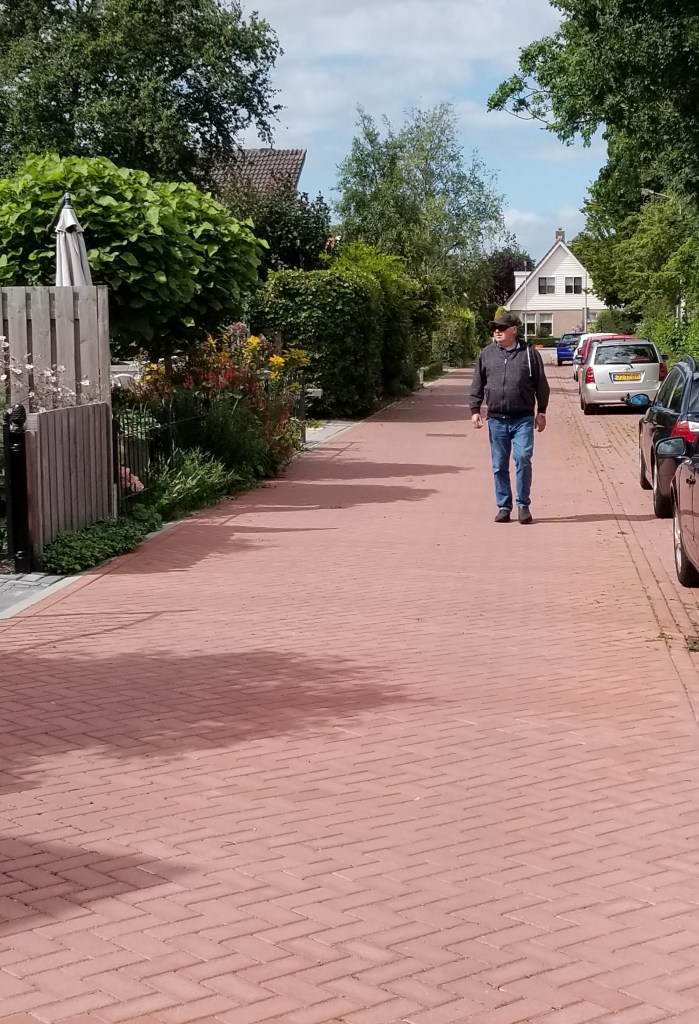
Unlike his grandfather, my father knew his grandmother well. In August 2017, my father and I walked to where his grandmother lived on Werfstraat. My dad told me that when he was a child, the street was a path alongside a canal. It is now a fully-paved street, which might be the reason for the name change from Pikstraat to Werfstraat.
My father walking in front of his grandparent’s house on Werfstraat in Noord-Scharwoude.
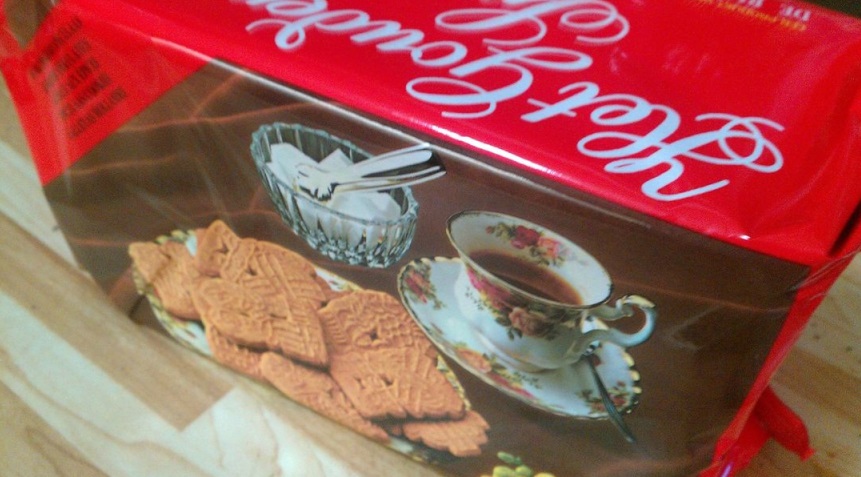
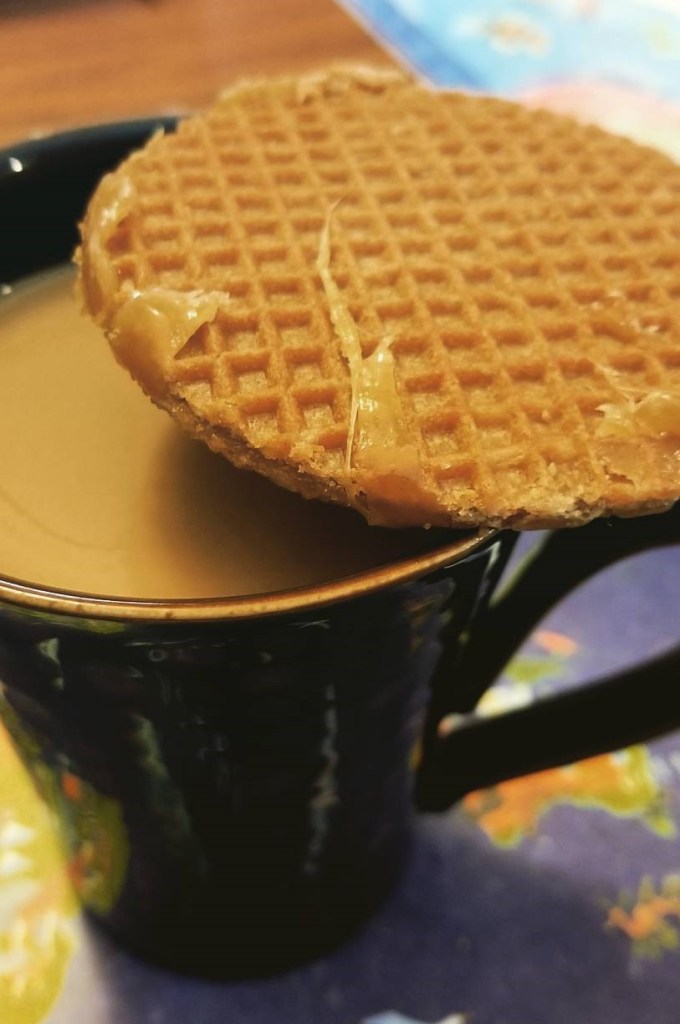
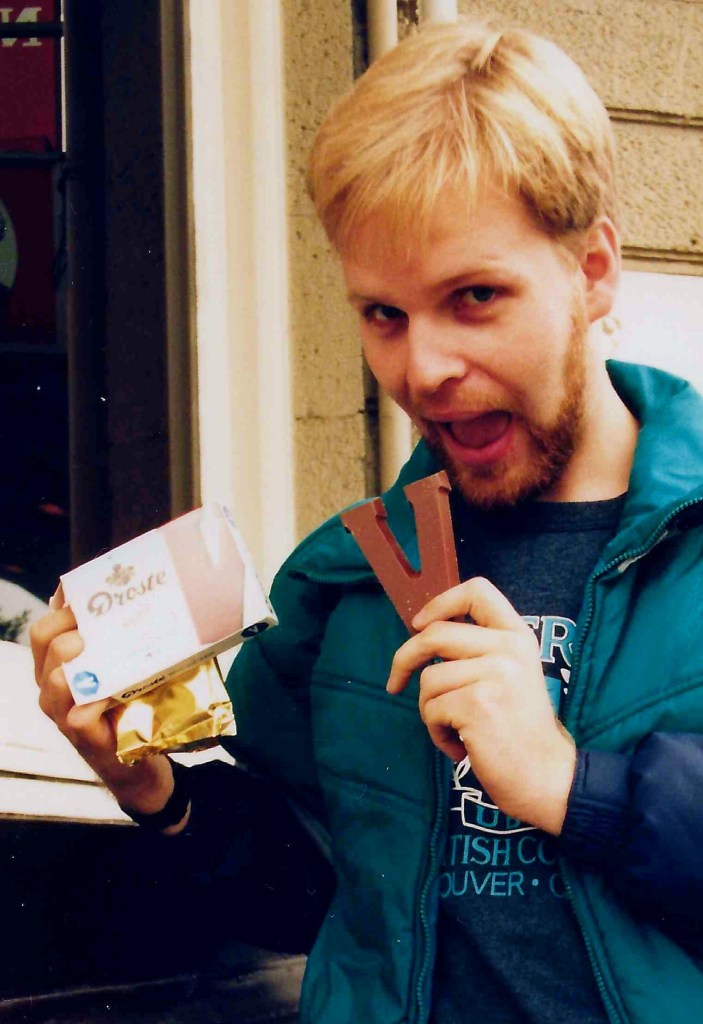
Elizabeth died when I was in elementary school. While I never met her, Oma Komen was well known to me. She regularly sent us letters, postcards, and – most significantly to us as children – boxes of goodies in time for Sinterklaas. However, at the time, I really didn’t know anything about Sinterklaas. I just thought they were really early Christmas treats.
Speculaas, stroopwafels, and chocoladeletters – just some of the treats that Oma Komen would send to us for Sinterklaas!
Supplemental (April 6, 2025): Isn’t this always the case – within a day of hitting publish (late, as usual!), I found interesting new information.
I discovered that Arie spent some or most of 1918 in Heerlen, Limburg. It is almost as far as you can get from Langedijk (Noordscharwoude and Zuidscharwoude) and still remain in the Netherlands. They are pretty much opposite corners of the country.
The dates during which Arie was in Heerlen are unclear from the Bevolkingsregister (population register). It has has him returning from Heerlen (May 10, 1918) before he departs for Heerlen (August 29, 1918). The record of his return was entered on the register on December 10, 1918. It would make more sense that this was also the date he returned from Heerlen.
It is not clear why Arie went to Heelen. His younger brother, Jacob, spent his later years in Limburg and died in Heerlen in 1938. However, it appears that during the time Arie was in Heerlen, Jacob was in Wijchen, Gelderland, which is significantly further north than Heerlen. However, it may be that by 1918 Jacob was in Limburg. Unfortunately, the relevant population registers aren’t available online. As much as I’d love a trip to the Netherlands, that is not happening anytime soon!
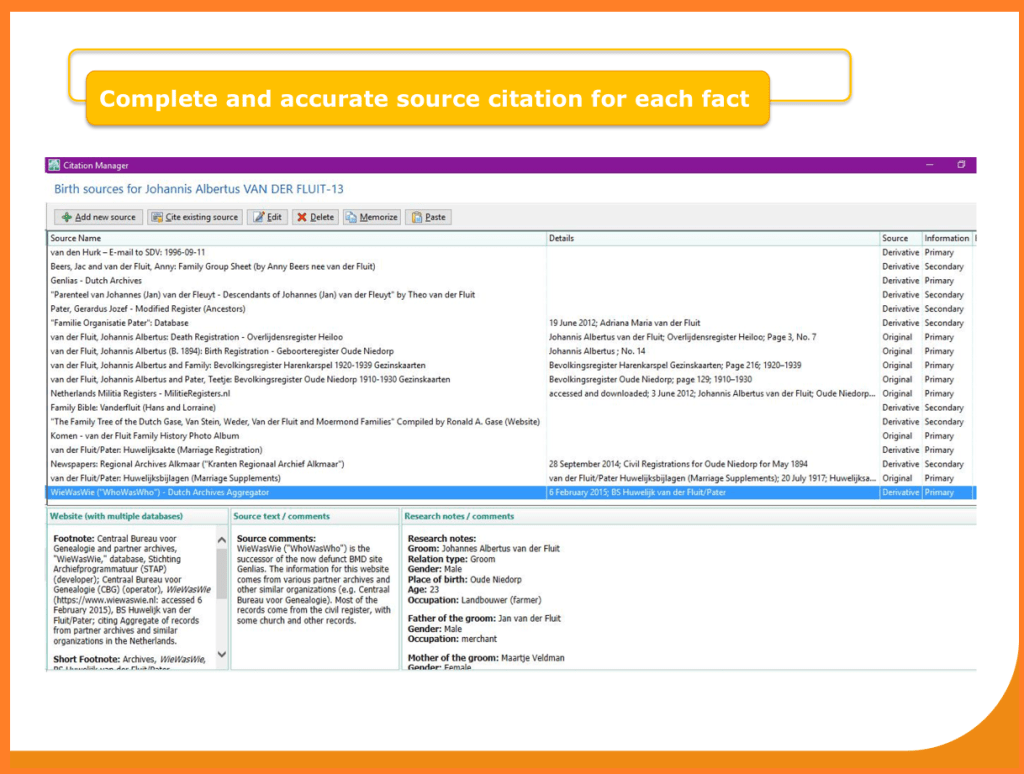
Five or six years ago I presented on the topic of “Law and Genealogy” at a continuing professional development conference. In my PowerPoint presentation, I used several examples from my own research to illustrate several of my points. For example, to illustrate one of five parts of the Genealogical Proof Standard, I used an image of the citations I used in support of the date of the birth of my great grandfather, Johannis Albertus van der Fluit (1894-1932).
What struck me at the time was how many sources I had for that one fact – 17 at the time. If memory serves, I think that was one of the reasons I chose this fact to demonstrate the point. Heck, I could have used this image to illustrate the principle of conducting reasonably exhaustive research!
That slide has stuck with me, so with “Most” being the prompt for this week’s 52 Ancestors Challenge, I got to wondering which ancestor in my family tree has the most sources. Not necessarily the best, or most reliable, or bear the most evidentiary weight – just most. Unfortunately, my software won’t provide the kind of statistics I’m looking for, so I manually went through the entries for all my direct ancestors up to and including my great grandparents.
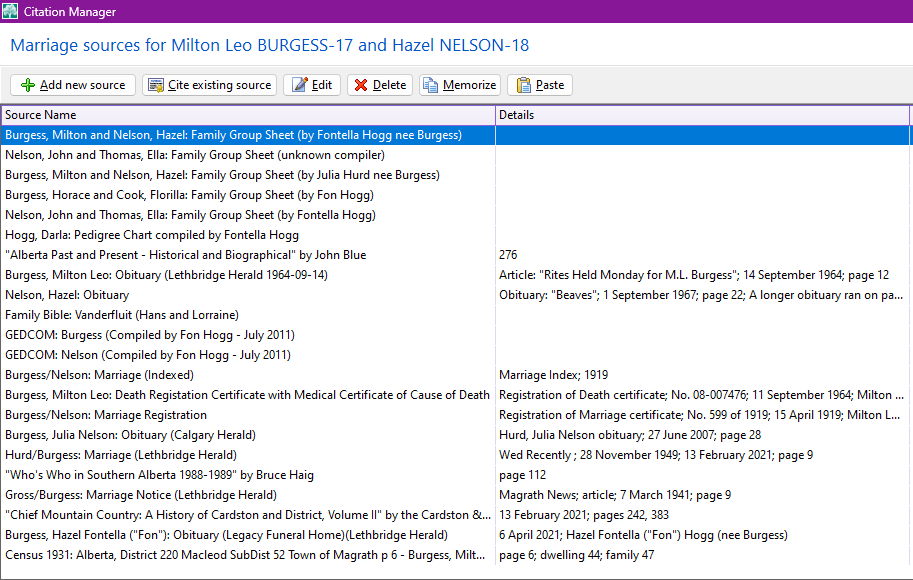
The most heavily sourced of any fact for this set of ancestors is the April 13, 1919 marriage of my mother’s maternal grandparents, Milton Leo Burgess and Hazel Nelson, with 22 unique sources cited.
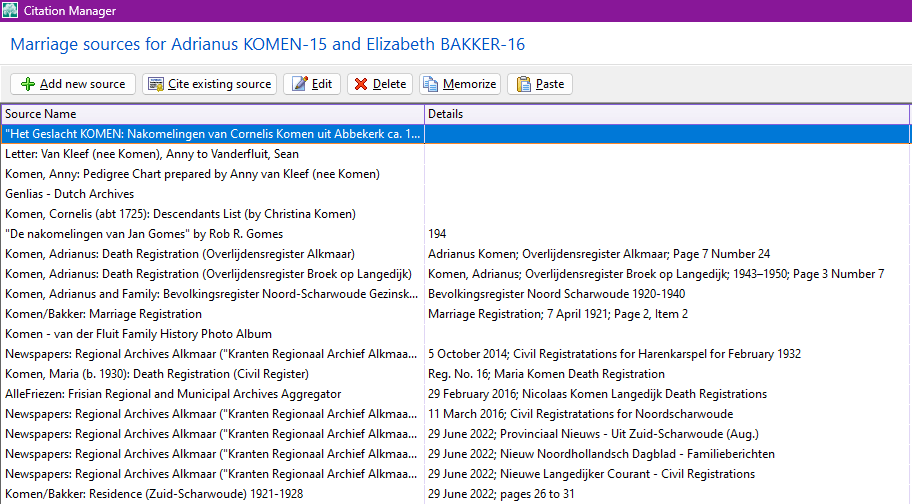
Not far behind is the list of sources demonstrating the marriage of my father’s maternal grandparents, Adrianus Komen and Elizabeth Bakker. I have cited 19 separate sources for their marriage that occurred on April 7, 1921.
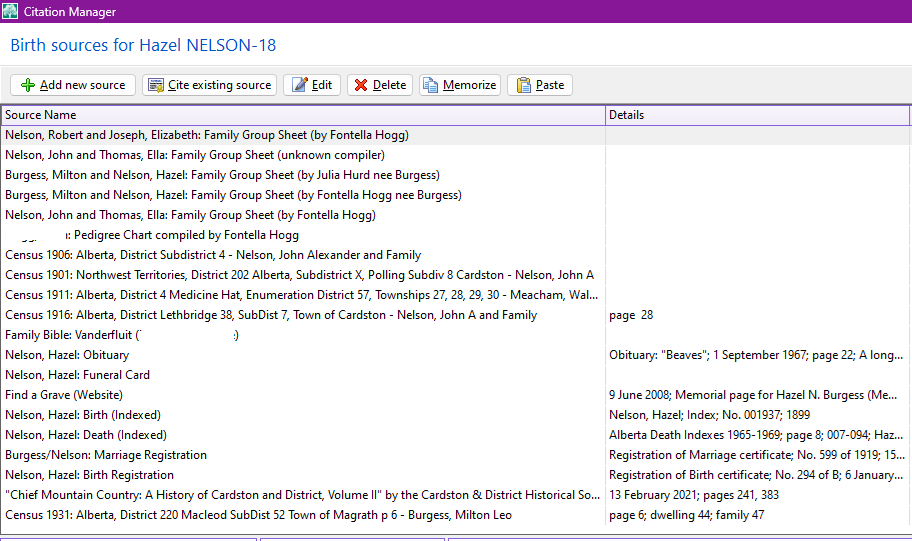
Returning to Hazel Nelson, I also have 20 separate individual sources for her birth, which occurred on December 15, 1899.
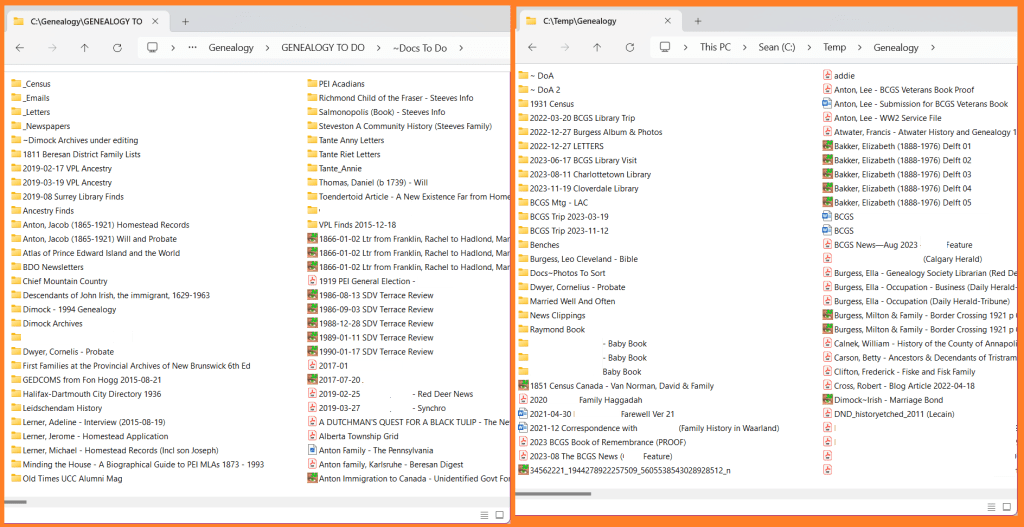
However, where I can find the most sources is in the two folders of electronic documents I’ve gathered that are all vying for my attention. There is also a banker’s box of documents that also need to be written up. Unfortunately, I hate preparing source citations as much as I love genealogy!
These sources aren’t going to write themselves up…Where are the genealogy elves when you need them?
With the prompt of “We Don’t Talk About It” for this week’s 52 Ancestors Challenge, the expectation was likely that participants would write about the bad secrets. However, not all secrets are bad!
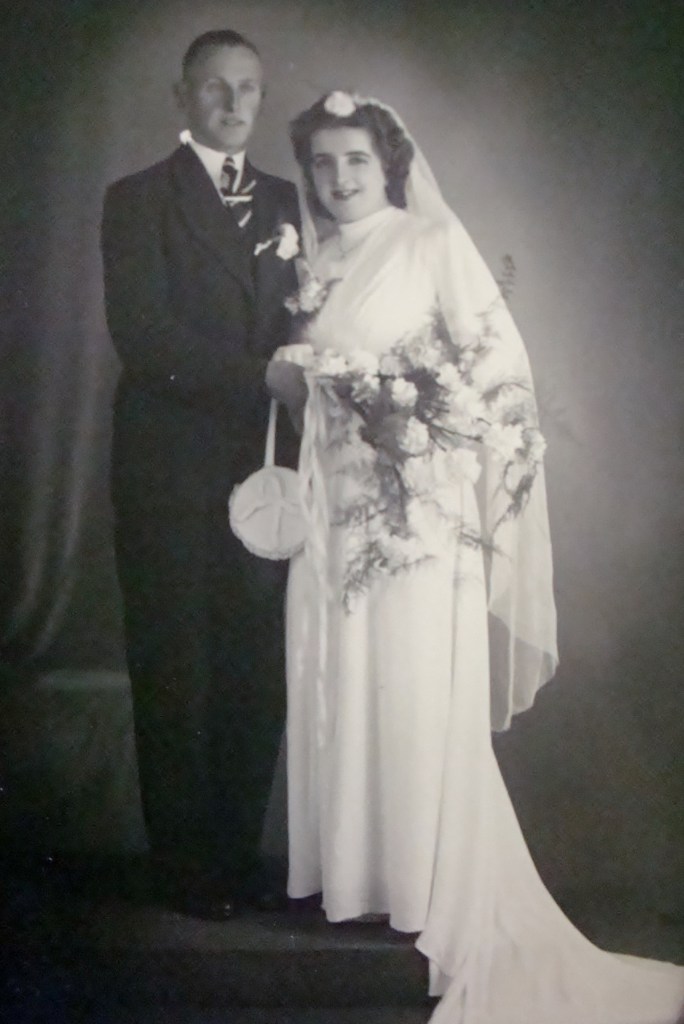
Adrianus Joseph “Arie” van der Fluit (1923 – 2002) and Christina (“Tiny”) Komen (1923 – 2000) on their wedding day.
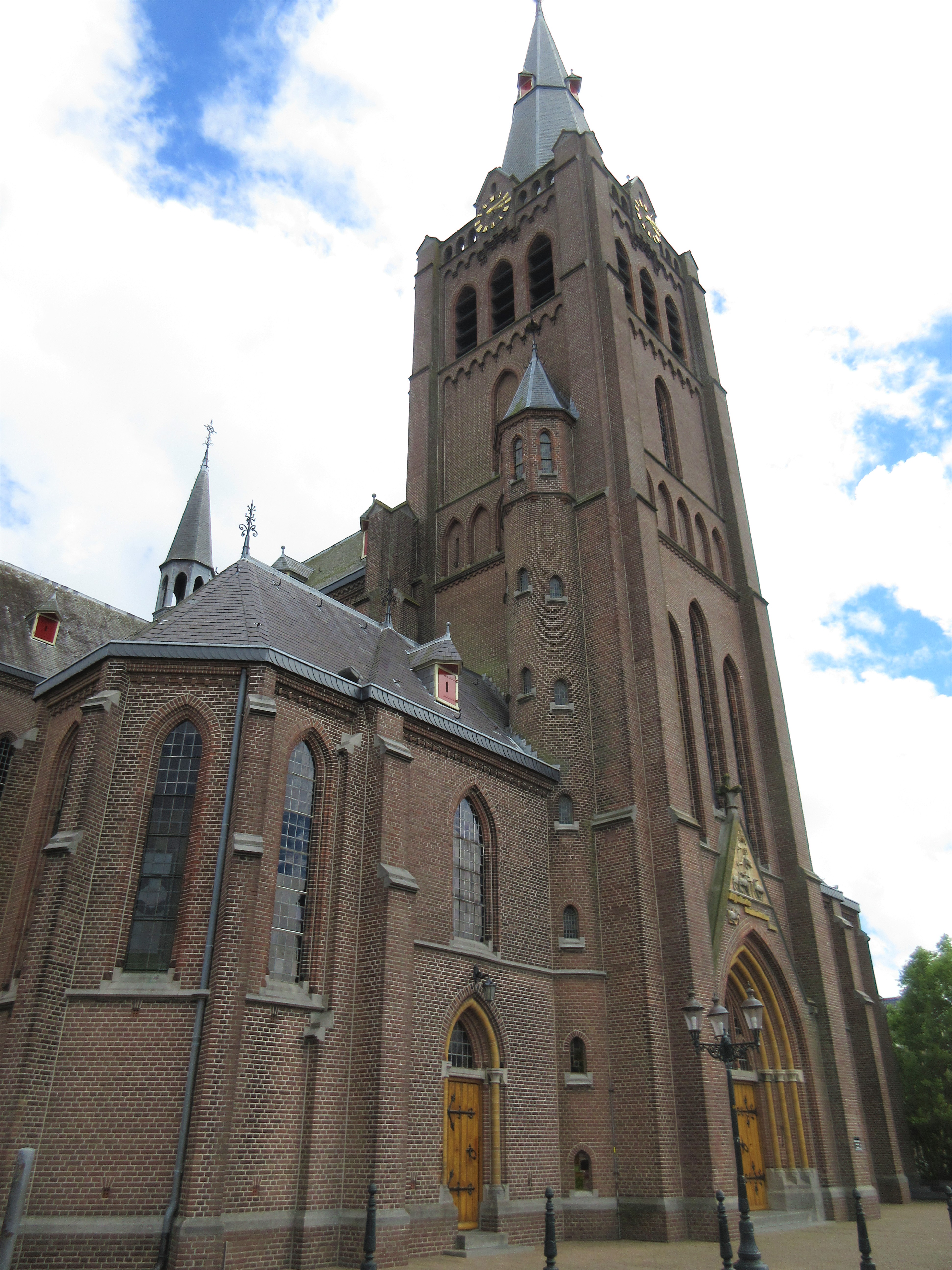
My father and his siblings organized a surprise party to celebrate my paternal grandparents’ 40th wedding anniversary. Adrianus (“Arie”) van der Fluit and Christina (“Tiny”, rhymes with “genie”) Komen were married on November 7, 1948, in Langedijk, Noord Holland, Netherlands at St. Jan de Doper Katholieke Kerk (St. John the Baptist Roman Catholic Church).
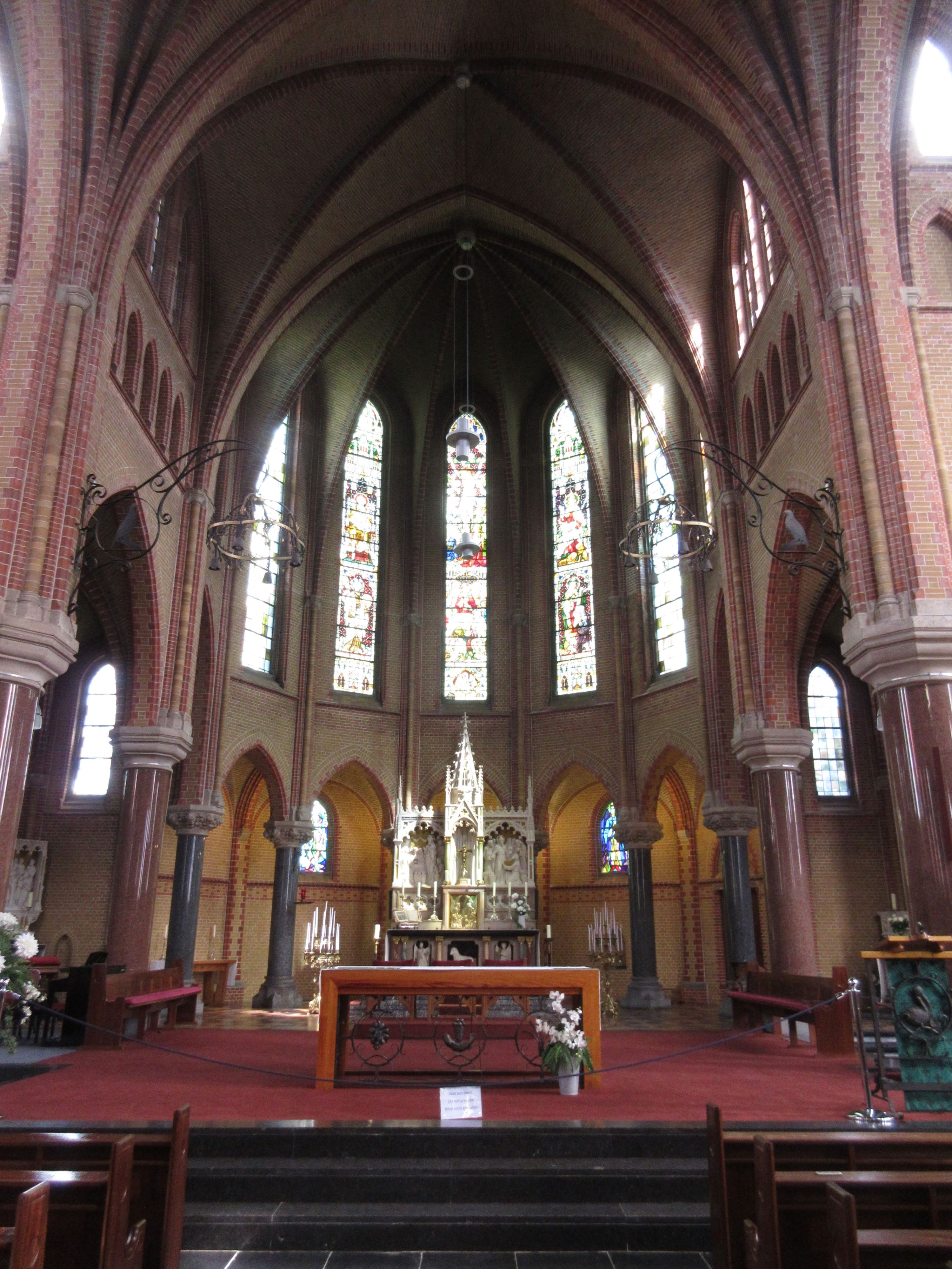
Kerk van Sint-Joannes de Doper, Noord-Scharwoude, Noord Holland, Netherlands, where my grandparents were married.
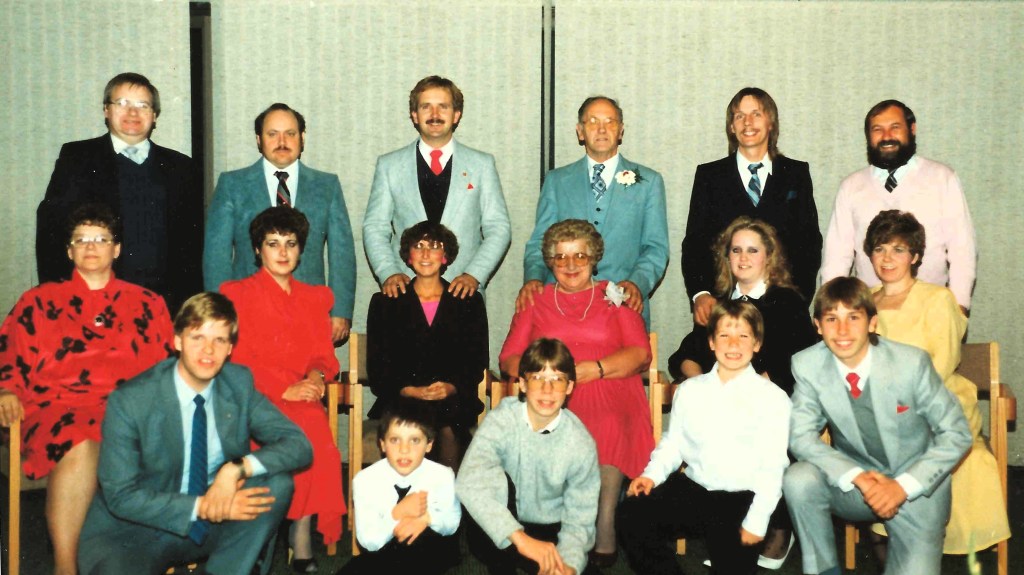
All my father’s siblings lived in Lethbridge, like my grandparents, so all the family living there were in attendance. My parents and siblings were living in northern British Columbia at the time, so my folks left my brothers and sisters with some family friends. In addition to all their children and most of their grandchildren, several family members also came over from the Netherlands to join in the festivities.
My grandparents, all their children and spouses, and about half their grandchildren (my four younger siblings did not attend). Several more grandchildren were born years after this celebration.
I had already left home and was living in Vancouver, so I flew to Alberta. I had lived in Vancouver long enough to have gotten used to the very mild winters there, forgetting that it was real winter elsewhere. So I boarded my flight wearing only a light jacket, only to be greeted by -11°C weather.
Two of my father’s cousins who made the trip from the Netherlands to celebrate my grandparents’ 40th wedding anniversary. That’s my noggin in the lower right.
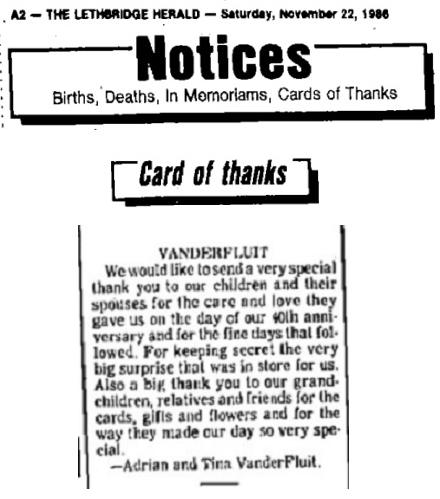
My grandparents took out a “thank you” notice in the Lethbridge Herald on November 22, 1986:
“We would like to send a very special thank you to your children and their spouses for the care and love they gave us on the day of our 40th anniversary and for the fine days that followed. For keeping secret the very big surprise that was in store for us. Also a big thank you to our grandchildren, relatives and friends for the cards, gifts and flowers and for the way they made our day so very special.”
Speaking of surprises, I was surprised to discover that I had written about this before, for last year’s 52 Ancestors Challenge! Upon making that discovery, I thought I might scrub this and choose a new topic. However, I changed my mind because (a) I’m feeling lazy (b) I have too many other things to do and (c) I had chosen several different photos than before. But let’s not talk about it, okay?
 A Deck of Ancestors