52 Weeks Mark III – Week 13: Worship

Wow, we are now one-quarter of the way through this year’s 52 Ancestors Challenge!!

In the Netherlands, there has not been much of a tradition of preparing and publishing obituaries of deceased persons. Deaths were once noted in local newspapers in regular reports of recent entries of births, marriages, and deaths taken from the local civil registry (“burgerlijke stand”). What is more common to see in newspapers are “familieberichten” (“family notices”). These are all secular forms of announcing and commemorating the death of a person.

For Roman Catholics, another common form of remembrance is a “bidprentje” (“prayer card”). In Germany, they are known as a “totenzettel”. These are usually given out at funerals and commemorate a deceased person. They usually consist of a short prayer or biblical verse along with the name of the deceased. However, bidprentjes can be used to mark other religious milestones, such as baptisms, first communions, confirmations, marriages, and ordinations into the priesthood. While they originated as a Roman Catholic tradition, in recent decades the practice of making these cards has occurred within other religious traditions.

Bidprentjes are a fantastic source of genealogical information. In addition to the name of the deceased they usually include the dates and places of their birth and death and the name of the deceased’s spouse. They also often have details of the date and place of the funeral and interment. Older bidprentjes are quite beautiful as they were adorned with religious art and iconography. In more recent years, they are more likely to include the name of the deceased’s children. In that regard, they now appear quite similar to familieberichten.
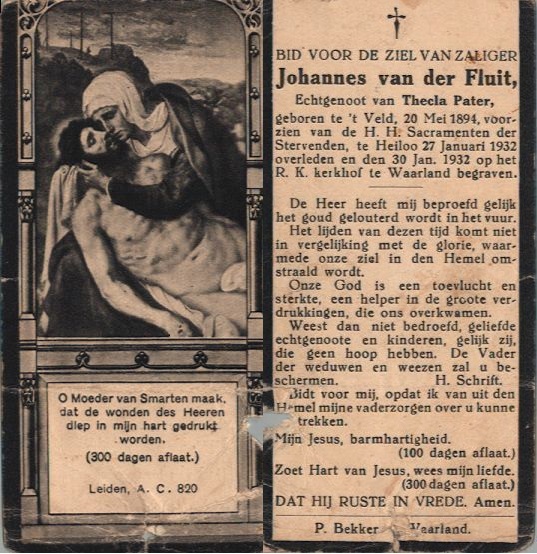
Bidprentje for my great grandfather, Johannis Albertus van der Fluit (1894-1932)
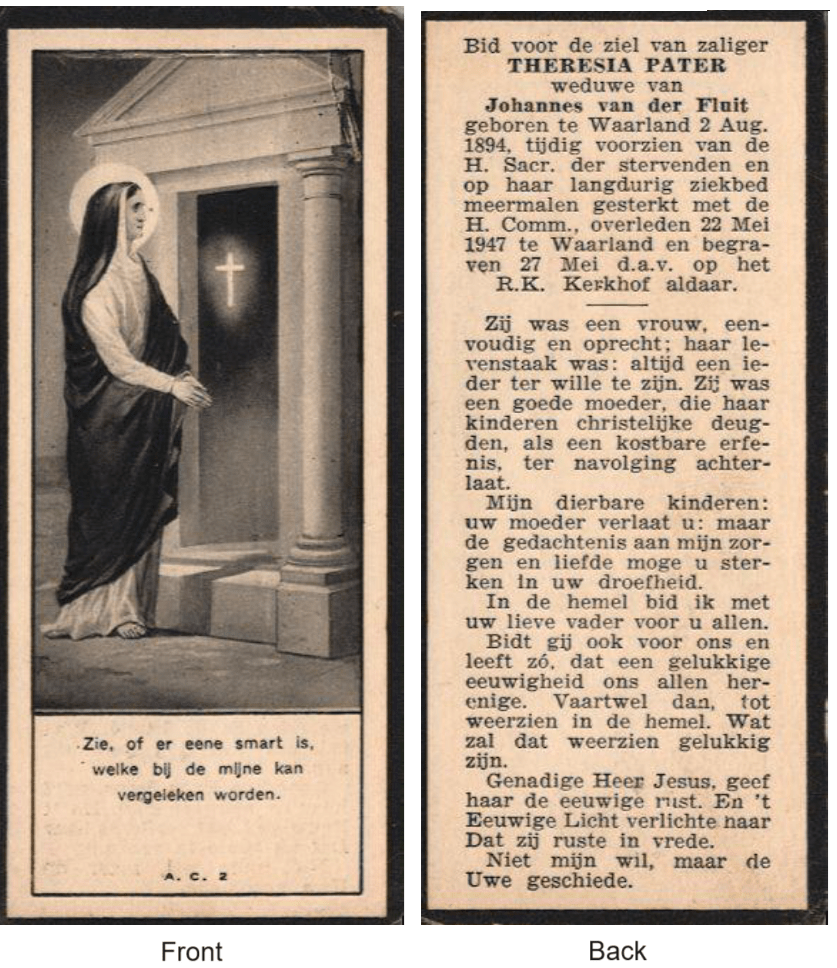
Bidprentje for my great grandmother, Teresia (“Teetje”) Pater (1894-1947)
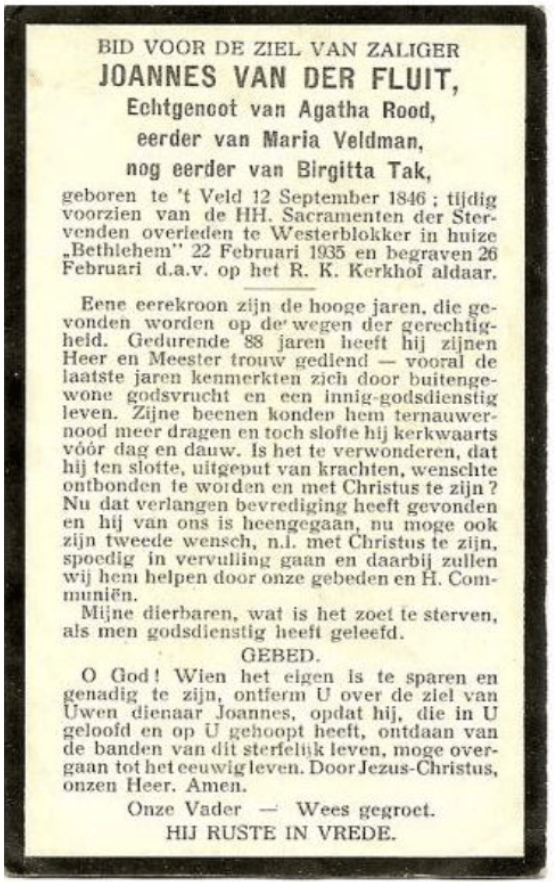
Bidprentje for my great great grandfather, Jan Dirksz van der Fluit (1846 – 1935). It notes that at the time he died he was the widower of Agatha Rood and that he had been previously married to Maria Veldman (my great great grandmother) and before Maria he was married to Brigetta Tak. Jan had outlived all three of his wives.

Neither bidprentjes nor familieberichten are government documents. They are private documents created, distributed, and published by the family. This means a primary source of bidprentjes would be the family of the deceased. There are also genealogical societies that have collections of bidprentjes. The Centrum Voor Familiegeschiedenis (“Centre for Family History” or “Central Bureau for Genealogy”) also has a collection of bidprentjes. While you can search the collection, you must be a member to view and download the document. Familieberichten can be found at Online Familieberichten and Mensenlinq.
52 Weeks Mark III – Week 6: Earning a Living

While most of my Dutch ancestors were farmers and labourers, it should come as no surprise that a few worked in windmills. On my father’s maternal side of the family, three of my Gx4 grandfathers were watermolenaaren (singular, watermolenaar – “water mill worker”). These were the windmills used for pumping water.

On my father’s paternal line, the surname “van der Fluit” may have originated with a windmill (“Fluijtermolen” – “Whistler Mill”) or the polder (“Fluitpolder”) on which it stood in Veur, Zuid-Holland (now part of Leidschendam). Alternatively, the windmill and polder might have been named after my ancestor, Johannes Dircks (“Jan”) (van der Fluit or Goeman) who owned or constructed them.

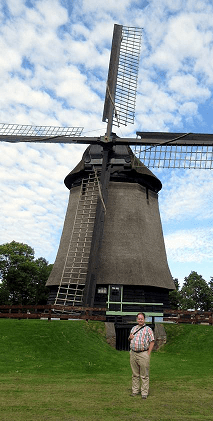
Me standing in front of the windmill in Waarland, Noord Holland, at more than a metre below sea level, about a kilometer from where my father was born and 200 metres from where he was baptized.

My paternal grandmother’s father was Adrianus Komen (1888-1948). Three of his four great grandfathers were all water mill workers. There is a strong possibility all three worked in the same windmill at the same time. I know that two of them, Nicolaas Cornelisz “Klaas” Komen (1786-1864) and Jan Smit (1786-1852) worked at the windmill located in Heerhugowaard, Noord Holland. However, the records I have consulted do not indicate when they worked in the windmill. At most, it is quite likely that Jan was working at the windmill until at least 1852.

I have no idea where and when the third, Johannes “Jan” Woltering (abt 1788-1834) worked in a windmill. I know that it was sometime before 1814, by which time he was working as a carpenter, as documented in the registration of his marriage. Unfortunately, the source from which I obtained the fact he had been a watermolenaar was simply an index and no longer exists. I have not found this item in other sources and records I’ve consulted. The population registers I have seen do not include his occupation. A notarial record I’ve found is dated 1817, which shows Jan working as a carpenter.

Despite this, I have reason to believe that Jan may have worked in the windmill in Heerhugowaard. Jan was born in 1788 in what is now Vreden, North Rhine-Westphalia, Germany. Vreden is about three kilometers from the Dutch border. What he did between his birth and marriage I don’t know, but by 1814 he was living in Akersloot, Noord Holland, which is about 14 kilometers south of Heerhugowaard. After he married he lived and worked in Langedijk, Noord Holland, which is immediately adjacent to Heerhugowaard.

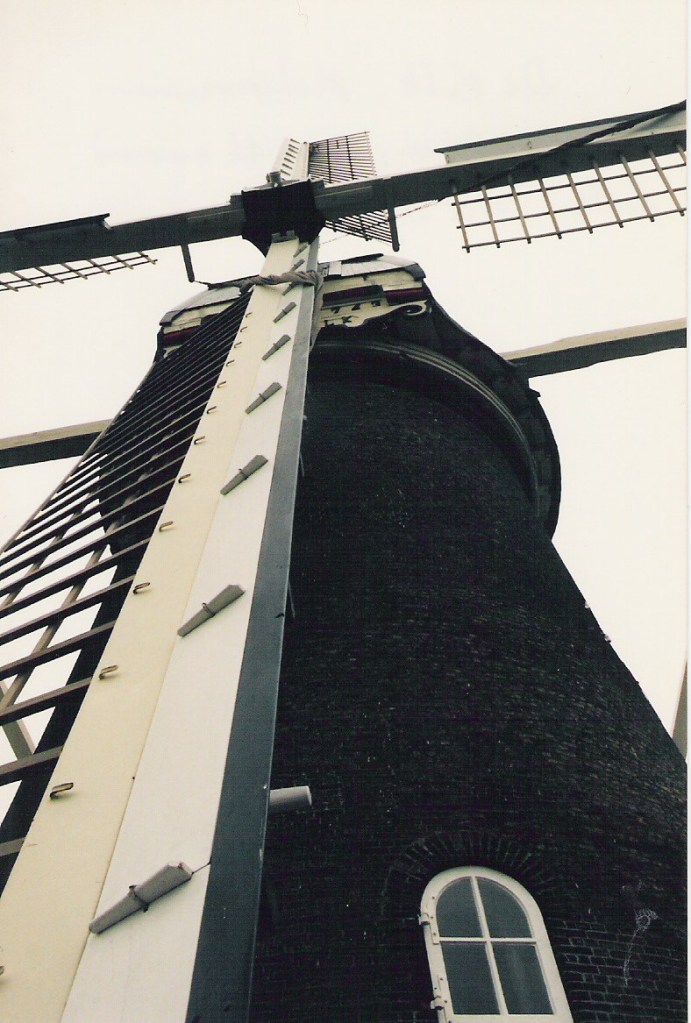
“De Valk” (The Falcon), a windmill in Leiden, Zuid Holland, about 10 kilometers from where Fluijtermolen once stood.

There is one fact in particular that makes me suspect Jan may have worked in the windmill in Heerhugowaard is that Jan Woltering’s son Cornelis married Jan Smit’s daughter Neeltje. Thus, it is possible that the families knew each other because Jan and Jan worked together in the same windmill. Then again, Heerhugowaard was not a large place in 1814 and it is quite possible they knew each other the way everyone in a small town tends to know each other.

Turning to Jan Dircks, the website for the municipality of Leidschendam-Voorburg used to have this information, which I have translated from Dutch:

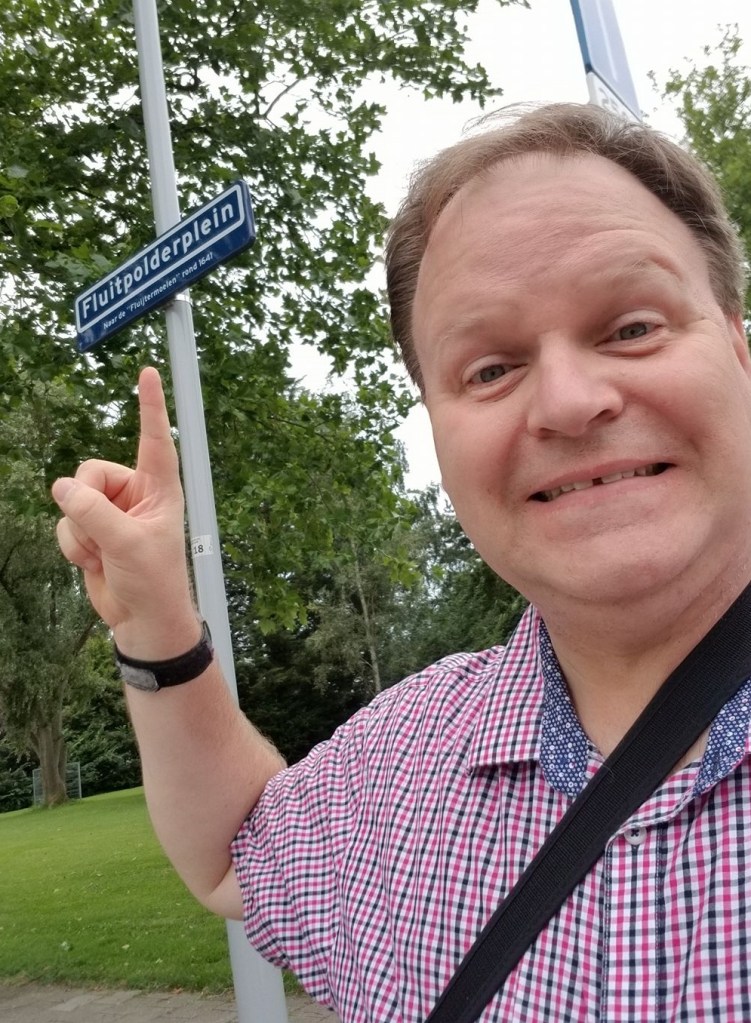
The square and adjacent street between Prinsensingel, Noordsingel, de Amstelweg, and de Graaf Willem de Rijkelaan is called Fluitpolderplein. This was decided in 1970. But where does the “fluit” in “Fluit Polder” come from anyway? According to a historian of Veur, Hendrik Brouwer Schut, it may have something to do with the whistle of the grinding mills, or possibly the “fluitenkruid” (“cow parsley” or “Queen Anne’s lace” in English). [The Dutch name of the plant refers to the fact a flute or whistle can be made from the stem.] However, there may be a better explanation. In 1648 a large part of the territory of the polder already belonged to a certain Jan Dirckxz, who also went by the name “Fluijt”.

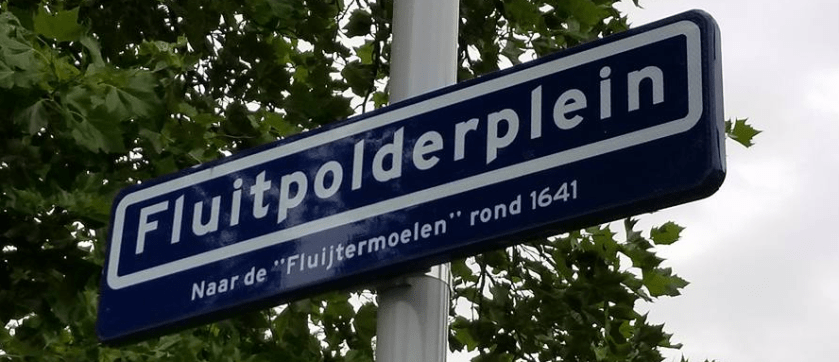
According to the street sign for Fluitpolderplein, the polder was located alongside the “Fluijtermolen” (Fluit Windmill), which was built around 1641. 

Am I named after the polder or is the polder named after me?

52W Mark II – Week 49: Family Recipe

Years ago on The Great Canadian Baking Show, one of the contestants said that she was using her *great* grandmother’s recipe. I have all sorts of recipes from my grandmothers (and copious notes on the recipes they didn’t write down that I’ve spent years trying to recreate). However, it never crossed my mind to think about my great grandmothers’ cooking. So the episode inspired me to ask my mother and mother-in-law if they had any of their grandmothers’ recipes.

My mother-in-law responded first and provided me with her maternal grandmother’s recipe for brown bread. I’m happy to have it, but I doubt I’ll ever make it. It not only calls for nine cups of flour, it also requires two cups of rolled oats. I know that nine cups of flour isn’t outlandish for two loaves of bread, but adding in all those oats, it strikes me as a lot. However, the real impediment is that while I love to cook, I do not enjoy baking – despite the fact I am a pretty good baker. Nevertheless, I am thrilled to have a recipe that our kids can say was their great great grandmothers! (In fact, writing that last sentence has me thinking that maybe I should make this recipe…)

My mother responded by saying that she didn’t think she had any. She reminded me that her maternal grandmother was not a very good cook. The one exception was that her grandmother made fantastic raisin drop cookies, which all the grandchildren loved. My mother doesn’t have the recipe, which is fine by me. The only thing more boring than raisin cookies is oatmeal cookies.

As for my grandmothers, I’ve written about their cooking in some detail before, but I can add a bit of an update.

This past summer we participated in a 16-week Community Supported Agriculture (CSA) program through a local Richmond farm, Sweet Digz Farm. Overall, we had a very positive experience. What became apparent very early on was that a lot of the produce we were receiving lent itself to a lot of Dutch dishes. In particular, we had a lot of potatoes and kale, the key components of boerenkool stamppot (the Dutch were eating kale decades before it was cool and trendy in North America). My paternal grandmother often made stamppot, and it was awful. I knew I could do better.

My youngest and I went to a local butcher in Steveston Village and he selected the sausage for the recipe. (Sometime I will have to write about the Steeves family of New Brunswick, after whom the west coast village is named. My kids are Steeves descendants.) I also was a bit non-traditional with my stamppot. While there are no hard and fast rules, stamppot is usually potatoes and kale, while a combination of potatoes, onions, and carrots is hutspot. I was a rebel and not only used potatoes, carrots, and kale in the same dish, I used a few kohlrabi in place of a couple potatoes.

If I say so myself, it turned out amazing, and needless to say, much better than my grandmother’s. Not only that, but everyone in the family loved it and wanted seconds. While my family are generally not picky eaters, there are very few things that appeal to all of them. There’s always something I can tell someone is less than thrilled with. Even moreso with the Dutch foods I make – there’s always one who loves it and one for whom the dish is not for them. Pity, because in the winter months I really could go for some snert. A few days later I made shepherds pie (another universal favourite), but used leftover stamppot instead of the typcial mashed potatoes. Another win!

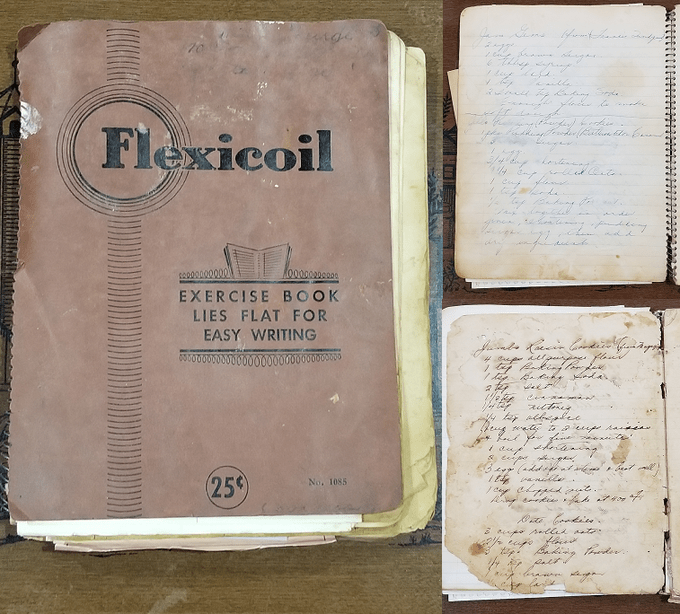
The biggest score, however, was during a visit to my mother’s a year ago. She distractedly removed an item from the back of a shelf and casually said, “oh, it’s my mother’s recipe book.” Yes, my head exploded. I had been asking her for years if she would find it for me sometime. I immediately absconded with it and photographed every page. The vast majority of the recipes were her desserts and sweet dishes but very few of her savoury dishes. However, a few of the savoury dishes seemed familiar – they were things my mother made, but in a whole different way. I could see how my mother adapted and changed her mother’s recipes over time – just as I do with my mother’s recipes!

My maternal grandmother’s recipe book.

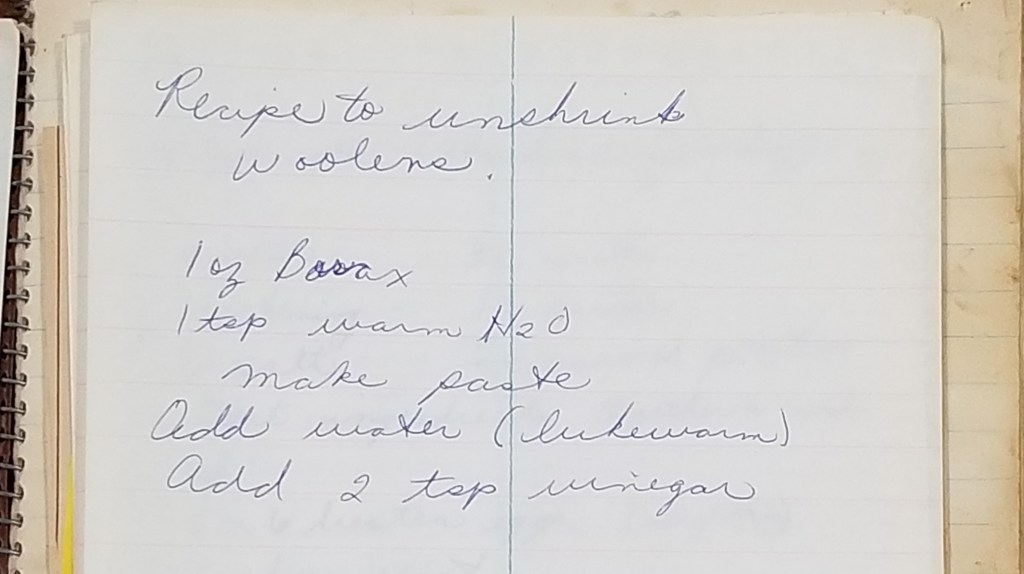
My grandmother also wrote down a few non-culinary recipes, such as this Recipe to Unshrink Woolens:

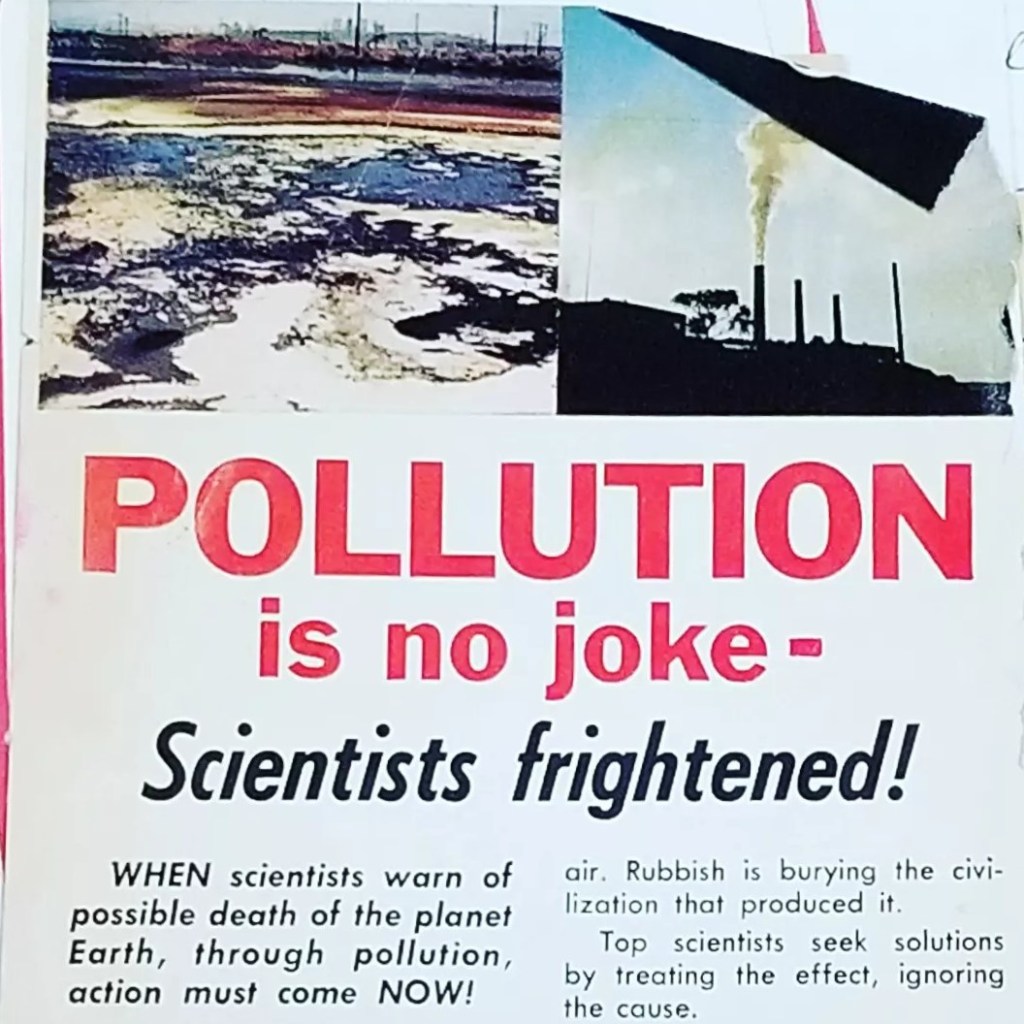
There were also a lot of clippings of recipes from magazines and product packaging. This was an advertisement on the reverse side of a recipe my grandmother clipped from a magazine in the 1970s:

I suspect those scientists – and their successors – remained frightened, and rightfully so.

52W Mark II – Week 39: Surprise!

Okay, I added the exclamation point to the theme of this week’s  52 Ancestors Challenge. However, the first thing that came to mind is what you’d yell for the guests of honour when they arrive for a party they weren’t expecting. So of course you need the exclamation point!

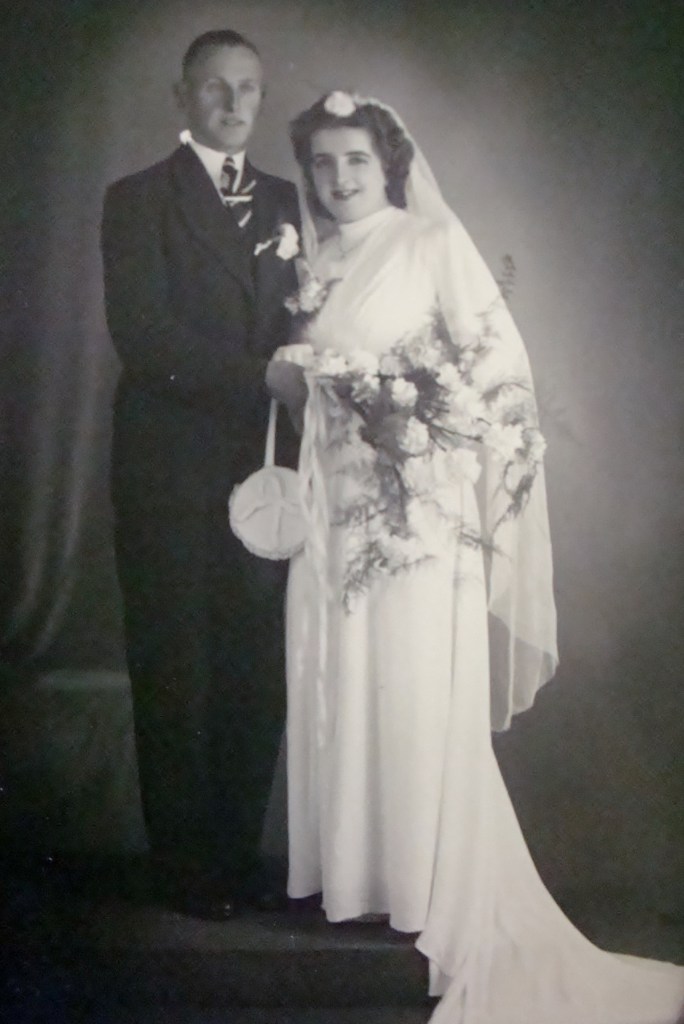
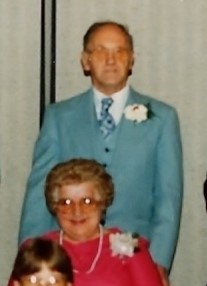
Adrianus Joseph “Arie” van der Fluit (1923 – 2002) and Christina Komen (1923 – 2000)

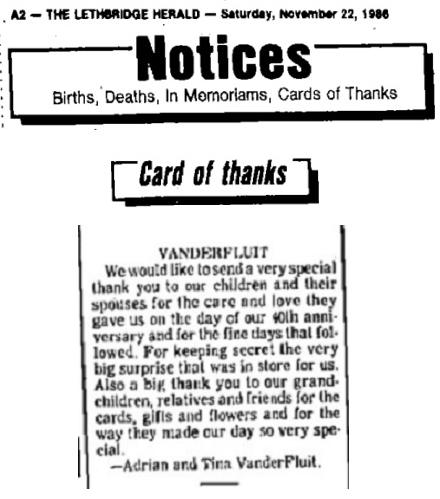
My paternal grandparents married on November 7, 1946, almost 77 years ago. For their fortieth anniversary, my aunts and uncles arranged a surprise party. All their children were in attendance, as were most of their grandchildren. I was attending second year university in Vancouver at the time, so I flew out for the event. As well, some of my father’s cousins (my grandparent’s nieces) came to Canada for the celebration.

This is cropped from the group photo taken during the celebration. I had neither the time not the interest in asking everyone’s permission to post the photo online.

While I grew up in the Canadian prairies and northern British Columbia, by my second year I had gotten used to the mild Vancouver weather and forgot to bring proper winter gear with me. Brrr!! Why on Earth did my grandparents marry in November? Why did they not marry in May? (For what it’s worth, their eldest child – my father – was born over a year after my grandparents married!)