52 Weeks – Week 37: High and Low

Highs and lows bring to mind the Guinness Book of World Records. So for this week’s 52 Ancestors Challenge, I thought I’d consider some of the superlatives in my family tree. Bear in mind that this is for entertainment purposes only, because some of these superlatives have not been sufficiently researched or verified such that they can be taken as fact.
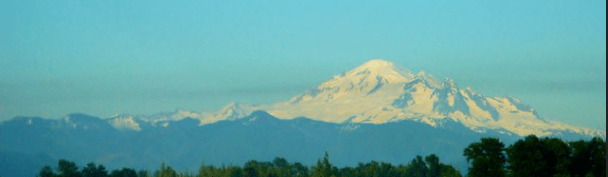
Here’s a high: Mount Baker, Washington

I cannot verify with certainty the longevity of the few centenarians in my database. According to my database, my longest-lived ancestor died at age 110. I don’t believe that for a second, so I won’t even name them. The person for whom I have at least a scintilla of information regarding their longevity is Joseph Metz, my first cousin three times removed. According to his headstone, as seen on Find a Grave, Joseph lived to be about 102 or 103. The longest-lived person in my database with the most reliable information regarding their lifespan is my fourth cousin three times removed, Fern Renner. She was better known to the world as Fern Welk, as she was married to the well-known band leader, Lawrence Welk.

My relative who was the oldest on their wedding day was my great great great uncle, Samuel Nelson, who married for the fourth time when he was 77. The bride, Cecilie Anderson, was 62. Samuel lived to be 93, making him one of my longer lived relatives.
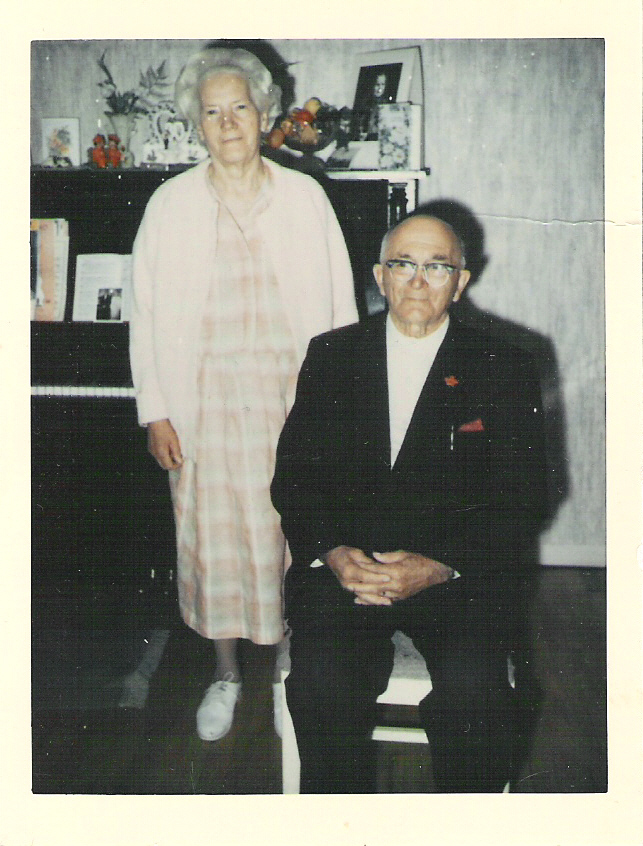
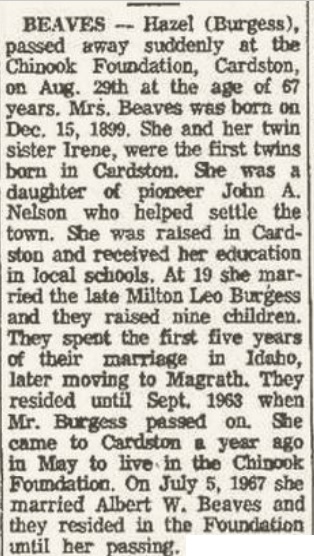
The newlyweds, Hazel Nelson and Albert Beaves, about July 5, 1967.

My great grandmother, Hazel Nelson, married for a second time at age 67, not quite two months before she passed away. Her husband, Albert Beaves, was also a widower marrying for the second time. Albert was 85 years old at the time. He lived another nine years after Hazel’s death. Albert died when he was 94.

While Samuel Nelson had been married four times, the record for most marriages is my 7x great uncle, Archelaus Kenney, who apparently married five times. Not even any of the Mormon polygamists in my tree married that many times. However, I have not verified any of Archelaus’s marriages.

Otherwise, Samuel’s record was tied by his younger brother, my great great grandfather, John Alexander Nelson. However, while it appears that Samuel had been widowed each time he remarried, John was a polygamist. Another ancestor, my great x3 grandfather, Henry Lyman Cook, was also a polygamist who married four times. Other polygamist ancestors, including my great x3 grandfathers William Burgess, Jr. and Preston Thomas, only married three times.
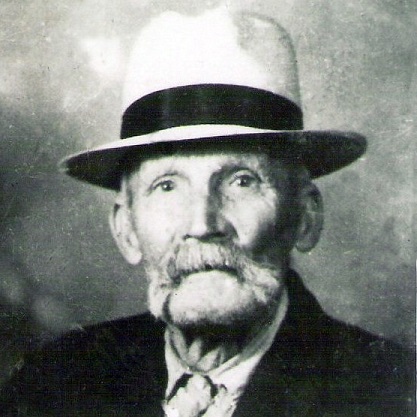
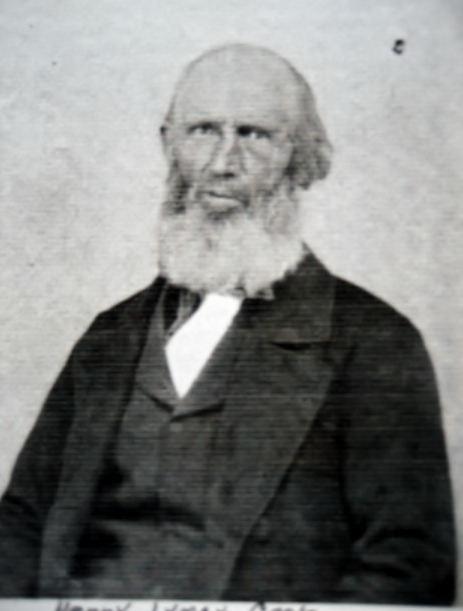
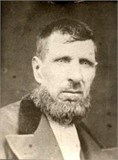
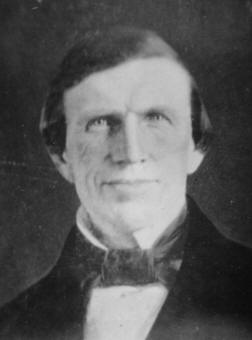
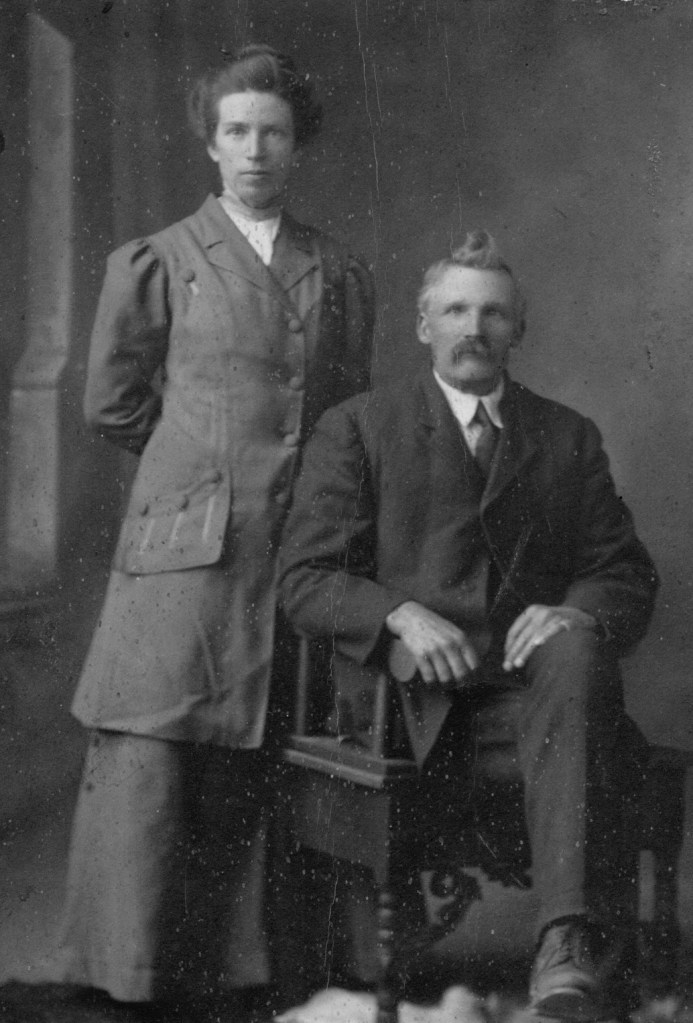
A bunch of polygamists: John A. Nelson, Henry L. Cook, William Burgess Jr., Preston Thomas.

It probably comes as no surprise that the women in my family tree have had fewer multiple marriages than the men. I can find few examples of women who married more than twice. One of the exceptions is my great x4 grandmother, Louisa Thomas, who married three times. Her first husband, Lazarus Beakley, died a year or two after they married, when Louisa was around 24 or 25 years old. Louisa’s second husband, my great x4 grandfather Conrad Liggett, died 18 months after they married, when Louisa was 26. Louisa married again at age 29, to Aaron Cook. Unfortunately, that was another short-lived marriage, as Louisa died when she was 35.

Of course, with marriage there are often children. Of course, the person with the most children in my tree is a father. My great great grandfather, Horace Burgess, had nineteen children. He had nine children with his first wife, my great great grandmother Sarah Cook. Their eight child and youngest son was Milton Leo Burgess, my great grandfather. After Sarah died, Horace remarried, to Julia Josephine Lundquist, with whom he had ten children.
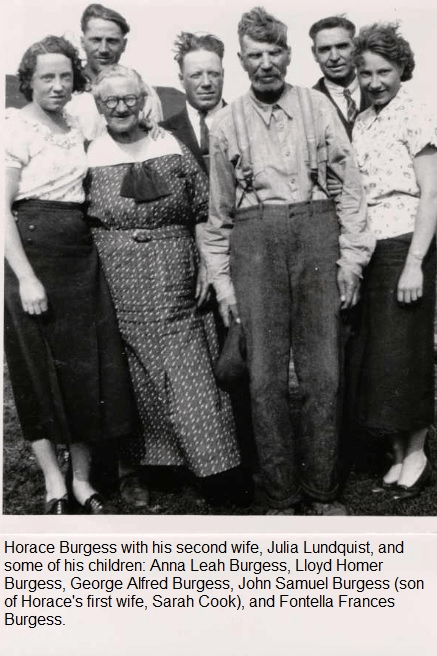
The woman in my family tree who appears to have had the most children is Horace’s paternal grandmother, Violate Stockwell. Violate and my great x 4 grandfather, William Burgess Sr., had 12 children, including my great x 3 grandfather William Jr, who had 12 children with three different wives.

Delving far from what I’ve established through the genealogical proof standard, the earliest occurrence of a surname in my direct lineage is de Fleg, which dates back to the 10th century, through my 9x great grandfather Thomas Flegg. My connection to Thomas is through Henry Lyman Cook. While I have done a pretty good job at demonstrating my connection to Henry, I have not really done much work on his ancestry beyond the basics.
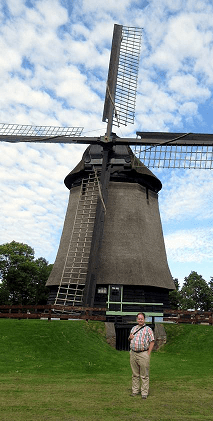
Here’s a low: standing a meter below sea level in Waarland, Netherlands

I realize that in this examination of superlatives, I have only considered the highs. Of course, considering the people in my tree who are at the opposite end of most of the categories I have discussed are in the multiples. The one category that might lend itself to reasonable consideration of the low end is the surname that might be the opposite end of earliest occurrence. In other words, the surnames I have traced the least far back in time. I’ve identified all 32 of my great x3 grandparents. It is the next generation where I face my first brick walls. I am missing nine of my 64 great x4 grandparents, all on my maternal grandmother’s side of the family. They are all Germans from Russia, who are particularly difficult to research. These lines trace back to settlements in what is now Ukraine, when it was part of the Russian Empire.

Genealogy: all the highs and lows are fascinating!
52 Weeks – Week 36: Exploration

Looking back over past posts, I have come to realize that writing this blog as part of the 52 Ancestors Challenge has been an exercise in exploration. I also realized that I have written a lot about exploration, both my own and my ancestors’. In this post, I will be recounting my exploration of Cardston, Alberta in 2015, when I visited my great aunt Fon Hogg (née Burgess) and her husband Dave. Aunt Fon, who passed away in early 2021, was my maternal grandfather’s youngest sister and a dedicated genealogist.

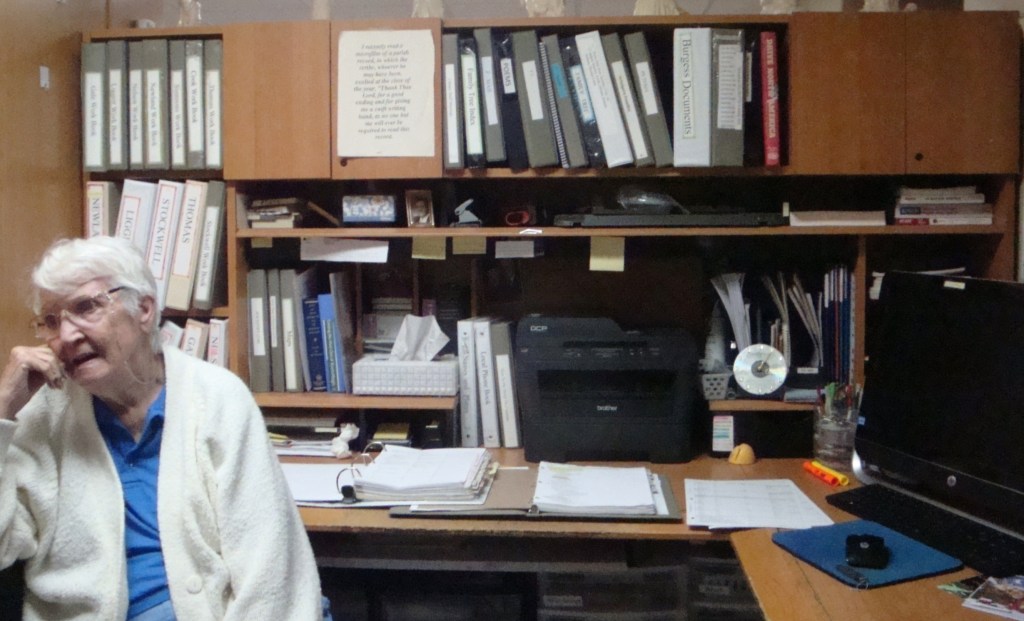
My aunt Fon in her amazing home office, which was primarily dedicated to genealogy and crafting.

I don’t often get the opportunity to visit ancestral homelands, so I was excited to undertake my adventure. One of the goals of my visit was to learn more about my great great grandparents – Aunt Fon’s grandparents – John Alexander Nelson and Ella Elizabeth Thomas. They were amongst the earliest settlers of Cardston, which was founded in 1887 by members of the Latter Day Saints (Mormons). John and Ella were both born in Utah a few short years after it became a territory of the United States.

Ella Elizabeth Thomas (1859 – 1941)
John Alexander Nelson (1854 – 1942)

John was born in 1854 to Irish immigrant parents. Ella was born in 1859. Her father was originally from North Carolina and her mother was from England. John had worked as a farm labourer in Utah before he married. John and Ella married in Salt Lake City in 1879. Shortly afterwards, John and Ella moved to Smithfield, Utah, where John continued to work in farming.

John and Ella came to Canada in September 1890. John and Ella had five children at the time. The family travelled to Canada by covered wagon. Their eldest daughter, Maria, said that she often drove the wagon team while her father managed the cattle. The family first settled in a sod dugout at “Lee’s Creek”, west of Cardston. They arrived with 13 horses, 7 cows, 7 “other horned cattle”, and a pig.

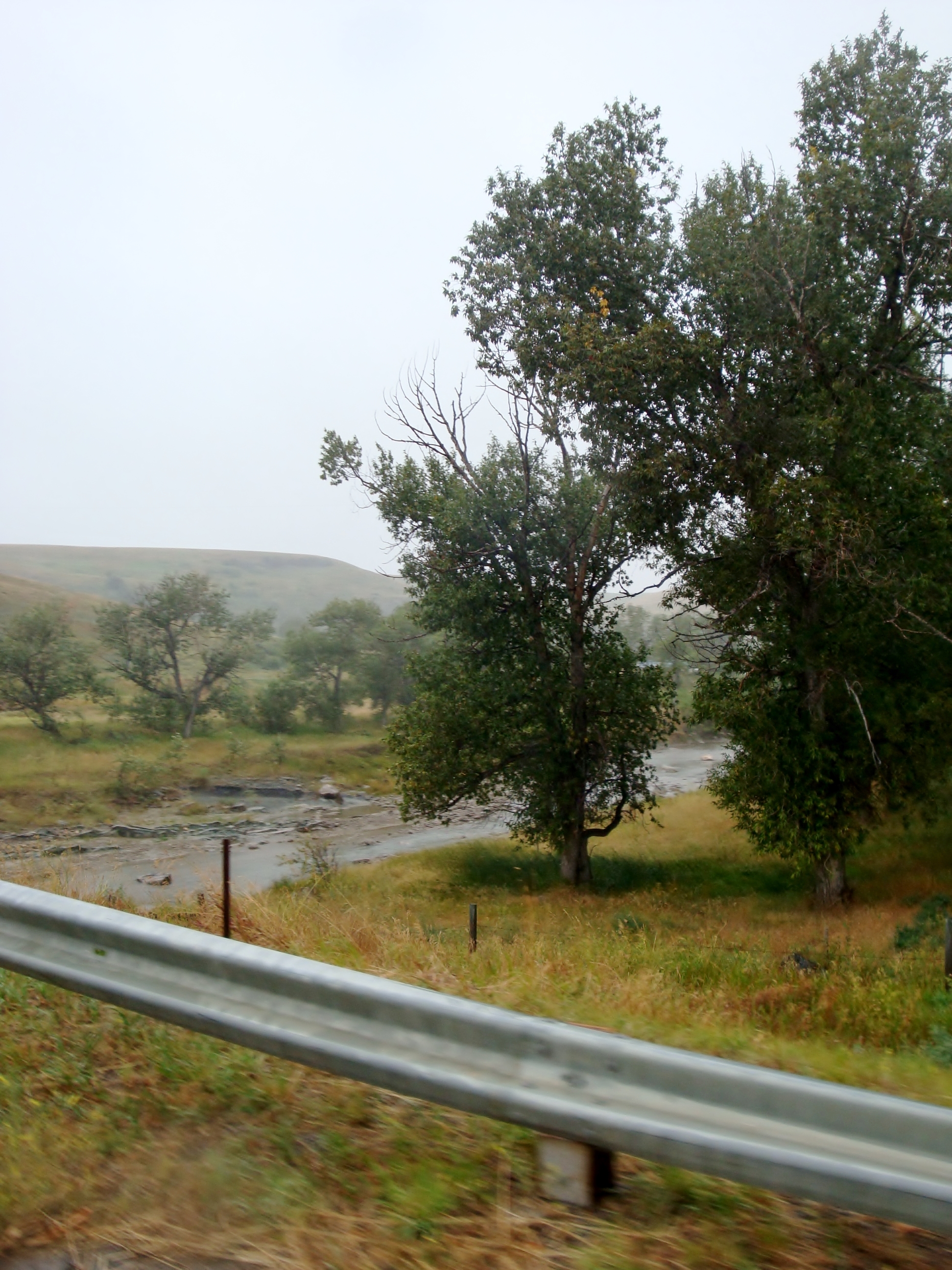
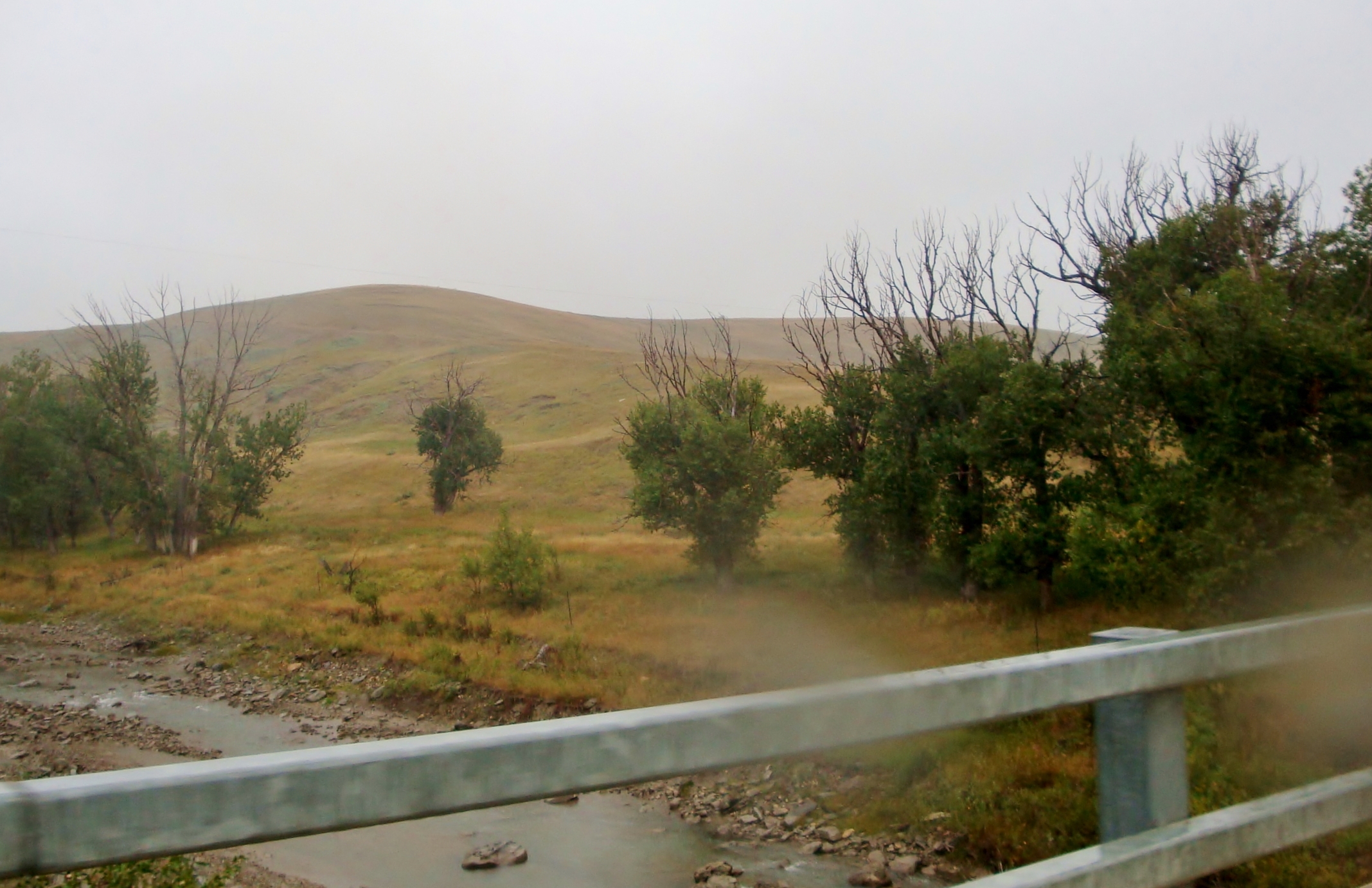
Aunt Fon told me that this was the land where John and Ella first settled in Canada, just west of Cardston, where the prairies meet the foothills of the Rockies.

The book, Alberta Past and Present, states that upon moving to Canada, John homesteaded on 160 acres of raw land. The homestead was located on Lee Creek, which ran through the property and into the centre of Cardston. The farmhouse was about four kilometers southwest of the town centre and is located on what is now Alberta highway 501.

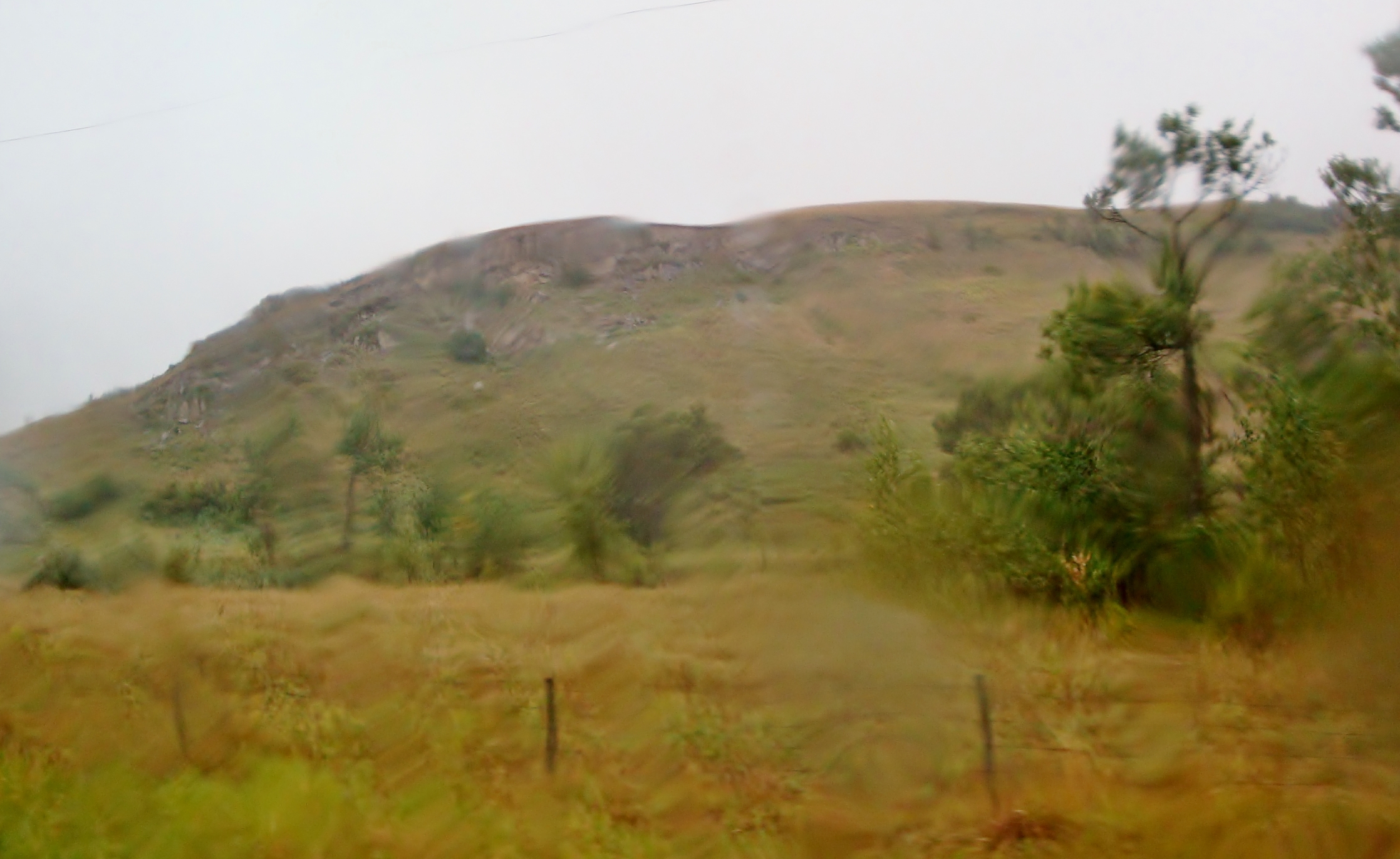
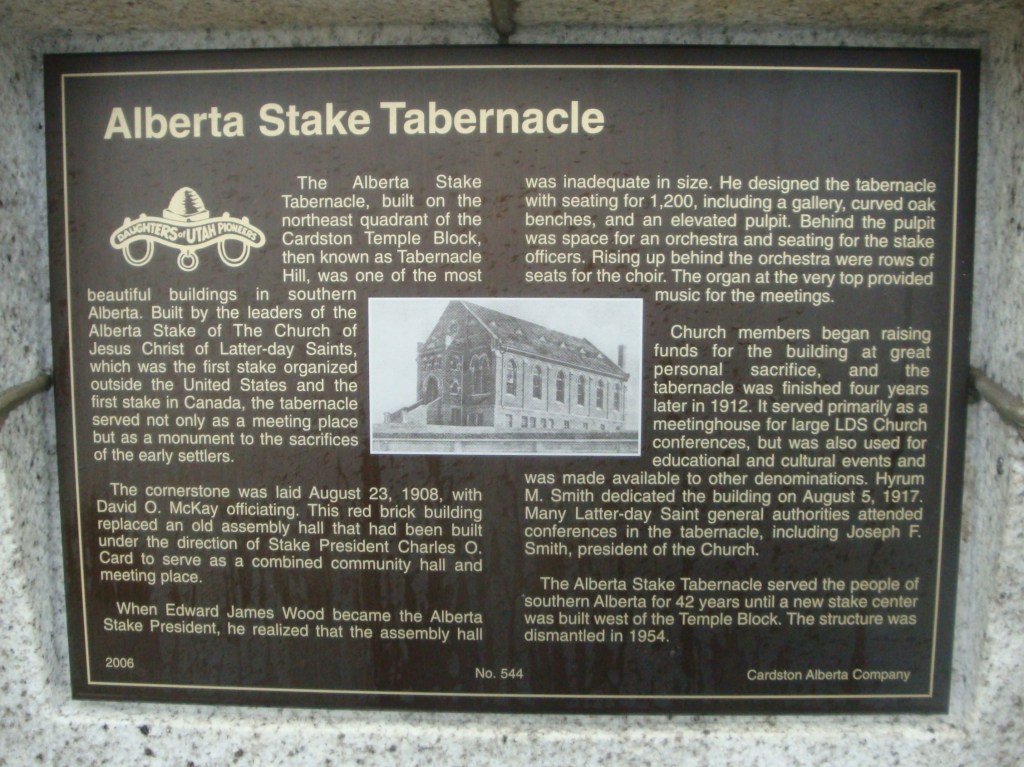
There was a quarry on the land, which supplied the stone for many of the buildings in Cardston, which, according to Alberta Past and Present, included the courthouse. According to John’s obituary, one building in Cardston built not using stone from his quarry was the first saloon built there – John refused to supply stone for that purpose. Aunt Fon told me that stone from the quarry was also used to build the foundation of the Alberta Stake Tabernacle. The Tabernacle stood from 1912 to 1954. Uncle Dave said that when the Tabernacle was demolished, people in Cardston used the stone for other projects. In fact, Uncle Dave told me that their first house originally had a fence built with stone from the Tabernacle.

In addition to farming, John also worked in carpentry. As well, John and a partner, John Turner, constructed and operated the first lime kiln in this part of the country. In 1906, John and Ella moved to nearby Woolford, Alberta, where John continued farming. John and Ella briefly returned to Utah in the early 1920s, where John operated an orchard or fruit farm, but they returned to Woolford in 1924. John continued farming the rest of his working life.

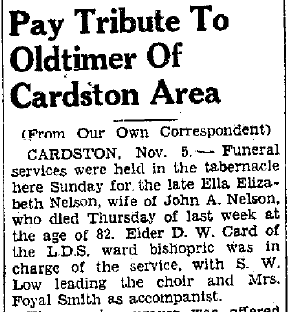
The Lethbridge Herald, November 5, 1941, page 11.

Meanwhile, Ella did not simply bide her time in the background as a farm wife and mother. According to a Lethbridge Herald article published after her death, in 1892 Charles Ora Card, Cardston’s founder and stake president, called to on Ella to study nursing and obstetrics. She was sent to Salt Lake City to study under the tutelage of a Dr. Shipp.  Ella left her five eldest children at home, taking with her “a six months old baby”. Based upon this timeline, the baby would have been Seth Henry Nelson, who was born in October 1891.

However, another source stated that Ella went to Utah in 1893 and that the baby she brought with her was her son Cleveland, who was born in March 1893. After six months’ training, Ella returned to Cardston and started her service. The Herald article says that Ella “answered every call from 1892 to the time when the district was supplied with medical men, and after that time when there was more work than one doctor could do”. Ella continued as a midwife until 1932, when she was 73.

John and Ella were nationalized as British subjects domiciled in Canada in 1896 (there was no “Canadian” citizenship until 1947).

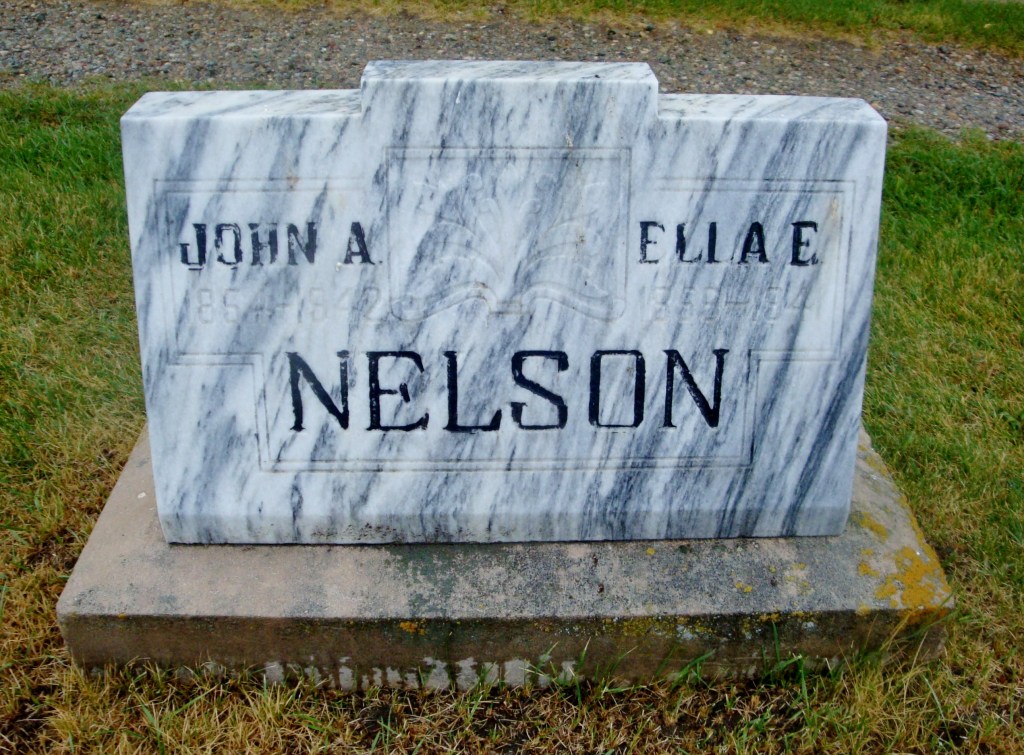
Together, John and Ella had twelve children, two of whom died in infancy. This included my great grandmother, Hazel Nelson, and her twin sister, Irene, who died at one month old. Ella died in October 1941. John died almost a year later, in September 1942. After I left Fon and Dave’s house, I drove to the Cardston Cemetery, where John and Ella are buried, along with other close relatives.

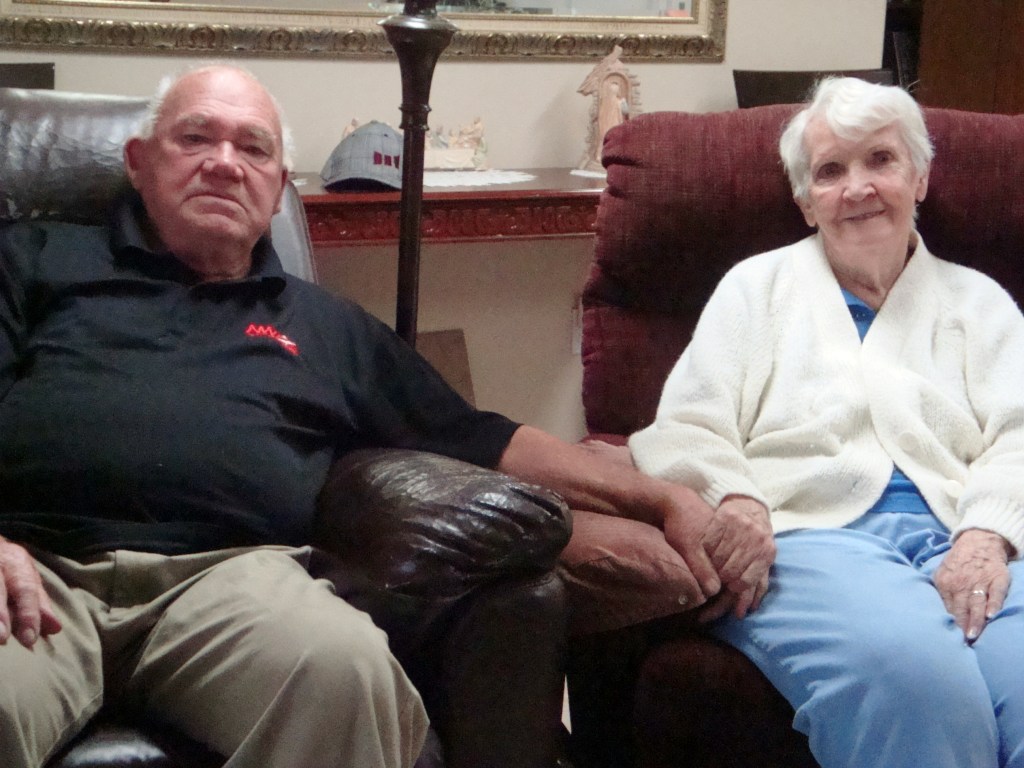
Unfortunately, while I often emailed Aunt Fon, my trip to Cardston was the last time I saw Fon and Dave. Dave passed away in October 2020 and Fon passed away five months later, in March 2021.

Dave and Fon Hogg, August 21, 2015.

52 Weeks – Week 23: Mistake

More of a misunderstanding than a mistake, really…

It’s week 23 of the 52 Ancestors Challenge, on the topic of “Misteak”, er “Mistake”. (See what I did there?)

Creative Commons 3 Licence – CC BY-SA 3.0
Original Author: Nick Youngson https://www.picpedia.org/chalkboard/e/error.html

A few weeks before I turned 19, I visited Ottawa for the first time, during a student conference. I took the opportunity to visit my aunt, who by that time was well-established in the capital. I had already been actively working on my family tree for at least ten years by then, so our conversation turned to our family history.

We ended up talking about our Nelson ancestors. I knew nothing about them beyond my great great grandfather, John Alexander Nelson. My family and I had gone to a family reunion of his descendants in Big Fork, Montana when I was 13.

John A. Nelson, circa 1930s.

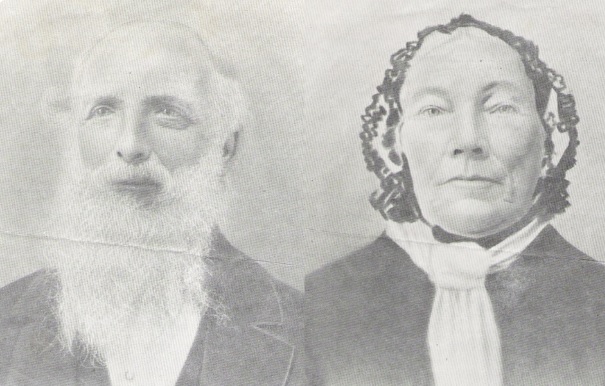
My aunt told me that John’s parents, Robert Nelson and Elizabeth Joseph, had emigrated from Scotland to the United States. My aunt then volunteered two pieces of information that I found particularly exciting.

Joseph Nelson (1818-1902) and Elizabeth Joseph (1818-1902)

First, she said that the belief was that the Nelson name in Scotland had Viking origins. Vikings? That was even cooler than if she had told me they were descended from pirates. Second, she said that through the Nelson line we might be descendants of Robbie Burns. I was thrilled by that possibility, because Burns was one of my favourite poets.

I knew enough at the time not to accept the idea unconditionally. I had already honed an overdeveloped sense of skepticism. I already knew a few family legends and their lack of veracity, so I had no reason to believe these legends would turn out to be any different. Moreover, while the initial development of the Genealogical Proof Standard was many years in the future, I was well into my undergraduate degree in history and knew full well the importance of proof.

However, I received these pieces of information back at a time when genealogy was done the old-fashioned way. Personal computers were still largely a relatively new and novel thing and it would be a few years before most of us even heard of the internet. It would have taken a lot of time and effort to verify or debunk what I had learned. Besides, the ideas were so cool that I was really not in a hurry to burst the bubble.

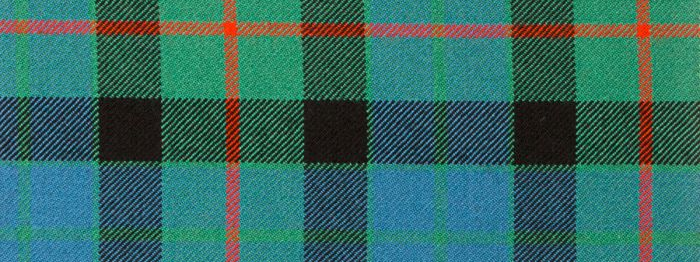
In the meantime, I reveled in the prospect of a Scottish connection. I learned that the Nelsons had connections to Clan Gunn. Shortly afterwards, I spotted a necktie patterned on the Gunn tartan and bought it mostly out of amusement. Plus, I enjoyed bewildering people as to why someone with a Dutch surname was wearing a tartan tie.

Alas, all good things come to an end.

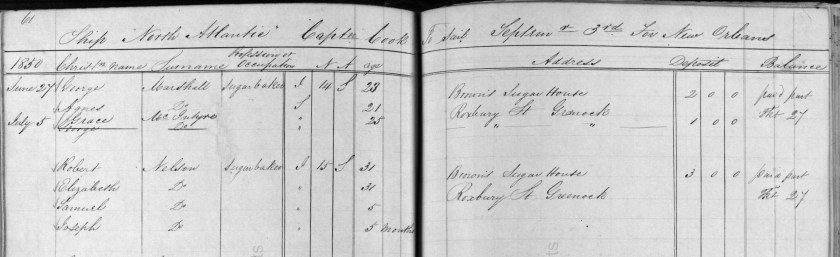
While Robert and Elizabeth had lived in Scotland, they weren’t Scottish. They were Irish. They were both born in Muff, Donegal in 1818 and married there in 1842. Sometime in the early 1840s, likely around 1844, they relocated to Renfrewshire, Scotland. By 1850, Robert was working at Brown’s Sugar House, on Roxburgh Street in Greenock, Scotland as a sugar baker. Sugar bakers usually refined muscovado sugar, an unrefined brown sugar imported from Barbados. In 1848, they joined the Latter Day Saints (“Mormons”). On September 3, 1850 Robert and Elizabeth, along with their three children, departed Liverpool on board the ship “North Atlantic” bound for New Orleans. By 1854, they had settled in Salt Lake City where John, my great great grandfather, was born.

Passenger list for the North Atlantic showing the Nelson family travelling from Liverpool to New Orleans.

As for the Burns connection, it really did not take much to dispel that myth. Robert Nelson’s mother was a woman named Martha Burns. Martha was born in 1787. So while her surname was Burns and she was born at a time Robbie Burns was busy fathering numerous children, that is where the correlation ends. None of Burns’ children – legitimate and illegitimate – were named Martha. Moreover, Martha was born in Muff, Donegal, not Scotland.

Sad trombone

52 Weeks – Week Thirteen: Sisters

My mother has told me, several times, that before I was born my father had hoped to have five daughters. As the first born, I quickly put paid to that. It was probably in my father’s best interest. Back in my teens when my father had hair, I liked to tell him that all the grey ones were entirely due to his daughters and none of his sons.

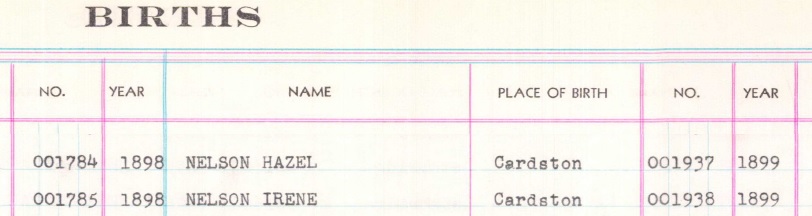
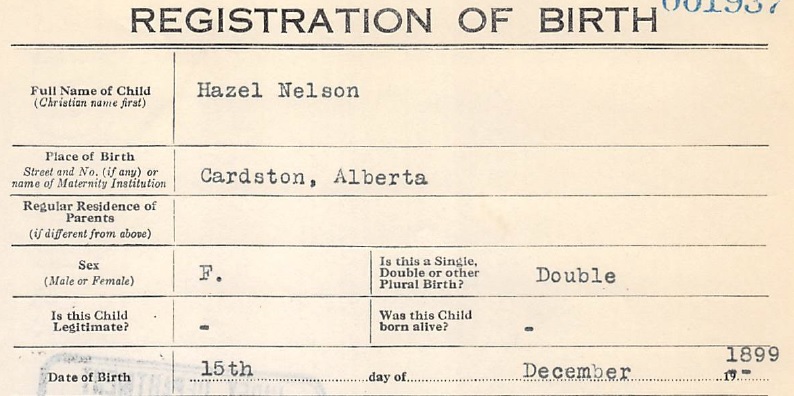
Hazel and Irene Nelson in the Alberta Birth Index

When I saw the topic for this week’s  52 Ancestors Challenge, the first sisters who immediately came to mind were my great grandmother and her sister. They are amongst the very few twins I actually have in my family tree. Unfortunately, they were sisters who never had the opportunity to know each other or to share a childhood together.

Hazel and Irene Nelson were born to John Alexander Nelson and Ella Elizabeth Thomas on December 15, 1899. The girls were the tenth and eleventh of twelve children. Given that Hazel was registered first, I take it that she was born first.

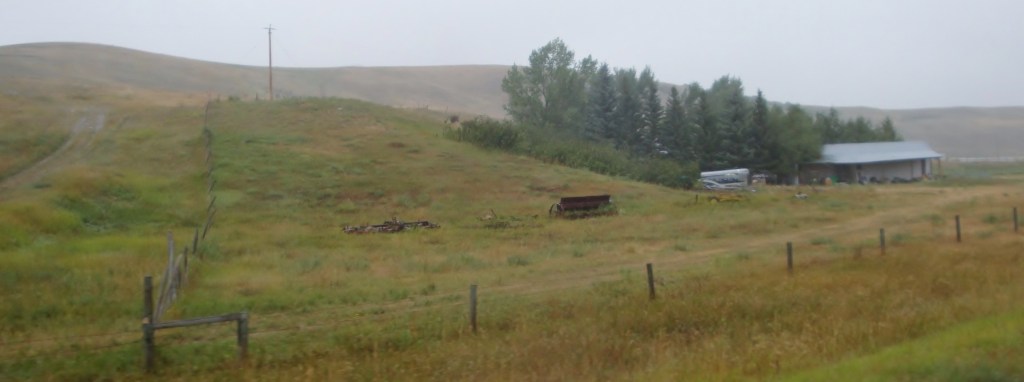
John and Ella were amongst the earliest settlers of Cardston, Alberta, which was founded in 1887 by members of the Latter Day Saints (Mormons). The Nelsons arrived in 1890 and began farming nearby.

This is where my great great grandparents, John and Ella Nelson, first farmed when they settled in Cardston, Alberta

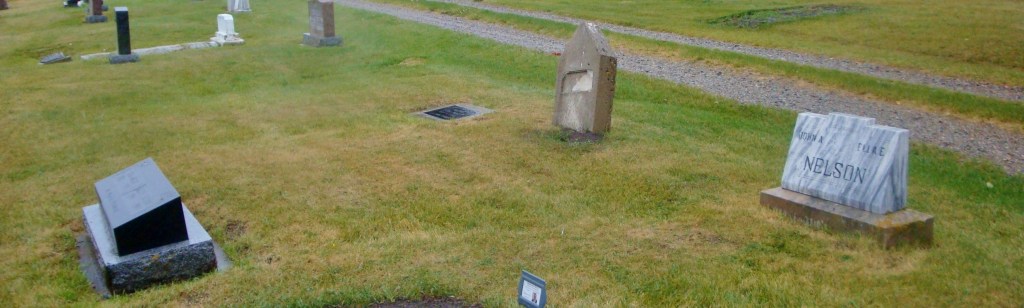
Hazel and Irene Nelson were the first twins born in Cardston. Sadly, Irene passed away five weeks later. I’ve been to the cemetery where she is buried. Unfortunately for me, I only discovered where she is interred after my trip. While I did not realize it at the time, Irene is buried next to her parents. The grave marker is damaged. Information for the Cardston Cemetery on the Town of Cardston website confirms that Irene’s grave is the one beside her parents. Irene’s brother is interred in the plot below hers.

Irene Nelson is buried beside her parents John and Ella, whose grave marker is the white one in the foreground. Irene’s grave is the one with the damaged headstone. The black marker on the left is Irene’s brother Seth Henry Nelson and his wife Mabel.
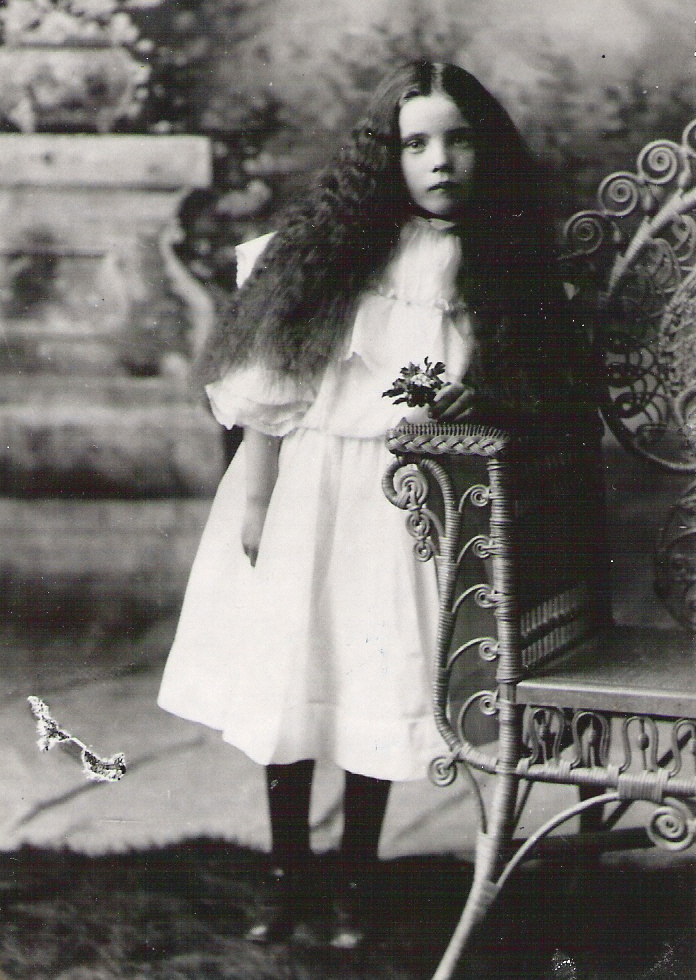
Hazel Nelson, about 1904

Hazel, on the other hand, lived to be 67. She and her husband, Milton Leo Burgess, had nine children, the oldest of whom was my grandfather, Leo. Milton died in 1964. Eight weeks before she died, Hazel married a widower, Walter Beaves. They met in the seniors’ home where they both lived, which Hazel called “the old fools’ home”.

Hazel passed away three days before I was born. My mother pretty much went from her grandmother’s funeral to the hospital for my arrival.

Hazel’s obituary in The Lethbridge Herald