

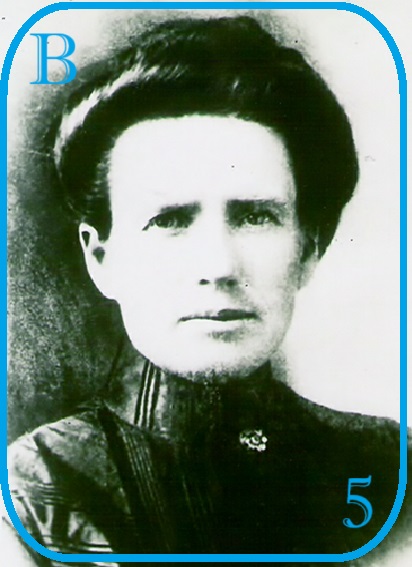
My Gx2 Grandmother, Ella Elizabeth Thomas, is a rarity amongst my direct female ancestors, as she was one of the few with an occupation outside of the home. Ella was a midwife and nurse for about 40 years, serving the town of Cardston, Alberta and the surrounding community.
Ella was born in Lehi, Utah on October 9, 1859. Her father, Preston Thomas, was originally from North Carolina. Her mother, Maria Hadlond, was from England and emigrated to the States with her family when she was a teen.
When Ella was about 18 months old, her family moved nearly 200 kilometers north to Franklin, Idaho, which is located right on the Utah border. It was the first non-Indigenous settlement in Idaho. In fact, when the town was founded, the original settlers thought they were within the boundary of Utah. Another fun fact about Franklin is that its county, also named Franklin, is the only county by that name in the United States that is not named after Benjamin Franklin. Rather, it was named after Franklin Richards, a Mormon leader.
Somehow, by 1879, when she was 19, Ella was living in Salt Lake City. It is not clear what events in her life led her to be there. Salt Lake City is a fair distance south of Franklin. Her father died in 1877, so it may have been that her mother relocated to the city after becoming a widow. That’s a matter for further research.
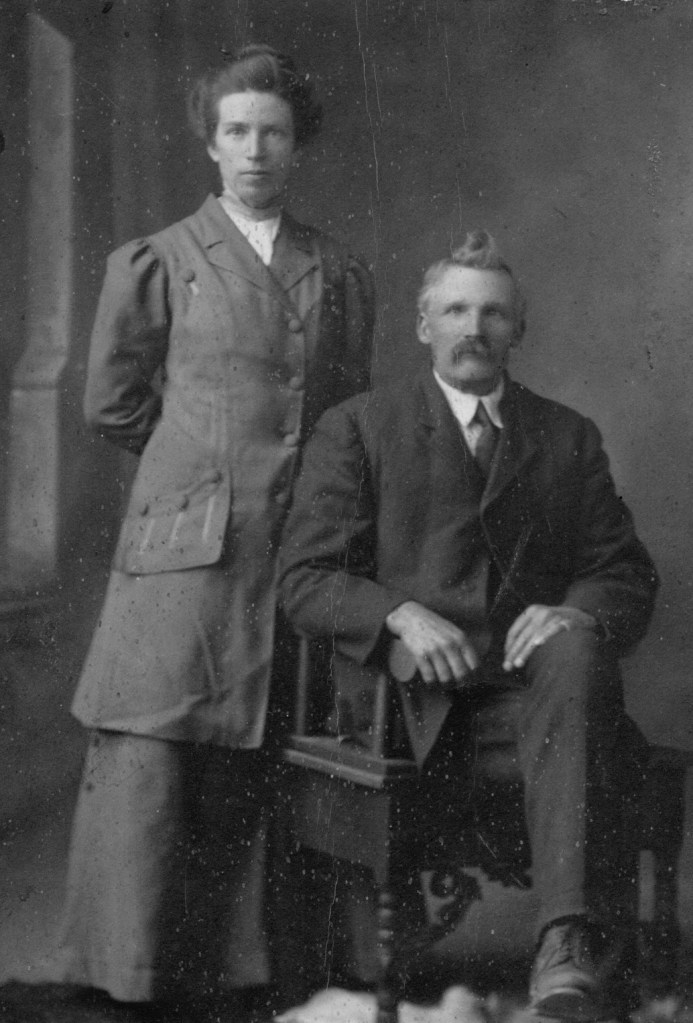
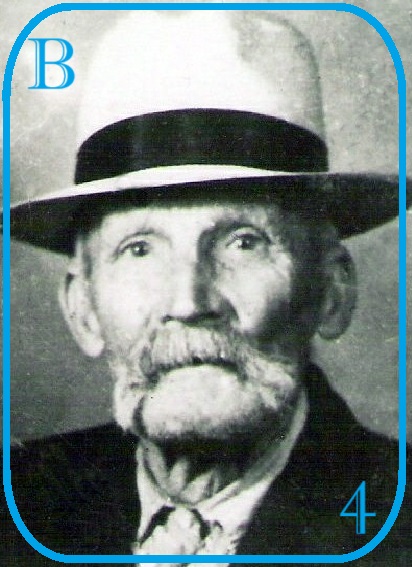
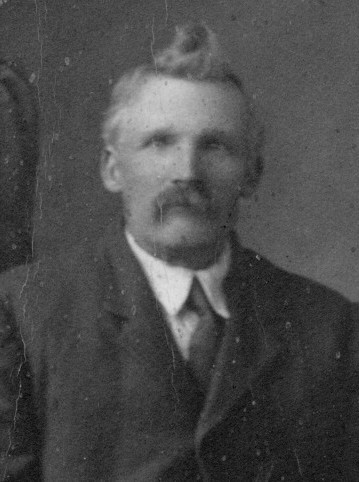
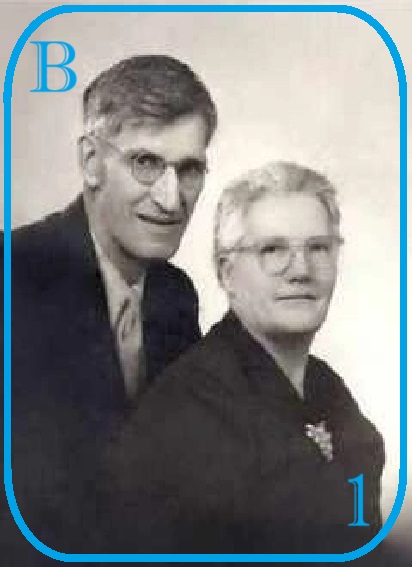
Ella and John. One source I’ve seen says this is their wedding photo, but I have a hard time seeing a 19-year-old and a 24-year-old. Of course, the stern expressions, style of dress, and fact it’s black and white all serve to age them.
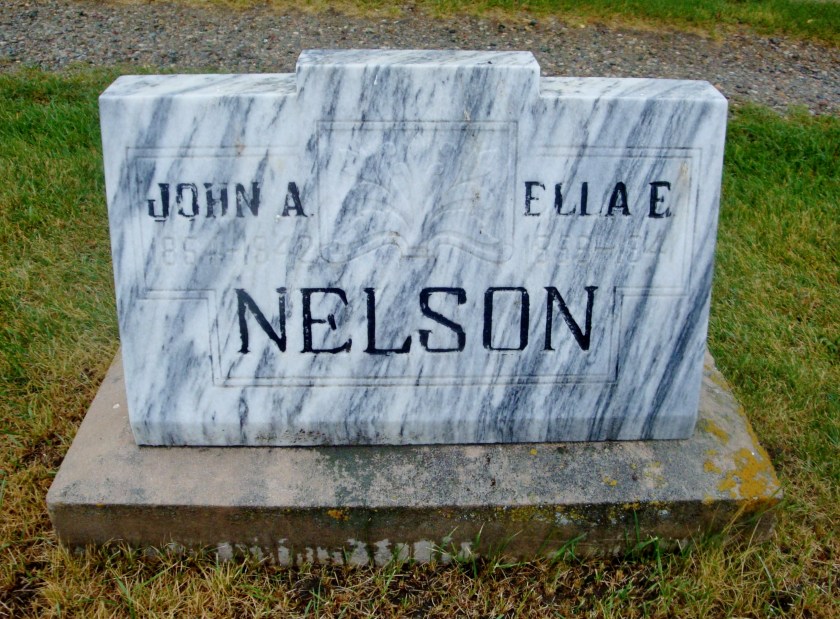
In Salt Lake City, Ella married John Alexander Nelson on January 9, 1879. After marrying, the couple relocated to Smithfield, Utah, which is relatively close to Franklin. They remained there for about ten years, where Ella gave birth to the first six of their twelve children. In September 1890, the family moved to Canada. They were part of the earliest wave of Mormons to settle Cardston, Alberta after it was founded in 1887.
While John was kept busy by a multitude of endeavors, Ella was soon called to a profession of her own after the family settled in Canada. As a new community, Cardston did not have any physicians or other kind of healthcare providers. The closest doctor would have been in Lethbridge, 80 kilometers away. Today that’s under an hour’s drive; in 1890, it was a long and difficult journey by horse or wagon.
The accounts of Ella’s training as a midwife differ. They all agree that Ella was called to study nursing and obstetrics in her early 30s and was sent to Salt Lake City for training. Several sources say that Cardston’s founder and stake president, Charles Ora Card, issued the direction himself. However, the various sources are inconsistent as to when Ella received her training.
An article about Ella in the Lethbridge Herald following her death said that she left her five eldest children at home, taking with her “a six months old baby”. Given there were five older children left at home, that baby would have been Seth Henry Nelson, who was born October 1891. Another article in an annual family newsletter, Nelson Talk, stated that the baby Ella brought with her was her son Cleveland, who was born in March 1893. Chief Mountain Country: A History of Cardston suggests that Ella “left behind seven small children for John to care for and run the home, only to find she was expecting another child.”
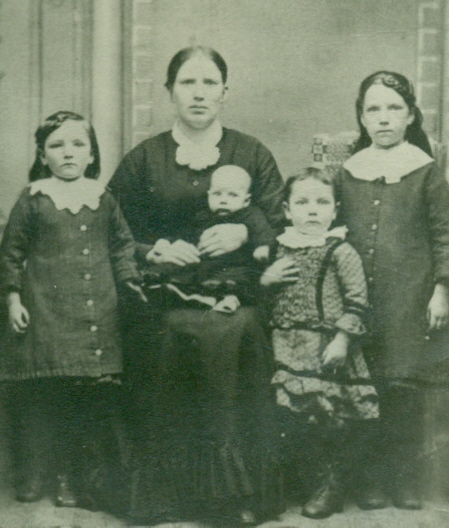
Ella with her four eldest children, Ella, Rachel, Lileth, and Maria. This photo would have been taken in Utah shortly before the family moved to Canada.
Together, these accounts are most consistent with Ella having attended her studies in Utah in 1892. Seth would have been about six months old at the time, and the child Ella learned she was expecting was most likely Cleveland. Of course, Nelson Talk most likely nailed it when it said that John and Ella’s eldest child, Maria, who was about 12 at the time, primarily took care of the other children in the family during their mother’s absence.
In Salt Lake City, Ella trained under a Dr. Shipp for about six months. When Ella returned, she was the only medical help that Cardston and area had for many years. The Herald article says that Ella “answered every call from 1892 to the time when the district was supplied with medical men, and after that time when there was more work than one doctor could do”.
Chief Mountain Country indicated that Ella often received no payment for her services, or would sometimes be paid in goods, such as produce. In a short biography of his mother’s life, Seth wrote that Ella’s regular fee for the delivery was $5 and $1 per day for nursing services after the delivery. However, she would often not receive anything for nursing.
Nevertheless, it seems that Ella did not forego payment easily. Seth said that her sons were often sent to collect on outstanding accounts, which sometimes required repeated trips. An account from another of Ella’s sons was that one woman deducted fifty cents on her own volition because she was paying in cash. Ella promptly sent her son back to get the full $5, who told the woman, “mother is not a storekeeper and does not give discounts!”
All the while, Ella had five more children after becoming a midwife. I have no idea who, if anyone, attended to her for those births. However, Seth wrote that at the time Ella began her service there were “a partially trained midwife or two” in Cardston.
Ella assisted in the delivery of hundreds of babies in her 40 years of service. According to Seth, his mother lost track after 400. Seth proudly said that Ella never lost a mother and rarely lost a baby.
When physicians first set up shop in Cardston, Ella would sometimes act as their nurse. Ella also helped those suffering from diphtheria, typhoid, and childhood diseases. Seth wrote that Ella continued to provide midwife services after physicians had established themselves in Cardston. However, Seth stated that after the Alberta “Medical Professional Act” came into effect, Ella was not permitted to charge a fee for her services.
This was most likely a reference to the Alberta Health Insurance Act enacted in 1935, when Ella was 76. She had already largely retired from working as a midwife and healthcare provider a few years earlier, when she was 73. By that time, Ella was not only a grandmother, but a great grandmother.
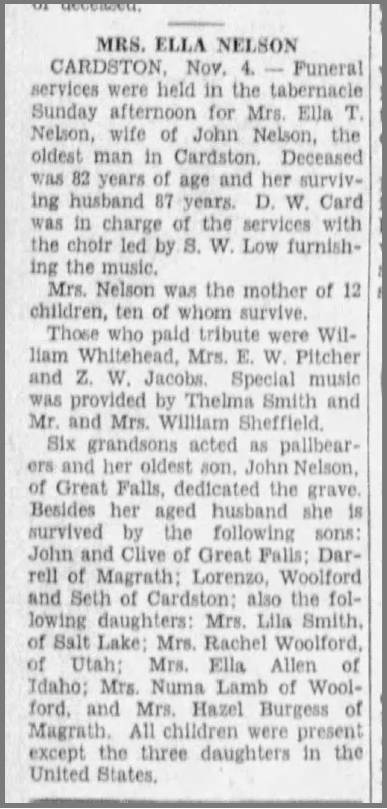
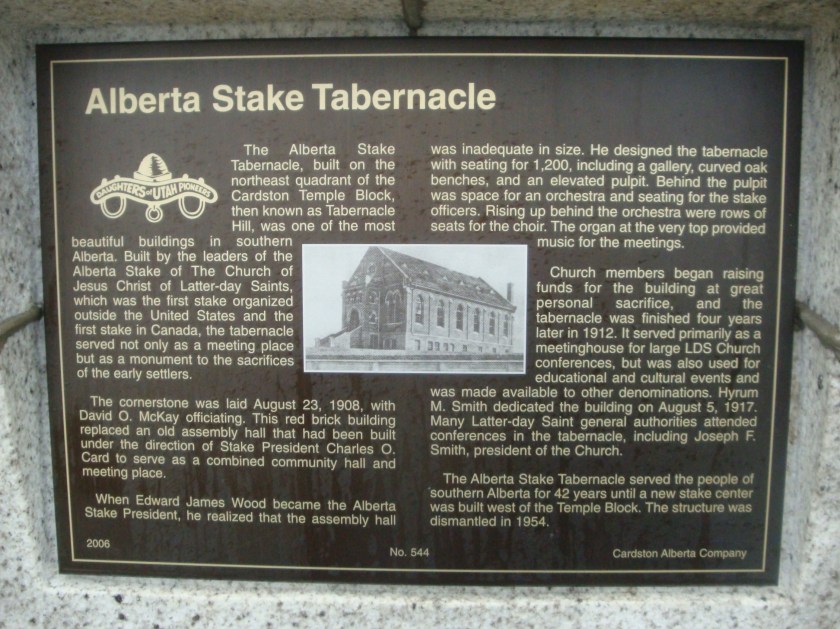
Ella passed away on October 30, 1941, almost a month after her 82nd birthday. The funeral service was held at the Latter Day Saints tabernacle in Cardston and Ella was interred at the Cardston Cemetery. Ella’s pallbearers were all grandsons: Leo Burgess (my grandfather), Grant Lamb, Rulon Lamb, Grover James, and Wilbur Nelson. Her granddaughters Ella Burgess, Julia Burgess, Fontella Burgess, Jean Nelson, Dorothy Nelson, Kathleen Nelson, and Jane Nelson all served as flower girls.
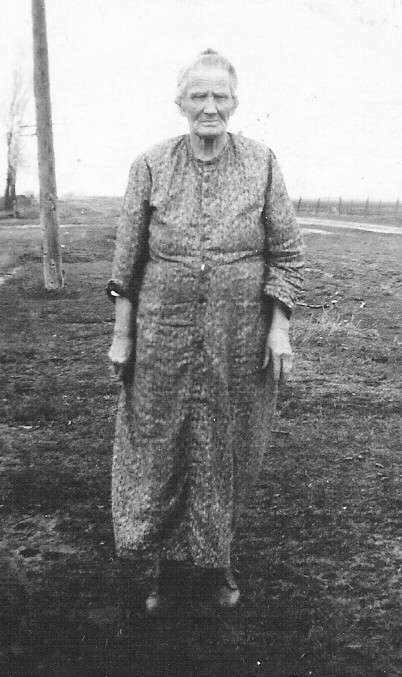
Ella is one of those ancestors for whom I have a lot of respect. When people query which of your ancestors you’d like to meet, Ella certainly comes to mind. It is somewhat strange and special to think of my personal connection with my grandfather, born over 100 years ago, who had a personal connection with someone born in the middle of the 19th Century. While musing over this, I also remembered that just as my grandfather was a pallbearer for his grandmother, I was one of his.
 A Deck of Ancestors