
52 Weeks – Week 36: Exploration

Looking back over past posts, I have come to realize that writing this blog as part of the 52 Ancestors Challenge has been an exercise in exploration. I also realized that I have written a lot about exploration, both my own and my ancestors’. In this post, I will be recounting my exploration of Cardston, Alberta in 2015, when I visited my great aunt Fon Hogg (née Burgess) and her husband Dave. Aunt Fon, who passed away in early 2021, was my maternal grandfather’s youngest sister and a dedicated genealogist.
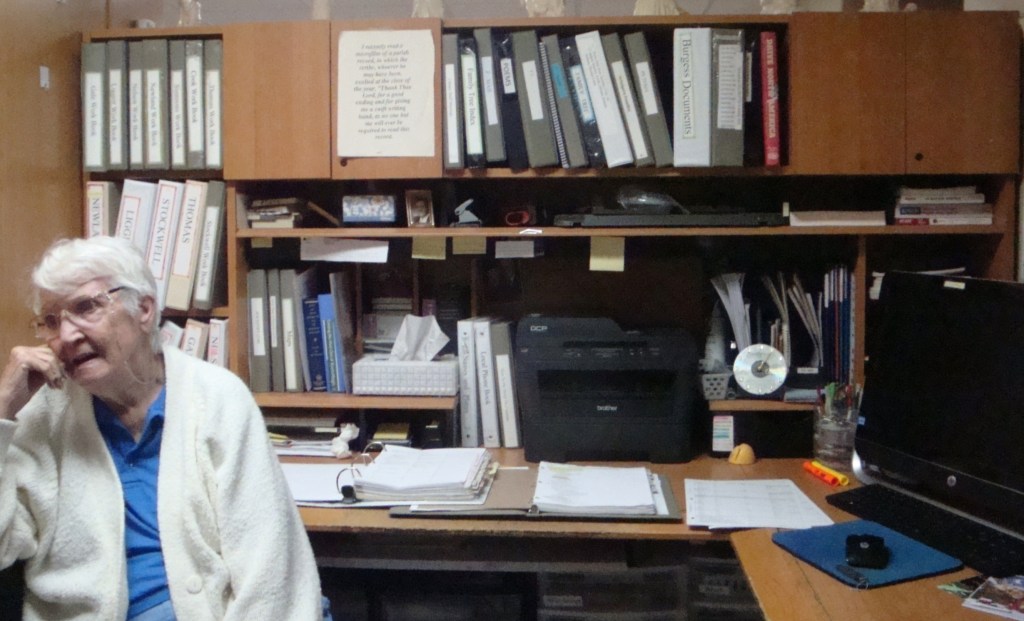
My aunt Fon in her amazing home office, which was primarily dedicated to genealogy and crafting.

I don’t often get the opportunity to visit ancestral homelands, so I was excited to undertake my adventure. One of the goals of my visit was to learn more about my great great grandparents – Aunt Fon’s grandparents – John Alexander Nelson and Ella Elizabeth Thomas. They were amongst the earliest settlers of Cardston, which was founded in 1887 by members of the Latter Day Saints (Mormons). John and Ella were both born in Utah a few short years after it became a territory of the United States.
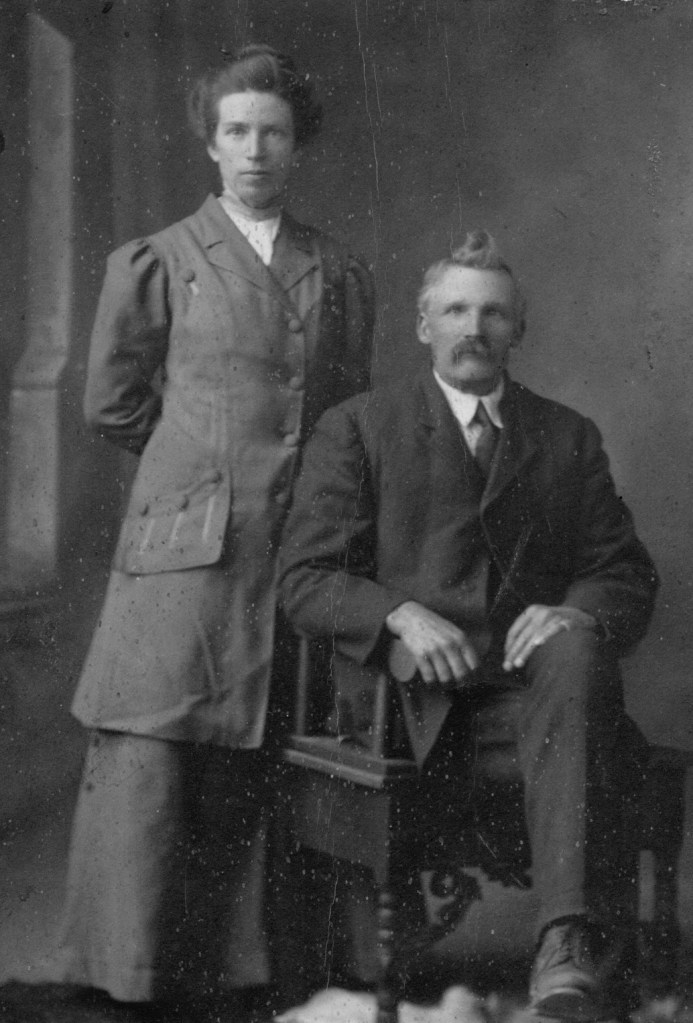
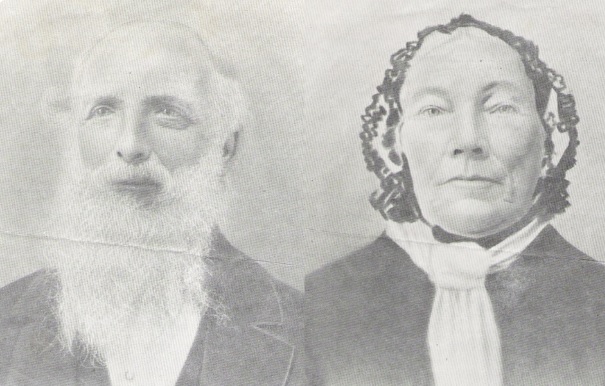
Ella Elizabeth Thomas (1859 – 1941)
John Alexander Nelson (1854 – 1942)

John was born in 1854 to Irish immigrant parents. Ella was born in 1859. Her father was originally from North Carolina and her mother was from England. John had worked as a farm labourer in Utah before he married. John and Ella married in Salt Lake City in 1879. Shortly afterwards, John and Ella moved to Smithfield, Utah, where John continued to work in farming.

John and Ella came to Canada in September 1890. John and Ella had five children at the time. The family travelled to Canada by covered wagon. Their eldest daughter, Maria, said that she often drove the wagon team while her father managed the cattle. The family first settled in a sod dugout at “Lee’s Creek”, west of Cardston. They arrived with 13 horses, 7 cows, 7 “other horned cattle”, and a pig.
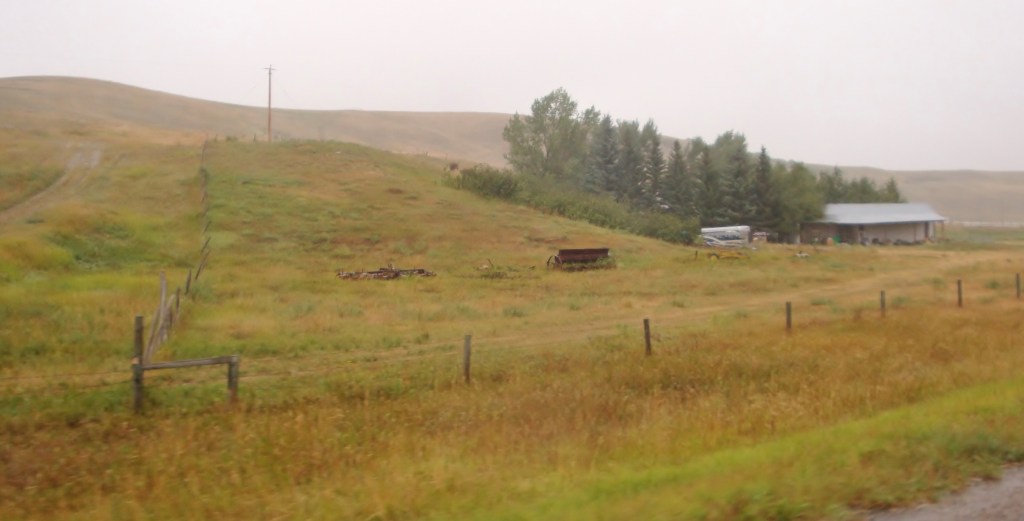
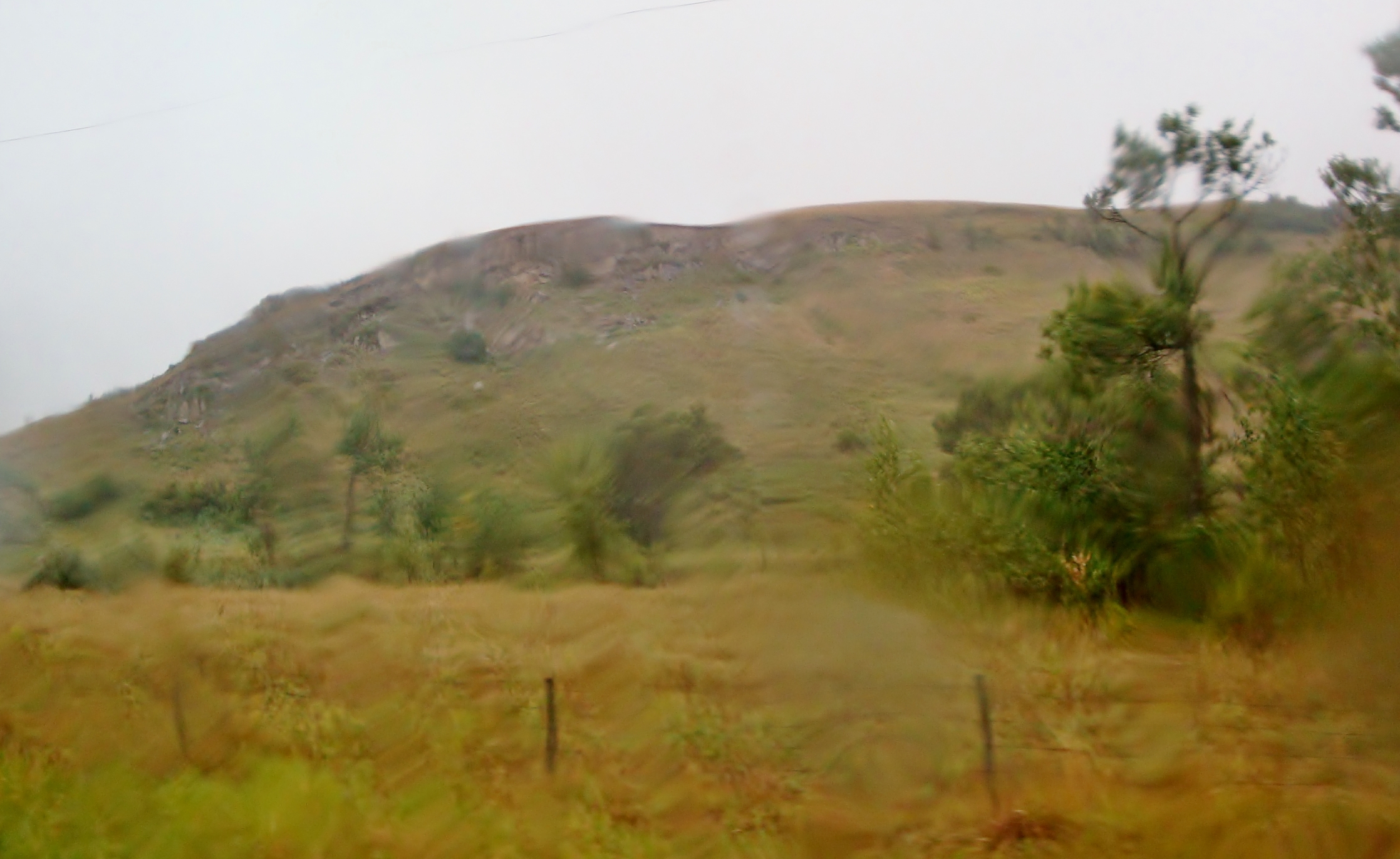
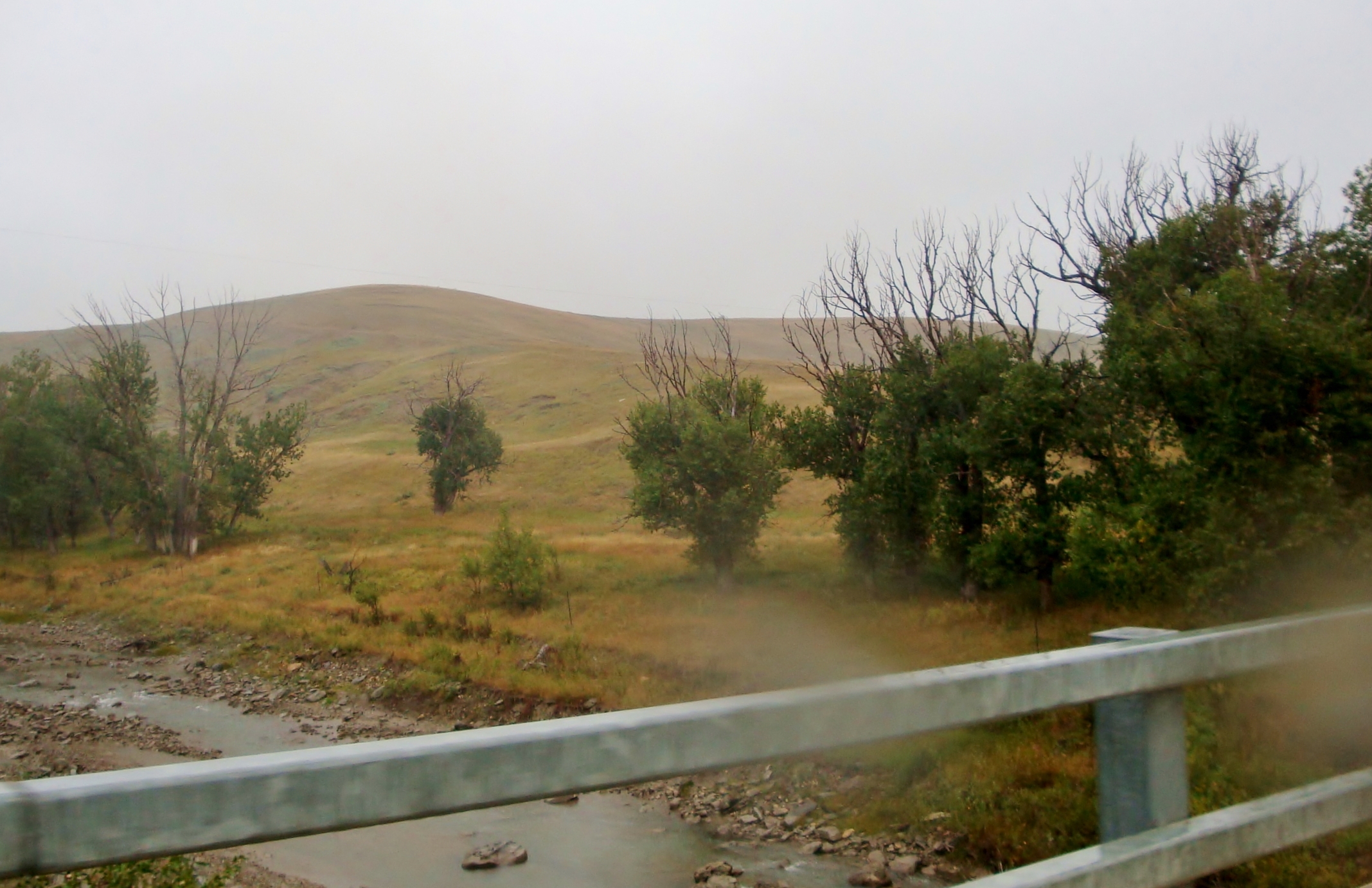
Aunt Fon told me that this was the land where John and Ella first settled in Canada, just west of Cardston, where the prairies meet the foothills of the Rockies.

The book, Alberta Past and Present, states that upon moving to Canada, John homesteaded on 160 acres of raw land. The homestead was located on Lee Creek, which ran through the property and into the centre of Cardston. The farmhouse was about four kilometers southwest of the town centre and is located on what is now Alberta highway 501.
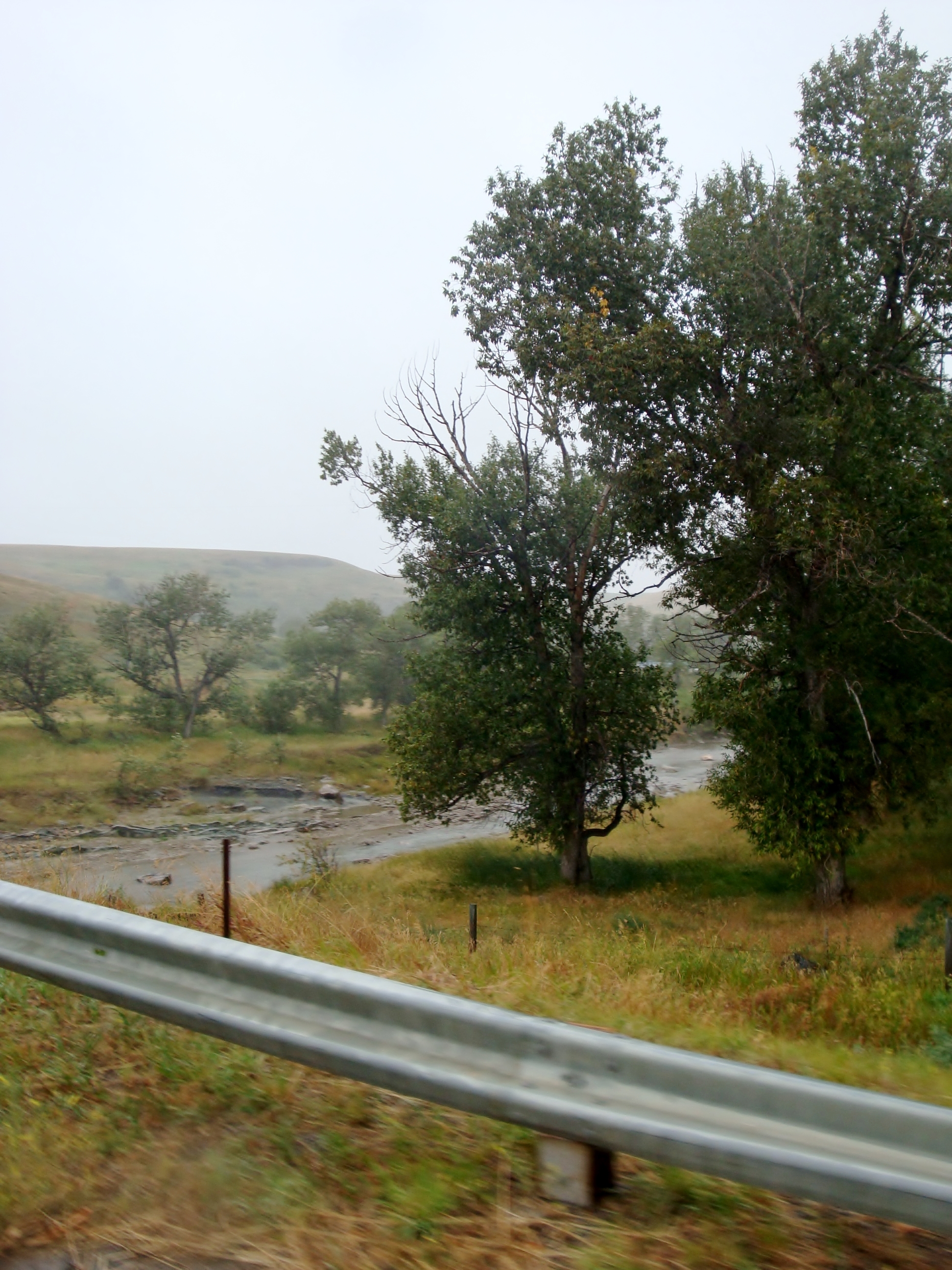
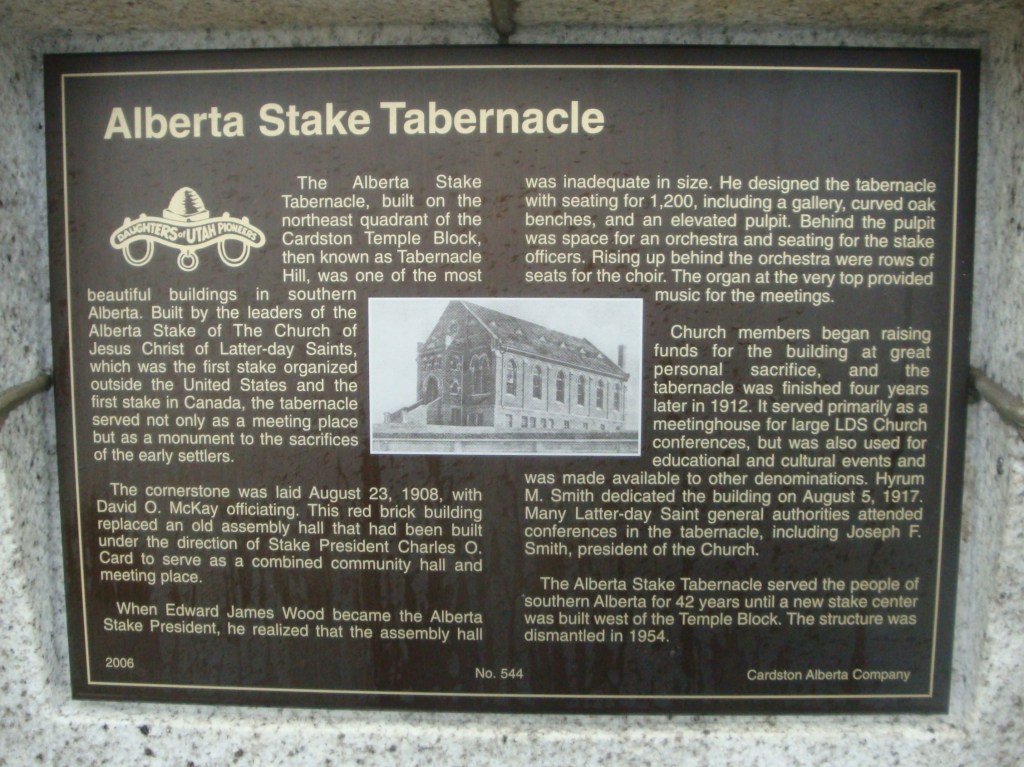
There was a quarry on the land, which supplied the stone for many of the buildings in Cardston, which, according to Alberta Past and Present, included the courthouse. According to John’s obituary, one building in Cardston built not using stone from his quarry was the first saloon built there – John refused to supply stone for that purpose. Aunt Fon told me that stone from the quarry was also used to build the foundation of the Alberta Stake Tabernacle. The Tabernacle stood from 1912 to 1954. Uncle Dave said that when the Tabernacle was demolished, people in Cardston used the stone for other projects. In fact, Uncle Dave told me that their first house originally had a fence built with stone from the Tabernacle.
In addition to farming, John also worked in carpentry. As well, John and a partner, John Turner, constructed and operated the first lime kiln in this part of the country. In 1906, John and Ella moved to nearby Woolford, Alberta, where John continued farming. John and Ella briefly returned to Utah in the early 1920s, where John operated an orchard or fruit farm, but they returned to Woolford in 1924. John continued farming the rest of his working life.
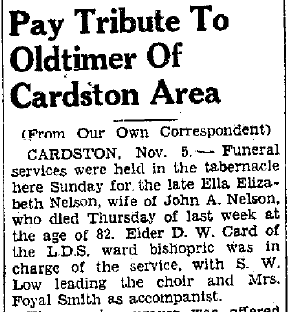
The Lethbridge Herald, November 5, 1941, page 11.

Meanwhile, Ella did not simply bide her time in the background as a farm wife and mother. According to a Lethbridge Herald article published after her death, in 1892 Charles Ora Card, Cardston’s founder and stake president, called to on Ella to study nursing and obstetrics. She was sent to Salt Lake City to study under the tutelage of a Dr. Shipp.  Ella left her five eldest children at home, taking with her “a six months old baby”. Based upon this timeline, the baby would have been Seth Henry Nelson, who was born in October 1891.

However, another source stated that Ella went to Utah in 1893 and that the baby she brought with her was her son Cleveland, who was born in March 1893. After six months’ training, Ella returned to Cardston and started her service. The Herald article says that Ella “answered every call from 1892 to the time when the district was supplied with medical men, and after that time when there was more work than one doctor could do”. Ella continued as a midwife until 1932, when she was 73.

John and Ella were nationalized as British subjects domiciled in Canada in 1896 (there was no “Canadian” citizenship until 1947).

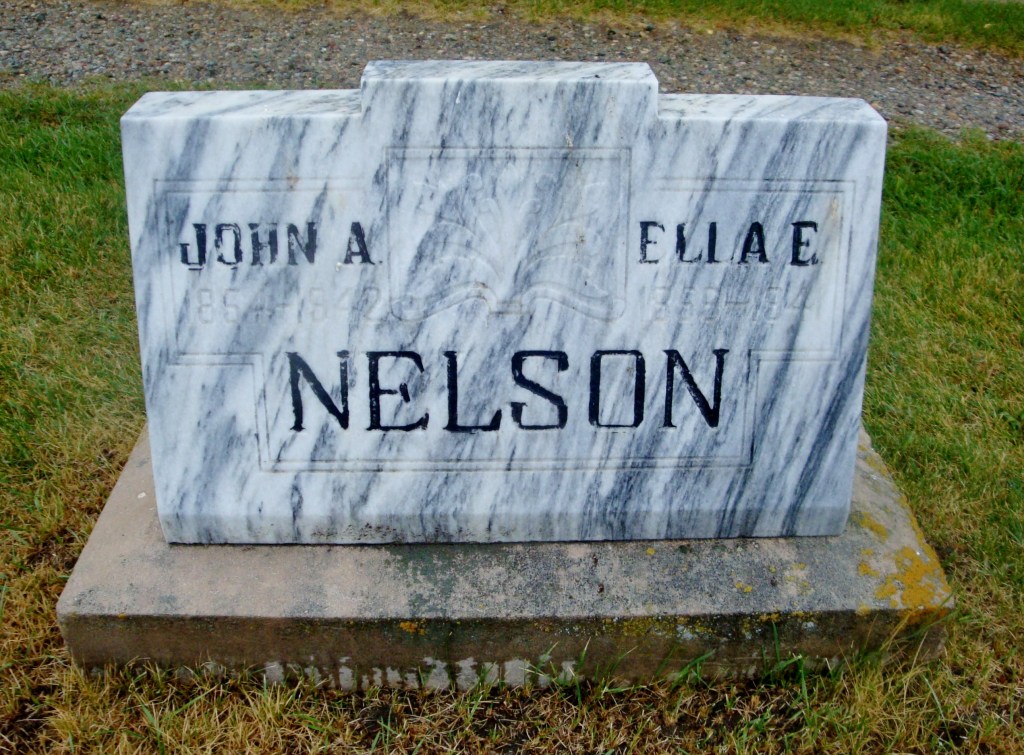
Together, John and Ella had twelve children, two of whom died in infancy. This included my great grandmother, Hazel Nelson, and her twin sister, Irene, who died at one month old. Ella died in October 1941. John died almost a year later, in September 1942. After I left Fon and Dave’s house, I drove to the Cardston Cemetery, where John and Ella are buried, along with other close relatives.
Unfortunately, while I often emailed Aunt Fon, my trip to Cardston was the last time I saw Fon and Dave. Dave passed away in October 2020 and Fon passed away five months later, in March 2021.
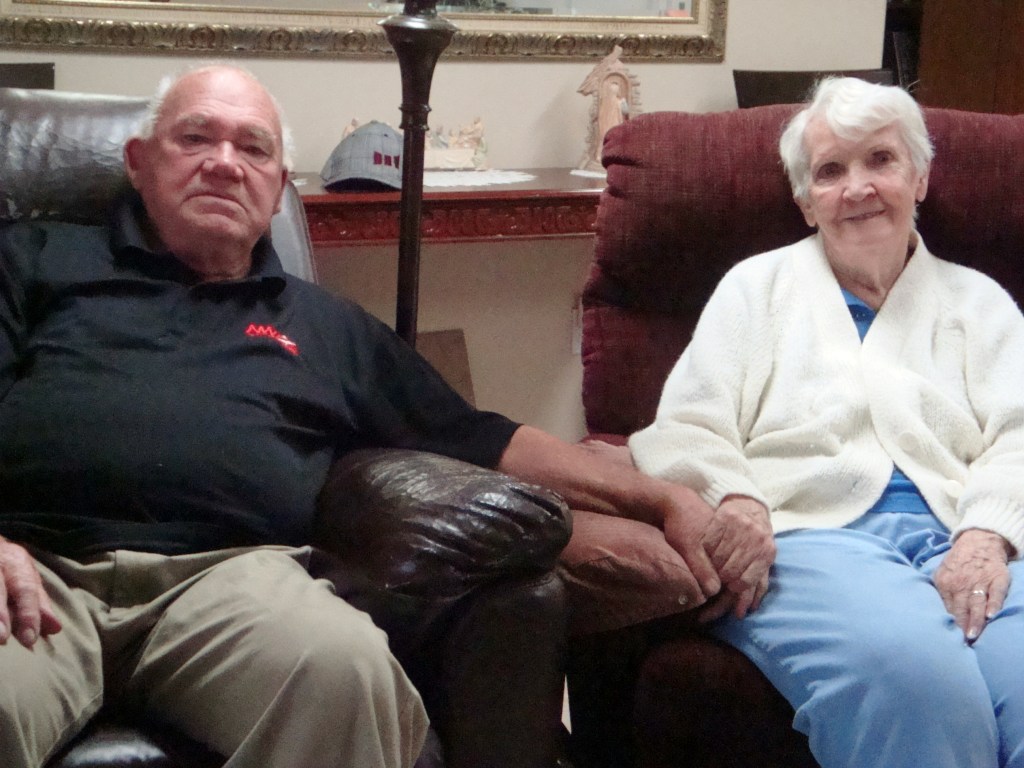
Dave and Fon Hogg, August 21, 2015.

52 Weeks – Week 34: Timeline

In the timeline of the 52 Ancestors Challenge, we’re on Week 34, which is the theme of the week, “Timeline”!

Plotting out the timeline of an ancestor or family group can be a great analytical tool. However, I find what is just as important are timelines of history. Knowing the history of a place can provide context and clues as to our ancestors’ actions.

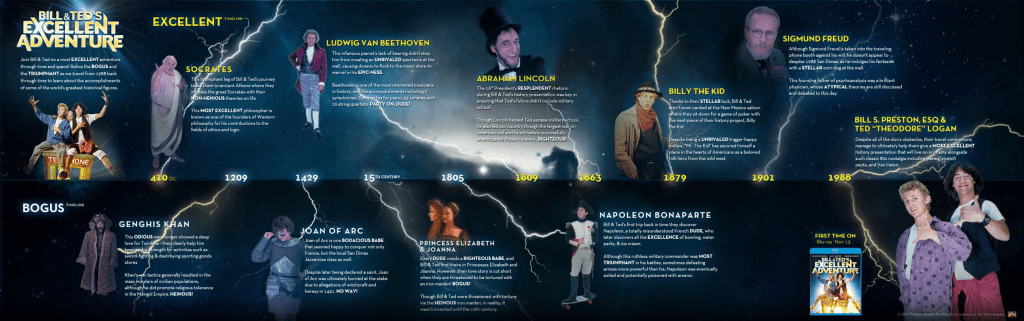
Timelines of history are totally bodacious and most triumphant.

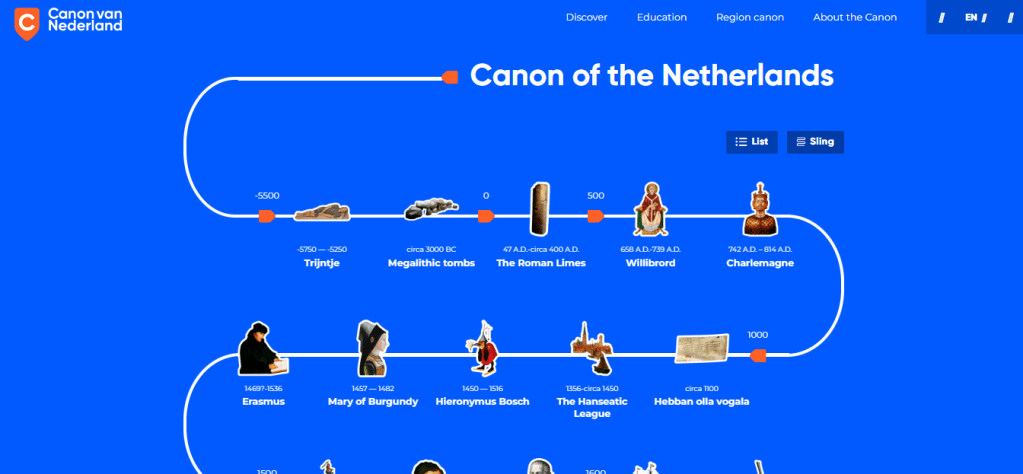
One of my favourite timelines of history is the Canon of the Netherlands. In addition to my love of genealogy, I have always loved history (it was my major in undergrad) and the Canon appeals to my inner history geek. It is a timeline of fifty historical events that together show the historical and cultural development of the Netherlands as a nation. Not only that, there are separate canons for every province and the regions within each province. It is a beautiful piece of work and I enjoy reading it independent of any family history research I might be doing.

The Canon was developed at the behest of the Dutch ministry of education and provides a summary of what is taught in Dutch primary schools. The website is available in English for the timeline itself and for each of the historical and cultural events listed on the timeline, although other information (such as the “About” pages, FAQs, and regional Canons) is only available in Dutch. That’s where the translate functions of browsers like Chrome can come in handy, although I like to try to read them in the original Dutch as part of my decades-long struggle to learn the language.

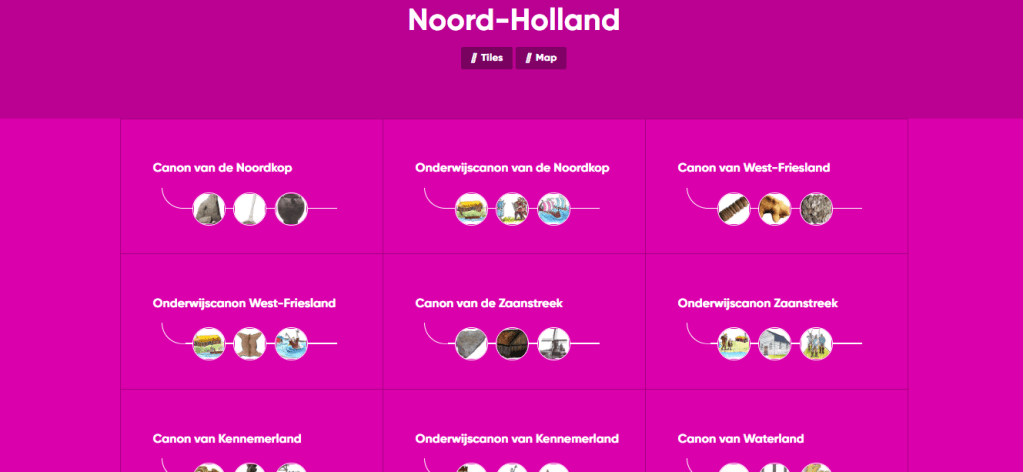
The Canon for Noord Holland (North Holland), the province where my father was born.

Knowing when the Netherlands was under French dominion helps in understanding the timeline of some of my ancestors. Napoleon originally structured the Netherlands as a separate “Kingdom of Holland”, with his brother Louis as the King. Over time, Louis ran the kingdom more with Dutch interests in mind, so in 1810 Napoleon abolished the kingdom and incorporated the Netherlands as part of France itself. Records from the time of French rule might be in Dutch, French, or a combination of both. Records I’ve found from after the Netherlands was incorporated into the Empire are more likely to be in French.

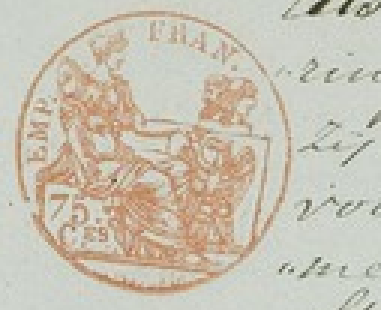
My Great x 4 grandparents, Jan de Waard and Cornelia Pieters Kooij, married on October 10, 1813. The record of their marriage is written in Dutch, but bears the seal of Imperial France. Less than a month after their marriage, a popular uprising resulted in the ouster of the French. On November 30, 1813, the son of the former stadholder of the country returned from exile and was named William I, Sovereign Prince of the United Netherlands. Jan and Gurr marriage was one of the last in Texel to be registered under the French regime.

Knowing the timelines of history have also been helpful in understanding my maternal grandfather’s family history. He was Mormon (Latter Day Saints) and several of his direct ancestors were amongst the earliest converts to the new religion, joining in the 1830s in New York State. Knowing the history of Mormon migration helps me understand my maternal ancestors’ movements and why they did certain things at certain times.

The group’s founder, Joseph Smith, sought to create a “New Jerusalem”. He and his followers moved to Ohio and soon began building a settlement in Missouri. In 1833, church members were run out of Missouri and a failed banking venture crippled the Ohio settlement. The Mormons attempted a settlement elsewhere in Missouri, but were driven out upon an executive order of the governor, calling for them to be exterminated or expelled from the state. In 1939, the church regrouped in a new community, Nauvoo, Illinois, and began to build their Zion there. Two years after Joseph Smith’s death in 1844, tensions with non-Mormons increased, such that the Mormons were driven out once again. They upped stakes and began the migration to Utah. During the westward migration, over the winter of 1846-1847, about 2,500 church members encamped at Winter Quarters, which was just north of where Omaha, Nebraska came to be. The first settlers arrived in what is now Salt Lake City in July 1847, in what was still Mexican territory.

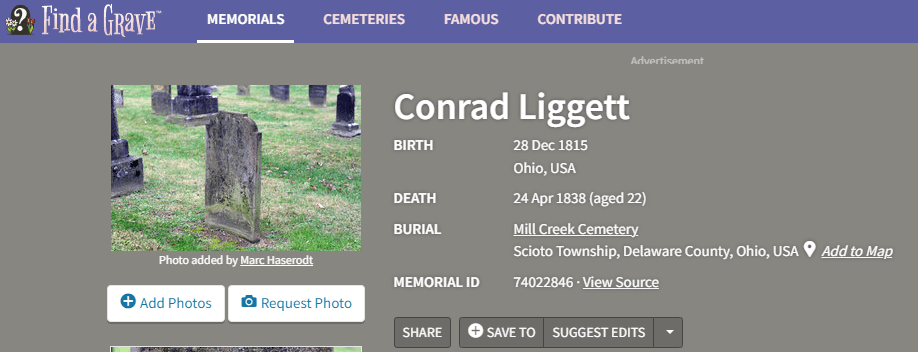
Knowing this timeline, I can test the accuracy or reliability of information I have found about my Mormon ancestors. For example, some of the information I’ve found about my great x4 grandfather, Conrad Liggett, suggests that he died in Nauvoo before 1839. However, as Mormon settlement in Nauvoo did not begin until 1839, I doubt the veracity of that information.

If you were buried in Ohio in 1838, odds are you did not die in a town that was settled by the Mormons in 1839.

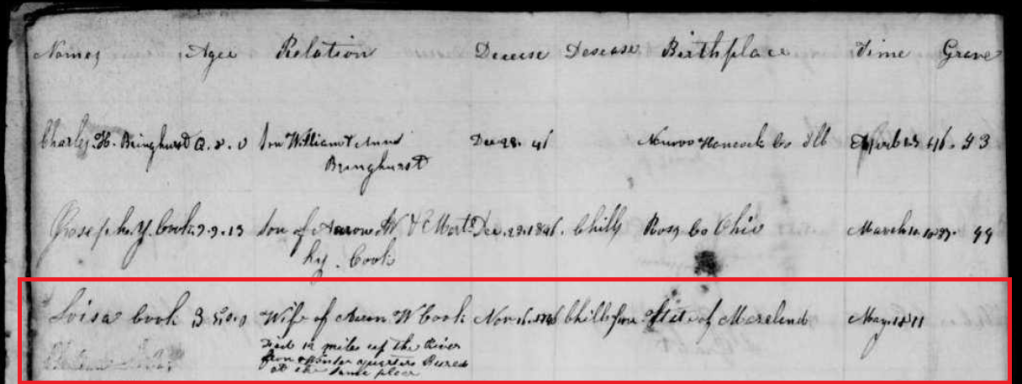
As well, if I have a Mormon ancestor who passed away in late 1846 or early 1947, chances are good that it occurred during the migration to Utah. For example, Conrad’s widow, Louisa Thomas, my 4x great grandmother, died on November 16, 1846. Sure enough, an entry in the Winter Quarters sexton’s records shows that Louisa died 19 miles up the river from Winters Quarters.

The entry for Louisa Thomas in the Winter Quarters sexton’s records, 1846-1848: “Loisa Cook. 36 years, 0 months, 0 days. Wife of Aaron W. Cook [her third husband]. Died 19 miles up the River from Winter quarters Bur[i]ed at the same place. [Died] Nov 16 1846. [Disease] chills fever. [Born] State of Mareland May 1811.”

Timelines of history can take you on some most excellent adventures!

52 Weeks – Week Twelve

Joined Together

Twelve weeks of genealogy, my true love gave to me: the theme “Joined Together” for the 52 Ancestors Challenge. Rather than a lot of discussion, I thought this week I’d post photos of some of the couples whose unions ultimately resulted in…me!

While I have photos of other (great) grandparents, I will only post for those of whom I have the pair. First, my maternal great great great grandparents.

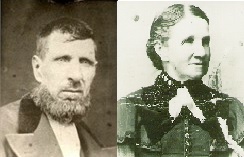
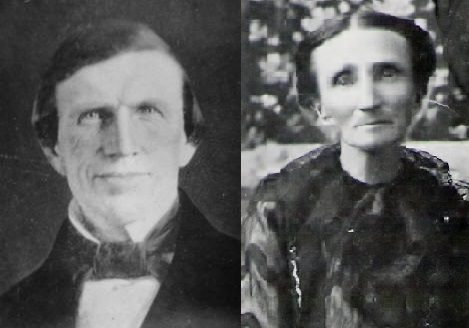
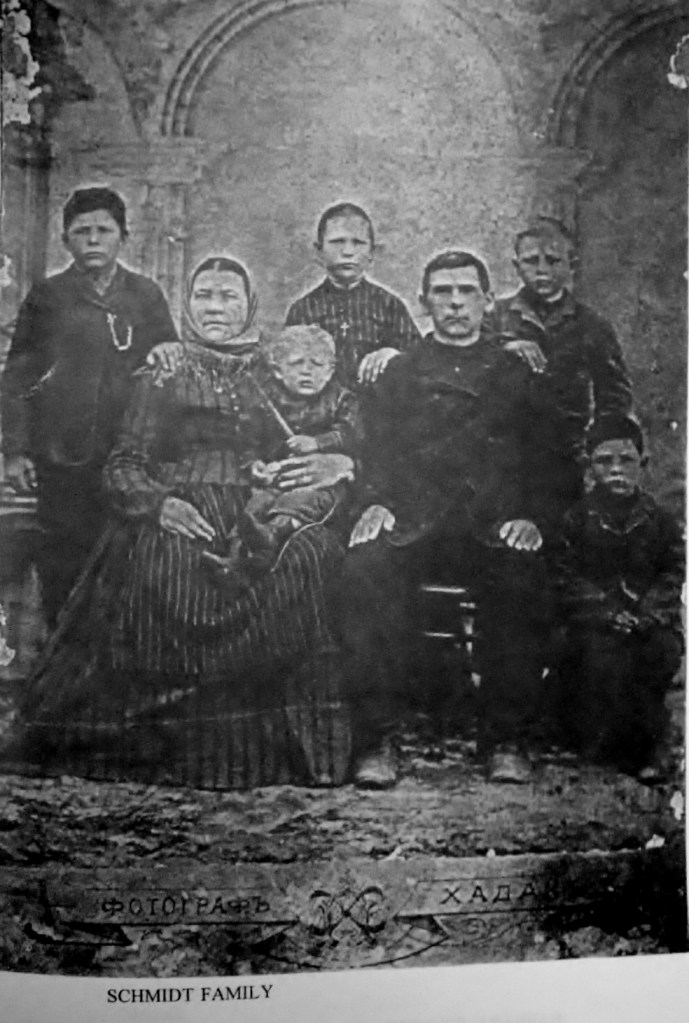
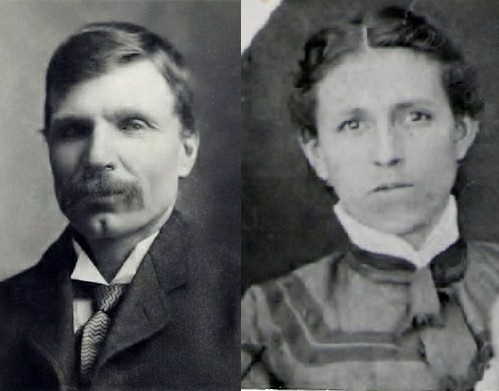
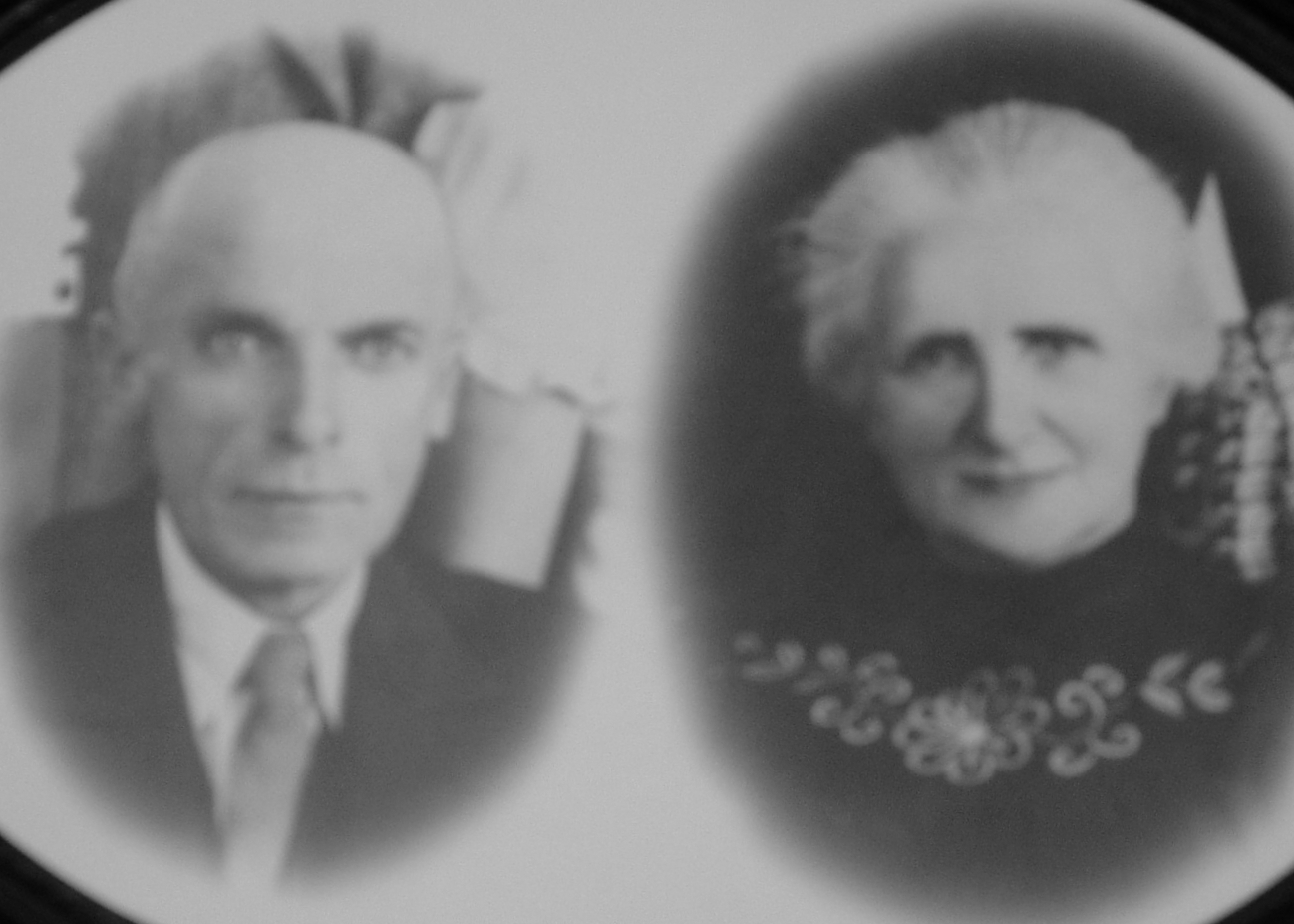
Valentine Schmidt (1839 – ?)
Margaretha “Regina” Boechler (? – ?)

Next, for my great great grandparents on my father’s side, I only have photos for one pair. These are my grandfather’s grandparents.

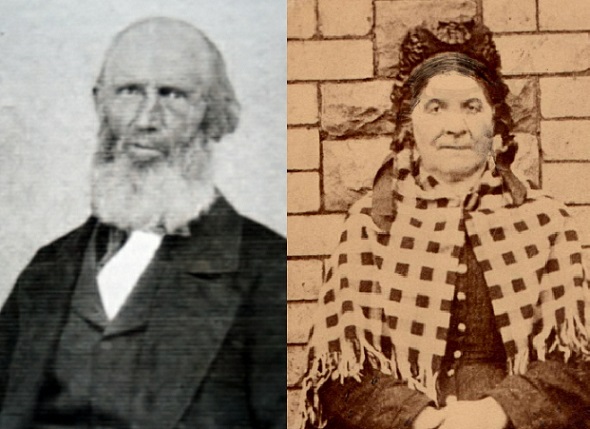
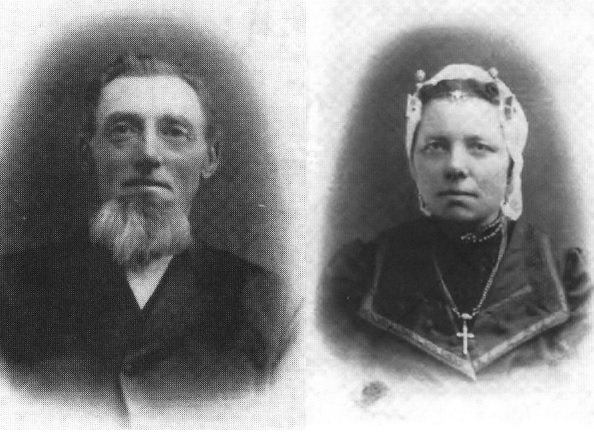
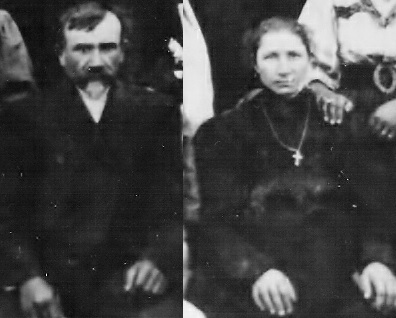
Johannes Jansz “Jan” Pater (1862 – 1935)
Ariaantje Jacobs “Adriana” Bleeker (1865 – 1929)

I have photos of all my maternal great great grandparents.

On to my great grandparents. I have photos for all of them.

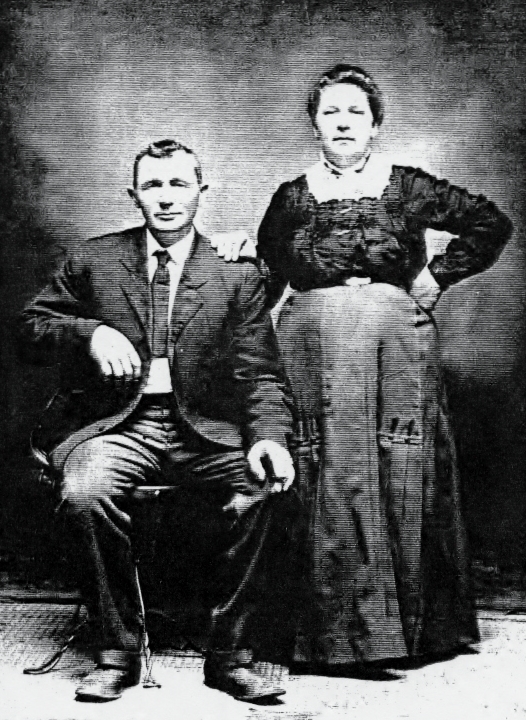
Theresia “Teetje” Pater (1894 – 1947)
Johannis Albertus van der Fluit (1894 – 1932)
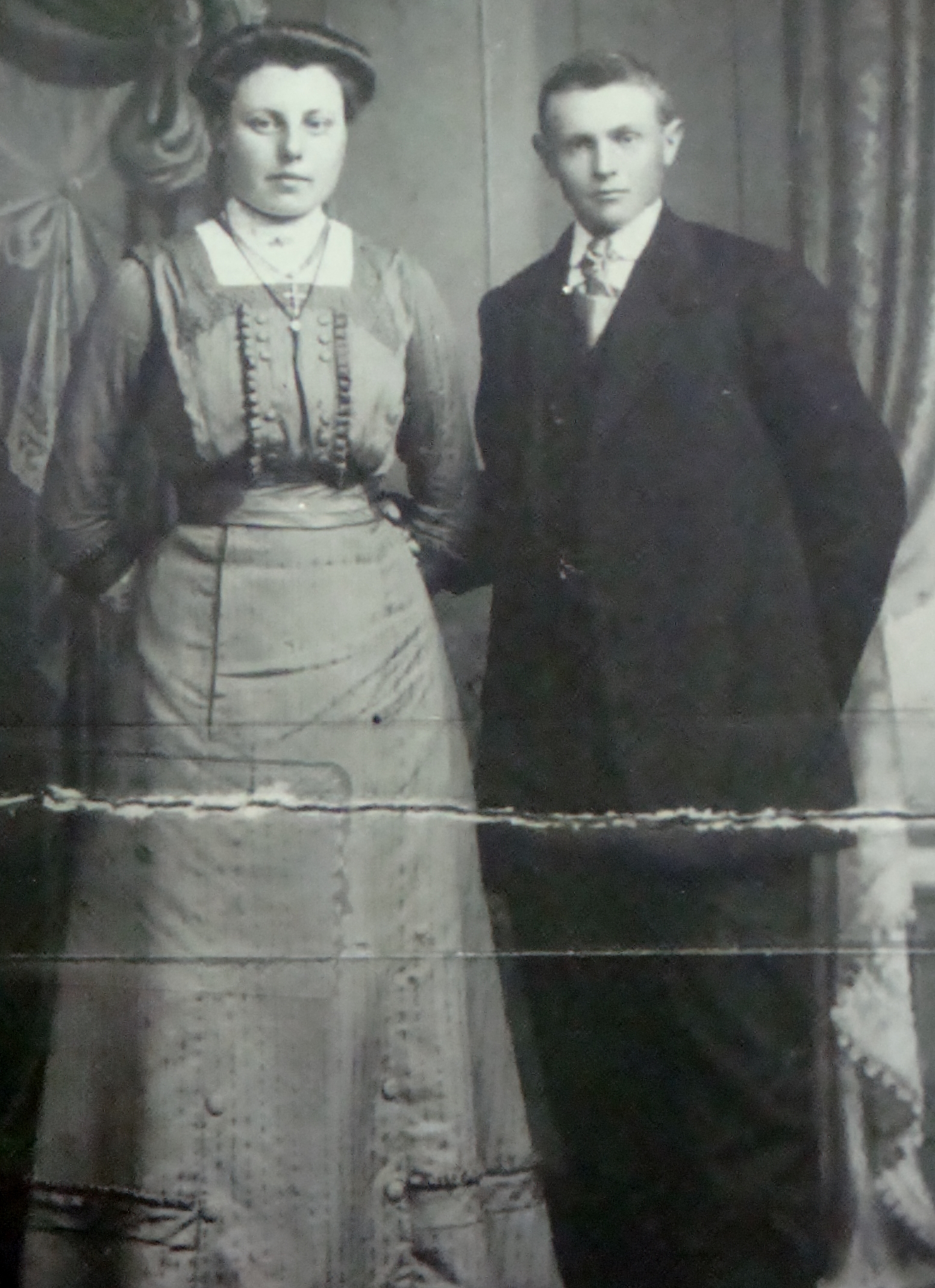
Adrianus Komen (1888 – 1948)
Elizabeth Bakker (1888 – 1976)
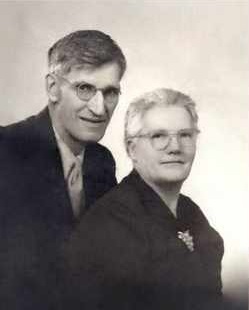
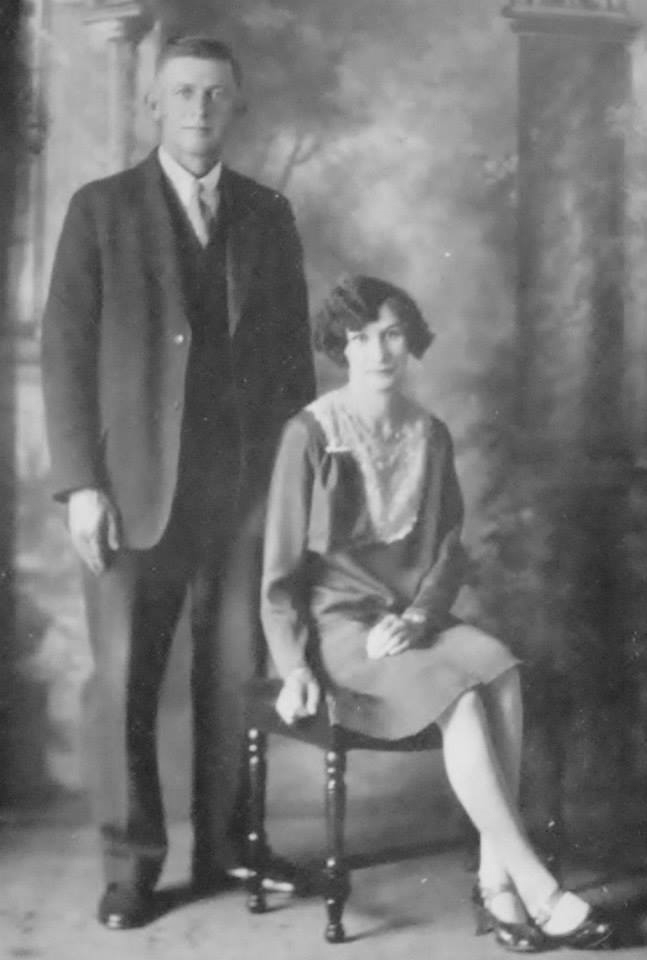
Milton Leo Burgess (1891 – 1964)
Hazel Nelson (1899 – 1967)
Heronimus “Jerome” Lerner (1895 – 1954)
Emelia Anton (1903 – 1997)

My paternal grandparents.

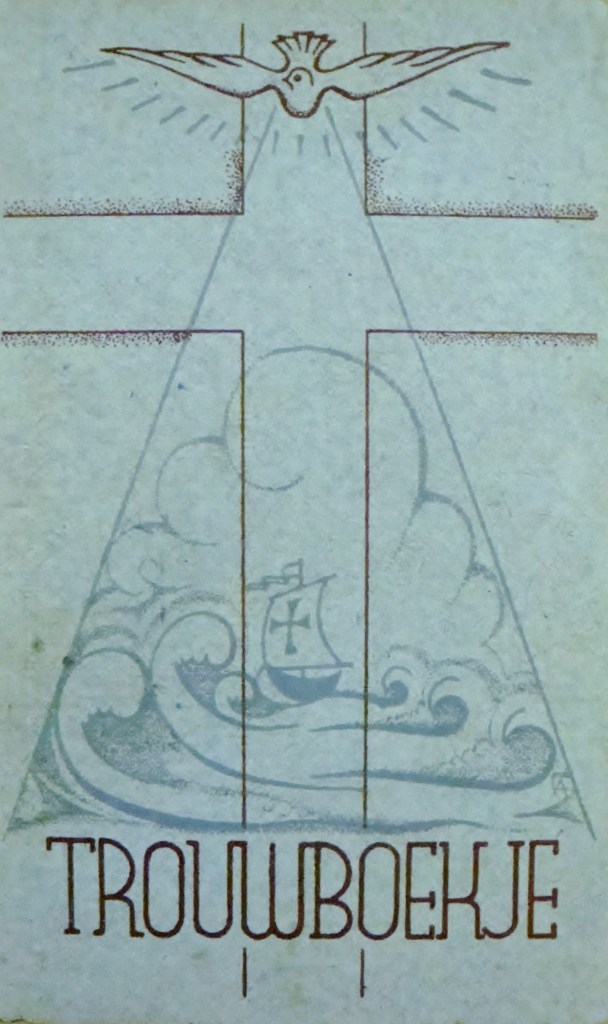
Trouwboekje” means “marriage booklet” in Dutch. In the Netherlands, only a civil marriage is legally valid. A church ceremony can take place afterward, but is not recognized by the state. The registry office would issue one to a couple at they time they were married. They typically include an extract of the marriage registration. While they can vary from one municipality to another, a trouwboekje usually will include space for the birth information of the couple, as well as for the children of the marriage. They can also include information about religious matters, such as information about the church wedding and baptisms of the couple and their children.

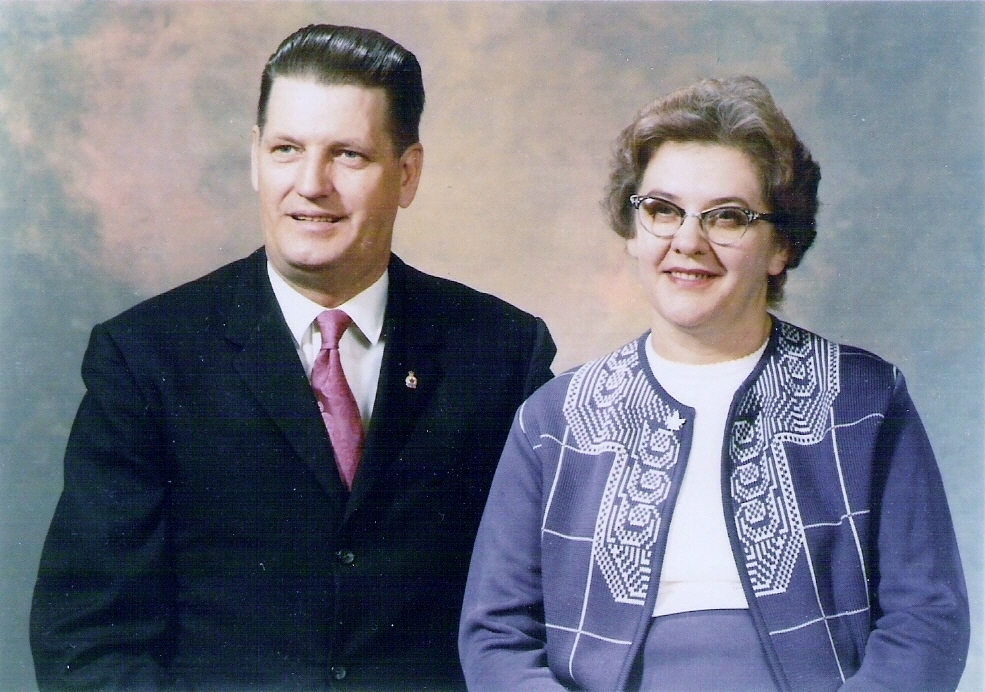
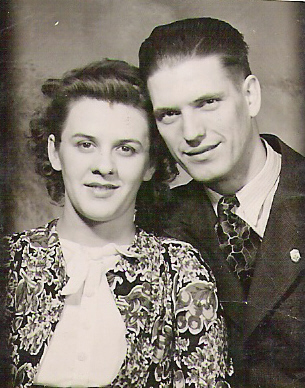
My maternal grandparents.

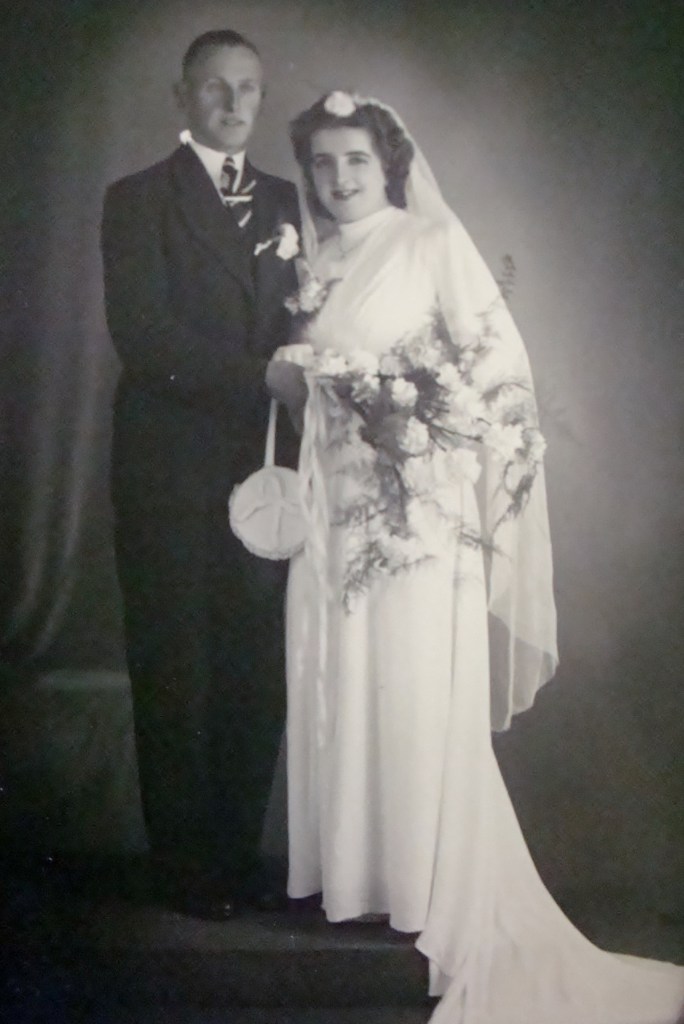
Leo Cleveland Burgess (1920- 1995)
Helen Lerner (1921 – 1984)
October 1971
Helen and Leo around 1947.

My parents. Married crazy young by current standards and still together, modelling what a great marriage should be.

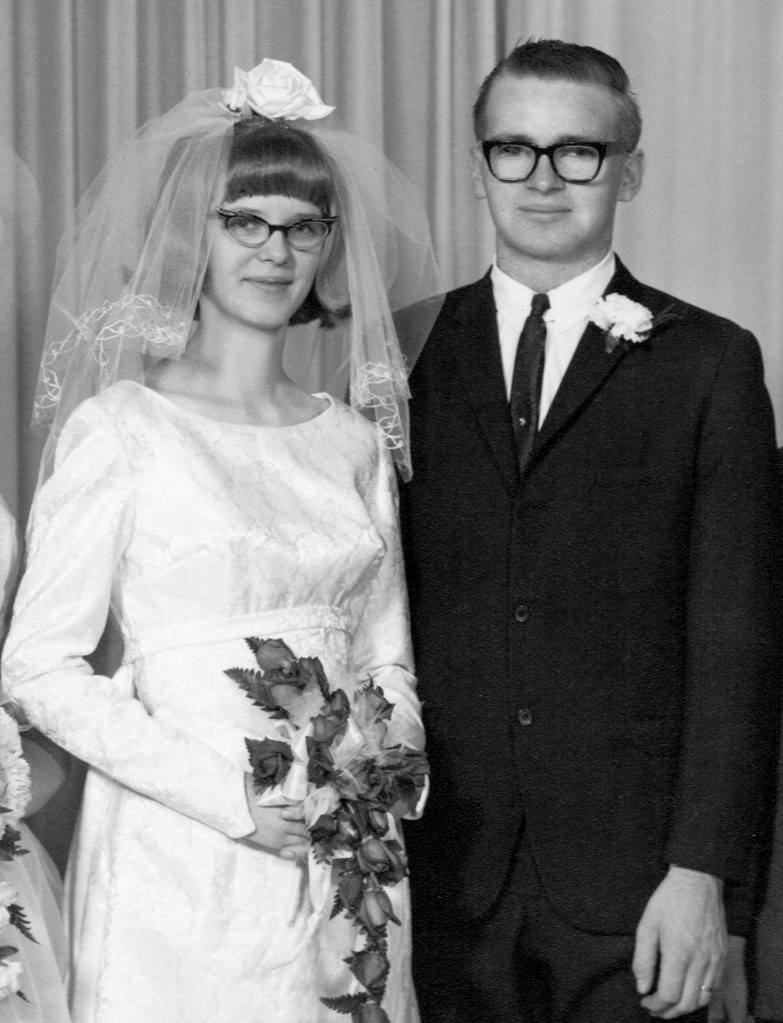
And then there’s mine.

52 Weeks – Week Eight 

Courting

Yeah! That’s why you’re the “judge” and I’m the “law-talking guy”.

Noted lawyer Lionel Hutz
View from the current Vancouver Law Courts, looking towards the former law courts, which is currently the home of the Vancouver Art Gallery.

This week’s 52 Ancestors Challenge is “Courting”. If I was going to write about dating and romance, it would have been last week during what retailers are now calling “Valentine’s Week”. Besides, how my parents met is a story for another time. Instead, I am taking “courting” to be a loose descriptor of what lawyers and judges do. I acknowledge that turning a noun into a verb can be egregious, but here we are.

Canadian courts don’t use gavels!

It turns out that there are many lawyers and judges in my family history, as well as my wife’s. My brother-in-law is a lawyer. As well, many of my friends are lawyers and judges. Unlike most people who have lawyer friends, it’s because they’re lawyers themselves. However, most of my lawyer friends are people I’ve known since high school who all happened to go to law school later in life, including myself.

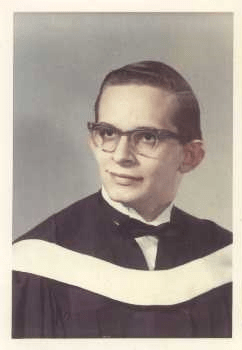
It wasn’t always this way. When I was a kid, the only lawyer in the family I knew of was my Uncle Leo Burgess. He graduated from the University of Alberta with a law degree (LL.B) in June 1972. I was surprised to learn that one of the partners of my old firm, for whom I did a lot of work, was in the same graduating class. We ensured that they were seated together for the wedding reception when I got married.

Leo Burgess – University Graduate

Leo articled with an Edmonton firm called Field & Field, now known as Field Law. For readers in places where articling is not part of the process of becoming a lawyer, its essentially a form of apprenticeship that takes about a year. Law school teaches the law, articling is an introduction to the actual practice of law. The articling process usually includes completion of the bar exam.

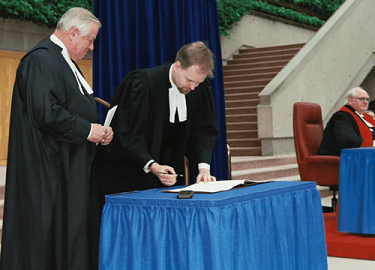
I attended Leo’s call ceremony in Edmonton. While I was only in kindergarten or grade one at the time, I remember it vividly. It was the first time I had ever been in a courtroom. I don’t even know if I had seen one on TV at the time. Everything about it was striking. It was very much a very traditional courtroom, with lots of wooden everything. The court attire, consisting of gowns and tabs, was also unforgettable.

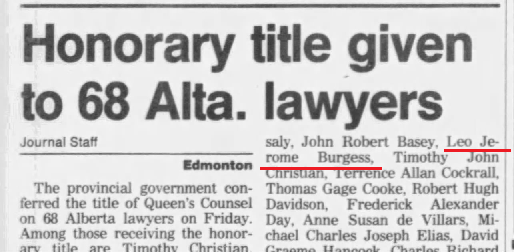
Leo remained at Field & Field for only a short time. From 1976 to 2003, Leo practiced at the Edmonton law firm of Brownlee Fryett, now known as Brownlee LLP. His expertise was municipal law. Leo became a partner in 1977. In addition to his legal practice, Leo lectured at the University of Alberta law school. In 1994, Leo earned an appointment of “Queen’s Counsel”, which entitled him to use the initials “Q.C.” after his name. In 1990, Leo was admitted to the bar of the Northwest Territories.

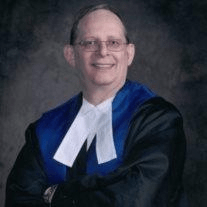
The Hon. Leo Burgess, Prov. Ct. of Alberta

Nineteen years ago this month, shortly after Valentine’s Day, Leo was appointed to the Provincial Court of Alberta. His appointment came as a surprise to my mother, since she always thought Leo hated going to court. He did, but having spent some time as a litigator myself by that time, I told her it came as no surprise to me. Leo served on the bench until his death in 2014.

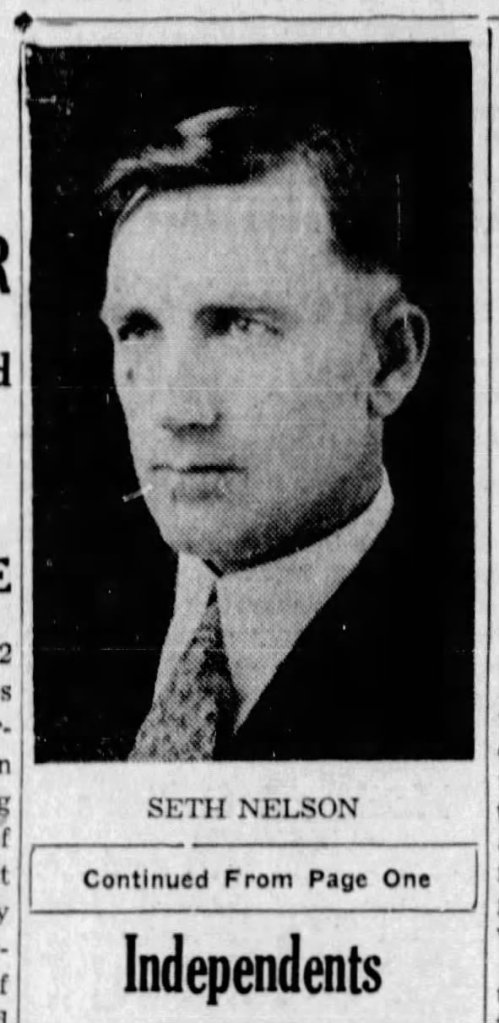
As far as I know, all the lawyers I am related to are on my mother’s side of my family tree. One was my mother’s uncle, Seth Henry Nelson, Q.C. Seth graduated from the University of Alberta in 1912. This was likely an undergraduate degree, as the University of Alberta did not establish a law school until that year. As well, becoming a lawyer at the time often did not require a law degree.

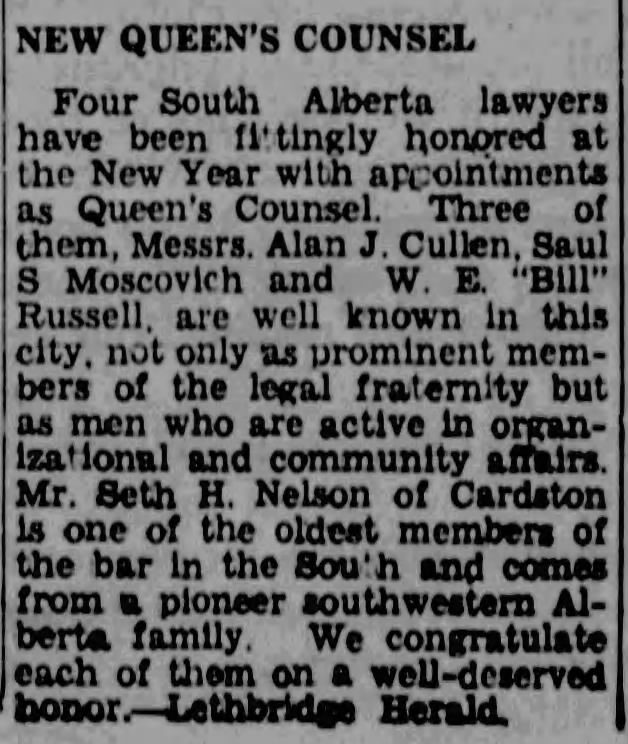
The Cardston News, Jan. 9, 1958, p. 1

Seth practiced law in Cardston, Alberta for almost 60 years. After completing his time as a law clerk at a Cardston firm, Seth was called to the bar in April 1918. Seth was appointed a Queen’s Council (hence the “Q.C.”) in 1958. In addition to his legal practice, Seth was active in civic affairs. He was a school board trustee for 15 years, and was Secretary Treasurer of the local hospital board.

Calgary Herald, Feb. 22, 1940, p. 8

As well, Seth stood for election as an independent in the 1940 provincial general election in the riding of Cardston. He ran against the incumbent, Social Credit member Nathan Tanner, a former Speaker of the legislature who was appointed to Cabinet in 1937. Tanner defeated Seth in a two-way race, 2,160 votes to 1,808 (54.4% of the vote).

Seth remained active in his church, community, and legal work until he died in 1975, at age 83.

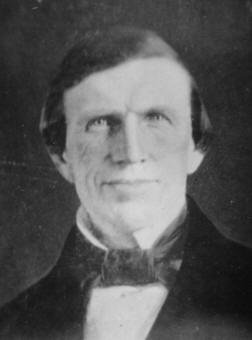
My 3rd Great Grandfather, Preston Thomas, also had a legal career amongst the many hats he wore. He was born in Rockingham, North Carolina, in 1814. He spent time in Tennessee in the late 1830s and early 1840s. In 1844, he joined the Latter Day Saints (Mormons) and moved west. Over a period of many years, Preston was part of a number of missions for the church.

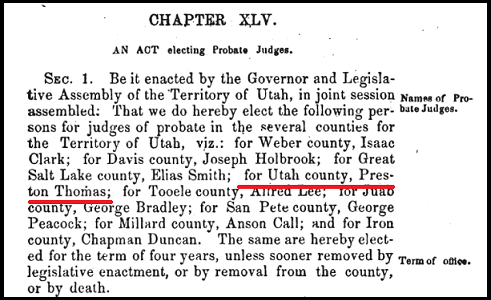
Preston was named a Probate Judge in Utah Territory in 1852, being appointed to the court upon its creation. Preston’s appointment was approved by an Act of the territorial legislature on February 7, 1852 (Laws of the Territory of Utah, Chapter XLV). He was assigned to the court in Utah County.

At the time, the Probate Court in Utah had a much broader jurisdiction than simply the estates of the deceased and those under guardianship (e.g. children, the mentally disabled), which was granted by federal US law. In addition to the usual jurisdiction of a probate court, the Utah territorial legislature granted the Probate Court jurisdiction over civil, criminal, chancery, and divorce matters. As well, the Probate Court heard appeals from the county Justice of the Peace courts. The Probate Court acted as a registry for incorporations and disincorporations and, in 1869, it was granted authority to determine land title claims.

In 1874, the federal government revoked the Probate Court’s jurisdiction over all matters except for divorce and probate matters. In 1877, the federal government revoked the Probate Court’s authority in divorce matters. Probate Judges were appointed by the legislature until 1874, when the judges were elected to a two-year term. In 1888, federal law changed the process, making the office subject to the appointment of the President of the United States. When Utah became a state in 1896, the Probate Court was abolished.

Preston Thomas
(1814-1877)

As far as I have been able to determine, Preston had no formal legal training. He did serve on a number of church and community committees, as well as a term as a member of the House of Representatives of the Territorial Legislature from 1857 to 1859, so he had some knowledge of rules and procedure.

Tullidge’s Quarterly Magazine, Vol. III No. IV, states that Isaac Higbee succeeded Preston as Probate Judge on December 27, 1852. However, Preston appointed to the Probate Court again, no later than 1864. He was still a judge of the Probate Court in 1866, as he was listed as such in The Law Register for the United States for the Year 1866 by John Livingston of the New York Bar.

Fun fact: at the convocation ceremony when I received my B.A. from U.B.C., Raymond Burr received an honourary degree. Of course, he was famous for the role of TV lawyer Perry Mason – and was quite the opposite of Lionel Hutz.

Look at me, becoming an official Law Talking Guy!

This brings the February theme of “Branching Out” to an end. The theme for March is “Women”, which is appropriate given that it’s Women’s History Month in the United States, the United Kingdom, and Australia. In Canada, it’s not until October, so that it coincides with Persons Day. However, Canada does mark International Women’s Day on March 8. Seeing the weekly themes for March, I’m quite looking forward to them!