52W Mark II – Week 18: Pets

For Week 11 of the 2022 52 Ancestors Challenge, the theme was “Flowers”. However, I chose to change the topic to “Pets”, not realizing that would be the theme a year later. So here I am, stuck with little to say on the topic of pets. At most, I could write about my Aunt Diana (again!), who dearly loved her cats. Nevertheless, since I turned “Flowers” into “Pets” last year, it seems I should turn “Pets” into “Flowers” this year.

My paternal grandfather, Arie van der Fluit, was an avid gardener. He and my grandmother lived in a number of different places over the years, and at every one of them my grandfather had some sort of garden or greenhouse. Even when he lived in a condominium tower, he somehow managed to turn permission to have a small kennel in an unused area of the main floor – about the size of a banquet hall – into a menagerie of all kinds of animals, along with all kinds of potted plants throughout the place.

At one home, he tore out the grass in the front yard and replaced it with flower beds. He only left strips of grass so that he had a place to walk between the blooms while tending to them.

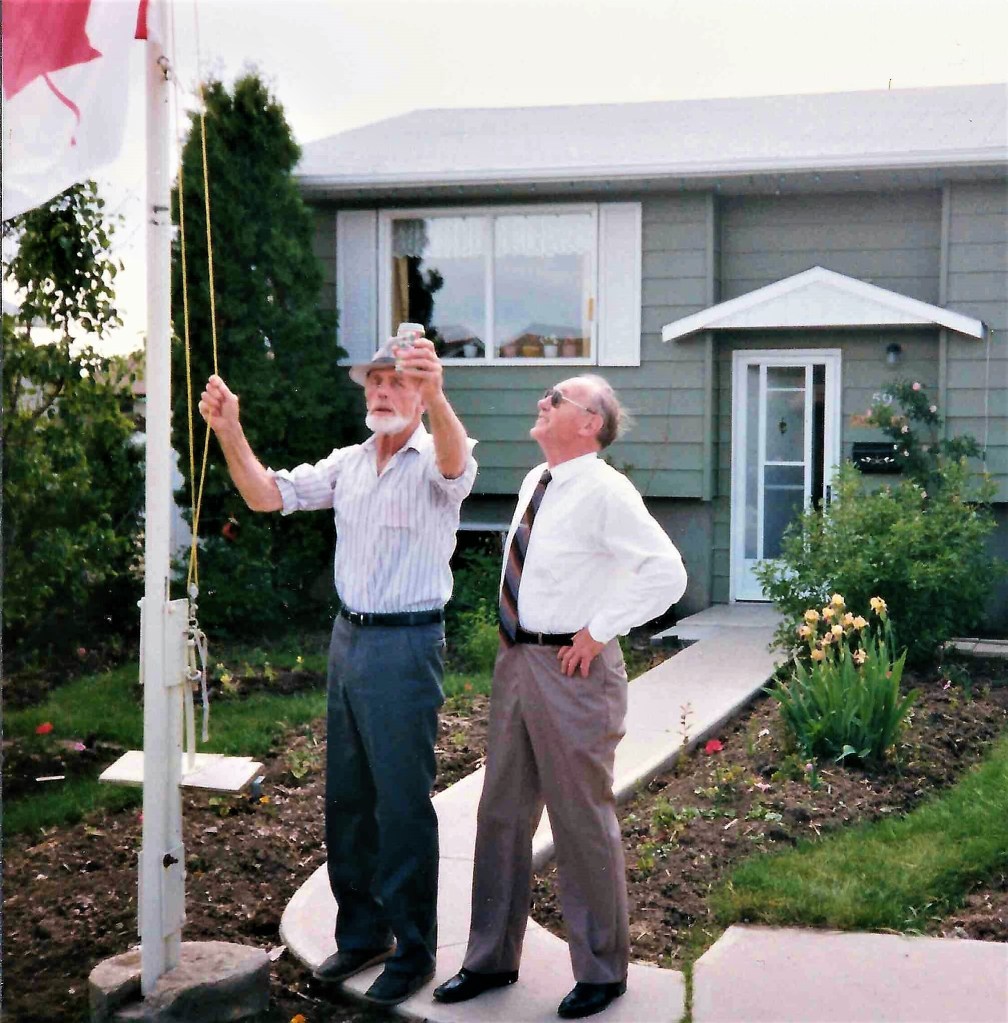
On the left, my grandfather’s younger brother, Jaap van der Fluit, with my grandfather on the right. This was taken in 1992, while my great uncle was visiting from the Netherlands. This was taken before my grandfather had fully transitioned the front yard into flowerbeds.

My grandfather was less physically able to garden in the final years of his life, yet he did not let his health problems keep him from the two things he loved most, gardening and training dogs. He put more of his available energy into the dogs, erecting an impressive obstacle course that he used to put them through their paces. He also built a small windmill in his front yard – which generated enough electricity to operate an outdoor lamp. What energy and ability my grandfather had left for gardening he put largely into potted plants. They were easier to tend to.

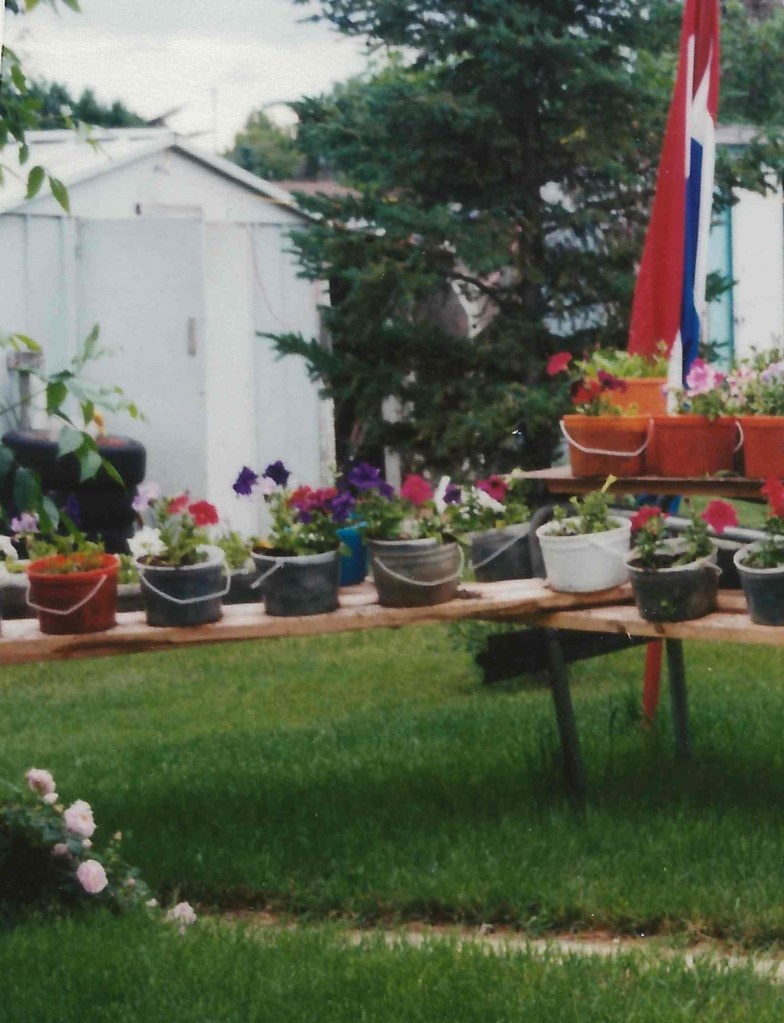
My grandfather’s last “garden”. You can see flags of Canada and the Netherlands that he always had wherever he lived.

52W Mark II – Week 11: Lucky

I’ve already written about the two luckiest genealogical breaks I’ve had: meeting Nol van den Hurk on an online forum, resulting in the foundation of much of my Dutch family history research; and using a random farm driveway in the middle of nowhere to turn around, thus stumbling upon and meeting a cousin in time to contribute to a family history book project. So it took a bit of thinking to come up with something new for this week’s them of “Lucky” for the 52 Ancestors Challenge.

When most people hear the word “luck” or “lucky”, the assumption is usually good luck. I started off with that premise in mind, only to discover that the example I came up with involves both good and bad luck.

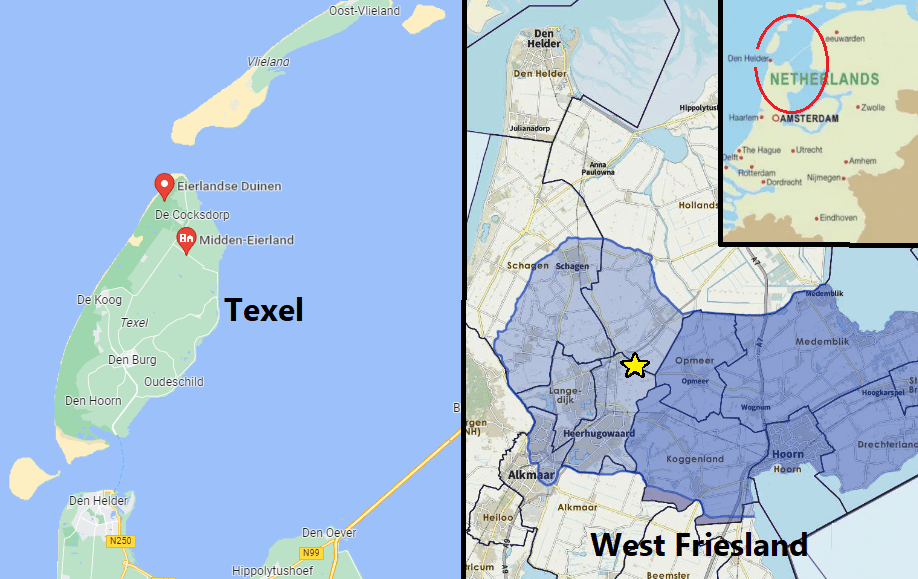
Sometime in the early 1860s, Pieter Jansz van der Fluit, my first cousin four times removed, relocated from Oude Niedorp to Eierland. Oude Niedorp is in the centre of West Friesland (which is actually in the province of Noord Holland). Eierland (“Egg Land”), is located at the northernmost tip of Texel, the largest of the Wadden Sea Islands (or Frisian Islands), which stretch from the western Netherlands to Denmark. Until the 13th century, Eierland was part of the neighbouring island of Vlieland, when natural changes separated the two. In the 1600s, a sandbar developed between Eierland and Texel, which was dammed, merging the two. In the 1840s, developers enlarged this area to create a polder, resulting in new farmland.

I first learned about Pieter in August 1997, in an email from Nol summarizing many birth, marriage, and death registrations. In that email, he wrote that one of the records described Pieter’s occupation as “Farm”, as opposed to “Farmer”, suggesting that he owned his farm in Eierland. In the decades that followed, these archival records have been scanned and posted online. However, the only records I’ve found for Pieter say that he was a “farmer”.

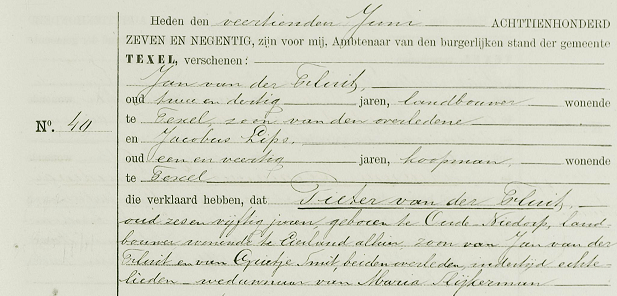
Death registration for Pieter van der Fluit, showing his son Jan as the declarant. It shows that Pieter and Jan were both farmers at Eierland. No mention of Het Fortuin (“The Fortune”), which apparently was the name of the farm.

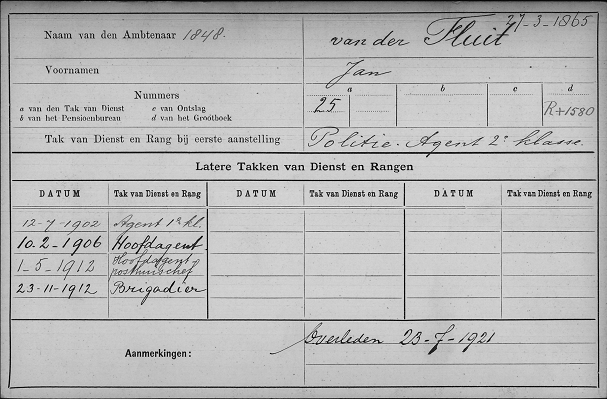
The farm was later taken over by Pieter’s son Johannes Pietersz (“Jan”) van der Fluit. In an a September 1998 email to me, Nol reported that Pieter’s occupation was “farmer on Texel”, at Eierland. Nol added that the farm was named Het Fortuin (“The Fortune”). However, it seems that good fortune was not with Jan, as Nol said that Jan went broke. Nol told me that Jan was 75 Guilders short to pay an unspecified debt. Nol said that this was about the price of three sheep. I don’t know if Jan farmed sheep, but Texel is famous for a breed of sheep developed there. After going broke, Jan relocated to Amsterdam and became a police officer.

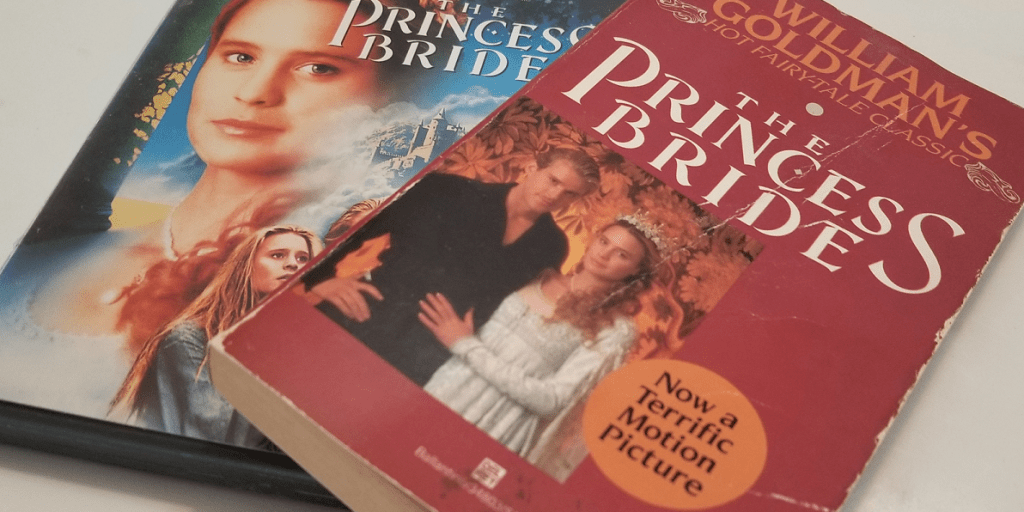
The Dutch guilder was originally called the “gouden florijn” (“golden florin”). The florin was an old Florentine coin. The Dutch coin was alternatively called a “guilder” or “florin”, but soon came to most commonly be known as the guilder. Its symbol was “ƒ” (e.g. ƒ100, or 100 guilders). These names will be familiar to the fans of The Princess Bride: Florin and Guilder were sworn enemies. Prince Humperdink’s scheme was a means of creating an excuse for Florin to attack Guilder.

I’ve found records showing Pieter and Jan farming at Eierland and Jan relocating to Amsterdam and becoming a police officer. Good luck! Unfortunately, I have been unable to find any of the sources Nol might have been looking at confirming that the farm was named Het Fortuin or Jan’s financial woes. Bad luck.

Jan’s Pensioenkaart (Retirement Card) showing his career as a police officer, starting as a police agent second class and ending as a brigadier.

“Het Fortuin” was also the name of a ship that sailed from Texel in September 1723, bound for Indonesia. It was the ship’s maiden voyage. It reached the Cape of Good Hope (South Africa) in January 1724. The ship and its crew of 225 men set sail two weeks later and was never seen again. Not very good luck at all.

52W Mark II – Week 1: I’d Like to Meet

Happy New Year! It’s time for another trip around the sun and another year of Amy Johnson Crow’s “52 Ancestors in 52 Weeks“! We’re starting off the year on the theme of “I’d Like to Meet”.

I’m grateful that the challenge is not which ancestor we would “most like to meet”, but simply an ancestor we’d “like to meet”. For anyone who has been doing genealogy for a while, it would be hard to narrow it down to just one. Rather than choose a single ancestor, I’ve selected a category of ancestor: my great grandparents.

While I would love the opportunity to meet ancestors further back in my tree, they seem so much more remote and abstract than my great grandparents, who seem more tangible and real. I know people who knew them, and I even had many visits with one of them. My great grandparents would be able to shed a lot of light on things I don’t know about them and their immediate families. It would open a gateway to improving and expanding my research.

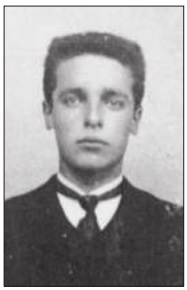
1. Johannis Albertus van der Fluit (my father’s paternal grandfather)

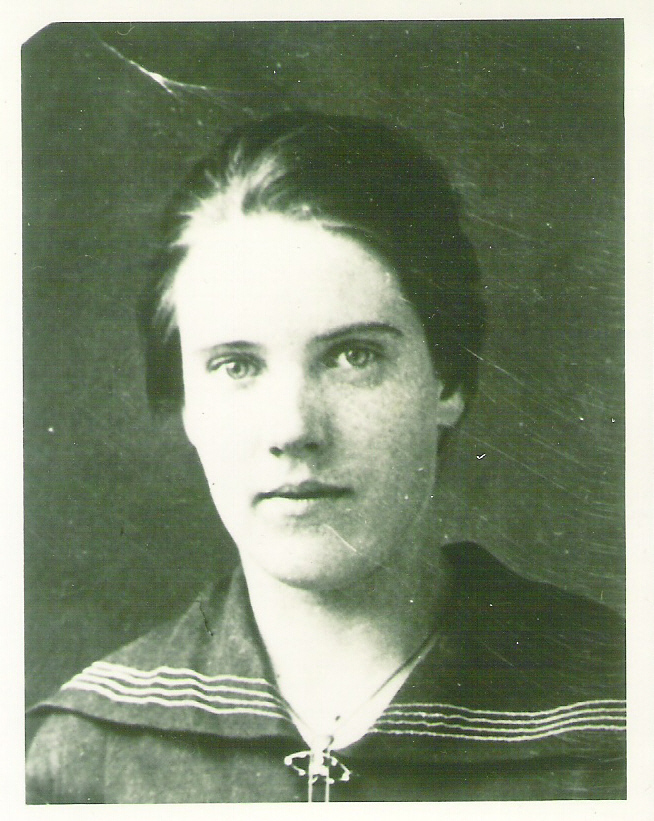
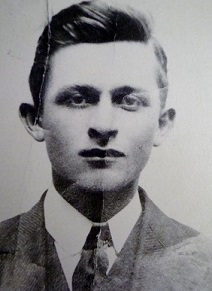
Johannis was born in ‘t Veld, North Holland, in 1894. He was an agricultural worker most of his short life. While I don’t have a lot of the details, he sustained a head injury that resulted in a mental disorder. He spent the following years suffering from delusions and passed away in a sanitorium in 1932. My grandfather was eight years old.

2. Theresia “Teetje” Pater (my father’s paternal grandmother)

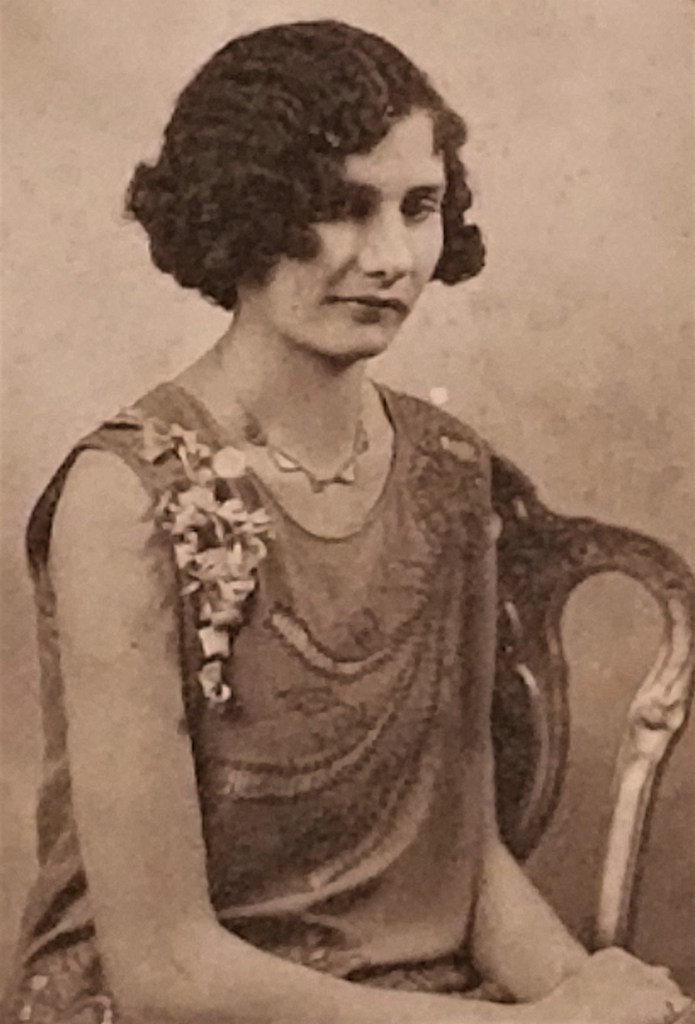
Teetje was born in Waarland, North Holland in 1894. That is the same village where my father was born. Teetje was 37 when she was widowed and was left to raise eight children on her own, the youngest of whom was one year old at the time. I don’t know how she supported herself or the family. She passed away in 1947, a few months before my father was born, so he never knew her.

3. Adrianus “Arie” Komen (my father’s maternal grandfather)

Arie was born in Zuid-Scharwoude, Noord Holland in 1888. Arie spent his whole life as an agricultural labourer. Arie was only 59 years old when he passed away in January 1948, when my father was only a few months old. I don’t recall my grandmother ever speaking about her father, so most of what I know about Arie is from the documentary evidence I have found over the years.

4. Elizabeth Bakker (my father’s maternal grandmother)

Elizabeth was born in Den Helder, North Holland, in 1888. I have little information about her prior to her 30s. Prior to marrying Arie Komen in 1921, when she was 32, she had worked as a domestic servant in Den Helder and Amsterdam. While Elizabeth died in 1976, when I was in grade four, I never met her, but I was quite familiar with “Oma Komen”. She wrote often to my parents and every December she would send us a package of goodies for Sinterklaas and Christmas. My father remembers her well. During a trip to the Netherlands in 2017, my father showed me where she had lived.

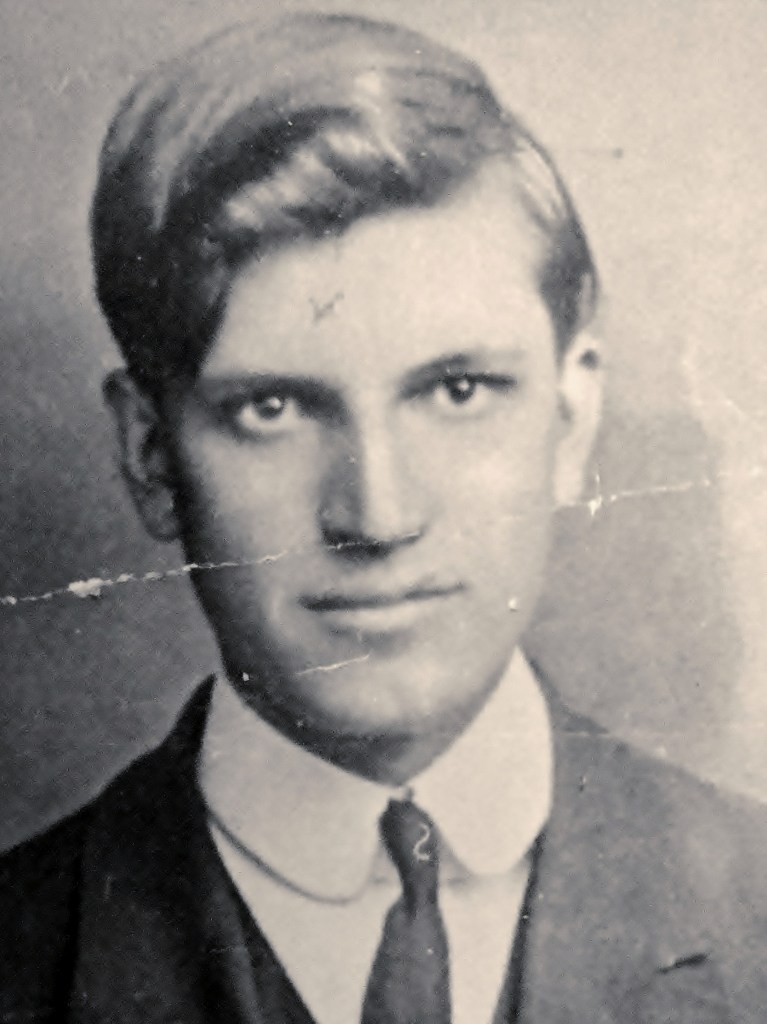
5. Milton Leo Burgess (my mother’s paternal grandfather)

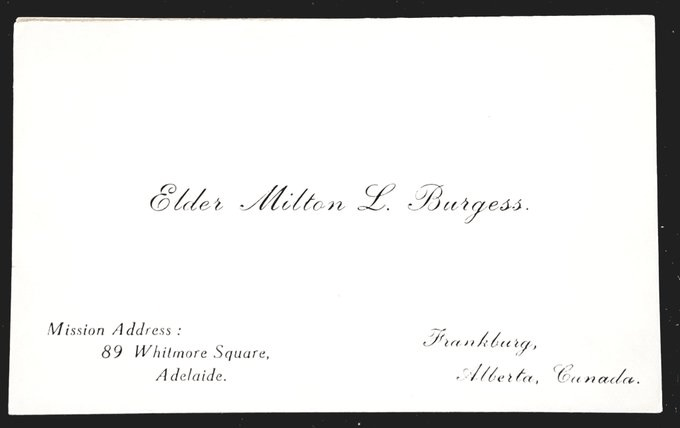
Milton was born in Vernal, Utah, in 1891. He came to Canada with his parents when he was 14. Milton was Mormon, so when he was 20 he spent two years in Adelaide, Australia on a mission. Even today with air travel, Australia is pretty far away, so it must have felt even more so when Milton went there. A few years ago, someone reached out to me on FamilySearch and said that he had some of Milton’s calling cards from his time on the mission. I was quite surprised and very grateful when he sent me one of the cards through the mail!

In his 20s and 30s Milton was a farmer. Later in life he had several other occupations. Sometime before 1941 he as a plumber. He worked in a woolen mill, where he lost a finger of his left hand due to a work injury. Milton also worked for a short time as a grave digger around 1950.

Milton died in 1964, a few years before I was born. My mother has told me many stories about Milton over the years. I also have a small cache of letters he wrote to my grandfather in the 1940s. Most of them were gentle admonishments, such as disapproving of my grandfather working in establishments that served alcohol, coffee, and tea, or telling him that it was time to stop seeing the Catholic girl he had been dating and to find a nice Mormon girl to settle down with. Fortunately for me, my grandfather did not follow that advice, as that Catholic girl became his wife and my grandmother!

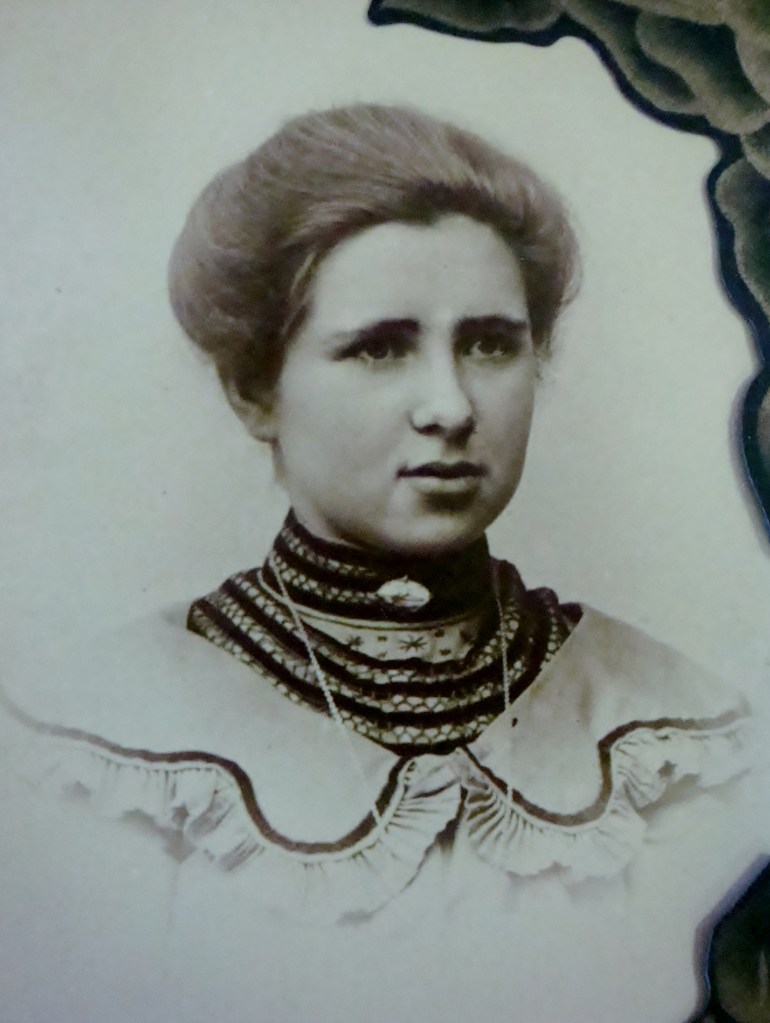
6. Hazel Nelson (my mother’s paternal grandmother)

I’ve written a lot about Hazel in this blog (in particular, in this post about “Sisters”). She and her sister Irene were twins, born in 1899, and were the first twins to be born in Cardston, Alberta. Sadly, Irene died a little over a month after she was born. Hazel passed away in 1967, three days before I was born. While she might not have met me, she knew I was coming. My mother literally went from her grandmother’s funeral to the hospital to give birth to me. As far as I’ve been able to determine, I was Hazel’s first great grandchild. I’ve often asked my mother about what Hazel might have thought about her approaching status as a great grandmother. My mother has lots of stories about Hazel. It sounds like she was the quintessential grandmother.

7. Heronimus Michael “Jerome” Lerner (my mother’s maternal grandfather)

Jerome Lerner was born in Henrietta, Texas in 1895. His parents were Germans from Russia and Jerome was the first of their children to be born after they emigrated. Jerome immigrated to Canada when he was 22, where he took up farming outside Fox Valley, Saskatchewan. Many of his siblings, as well as his parents, followed Jerome to Saskatchewan over the following few years.

Jerome developed a mental health condition in later life, which contributed to the breakdown of his marriage. Nevertheless, Jerome managed to continue farming until he died in 1954. My mother never met her grandfather. Fortunately, I had the foresight to interview my great aunt about her father.

8. Emelia Anton (my mother’s maternal grandmother)

Emelia was born on January 1, 1903; however, I don’t know if that was by the Julian or Gregorian calendar. Emelia’s parents were Germans from Russia, who lived in one of the many German colonies in Imperial Russia, in what is now part of Ukraine. Sometime in 1900, Emelia’s parents and older siblings moved to Selo Suchoi, Veronesch, Russia, where Emelia was born. The family emigrated to Canada in 1912 and settled in Rastadt, Saskatchewan, just outside Fox Valley.

Emelia lived to be 94, outliving my grandmother by 13 years, so I knew her quite well. When I was a kid we visited her every time we were in Lethbridge, Alberta, which was at least once or twice a year. To this day, I am perplexed as to why I did not ask her more about her family and her life story, given my interest in genealogy since childhood.

I will never forget my amazement when I learned that she was German. During a visit when I was in grade eight, my mother said, “Grandma, guess what? Sean is taking German in school!” My first thought was to wonder why great grandma would care. To my great surprise, her reaction was to start speaking to me in German. Until that time (for many good reasons), I thought she was English!
52 Weeks – Week 44: Shadows

This week’s 52 Ancestors Challenge theme is a difficult one: “Shadows”. It has taken me a while to think of anything relating to this theme. If only I had an ancestor who was a spy. Or maybe I do, and don’t know it, they were that good!

After pondering the theme for a while, I began to consider that what often lies in the shadows are those skeletons in the closet and other parts of family histories that people don’t want to talk about. These things are not always misdeeds or scandals or salacious affairs. Sometimes they are things out of our control that have a cultural or societal stigma, such as mental health. The stories, or even existence, of family members afflicted with mental health problems were often deliberately kept in the shadows.

Two ancestors of mine who most likely had some form of psychological condition come to mind. While the fact they may have had a mental health condition was not entirely kept hidden, I have very little information about their circumstances because their stories came to me second or third hand, with little detail. From the accounts, it seems clear that the lack of detail is due to the hushed nature of the way their circumstances were recounted by those who knew them best.

Johannis Albertus van der Fluit (1894-1932)

I will start with my great grandfather, Johannis Albertus van der Fluit. He died when my grandfather was eight years old. I really never had any contact with anyone else who knew Johannis personally or was old enough to remember him. However, over the years I heard passing references to his mental health and related problems.

I do know that my grandfather could recall some of the circumstances of his father’s mental health. Apparently, Johannis sustained some sort of head injury after an accidental blow to the head and began to exhibit strange behavior afterward. He suffered from delusions, which were very unsettling to him. According to one account of a delusional episode, it took my grandfather’s two older brothers and some neighbours to restrain him. From what I know of the story, Johannis was placed in a sanitorium, where he continued to suffer from delerium. However, shortly before his death, he experienced a period of rational thought. At that time, my great grandmother was summoned to see him, which occurred close to the time Johannis died.

Heronimus Michael “Jerome” Lerner (1895-1954)

Another ancestor who, I believe may have had mental health problems was my mother’s maternal grandfather, Heronimus Michael “Jerome” Lerner. This is based upon things some of my relatives mentioned, briefly, over time. My mother never knew him; her grandparents separated long before she was born. However, my mother believes, based on what she heard from her mother, that Jerome had some sort of mental health condition.

Apparently Jerome’s mental health was a significant factor in the breakdown of his marriage. My mother says that a rift developed between the Lerners and my great grandmother over the separation. It seems there was some sort of expectation that my great grandmother should have remained with Jerome despite his troubles.

Whatever mental health problems my great grandfather may have had, I do not know what they were or how long they persisted. I know Jerome was farming in the 1940s. When my grandmother’s younger sister was in her teens, she went to live with her father on his farm for some time. As well, the record of his death noted that he was a farmer at the time of his death; it also made no mention of any mental health conditions. I spoke to my great aunt at length about her time living with her father, but she never really spoke of his mental health.

Finally, a mental health problem that may have affected a number of my female ancestors was postpartum depression. Again, I have no solid evidence of this. Rather, brief and cryptic conversations and speculation about the circumstances of some ancestors’ experience after childbirth certainly sounds consistent with what was likely postpartum depression.

In recent years, the stigma around mental health has diminished, although it still may be a difficult thing to talk about. Fortunately, there are now many more resources available for people who need help. In Canada, one can start with this “Get Help” resource page.