52W Mark III – Week 38: Symbol

I have many farmers in my family tree. Most grew crops, although a few practiced animal husbandry on a small scale as a small part of their farming activities. Several had cows, although not to such a degree that I would describe them as having cattle, which to me connotates something more like ranching.

Two of my direct maternal ancestors had their brands recorded in a register published by the Utah state legislature, published in the Book of Recorded Marks and Brands in 1874. It records all brands used in the Utah Territory from its establishment to 1874.
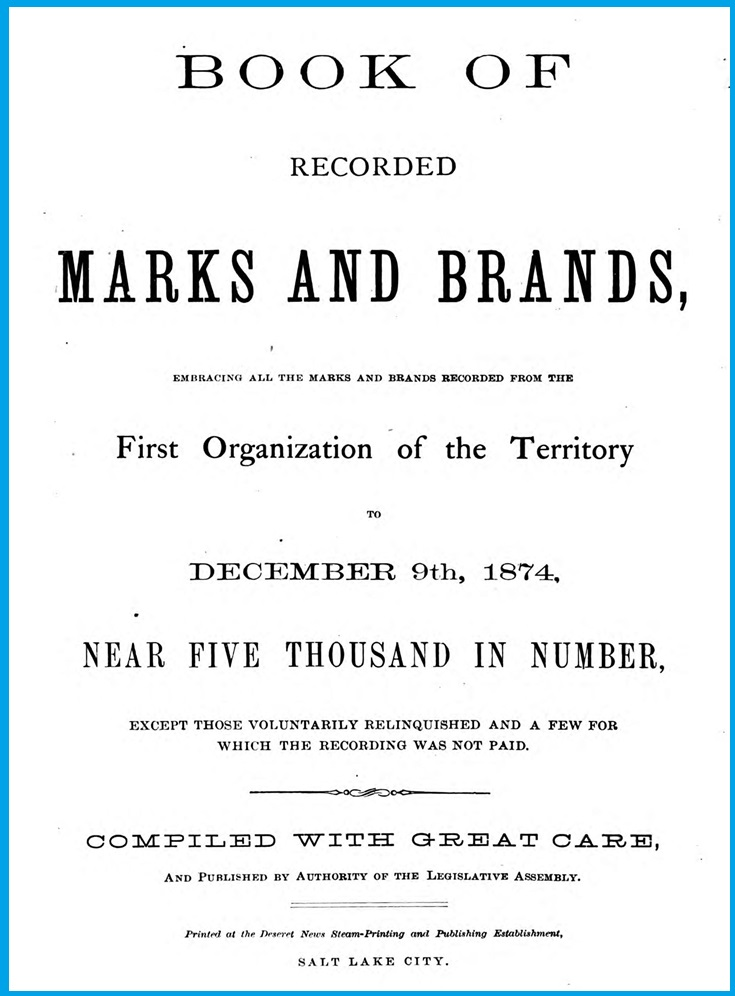
My Gx4 grandfather, William Burgess (1794-1880) used a brand that looked like a number “2” with a flourished serif and an arch above. William’s eldest son with his first wife, Harrison, also had a brand recorded in the book. Harrison’s brand, recorded on June 5, 1867, was a sideways capital “H”, placed on the right shoulder. Harrison also used a cropped ear mark, consisting of two “v” notches out of the upper side of the left ear.
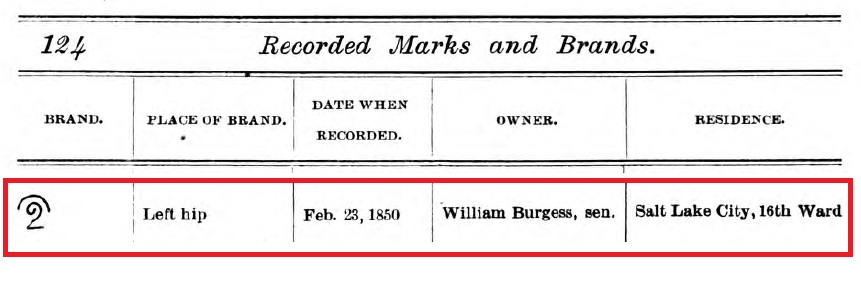
William Burgess’s brand

On another branch of my maternal line, my Gx3 grandfather Henry Lyman Cook (1803-1869) has a brand recorded in the book, dated December 2, 1868. The brand was a capital “H” which was placed at the right jaw.
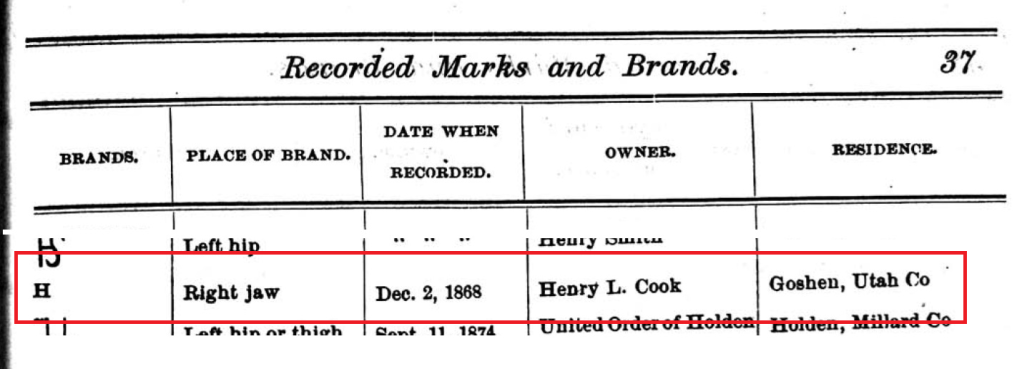
Henry Lyman Cook’s brand

I have also found a subsequent publication of this book, compiled in 1901. However, I have not found any family in that edition. William, Harrison, and Henry had all passed away by then. My more recent direct ancestors were not farming at that time, while others had left the state by then. Sometime I may have to look into what records there might be for brands used in Alberta, where many of these people had settled.
52W Mark III – Week 37: Tombstone

After last week’s inadvertent repeat, I took great care to check before starting this week’s post for the 52 Ancestors Challenge. Why, look at this! The prompt for Week 46 in 2022 was “Tombstones”!

Just because it’s written in stone doesn’t mean it’s correct.

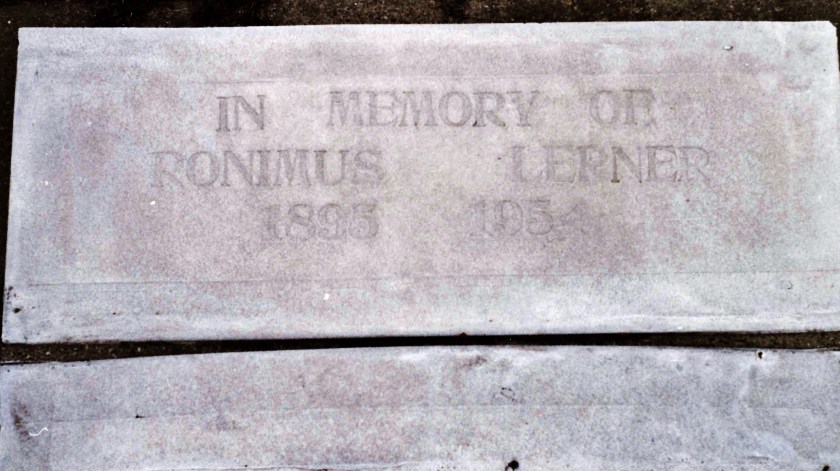
A prime example in my tree is the headstone for my mother’s maternal grandfather, Heronimus Michael Lerner (1895 – 1954), who went by Jerome. However, the headstone on his grave is in memory of “Ronimus Lerner”. It’s clear that there had not been a preceding “Je” that wore away or that had been otherwise removed.

Headstone for Heronimus “Jerome” Lerner, Fox Valley Cemetery, Fox Valley, Saskatchewan

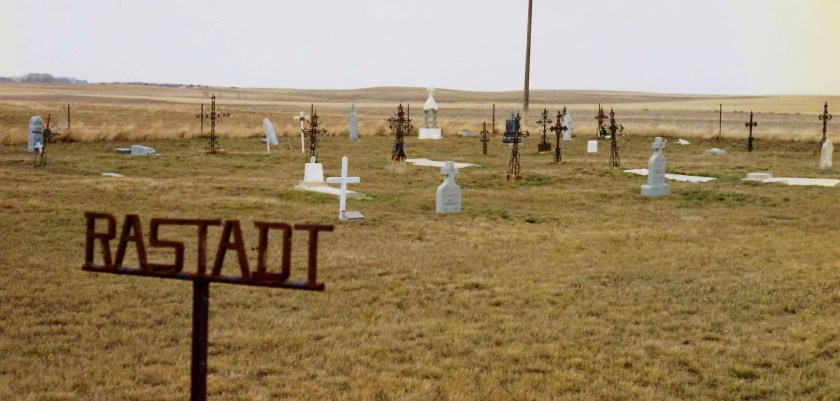
Another example is in the nearby Holy Trinity Roman Catholic Cemetery in Rastadt, Saskatchewan, where a number of my mother’s ancestors and relatives are interred. The marker for my mother’s great aunt, Marianne Roeder, says she died “6/21/29” (June 21, 1929). However, church records show that she died on June 2, 1921 and was buried July on 1, 1921.

Holy Trinity Roman Catholic Cemetery at Rastadt, Saskatchewan, April 1, 1997. 

While there are several other examples in my tree, my wife’s maternal line has a significant number of tombstone typos.

The headstone for my wife’s Gx2 grandmother, Ellen Sophie Butcher Dwyer (1867 – 1952), puts her year of birth as 1866 or 1867, but the record of her marriage puts her year of birth as 1865. The 1921 census puts her birth in 1867. The headstone for Ellen’s grandmother, Agnes Pellow (1794 – 1869) erroneously states that she died in 1879.

Other apparent errors might not actually be so. For example, my wife’s Gx11 grandfather, Thomas Newman. Thomas most likely lived from about 1560 to 1649, dying at age 89. His headstone says that he was was “over eighty years old” at the time of his death. If he died at 80, Thomas would have been 15 years old when his third child, Richard, was born. However, it was more likely that Thomas was age 20 when his first child was born. While it might seem that Thomas’s headstone may have been incorrect, if Thomas died at age 89 then it was correct to say he was over 80 years old at the time of his death.

These examples underscore the importance of at least two of the elements of the Genealogical Proof Standard: the need for reasonably exhaustive research and to resolve any contradictory evidence.

52W Mark III – Week 36: We Don’t Talk About It

With the prompt of “We Don’t Talk About It” for this week’s  52 Ancestors Challenge, the expectation was likely that participants would write about the bad secrets. However, not all secrets are bad!

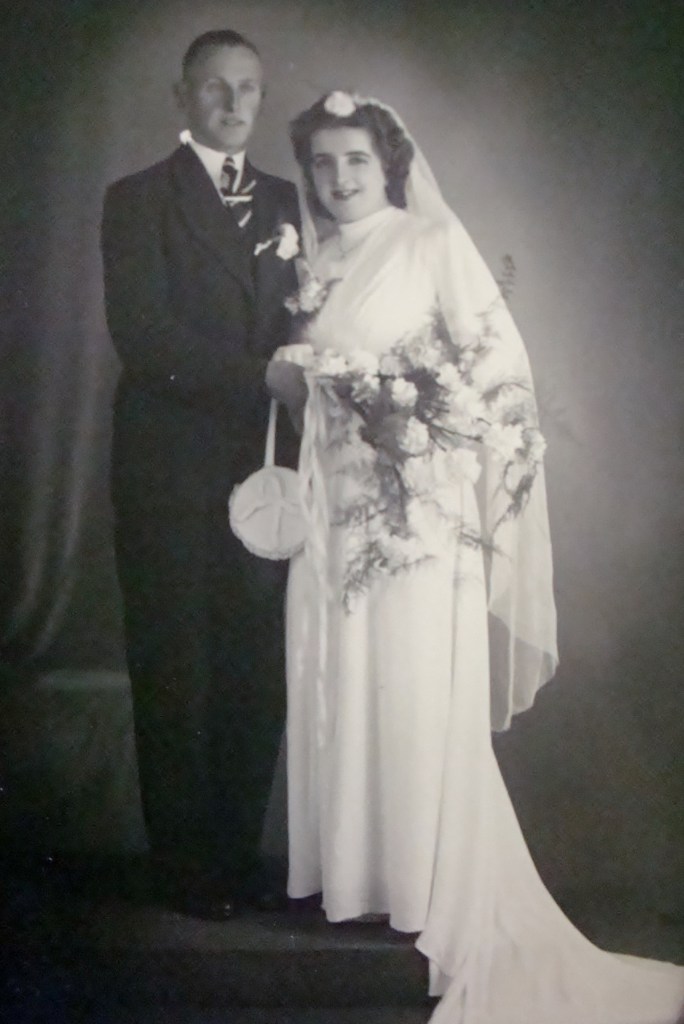
Adrianus Joseph “Arie” van der Fluit (1923 – 2002) and Christina (“Tiny”) Komen (1923 – 2000) on their wedding day.

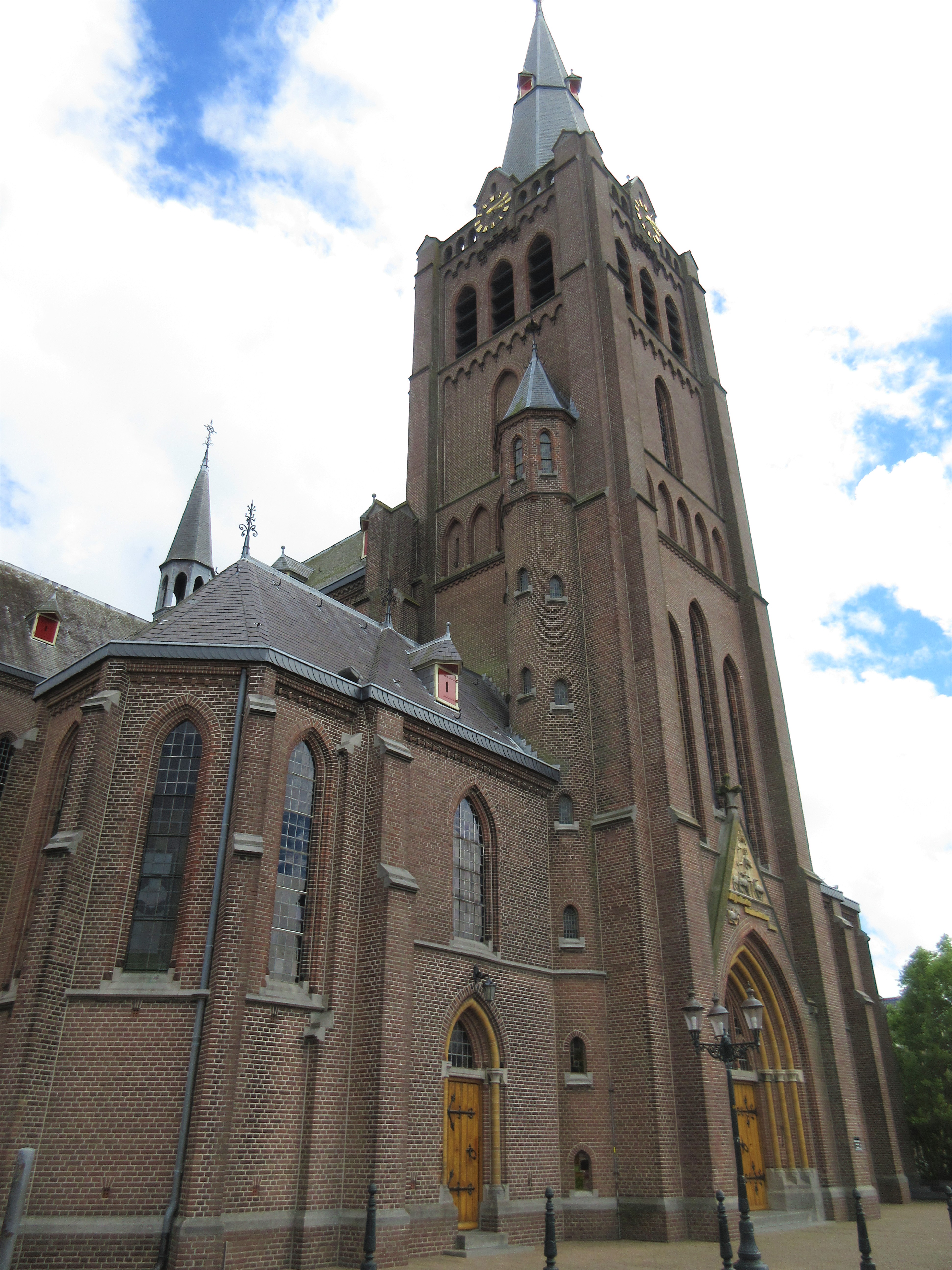
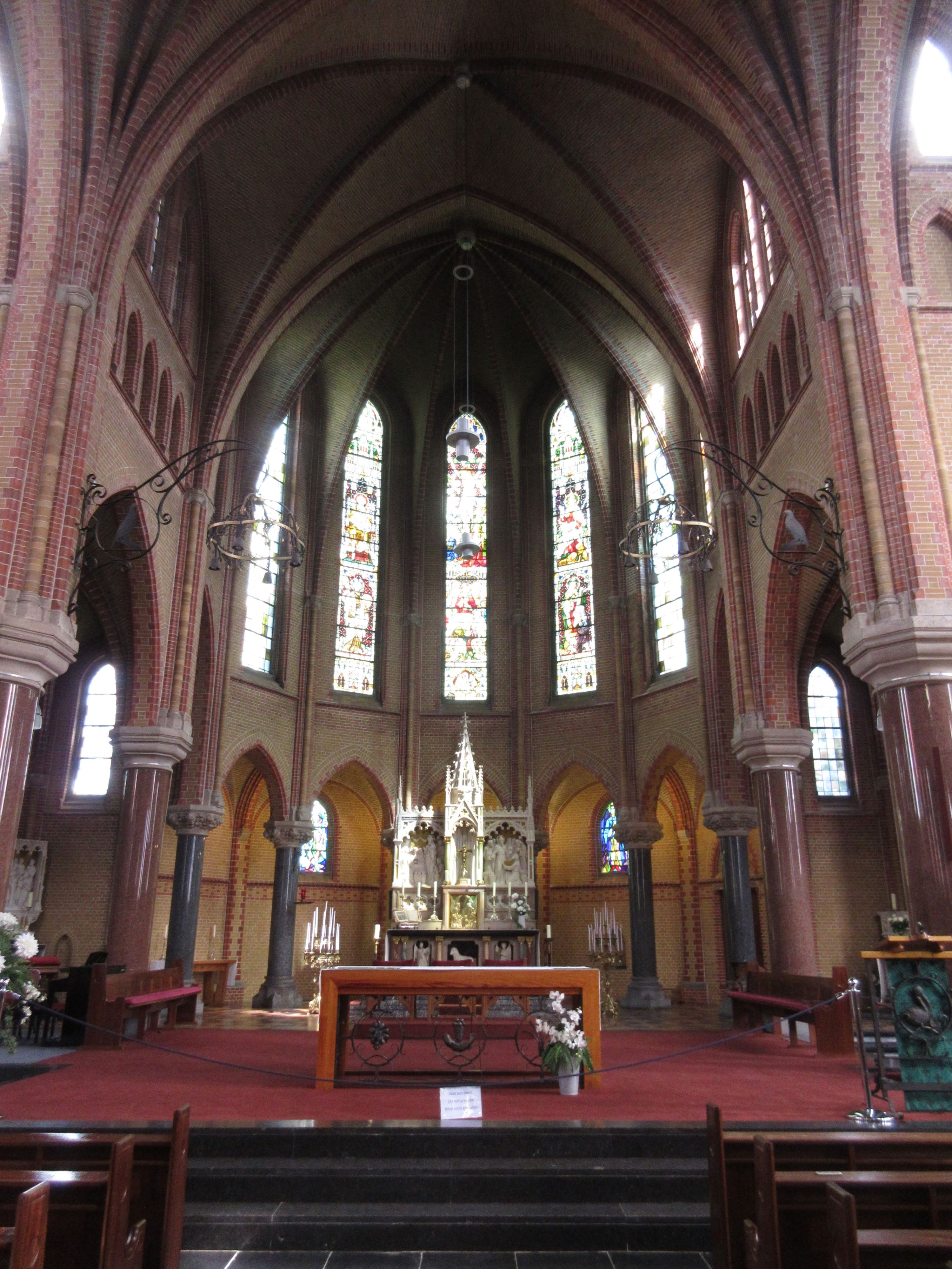
My father and his siblings organized a surprise party to celebrate my paternal grandparents’ 40th wedding anniversary. Adrianus (“Arie”) van der Fluit and Christina (“Tiny”, rhymes with “genie”) Komen were married on November 7, 1948, in Langedijk, Noord Holland, Netherlands at St. Jan de Doper Katholieke Kerk (St. John the Baptist Roman Catholic Church).

Kerk van Sint-Joannes de Doper, Noord-Scharwoude, Noord Holland, Netherlands, where my grandparents were married.

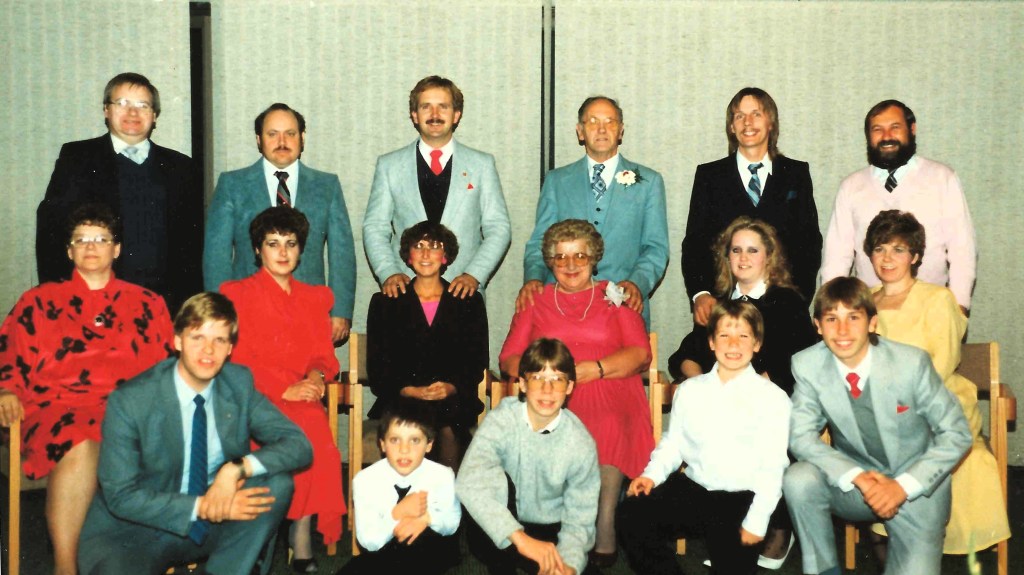
All my father’s siblings lived in Lethbridge, like my grandparents, so all the family living there were in attendance. My parents and siblings were living in northern British Columbia at the time, so my folks left my brothers and sisters with some family friends. In addition to all their children and most of their grandchildren, several family members also came over from the Netherlands to join in the festivities.

My grandparents, all their children and spouses, and about half their grandchildren (my four younger siblings did not attend). Several more grandchildren were born years after this celebration.

I had already left home and was living in Vancouver, so I flew to Alberta. I had lived in Vancouver long enough to have gotten used to the very mild winters there, forgetting that it was real winter elsewhere. So I boarded my flight wearing only a light jacket, only to be greeted by -11°C weather.

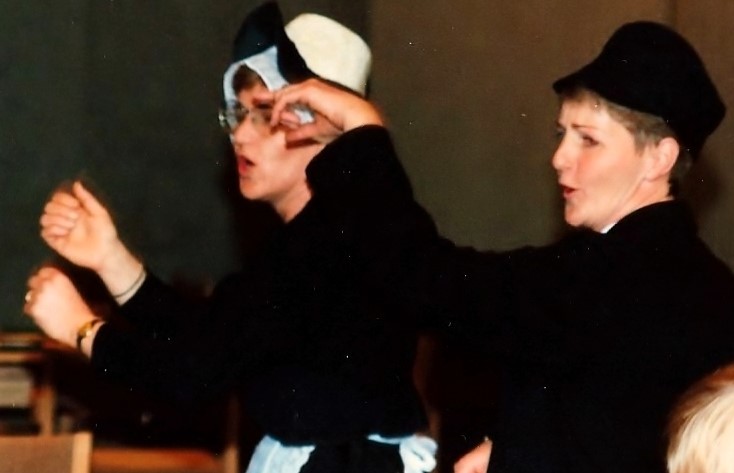
Two of my father’s cousins who made the trip from the Netherlands to celebrate my grandparents’ 40th wedding anniversary. That’s my noggin in the lower right.

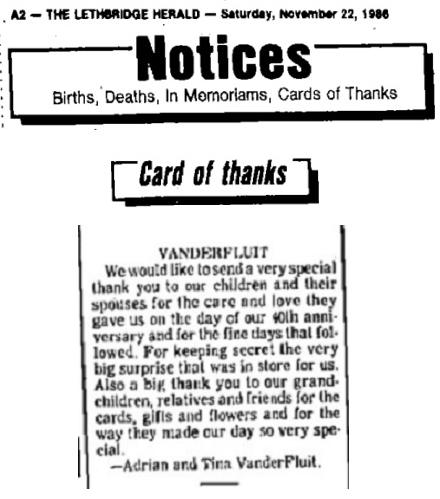
My grandparents took out a “thank you” notice in the Lethbridge Herald on November 22, 1986:

“We would like to send a very special thank you to your children and their spouses for the care and love they gave us on the day of our 40th anniversary and for the fine days that followed. For keeping secret the very big surprise that was in store for us. Also a big thank you to our grandchildren, relatives and friends for the cards, gifts and flowers and for the way they made our day so very special.”

Speaking of surprises, I was surprised to discover that I had written about this before, for last year’s 52 Ancestors Challenge! Upon making that discovery, I thought I might scrub this and choose a new topic. However, I changed my mind because (a) I’m feeling lazy (b) I have too many other things to do and (c) I had chosen several different photos than before. But let’s not talk about it, okay?

52W Mark III – Week 35: All Mixed Up

Imagine changing municipalities several times in your life while living in the same house the entire time. With the ever changing municipal boundaries of the Netherlands, it can become All Mixed Up – which is the prompt for this week’s 52 Ancestors Challenge!

The Netherlands has thousands of villages, towns, and cities; however, the smallest administrative unit of government is the gemeente, which roughly translates as “municipality” or “local authority”. They are the third and lowest level of government after the national and provincial governments. Some gemeentes (in Dutch the plural is “gemeenten”) consist of a single community, such as gemeente Amsterdam. Many consist of multiple villages and towns.

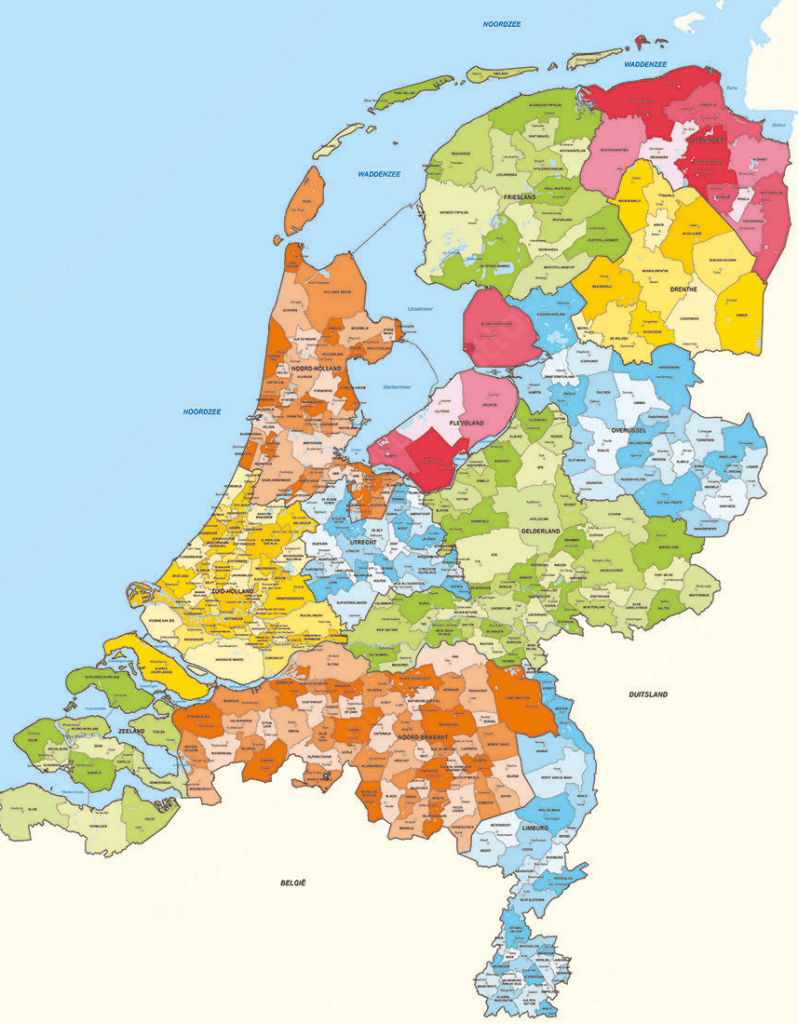
The gemeentes of the Netherlands as of 2024. The colour groups indicate the provinces of the Netherlands.

In 1812, immediately after the end of Napoleonic rule, the Netherlands had more than 1,100 gemeentes. I don’t know if that includes or excludes modern-day Belgium, which until 1830 was part of the Netherlands. Over the following two centuries, the municipal map was revised many times. Gemeentes expanded, shrank, divided, and merged, such that almost 1,700 different gemeentes have existed over time.

Since January 1, 2023, the most recent reorganization, there are 342 gemeentes in the European part of the Netherlands. There are three in the Caribbean Netherlands, except there they are a “Caribisch openbaar lichaam” (“Caribbean Public Body”).

My father was born in Waarland, a village that currently has about 2,700 inhabitants. When my father was born, it was in gemeente Harenkarspel, which had been in existence for centuries. Its boundaries changed twice after my father was born.

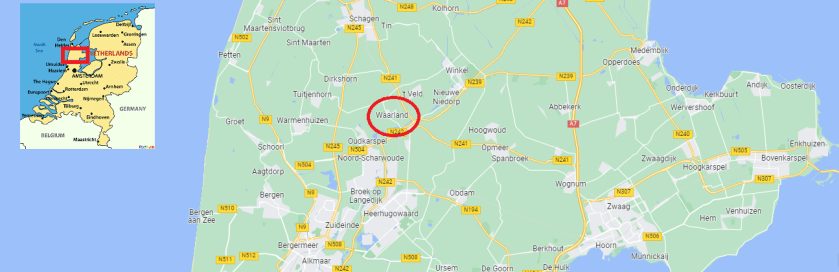
Waarland’s location in the Netherlands.
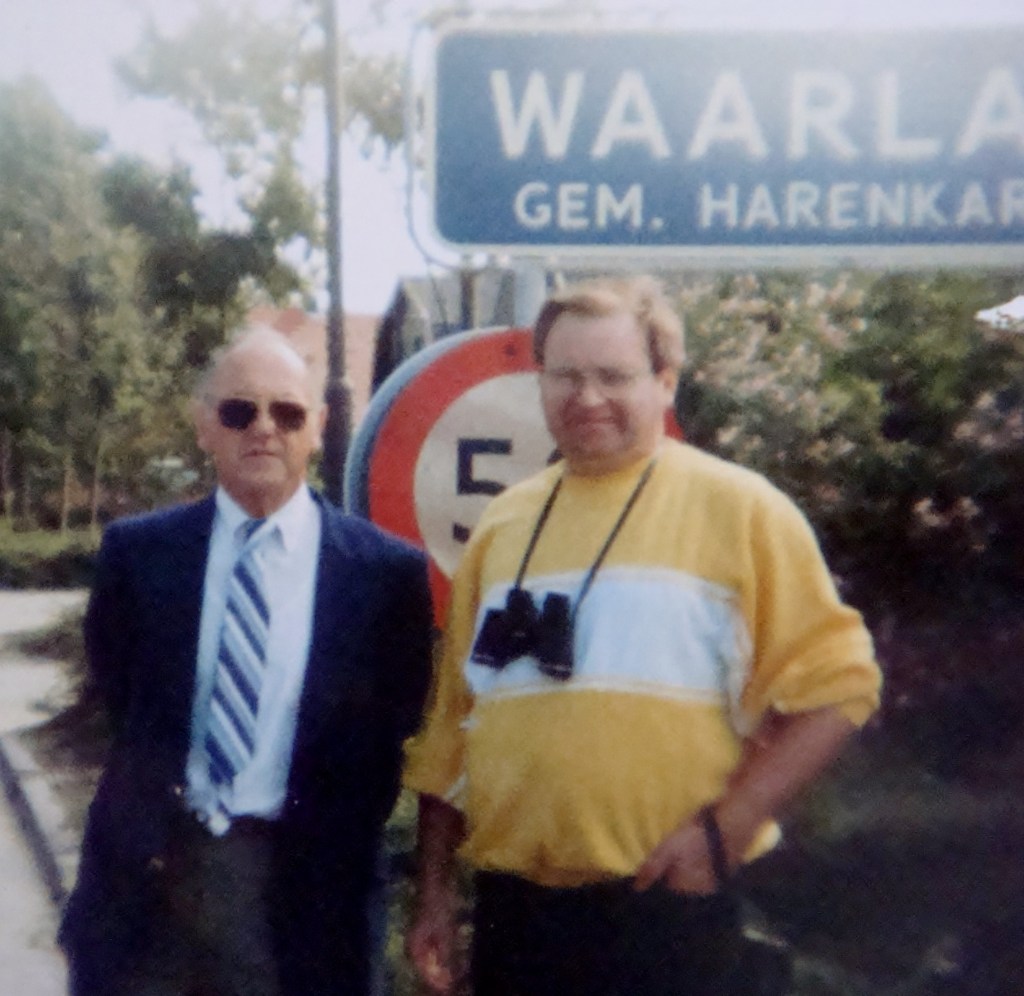
My grandfather and father visiting Waarland in the late 1980s. It was my father’s first time back since they emigrated to Canada. The sign says “Waarland Gemeente Harenkarspel”. Waarland was in Harenkarspel the first time I visited it; it was in Schagen the next time I was there.

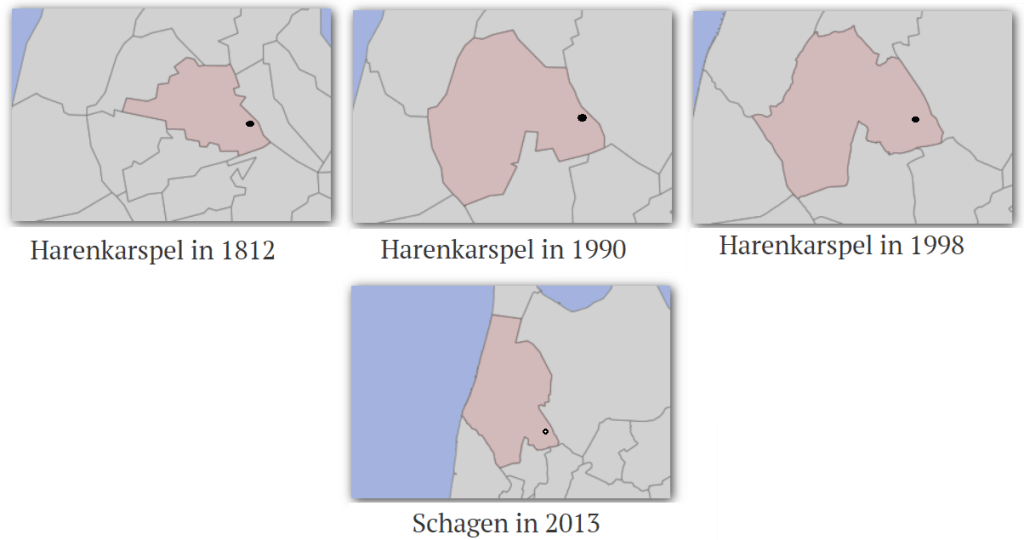
In 2013, Harenkarspel merged with Zijpe and Schagen and ceased to exist as a separate gemeente. Since the merger, the gemeente is simply Schagen. Zijpe itself had six different iterations between its creation in 1817 and its merger with Schagen in 2013.

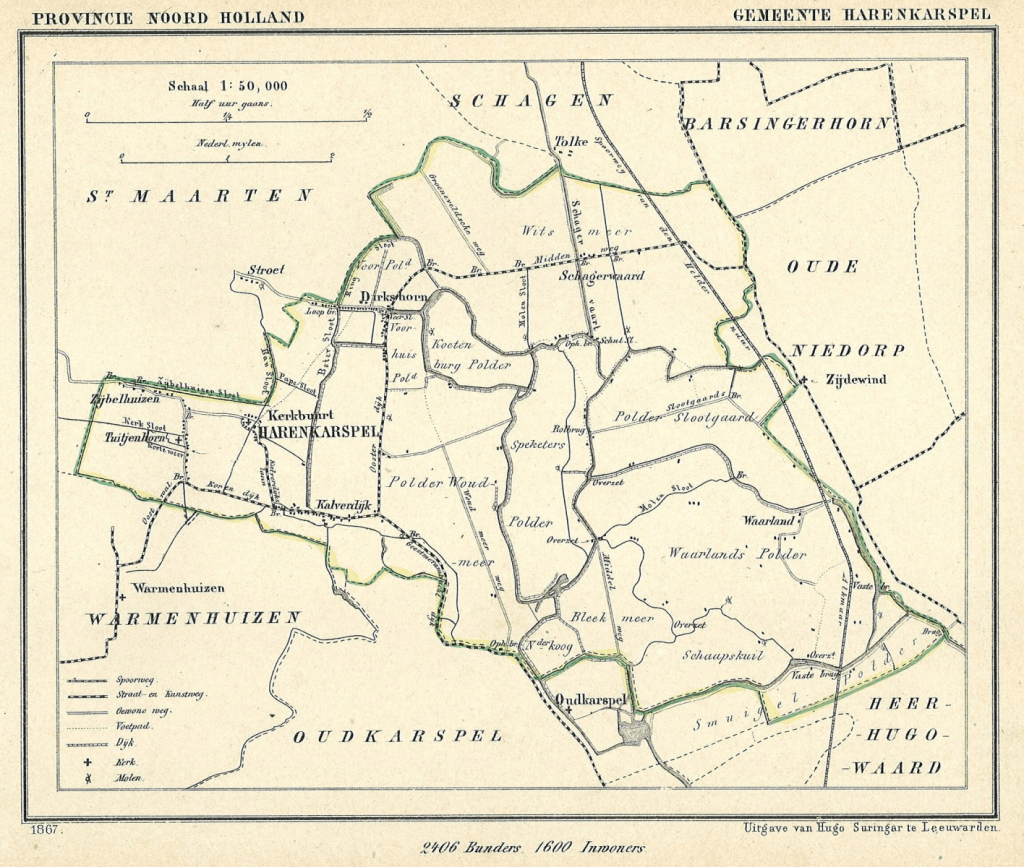
Harenkarspel in 1867. Waarland is in the south-east, near the border with Niedorp.
Waarland’s location within Harenkarspel and, now, Schagen.

When I enter a Dutch location into my database for any particular fact, I always use the smallest unit, even if it is not an independent administrative body. While gemeentes come and go, or expand and contract, the villages, towns, and cities largely stay the same. Thus Waarland is Waarland, regardless of what gemeente it is in. Fortunately, there is a website that helps track all the gemeentes that have existed “from ancient times” to present: “Gemeentegeschiedenis” (“Municipal History”). With it, you can find which gemeente a place might have been at any time in Netherlands history. No need to be all mixed up!