52W Mark III – Week 28: Trains

My grandfather, Leo Burgess (1920 – 1995), worked for the Canadian Pacific Railway for 32 years. I’ve written about various aspects of his time with the railway, such as the fact he was a proud member of his union and his brushes with Hollywood, including meeting his movie idol Glenn Ford.
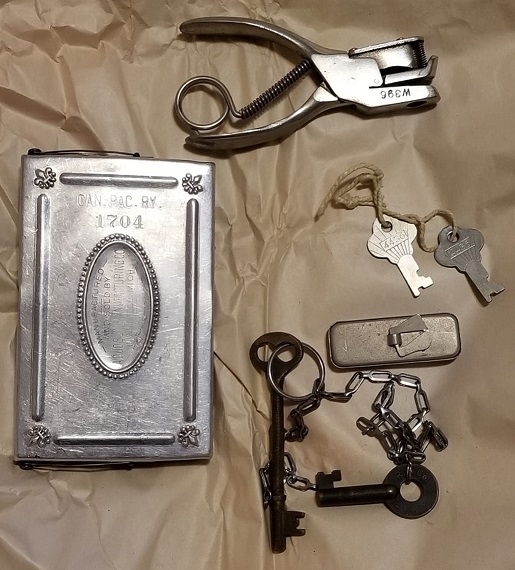
Some of the items my grandfather used as a conductor, which are now in my possession

Leo was based out of Lethbridge, Alberta. He started as a brakeman and worked through the ranks, later becoming a yard manager. Early on, because of winter layoffs, he chose to work for the CPR in Cranbrook because there was more work there during the winter to provide a steady income. In 1972 he became a conductor, performing that role until his retirement in 1982.

One of my earliest memories was travelling on the train from Medicine Hat to Lethbridge. I’m sure my mother would correct me if I’m wrong, but in that memory I am sure my grandfather was travelling with us.

My grandfather often brought me to the train station in Lethbridge when I was little. Of course, the highlight was always getting to go on to the caboose. Of course, I’m showing my age in being able to recall a caboose as an everyday working part of a train and not just as a museum piece.
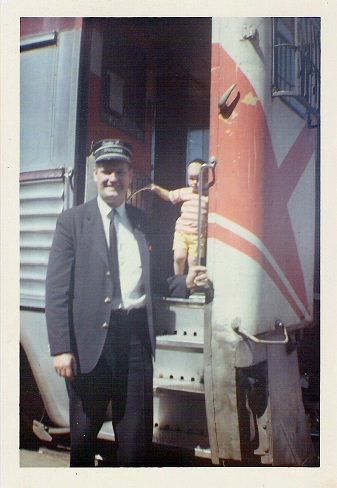
One of my favourite photos, showing me with my grandfather. If there’s any doubt, he’s the one on the left.

The station building still exists and has been designated with heritage status. In the 1980s, the railyard was relocated a few kilometers west of the city and the tracks were removed from central Lethbridge. In 1987, the station building was converted into the Lethbridge Community Health Centre and it still serves in that capacity.
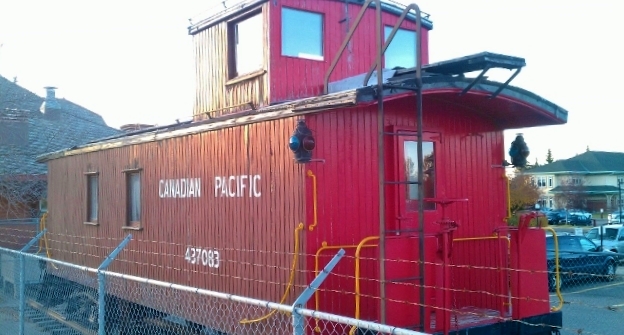
The former train station in Lethbridge is now the Community Health Centre. This caboose remains preserved beside the former station building. I wonder if my grandfather ever worked on this specific railcar. Heck, I wonder if this is one of the cabooses that he took me on!

Of course, I would be remiss if I did not repeat the fact that working on the train crew for Superman: The Movie was one of the highlights of his time with the CPR. During the eulogy at my grandfather’s memorial service, one of his friends told an anecdote that suggests my grandfather felt that he had gotten familiar with the cast and crew. The scene took six days to shoot. Apparently during a break in filming, Ford was talking to a group of railway workers when my grandfather sauntering up, put his arm around the actor, and said, “How’s it going, Glenn?”
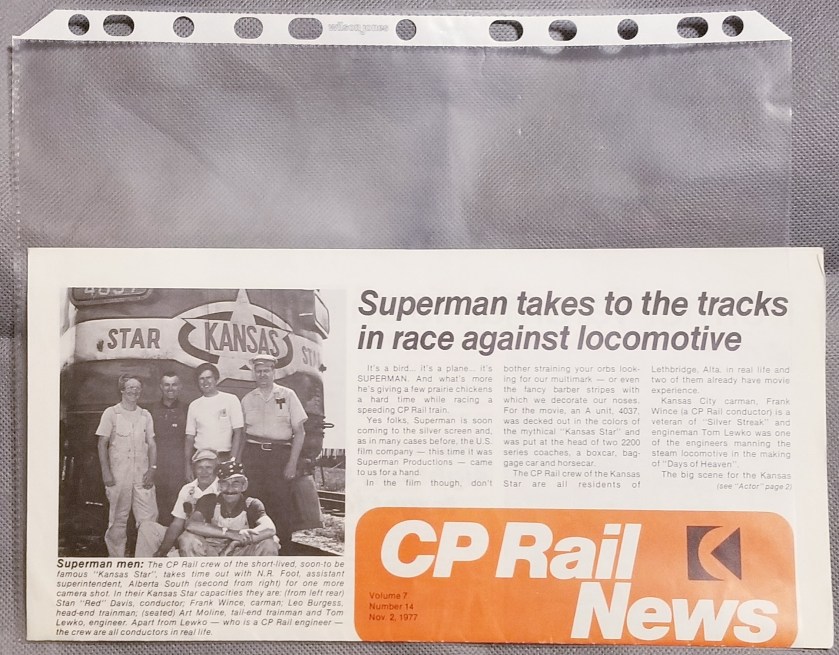
My grandfather was working in the engine during the filming of this scene. My parents live about a 30 minute drive from where this was filmed. The tracks are gone, but the memories live on.
My grandfather is the man wearing a cap standing on the right side of the photo.

52W Mark III – Week 27: Planes

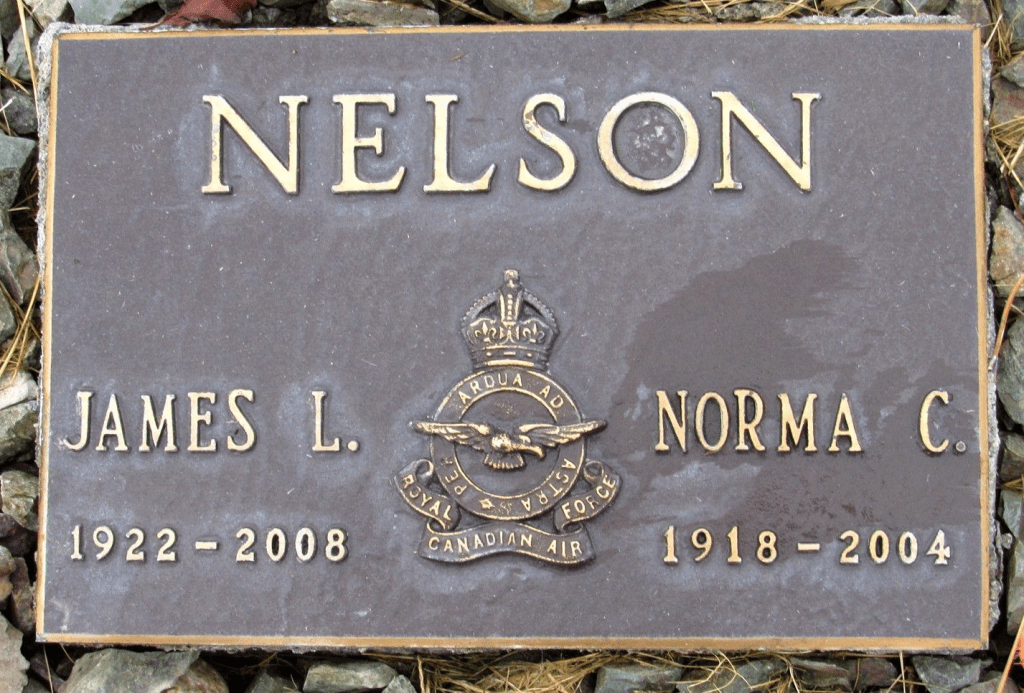
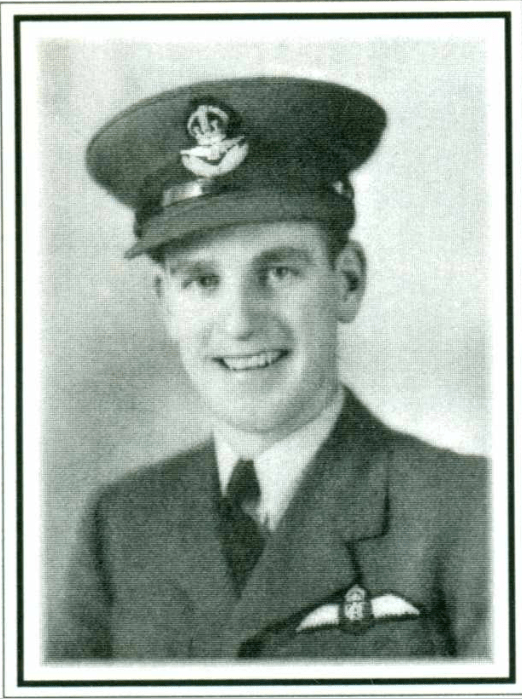
James Lorenzo Nelson (1922 – 2008) was my grandfather Leo Burgess’s cousin. James had a distinguished career as a Royal Canadian Air Force pilot, which included a four-year stint assigned to the Royal Air Force. During his career, he served on 16 different kinds of aircraft and logged 8334 flying hours.

James Lorenzo Nelson

James was the second of the nine children of Lorenzo Snow Nelson and Mary Ireta Turner. However, James’s older sister Clea died within weeks of birth, so James essentially grew up as the eldest child.

When he was 20, James joined the Royal Canadian Air Force during World War II, in October 1942. After training, James was transferred to Bomber Command in Leeming, Yorkshire, flying Halifax and Lancaster bombers. After the war, he remained in England as part of the post-war demobilization. During that time, he transported soldiers out of Italy, cleared armament dumps, disposed of unused bombs and ammunition by dropping them into the Irish and North Seas, and flew old aircraft to the “junk yard”. James was part of the last Canadian-crewed Lancaster flight.

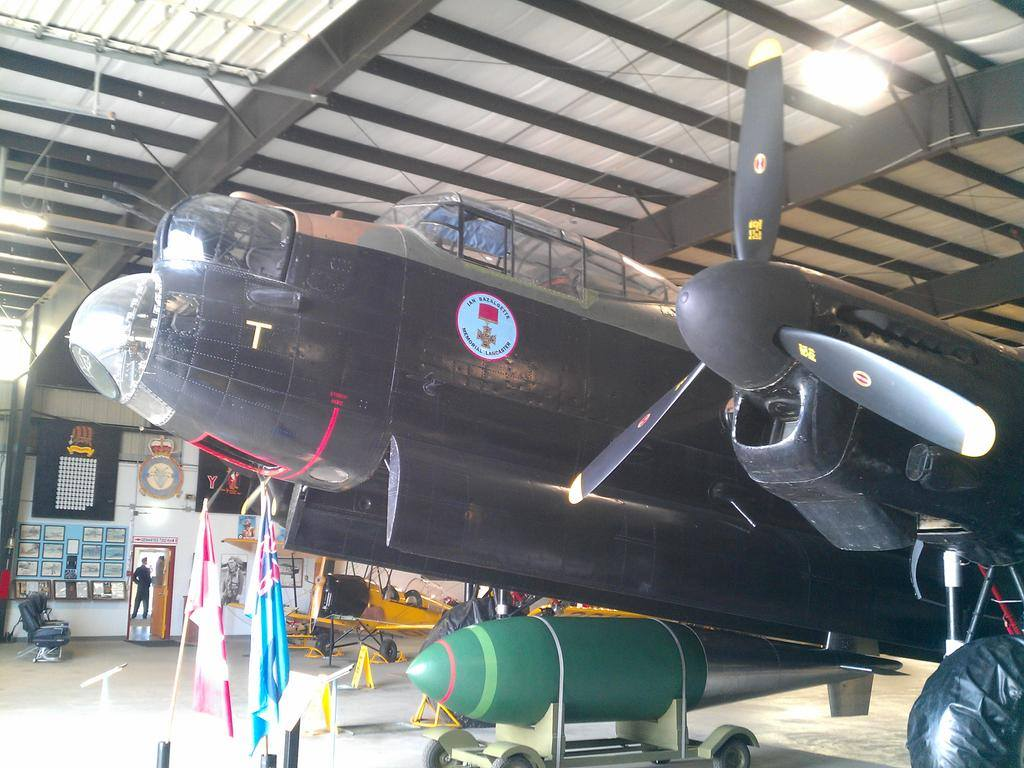
This Lancaster is on display at the Bomber Command Museum of Canada in Nanton, Alberta. It is one of 17 remaining Lancasters in the world. It is also one of four Lancasters that can taxi under its own power. We were lucky enough to see the engines in operation during a test in 2016.

After the war, James returned home to Alberta and briefly spent some time as a grain buyer. Clearly the land was not where James’s heart laid, as he joined the Royal Air Force in 1947. James served with the #224 Squadron in Belfast, Ireland and with a detachment in Gibraltar. His duties included long-range meteorological reconnaissance. King George VI awarded James the Distinguished Flying Cross at Buckingham Palace on October 31, 1951. The commendation read:

This officer has served with No. 224/269 Squadron at Aldergrove and Gibraltar for two and a half years from March 1948 to 1951. During this time he has flown one hundred meteorological sorties, and on nine occasions he has experienced engine failure in flight. He has coped with these problems coolly and with exceptional skill, proving an excellent leader under most adverse conditions.

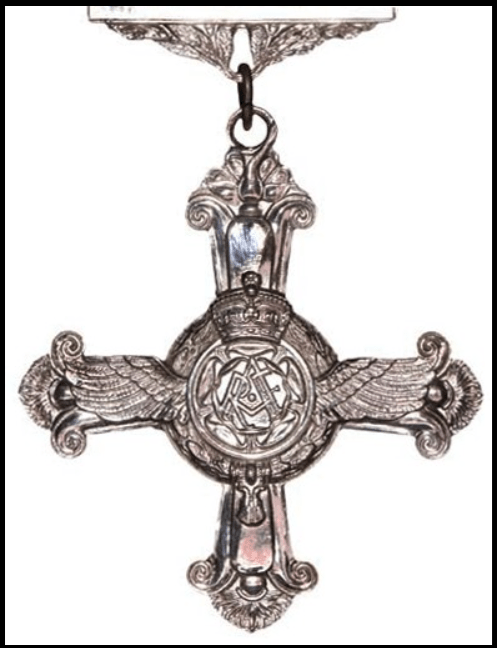
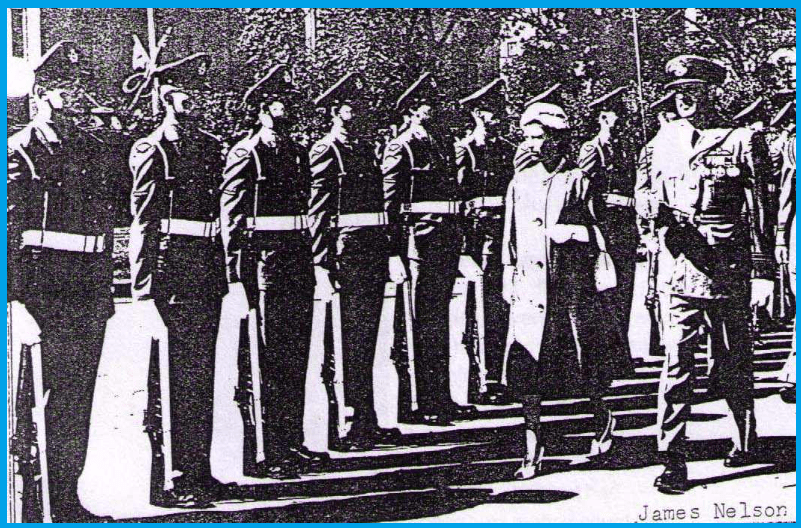
James completed his service with the Royal Air Force in 1951. He returned to Canada and immediately reenlisted in the Royal Canadian Air Force. James was initially posted in Calgary and then later in Edmonton. During his time in Edmonton, James was awarded the Air Force Cross by Governor General Vincent Massey for his service. After four years in Edmonton, James was transferred to Training Command. In 1959, James served as Guard Commander during Queen Elizabeth’s visit to Regina. In 1967, James was transferred back to Edmonton to serve as Provincial Air Cadet Liaison Officer.

James serving as The Queen’s Guard Commander during her Royal Visit in 1959.

In 1953, while stationed in Calgary, James married Norma Dunford (1918 – 2004). Together they had two children, one of whom was a dentist. I am pretty sure he worked on my teeth, but I didn’t discover the familial connection until well after the fact.

After James left the military, he and Norma relocated to Penticton, British Columbia. James owned and operated a picture-framing business there from 1971 to 1976, when he sold the business. James spent his retirement in Oliver, British Columbia, spending his time golfing, fishing, hunting, and caring for a small fruit orchard. He died in 2008, at the age of 86.

52W Mark III – Week 26: Family Gathering

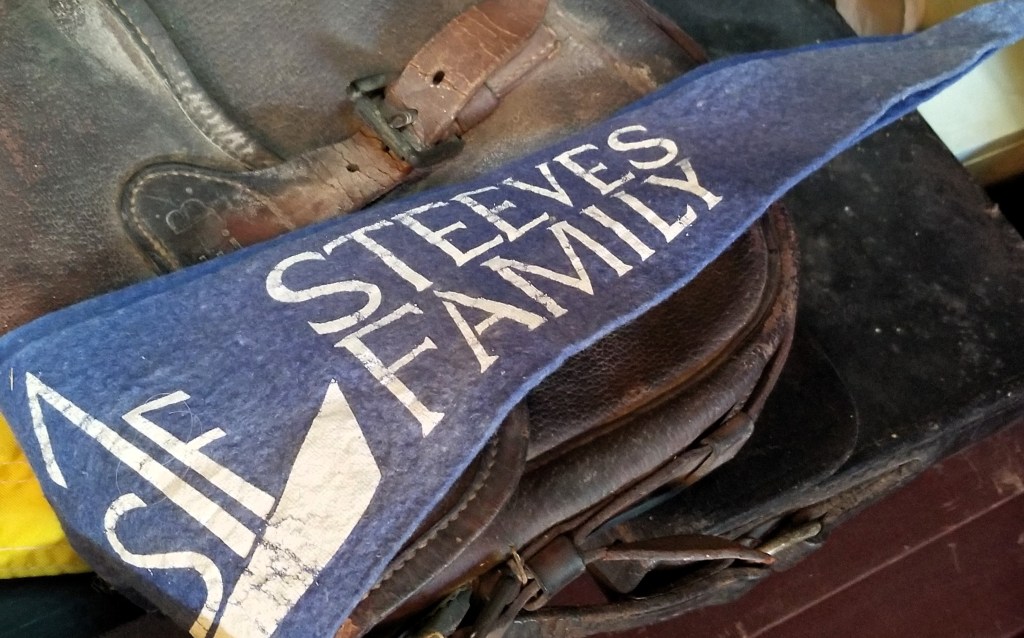
Save the date – July 25, 2026 – for the Steeves Family Reunion in Steveston, British Columbia!

If you’re a “Steeves” in North America, odds are you’re a direct descendant of Heinrich Stief and Regina Stahleker. In 1749, they emigrated from Münsingen in the Duchy of Württemberg (now southwest Germany) and settled in Pennsylvania. There they had seven sons. 250 years ago, in 1766, under land grants arranged by Benjamin Franklin and others, they moved to what is now New Brunswick and were amongst the original settlers of Moncton. The family later settled in Hillsborough, New Brunswick and there they started multiplying.

Apparently there are over 200,000 direct descendants of Heinrich and Regina. Our kids are two of them! At a family reunion in New Brunswick in 2016, there was an attempt to set a Guinness World Record for largest gathering of individuals with the same last name. Unfortunately, the attempt fell short.

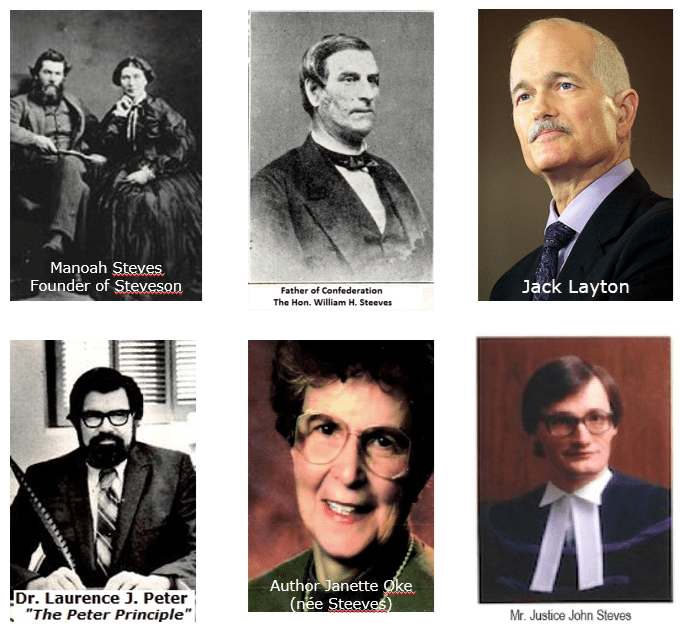
Notable Steeves descendants include the Hon. William H. Steeves (one of the “Fathers of Confederation” of Canada), Jack Layton (late Leader of the Opposition in Canada’s parliament), Laurence J. Peter (author of The Peter Principle), and Janette Oke (author). A few years ago, I gave a presentation on “Law and Genealogy”, using my sons’ Steeves connection as a research example. Through sheer serendipity, the presenter who spoke before me was also a Steeves descendant, John Steeves, a now-retired Justice of the B.C. Supreme Court. Right before the program started, I leaned over and quietly asked him if it was okay to incorporate him into my presentation.

Coincidentally enough, our Steeves connection does not end there. Several years ago we moved to Steveston, a fishing village that is now part of  Richmond, B.C. The village was founded by Manoah Steeves, who left New Brunswick with his wife Martha Taylor, dropped an “e” from his surname, bought land in the southwestern corner of Lulu Island in 1877, and established a dairy farm.

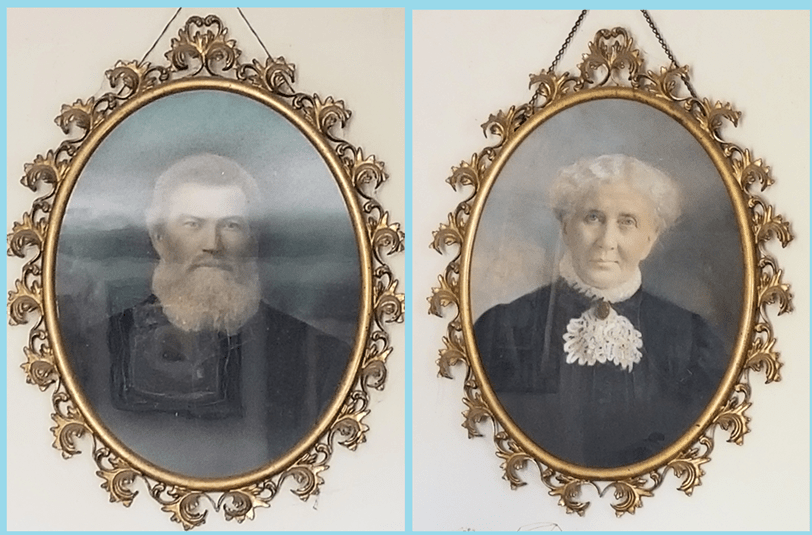
Manoah and Martha Steves

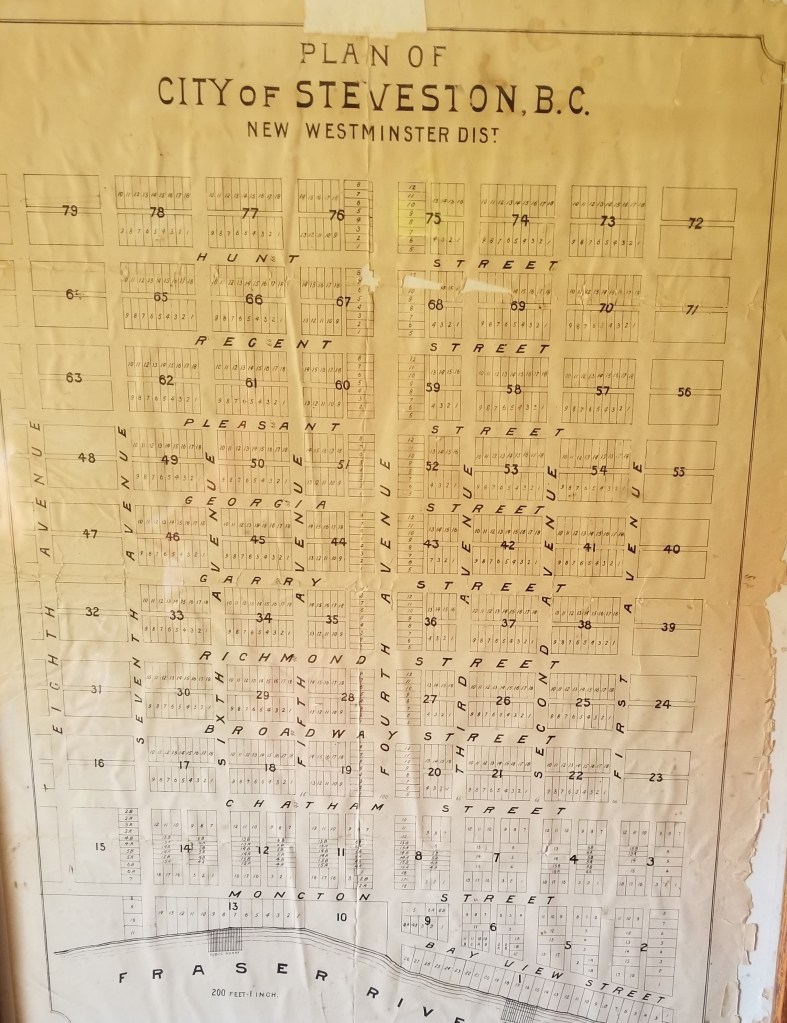
Nearly all of Lulu Island is now part of Richmond. In 1880, Manoah’s son William Herbert obtained a crown grant of the land that became the townsite of Steveston.

The streets in our neighbourhood share the names of Steeves relatives and places in New Brunswick. Manoah’s descendants still operate a farm on the land he originally purchased.

One of the houses on the property was built in 1917. Harold Steves, Manoah’s great grandson, lives there. Harold served one term as a Member of the Legislative Assembly of British Columbia and many terms as a Richmond city councillor. He is also a life-long farmer and an active conservationist – he was a driving force behind the creation of the Agricultural Land Reserve in British Columbia.

Harold has turned part of the house into a private museum. In addition to artifacts reflecting all aspects of his and the Steves family history of farming, politics, and conservation activism, Harold has turned part of the home into a recreation of the Hong Wo Store, a general store that had been established in 1895. Beside the Hong Wo store, Harold has recreated the canteen his parents operated during World War II, serving the soldiers stationed at a base beside the farm.

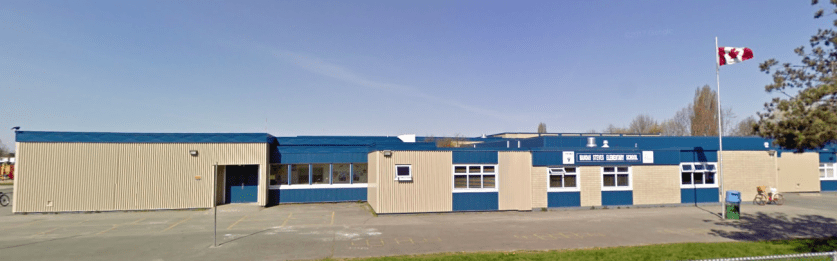
Manoah Steeves Elementary School.

Harold opened up his museum to the general public earlier this year as part of “Doors Open Richmond”, a city-wide festival of culture and community operated by the Richmond Museum. Needless to say, we couldn’t pass up the opportunity. I could have spent days in there. His bookshelves alone could keep me occupied for weeks. Plus it was a chance for the boys to meet their fourth cousin three times removed! 😉

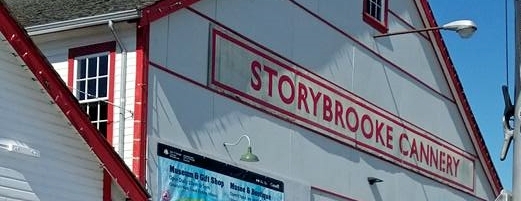
Steveston, B.C., or as you might recognize it from television, Storybrooke, Maine.

52W Mark III – Week 25: Storyteller

I’ve wracked my mind, and I cannot think of who the storytellers in our family might be. However, I have no problem identifying the storykeepers. They might not spin yarns or be captivating narrators, but they are always willing to share the family lore if asked. I wouldn’t call my mother a good storyteller, but I can absolutely count on her to provide the answers to questions I might have about even the most obscure bits of familial trivia.

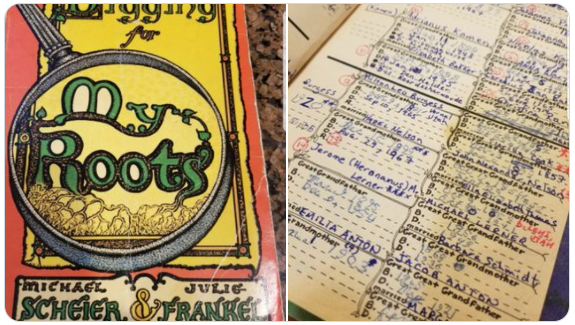
I’ve been keeping the family history since I was in elementary school!

While I don’t consider myself a storyteller, I definitely count myself amongst the family storykeepers. I think by definition, genealogists are storykeepers. It’s not often that I’m asked, but I’m more than happy to share the stories whenever someone in the family should ask.

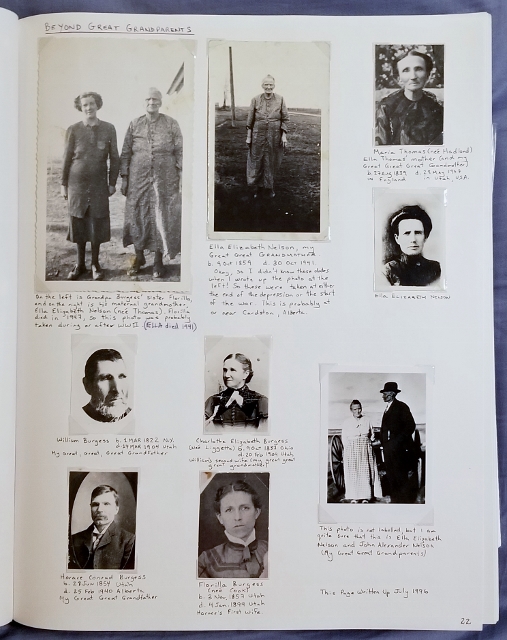
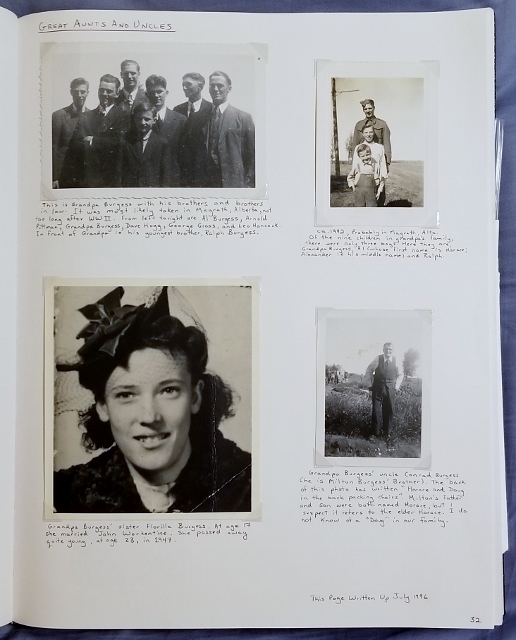
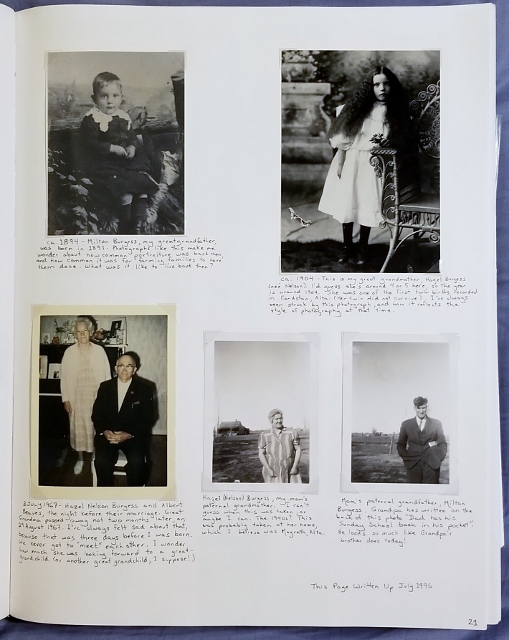
Pages from a family history photo album I made.

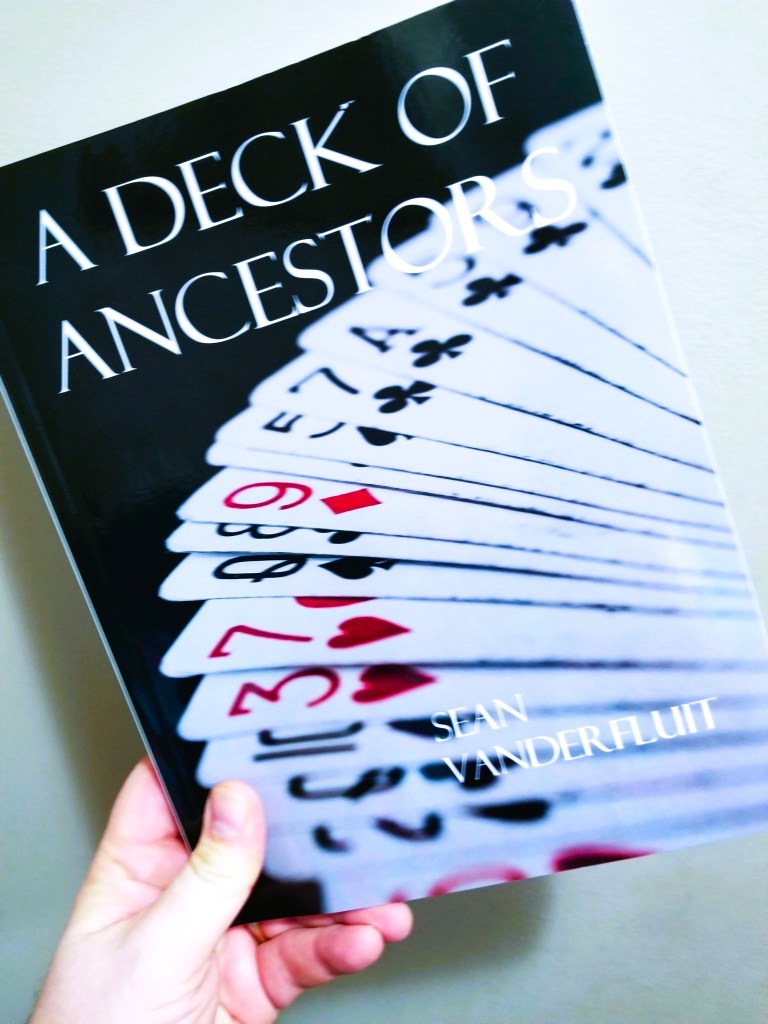
I will concede, however, that maybe I have become a storyteller. This blog is now two-and-a-half years old. This is my third time participating in Amy Johnson Crow‘s 52 Ancestors in 52 Weeks and my 129th post as part of the challenge. I’ve even turned my first year’s set of posts into a print book and have nearly completed turning the second year’s worth into a digital book.

I guess that makes me a storyteller!