
52W Mark III – Week 20: Taking Care of Business

When I was a kid, we moved around a lot. People often asked my if my dad was in the military. No, he was a Woolworths manager.

My father entered the Woolworth manager training program right out of high school. Back in the day, the program involved a lot of moving around. Later, promotions almost always meant a transfer. He was with the company for 28 years, leaving the company about six months after Wal-Mart bought it out in Canada. That’s a story for another time.
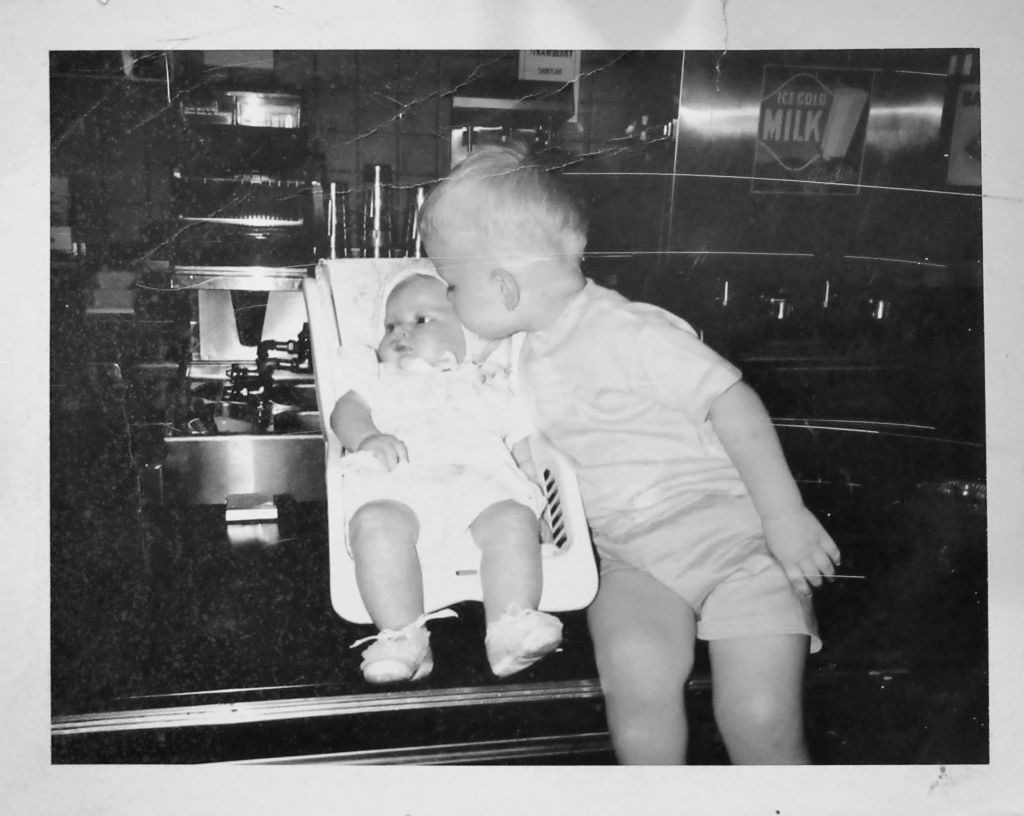
My sister and me at the Woolworths in Regina

My dad began his career with Woolworth’s in Lethbridge, Alberta as a management trainee. He once told me that his very first assignment on his first day was to unload a shipment of bras, and the female staff stood there giving him a hard time. Next, my dad trained in the Regina, Saskatchewan and Medicine Hat, Alberta stores, where he was an assistant manager.

Dad’s first store as manager was in Flin Flon, Manitoba. After Flin Flon, dad was transferred to Terrace, B.C., and shortly afterward to Duncan, B.C., where he opened a new store there as the Associate Manager.
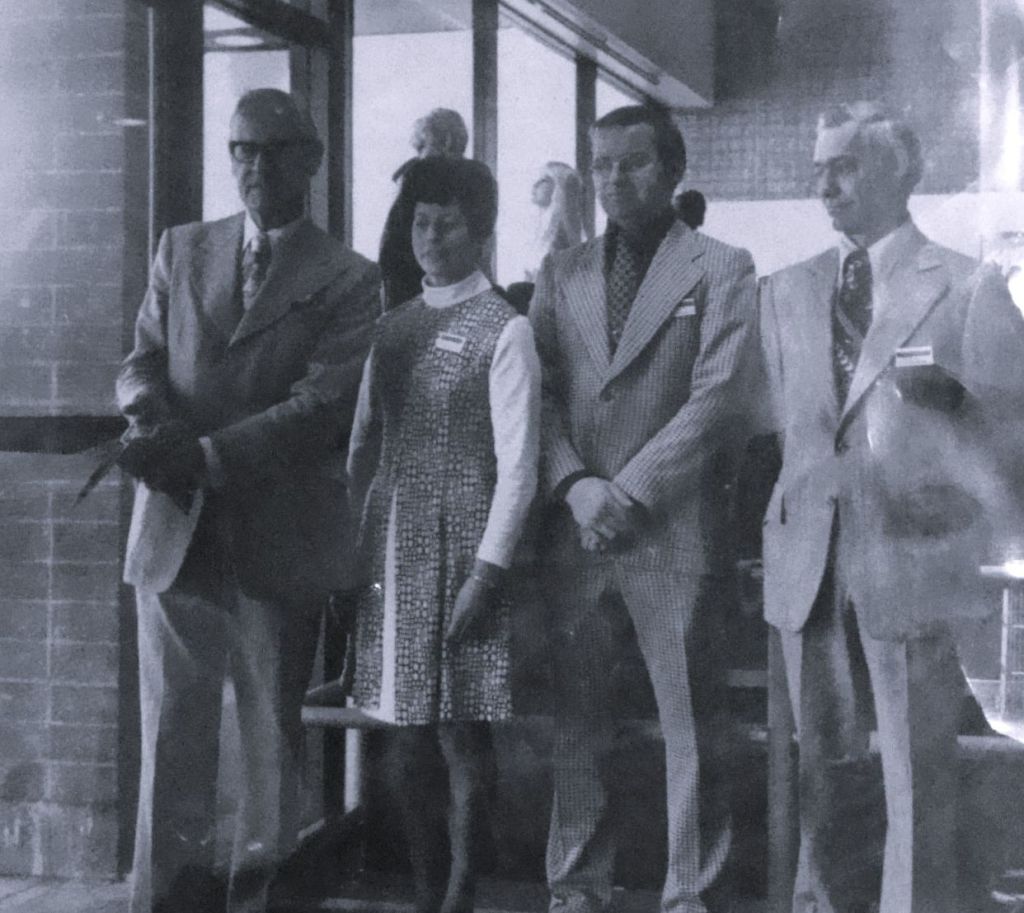
Grand Opening of the Woolworths in Duncan. My dad is second from the right.

At one point, the Canadian head office in Toronto transferred dad to Kirkland Lake, Ontario. However, when the international head office learned about the transfer, they cancelled it. They thought it was too much to move a man with young kids halfway across Canada.
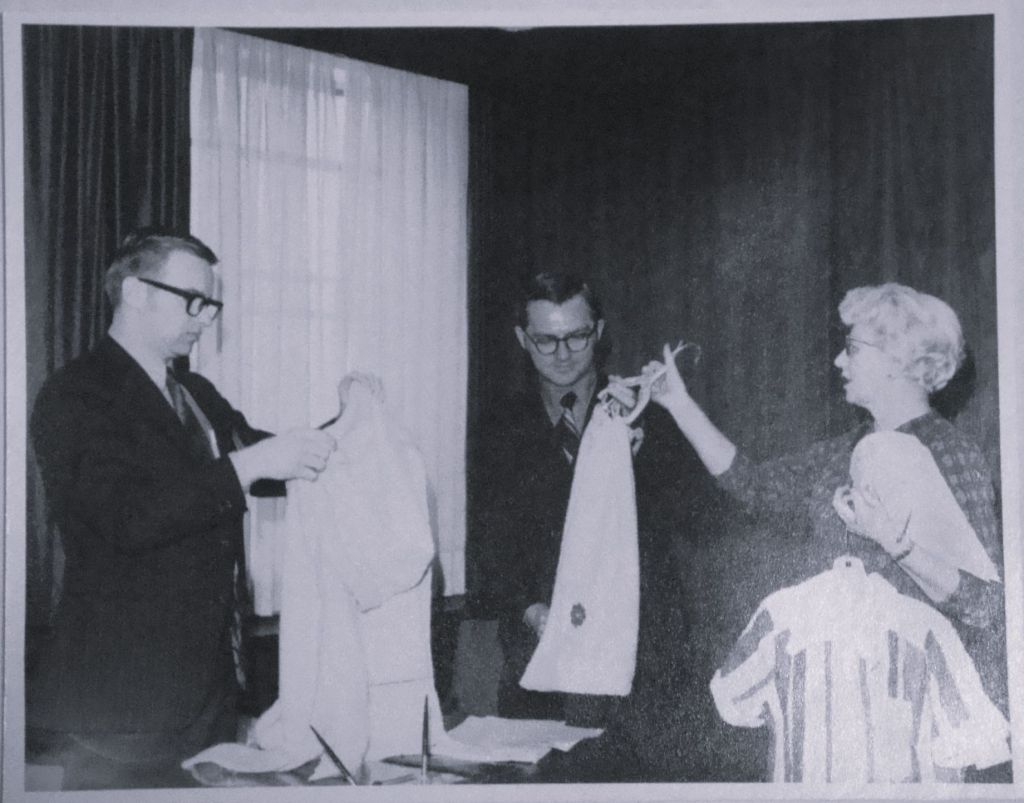
My dad (left) at the Canadian head office in Toronto.

Dad transferred to North Battleford in 1974 and was General Manager when Woolworths opened a large new store there as the anchor tenant of the Frontier Mall in 1975.
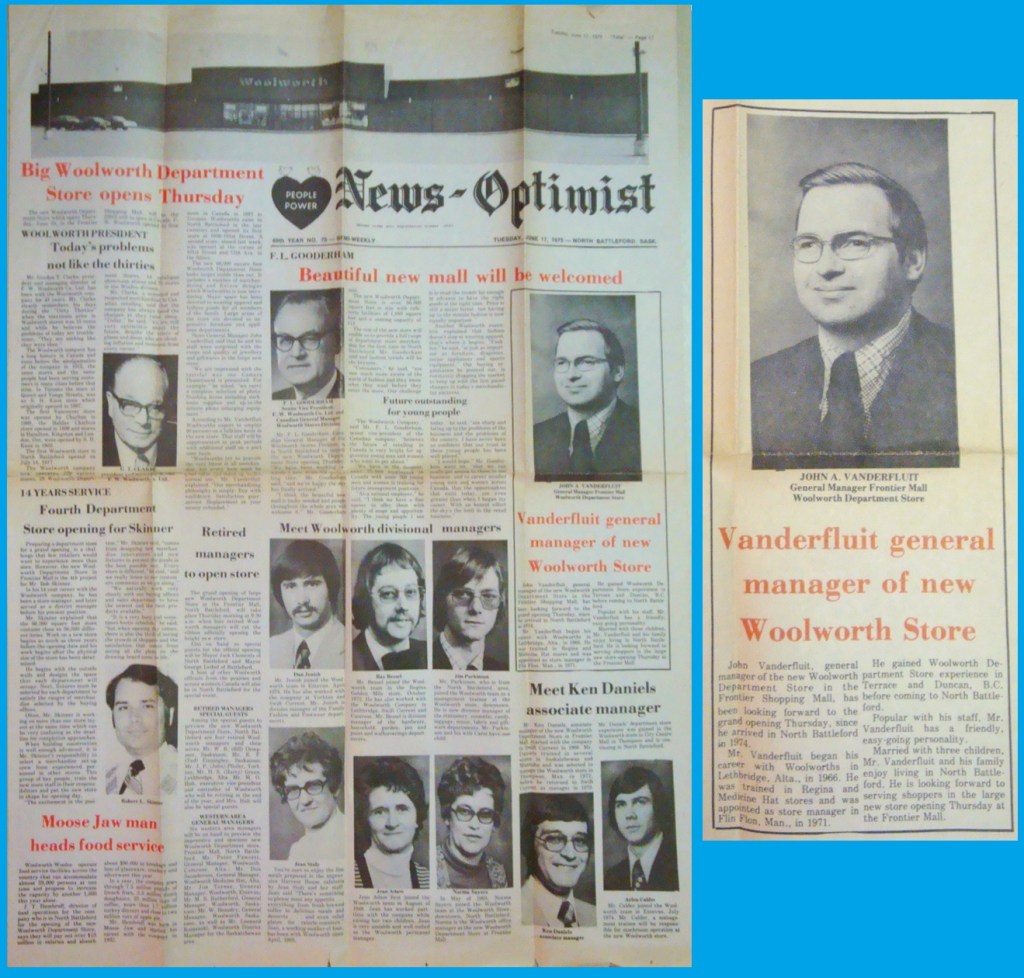
Big news in a small town.

Dad quit in the early 80s and went into business as a sales agent for a furniture company. The new career was not what dad anticipated, and he did not enjoy being separated from his family as the job entailed a great deal of travel. He returned to Woolworth’s a few months later. As he had been replaced at the North Battleford store, he was assigned to the Woolworths in Swift Current, Saskatchewan. He commuted from North Battleford to Swift Current, a distance of about 320 kilometres. Dad was there until he was transferred to Terrace, British Columbia six months later.

Four years later, the company transferred dad to William’s Lake, B.C. In 1989 Woolworth’s converted all of its larger Woolworth stores into Woolco stores, which included the Williams Lake location.
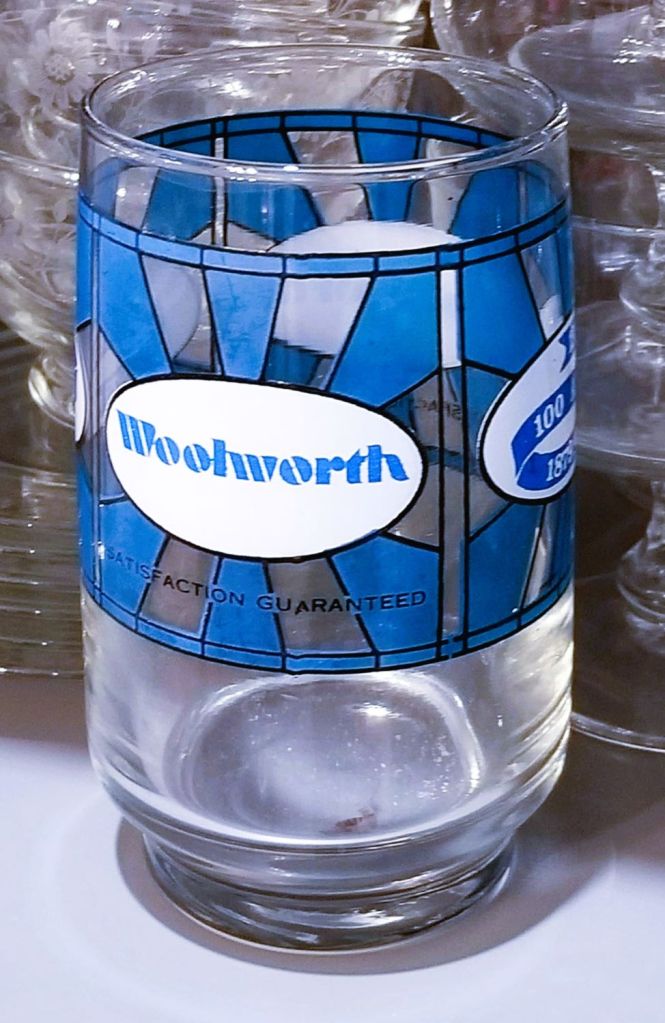
Until last Christmas, I had no idea my mom still had these.

In August 1991, dad was transferred to the Woolco in Chilliwack. In March 1994, Woolworth’s sold its Woolco stores to Wal-Mart. Wal-Mart transferred Hans to Hinton, Alberta that same month. Dad left the company in August 1994. My parents and younger siblings then moved to Lethbridge, where we still had a fair amount of family. My dad briefly went into sales before he and my mother bought a small motel in southern Alberta. My dad has now been a motelier longer than he was a Woolworths manager. My youngest sibling and I have had much different fathers!

One of my brothers had this on his bedroom door for years.

52W Mark III – Week 19: Preserve

I am absolutely certain my grandmother, Helen Lerner, could have made anything from scratch, sweet or savory. She was a fantastic baker. She made her own pickles from what my grandfather grew in the garden. She made homemade noodles for her homemade soups. I’m pretty sure there was a time back in the day she made her own soap. Of course, she made her own jams, jellies, and preserves. One of my favourites was her chokecherry jam.

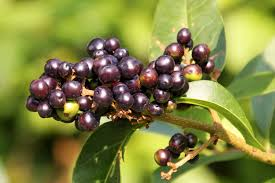
Chokecherries

My grandmother passed away when I was finishing my last month of grade eleven. In the last year or two of my grandmother’s life, my mother often went to Lethbridge to help her out and, later, visit her in hospital. After one of her last visits, my mother returned home with a bunch of things my grandmother had made, including several jars of chokecherry jam. I was pretty sure that they did not last long in our family of seven.

Fast forward to just over a year later. I moved to Vancouver to attend my first year of undergrad at the University of B.C. A few weeks after having moved into residence, my mother sent me a box of my things. Imagine my surprise when I discovered that the box included the last jar of my grandmother’s chokecherry jam. Needless to say, I did not rush through that jar. I used it judiciously and sparingly, without being stingy, and savored every bit of it. It was a wonderful way to remember my grandmother.

52W Mark III – Week 18: Love & Marriage

This week’s prompt for the 52 Ancestors Challenge is “Love & Marriage”. While this is on the topic, it may be more about genealogy serendipity.

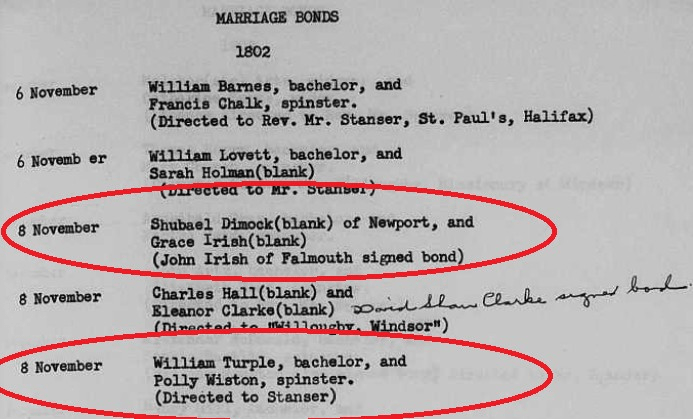
A few years ago I consulted an index of marriage bonds, looking for my 4x great grandfather, William Turple (1778 – ca. 1862), and his first wife, Polly Wiston, of Halifax, Nova Scotia. Much to my surprise, my wife’s 5x great grandparents, Shubael Dimock (1753 – 1834) and Grace Irish (1768 – 1846), are in the same record! Both couples’ bonds were registered the same day, November 8, 1802.

I don’t have an actual marriage record for either couple. William and Polly were likely married in St. Paul’s Anglican Church. I don’t know where Shubael and Grace were married, but as they were Baptist I doubt they married in St. Paul’s.

52W Mark III – Week 17: War

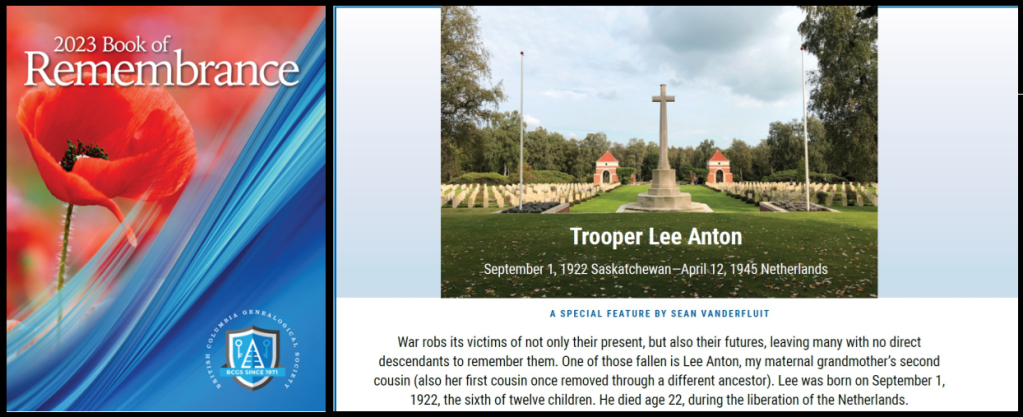
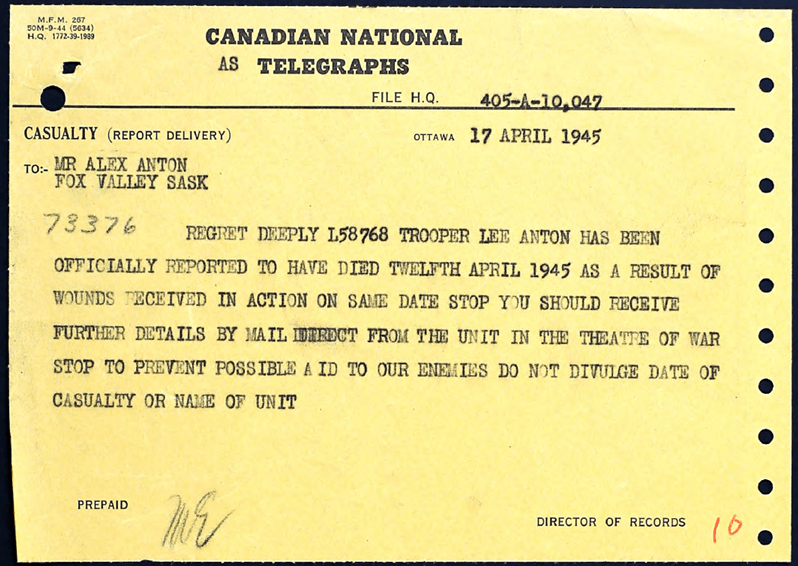
In Week 45 of the 2022 52 Ancestors Challenge, I wrote about my maternal grandmother’s cousin Lee Anton. I also wrote about Lee as one of the Featured Articles for the 2023 Book of Remembrance published by the British Columbia Genealogical Society. With this week’s writing prompt, I’d like to share what I’ve learned since writing these two pieces.

              The cover of the book.                                        Feature about Lee on page 98.

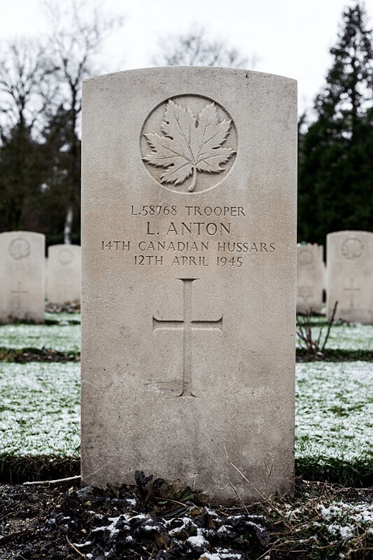
First, to recap, Lee was a Trooper of the 8th Reconnaissance Regiment (14th Canadian Hussars, also known as the 8th Recce) R.C.A.C. Lee was killed in action on April 12, 1945, age 22, less than a month before V-E Day, in the northern part of the Dutch province of Drenthe, the day before the start of the Battle of Groningen. Along with many of Canada’s other fallen soldiers, Lee is memorialized in two very special ways.

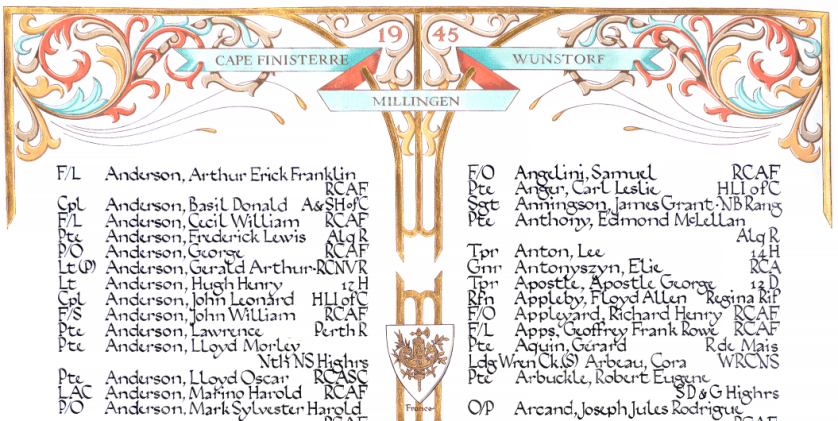
One is through the Second World War Book of Remembrance for the Second World War. Lee is commemorated on page 491.

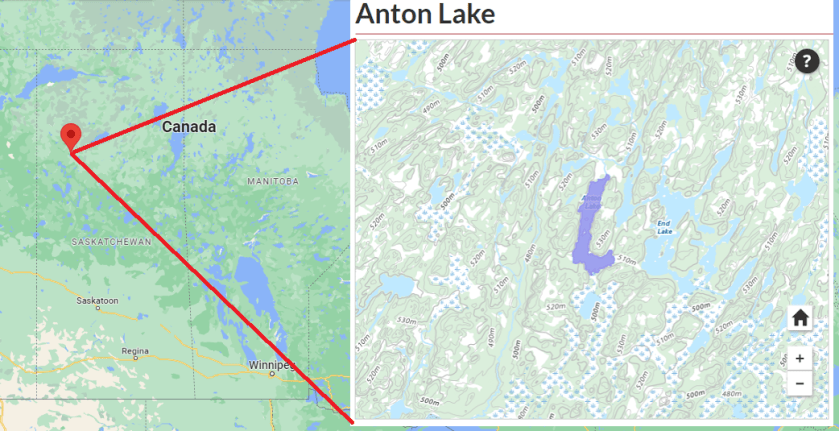
Lee was also memorialized through Saskatchewan’s “Geo-Memorial” program. You can see Anton Lake, which was named after Lee, on Google Maps. This project is documented in the book, Their Names Live on: Remembering Saskatchewan’s Fallen in World War II.

Lee is interred at the Holten Canadian War Cemetery, located just outside of Holten, Overijssel, Netherlands. It is not far from where Lee was killed.

It was only a few weeks ago that the significance of the date on which Lee had been killed dawned on me. April 12, 1945 is the day that Canadian troops liberated Camp Westerbork. It was the transit point where the Nazis gathered Dutch Jews before sending them to the death camps. It was the first place they interred Anne Frank after she and her family were betrayed.

Going through the regimental diaries for Lee’s regiment, I discovered that it was the 8th Recce that liberated the camp, which the Germans had abandoned hours beforehand.

Entry from the War Diary of the 8th Reconnaissance Regiment for April 12, 1945 documenting the liberation of Camp Westerbork.

Based upon the chronology set out in the diaries and other war records, advancing on the camp was the first thing Lee’s regiment did that day. It means that the fighting in which Lee was killed occurred after the camp was liberated. While the entire regiment was not involved, there were at least 100 members of the regiment present at the camp, so there is a good chance that Lee was present for the liberation of Westerbork.

Lee’s grave as seen on Find a Grave