Antje “Anna” Woltering, my Gx2 grandmother, was born in Zuid-Scharwoude, Noord Holland on February 25, 1853. She was the youngest of four children born to Cornelis Woltering and Neeltje Smit. [Update: I have since learned that Anna was the fifth of six children. An older brother died before Anna was born, and a younger sister died at age five.]
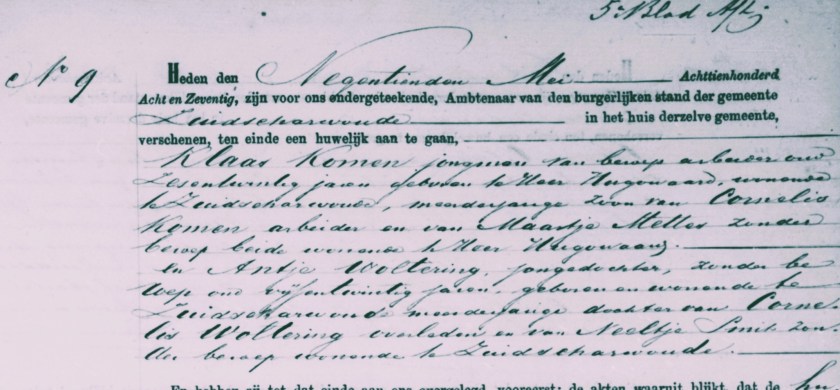
Anna lived over half her life in Zuid-Scharwoude. There she married Nicolaas “Klaas” Komen on May 19, 1878.
Opening paragraph of Anna and Klaas’s marriage registration, from the civil register of Zuid-Scharwoude.
Together Anna and Klaas had ten children, all of whom were born in Zuid-Scharwoude, although two did not survive infancy. Seven of their children married and had families of their own. Their youngest son, Jacob, took up a religious life as a “kloosterbroeder” with the Franciscan Fathers in the province of Limburg – almost as far as one could get from Zuid-Scharwoude and still be in the Netherlands.
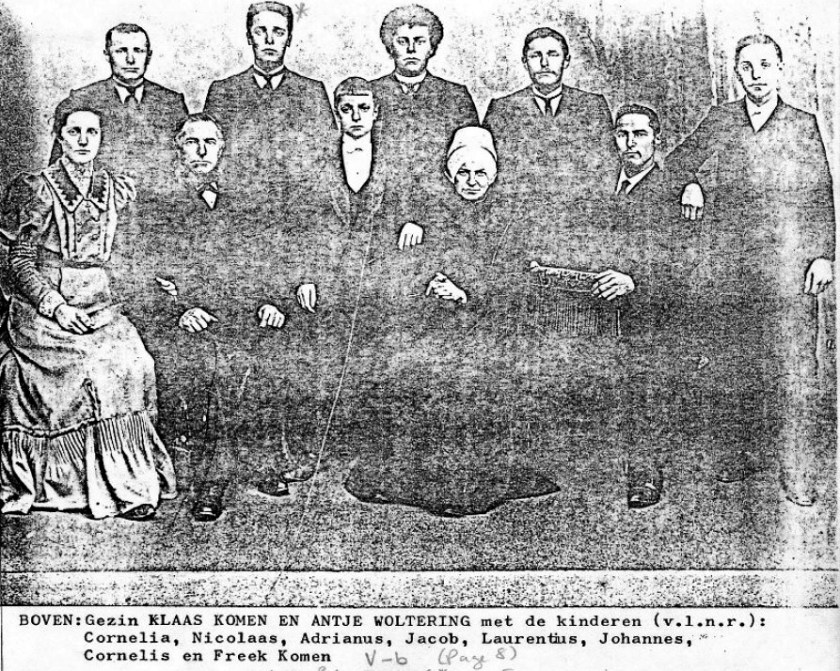
The caption in English: “ABOVE: Family KLAAS KOMEN and ANTJE WOLTERING with the children (from left to right: Cornelia, Nicolaas, Adrianus, Jacob, Laurentus, Johannes, Corenlis, and Freek [a diminutive of Frederik].”
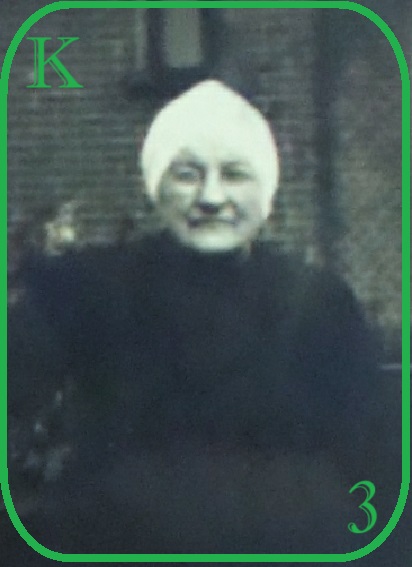
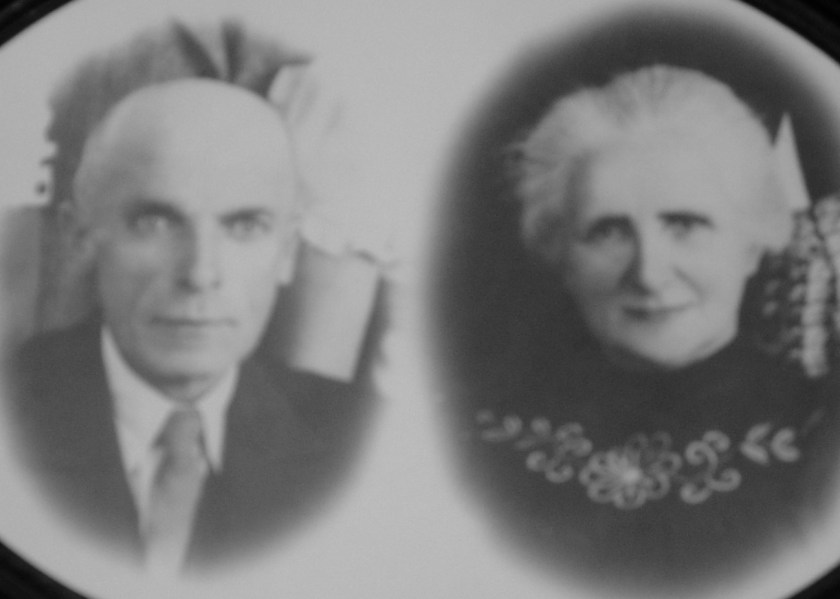
On March 20, 1900, after two decades of marriage and a few years after Jacob was born, the family moved to Noord-Scharwoude. It was not a far move, since Zuid- and Noord-Scharwoude are adjacent to each other and were part of the then gemeente of Langedijk (now part of Dijk en Waard). Anna and Klaas lived together in Noord-Scharwoude for over 30 years and Anna remained there after Klaas died on February 28, 1929. The photo of Anna in the playing card was taken in front of her house.
Less than a year before she passed away, Anna went to live with her son Arie and daughter-in-law Elizabeth at Pikstraat (now Werfstraat) 8 in Noord Holland. Elizabeth lived at that house until her death in 1976. My father remembers visiting that house as a child, and I walked down that street with him during a visit in 2017.
Six years after Klaas passed away, Anna died on April 21, 1935 at the age of 82. She was laid to rest on April 25, 1935, likely at St. Jan de Doper (St. John the Baptist) church in Noord-Scharwoude. However, her remains are no longer there, as graves in the Netherlands are usually leased, not purchased. They are routinely cleared after a few decades.
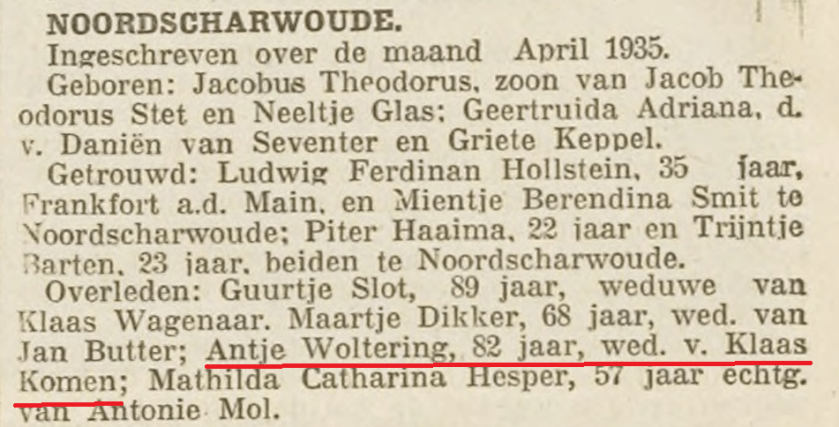
Anna’s death noted in the Schager Courant, May 6, 1935, page 6: “Antje Woltering, age 82, widow of Klaas Komen”
Nicolaas “Klaas” Komen, my Gx2 Grandfather, was born on May 17, 1852 in Heerhugowaard, Noord Holland. He was the eldest of two sons born to Cornelis Komen and Maartje Meetes.
Like most young men of his time, Klaas began his adult life by fulfilling his mandatory military service. In practice, most conscripts never really served in active duty; rather, their service was more like a reserve militia or national guard.
Klaas’s true adult life story began in Zuid-Scharwoude, in the gemeente (municipality) of Langedijk, where he worked as a labourer and began a family of his own. On May 19, 1878, Klaas married Antje “Anna” Woltering, who was born and lived in that town. Over the years, Klaas and Anna had ten children, all but two who lived to adulthood.
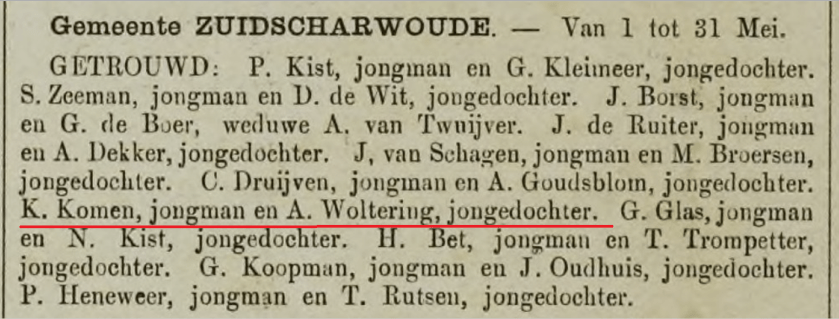
Notice of Klaas and Anna’s marriage in the Heldersche en Nieuwedieper Courant, June 16, 1878, page 3
From 1878 until 1900, the family lived in Zuid-Scharwoude. During this period, Klaas continued working as a labourer. In March 1900, Klaas and his family moved to the adjacent town of Noord-Scharwoude, which was also part of Langedijk. It was there that Klaas transitioned into work farming.
Around 1914, in his early 60s, Klaas embarked on a new occupational path as a “brandstoffenhandelaar” (“fuel dealer” or “fuel merchant”), operating out of Zuid-Scharwoude. It was a profession he carried out for many years, possibly even until his death in 1929. However, work as a brandstoffenhandelaar was not his sole occupation, as records show that he continued to work as a labourer, horticulturalist, and farmer at various times in the 1920s.
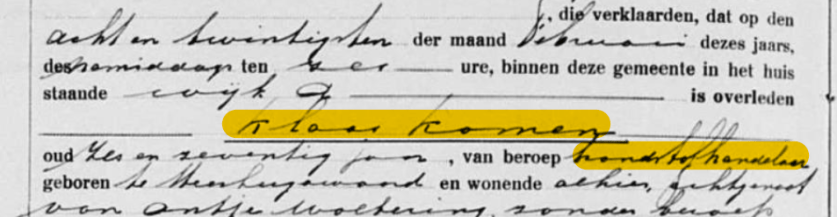
An extract from Klaas’s death registration, noting his occupation as a brandstoffenhandelaar.
I had been intrigued by his role as a brandstoffenhandelaar ever since I first learned of it, first because of the mouthful of a compound noun that it is, and then by the questions I had about it. Needless to say, the direct translation of the word into English doesn’t mean or tell much. In fact, it took me a while to learn that much, since I discovered the term long before Google and the word wasn’t in any of my Dutch-English dictionaries, although I was able to break down the component parts.
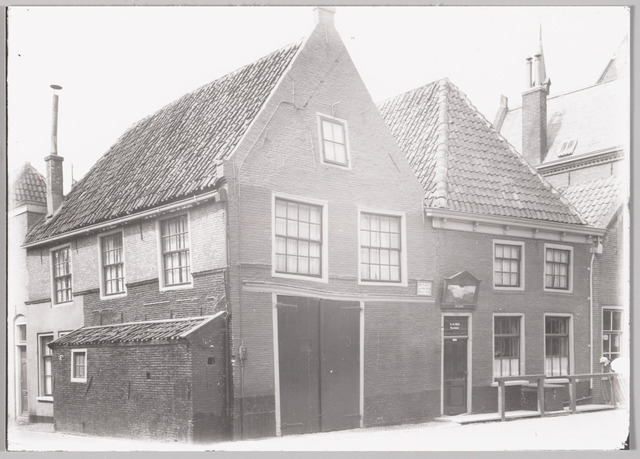
I found this photo in the collection of Regionaal Archief Alkmaar. It was the warehouse of Dirk Veer, a brandstoffenhandelaar in Alkmaar, which is only a couple kilometers from Zuid-Scharwoude. The image was taken in 1925, so it’s possible Klaas might have known of this place.
It is a common term still in use today, especially in the petroleum industry. However, it could have meant many different things in the early decades of the twentieth century. I have no idea what kind of fuel Klaas worked with, whether he was the vendor or if he worked for someone else, and where he carried out that work. It could have been that he transported fuel, such as coal, oil, or peat, by cart, wagon, or truck. I also do not know who his customers might have been, that is, commercial or domestic.
Klaas passed away in Zuid-Scharwoude on February 28, 1929, at the age of 76. Anna survived him by another six years.
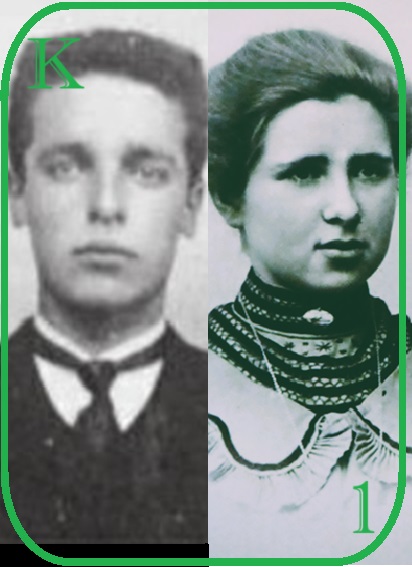
Adrianus Komen (1888 – 1948) Elizabeth Bakker (1888 – 1976)
It’s the second fiscal quarter of 2025 and time to start the second suit of my Deck of Ancestors. This suit involves my father’s maternal line, starting with his grandparents, Adrianus (“Arie”) Komen (1888 – 1948) and Elizabeth Bakker (1888 – 1976). They were born only a few months apart; Arie was born on May 11 and Elizabeth was born on September 12. They were both 32 when they married and spent 27 wedded years together, but Elizabeth spent more years than that as a widow.
Arie was born in Zuid-Scharwoude, Noord Holland, while Elizabeth was born in Den Helder. I have no idea how they met, as their home towns are 30 kilometers apart – a significant distance at the time. (Heck, it still is for a lot of my Dutch relatives!) Arie spent almost his entire life in Zuid- and Noord-Scharwoude (both part of what was then gemeente Langedijk). In her 20s, Elizabeth worked as a domestic servant. She spent some time in that job in Amsterdam, but from 1918 to when she married in 1921, Elizabeth worked in Den Helder.
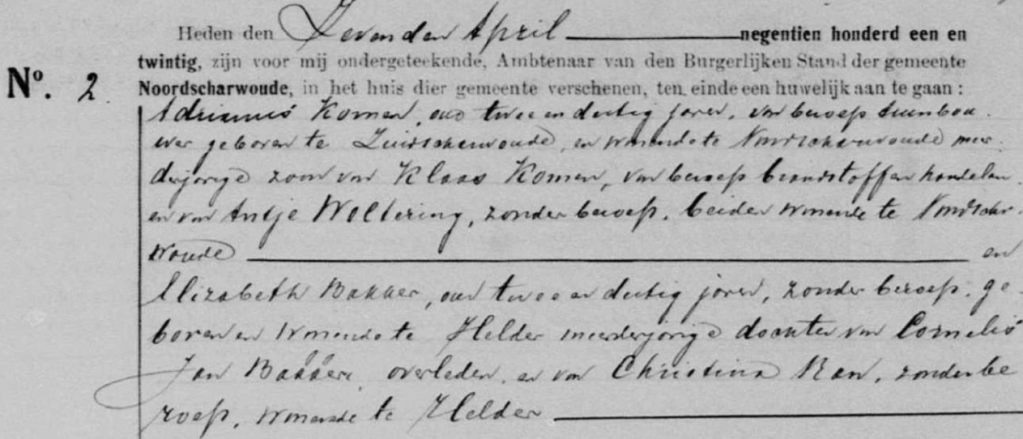
First part of the registration of Arie and Elizabeth’s marriage.
It might be that they met during Arie’s military service. The Netherlands used to have mandatory military service. In practice, most conscripts never really served in active duty; rather, it was more like a reserve militia or national guard. In fact, Arie spent his whole life as an agricultural worker.
Arie initially sought an exemption from service due to poor eyesight. On December 24, 1907, the military deemed him fit for service. Arie was assigned to the 4e Regiment Vesting-Artillerie (4th Regiment Fortress Artillery) based out of Den Helder. Like many conscripts, Arie was never in active service, but likely had to report in or attend training from time to time. Perhaps he met Elizabeth during one of those times.
Arie Komen and Elizabeth Komen
Arie and Elizabeth married on April 7, 1921 in Noord-Scharwoude. (This coming Monday will be their 104th wedding anniversary!) They had seven children together, with my grandmother being the eldest – or so I thought. I was surprised to discover through WieWasWie that Arie and Elizabeth had a daughter one year after they were married, who did not live the day. I doubt my grandmother even knew.
For the first seven years of their marriage, Arie and Elizabeth lived on Dorpstraat in Zuid-Scharwoude. The history of their house is documented in a October 2004 article in Van Otterplaat tot Groenveldsweid (now Otterplaat) magazine:
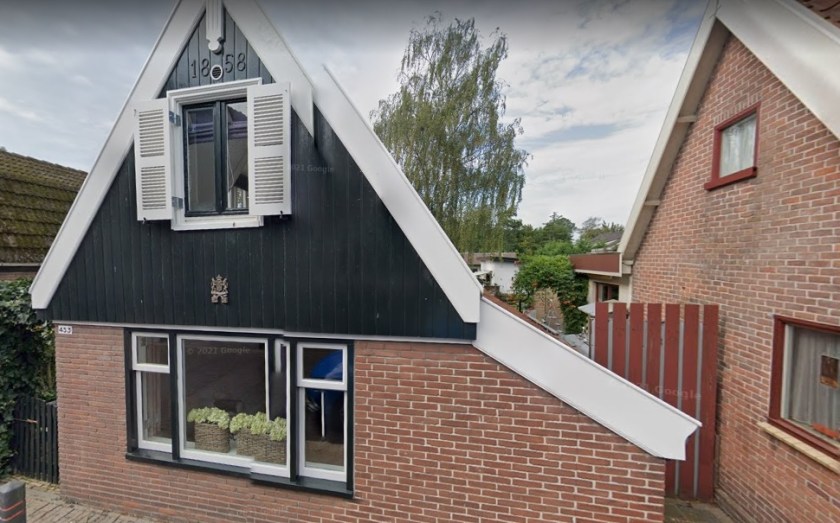
…the newly married couple Adrianus (Arie) Komen and Elisabeth Bakker moved there, on June 10, 1921 to be precise. Three of their children were born here. The house passed into the hands of Maarten Verweel Voorn in 1928, who lived in the neighboring house (now number 451).
The house on Dorpstraat where Arie and Elizabeth lived, and where my paternal grandmother Christina Komen was born. I saw this house during my first visit to the Netherlands.
They then moved to Pikstraat (now Werfstraat), where they lived together for the next 20 years. Arie died on January 14, 1948. Arie was only 59 years old when he passed away. My father was only a few months old at the time, so he has no recollection of his grandfather. I don’t recall my grandmother ever speaking about her father, but she rarely spoke about the past. To be fair, I never asked her about him, either.
Arie was buried in the parish churchyard of St. Jan de Doper Katholieke Kerk (St. John the Baptist Catholic Church) in Noord-Scharwoude. I’ve been to that cemetery, but his grave is no longer there. Graves in the Netherlands are usually leased, not purchased, and are routinely cleared after a few decades.
Elizabeth remained at the house on Pikstraat and she lived there the rest of her life. She died exactly 28 years after Arie, on January 14, 1976. Her remains were cremated. I don’t know if they were ever interred.
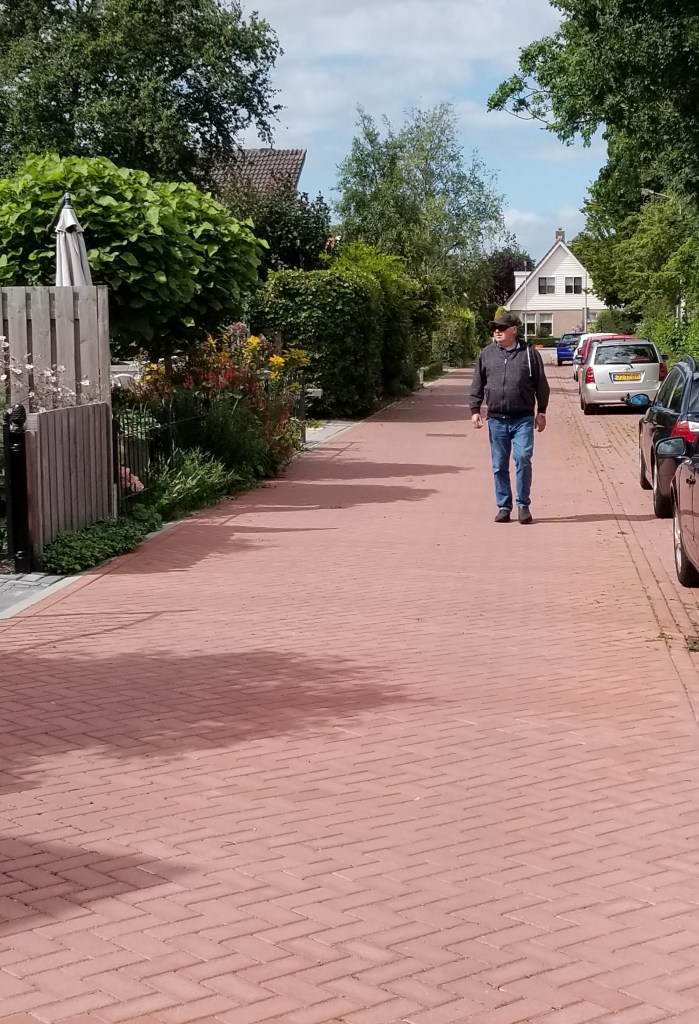
Unlike his grandfather, my father knew his grandmother well. In August 2017, my father and I walked to where his grandmother lived on Werfstraat. My dad told me that when he was a child, the street was a path alongside a canal. It is now a fully-paved street, which might be the reason for the name change from Pikstraat to Werfstraat.
My father walking in front of his grandparent’s house on Werfstraat in Noord-Scharwoude.
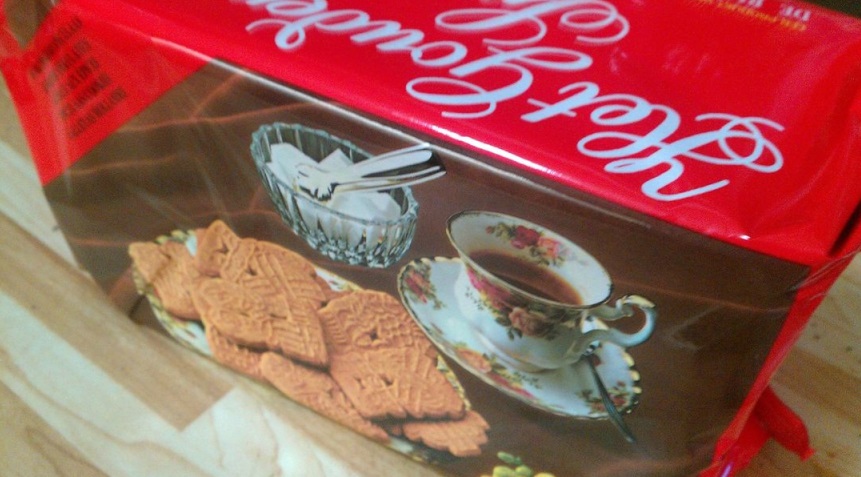
Elizabeth died when I was in elementary school. While I never met her, Oma Komen was well known to me. She regularly sent us letters, postcards, and – most significantly to us as children – boxes of goodies in time for Sinterklaas. However, at the time, I really didn’t know anything about Sinterklaas. I just thought they were really early Christmas treats.
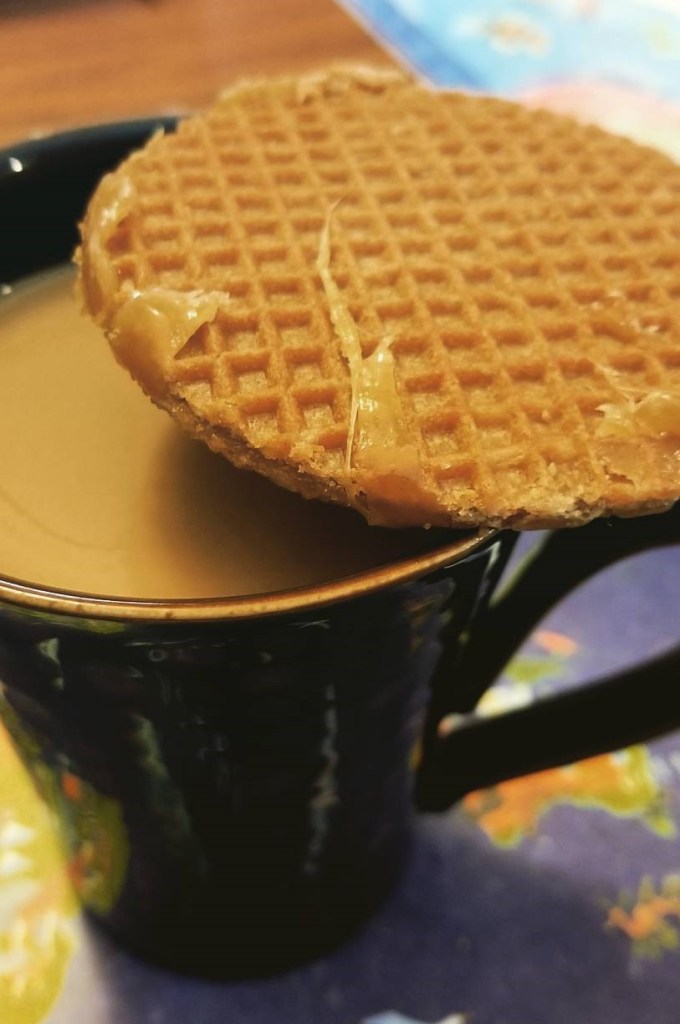
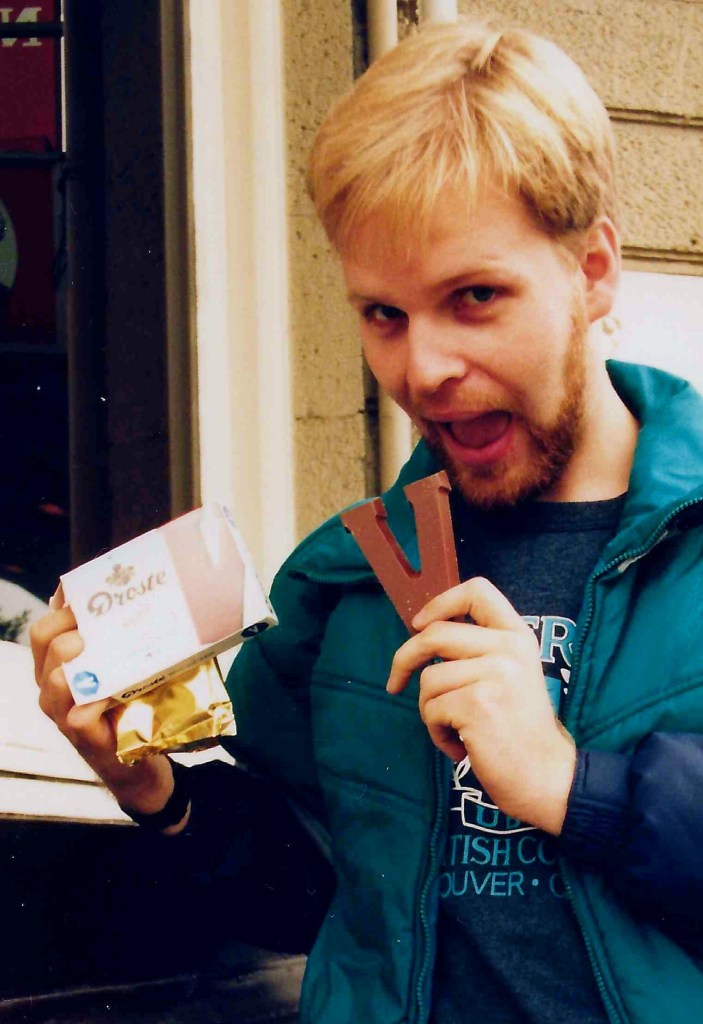
Speculaas, stroopwafels, and chocoladeletters – just some of the treats that Oma Komen would send to us for Sinterklaas!
Supplemental (April 6, 2025): Isn’t this always the case – within a day of hitting publish (late, as usual!), I found interesting new information.
I discovered that Arie spent some or most of 1918 in Heerlen, Limburg. It is almost as far as you can get from Langedijk (Noordscharwoude and Zuidscharwoude) and still remain in the Netherlands. They are pretty much opposite corners of the country.
The dates during which Arie was in Heerlen are unclear from the Bevolkingsregister (population register). It has has him returning from Heerlen (May 10, 1918) before he departs for Heerlen (August 29, 1918). The record of his return was entered on the register on December 10, 1918. It would make more sense that this was also the date he returned from Heerlen.
It is not clear why Arie went to Heelen. His younger brother, Jacob, spent his later years in Limburg and died in Heerlen in 1938. However, it appears that during the time Arie was in Heerlen, Jacob was in Wijchen, Gelderland, which is significantly further north than Heerlen. However, it may be that by 1918 Jacob was in Limburg. Unfortunately, the relevant population registers aren’t available online. As much as I’d love a trip to the Netherlands, that is not happening anytime soon!
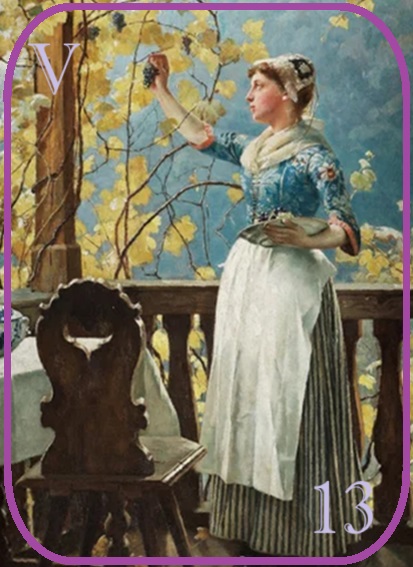
With Week 13, we have reached the last card of the first suit of this year’s deck of ancestors! I am really enjoying the different approach I have taken with the 52 Ancestors Challenge this year. I thought it might be less work, but as I worked through each card, I realized that my research hadn’t been as thorough or complete as I thought it had been. So I’ve spent much more time researching than writing as part of this year’s challenge. In essence, it has turned into Yvette Hoitink‘s Level-Up Challenge!
My Gx3 Grandmother, Trijntje Jans, is featured in this final card. For decades, I’ve had her entered in my database as “Trijntje Jansen”, with “Jans” as an alternate surname. However, quite recently, I’ve reversed things, and now have “Jans” as Trijntje’s surname with “Jansen” as an alternative.
As anyone who has done genealogy for enough time knows, a fixed consistent spelling of names is a relatively recent thing, so the fluidity of Trijntje’s surname is not surprising.
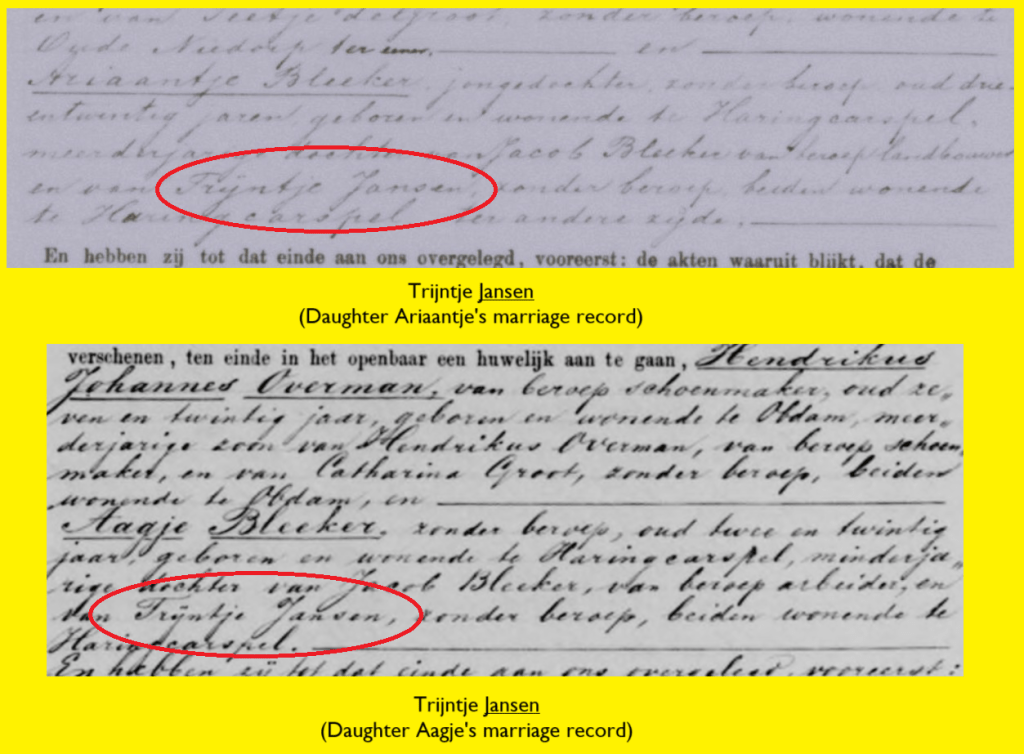
I first used “Jansen” because it was how I first encountered Trijntje. In the marriage registration for Ariaantje Bleeker, my Gx2 Grandmother and Trijntje’s daughter, Trijntje’s surname was recorded as “Jansen”. It was also entered as “Jansen” in the marriage registration of Ariaantje’s younger sister, Aagje Bleeker.
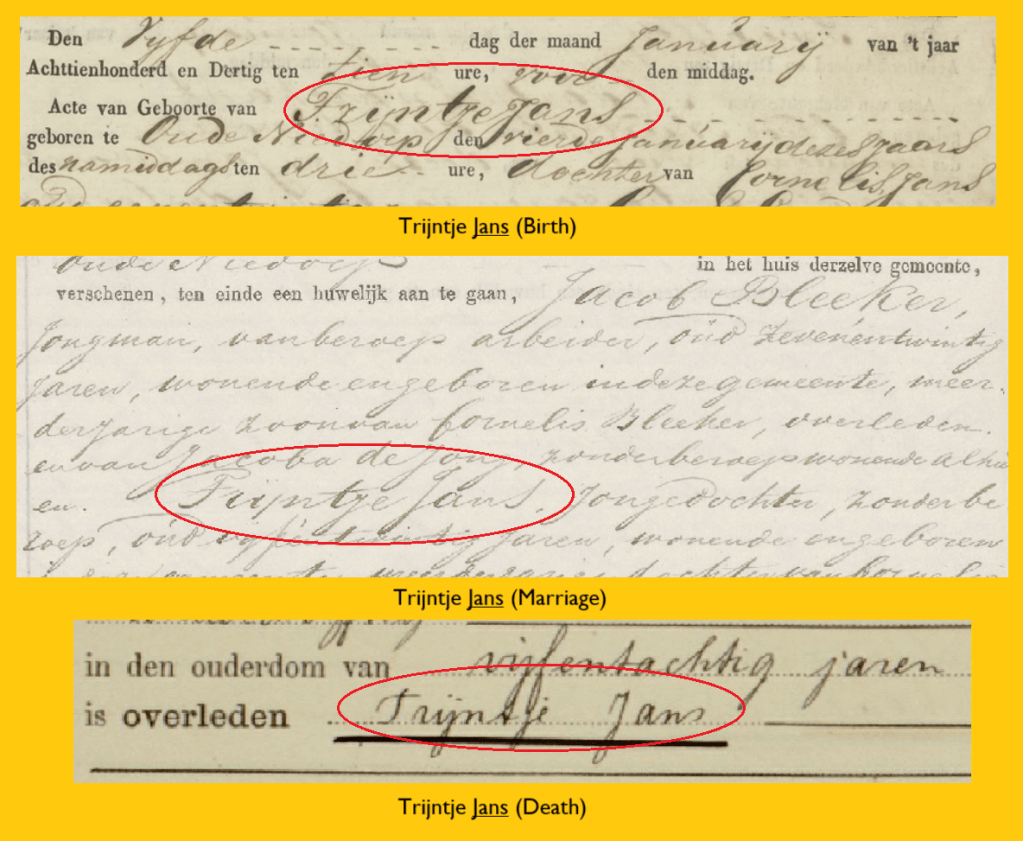
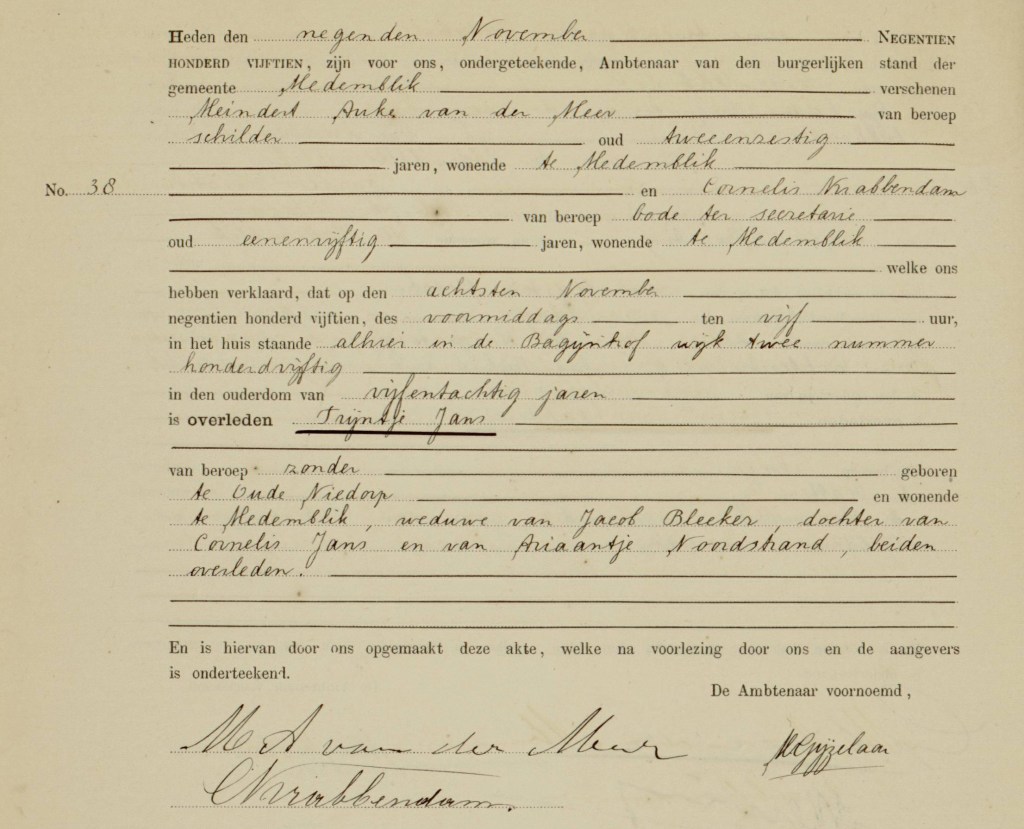
However, in records specifically about Trijntje herself, her surname was recorded as “Jans”. Most significantly, the name entered in the registration of her birth was “Jans”. Trijntje’s marriage and death registrations also named her as “Jans”. To me, that’s a compelling reason to use “Jans” as her “actual” surname and “Jansen” as the alternate.
So what do all these records tell us?
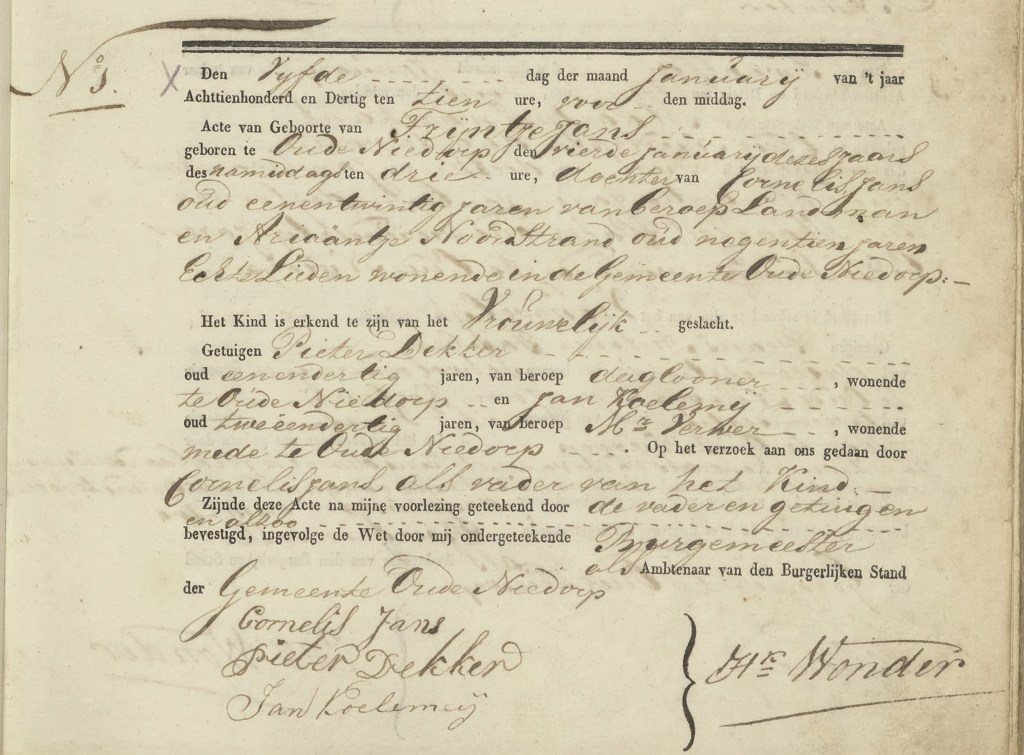
Trijntje was born on January 4, 1830 in Oude Niedorp, Noord Holland. She was the first of 13 children born to Cornelis Janz Jans(en) and Ariaantje Noordstrand. Fewer than half the children survived infancy or childhood.
Trijntje’s full birth registration
Oddly enough, the youngest of the 13 children was also named Trijntje. The elder Trijntje was 19 years old when her younger namesake was born and was likely still living at home. There are manyreasonswhy parents would give two or more of their children the same name, but I cannot think of any that would have applied in this case.
Trijntje married Jacob Bleeker on May 12, 1855 in Oude Niedorp. Together they had four children. Sometime between the birth of their second and third children (1859 to 1865), Trijntje and Jacob moved to Harenkarspel, Noord Holland. Harenkarspel is about 10 kilometers west of Oude Niedorp. That strikes me as a huge move, given that even today that seems to be a long distance for some of my relatives who live in Noord Holland. I don’t know why they moved. It’s possible there was significant event in their lives, which might go to the five and a half year age gap between their second child, Cornelis, and third child, Adriana (my Gx2 Grandmother).
Jacob died in 1890, when Trijntje was 60 years old. However, she did not remain in Harenkarspel after he died. According to her death registration, Trijntje died in Medemblik, Noord Holland, on November 8, 1915. I do not know when or why she moved to Medemblik, which is on the coast of the Zuiderzee (“South Sea”), a saltwater bay. With the completion of the Afsluitdijk in 1932, the Zuiderzee became a freshwater lake, the IJsselmeer.
This was also a significant move, because Medemblik is almost 30 kilometers east of Harenkarspel and 10 kilometers east of Oude Niedorp. I don’t know of any contemporaneous family who lived in Medemblik at the time that might explain why Trijntje moved there. I will have to check the bevolkingsregisters (population registers) and Trijntje’s FAN club (“Friends, Associates, and Neighbours”) to see if I can solve this mystery.

 A Deck of Ancestors