When I was 13, we went to Montana for a family reunion of the descendants of John Alexander Nelson, my Gx2 Grandfather. Of course, we were also the descendants of his wife Ella, but there wasn’t a lot of talk of her that weekend, but there certainly seemed to be a lot of reverence and awe when people spoke about John.
The event made an impression on me in many ways. It was the first (and pretty much only) organized family reunion I’ve ever been too. While it wasn’t my first time to the States, at that time I had not been there many times, and it had never been to see relatives. At the time I didn’t really have much connection to or knowledge about my American relatives, nor were they particularly close to me – lots of second or third cousins, once or twice removed. As well, it was my first real exposure to my Mormon relatives. John was my grandfather Leo Burgess’s grandfather, and my grandfather really wasn’t much of a practicing Mormon. He had pretty much left the church and didn’t follow any of its practices, so I didn’t really know much about it at the time.
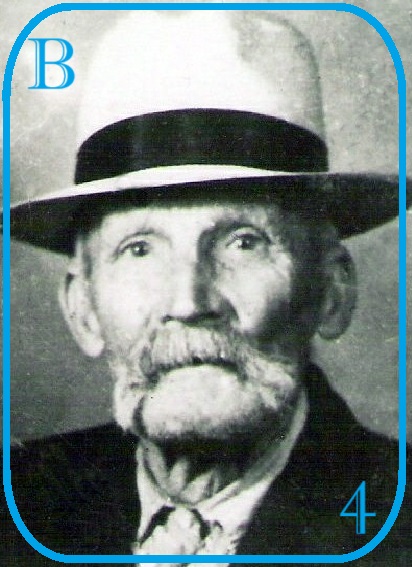
John was born in Farmington, Utah, on October 17, 1854 to Irish immigrant parents, Robert Nelson and Elizabeth Joseph, who had spent some time in Scotland before they joined the Mormon church and moved to America with their first three children. After arriving in the States, the Nelsons lived in Missouri for a couple years before continuing on to Utah in 1852. While he was Robert and Elizabeth’s second child born in the United States, John was the first of their children born in Utah.
Sometime between 1860 and 1862, when John’s youngest siblings were born, the family moved to Smithfield, Utah, almost 100 kilometers to the nouth of Farmington. While he married his wife, Ella Elizabeth Thomas, in Salt Lake City on January 9, 1879, he continued to reside in Smithfield, apparently until the family emigrated for Canada.
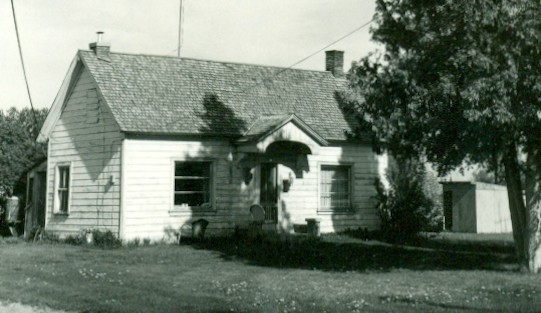
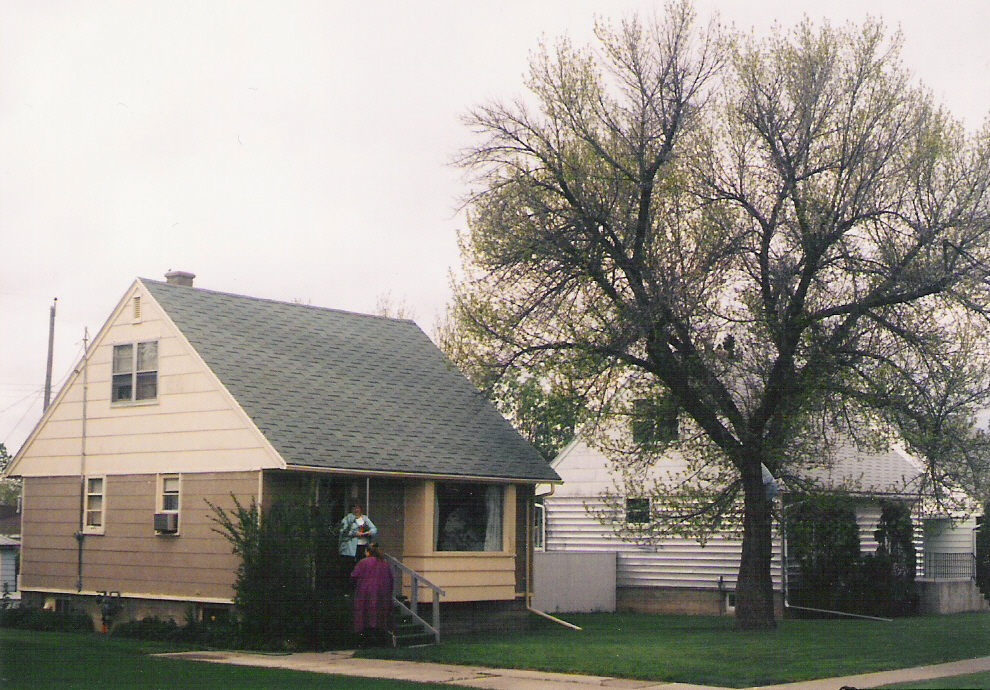
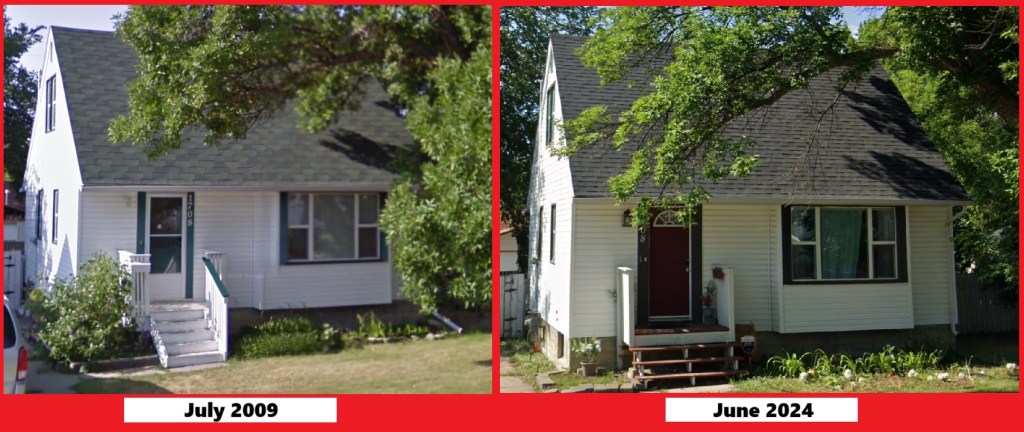
The house John built in Smithfield in 1879
It appears that John might have flirted with the polygamous practices of the Mormon church. On March 19, 1885, he was “sealed” (a Mormon ritual meant to bind familial relationships for eternity) to two sisters, Matilda Jane and Eliza Rankin. Sometime in 1892, John was sealed to Frances Rebecca Purser.
I received this information from my great aunt Fon Hogg (née Burgess), John’s granddaughter. Fon was an avid and proficient genealogist. As a member of the Mormon church, Aunt Fon had access to information that is not available to non-adherents. Fon stated that they were “only sealed,” suggesting there was no civil marriage. In any event, as a polygamous marriage, these unions would not be recognized by the civil authority. Fon also informed me that the sealing between John and Frances was “cancelled” in 1896.
In 1887, Charles Ora Card, a significant Mormon leader, founded the settlement that became Cardston. In part, Card was seeking to avoid arrest for bigamy and was hoping Canada would be more accepting of plural marriage. The Canadian government quickly quelled that prospect, but the settlement flourished. In 1889, he returned to Utah to recruit more settlers.
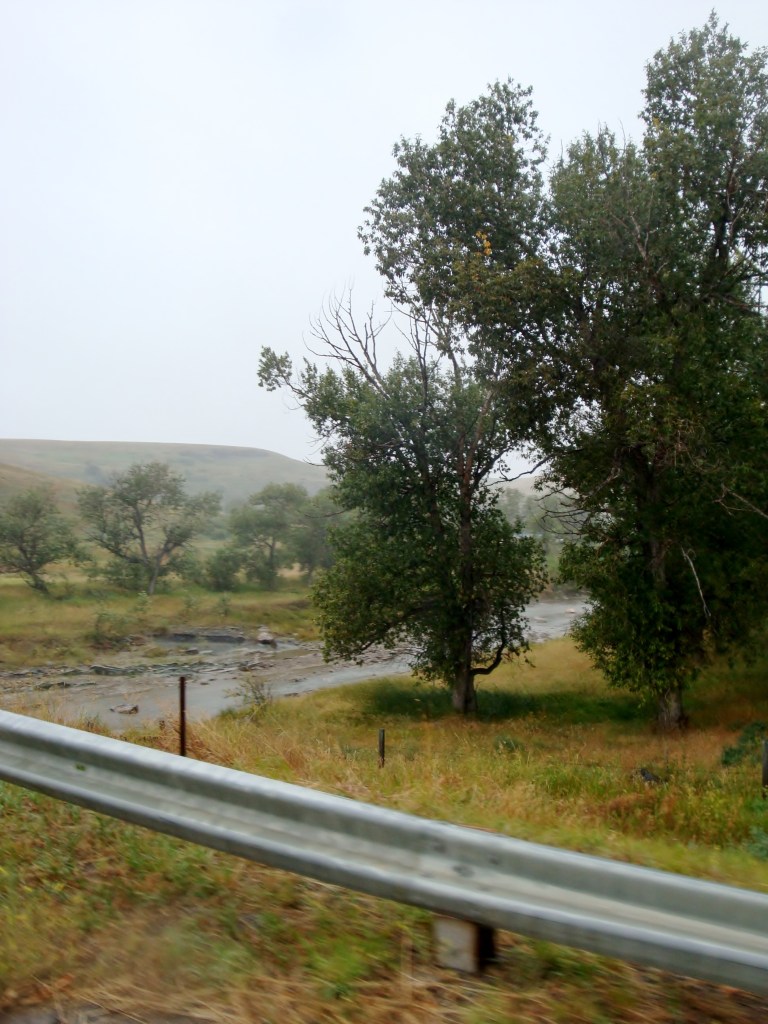
John and Ella answered the call, so they and their five children moved to Canada in September 1890. They travelled by covered wagon and brought 13 horses, 7 cows, 7 “other horned cattle”, and a pig. Upon arrival, John constructed a sod dugout on a 160 acre homestead on Lee Creek, which ran though the land and on to Cardston. The land is located on what is now Alberta highway 501. John and Ella were nationalized as British subjects domiciled in Canada in 1896 (there was no “Canadian” citizenship until 1947).
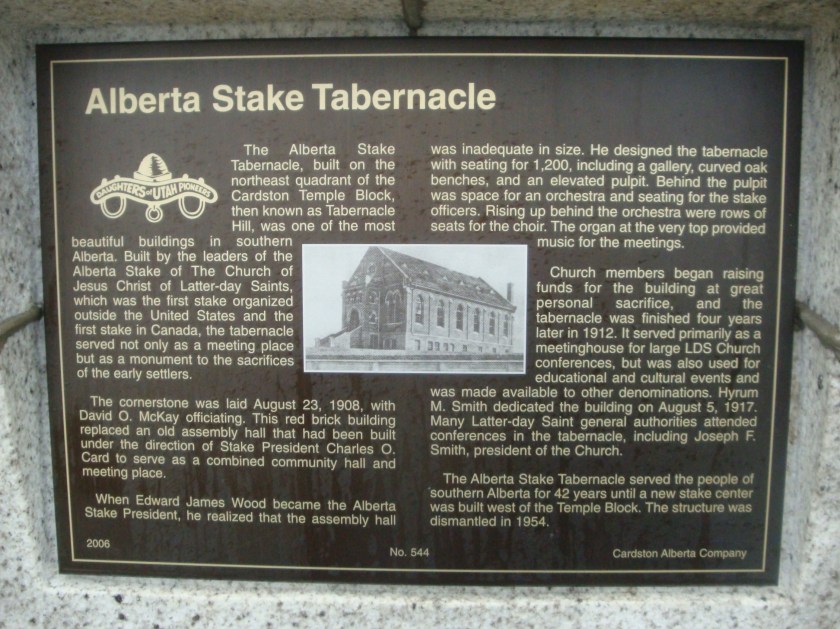
John’s land also had a quarry. Rock from his quarry helped build, among other things, included the Cardston courthouse and, reputedly, the Alberta Stake Tabernacle that stood from 1912 to 1954. The one structure for which John definitely did not supply the stone was Cardston’s first saloon. As if farming and operating a quarry was not enough, John was also a carpenter and operated the first lime kiln in the region. He also served as a school trustee in 1907.
In 1906, John and Ella moved to nearby Woolford, Alberta, where John continued farming. They briefly returned to Utah in the early 1920s, where John operated an orchard or fruit farm, but they returned to Woolford in 1924. John continued farming there for the rest of his working life.
John died on September 29, 1942, a year after Ella passed away. At the time of his death, John had 10 children, 54 grandchildren, and 25 great grandchildren, on both sides of the Canadian-US border. No wonder there were so many people at that family reunion in Montana!
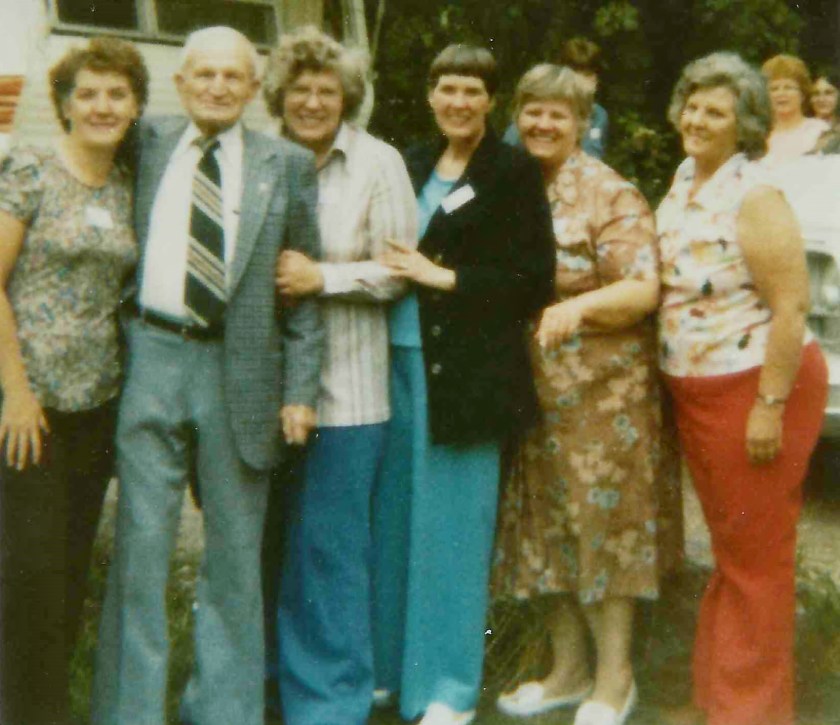
One of the big stars at the Nelson family reunion was Cleveland Nelson (1893-1982) , the last living child of John and Ella. He’s with five of his nieces, my grandfather Leo Burgess’s sisters: Fon, Cleve, Julia, Ella, Molly, and Irene. You can also see my mother over Irene’s shoulder.


 A Deck of Ancestors