With the prompt of “We Don’t Talk About It” for this week’s 52 Ancestors Challenge, the expectation was likely that participants would write about the bad secrets. However, not all secrets are bad!
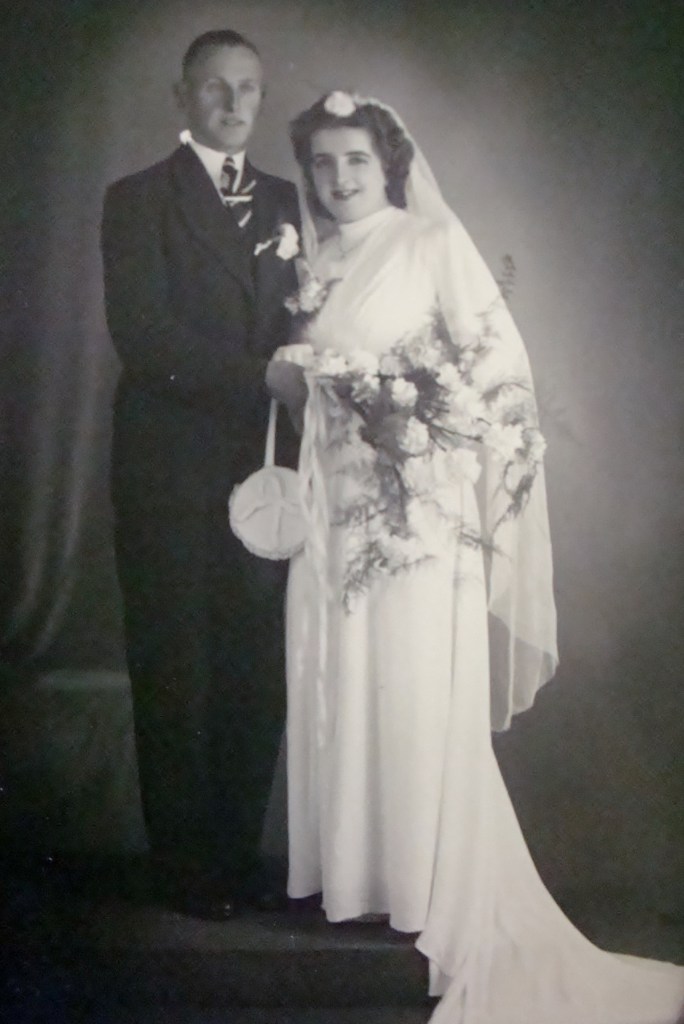
Adrianus Joseph “Arie” van der Fluit (1923 – 2002) and Christina (“Tiny”) Komen (1923 – 2000) on their wedding day.
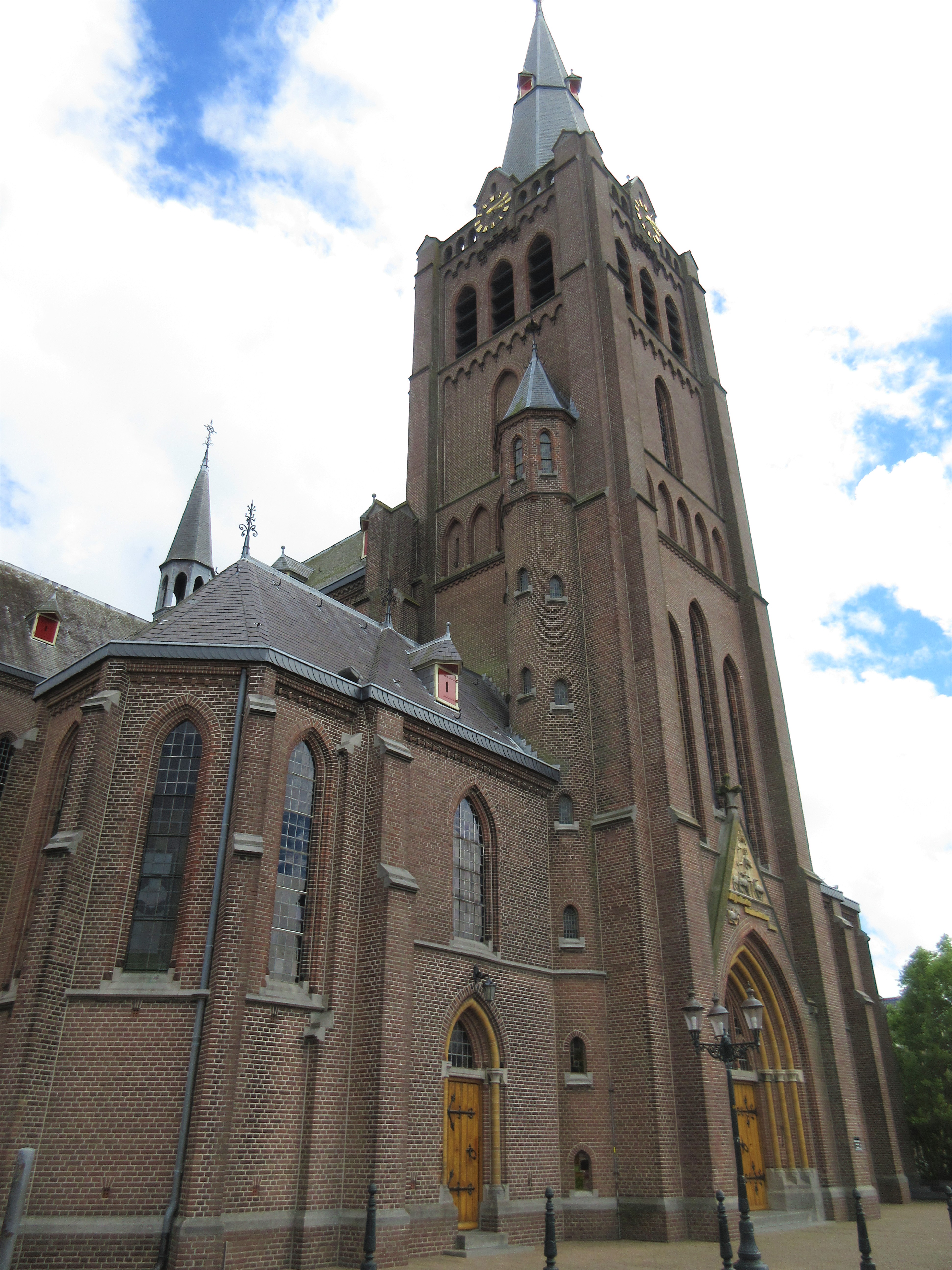
My father and his siblings organized a surprise party to celebrate my paternal grandparents’ 40th wedding anniversary. Adrianus (“Arie”) van der Fluit and Christina (“Tiny”, rhymes with “genie”) Komen were married on November 7, 1948, in Langedijk, Noord Holland, Netherlands at St. Jan de Doper Katholieke Kerk (St. John the Baptist Roman Catholic Church).
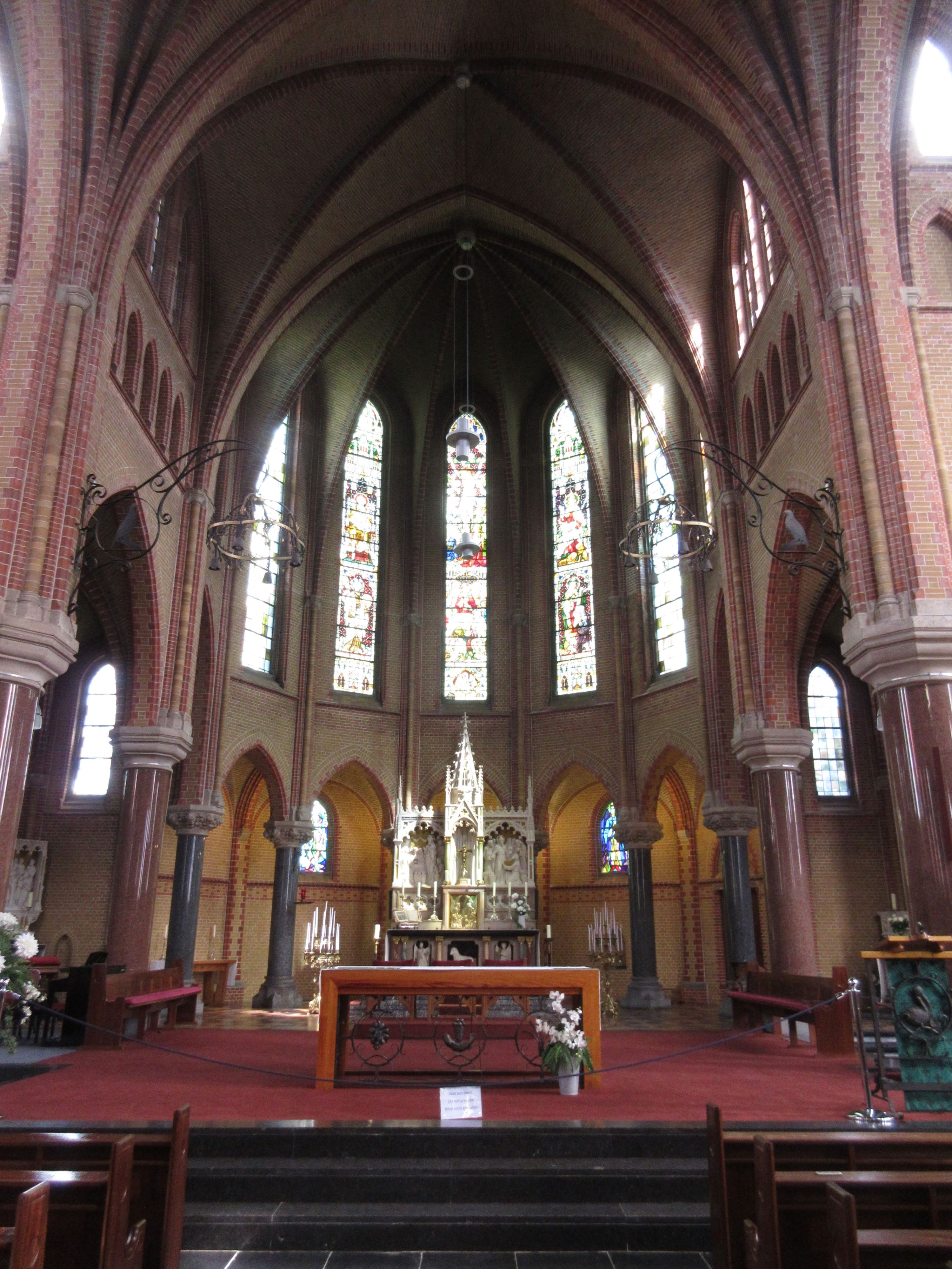
Kerk van Sint-Joannes de Doper, Noord-Scharwoude, Noord Holland, Netherlands, where my grandparents were married.
All my father’s siblings lived in Lethbridge, like my grandparents, so all the family living there were in attendance. My parents and siblings were living in northern British Columbia at the time, so my folks left my brothers and sisters with some family friends. In addition to all their children and most of their grandchildren, several family members also came over from the Netherlands to join in the festivities.
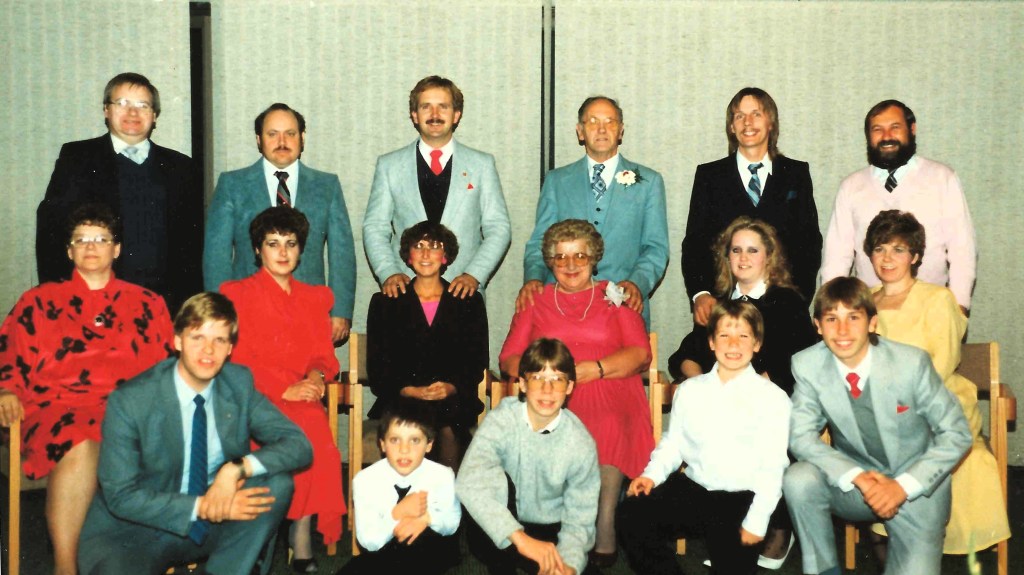
My grandparents, all their children and spouses, and about half their grandchildren (my four younger siblings did not attend). Several more grandchildren were born years after this celebration.
I had already left home and was living in Vancouver, so I flew to Alberta. I had lived in Vancouver long enough to have gotten used to the very mild winters there, forgetting that it was real winter elsewhere. So I boarded my flight wearing only a light jacket, only to be greeted by -11°C weather.
Two of my father’s cousins who made the trip from the Netherlands to celebrate my grandparents’ 40th wedding anniversary. That’s my noggin in the lower right.
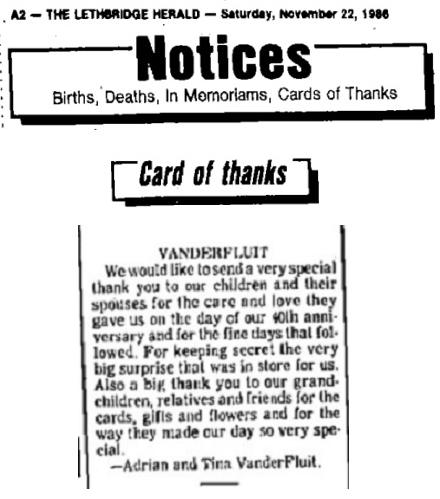
My grandparents took out a “thank you” notice in the Lethbridge Herald on November 22, 1986:
“We would like to send a very special thank you to your children and their spouses for the care and love they gave us on the day of our 40th anniversary and for the fine days that followed. For keeping secret the very big surprise that was in store for us. Also a big thank you to our grandchildren, relatives and friends for the cards, gifts and flowers and for the way they made our day so very special.”
Speaking of surprises, I was surprised to discover that I had written about this before, for last year’s 52 Ancestors Challenge! Upon making that discovery, I thought I might scrub this and choose a new topic. However, I changed my mind because (a) I’m feeling lazy (b) I have too many other things to do and (c) I had chosen several different photos than before. But let’s not talk about it, okay?
I had originally drafted this as a post separate from the 52 Ancestors Challenge, but then I noted “Free Space” as an upcoming post. So nice to be ahead of the prompt for a change!
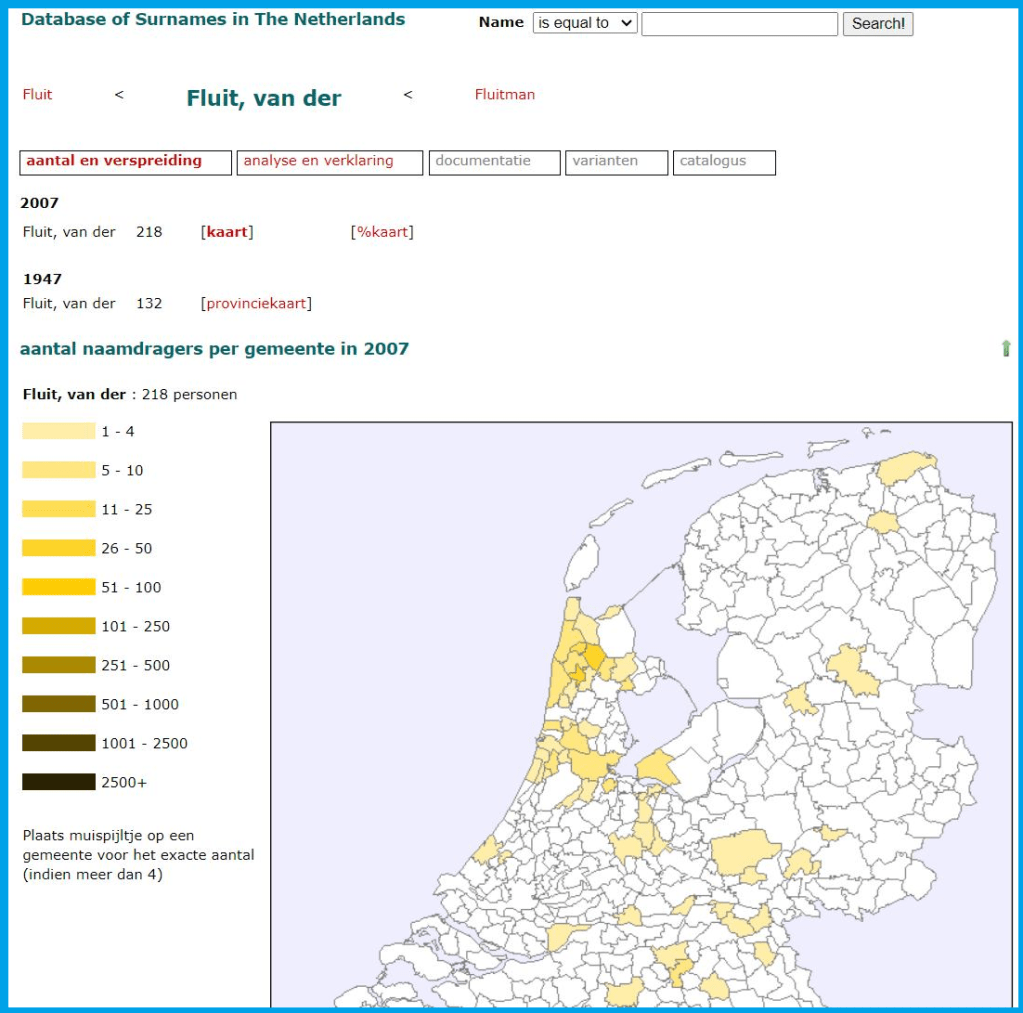
The Database of Surnames in The Netherlands contains about 300,000 surnames found in the Netherlands in 2007, with similar data for 1947. It is maintained by the CBG Centrum voor familiegeschiedenis (“CBG Centre for Family History”) in the Netherlands, formerly called the Centraal Bureau voor Genealogie (“Central Bureau for Genealogy”).
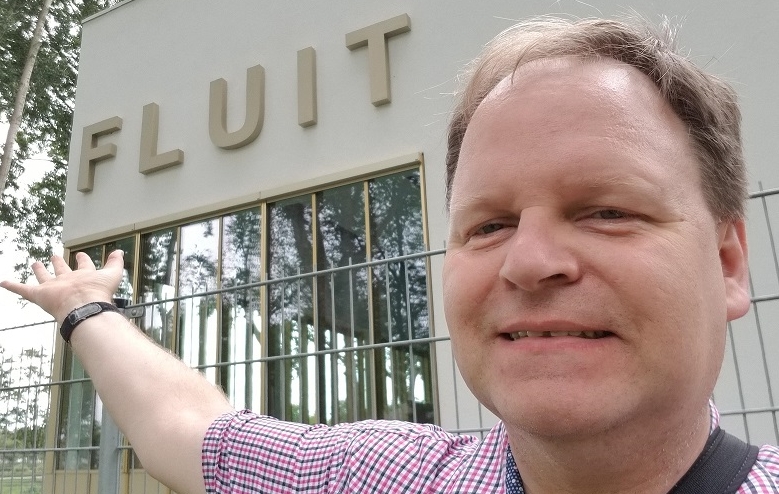
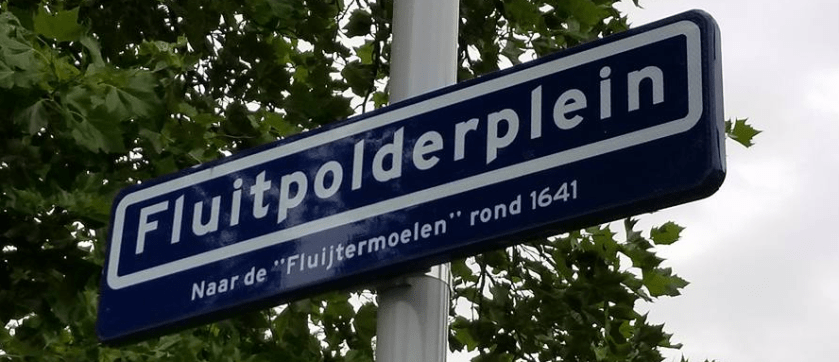
A swimming pool with my surname on it, located on Fluitpolderplein in Leidschendam, Zuid Holland. Our surname either comes from the polder on which this pool is located, or the polder is named after my ancestor. There’s also an adjacent library, where I tried to do a bit of family history research.
You’d be hard pressed to find many Vanderfluits/van der Fluits in North America. Yes, there are a few of us, mostly in New Brunswick and Alberta, and some in British Columbia (like me!). There are also a few in the United States.
There aren’t many van der Fluits in the Netherlands, either, but 218 (in 2007) seems like a huge number when I think of how few are on this side of the Atlantic.
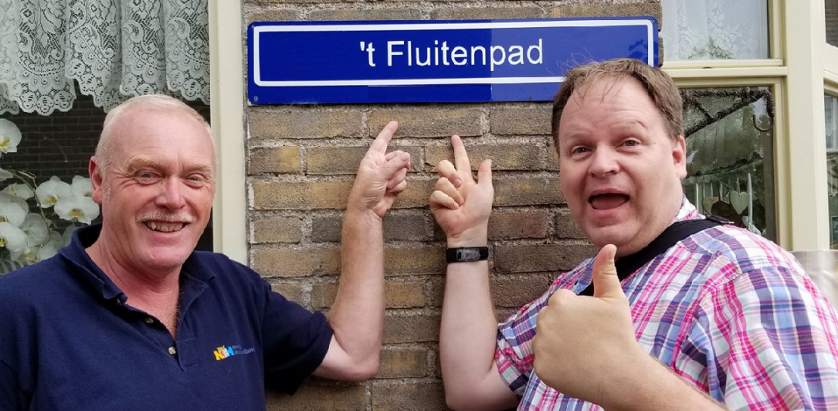
Visiting my cousin in the Netherlands, whose house is on “‘t Fluitnpad” – which is actually the name he gave his driveway. In English, it says “The Fluit Path”.
It’s no surprise to me to find the concentration in Noord Holland (the bit below Texel, the largest of the islands on the map). It’s where my father was born and pretty much where all the van der Fluits who I know in the Netherlands live. What’s surprising are the pockets of van der Fluits in Gelderland and Noord Brabant (the south-east). I have no idea who they are or how they got there. Even more surprising is the dearth of van der Fluits in Zuid Holland (around The Hague and Leiden), especially since that is the primary source of the surname. There are *zero* in many of the municipalities where my ancestors came from.
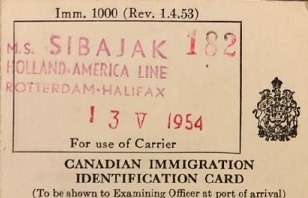
Like many immigrants, my father came to Canada on a boat; in his case, the M.S. Sibajak.
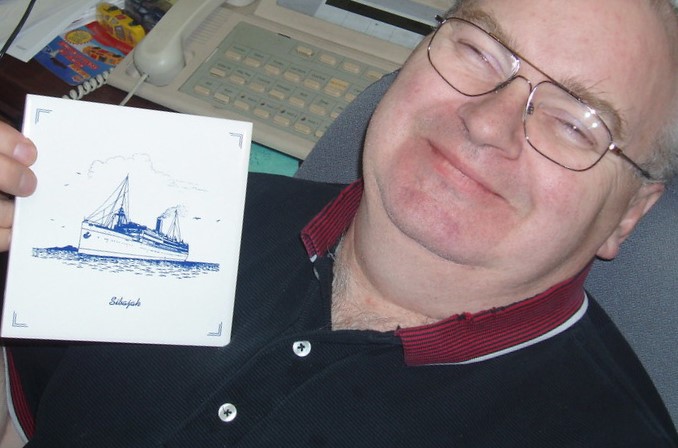
My father holding a Delft tile of the Sibajak, the ship on which he immigrated to Canada in 1954. This one is actually a replacement, as the original one I gave him had chipped. I was lucky to find this, as these tiles are no longer available.
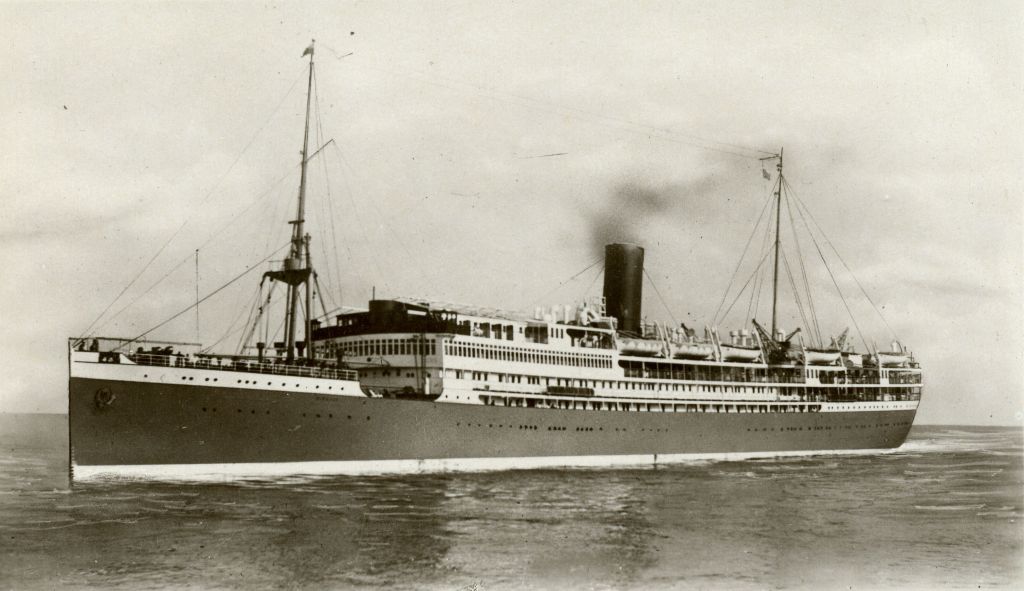
The Sibajak was named after a volcano in Sumatra. it was built for Koninklijke Rotterdamsche Lloyd (Royal Rotterdam Lloyd) at the De Schelde shipyards in Vlissingen, Zeeland. Construction began in 1926 and completed in 1927. Royal Rotterdam Lloyd received the Sibajak in January 1928. At launch, it could carry 527 passengers and had a crew of just over 200. It departed on its maiden voyage on February 8, 1928, leaving Rotterdam for Batavia, Dutch East Indies (now Jakarta, Indonesia).
The M.S. Sibajak when it launched in 1927.
During World War II, the Sibajak ended up in Liverpool after the Dutch fell to the Nazis at home and to the Japanese in the East Indies. The Dutch government in exile seized the ship, which was re-registered in Curaçao. The British navy took control of the Sibajak, but its Dutch and Indonesian crew continued to operate the ship. After modifications were made in Singapore, the Sibajak served as a troop ship during the war. It was capable of carrying up to 2,300 troops. The British returned control of the ship back to the Dutch in 1946.
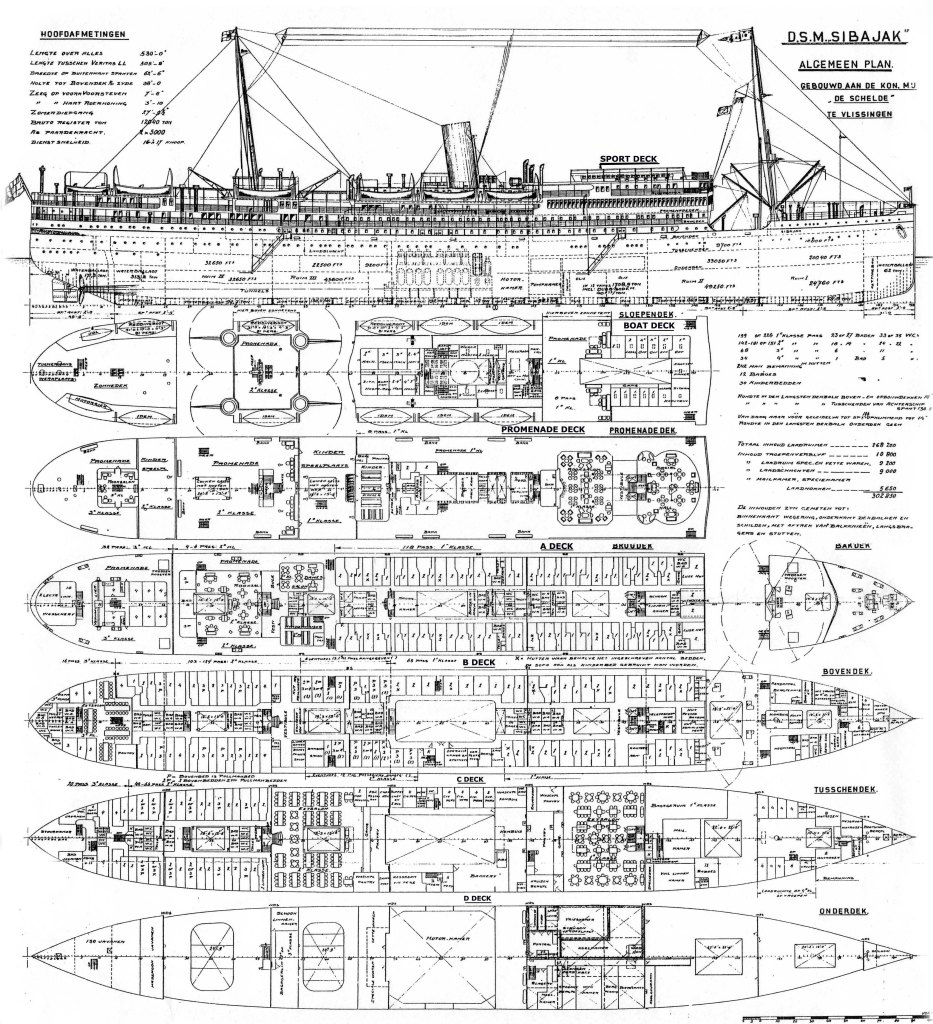
The original plans for the Sibajak.
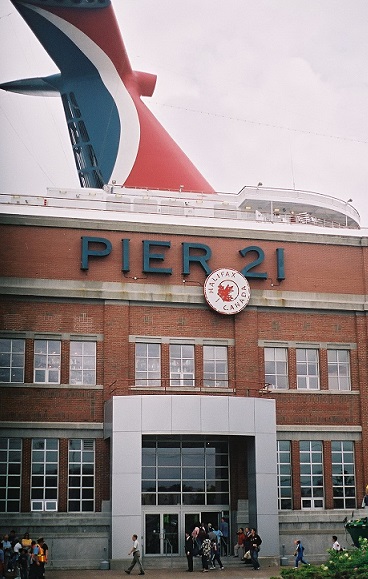
Pier 21 in Halifax, which is now a museum that I have visited twice.
The Sibajak was converted back into a passenger ship in 1950. It had the capacity to carry 956 passengers. Its first voyage after the retrofit was in April 1950, transporting Dutch emigrants departing from Rotterdam for Melbourne, Australia. It also served to repatriate Dutch citizens after Indonesia’s independence. In 1952, the Sibajak also carried passengers to New Zealand, Canada, and the United States.
In 1959, Royal Rotterdam Lloyd sold the Sibajak to a company in Hong Kong. The Sibajak’s last voyage as a passenger ship ended in July 1959, travelling from Rotterdam to Melbourne via Curaçao, the Panama Canal, Wellington, New Zealand and Sydney, Australia. In August 1959, the new owners transported the ship to Hong Kong, where it was stripped of all salvageable materials and scrapped. My understanding was that the remains were scuttled somewhere in the waters around Hong Kong. When I visited the city in 1996, I wondered how close I had come to it on the many different boats and ferries I rode on at the time.
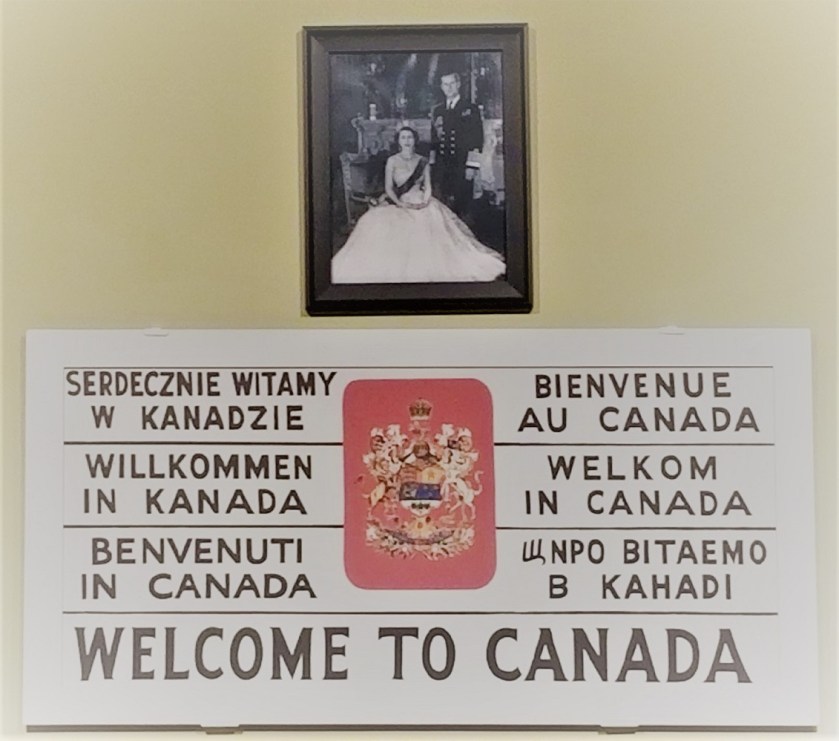
This hangs on the wall in front of the seating area in Pier 21 where immigrants waited to be interviewed by immigration officials.
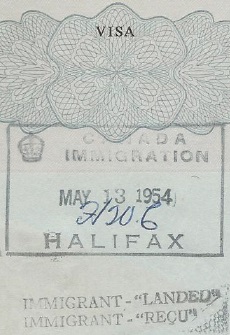
My father and his family departed Rotterdam on May 5, 1954 and arrived at Pier 21 in Halifax, Nova Scotia on May 13, 1954. Pier 21 is analogous to Ellis Island in the United States. My father’s aunt and uncle came over four months earlier, in January 1954 on the Groote Beer, while another aunt and uncle followed in late May 1954, on board the Castel Felice.
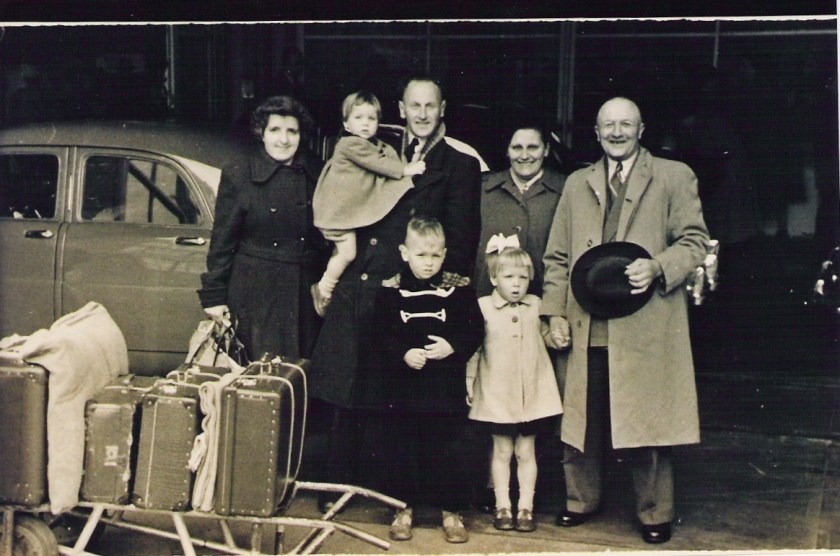
My father with my grandparents and his sisters at the Rotterdam pier on the day of their departure for Canada aboard the Sibajak. My father is standing in the centre, in front of my grandfather. The couple on the right are family friends who drove my family to the pier. At the time, my grandmother was two months pregnant with my father’s youngest brother!
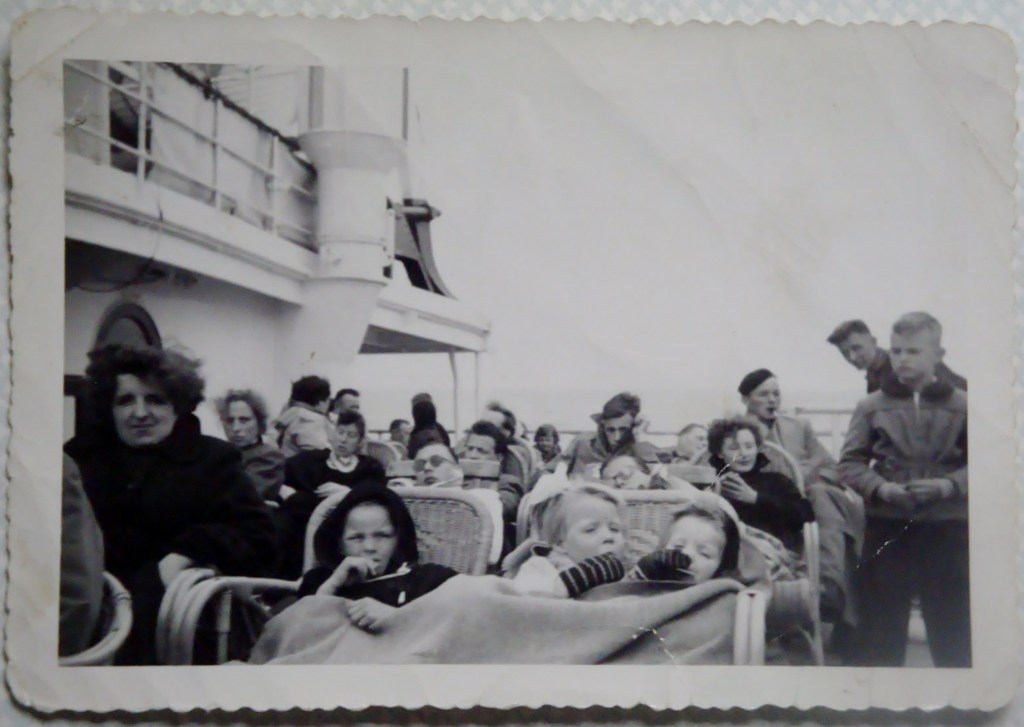
My grandmother, my father, and his two sisters seated on the deck of the Sibajak somewhere on the Atlantic Ocean between the Netherlands and Canada.
From Halifax the family took the train from Halifax to Alberta. On often-told story recounts my grandmother becoming separated from the family and lost during a stop in Montreal. Happily, she found her way back to the train before departure. he train went through Maine, U.S.A., and through Montreal. My grandfather originally planned on settling in Manitoba. However, his sister encouraged him to continue on to Alberta, where she and my great uncle had settled.
They made it!
In the late 1990s, my parents went on an Alaskan cruise on a Holland America ship. During the trip, my father, who loves to talk to people, fell into a conversation with one of the older hands on deck. My father mentioned having come to Canada on the Sibajak. After a few questions from the crew member, my dad learned that the man had been on the Sibajak during my father’s trip, in his first year or two of service.
This is a fascinating short documentary about a voyage the Sibajak made to Australia carrying Dutch emigrants. The video is in Dutch, but the images convey a lot of meaning. My father recognized many of the scenes in this video.
I don’t know if my father acquired it before or after I was born, but for us the first family car was a 1966 Oldsmobile Cutlass. Or, as my father called it, The Hutless Cutlass.
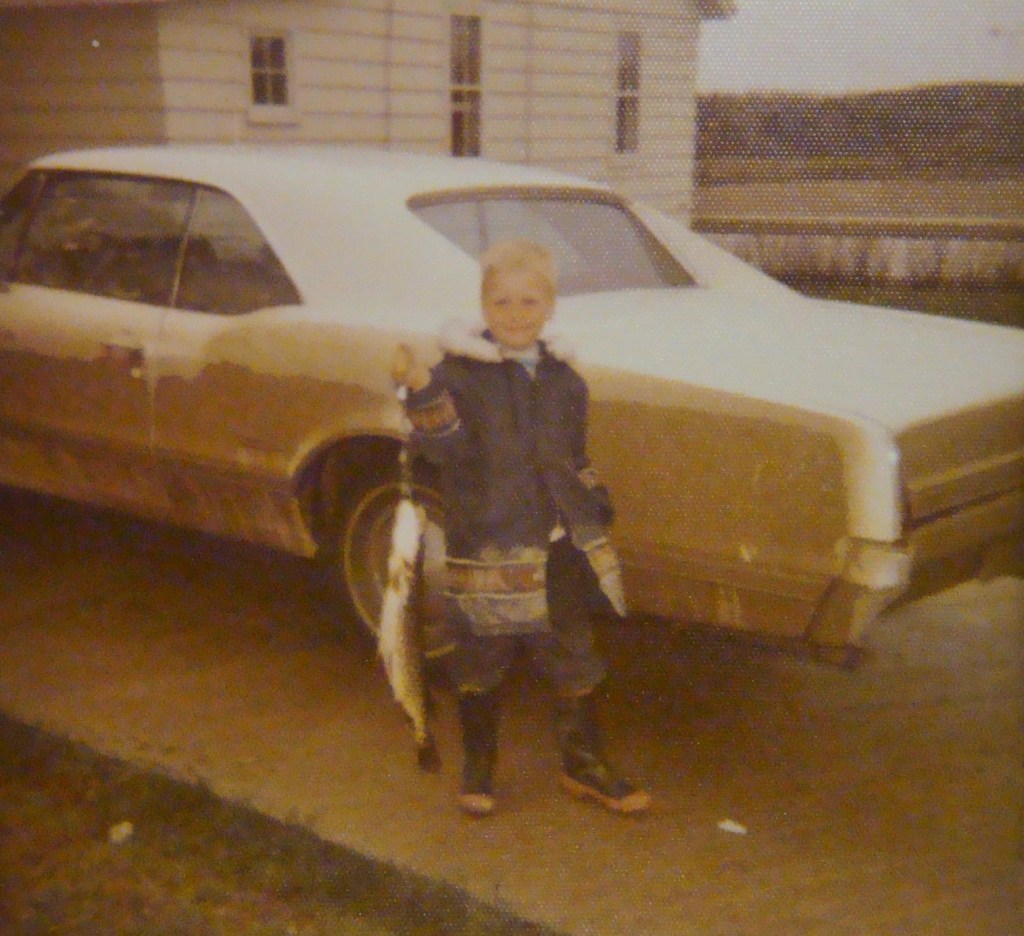
Me in front of the Hutless Cutlass a month before my fifth birthday, in Creighton, Saskatchewan. My father often took me fishing. When we lived in Creighton, we usually went fishing at the lakes and rivers right over the border in Manitoba. Here I’m holding a jackfish (northern pike), but what I really preferred to catch were pickerel (walleye).
My father bought it when we were living in Lethbridge, Alberta. The Hutless Cutlass travelled all over western Canada, both as we moved around the country and for many family road trips. With my youngest sister, it meant that there were six people packed into that car (dad sold it before my youngest brother was born). Invariably, whether we were in Creighton, Saskatchewan (on the border with Manitoba, next to Flin Flon) or Duncan, British Columbia, the road trip was to Lethbridge to visit family. Since my dad loves exploring, that car has probably driven over nearly every primary, secondary, and tertiary highway from the Pacific to Manitoba.
The Hutless Cutlass was old school – no power steering, no power brakes, no air conditioning. I remember it had a choke. From time to time, while checking under the hood, he’d have me open or close the choke, or rev the engine.
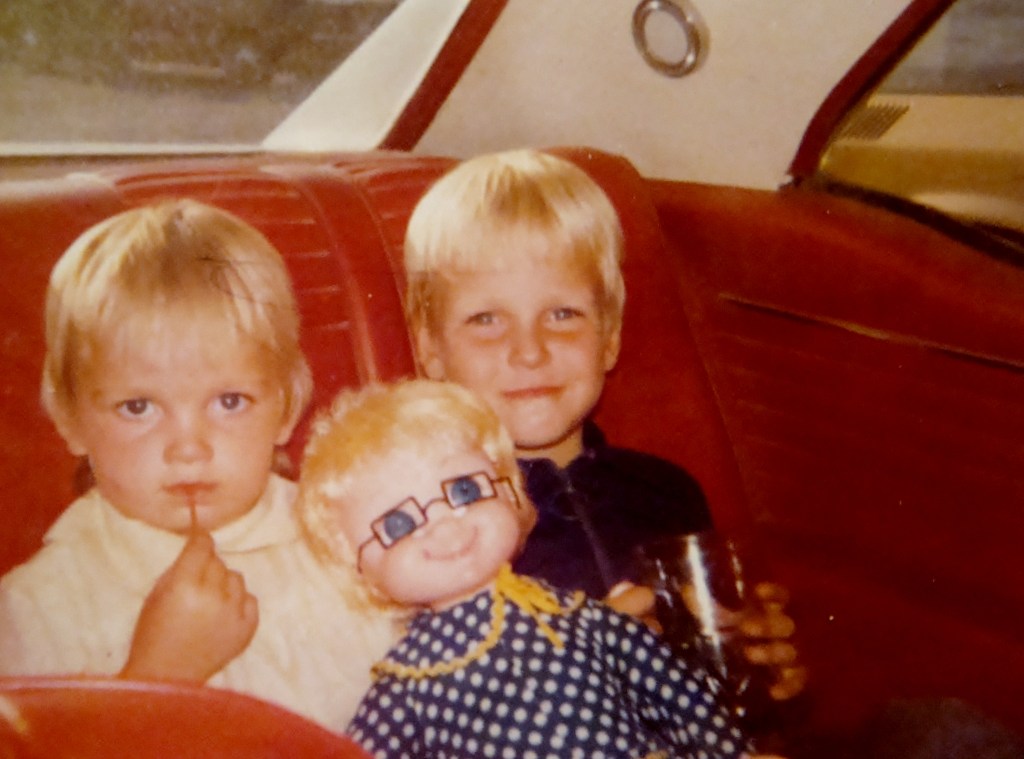
At the A&W Drive In in Terrace, British Columbia, with my sister and Mrs. Beasley.
One night, when I was about 13, my dad and I went to a hockey game in the small prairie town where we were living at the time. We got home pretty late. We didn’t pull into the driveway. Instead, we parked in front of the house, with the engine running. If memory serves, we were listening to the sports highlights on the radio. Somehow the conversation turned to me telling my dad what I knew about operating a car. I then bragged that I probably could even drive it. Dad doesn’t let it slide; rather, he says show me. So we switch seats and I drove very slowly and tentatively down our empty street at the edge of town.
Sometime when I was 13 or 14, my father traded the Hutless Cutlass in for an Oldsmobile Delta 88. It was a real land yacht, and the car in which I learned to drive and took my driving test. (I am always quick to point out I took my driving test during a blizzard – how Canadian!) When I was in grade eight or nine, sometime after my dad traded it in, I saw our old Hutless Cutlass parked downtown. Of course, I had to check it out. The interior had been completely redone in some sort of heavy metal decor. I particularly remember that the steering wheel had been replaced with a metal chain with the links welded together so that it formed a circle. That poor car.
 A Deck of Ancestors