
52W Mark III – Week 28: Trains

My grandfather, Leo Burgess (1920 – 1995), worked for the Canadian Pacific Railway for 32 years. I’ve written about various aspects of his time with the railway, such as the fact he was a proud member of his union and his brushes with Hollywood, including meeting his movie idol Glenn Ford.
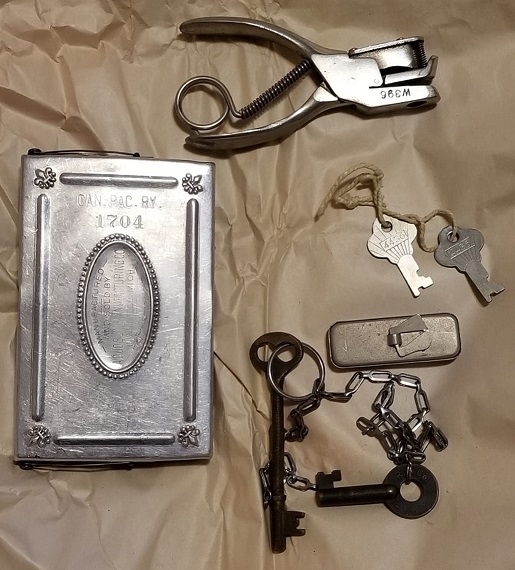
Some of the items my grandfather used as a conductor, which are now in my possession

Leo was based out of Lethbridge, Alberta. He started as a brakeman and worked through the ranks, later becoming a yard manager. Early on, because of winter layoffs, he chose to work for the CPR in Cranbrook because there was more work there during the winter to provide a steady income. In 1972 he became a conductor, performing that role until his retirement in 1982.

One of my earliest memories was travelling on the train from Medicine Hat to Lethbridge. I’m sure my mother would correct me if I’m wrong, but in that memory I am sure my grandfather was travelling with us.

My grandfather often brought me to the train station in Lethbridge when I was little. Of course, the highlight was always getting to go on to the caboose. Of course, I’m showing my age in being able to recall a caboose as an everyday working part of a train and not just as a museum piece.
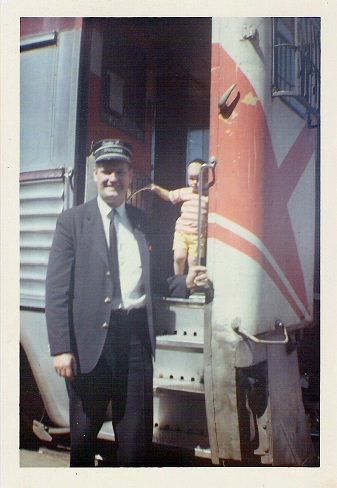
One of my favourite photos, showing me with my grandfather. If there’s any doubt, he’s the one on the left.

The station building still exists and has been designated with heritage status. In the 1980s, the railyard was relocated a few kilometers west of the city and the tracks were removed from central Lethbridge. In 1987, the station building was converted into the Lethbridge Community Health Centre and it still serves in that capacity.
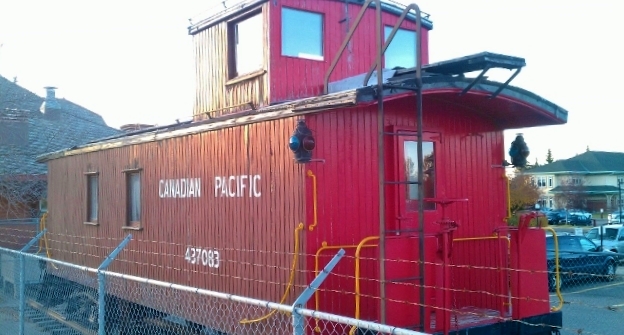
The former train station in Lethbridge is now the Community Health Centre. This caboose remains preserved beside the former station building. I wonder if my grandfather ever worked on this specific railcar. Heck, I wonder if this is one of the cabooses that he took me on!

Of course, I would be remiss if I did not repeat the fact that working on the train crew for Superman: The Movie was one of the highlights of his time with the CPR. During the eulogy at my grandfather’s memorial service, one of his friends told an anecdote that suggests my grandfather felt that he had gotten familiar with the cast and crew. The scene took six days to shoot. Apparently during a break in filming, Ford was talking to a group of railway workers when my grandfather sauntering up, put his arm around the actor, and said, “How’s it going, Glenn?”
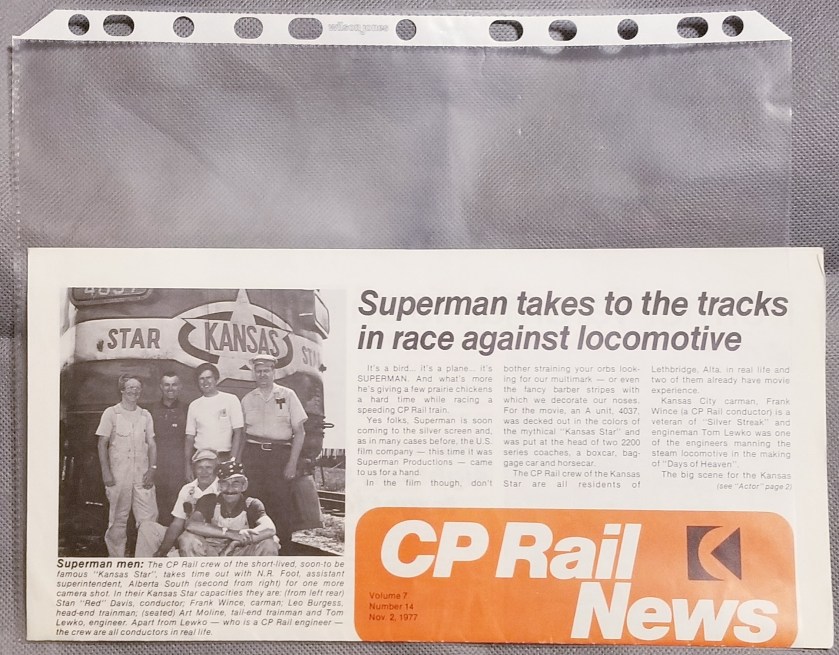
My grandfather was working in the engine during the filming of this scene. My parents live about a 30 minute drive from where this was filmed. The tracks are gone, but the memories live on.
My grandfather is the man wearing a cap standing on the right side of the photo.

52W Mark III – Week 27: Planes

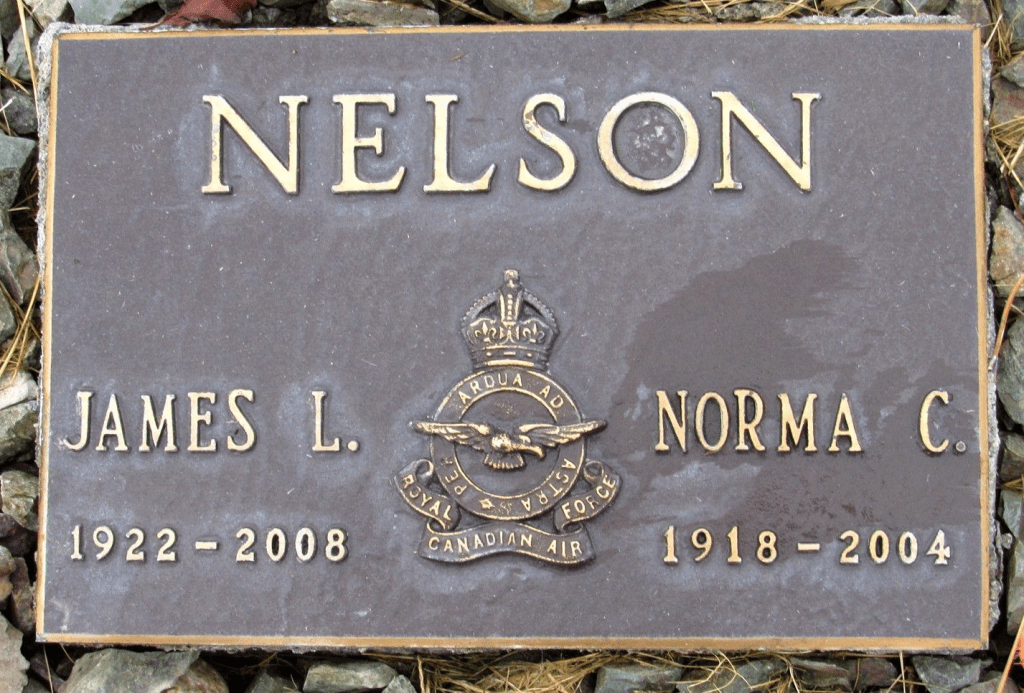
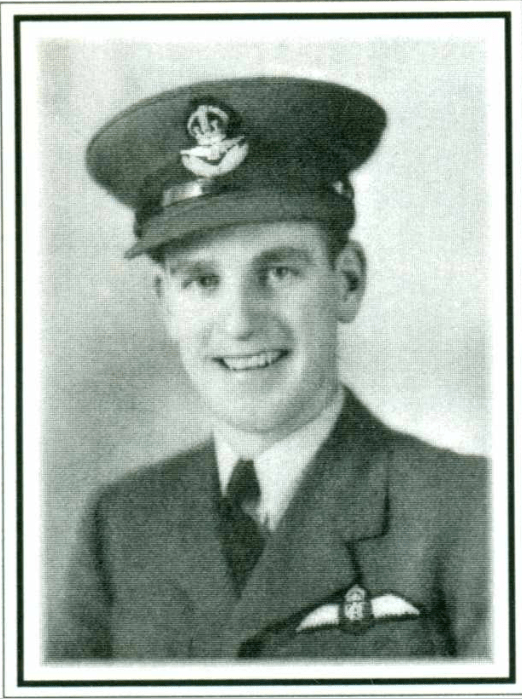
James Lorenzo Nelson (1922 – 2008) was my grandfather Leo Burgess’s cousin. James had a distinguished career as a Royal Canadian Air Force pilot, which included a four-year stint assigned to the Royal Air Force. During his career, he served on 16 different kinds of aircraft and logged 8334 flying hours.

James Lorenzo Nelson

James was the second of the nine children of Lorenzo Snow Nelson and Mary Ireta Turner. However, James’s older sister Clea died within weeks of birth, so James essentially grew up as the eldest child.

When he was 20, James joined the Royal Canadian Air Force during World War II, in October 1942. After training, James was transferred to Bomber Command in Leeming, Yorkshire, flying Halifax and Lancaster bombers. After the war, he remained in England as part of the post-war demobilization. During that time, he transported soldiers out of Italy, cleared armament dumps, disposed of unused bombs and ammunition by dropping them into the Irish and North Seas, and flew old aircraft to the “junk yard”. James was part of the last Canadian-crewed Lancaster flight.

This Lancaster is on display at the Bomber Command Museum of Canada in Nanton, Alberta. It is one of 17 remaining Lancasters in the world. It is also one of four Lancasters that can taxi under its own power. We were lucky enough to see the engines in operation during a test in 2016.

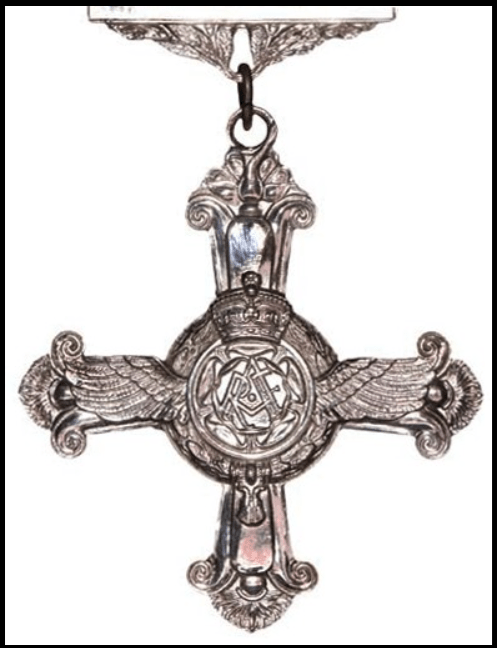
After the war, James returned home to Alberta and briefly spent some time as a grain buyer. Clearly the land was not where James’s heart laid, as he joined the Royal Air Force in 1947. James served with the #224 Squadron in Belfast, Ireland and with a detachment in Gibraltar. His duties included long-range meteorological reconnaissance. King George VI awarded James the Distinguished Flying Cross at Buckingham Palace on October 31, 1951. The commendation read:

This officer has served with No. 224/269 Squadron at Aldergrove and Gibraltar for two and a half years from March 1948 to 1951. During this time he has flown one hundred meteorological sorties, and on nine occasions he has experienced engine failure in flight. He has coped with these problems coolly and with exceptional skill, proving an excellent leader under most adverse conditions.

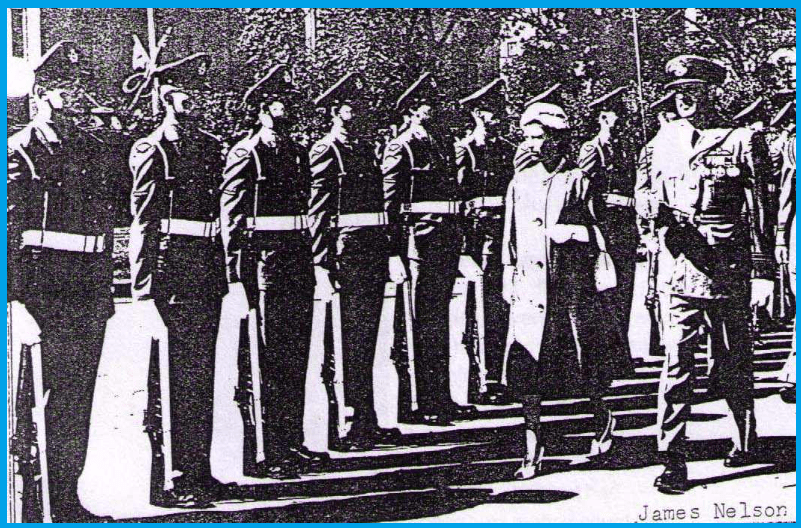
James completed his service with the Royal Air Force in 1951. He returned to Canada and immediately reenlisted in the Royal Canadian Air Force. James was initially posted in Calgary and then later in Edmonton. During his time in Edmonton, James was awarded the Air Force Cross by Governor General Vincent Massey for his service. After four years in Edmonton, James was transferred to Training Command. In 1959, James served as Guard Commander during Queen Elizabeth’s visit to Regina. In 1967, James was transferred back to Edmonton to serve as Provincial Air Cadet Liaison Officer.

James serving as The Queen’s Guard Commander during her Royal Visit in 1959.

In 1953, while stationed in Calgary, James married Norma Dunford (1918 – 2004). Together they had two children, one of whom was a dentist. I am pretty sure he worked on my teeth, but I didn’t discover the familial connection until well after the fact.

After James left the military, he and Norma relocated to Penticton, British Columbia. James owned and operated a picture-framing business there from 1971 to 1976, when he sold the business. James spent his retirement in Oliver, British Columbia, spending his time golfing, fishing, hunting, and caring for a small fruit orchard. He died in 2008, at the age of 86.

52W Mark III – Week 20: Taking Care of Business

When I was a kid, we moved around a lot. People often asked my if my dad was in the military. No, he was a Woolworths manager.

My father entered the Woolworth manager training program right out of high school. Back in the day, the program involved a lot of moving around. Later, promotions almost always meant a transfer. He was with the company for 28 years, leaving the company about six months after Wal-Mart bought it out in Canada. That’s a story for another time.

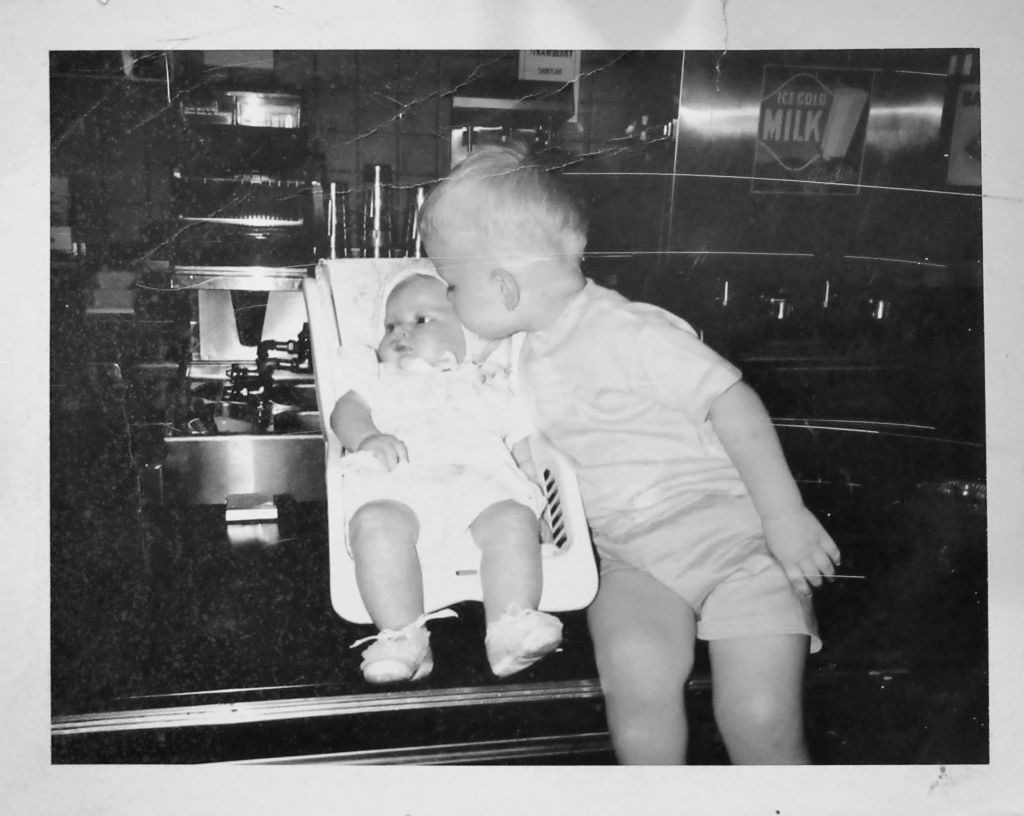
My sister and me at the Woolworths in Regina

My dad began his career with Woolworth’s in Lethbridge, Alberta as a management trainee. He once told me that his very first assignment on his first day was to unload a shipment of bras, and the female staff stood there giving him a hard time. Next, my dad trained in the Regina, Saskatchewan and Medicine Hat, Alberta stores, where he was an assistant manager.

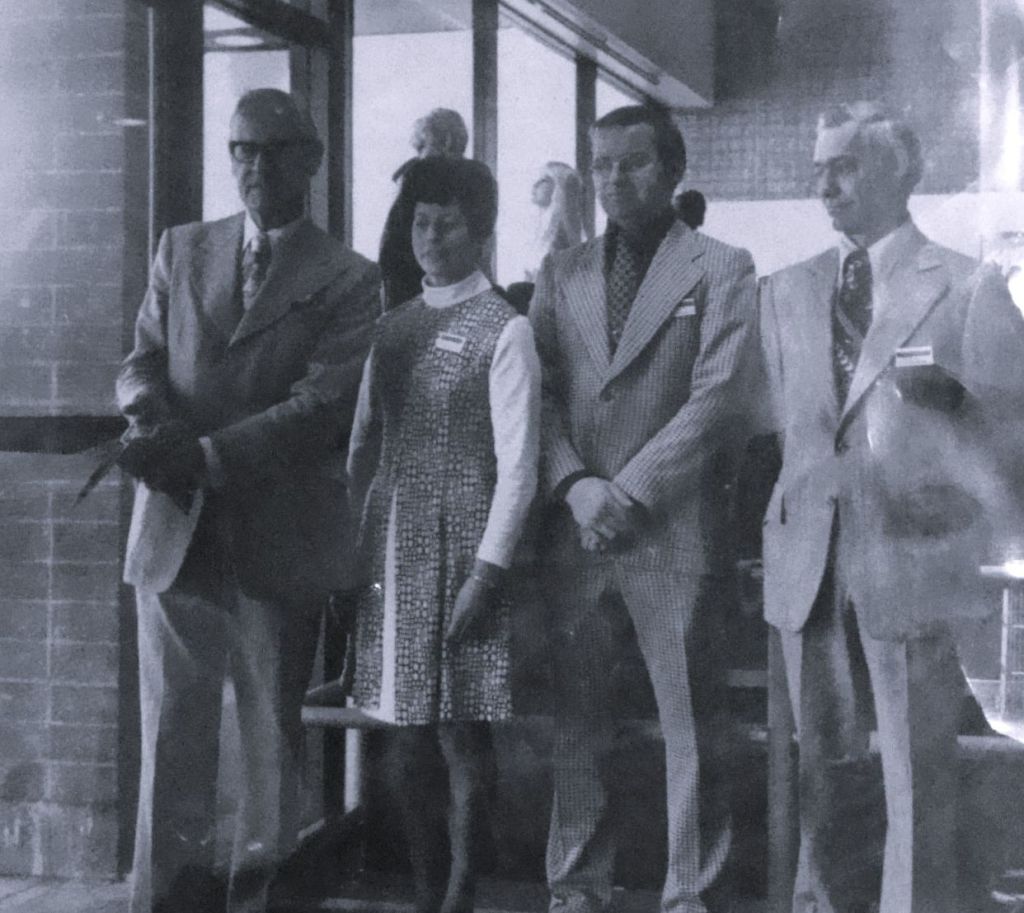
Dad’s first store as manager was in Flin Flon, Manitoba. After Flin Flon, dad was transferred to Terrace, B.C., and shortly afterward to Duncan, B.C., where he opened a new store there as the Associate Manager.

Grand Opening of the Woolworths in Duncan. My dad is second from the right.

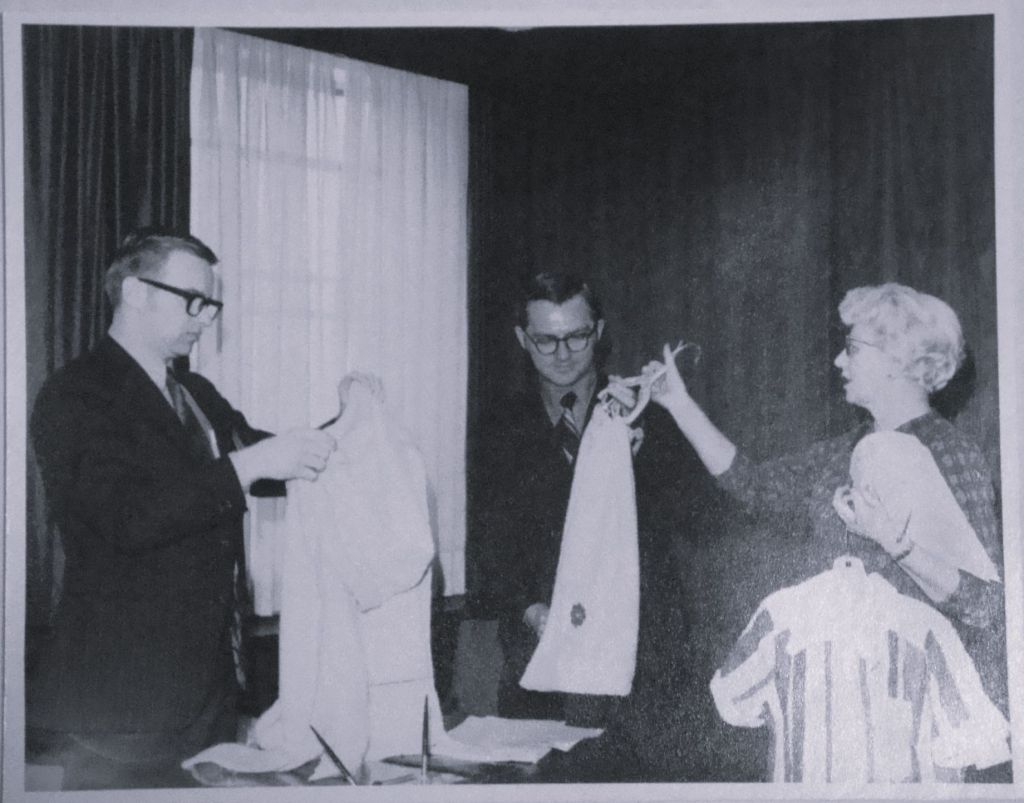
At one point, the Canadian head office in Toronto transferred dad to Kirkland Lake, Ontario. However, when the international head office learned about the transfer, they cancelled it. They thought it was too much to move a man with young kids halfway across Canada.

My dad (left) at the Canadian head office in Toronto.

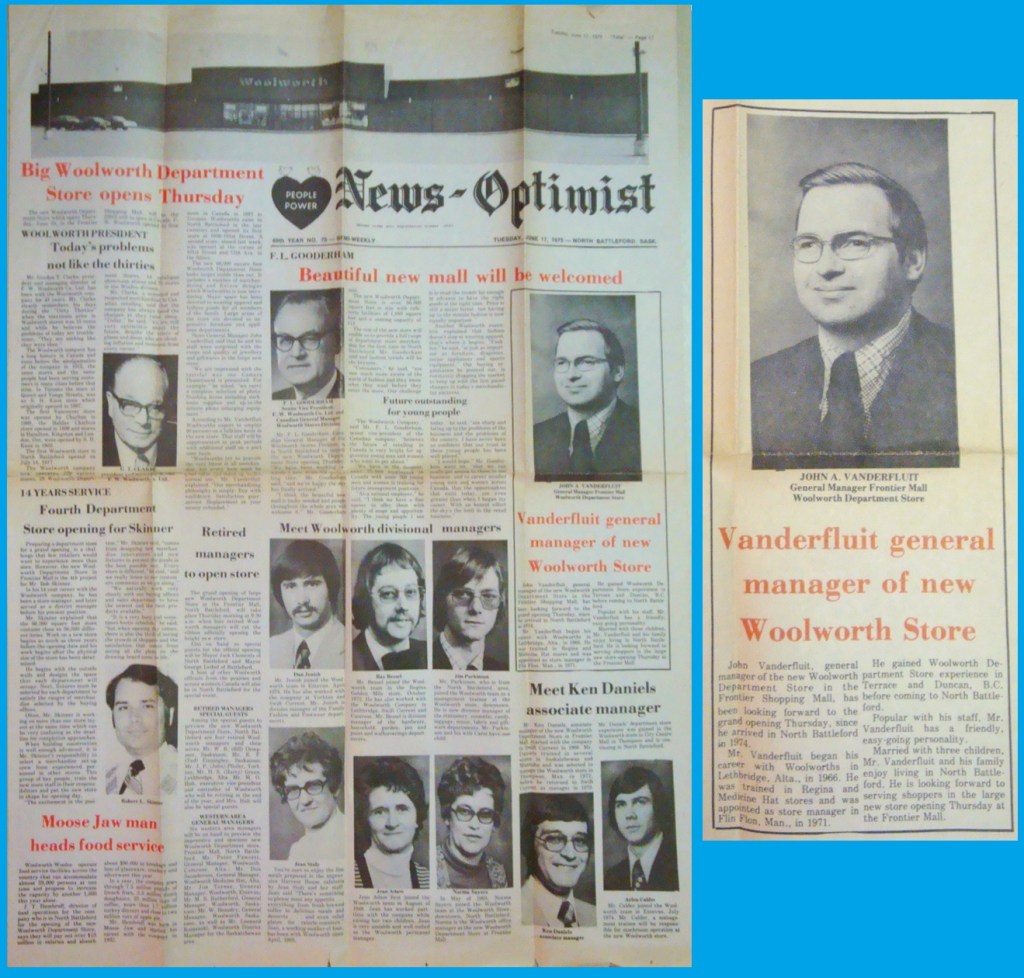
Dad transferred to North Battleford in 1974 and was General Manager when Woolworths opened a large new store there as the anchor tenant of the Frontier Mall in 1975.

Big news in a small town.

Dad quit in the early 80s and went into business as a sales agent for a furniture company. The new career was not what dad anticipated, and he did not enjoy being separated from his family as the job entailed a great deal of travel. He returned to Woolworth’s a few months later. As he had been replaced at the North Battleford store, he was assigned to the Woolworths in Swift Current, Saskatchewan. He commuted from North Battleford to Swift Current, a distance of about 320 kilometres. Dad was there until he was transferred to Terrace, British Columbia six months later.

Four years later, the company transferred dad to William’s Lake, B.C. In 1989 Woolworth’s converted all of its larger Woolworth stores into Woolco stores, which included the Williams Lake location.

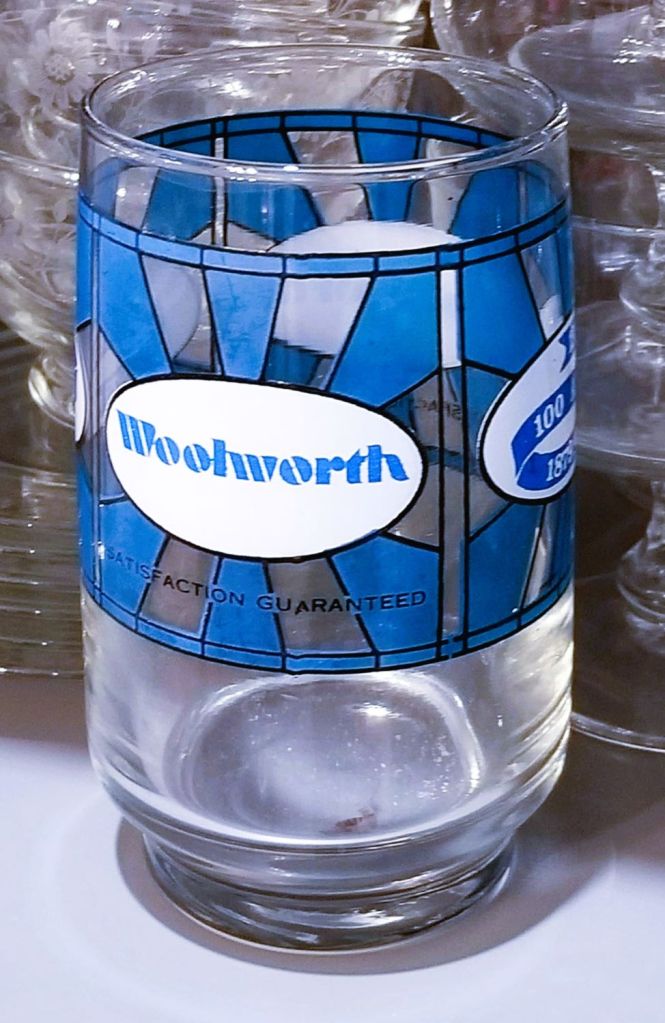
Until last Christmas, I had no idea my mom still had these.

In August 1991, dad was transferred to the Woolco in Chilliwack. In March 1994, Woolworth’s sold its Woolco stores to Wal-Mart. Wal-Mart transferred Hans to Hinton, Alberta that same month. Dad left the company in August 1994. My parents and younger siblings then moved to Lethbridge, where we still had a fair amount of family. My dad briefly went into sales before he and my mother bought a small motel in southern Alberta. My dad has now been a motelier longer than he was a Woolworths manager. My youngest sibling and I have had much different fathers!

One of my brothers had this on his bedroom door for years.

52W Mark III – Week 15: School Days

I typically consider myself as a descendant of many, many farmers. However, I am always surprised to remember that I am also descended from many individuals for whom education was important. There are also several educators in my extended family, including a high school principal. One of my sisters was a school teacher before becoming a medical doctor. As well, my maternal grandmother, Helen Lerner, originally intended to become a school teacher until a nun steered her in another direction.

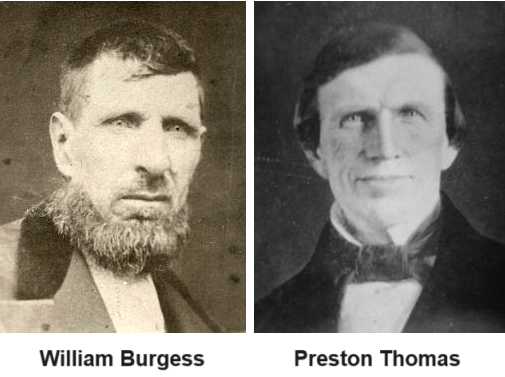
In particular, several of my direct ancestors were school board trustees. The earliest were my Gx3 grandfathers, William Burgess (1822-1904) and Preston Thomas (1814-1877). They served together on the first school board for the Lehi, Utah school district. The school district was created by the city of Lehi by resolution dated February 17, 1854. An election was held three days later, on February 20, 1854. Three school trustees were elected: William, Preston, and Daniel Collett.

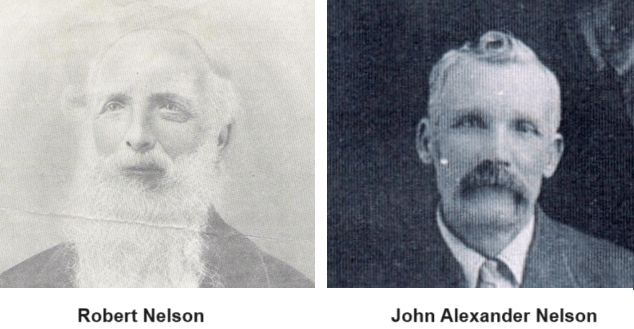
My Grandpa Burgess also had several other school trustees on his maternal line, the Nelson family. According to the 1880 US Census, his great grandfather (another of my Gx3 grandfathers), Robert Nelson (1818-1902) was a school trustee in Smithfield, Utah. Twenty-seven years later Robert’s son, John Alexander Nelson (my Gx2 grandfather) held the same office in Woolford, Alberta. John was one of the founders of the Woolford school board and was one of its first board members.

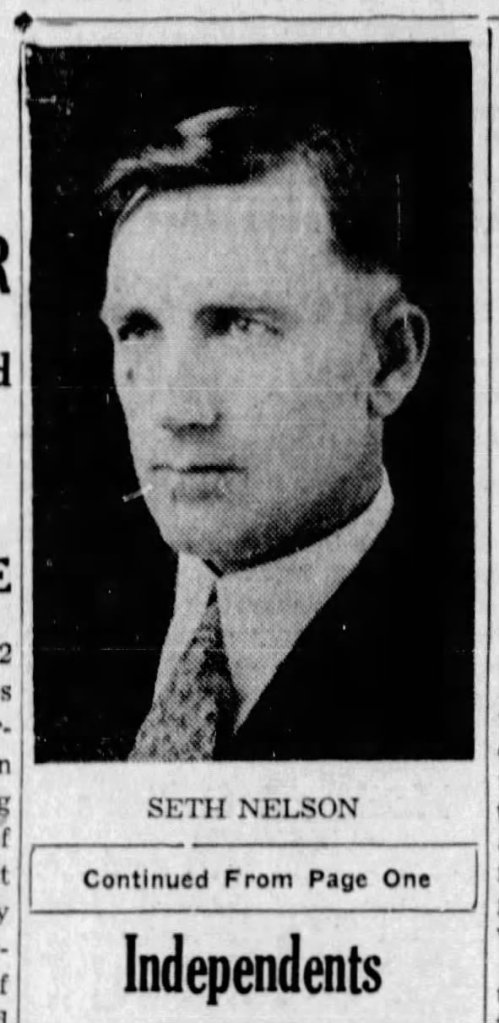
John’s son (my grandfather’s uncle), Seth Henry Nelson Q.C. (1891-1975), also served as a school board trustee in Cardston, Alberta. Seth was a school trustee for 15 years, from 1924 to 1939. Seth served as the Board’s Secretary for the last 10 years of his time in office. Following his last term as a school trustee, Seth made an unsuccessful run for a seat in the Alberta provincial legislature during the 1940 general election. Seth ran as an independent against the incumbent Social Credit candidate, Nathan Tanner. Tanner was a former Speaker of the legislature who was appointed to Cabinet in 1937. Despite running as an independent, it was a close race. Tanner defeated Seth in a two-way race, 2,160 votes to 1,808 (54.4% of the vote).

Education was also a facet of my wife’s side of the family, one of whom also served as a school trustee. Frank Eden (1839-1907), our children’s Gx3 grandfather, was a prominent Halifax, Nova Scotia merchant whose primary business was shoe manufacturing and sales. Frank served two non-consecutive terms as an alderman on the Halifax city council (1892-1893 and 1895-1896). Concurrent with both terms of office on city council, Frank served on the Halifax Board of School Commissioners.

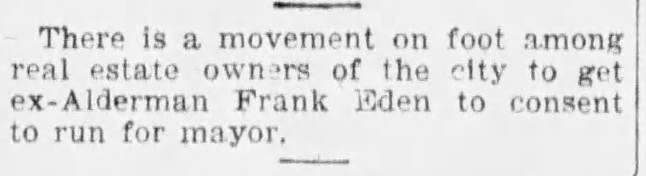
In 1902, there was an attempt to persuade Frank, who was still in the shoe industry, to run for Mayor of Halifax. As stated on page nine of the Halifax Herald, on January 1, 1902: “There is a movement on foot…to get ex-Alderman Frank Eden to consent to run for mayor.” As far as I’m concerned, all puns are intended.