52 Weeks Mark III – Week 6: Earning a Living

While most of my Dutch ancestors were farmers and labourers, it should come as no surprise that a few worked in windmills. On my father’s maternal side of the family, three of my Gx4 grandfathers were watermolenaaren (singular, watermolenaar – “water mill worker”). These were the windmills used for pumping water.

On my father’s paternal line, the surname “van der Fluit” may have originated with a windmill (“Fluijtermolen” – “Whistler Mill”) or the polder (“Fluitpolder”) on which it stood in Veur, Zuid-Holland (now part of Leidschendam). Alternatively, the windmill and polder might have been named after my ancestor, Johannes Dircks (“Jan”) (van der Fluit or Goeman) who owned or constructed them.
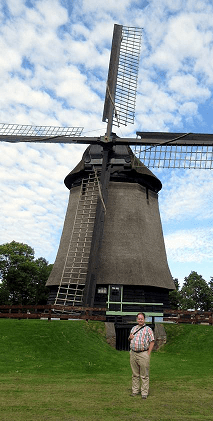
Me standing in front of the windmill in Waarland, Noord Holland, at more than a metre below sea level, about a kilometer from where my father was born and 200 metres from where he was baptized.

My paternal grandmother’s father was Adrianus Komen (1888-1948). Three of his four great grandfathers were all water mill workers. There is a strong possibility all three worked in the same windmill at the same time. I know that two of them, Nicolaas Cornelisz “Klaas” Komen (1786-1864) and Jan Smit (1786-1852) worked at the windmill located in Heerhugowaard, Noord Holland. However, the records I have consulted do not indicate when they worked in the windmill. At most, it is quite likely that Jan was working at the windmill until at least 1852.

I have no idea where and when the third, Johannes “Jan” Woltering (abt 1788-1834) worked in a windmill. I know that it was sometime before 1814, by which time he was working as a carpenter, as documented in the registration of his marriage. Unfortunately, the source from which I obtained the fact he had been a watermolenaar was simply an index and no longer exists. I have not found this item in other sources and records I’ve consulted. The population registers I have seen do not include his occupation. A notarial record I’ve found is dated 1817, which shows Jan working as a carpenter.

Despite this, I have reason to believe that Jan may have worked in the windmill in Heerhugowaard. Jan was born in 1788 in what is now Vreden, North Rhine-Westphalia, Germany. Vreden is about three kilometers from the Dutch border. What he did between his birth and marriage I don’t know, but by 1814 he was living in Akersloot, Noord Holland, which is about 14 kilometers south of Heerhugowaard. After he married he lived and worked in Langedijk, Noord Holland, which is immediately adjacent to Heerhugowaard.
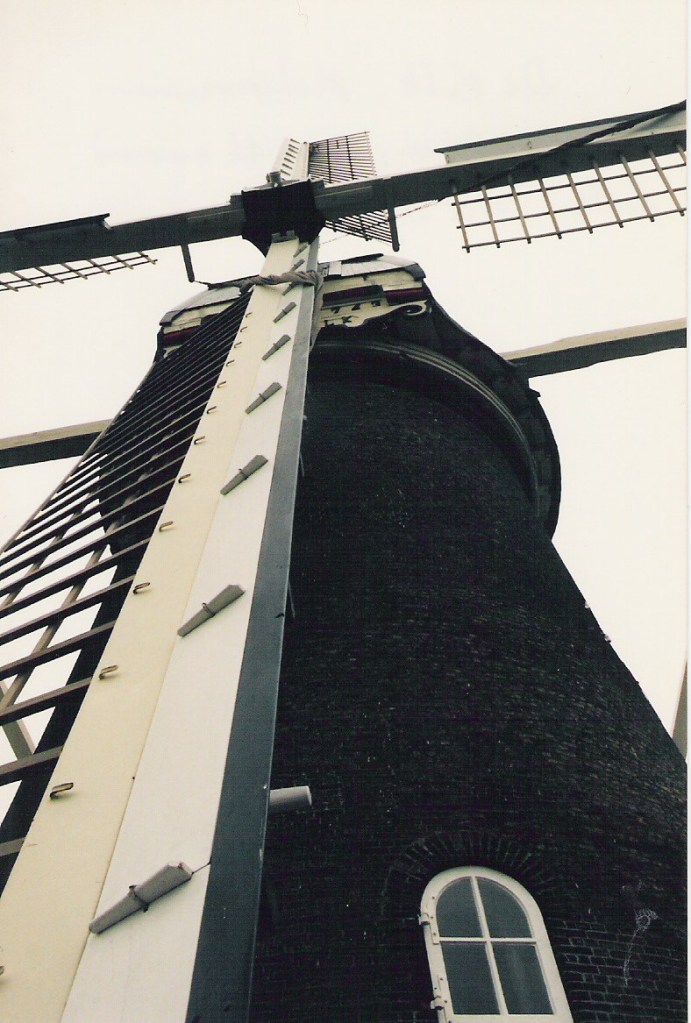
“De Valk” (The Falcon), a windmill in Leiden, Zuid Holland, about 10 kilometers from where Fluijtermolen once stood.

There is one fact in particular that makes me suspect Jan may have worked in the windmill in Heerhugowaard is that Jan Woltering’s son Cornelis married Jan Smit’s daughter Neeltje. Thus, it is possible that the families knew each other because Jan and Jan worked together in the same windmill. Then again, Heerhugowaard was not a large place in 1814 and it is quite possible they knew each other the way everyone in a small town tends to know each other.

Turning to Jan Dircks, the website for the municipality of Leidschendam-Voorburg used to have this information, which I have translated from Dutch:

The square and adjacent street between Prinsensingel, Noordsingel, de Amstelweg, and de Graaf Willem de Rijkelaan is called Fluitpolderplein. This was decided in 1970. But where does the “fluit” in “Fluit Polder” come from anyway? According to a historian of Veur, Hendrik Brouwer Schut, it may have something to do with the whistle of the grinding mills, or possibly the “fluitenkruid” (“cow parsley” or “Queen Anne’s lace” in English). [The Dutch name of the plant refers to the fact a flute or whistle can be made from the stem.] However, there may be a better explanation. In 1648 a large part of the territory of the polder already belonged to a certain Jan Dirckxz, who also went by the name “Fluijt”.
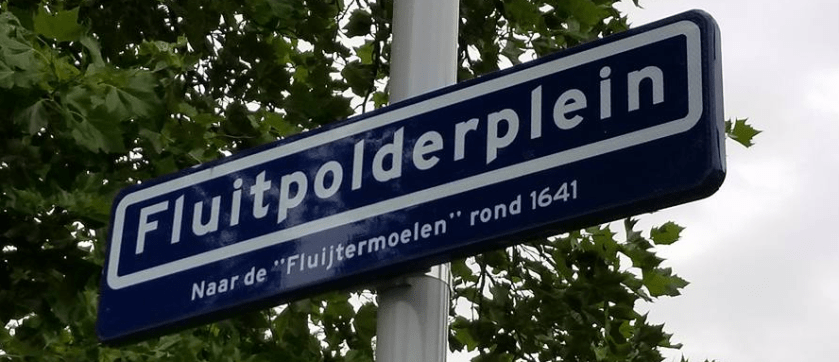
According to the street sign for Fluitpolderplein, the polder was located alongside the “Fluijtermolen” (Fluit Windmill), which was built around 1641. 
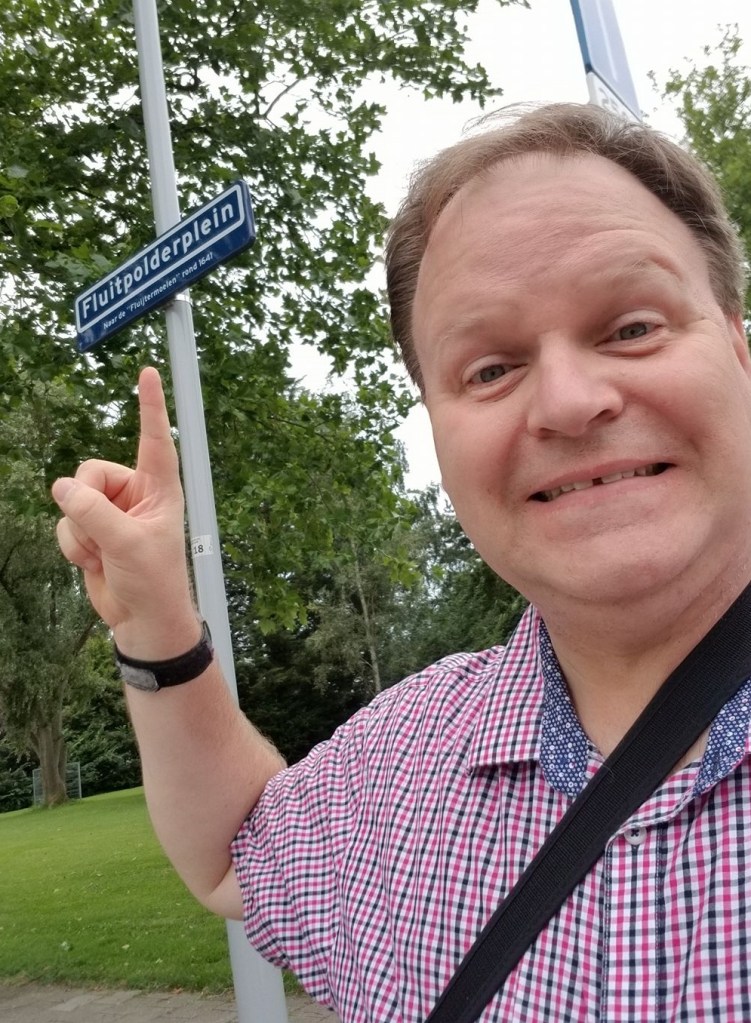
Am I named after the polder or is the polder named after me?

52 Weeks Mark III – Week 4: Witness to History

Two weeks ago, I wrote about my roots in the Dutch island of Texel. While the focus was primarily on my paternal grandmother’s ancestors, my paternal grandfather’s side of the family also has a strong connection to Texel. This includes several van der Fluit cousins of varying degrees, many of whom are descendants of my 4x Great Grandfather, Petrus Pieterszoon “Pieter” van der Fluit. I’ve written about at least one of those cousins, Pieter Jansz van der Fluit.

Both sides of my father’s family had a presence on Texel during the French occupation of the Netherlands during the Napoleonic Wars. Many of my ancestors were living on the island during one of the most unusual military confrontations in history, involving a confrontation between cavalry and naval forces.

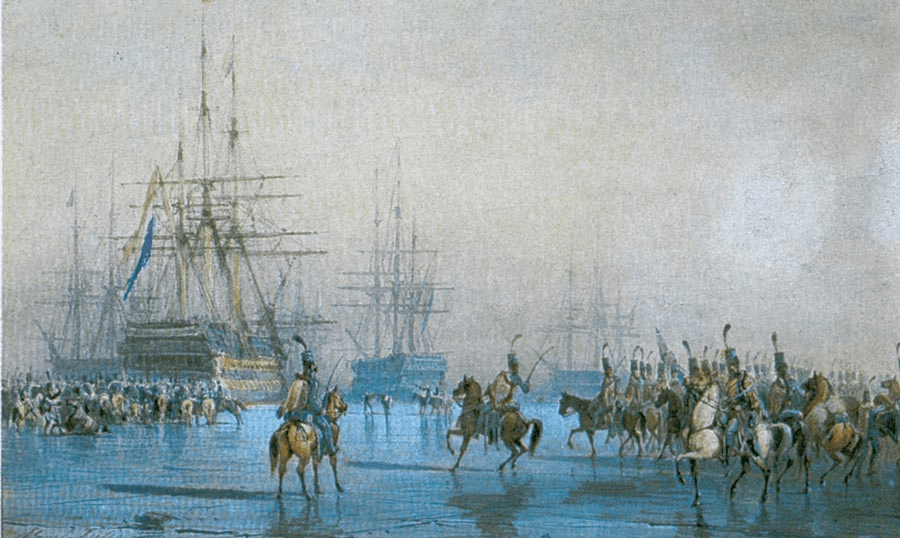
A depiction of the capture of the Dutch fleet at Texel by French naval painter Antoine Léon Morel-Fatio (1810–1871)

The French invaded the Dutch Republic over the period from 1793 to 1795. There was a great deal of support for the French in the Dutch provinces. The Patriotten (“Patriots”) shared the ideals of the French Revolution. During the French incursion, a French-supported uprising led by the Patriots overthrew the previous regime.

By January 19 , 1795, the Patriots had succeeded and established the Batavian Republic (later the Batavian Commonwealth). While nominally independent, the Batavian Republic was essentially a French vassal state. However, Napoleon was dissatisfied by the rate of change in the new state and was not impressed by its degree of opposition to the English. In 1806 he replaced the Batavian Republic with the Kingdom of Holland, with his brother Louis (Lodewijk in Dutch) installed as its King. When Lodewijk proved to be too sympathetic to his subjects, Napoleon removed him from office and incorporated the Netherlands into France itself.

After the success of the Batavian revolution, the provisional government ordered loyalist Dutch forces to stand down. Despite the support for the French in the Netherlands, the Navy remained loyal to the previous regime. It had formidable forces centred at Den Helder, a major naval port.

The winter of 1794-95 was particularly cold. A storm threatened the Dutch fleet at Den Helder, so it sought shelter on the leeward side of Texel. Nevertheless, the fleet found itself frozen in the ice offshore. Wishing to take advantage of the loyalists’ plight, the French ordered the appropriately-named Admiral Jan Willem de Winter to Den Helder to secure the fleet for the Franco-Dutch forces. De Winter led forces comprised of cavalry and artillery. They arrived on January 22, 1795.

The senior officer of the fleet prepared to scuttle his ships, while de Winter prepared for an attack. However, once news confirmed that the revolutionaries had succeeded and taken over the government, the two sides negotiated a surrender.

There were other reasons why a battle might not have occurred, even if the rebels had not succeeded in overthrowing the government. If the battle had occurred, it would have been a very rare occasion of a land force attacking and (possibly) overtaking a naval force.

Texel was of significant military value during the French occupation. It was a lynchpin of defence against an English naval attack on the Dutch coast. So much so, Napoleon himself visited the island in 1811. One of the key locations he visited were two fortresses at De Schans, a kilometer or so outside of Oudeschild, where many of my ancestors lived. I would love to know what my ancestors might have seen and experienced at that time!

A cousin of mine has a story about one of our van der Fluit ancestors that took place on Texel during the French occupation. He didn’t say who it was specifically, other than a van der Fluit. Whether or not the story is true, or has a kernel of truth, I really cannot say. Nevertheless, whether fact or fantasy, it’s a fascinating legend.

In the course of the wars, Napoleon instituted conscription in many of the French territories, including the Netherlands. Orders were sent to round up all able-bodied men of fighting age and press them into service. One of our Texelaar van der Fluit ancestors sought to evade conscription by hiding in a hay rick while soldiers were rounding up men. The soldiers suspected that people might try to hide in the hay ricks, so they went from rick to rick and pierced them with their bayonets. Legend has it that this particular van der Fluit was praying the rosary while hiding. While doing so, a bayonet passed between his chest and upper arm. He went unscathed and undetected, so he evaded conscription.

52W Mark III – Week 2: Origins

Week Two for the 2024 edition of the 52 Ancestors Challenge, and I’m already struggling. While my experience with the challenge has been rewarding and continues to be so, as I start my third year participating I am finding it harder to find things I haven’t previously written about one way or another. For this week’s prompt, “Origins”, it would have been quite easy to simply recycle any one of a number of past posts. However, I am trying to do something relatively new each week, because I think that’s most in keeping with the purpose and goal of the challenge.

Finally, today, now that Week Three’s prompt has been issued (on another recurring topic!), I thought I had finally come up with something I hadn’t written about before. Turns out that it’s something I’ve touched upon before. Nevertheless, I’m running with it because it’s never been the primary focus of a post.

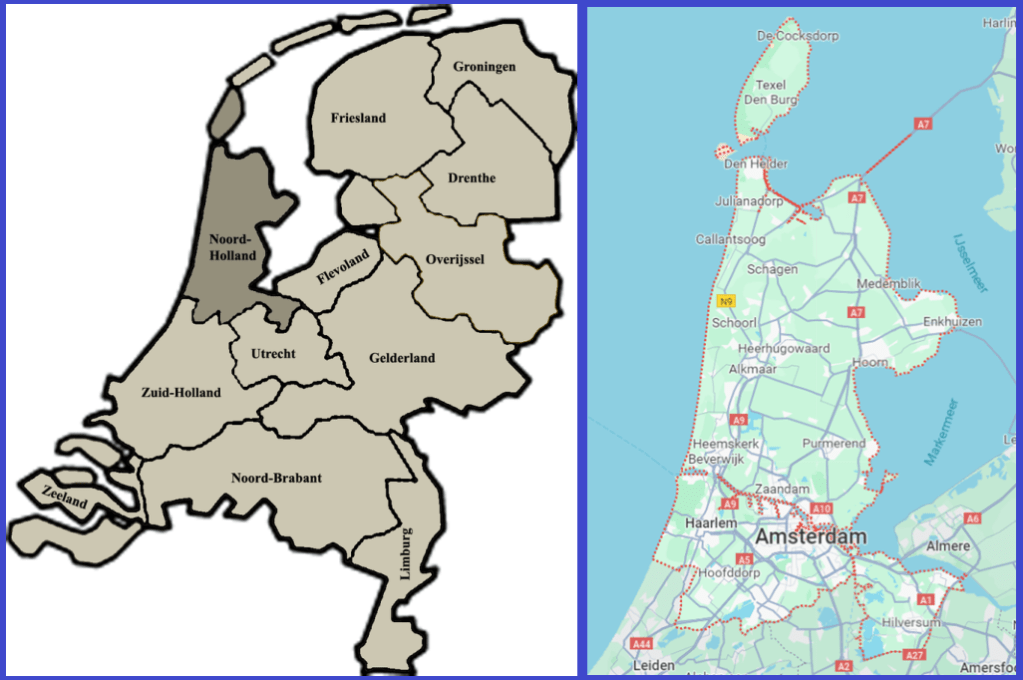
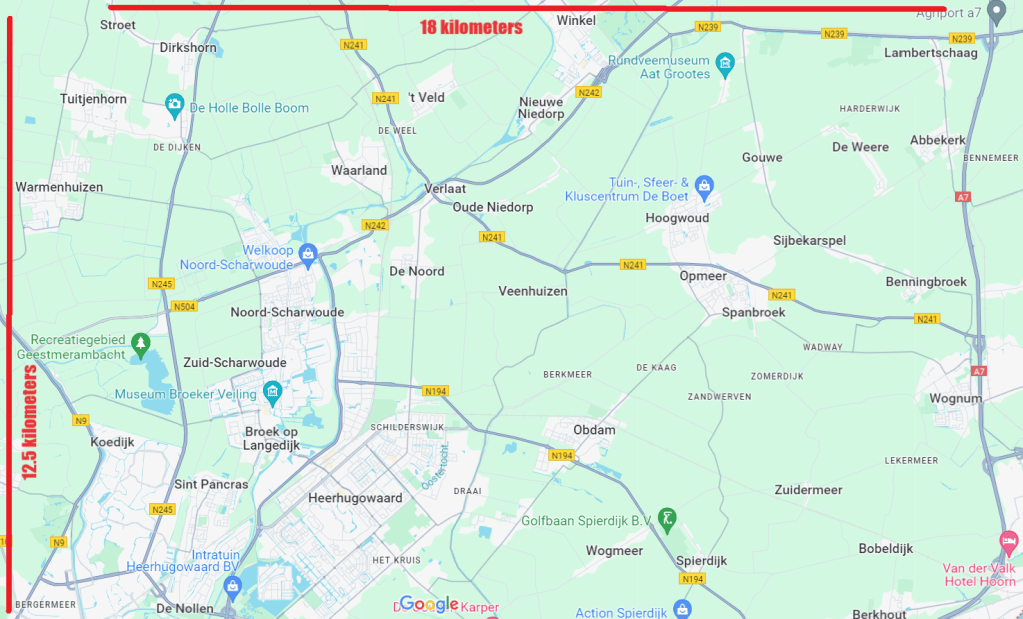
My father was born in the Netherlands, so I have deep Dutch roots. My direct ancestors are primarily from the central part of what is now the province of Noord Holland, going back centuries. My paternal line has been there for 200 years but originated in Zuid Holland, in towns and villages between Den Haag (The Hague) and Leiden. Most of my Noord Holland ancestors were born, lived, and died roughly within a 280 square kilometre area.

The area of Noord Holland where many of my paternal ancestors lived. This is immediately north-east of Alkmaar, one of the larger cities in the area.

However, several of my Noord Holland ancestors were from Den Helder, a city on the northern tip of the mainland of Noord Holland. It is an important port city. In the 16th and 17th centuries, it was a significant mustering and departure point for Dutch overseas trade and exploration. It is now the home of the Netherland’s main naval base.

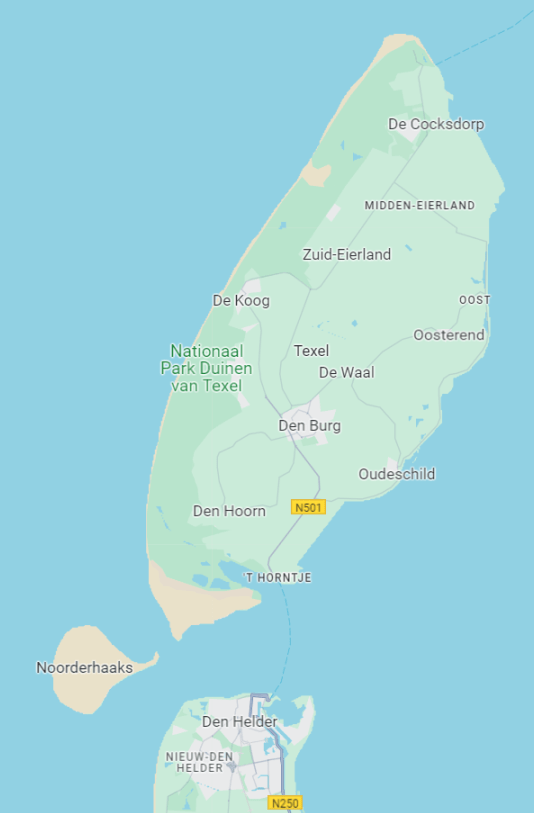
Three kilometers north of Den Helder, across the Marsdiep strait, is the island of Texel. Through my father’s maternal grandmother, Elisabeth Bakker (1888-1976), I have significant roots in Texel. I do not know how far back those roots truly go, but I know that one branch of Elisabeth’s maternal line was on Texel by end of the 15th century.

In English, the “x” is pronounced the same as it is in “Texas”. In Dutch, it’s pronounced “Tessel”. Texel is the first and largest of the Wadden Sea islands, which stretch along the entire north coast of the Netherlands. Nine hundred years ago, Texel was part of the mainland. A catastrophic flood in 1170 dramatically changed the geography of north-west Netherlands, including the creation of the island of Texel. There has been settlement on Texel since at least the 12th century. Texel even has its own dialect, Tessels. It was common until the 1950s, after which time it went into significant decline.

The island received city rights in 1415. It has been the site of significant naval engagements over the last 400 years. It was also the site of one of the last battles of World War II in Europe. The island had been relatively unscathed during the war itself. It was only after the war was over that it was devastated. A German battalion made up of Georgian soldiers occupied Texel during the war. Supported by the Dutch Resistance, they rebelled in April 1945. Fighting between the Georgians and Germans lasted well beyond VE Day, ending only with the arrival of Canadian troops on May 20, 1945.

Historically, Texel’s primary economic activity involved agriculture and the sea. It is famous for a breed of sheep, Texels, that originated there. In present times, the island is primarily dependent on tourism. While most of my Dutch ancestors were primarily farmers and labourers, many of my Texel ancestors were sailors.

Both of Elisabeth Bakker’s grandfathers, Jan Cornelis Bakker (1819-1859) and Cornelis Ran (1824-1897), were harbour pilots. I suspect it was that line of work that led them to relocate and settle in Den Helder. Two of Elisabeth’s four great grandfathers, Cornelis Dirksz Bakker (1789-1858) and Reijer Ran (1792-1860), were also sailors. It was Elisabeth’s father, Cornelis Jan Bakker (1855-1914) who broke with that tradition. He was a cobbler and shoemaker.

One of Elisabeth’s great grandfathers who was not a sailor was Jan de Waard (1787-1863). He began his working life as a labourer but for the last twenty years of his life he was a shopkeeper. Jan is interesting because nearly all my paternal line were Roman Catholic, but Jan was baptised in the Reformed Church. However, his wife Cornelia Pieters Kooij was Catholic and their children were baptised as Catholics. It is possible that Jan might have converted.

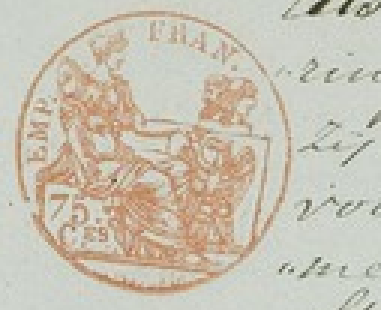
The other interesting thing about Jan and Cornelia is that they were amongst the last to be married during the period of French rule during the Napoleonic wars. They married at Texel on October 10, 1813. The record of their marriage is written in Dutch, but bears the seal of Imperial France. Less than a month after their marriage, a popular uprising resulted in the ouster of the French. On November 30, 1813, the son of the former stadholder of the country returned from exile and was named William I, Sovereign Prince of the United Netherlands and subsequently King.

The other of Elizabeth’s great grandfathers who was not a sailor, Johannes Puinbroek (1786-1865), was not even from Texel. In fact, he is quite the oddity in my family tree. He was born so far south from Texel that the town where he was born, Vrasene, is in Belgium (which at the time was the Austrian Netherlands). Sometime around 1822 and 1824 Johannes relocated to Den Helder, where he met and married his third wife. I have no idea beyond speculation as to what prompted him to move. I thought I had written about him before, given his unusual story, but searching through my posts I found nothing. Well! There is something I haven’t written about before! Stay tuned…

52W Mark II – Week 51: I’m My Own Gran…er, Cousin

Wow, hard to believe that it’s the penultimate week of Amy Johnson Crow’s 52 Ancestors Challenge!

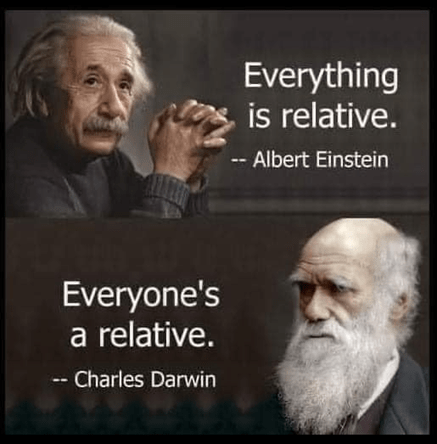
This week we’ve been challenged with the theme “Cousin”. As stated by Amy, “The neat thing about this theme is that we genealogists know that everyone is our cousin! That definitely opens up the possibilities for who to write about!” Thus, no cousin is too distant!

So what do a sixth cousin, ninth cousin, tenth cousin, and fourteenth cousin in my family tree all have in common? They’re all me!

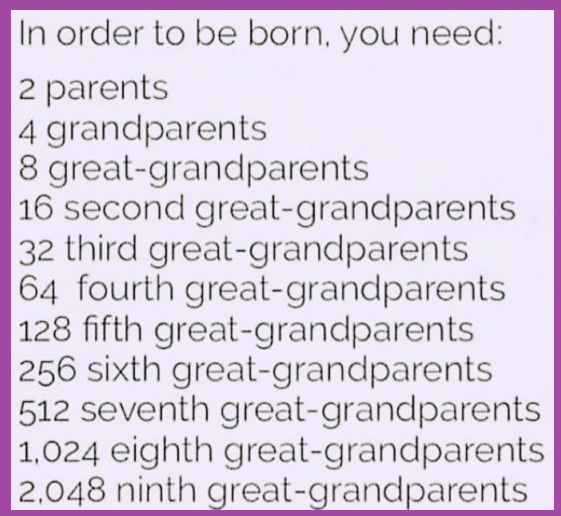
Being one’s own cousin is not unique to me. Most genealogists have seen the posts, memes, and graphics showing how many ancestors we have:

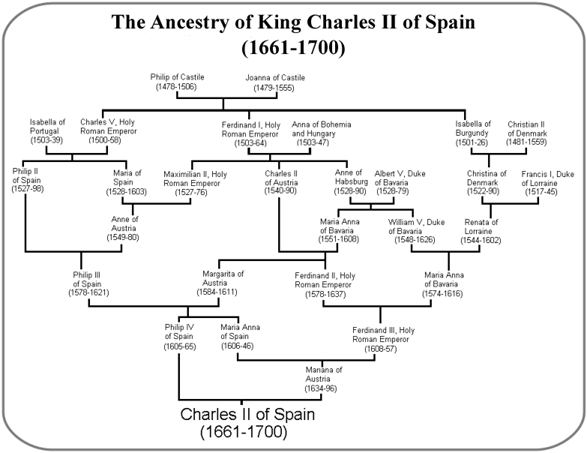
While technically correct – you need all these ancestors to have been born – it gives the impression that these are all separate unique individuals. However, the truth is that somewhere along the line two great x n ancestors are the same person. Otherwise, the math simply does not work out. It would mean that you have 67,108,864 individual great x 25 grandparents, which would have exceeded the population of the Earth at the time they lived. Robin Fox, an anthropology professor at Rutgers estimated that 80% of marriages in history were between second or closer cousins. The resulting phenomenon is referred to as “pedigree collapse“, although I was amused by the term “genealogical shrinkage“.

An extreme example of aristocratic pedigree collapse.

It’s well-known that the aristocracy and nobility have had marriages between close relations for diplomatic, political, and financial reasons. However, this practice also occurred at the lower end of the social ladder (here’s an extreme example from Yvette Hoitink, a Dutch genealogist). It’s inevitable to find first, second, and third cousins who are married living in small and isolated communities, and not just in colonial times. Moreover, once you get to a more distant relationship – who really knows (other than genealogists) who their fifth cousins might be – couples might not have even been aware that they were cousins.

A considerable example might be Iceland, a country of fewer than 400,000 people, with a relatively stable population of few immigrants over 1,000 years. Icelanders concerned about their consanguinity can consult an app that helps identify how closely they might be related to a potential partner.

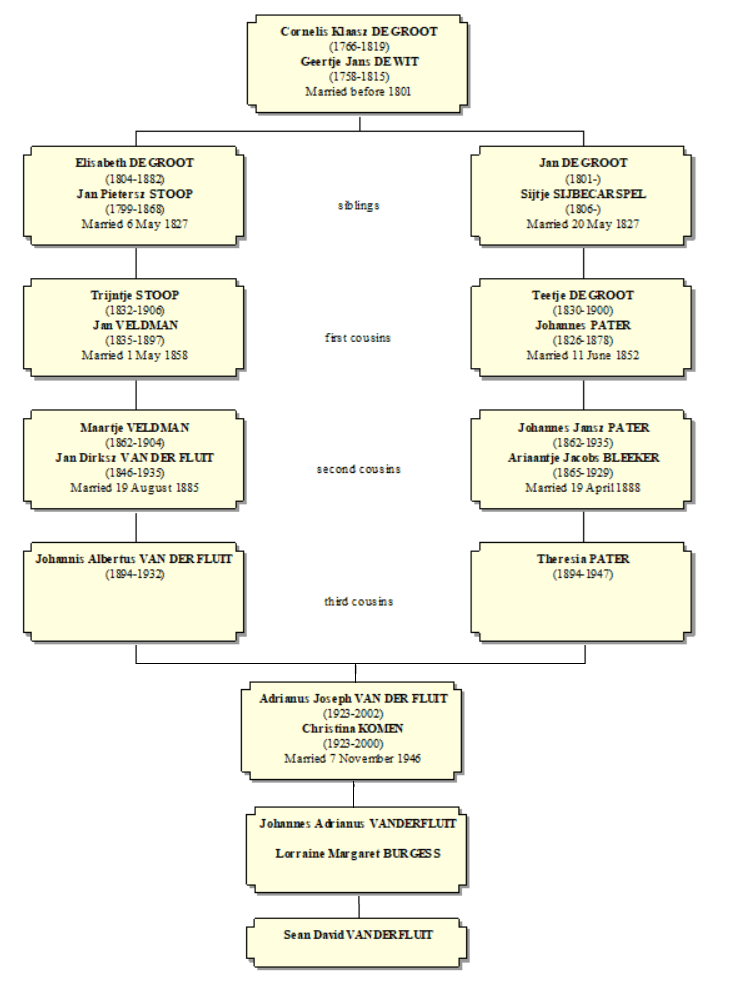
My closest relationship to myself is through my father’s paternal grandparents, Johannis Albertus van der Fluit and Theresia “Teetje” Pater, who were third cousins. They were born in raised in nearby villages in the Netherlands that are less than two kilometers apart. They married on July 20, 1917.

Johannis and Teetje are both descendants of Cornelis Klaasz de Groot and Geertje Jans de Wit, their great great grandparents and my G x 5 grandparents. Teetje is descended from their eldest son, Jan, while Johannis is descended from their youngest daughter, Elisabeth. Johannis and Teetje would have had to have known the surnames of their great grandparents to even have a clue that they might have been related. I doubt they did.

My grandfather is his own fourth cousin, and fourth cousin with his siblings. My father is his own fifth cousin, and fifth cousin with his siblings. I am my own sixth cousin, and sixth cousin with my siblings.

I can hold a family reunion anytime I want, even if I’m the only one there!