I have many farmers in my family tree. Most grew crops, although a few practiced animal husbandry on a small scale as a small part of their farming activities. Several had cows, although not to such a degree that I would describe them as having cattle, which to me connotates something more like ranching.
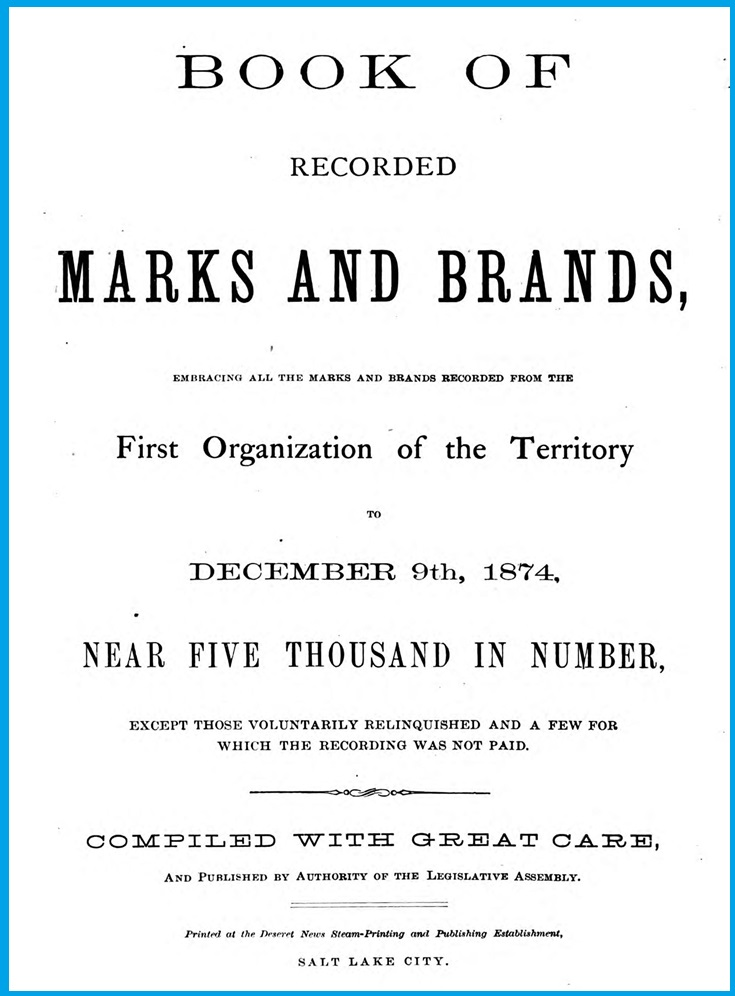
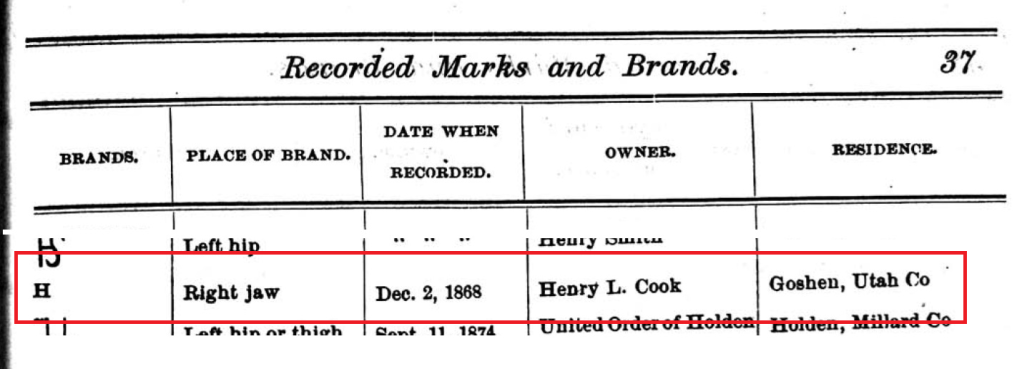
Two of my direct maternal ancestors had their brands recorded in a register published by the Utah state legislature, published in the Book of Recorded Marks and Brands in 1874. It records all brands used in the Utah Territory from its establishment to 1874.
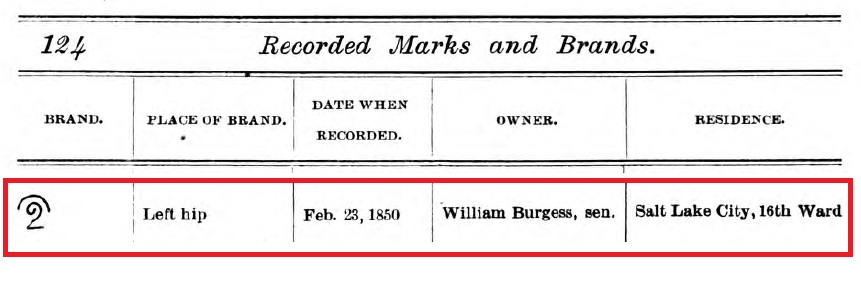
My Gx4 grandfather, William Burgess (1794-1880) used a brand that looked like a number “2” with a flourished serif and an arch above. William’s eldest son with his first wife, Harrison, also had a brand recorded in the book. Harrison’s brand, recorded on June 5, 1867, was a sideways capital “H”, placed on the right shoulder. Harrison also used a cropped ear mark, consisting of two “v” notches out of the upper side of the left ear.
William Burgess’s brand
On another branch of my maternal line, my Gx3 grandfather Henry Lyman Cook (1803-1869) has a brand recorded in the book, dated December 2, 1868. The brand was a capital “H” which was placed at the right jaw.
Henry Lyman Cook’s brand
I have also found a subsequent publication of this book, compiled in 1901. However, I have not found any family in that edition. William, Harrison, and Henry had all passed away by then. My more recent direct ancestors were not farming at that time, while others had left the state by then. Sometime I may have to look into what records there might be for brands used in Alberta, where many of these people had settled.
When I was a kid, we moved around a lot. People often asked my if my dad was in the military. No, he was a Woolworths manager.
My father entered the Woolworth manager training program right out of high school. Back in the day, the program involved a lot of moving around. Later, promotions almost always meant a transfer. He was with the company for 28 years, leaving the company about six months after Wal-Mart bought it out in Canada. That’s a story for another time.
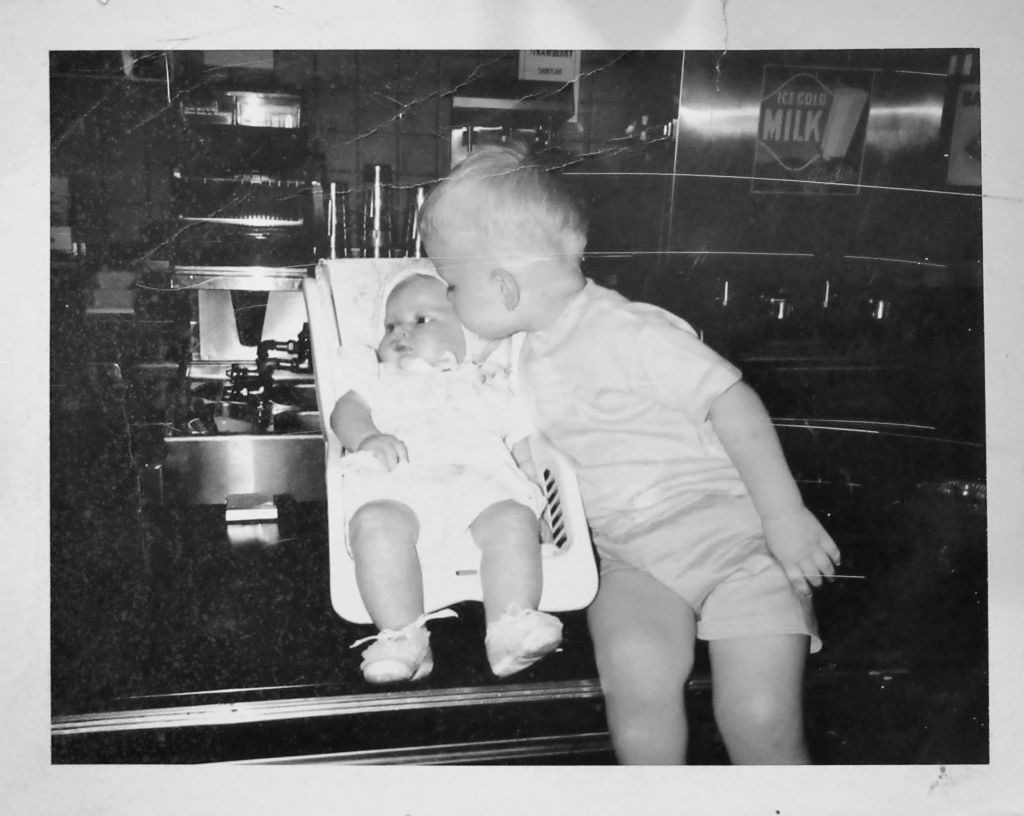
My sister and me at the Woolworths in Regina
My dad began his career with Woolworth’s in Lethbridge, Alberta as a management trainee. He once told me that his very first assignment on his first day was to unload a shipment of bras, and the female staff stood there giving him a hard time. Next, my dad trained in the Regina, Saskatchewan and Medicine Hat, Alberta stores, where he was an assistant manager.
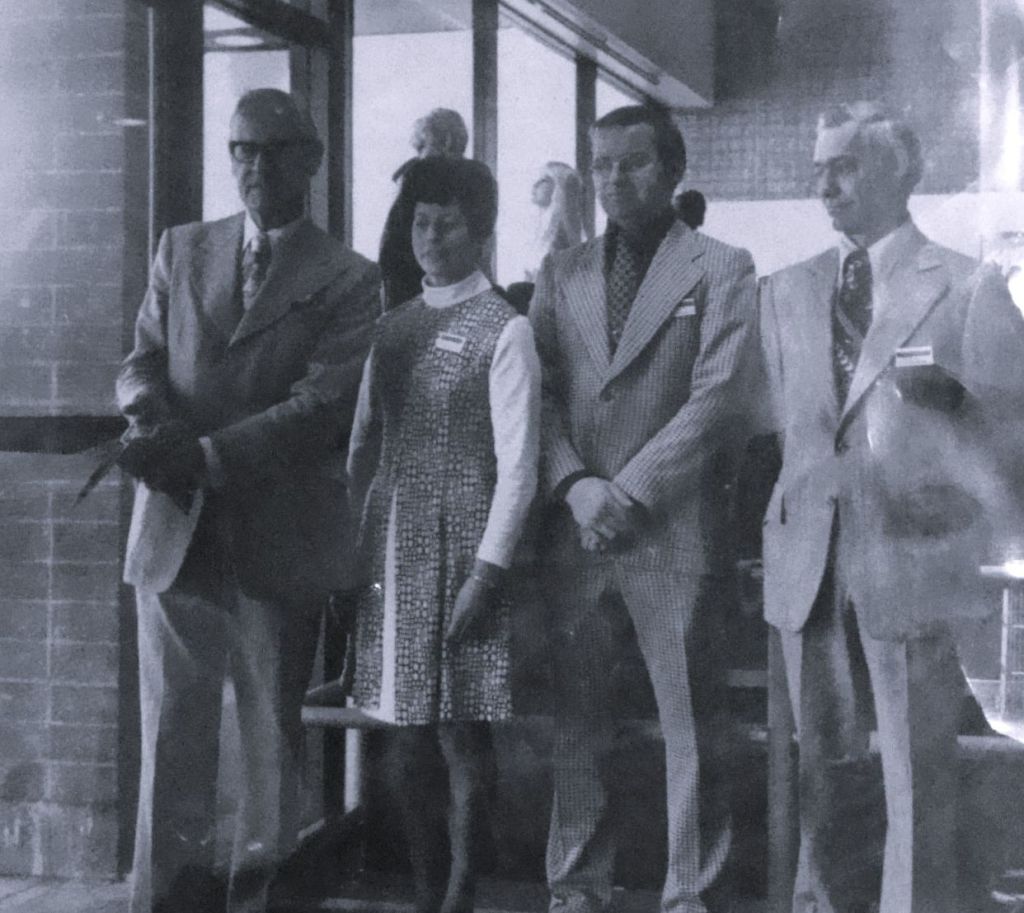
Dad’s first store as manager was in Flin Flon, Manitoba. After Flin Flon, dad was transferred to Terrace, B.C., and shortly afterward to Duncan, B.C., where he opened a new store there as the Associate Manager.
Grand Opening of the Woolworths in Duncan. My dad is second from the right.
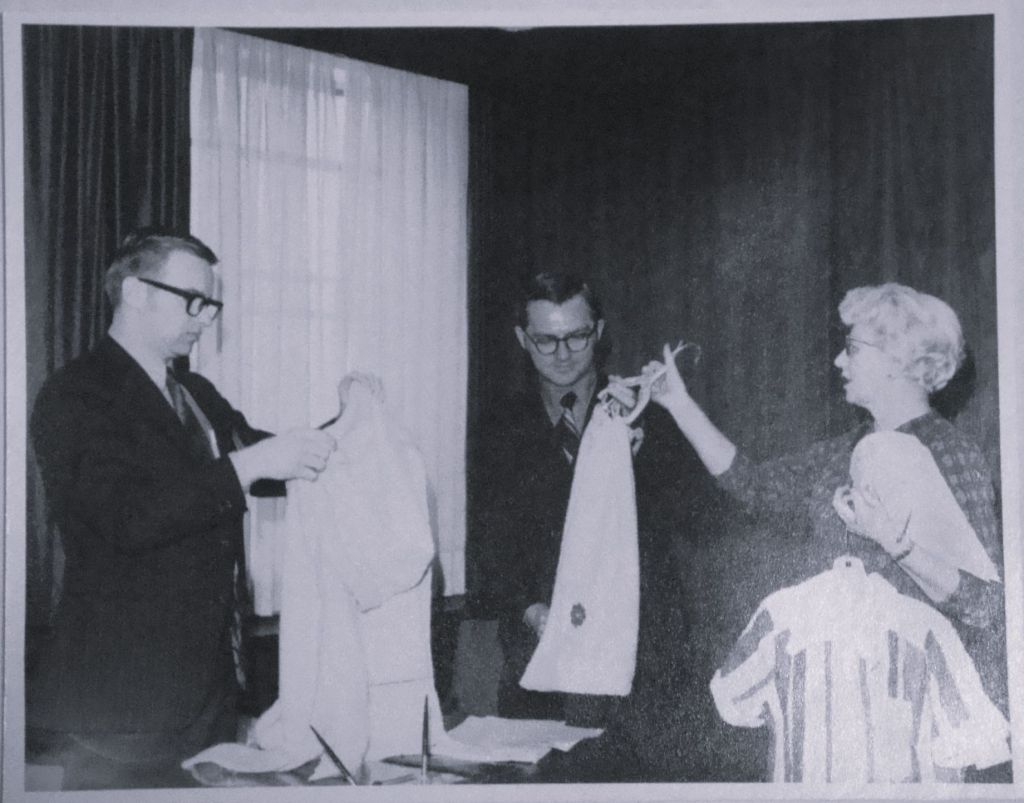
At one point, the Canadian head office in Toronto transferred dad to Kirkland Lake, Ontario. However, when the international head office learned about the transfer, they cancelled it. They thought it was too much to move a man with young kids halfway across Canada.
My dad (left) at the Canadian head office in Toronto.
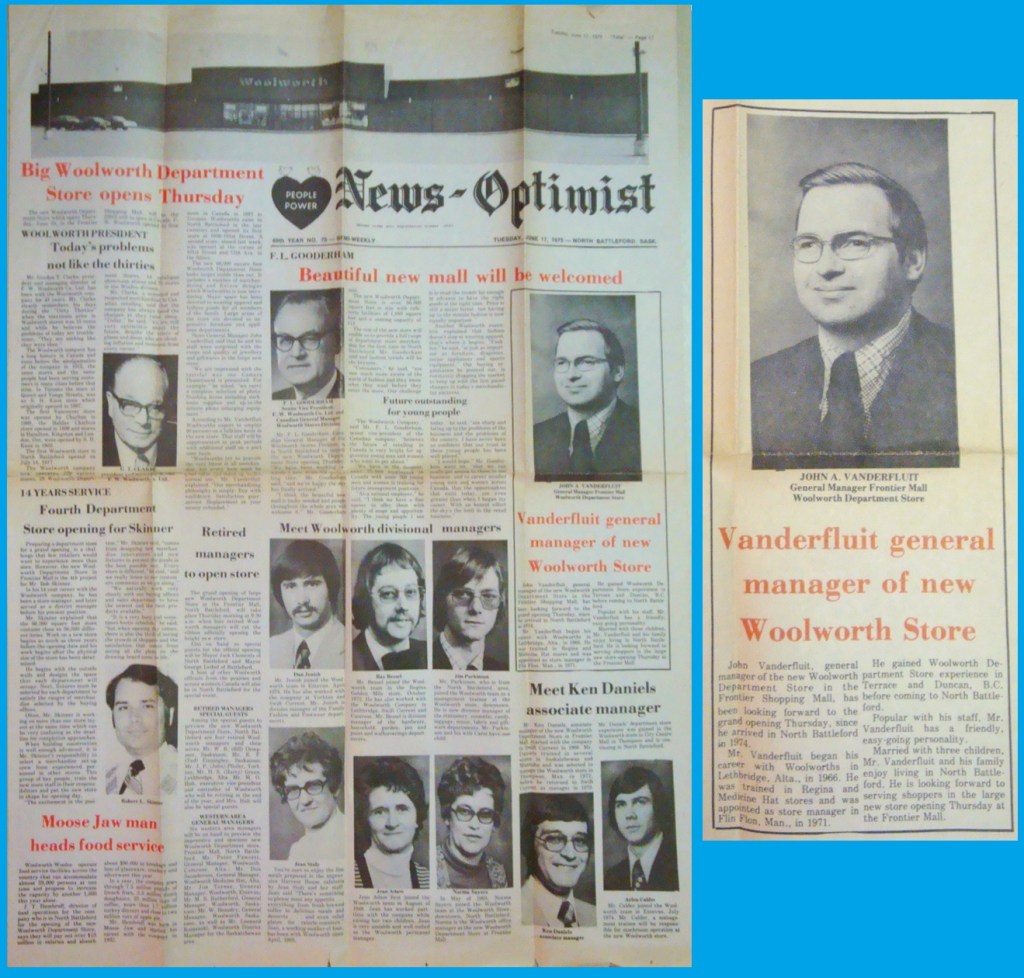
Dad transferred to North Battleford in 1974 and was General Manager when Woolworths opened a large new store there as the anchor tenant of the Frontier Mall in 1975.
Big news in a small town.
Dad quit in the early 80s and went into business as a sales agent for a furniture company. The new career was not what dad anticipated, and he did not enjoy being separated from his family as the job entailed a great deal of travel. He returned to Woolworth’s a few months later. As he had been replaced at the North Battleford store, he was assigned to the Woolworths in Swift Current, Saskatchewan. He commuted from North Battleford to Swift Current, a distance of about 320 kilometres. Dad was there until he was transferred to Terrace, British Columbia six months later.
Four years later, the company transferred dad to William’s Lake, B.C. In 1989 Woolworth’s converted all of its larger Woolworth stores into Woolco stores, which included the Williams Lake location.
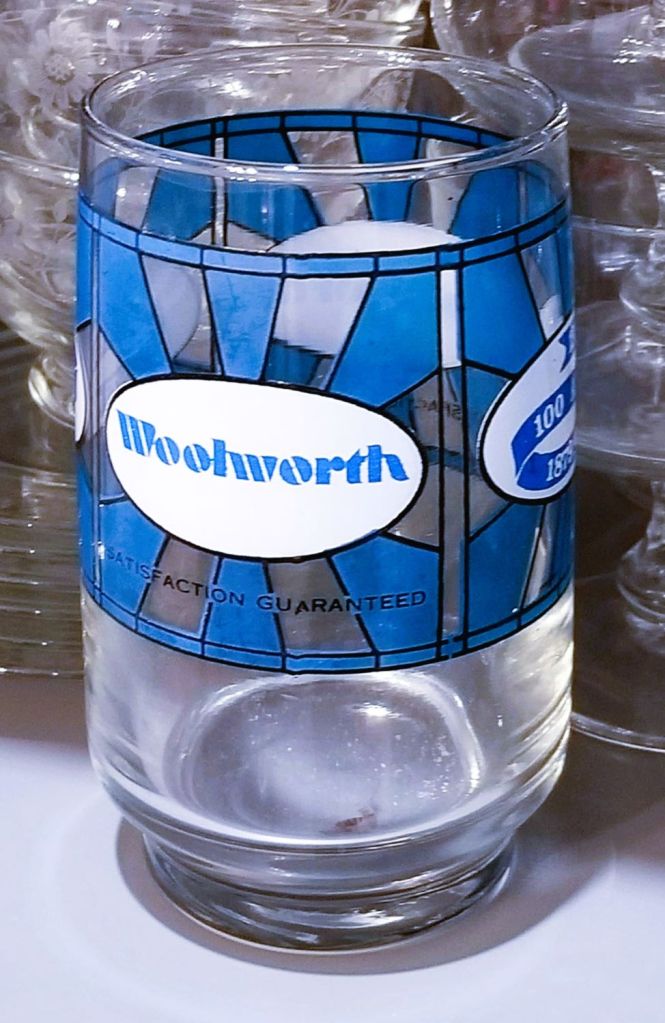
Until last Christmas, I had no idea my mom still had these.
In August 1991, dad was transferred to the Woolco in Chilliwack. In March 1994, Woolworth’s sold its Woolco stores to Wal-Mart. Wal-Mart transferred Hans to Hinton, Alberta that same month. Dad left the company in August 1994. My parents and younger siblings then moved to Lethbridge, where we still had a fair amount of family. My dad briefly went into sales before he and my mother bought a small motel in southern Alberta. My dad has now been a motelier longer than he was a Woolworths manager. My youngest sibling and I have had much different fathers!
One of my brothers had this on his bedroom door for years.
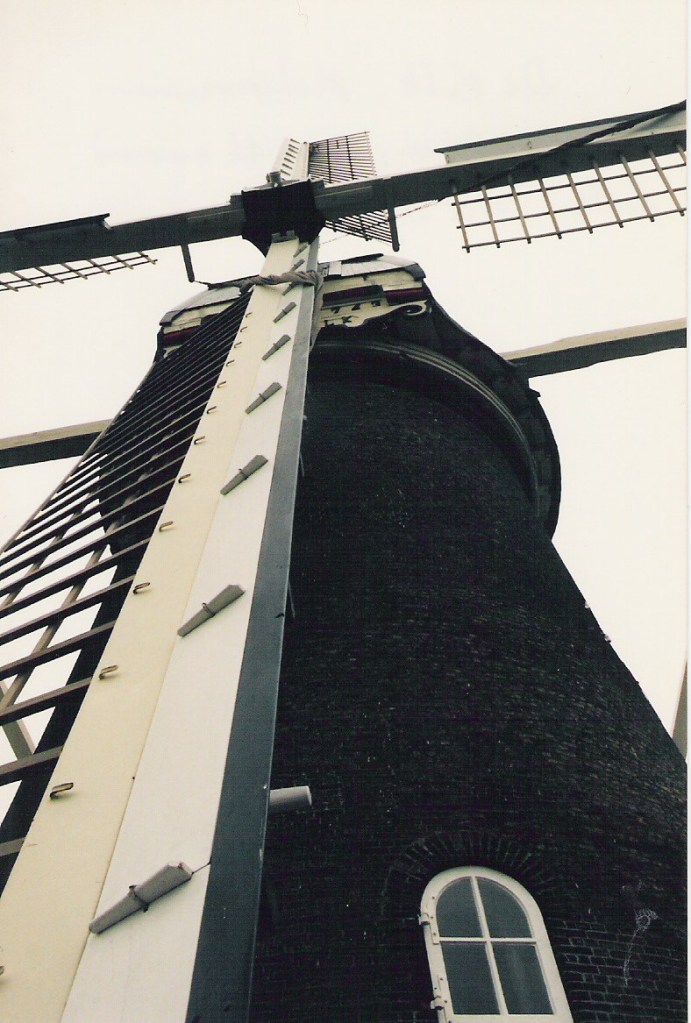
While most of my Dutch ancestors were farmers and labourers, it should come as no surprise that a few worked in windmills. On my father’s maternal side of the family, three of my Gx4 grandfathers were watermolenaaren (singular, watermolenaar – “water mill worker”). These were the windmills used for pumping water.
On my father’s paternal line, the surname “van der Fluit” may have originated with a windmill (“Fluijtermolen” – “Whistler Mill”) or the polder (“Fluitpolder”) on which it stood in Veur, Zuid-Holland (now part of Leidschendam). Alternatively, the windmill and polder might have been named after my ancestor, Johannes Dircks (“Jan”) (van der Fluit or Goeman) who owned or constructed them.
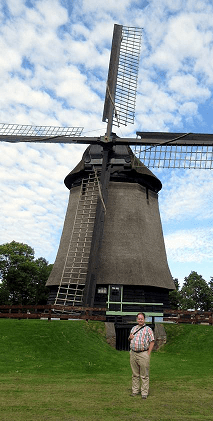
Me standing in front of the windmill in Waarland, Noord Holland, at more than a metre below sea level, about a kilometer from where my father was born and 200 metres from where he was baptized.
My paternal grandmother’s father was Adrianus Komen (1888-1948). Three of his four great grandfathers were all water mill workers. There is a strong possibility all three worked in the same windmill at the same time. I know that two of them, Nicolaas Cornelisz “Klaas” Komen (1786-1864) and Jan Smit (1786-1852) worked at the windmill located in Heerhugowaard, Noord Holland. However, the records I have consulted do not indicate when they worked in the windmill. At most, it is quite likely that Jan was working at the windmill until at least 1852.
I have no idea where and when the third, Johannes “Jan” Woltering (abt 1788-1834) worked in a windmill. I know that it was sometime before 1814, by which time he was working as a carpenter, as documented in the registration of his marriage. Unfortunately, the source from which I obtained the fact he had been a watermolenaar was simply an index and no longer exists. I have not found this item in other sources and records I’ve consulted. The population registers I have seen do not include his occupation. A notarial record I’ve found is dated 1817, which shows Jan working as a carpenter.
Despite this, I have reason to believe that Jan may have worked in the windmill in Heerhugowaard. Jan was born in 1788 in what is now Vreden, North Rhine-Westphalia, Germany. Vreden is about three kilometers from the Dutch border. What he did between his birth and marriage I don’t know, but by 1814 he was living in Akersloot, Noord Holland, which is about 14 kilometers south of Heerhugowaard. After he married he lived and worked in Langedijk, Noord Holland, which is immediately adjacent to Heerhugowaard.
“De Valk” (The Falcon), a windmill in Leiden, Zuid Holland, about 10 kilometers from where Fluijtermolen once stood.
There is one fact in particular that makes me suspect Jan may have worked in the windmill in Heerhugowaard is that Jan Woltering’s son Cornelis married Jan Smit’s daughter Neeltje. Thus, it is possible that the families knew each other because Jan and Jan worked together in the same windmill. Then again, Heerhugowaard was not a large place in 1814 and it is quite possible they knew each other the way everyone in a small town tends to know each other.
Turning to Jan Dircks, the website for the municipality of Leidschendam-Voorburg used to have this information, which I have translated from Dutch:
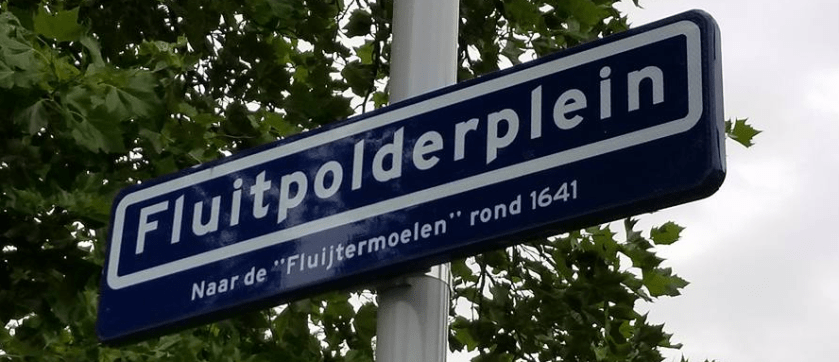
The square and adjacent street between Prinsensingel, Noordsingel, de Amstelweg, and de Graaf Willem de Rijkelaan is called Fluitpolderplein. This was decided in 1970. But where does the “fluit” in “Fluit Polder” come from anyway? According to a historian of Veur, Hendrik Brouwer Schut, it may have something to do with the whistle of the grinding mills, or possibly the “fluitenkruid” (“cow parsley” or “Queen Anne’s lace” in English). [The Dutch name of the plant refers to the fact a flute or whistle can be made from the stem.] However, there may be a better explanation. In 1648 a large part of the territory of the polder already belonged to a certain Jan Dirckxz, who also went by the name “Fluijt”.
According to the street sign for Fluitpolderplein, the polder was located alongside the “Fluijtermolen” (Fluit Windmill), which was built around 1641.
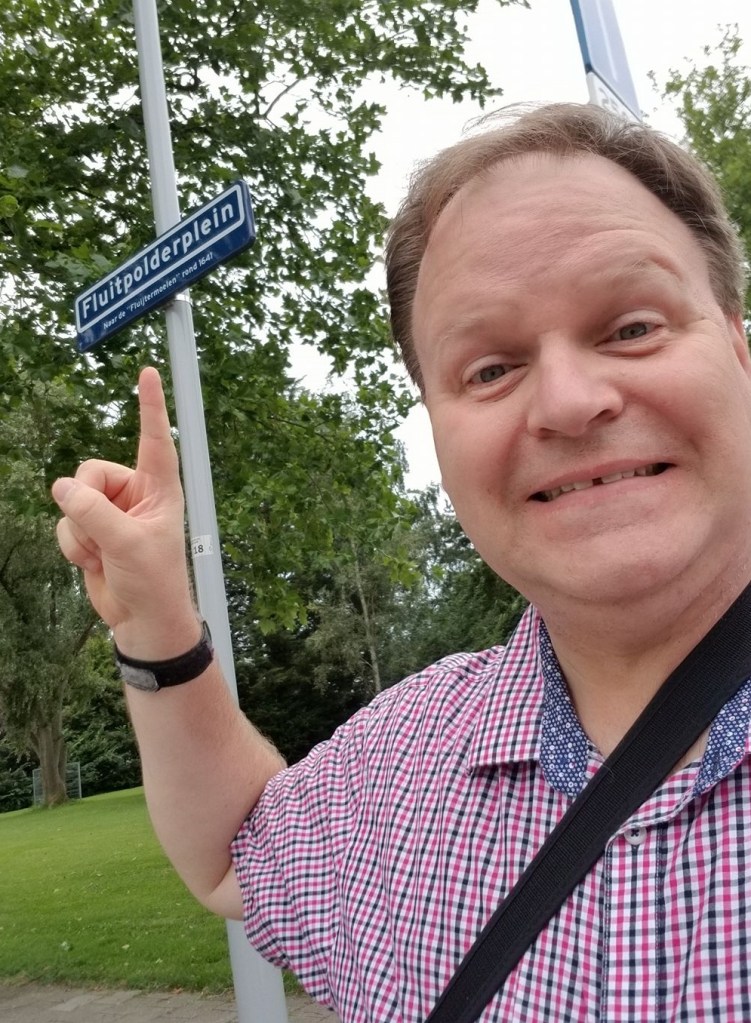
Am I named after the polder or is the polder named after me?
Week Two for the 2024 edition of the 52 Ancestors Challenge, and I’m already struggling. While my experience with the challenge has been rewarding and continues to be so, as I start my third year participating I am finding it harder to find things I haven’t previously written about one way or another. For this week’s prompt, “Origins”, it would have been quite easy to simply recycle any one of a number of past posts. However, I am trying to do something relatively new each week, because I think that’s most in keeping with the purpose and goal of the challenge.
Finally, today, now that Week Three’s prompt has been issued (on another recurring topic!), I thought I had finally come up with something I hadn’t written about before. Turns out that it’s something I’ve touched upon before. Nevertheless, I’m running with it because it’s never been the primary focus of a post.
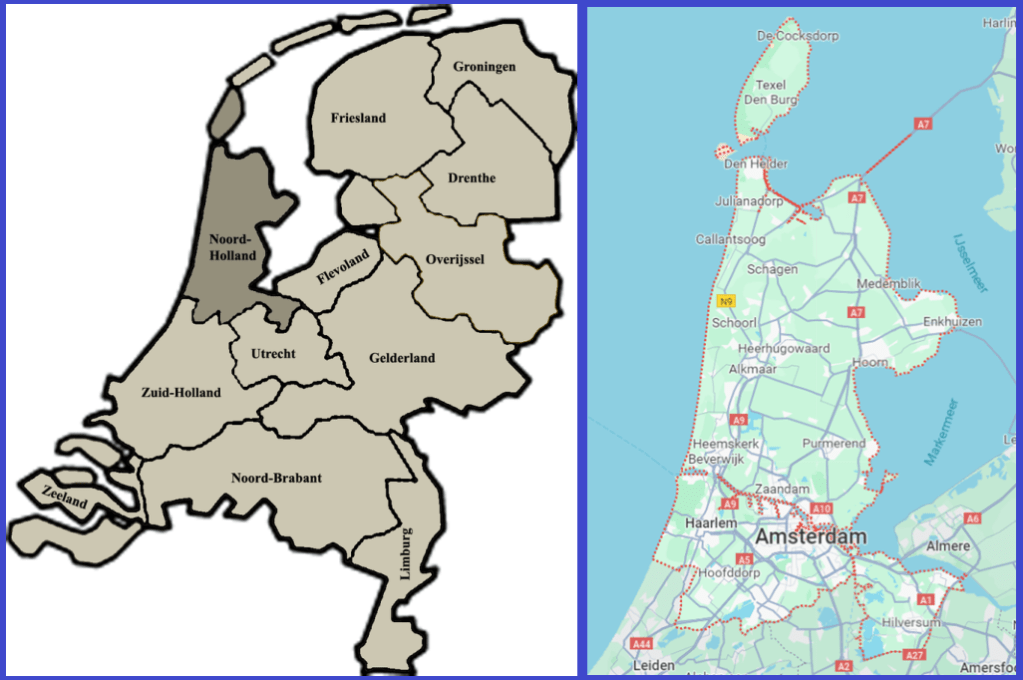
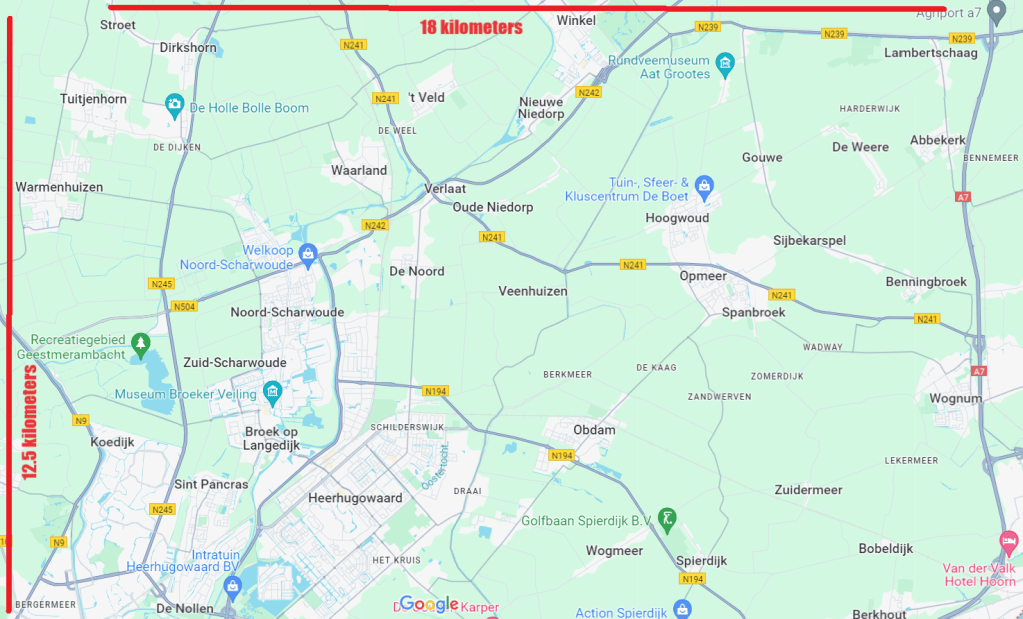
My father was born in the Netherlands, so I have deep Dutch roots. My direct ancestors are primarily from the central part of what is now the province of Noord Holland, going back centuries. My paternal line has been there for 200 years but originated in Zuid Holland, in towns and villages between Den Haag (The Hague) and Leiden. Most of my Noord Holland ancestors were born, lived, and died roughly within a 280 square kilometre area.
The area of Noord Holland where many of my paternal ancestors lived. This is immediately north-east of Alkmaar, one of the larger cities in the area.
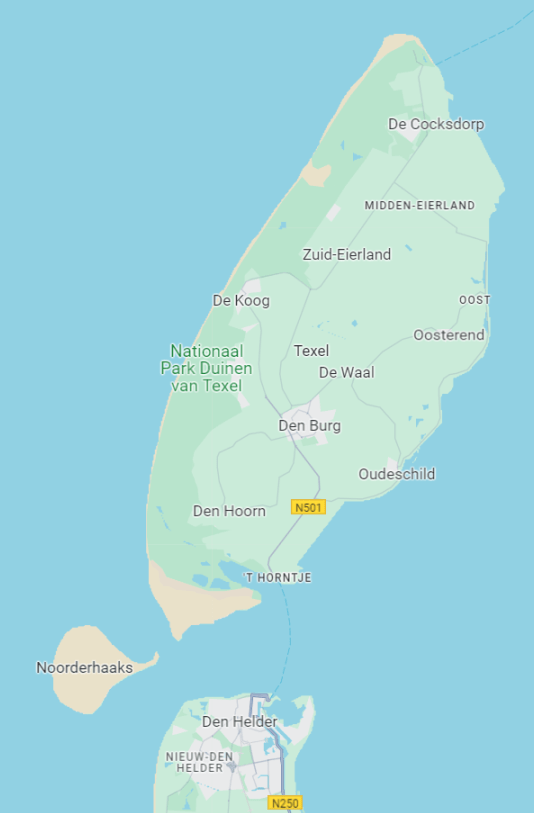
However, several of my Noord Holland ancestors were from Den Helder, a city on the northern tip of the mainland of Noord Holland. It is an important port city. In the 16th and 17th centuries, it was a significant mustering and departure point for Dutch overseas trade and exploration. It is now the home of the Netherland’s main naval base.
Three kilometers north of Den Helder, across the Marsdiep strait, is the island of Texel. Through my father’s maternal grandmother, Elisabeth Bakker (1888-1976), I have significant roots in Texel. I do not know how far back those roots truly go, but I know that one branch of Elisabeth’s maternal line was on Texel by end of the 15th century.
In English, the “x” is pronounced the same as it is in “Texas”. In Dutch, it’s pronounced “Tessel”. Texel is the first and largest of the Wadden Sea islands, which stretch along the entire north coast of the Netherlands. Nine hundred years ago, Texel was part of the mainland. A catastrophic flood in 1170 dramatically changed the geography of north-west Netherlands, including the creation of the island of Texel. There has been settlement on Texel since at least the 12th century. Texel even has its own dialect, Tessels. It was common until the 1950s, after which time it went into significant decline.
The island received city rights in 1415. It has been the site of significant naval engagements over the last 400 years. It was also the site of one of the last battles of World War II in Europe. The island had been relatively unscathed during the war itself. It was only after the war was over that it was devastated. A German battalion made up of Georgian soldiers occupied Texel during the war. Supported by the Dutch Resistance, they rebelled in April 1945. Fighting between the Georgians and Germans lasted well beyond VE Day, ending only with the arrival of Canadian troops on May 20, 1945.
Historically, Texel’s primary economic activity involved agriculture and the sea. It is famous for a breed of sheep, Texels, that originated there. In present times, the island is primarily dependent on tourism. While most of my Dutch ancestors were primarily farmers and labourers, many of my Texel ancestors were sailors.
Both of Elisabeth Bakker’s grandfathers, Jan Cornelis Bakker (1819-1859) and Cornelis Ran (1824-1897), were harbour pilots. I suspect it was that line of work that led them to relocate and settle in Den Helder. Two of Elisabeth’s four great grandfathers, Cornelis Dirksz Bakker (1789-1858) and Reijer Ran (1792-1860), were also sailors. It was Elisabeth’s father, Cornelis Jan Bakker (1855-1914) who broke with that tradition. He was a cobbler and shoemaker.
One of Elisabeth’s great grandfathers who was not a sailor was Jan de Waard (1787-1863). He began his working life as a labourer but for the last twenty years of his life he was a shopkeeper. Jan is interesting because nearly all my paternal line were Roman Catholic, but Jan was baptised in the Reformed Church. However, his wife Cornelia Pieters Kooij was Catholic and their children were baptised as Catholics. It is possible that Jan might have converted.
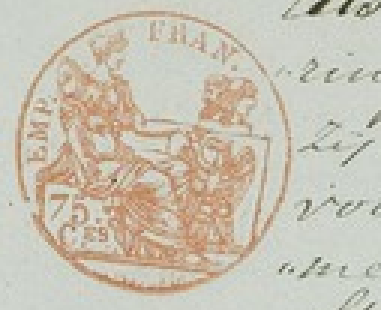
The other interesting thing about Jan and Cornelia is that they were amongst the last to be married during the period of French rule during the Napoleonic wars. They married at Texel on October 10, 1813. The record of their marriage is written in Dutch, but bears the seal of Imperial France. Less than a month after their marriage, a popular uprising resulted in the ouster of the French. On November 30, 1813, the son of the former stadholder of the country returned from exile and was named William I, Sovereign Prince of the United Netherlands and subsequently King.
The other of Elizabeth’s great grandfathers who was not a sailor, Johannes Puinbroek (1786-1865), was not even from Texel. In fact, he is quite the oddity in my family tree. He was born so far south from Texel that the town where he was born, Vrasene, is in Belgium (which at the time was the Austrian Netherlands). Sometime around 1822 and 1824 Johannes relocated to Den Helder, where he met and married his third wife. I have no idea beyond speculation as to what prompted him to move. I thought I had written about him before, given his unusual story, but searching through my posts I found nothing. Well! There is something I haven’t written about before! Stay tuned…
 A Deck of Ancestors