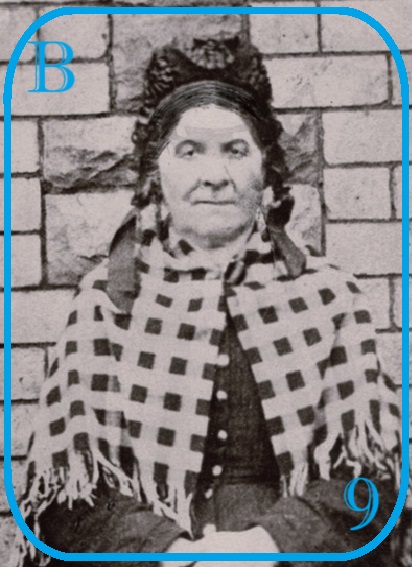
52W Mark IV – Week 35: Card B9 Susan Ann Elizabeth Turple

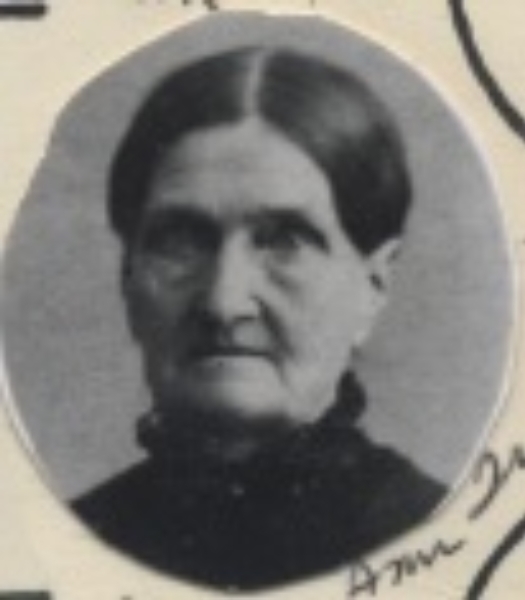
Susan Ann Elizabeth Turple (1818-1906)

What rhymes with “purple”. Nothing? Not so fast! Meet my Gx3 Grandmother, Susan Turple!

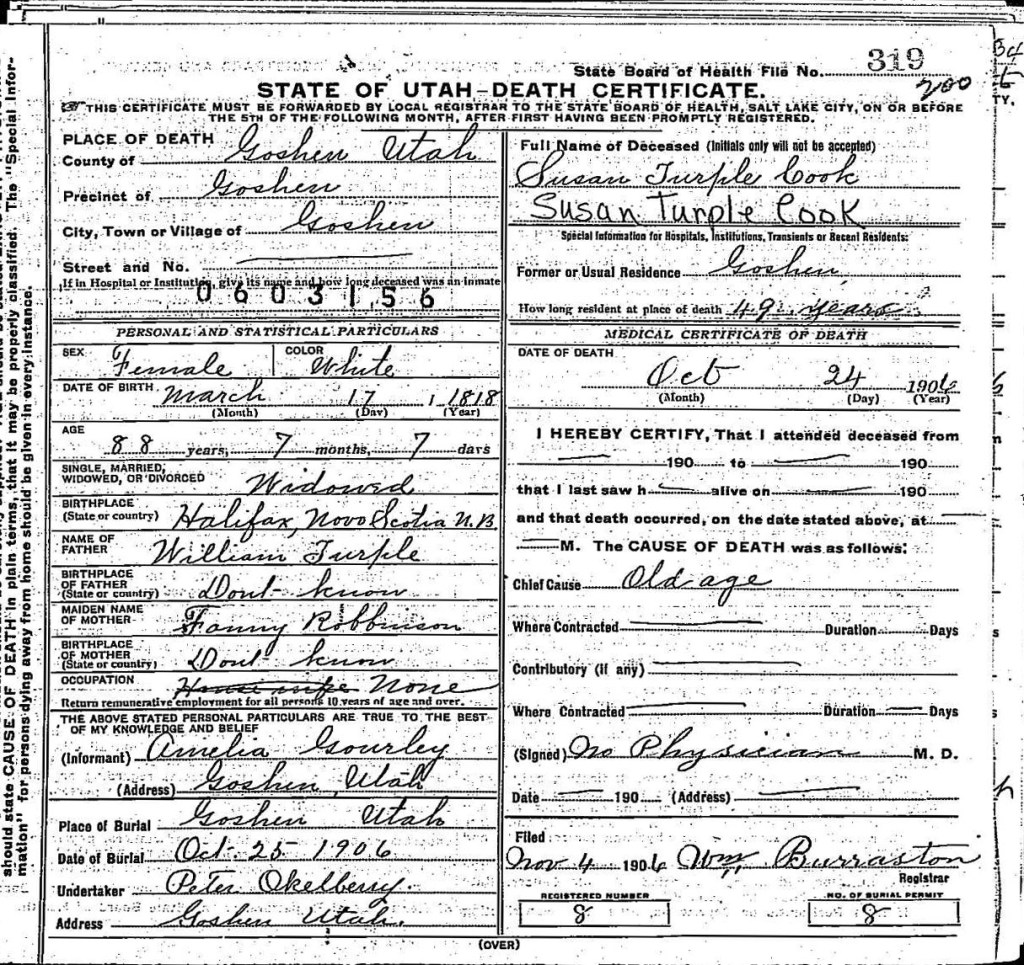
Susan was born on March 17, 1818 in Halifax, Nova Scotia to William Turple and Frances “Fanny” Robinson. While she was born on St. Patrick’s Day, it’s unlikely that Susan was even the least bit Irish. Her direct paternal line came to Nova Scotia from what’s now Germany around 1750. The rest of her lineage was most likely English and was in Nova Scotia by the mid-1700s.

Around 1841, when she was in her early 20s, Susan married Charles Brady, a musician who was born in Boston. I don’t know when Charles came to Nova Scotia and have no idea how he met Susan. It was a short marriage, lasting long enough for the couple to have a daughter, Amelia, who was born in Charlottetown, Prince Edward Island in 1842. Why Charles and Susan were living in Charlottetown at the time, again, I do not know why.

Some sources I’ve found suggest that Susan was widowed following the “untimely death” of Charles. This probably would have come as a surprise to Charles, who lived to be 67 and died in Washington in 1881, eight years before it became a state, as well as his second wife, Anne Dillon, who he married in 1855.

Rather, first-hand accounts written by Susan and Amelia show that Susan left Charles around 1843. Susan wrote that Charles was away from home a lot and that when he was home he mistreated her. Amelia stated that she did not know much about her father, because her mother left him when she was 11 months old. As far as I can find, Susan and Charles never formally divorced.

After Susan separated from Charles, she and her daughter Amelia moved back to Halifax and moved in with her parents. Apparently Susan’s parents primarily raised Amelia during that time.

Around 1838, the first Mormon missionaries began preaching in Halifax and the Latter Day Saints established a church there in 1843. Susan, her mother Fanny, and several of her siblings joined the church in the late 1840s. Susan was formally baptized into the church on May 18, 1849.

At that time, the Latter Day Saints were in the midst of a succession crisis, which had been ongoing since its founder Joseph Smith was killed in 1844. Susan, as well as her mother and some of her siblings, aligned herself with James Strang, who claimed to have a letter from Joseph Smith appointing Strang as his successor. It appears that many Halifax Mormons simply found themselves following Strang by default rather than actually taking an active interest in who their leader should be.

Strang’s faction of followers was about a fifth the size of those following Brigham Young. The schism resulted in the establishment of a separate church, also known as Church of Jesus Christ of Latter Day Saints, often distinguished as the “Strangites”. The Strangites fell into decline after Strang’s death, and further fractured into two separate groups. By 2000, neither branch of Strangites had more than a few hundred adherents.

In 1851, a delegation loyal to Brigham Young travelled to Halifax to re-establish their control over the Mormons there. Once there, this delegation excommunicated those who were loyal to Strang. This included Susan and those of her family who were members of the church.

Susan “confessed” her “error” shortly afterwards and was rebaptized back into the church on October 13, 1851. While Susan’s family members also recanted their “error”, they ultimately left the Mormon church. It seems that Susan’s family had stronger feelings about the church leadership and would not follow Young. Only Susan remained with the Mormon church.

This led to estrangement from her family, based upon Susan’s desire to leave Halifax for Salt Lake City. This estrangement is evident from her father’s will, which made provision for every one of his children – including a son from a first marriage – but left nothing to Susan.

Susan set out with her daughter for Boston in April 1853, aboard the Brig Halifax, with the intention of joining the Mormon migration to the west. They arrive in Boston on April 14, 1853. Susan was still using the surname Brady. As well, while Susan was 35 years old at the time, the passenger record lists her as having been 30.
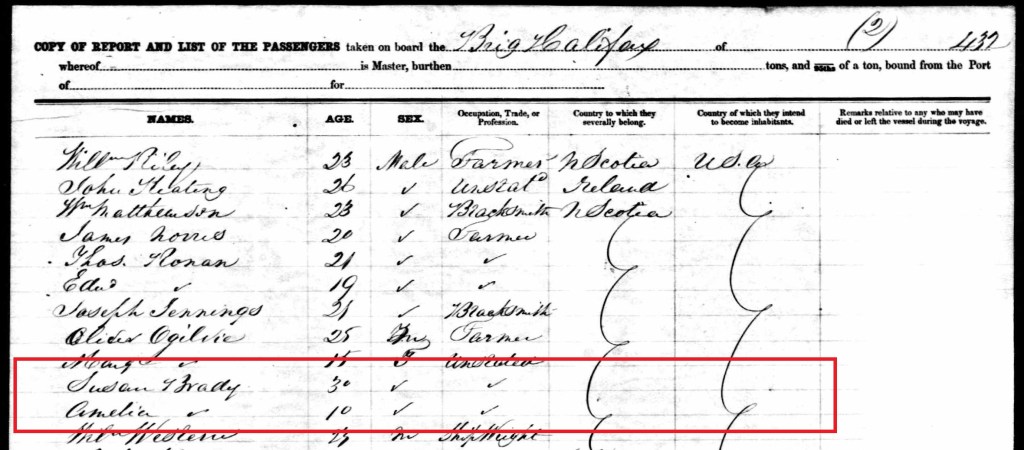
The passenger list for the Brig Halifax showing Susan and Amelia travelling to Boston.

From there, Susan and Amelia moved westward and joined a wagon train that formed part of the William Atkinson company. The company consisted of 79 individuals and 12 wagons. The company left Keokuk, Iowa in May 1853. After a brief sojourn in Kanesville, Iowa, the company resumed its journey in July 1853. The company arrived in Utah by September 11, 1853.

Two weeks of arriving in Utah, on September 28, 1853, Susan married Henry Lyman Cook. How they met or how that came to be I do not know. While some secondary sources suggest otherwise, I doubt Susan and Henry knew each other before Susan arrived in Salt Lake City.
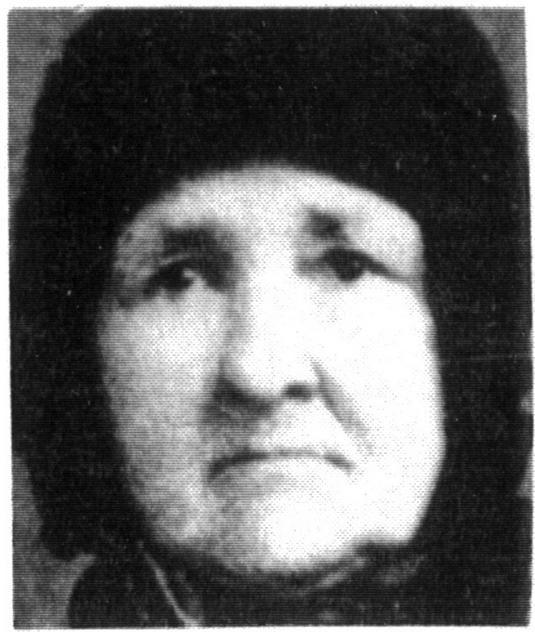
While it might be little more than speculation, I’ve wondered whether this was a marriage arranged by the church. Henry was already married; in fact, Susan was his fourth wife. Henry’s first wife died. His second marriage lasted only a few months, but there does not seem to have been a formal divorce. Henry’s third wife, Lovina, was still alive when Henry married Susan and I have no evidence the two ever separated.

Thus it seems that Henry’s marriage with Susan was polygamous, and conducted only in accordance with Mormon custom. I have no marriage record; rather, all I know is that Henry and Susan were “sealed”, a Mormon rite that binds spouses and family members for eternity. Henry was also a father to Susan’s daughter Amelia, who took on her stepfather’s surname. However, being 11 years old, it likely was not Amelia’s decision. In fact, later in life Amelia used the surname Brady.
Regardless of the nature and circumstances of their spousal union, Susan and Henry remained together until Henry died in 1869. Within a year of marrying Susan and Henry moved to Iron City in the southwest corner of Utah. Looking at the map, if the middle of nowhere had a middle of nowhere, it would be Iron City. In Iron City Susan gave birth to the first two of her children with Henry; a son who was also named Henry Lyman and a daughter, Sarah Florilla, my Gx2 grandmother. By the start of 1860 the family was in Goshen, a small town not far from Provo, Utah.

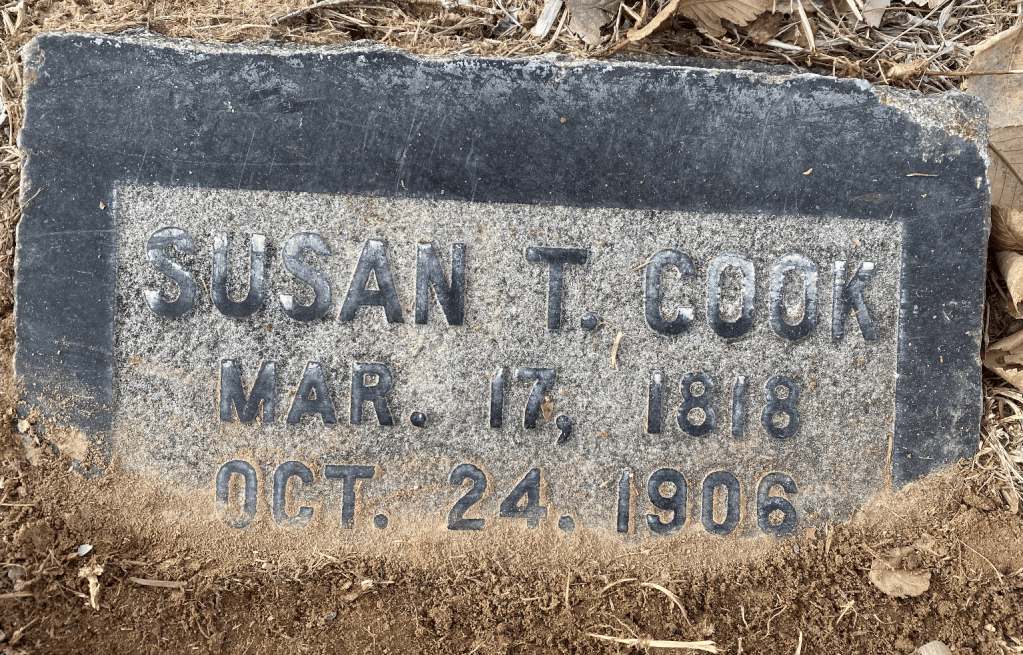
Susan lived out the rest of her long life in Goshen, on October 24, 1906, at the age 88. She was 63 when Henry died. Not only that, Susan outlived three of the four children she had with Henry. Her eldest son Henry Jr. passed away two months after his mother. Even Amelia, Susan’s oldest child, passed away within seven years of her mother. Susan is buried at the Goshen City Cemetery.
Having an ancestor whose surname rhymes with “purple”, I now need to find ones whose surnames rhyme with “orange” and “silver”.
52W Mark IV – Week 32: Card B6 William Burgess

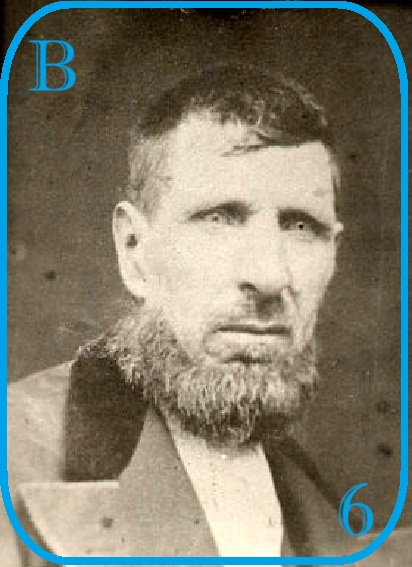
William Burgess, Jr. (1822-1904)

The Church of Jesus Christ of Latter Day Saints – the Mormons – was founded by Joseph Smith in April 1830 in Fayette, New York. In July 1832, Harrison Burgess of Putnam, New York, heard a Mormon missionary by the name of Simeon Carter. Harrison converted to the new religion and was baptized in October 1832. By the end of that year, Harrison’s parents and siblings (of whom there were at least nine at the time) also joined the Mormon church.

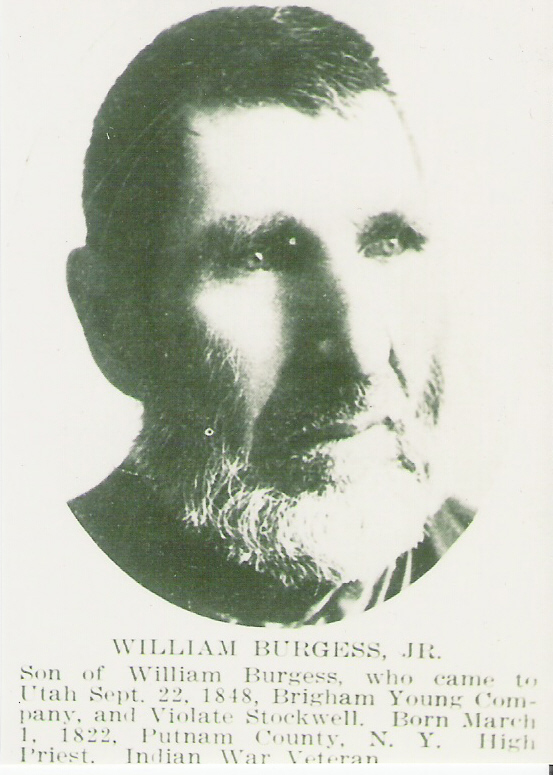
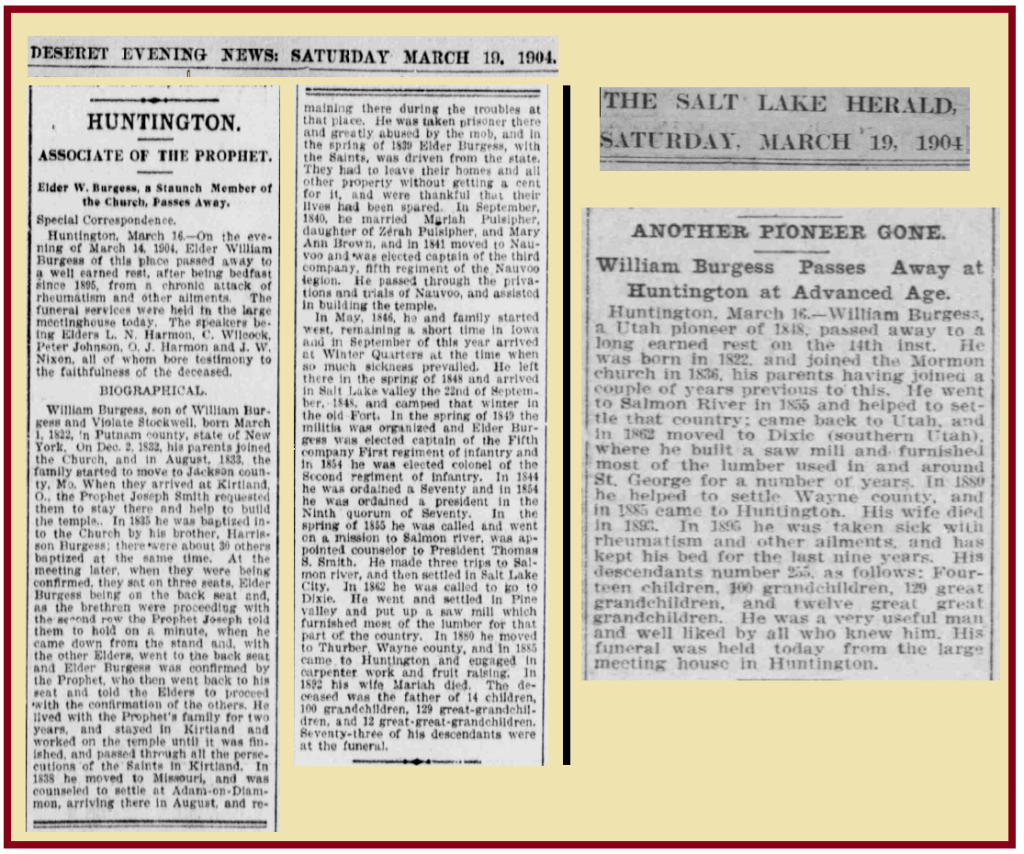
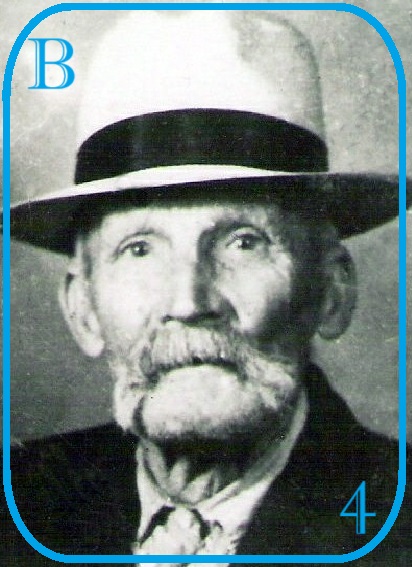
This included my Gx3 Grandfather, William Burgess Jr., who was about nine years old at the time. He was born on March 1, 1822, in Putnam. He was the sixth of twelve children born to William Burgess Sr. (1794-1880) and Violate Stockwell (1794-1880).

The Mormons relocated to Kirkland, Ohio in 1831. By September 1833, William was living there with his family. However, according to secondary sources, William Jr. lived in Joseph Smith’s house for a considerable period of time.

In the meantime, Smith was trying to establish Missouri as the church’s headquarters. However, between the Governor of Missouri driving the Mormons out of the state and a financial scandal involving the Kirtland Safety Society, a joint stock company intended to become a bank, the Mormons relocated to Nauvoo, Illinois in 1839. The Burgess family joined the fledgling church there by 1841, if not earlier.

While in Nauvoo, William joined the Third Company, Fifth Regiment of the Nauvoo Legion, a state-authorized militia that existed from 1841 to 1845. During his time with the Nauvoo Legion, William attained the rank of Colonel. As well, William was ordained as a “Seventy”, a level of priesthood within the Mormon church. He also participated in constructing the Latter Day Saints’ temple in Nauvoo.

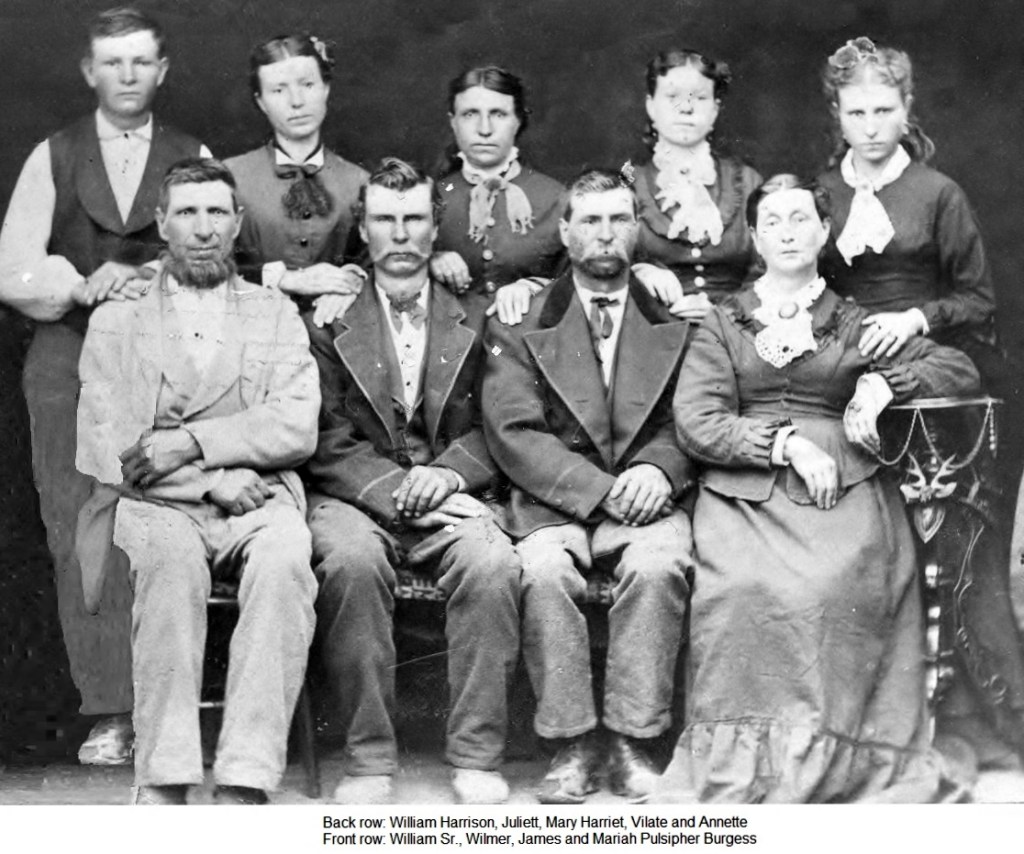
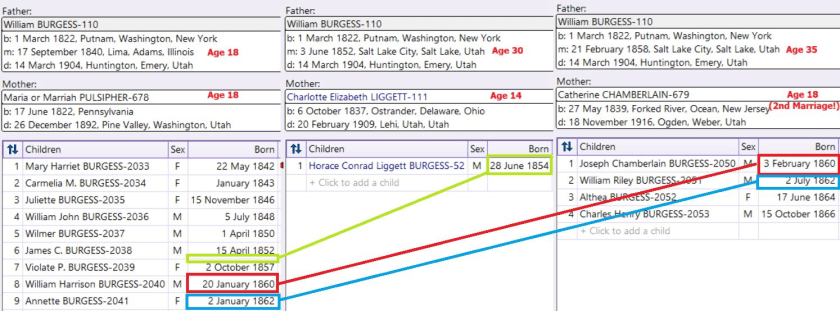
William married his first wife, Maria Pulsipher, in September 1840 in Lima, Illinois. More accurately, William entered into a legal marriage with Maria. His next two wives were polygamous unions. Early church leaders secretly began the practice while the church was in Nauvoo. The church did not openly start the practice until 1852, after Joseph Smith had died and it had established itself in Salt Lake City. William and Maria remained married until her death in 1892. They had nine children together.

William with his first family.

The Mormons were driven out of Nauvoo in 1846, which marked the beginning of the Mormon Migration to Utah. During the westward migration, over the winter of 1846-1847, about 2,500 church members encamped at Winter Quarters, which was just north of where Omaha, Nebraska came to be. The first settlers arrived in what is now Salt Lake City in July 1847, in what was still Mexican territory.

William and Maria were part of this great migration. They were in Winter Quarters from at least September 16, 1846 to May 1848. They set out as members of Brigham Young’s company, which consisted of about 1,220 people. William arrived in Utah by September 1848 and settled in Huntington, about 175 kilometers southeast of Salt Lake City.

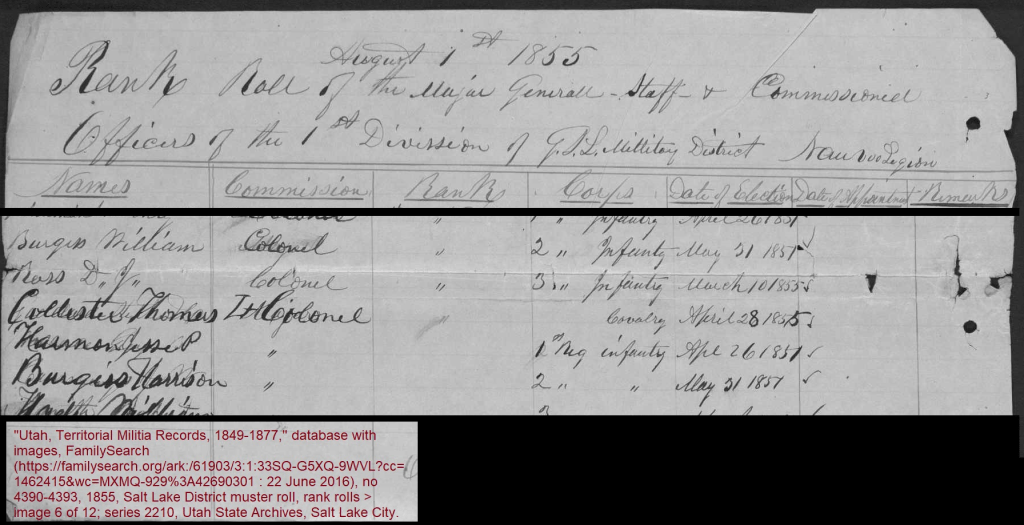
William was not in Huntington for long. By the next year, 1849, he was in Salt Lake City where he joined the militia. Upon enlisting he was made a captain; by 1853 he was a colonel. William also took up farming near Salt Lake City.

Militia record showing both William and his older brother Harrison.

While in Salt Lake City, William entered into a polygamist marriage with my Gx3 grandmother, Charlotte Liggett, on June 3, 1852. William was more than twice Charlotte’s age at the time – he was 30 and she was 14. Sadly, that kind of age gap, and the incredibly young age of the girls, was not uncommon with the early Mormon polygamists.

Shortly after marrying Charlotte, William entered into a mission. It appears that he may have or was to have carried out his mission in Great Britain; however, it is more likely that he performed his mission within the United States. At or around the time William completed his mission, he was ordained as President of the Ninth Quorum of Seventies.

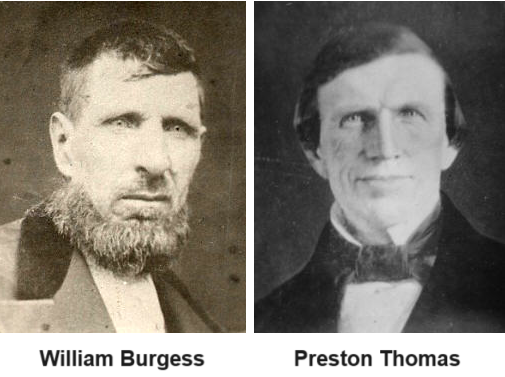
By the start of 1854, William and family were living in Lehi, Utah, which is about 40 kilometers due south of Salt Lake City. The city of Lehi established a school board on February 17, 1854 and held an election for trustees three days later. Three men were elected: William, Preston Thomas, and Daniel Collett. Sixty five years later, William’s grandson, Milton Burgess, married Preston’s granddaughter, Hazel Nelson. Milton and Hazel are my great grandparents.

Lehi school board trustees, 1854.

A month after William was elected to the Lehi school board, he was elected an alderman of Lehi. In addition to his electoral positions, William was one of the founders of the Lehi Dramatic Club, which was established in 1855. Its first productions were plays called “Priestcraft in Danger” and “Luke the Labourer”. The club performed in Lehi’s log schoolhouse, using tallow candles for footlights and painted wagon covers for scenery and curtains. I doubt William actually performed on stage. Rather, I believe he was one of the people overseeing the operations of the club. For example, William obtained the licence required by the town for operation of the club. Nevertheless, it is entirely possible that he may have been treading the boards!

William did not complete his term as alderman in Lehi. He resigned in March 1855, because he and his family moved to Salmon, Idaho, not far from where Sacagawea was born. While in Salmon, William embarked on a three-year mission for the church. The mission was based out of Fort Lemhi, a Mormon mission located about 40 kilometers south of Salmon. Initially, the mission consisted of twenty-seven sent to Lemhi by Brigham Young. At its peak, the mission grew to about 200 people. The Mormons were forced to abandon the mission due to conflict with the Bannock and Shoshone.

Sometime around or after moving to Salmon, likely in 1857, Charlotte left William. The marriage lasted long enough for them to have had one son, which was lucky for me, because he was Horace Burgess, my Gx2 Grandfather. By some accounts, the marriage ended because Charlotte did not get along with Maria; by others, it was because she was disenchanted with polygamy. Some sources indicate that the couple divorced. However, being a polygamous marriage, there may have been no formal civil registration of the marriage and, therefore, no formal divorce. While at the time of their marriage William and Charlotte had been “sealed” (a Mormon ritual meant to bind familial relationships for eternity), Charlotte had the sealing annulled in 1890.

After the Lemhi mission came to an end, William and family moved to Parley’s Canyon, which is now on the outskirts of Salt Lake City, where he had been granted 10 acres of land. William built a sawmill where he milled shingles for use at the nearby fort and for houses. William’s father and his brothers Harrison, Horace, and Melanchton also worked at the mill.

On February 21, 1858, William married Catherine Chamberlain, who was 18 years old at the time. Catherine had been previously married, at age 16, to a fellow by the name of William Randolph Teeples. Catherine and William had at least one child together. I have not researched the circumstances as to when Catherine and William separated, if they did at all. All the while, William was still married to Maria, who was 35 years old by this time. In fact, each of Maria’s last two children were born within a few months of each of Catherine’s first two children with William. Catherine ultimately had four children with William. This means that William fathered 14 children in total.

A rough sketch showing the ages of William and his three wives at the time of each marriage. As well, I’ve highlighted the relative times at which William fathered some of his 14 children, including the timing of Maria’s last two children and Catherine’s first two.

In 1862, William established a sawmill in Pine Valley, Utah, which furnished most of the lumber for southern Utah (then referred to as “Dixie”). It was one of the first sawmills in the region. The mill was a seasonal operation, so until 1880 William divided his time between Pine Valley in the summer and St. George, Utah, in the winter. The Pine Valley sawmill provided the lumber that was used to build the pipe organ for the local church. As well, apparently some of the lumber William milled was used for the construction of the Salt Lake Tabernacle.

In 1880, William relocated to Thurber, Utah, where he spent five years. Finally, around 1885, William settled back in Huntington, where he had begun life in Utah, and spent the rest of his life there. William had many business endeavours in Huntington. He was a bee keeper, which is fitting because Utah is known as the Beehive State. William also bought into the Co-op Mercantile Company as one of the principal stockholders and served as its president for seven years. He also worked as a carpenter, farmed, and raised cattle.

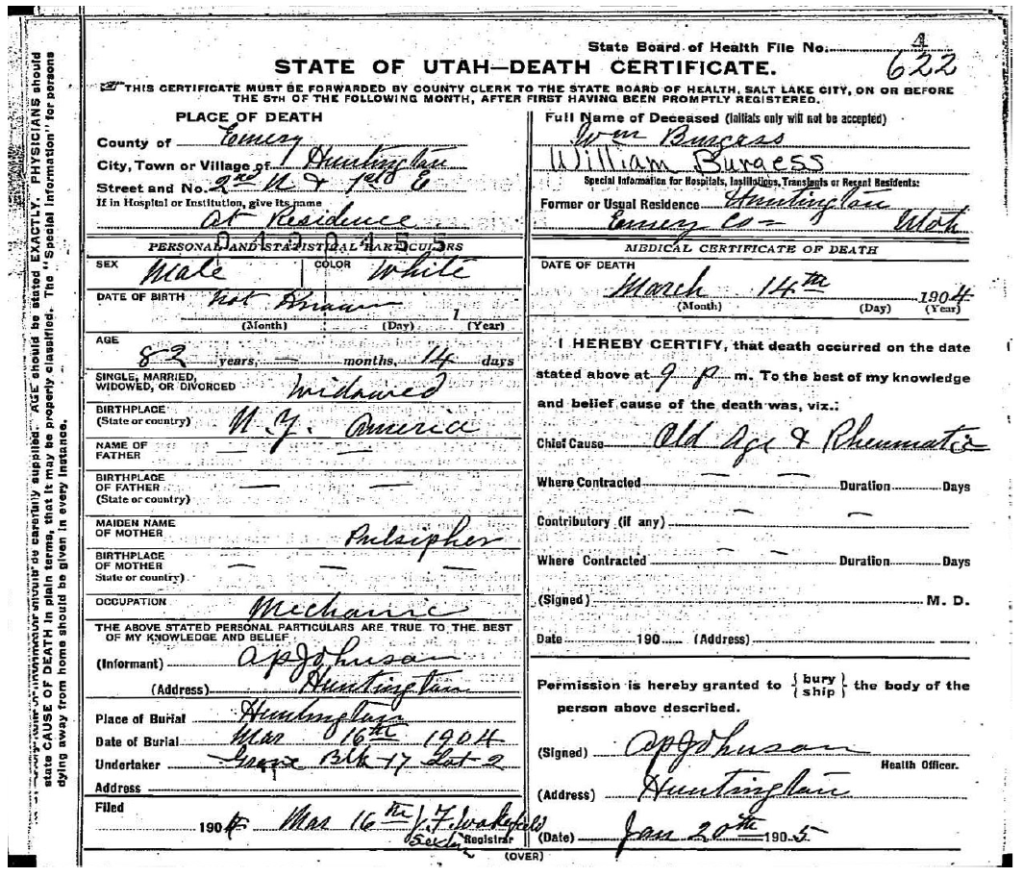
William died on March 14, 1904 after having been bedridden for nine years due to rheumatism and other ailments. He is buried at the Huntington City Cemetery.

52W Mark IV – Week 30: Card B4 John Alexander Nelson

John Alexander Nelson (1854-1942)

When I was 13, we went to Montana for a family reunion of the descendants of John Alexander Nelson, my Gx2 Grandfather. Of course, we were also the descendants of his wife Ella, but there wasn’t a lot of talk of her that weekend, but there certainly seemed to be a lot of reverence and awe when people spoke about John.

The event made an impression on me in many ways. It was the first (and pretty much only) organized family reunion I’ve ever been too. While it wasn’t my first time to the States, at that time I had not been there many times, and it had never been to see relatives. At the time I didn’t really have much connection to or knowledge about my American relatives, nor were they particularly close to me – lots of second or third cousins, once or twice removed. As well, it was my first real exposure to my Mormon relatives. John was my grandfather Leo Burgess’s grandfather, and my grandfather really wasn’t much of a practicing Mormon. He had pretty much left the church and didn’t follow any of its practices, so I didn’t really know much about it at the time.

John was born in Farmington, Utah, on October 17, 1854 to Irish immigrant parents, Robert Nelson and Elizabeth Joseph, who had spent some time in Scotland before they joined the Mormon church and moved to America with their first three children. After arriving in the States, the Nelsons lived in Missouri for a couple years before continuing on to Utah in 1852. While he was Robert and Elizabeth’s second child born in the United States, John was the first of their children born in Utah.

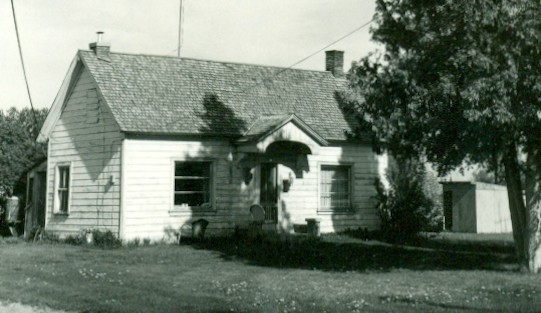
Sometime between 1860 and 1862, when John’s youngest siblings were born, the family moved to Smithfield, Utah, almost 100 kilometers to the nouth of Farmington. While he married his wife, Ella Elizabeth Thomas, in Salt Lake City on January 9, 1879, he continued to reside in Smithfield, apparently until the family emigrated for Canada.

The house John built in Smithfield in 1879

It appears that John might have flirted with the polygamous practices of the Mormon church. On March 19, 1885, he was “sealed” (a Mormon ritual meant to bind familial relationships for eternity) to two sisters, Matilda Jane and Eliza Rankin. Sometime in 1892, John was sealed to Frances Rebecca Purser.

I received this information from my great aunt Fon Hogg (née Burgess), John’s granddaughter. Fon was an avid and proficient genealogist. As a member of the Mormon church, Aunt Fon had access to information that is not available to non-adherents. Fon stated that they were “only sealed,” suggesting there was no civil marriage. In any event, as a polygamous marriage, these unions would not be recognized by the civil authority. Fon also informed me that the sealing between John and Frances was “cancelled” in 1896.

In 1887, Charles Ora Card, a significant Mormon leader, founded the settlement that became Cardston. In part, Card was seeking to avoid arrest for bigamy and was hoping Canada would be more accepting of plural marriage. The Canadian government quickly quelled that prospect, but the settlement flourished. In 1889, he returned to Utah to recruit more settlers.

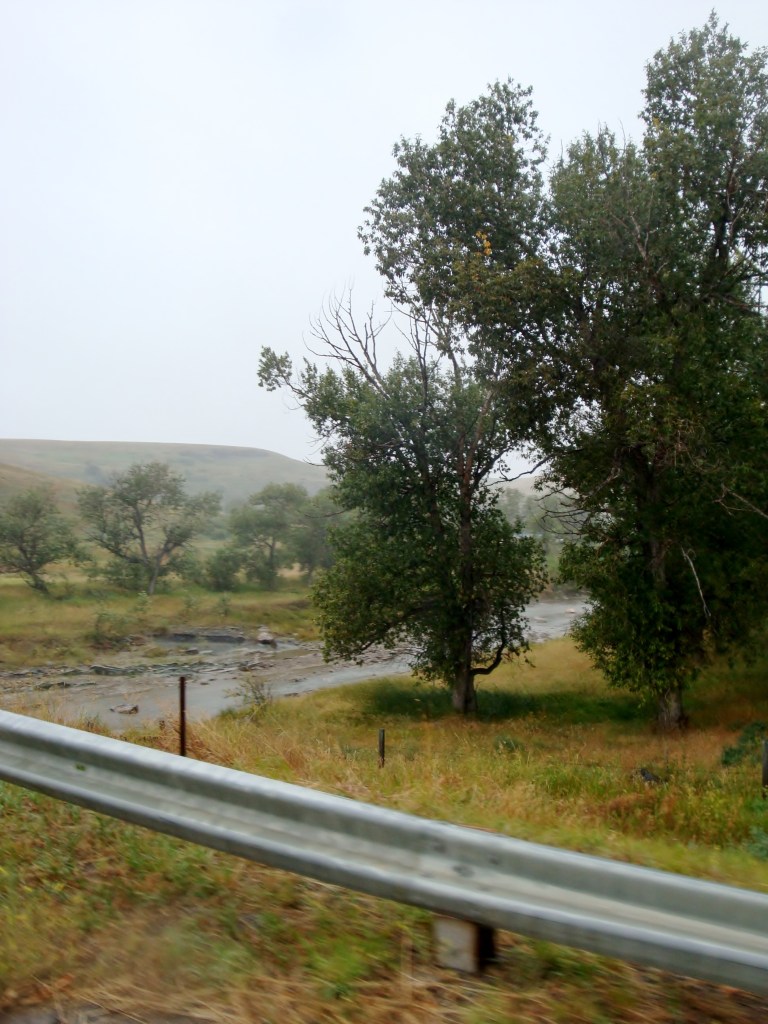
Lee Creek and the land John settled in 1890.

John and Ella answered the call, so they and their five children moved to Canada in September 1890. They travelled by covered wagon and brought 13 horses, 7 cows, 7 “other horned cattle”, and a pig. Upon arrival, John constructed a sod dugout on a 160 acre homestead on Lee Creek, which ran though the land and on to Cardston. The land is located on what is now Alberta highway 501. John and Ella were nationalized as British subjects domiciled in Canada in 1896 (there was no “Canadian” citizenship until 1947).

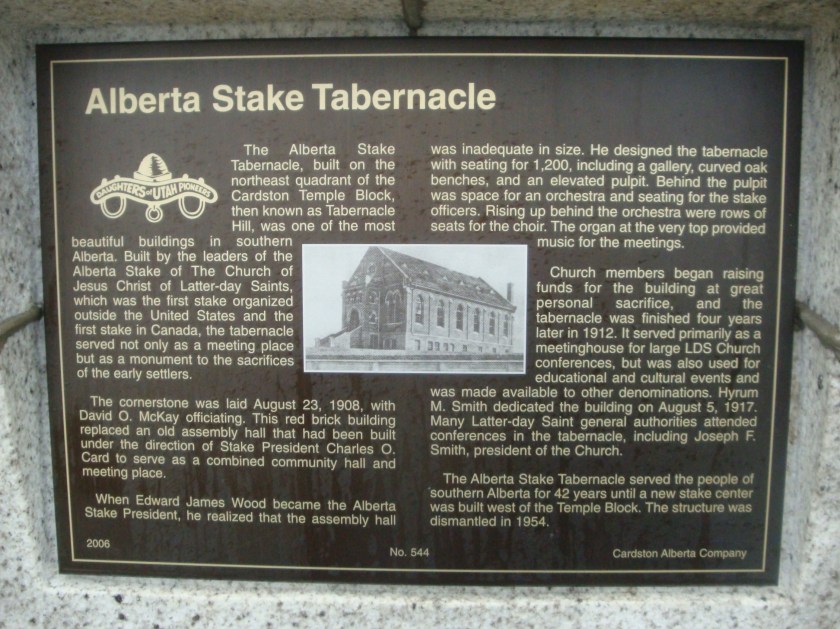
John’s land also had a quarry. Rock from his quarry helped build, among other things, included the Cardston courthouse and, reputedly, the Alberta Stake Tabernacle that stood from 1912 to 1954. The one structure for which John definitely did not supply the stone was Cardston’s first saloon. As if farming and operating a quarry was not enough, John was also a carpenter and operated the first lime kiln in the region. He also served as a school trustee in 1907.

In 1906, John and Ella moved to nearby Woolford, Alberta, where John continued farming. They briefly returned to Utah in the early 1920s, where John operated an orchard or fruit farm, but they returned to Woolford in 1924. John continued farming there for the rest of his working life.

John died on September 29, 1942, a year after Ella passed away. At the time of his death, John had 10 children, 54 grandchildren, and 25 great grandchildren, on both sides of the Canadian-US border. No wonder there were so many people at that family reunion in Montana!

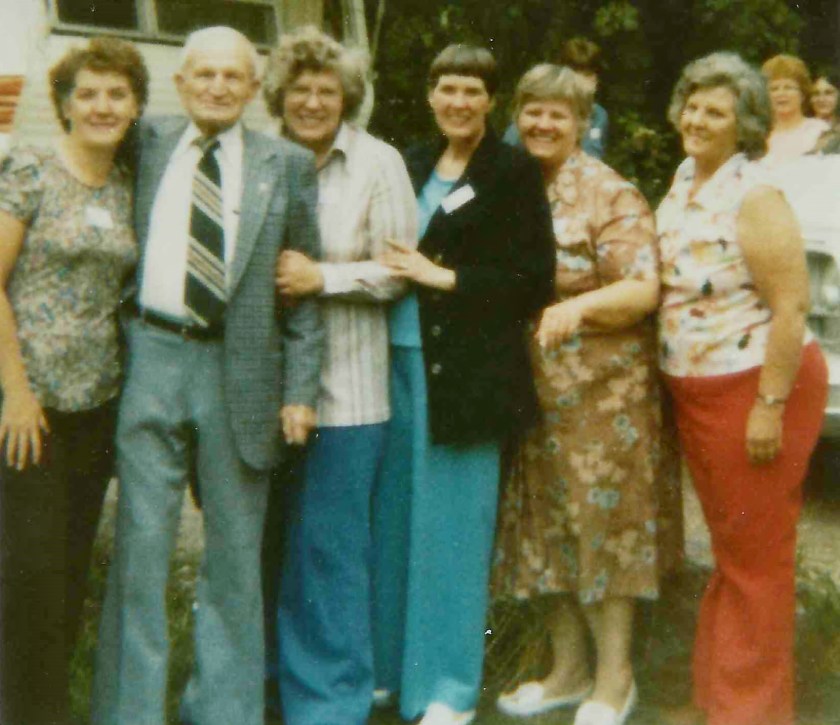
One of the big stars at the Nelson family reunion was Cleveland Nelson (1893-1982) , the last living child of John and Ella. He’s with five of his nieces, my grandfather Leo Burgess’s sisters: Fon, Cleve, Julia, Ella, Molly, and Irene. You can also see my mother over Irene’s shoulder.

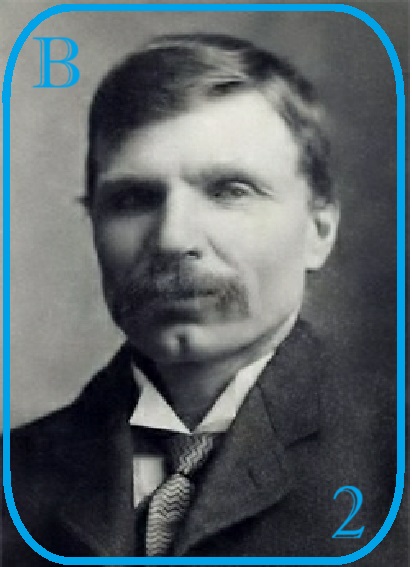
52W Mark IV – Week 28: Card B2 Horace Conrad Liggett Burgess

Horace Conrad Liggett Burgess (1854-1940)

What can I say about my Gx2 Grandfather Horace Burgess that I haven’t said before? It seems like I’ve written about or mentioned him many times in the four years that I’ve been participating in the 52 Ancestors Challenge.

Horace was born in 1854 in Lehi, Utah. As far as I can find, he was named Horace Liggett Burgess. His middle name reflects the Mormon custom of giving their children their mother’s maiden names as middle names. Census and marriage records show he was still using Liggett as his middle name in his late 40s. It was not until after he moved to Canada in 1903 that he began to use Conrad. The family lore I’ve found suggests he adopted the middle name Conrad later in life in order to add support to his claim in a dispute over his ownership of some land. Horace dropped Liggett from his full name when he applied for homesteads in Alberta in the first decade of the 20th Century. The name Liggett does not appear on his death certificate or headstone.

Horace was the only child of William Burgess and Charlotte Elizabeth Liggett, who married in 1852. The union was polygamous, as William was still married to his first wife, Maria Pulsipher. William and Maria had been married for 12 years at the time and had six children; they remained married until Maria died in 1892. Moreover, William was more than twice Charlotte’s age when they married – he was 30, she was 14. Based on my research, this was typical of polygamous Mormon marriages of the time.

Charlotte left William sometime around when Horace was three. Apparently she did not get along with Maria. Horace went with his mother when his parents separated. Charlotte remarried in 1857, entering into another polygamous marriage. By the time Horace was 17, he had five half-siblings through his mother and step-father. William married his third wife in 1858 – another polygamous marriage for him, too. William had three more children with Maria and four with his third wife. In all, Horace had 19 half-siblings.

Horace had no memories of his biological father during his childhood and teens. Based upon the 1860 and 1870 censuses, Horace went by his step-father’s surname. According to his half-brother George, Horace was 18 when he learned the identity of his biological father from his mother. Horace then sought out his father and began using the surname Burgess.

Horace married his first wife, Sarah Florilla (“Rilla”) Cook, in Goshen, Utah on March 3, 1876. He was 21 and she was 18. Together they had nine children – seven boys and two girls. Six children survived childhood and into adulthood. By 1887 the family had moved to Lawrence, Utah. As of 1891 they had relocated to Vernal, Utah.

I don’t know how Horace earned a living at the time he married or when his first two children were born. However, by 1880, he was working in Goshen as a teamster. It appears that he worked at this occupation in one form or another for the next twenty years.

1880 United States census, Utah Territory, Utah County, Goshen Precinct, Enumeration District 35, page 3.

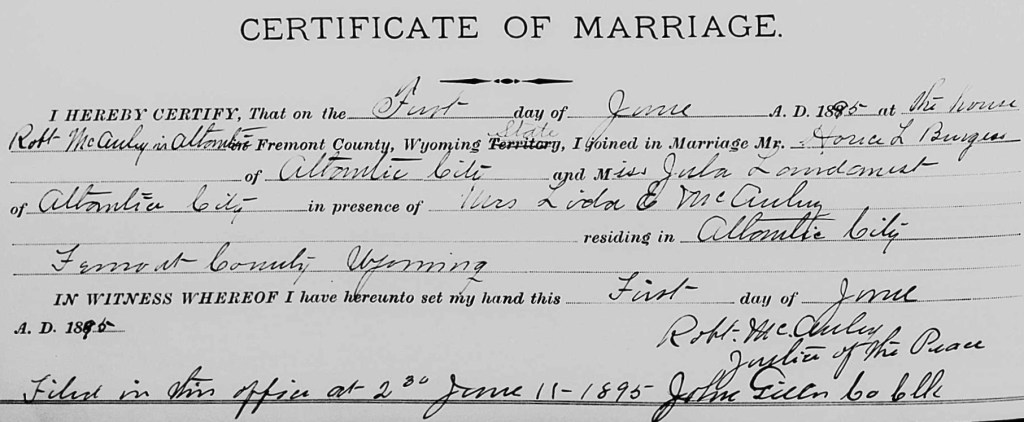
Rilla passed away in January 1894, a few weeks after giving birth for the ninth time. Just over a year later, on June 1, 1895, Horace married Julia Josephine Lundquist in Atlantic City, Wyoming. It is neither a city nor located by the Atlantic. In fact, the village is well more than twice as far from the Atlantic as it is from the Pacific. Apparently it takes its name from the fact it’s on the eastern (Atlantic) side of the Continental Divide.

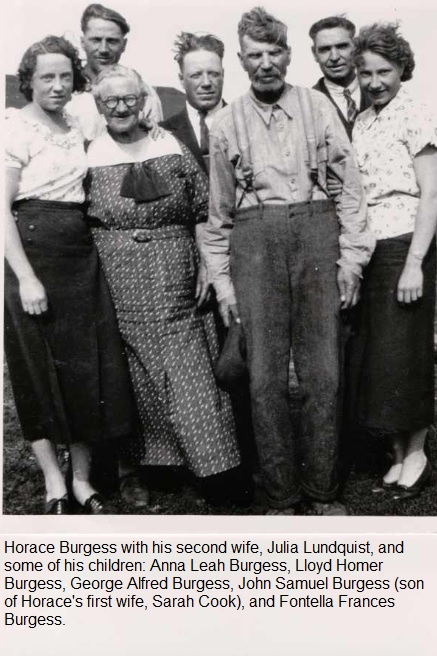
Horace was 13 years Julia’s senior. It was her third marriage. Julia was born in Sweden and immigrated to the United States when she was 16. Horace and Julia had nine or ten children. I say nine or ten because I cannot find much evidence regarding their first child, said to have been born sometime in 1895. Even his name is unconfirmed. I have it as Lewiston Leon Burgess, other places it’s James Harvey Lewiston Leon Burgess. If he in fact existed, Horace and Julia had five children in the United States and five in Canada.

Based on the records I have, how Horace came to be in Wyoming is little more than an exercise in speculation. I suspect it was related to Horace’s occupation of transporting freight.

Horace is included twice in the 1900 census, in Freemont and Sweetwater counties, both in Wyoming. For both, his occupation was entered as “freighter”. Since records for other times show Horace as a teamster, it’s likely that his work as a freighter meant he transported cargo. The fact he was listed in the 1900 census at two different locations, it may be that his transport work involved travel between the two counties.

The Freemont County census shows three of Horace’s sons as being with him in that county, with their occupations listed as sheepherder. One of those sons, John, is also listed in both census records. Together, this suggests that Horace’s transport work might have been related to agricultural products.

Horace and family moved to Canada in 1903, when Horace made the first of two attempts at homesteading. In August of that year he settled on a piece of land near Grassy Lake, Alberta, which is midway between Lethbridge and Medicine Hat. The venture did not last long, because he had returned to the United States the following year. In a subsequent application for a homestead at another location, Horace reported that he had forfeited his claim to this land.

The family came back to Canada soon afterwards and made a second attempt as a homesteader on a piece of land near Brant, Alberta, about 60 kilometers southeast of Calgary.

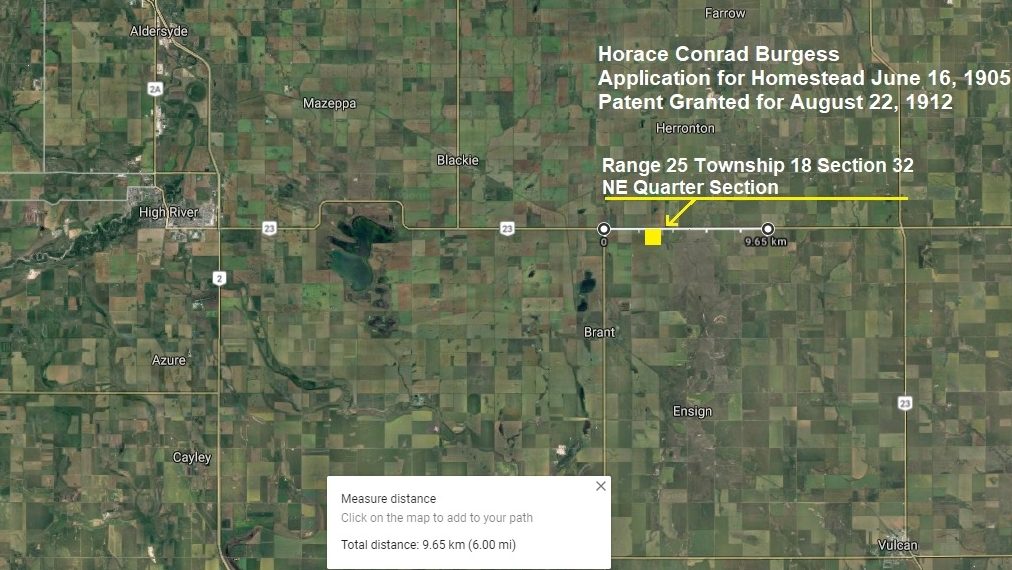
Horace obtained entry for the land on June 19, 1905. He built a home on the land and began continuous occupation in April 1908. That was the same year Horace was naturalized as a Canadian national (at that time, a British subject domiciled in Canada). According to the homestead application Horace filed in June 1908, on two occasions after entering the land he spent several months working in British Columbia. On this homestead, Horace had seven horses and ten head of cattle. The land was granted to him on August 22, 1912. Horace remained here until 1916. I do not know his ownership status there after that time.

The yellow square marks the land granted to Horace Burgess, upon which he was a homesteader – not far from Vulcan!

Sometime in 1916, Horace and family relocated to a farm at Glenwood (at the time, “Glenwoodville”), north of Cardston. Sometime after 1916, Horace and family moved several times, to places in Utah and Idaho, but they did not sell their home in Glenwood. Horace, Julia, and their two youngest children moved back to Glenwood in September 1924. It appears that from up to 1930, Horace divided his time between Glenwood and Cherry Grove, which is midway up the province close to the Saskatchewan border.

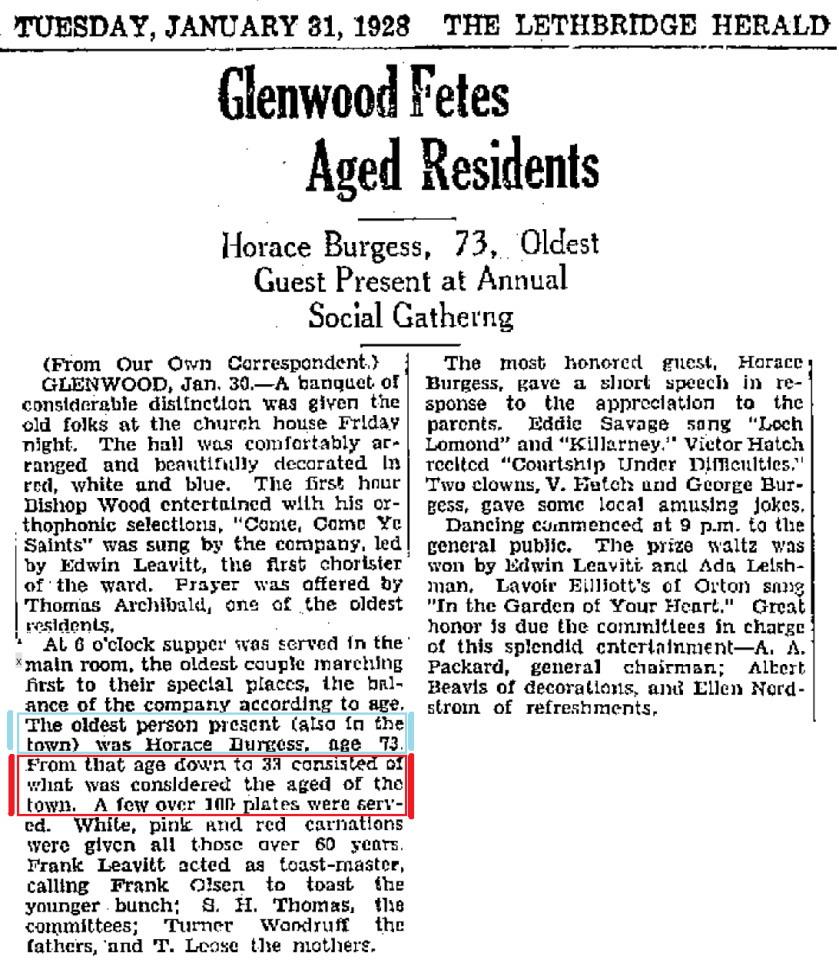
Two years before Horace left Glenwood the last time, the village honoured its oldest residents at a banquet in January 1928.  At age 73, Horace was the oldest of those honoured. However, the bar for what was considered “aged” was pretty low. According to the newspaper account of the event, from age 72 “down to 33 consisted of what was considered the aged of the town.” I suppose midlife crises in Glenwood occurred when people were in their teens.

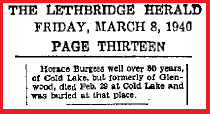
Horace ultimately retired in 1930 and remained in Cherry Grove from that time on. His hobbies included vegetable gardening. Horace passed away at age 85, on February 25, 1940. While the cause of death was due to kidney problems, the registration of his death said it was secondary to “senility”, amongst other health problems. Horace is buried at the Cherry Grove Cemetery.

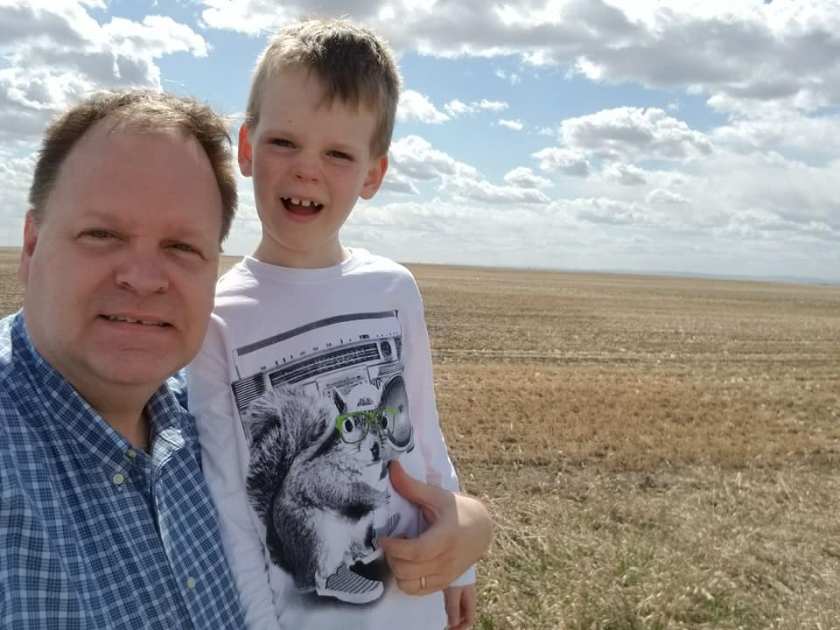
Horace’s Gx3 and Gx4 grandsons, visiting the land he farmed just over 100 years ago.