
52 Weeks – Week 37: High and Low

Highs and lows bring to mind the Guinness Book of World Records. So for this week’s 52 Ancestors Challenge, I thought I’d consider some of the superlatives in my family tree. Bear in mind that this is for entertainment purposes only, because some of these superlatives have not been sufficiently researched or verified such that they can be taken as fact.

Here’s a high: Mount Baker, Washington

I cannot verify with certainty the longevity of the few centenarians in my database. According to my database, my longest-lived ancestor died at age 110. I don’t believe that for a second, so I won’t even name them. The person for whom I have at least a scintilla of information regarding their longevity is Joseph Metz, my first cousin three times removed. According to his headstone, as seen on Find a Grave, Joseph lived to be about 102 or 103. The longest-lived person in my database with the most reliable information regarding their lifespan is my fourth cousin three times removed, Fern Renner. She was better known to the world as Fern Welk, as she was married to the well-known band leader, Lawrence Welk.

My relative who was the oldest on their wedding day was my great great great uncle, Samuel Nelson, who married for the fourth time when he was 77. The bride, Cecilie Anderson, was 62. Samuel lived to be 93, making him one of my longer lived relatives.
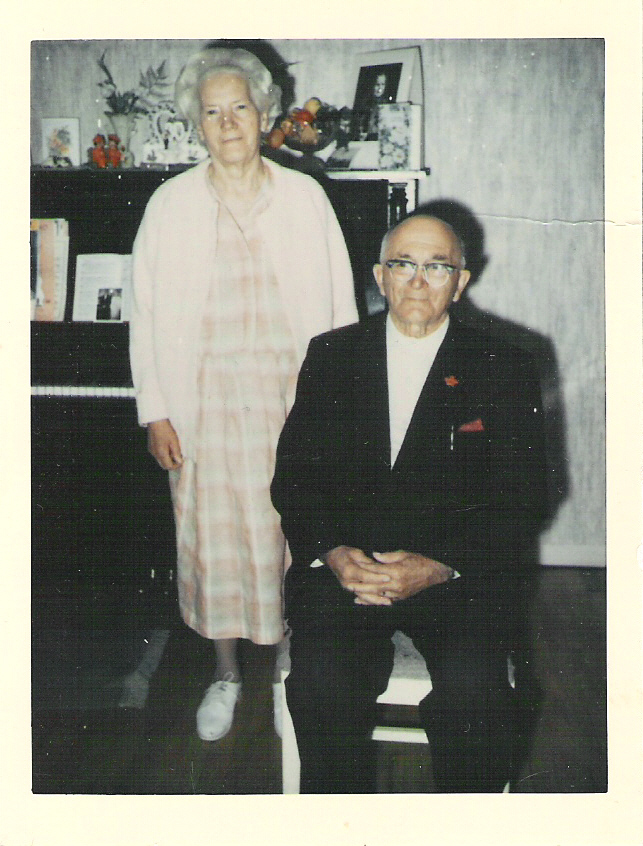
The newlyweds, Hazel Nelson and Albert Beaves, about July 5, 1967.

My great grandmother, Hazel Nelson, married for a second time at age 67, not quite two months before she passed away. Her husband, Albert Beaves, was also a widower marrying for the second time. Albert was 85 years old at the time. He lived another nine years after Hazel’s death. Albert died when he was 94.

While Samuel Nelson had been married four times, the record for most marriages is my 7x great uncle, Archelaus Kenney, who apparently married five times. Not even any of the Mormon polygamists in my tree married that many times. However, I have not verified any of Archelaus’s marriages.

Otherwise, Samuel’s record was tied by his younger brother, my great great grandfather, John Alexander Nelson. However, while it appears that Samuel had been widowed each time he remarried, John was a polygamist. Another ancestor, my great x3 grandfather, Henry Lyman Cook, was also a polygamist who married four times. Other polygamist ancestors, including my great x3 grandfathers William Burgess, Jr. and Preston Thomas, only married three times.
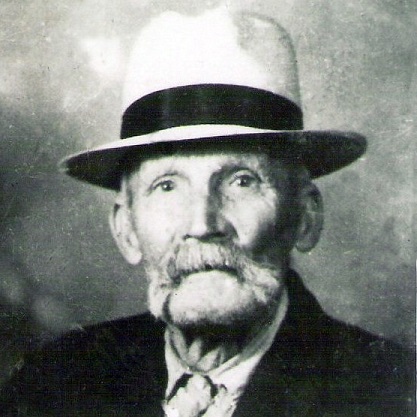
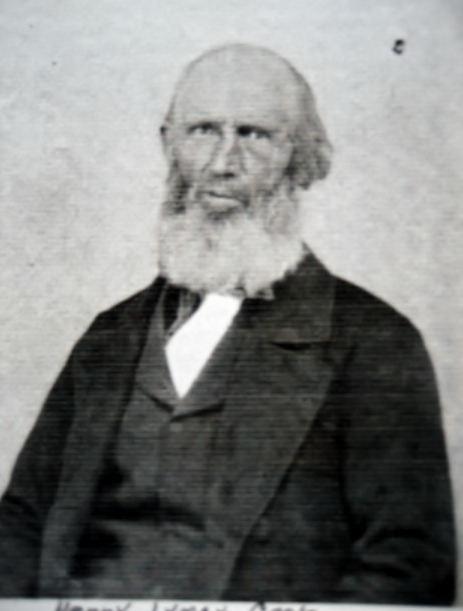
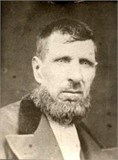
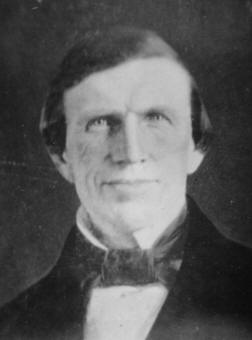
A bunch of polygamists: John A. Nelson, Henry L. Cook, William Burgess Jr., Preston Thomas.

It probably comes as no surprise that the women in my family tree have had fewer multiple marriages than the men. I can find few examples of women who married more than twice. One of the exceptions is my great x4 grandmother, Louisa Thomas, who married three times. Her first husband, Lazarus Beakley, died a year or two after they married, when Louisa was around 24 or 25 years old. Louisa’s second husband, my great x4 grandfather Conrad Liggett, died 18 months after they married, when Louisa was 26. Louisa married again at age 29, to Aaron Cook. Unfortunately, that was another short-lived marriage, as Louisa died when she was 35.

Of course, with marriage there are often children. Of course, the person with the most children in my tree is a father. My great great grandfather, Horace Burgess, had nineteen children. He had nine children with his first wife, my great great grandmother Sarah Cook. Their eight child and youngest son was Milton Leo Burgess, my great grandfather. After Sarah died, Horace remarried, to Julia Josephine Lundquist, with whom he had ten children.
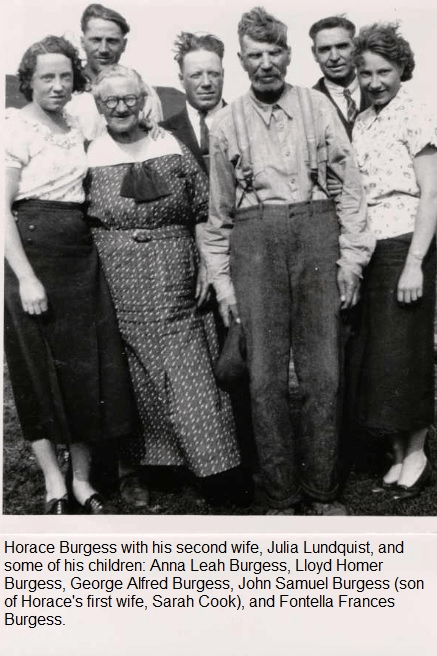
The woman in my family tree who appears to have had the most children is Horace’s paternal grandmother, Violate Stockwell. Violate and my great x 4 grandfather, William Burgess Sr., had 12 children, including my great x 3 grandfather William Jr, who had 12 children with three different wives.

Delving far from what I’ve established through the genealogical proof standard, the earliest occurrence of a surname in my direct lineage is de Fleg, which dates back to the 10th century, through my 9x great grandfather Thomas Flegg. My connection to Thomas is through Henry Lyman Cook. While I have done a pretty good job at demonstrating my connection to Henry, I have not really done much work on his ancestry beyond the basics.
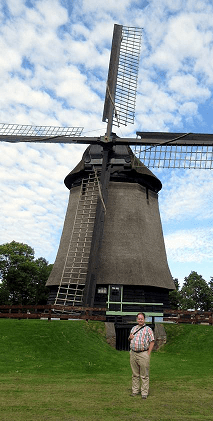
Here’s a low: standing a meter below sea level in Waarland, Netherlands

I realize that in this examination of superlatives, I have only considered the highs. Of course, considering the people in my tree who are at the opposite end of most of the categories I have discussed are in the multiples. The one category that might lend itself to reasonable consideration of the low end is the surname that might be the opposite end of earliest occurrence. In other words, the surnames I have traced the least far back in time. I’ve identified all 32 of my great x3 grandparents. It is the next generation where I face my first brick walls. I am missing nine of my 64 great x4 grandparents, all on my maternal grandmother’s side of the family. They are all Germans from Russia, who are particularly difficult to research. These lines trace back to settlements in what is now Ukraine, when it was part of the Russian Empire.

Genealogy: all the highs and lows are fascinating!
52 Weeks – Week 28: Characters

This week’s 52 Ancestors Challenge theme is “Characters”. While that actually provides a wide scope, the inclination might be to write about an ancestor who had a big personality or was quite the extrovert. I’ve decided to write about an ancestor who most likely needed quite a bit of character to have endured what life sent her way.

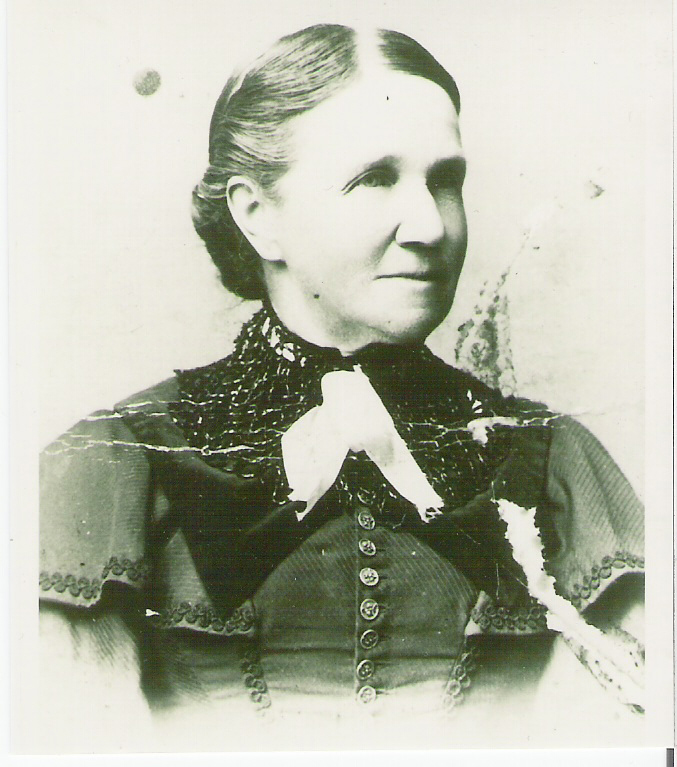
One of my Gx3 grandmothers was Charlotte Elizabeth Liggett. Charlotte was born on October 2 or 6, 1837, to Conrad Liggett and Louisa Thomas. According to some sources, Charlotte was born born in Dover Township, Union County, Ohio, although most other accounts say it was Ostrander, Delaware, Ohio. While in different counties, these communities are about five kilometers apart.

Charlotte Elizabeth Liggett

Conrad and Louisa married on February 28, 1837. Unfortunately, Conrad died shortly after Charlotte was born. I have been unable to find definitive sources as to when and where he actually died, although it is likely that it occurred in April 1838. Several sources suggest he died at Nauvoo, Illinois sometime before 1839. However, the Latter Day Saints (Mormons), of which he was likely a member, did not really begin to settle in Nauvoo until after they were expelled from Missouri in late 1838. It may be that Conrad himself never left Ohio. According to Find a Grave, Conrad is buried in Ohio, although there is always the possibility that his remains were transported to Ohio after his death.

Louisa remarried in 1841, to Aaron Cook. This marriage may have occurred in Nauvoo. With the Mormons being driven out of Nauvoo starting in 1846, Louisa, Aaron, and Charlotte set out in the westward migration to what is now Utah. The migration, undertaken in haste and without time for proper preparations, was arduous. On the way to Winter Quarters in Nebraska, in November 1846, Louisa died. Charlotte had just turned nine.

After time spent at Winter Quarters, Aaron continued to Utah with Charlotte. According to one family history I’ve read, upon reaching Utah Aaron, he “married Charlotte off” to a Mormon elder. That was likely a reference to Charlotte’s first husband, my Gx3 grandfather, William Burgess. The marriage occurred on June 3, 1852, when William was 30 and Charlotte was only 14. Even worse, this was a polygamous marriage, as William was still married to his first wife of 12 years, Maria Pulsipher.

The marriage did not last long. Fortunately for me, it lasted long enough to produce one child, my Gx2 grandfather, Horace Burgess. Apparently Charlotte did not get along with Maria. Charlotte left William sometime in 1857, when she was 19. Many secondary sources suggest that William and Charlotte divorced. However, being a polygamous marriage, there may have been no formal civil registration of the marriage and, therefore, no formal divorce. While at the time of their marriage William and Charlotte had been “sealed” (a Mormon ritual meant to bind familial relationships for eternity), Charlotte had the sealing annulled in 1890.

Shortly after leaving her first husband, Charlotte entered into her second marriage, with William Whitehead Taylor, on September 7, 1857. This was also a polygamous marriage, and at age 28, William was almost 10 years older than Charlotte.

While Charlotte’s early life may have been difficult, it may have been much less onerous after she joined with William. It appears that they remained together for 50 years, until William passed away in 1907. Charlotte and William were never sealed during their lifetimes, as a bishop had told Charlotte that she could not be sealed again. Apparently they were sealed after Charlotte’s death, as it was her “dying wish”.

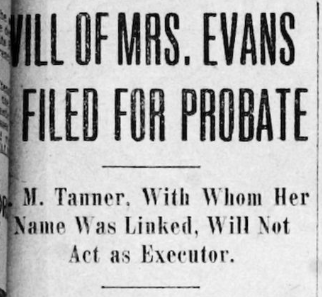
The Salt Lake Tribune, April 25, 1908, Page 11

Charlotte and William had four children. It appears their second child, Louisa, may have died in infancy or childhood. Their eldest, Sarah, died at age 49, when Charlotte was 70. There was a small amount of notoriety in the press when Sarah died. She was married twice. The first marriage was to Prime Evans. The second marriage was with a J. M. Tanner. However, this was not a legal marriage. According to newspaper reports at the time of Sarah’s death, this was a secret polygamous marriage, solemnized within the church after polygamy was outlawed. Tanner had been named executor of Sarah’s will and guardian of children Sarah had adopted (young relatives of hers). However, he ultimately declined to act in either role, likely because of the scandalous nature of his relationship with Sarah.

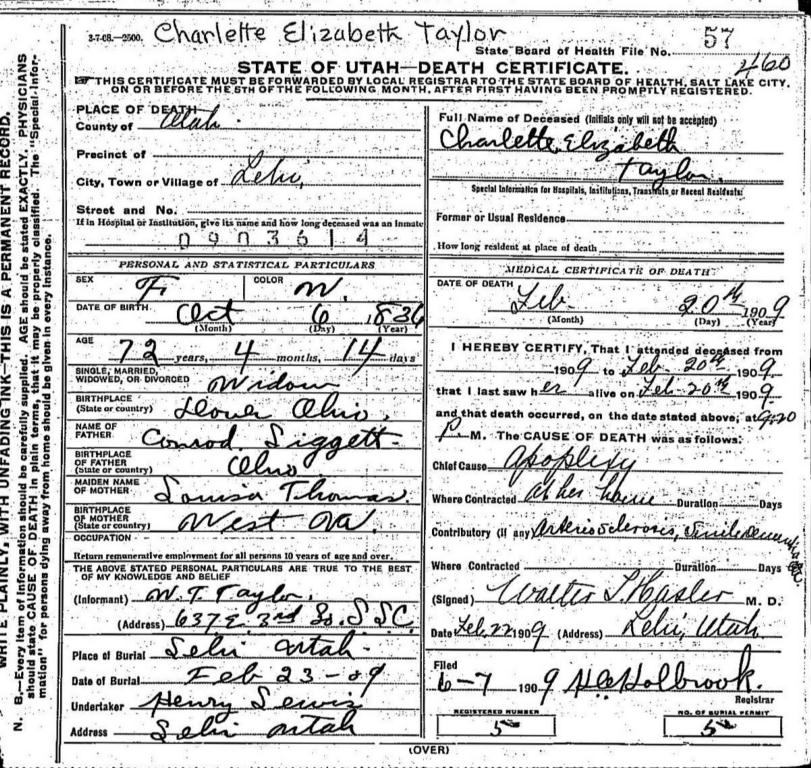
Charlotte died at home in Lehi, Utah on February 20, 1909 due to apoplexy, a term formerly describing a cerebral hemorrhage or stroke. Charlotte is interred at Lehi City Cemetery, with her second husband.

Charlotte’s Death Certificate

52 Weeks – Week 16: Negative

It has taken me most of the week to get to completing this week’s theme for the the 52 Ancestors Challenge, “Negative”, because that’s mostly the reaction I had to it.

The first example given in the description for the theme – and the first thing that came to my mind – was “discovering something ‘negative’ about an ancestor”. That brought to mind the ancestors that I really don’t admire. As one branch of my family tree goes back to almost the very beginning of the Latter Day Saint movement, I have a few polygamists as direct ancestors. It was an offensive, oppressive, and misogynistic practice, begun in secret likely because its proponents knew how reprehensible it really was. My least favourite of these ancestors is the one who started as a slave owner and ended up as a polygamist. I might not like these people, but I still research them because it helps in finding out more about the ancestors who I do like.

However, I had neither the bandwidth or the patience this week to write about those men any further. So how else to spin “negative” without delving into the things that weigh us down, cause us to complain (ugh – writing up source citations!), or simply “yuck our yum”, as my kids might say? Unfortunately, while I have many tradespeople in my lineage, none of them were electricians, short-circuiting that idea for further discussion.

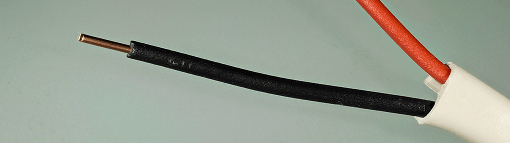
Image: Copper Wire – Positive and Negative by Tudor Barker available under Creative Commons Attribution (CC BY) 2.0 Generic licence.

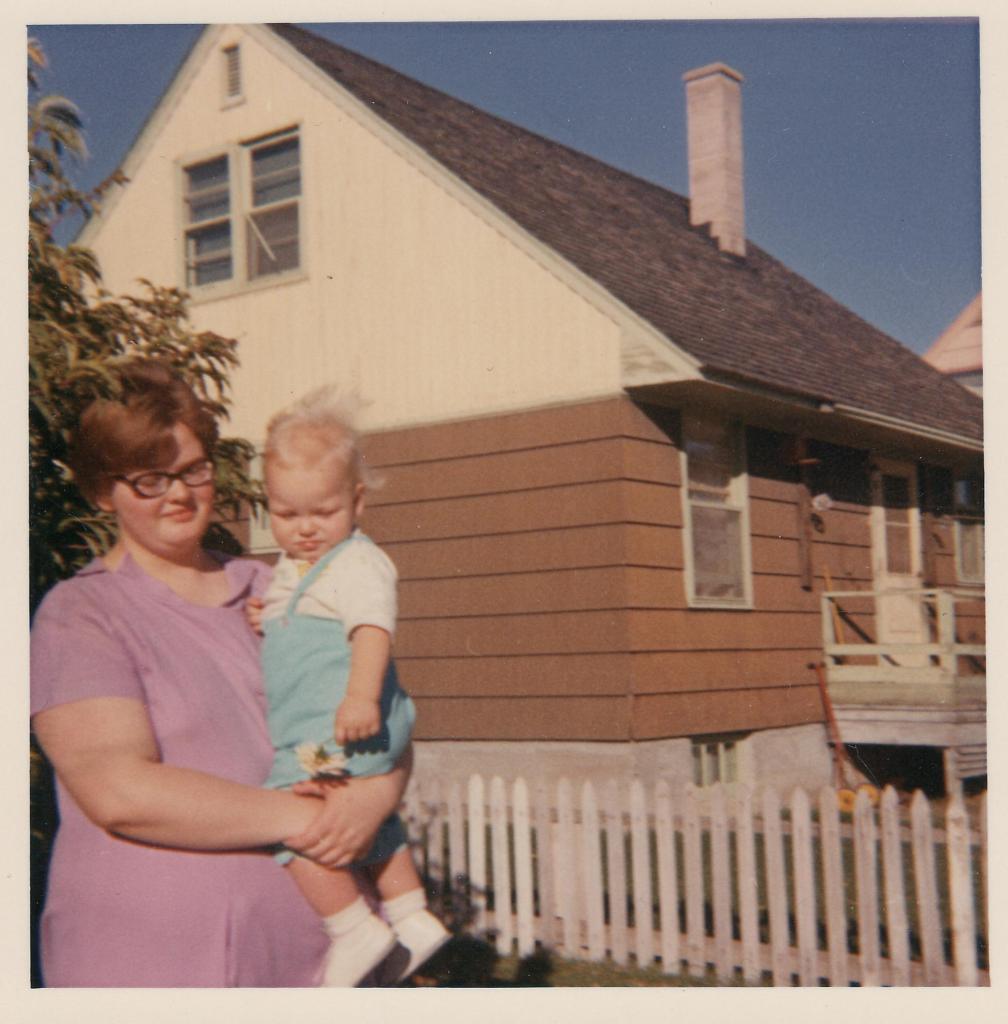
I know that for this challenge a lot of people are writing about photo negatives, but it seems to be a well-worn path of discussion. Nevertheless, here is an attempt I made many years ago to turn some negatives I found into a positive, without really having the kind of equipment that I really needed or that was even practical. Years later, I came across prints that were made from those same negatives. This is an example of but one of those photos.

Meanwhile, for this week’s theme another participant in the 52 Ancestors Challenge, Karen McPherson of I Seek Dead People, posted about a pair of father-and-son rouges, both named Robert Cross. The elder was born in 1613 and the younger was born in 1642. I am also descended from Robert the elder, through his daughter Anna. I have done absolutely no research on this branch of the family since the mid-1990s. My other lines have been of much greater interest to me and I’ve just never come back to the Crosses. After reading Karen’s story, I don’t think I’m in any more of a hurry to get back to them. That said, I now know more about an ancestor that I didn’t know before. (You’ll want to see Karen’s blog post for the cartoon, which I found exceptionally funny.)

What I’d like to do is end this week’s theme on a note of positivity – with a negative! While I hope I don’t jinx things by pointing this out, our family has managed to get through more than two years of pandemic without coming down with a single case of COVID. We’ve all gone in for testing at various points in time over the last two years, and fortunately the result has always been negative. Today we tested our youngest again and, happily, the result was once again negative.

That’s the kind of negative I like to see!