It’s Week 49 of the 52 Ancestors Challenge. As we approach the horizon of a new year, this week’s theme is “New Horizons”.
I’ve written before about my mother’s maternal lineage, who are all Germans from Russia. This is the story of my mother’s immigrant great grandparents, Michael Lerner and Barbara Schmidt, who sought new horizons in not one, but two countries.
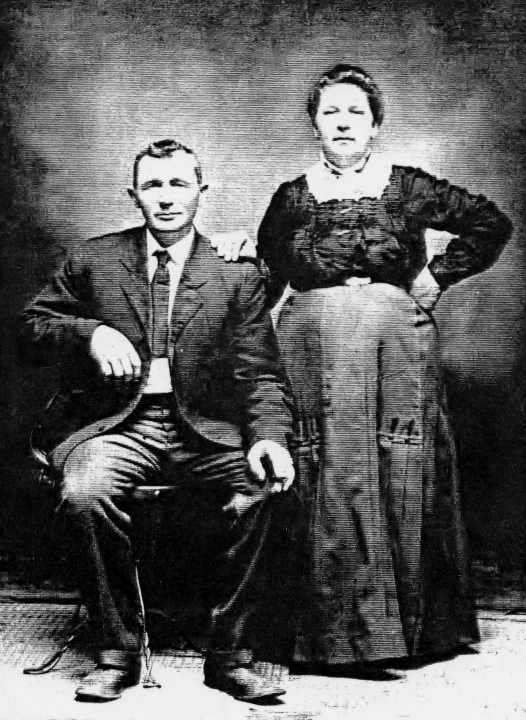
Michael Lerner (1862 – 1947) Barbara Schmidt (1865 – 1936)
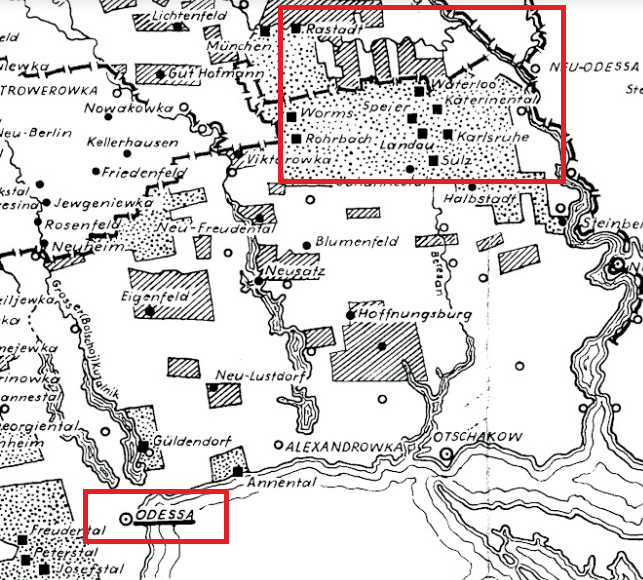
Michael and Barbara were both born in the Beresan district of Kherson province in what is now Ukraine, but which at the time was part of the Russian Empire. Michael was born in Rastatt and Barbara was born in nearby Karlsruhe. As should be apparent, the colonies were generally named after the cities and towns in what is now Germany from where the colonists came.
The German colonies in the Beresan district in 1890, as seen in relation to Odessa.
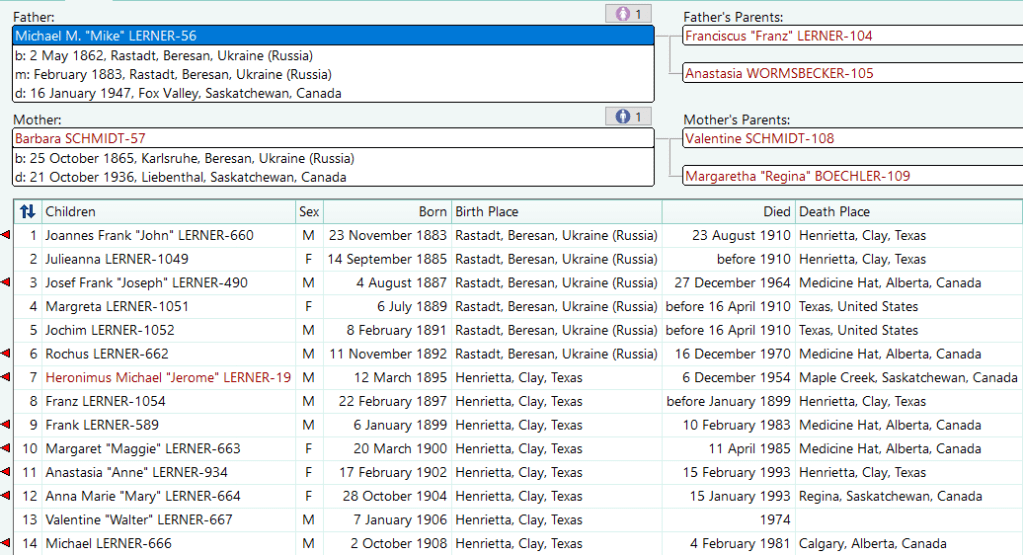
Michael and Barbara married in Rastatt in February 1865. They lived there for the next ten years, where Michael was engaged in farming. Michael and Barbara had six children together during this time.
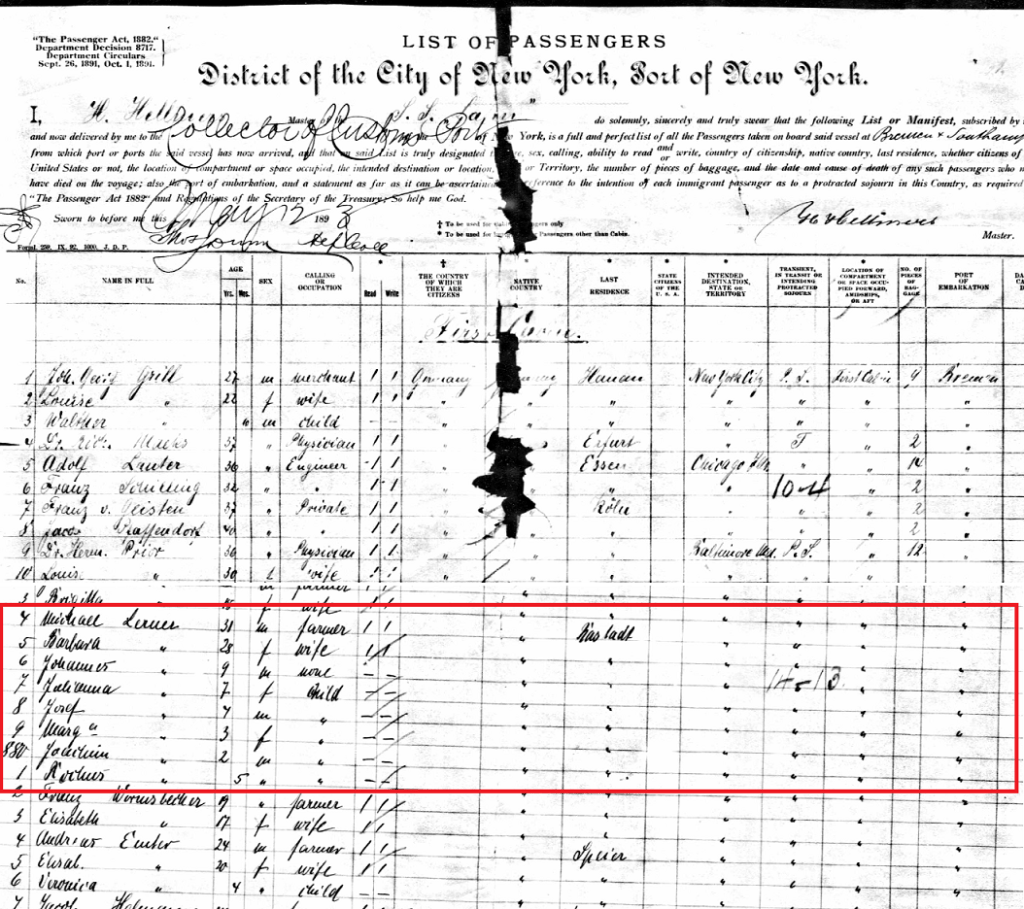
The family emigrated from the Beresan to the United States in 1893. They travelled across the Atlantic on the S.S. Lahn, landing at Ellis Island on May 12, 1893, where immigration officials did not change their surname.
The passenger list for the S.S. Lahn showing the Lerner family.
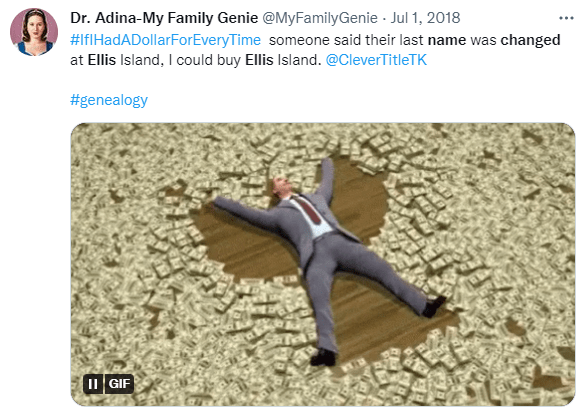
A brief editorial comment.
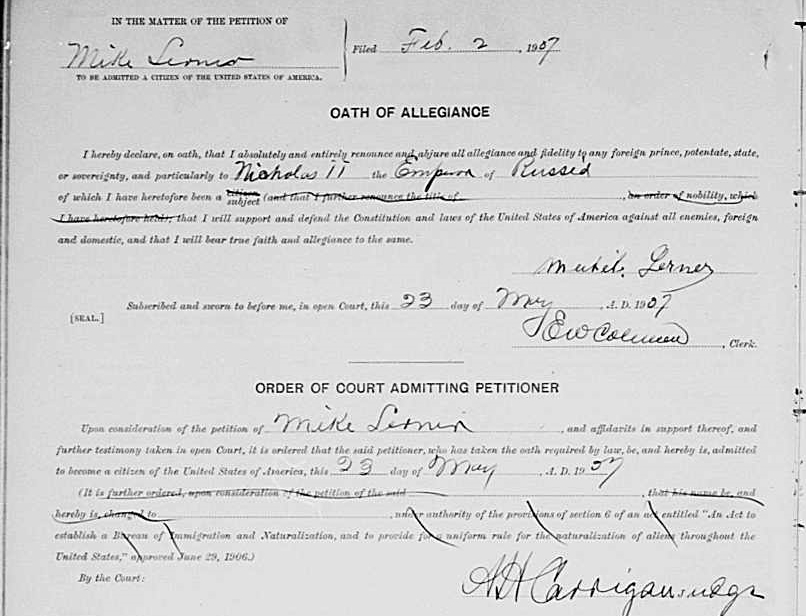
The family settled in Henrietta, Clay County, Texas, where Michael continued farming. Census records show that he farmed on Jacksonboro Road. The name must have changed over the years, as I cannot find it on any map. Michael did not waste any time in applying for American citizenship, as he filed a Declaration of Intention in 1894. However, he took no further steps towards that goal for another thirteen years, in 1907, when he filed a new Declaration of Intention. Michael and Barbara became naturalized American citizens on May 23, 1907.
Heronimus (“Jerome”) Lerner (1895-1954)
From 1895 to 1908, Michael and Barbara had eight more children while living in Henrietta. My great grandfather, Heronimus (Jerome) Lerner, born March 12, 1895, was the first of their children born in the United States.
However, most of the family did not stay there for long after the youngest child was born. In 1913, Michael and Barbara’s son Rochus (1892-1970) moved to south-west Saskatchewan, where there were many other settlements of Germans from Russia. Rochus took up farming near Fox Valley, Saskatchewan. According to my mother, Rochus sent word back to Texas saying that there was a lot of good farmland available in Saskatchewan.
My great grandfather, Jerome, followed the call and moved to Fox Valley in 1917. Michael and Barbara followed in 1918, where they settled on land just outside of Fox Valley, near Rastadt. (See how the names followed the settlers around?) Most of the family ended up in Saskatchewan, but a few of Michael and Barbara’s children remained in Texas. As well, some of the family who moved to Saskatchewan later returned to Texas.
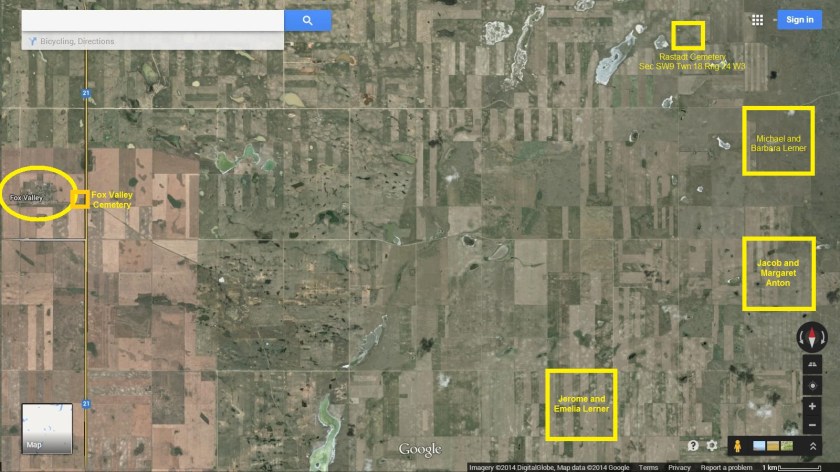
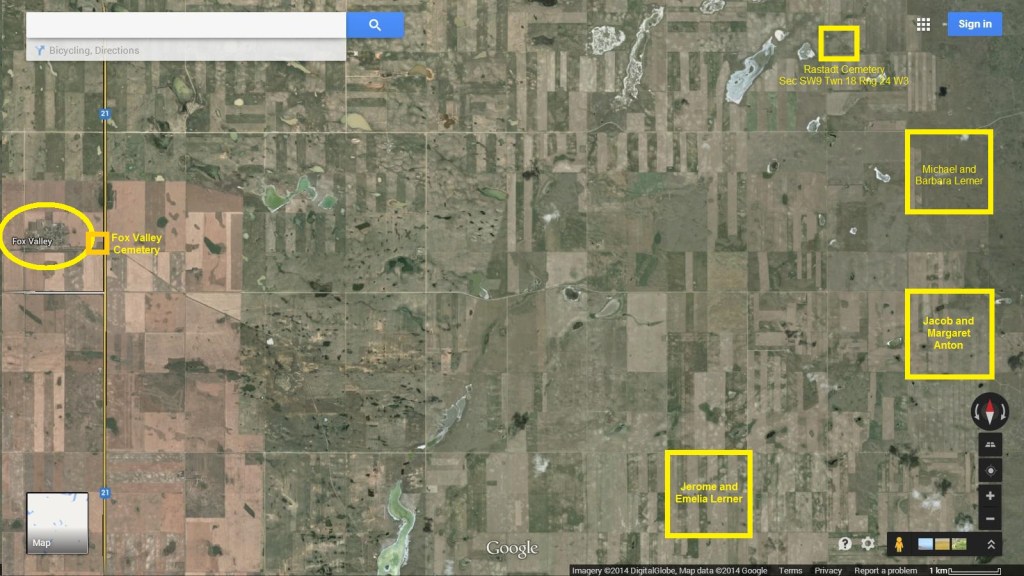
Fox Valley, Saskatchewan is in the oval on the left. The land Michael and Barbara farmed is to the east, marked in the box on the upper right. The smaller nearby box shows where Rastadt once stood.
Michael and Barbara became naturalized British subjects domiciled in Canada in 1896 (there was no “Canadian” citizenship until 1947).
Naturalization of Michael and Barbara Lerner in the Canada Gazette 1929-1930, page 692
Barbara died on October 21, 1936. Michael died just over ten years later, on January 16, 1947. Michael is buried at the Fox Valley Cemetery. There is some insistencies in the records as to where Barbara was interred.
Records show that “Barbara (Schmidt) Lerner” is buried in both Rastadt Cemetery and the Fox Valley Cemetery. It may be more likely than not that Fox Valley is the correct location. The record for that cemetery gives her plot as W23-2, which is right beside where her husband, Michael, is buried (plot W23-3). As well, other close Lerner family members are buried in Fox Valley Cemetery, including their son Jerome Lerner (plot W13-1). On the contrary, there are no other Lerners buried in the Rastadt cemetery. As well, there appears to be inconsistency in the plot in which she is supposedly interred in Rastadt. An older listing (ca. 1997) indicated plot 61; in 2004, it was said to be plot 70. This inconsistency is consistent with the conclusion that her being buried in Rastadt is less likely to be reliable.
For this week’s 52 Ancestors Challenge, Amy Johnson Crow wrote “Are you researching a branch that it feels like there is nobody else in the world who is researching them? What about a collateral line that seems to have gotten lost?”
Turns out that line was mine!
Through sheer chance, through a random encounter with a farmer in the middle of nowhere, I discovered that my great grandfather, Heronimus (“Jerome”) Lerner and his descendants had “gotten lost”. I thought I was looking for them, it turns out they were actually looking for me!
Jerome Lerner was born in Henrietta, Clay County, Texas on March 12, 1895. His parents, Michael Lerner and Barbara Schmidt, were Germans from Russia. They lived in one of the many German colonies in Imperial Russia, in what is now part of Ukraine. These colonies usually bore the names of the places in Germany the original settlers had come from. After Michael and Barbara married, they lived in the village of Rastadt, where their first six children were born. In 1893, the family emigrated to the United States and settled in Henrietta, Clay County, Texas. Jerome was the first of eight children Michael and Barbara had after coming to America.
Michael Lerner (1862-1947) and Barbara Schmidt (1865-1936)Jerome Lerner (1895-1954)
During the mid-1910s, members of the family began moving between Texas and Saskatchewan. Jerome was one of the first. Ultimately, Jerome, his parents, and at least four of his siblings ended up permanently moving to Canada and settled in the area of Fox Valley, Saskatchewan.
Jerome married my great grandmother, Emelia Anton, in 1920. They separated sometime around 1937. As far as I can tell, they never formally divorced. I thought that being Catholic, they might have simply separated without divorcing. However, my great aunt Adeline (their third child) told me that it was more due to the difficulty in obtaining a divorce at the time. Prior to 1968, divorces in Canada were granted through a private act of Parliament, through a difficult and expensive process.
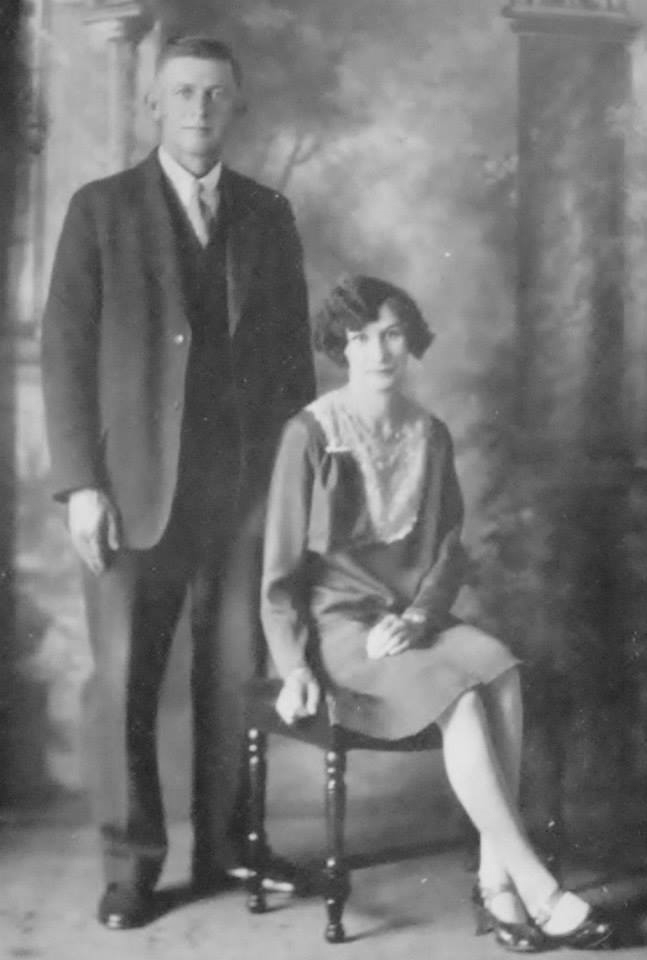
Jerome and Emelia, likely sometime around 1931.
I’d known my great grandmother since I was born. We visited her almost every time we went to my parents’ hometown. As she lived until I was thirty, she was the great grandparent I knew best. I’ve written quite a lot about my Anton ancestors in this blog. They were also Germans from Russia. They came to Canada in 1912 and settled in Rastadt, Saskatchewan. All that is left of Rastadt is the schoolhouse and the cemetery.
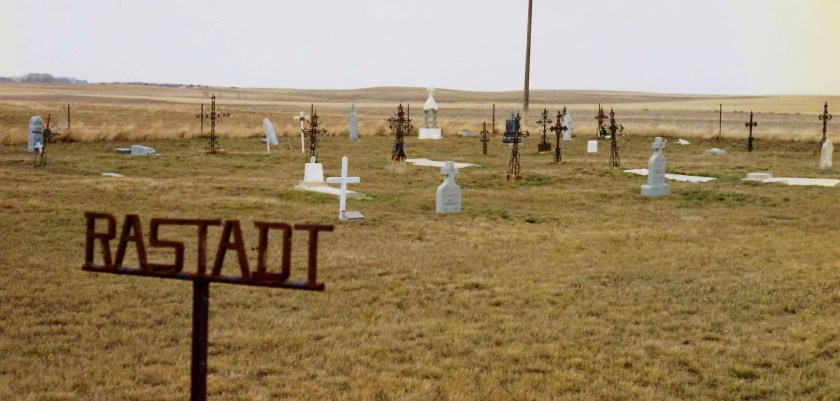
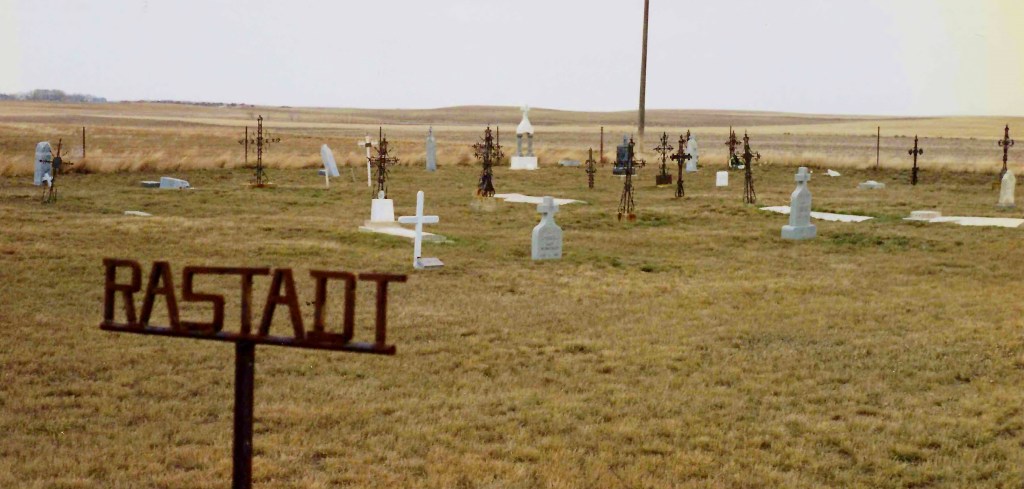
Rastadt, Saskatchewan Cemetery, April 1, 1997.
While I knew Emelia, I never met Jerome. He died in 1954. My mother never even met him. From what I know, Jerome may have had some mental health problems from sometime around the time he and Emelia separated. As well, from what my mother has told me, the Lerner side of the family was none too pleased with Emelia after she and Jerome separated.
After the separation, Emelia moved to Alberta. I doubt she had much contact with her former Lerner relatives, although it sounds like my grandmother and her siblings might have. Nevertheless, it is easy to see how the Lerner branch of the family might have lost track of Emelia and Jerome’s family. As well, while I know my grandmother, her siblings, and my mother all seem to have been in close contact with their Anton relatives, the fact that branch of the family relocated may have made for a much looser connection. So it seems that Jerome and Emelia’s branch of the family became lost, or lost-ish, to both the Lerners and the Antons.
How were we “rediscovered”?
First, the Antons. In the mid-90s, I made contact online with a Paul Antone of Washington state. It was the early days of online genealogy, so we probably met on a message board or something similar. I wasn’t even using Netscape yet! Paul’s father was one of Emelia’s first cousins. I don’t know if they knew each other. Paul and I sporadically exchanged emails. Through him, I learned of Gordon Anton, a nephew of Emelia’s. At the time, he was compiling a history of the Antons. I don’t know if Gordon ever met Emelia, but it was apparent he didn’t know much about her branch of the family. Apparently he had been in contact with one of Emelia’s sons, my great uncle Herb, but he never got much information through that contact. Gordon ultimately published a history of the Antons, but it was pretty sparse when it came to Emelia and her descendants. Gordon was hoping to publish a second edition, but it never came to be.
Nowadays, finding a lost branch online – even if you are the missing branch being found – is hardly unique or exciting. In comparison, the rediscovery by the Lerner side was largely a matter of coincidence, even though it was because I had been in the right place at the right time. Even today, it would be an unusual occurrence.
In 1997, I left a long-term job and was taking a few months off before embarking on a short-term gig and a return to university. One of the things I did during that time off was visit my parents, who had returned to living in southern Alberta. I had not been to Fox Valley since I was a child, so I suggested to my mother that we go there for a daytrip.
Upon arrival in Fox Valley, we stopped at the village hall where we gathered a wealth of information. Among other things, I was able to discover the exact place where my grandmother was born. After visiting the Rastadt schoolhouse and cemetery, my mother and I made our way to the place where my grandmother was born.
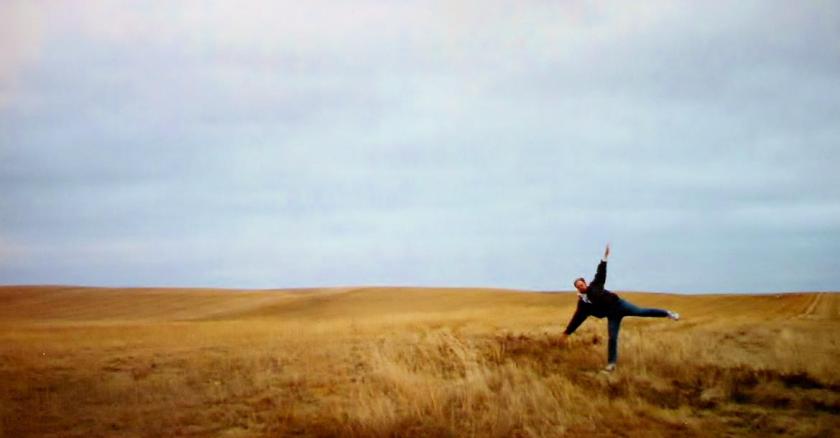
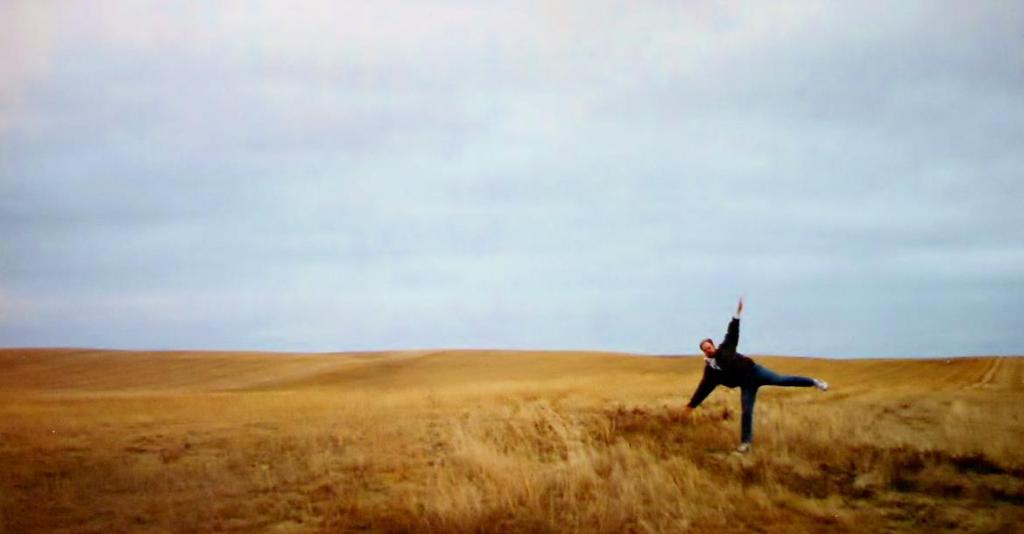
Beautiful downtown Rastadt, Saskatchewan.Actually, this is suburban Rastadt, but no one really is counting.If the middle of nowhere has a middle of nowhere, this is it.Where I am standing once stood the farmhouse where my maternal grandmother, Helen Lerner, was born.
I was not surprised at all to find nothing but a field of wheat. We snapped some photos of the site and decided it was time to head back to Alberta. We drove a bit down the narrow road to find a place to turn around. We soon found a farmhouse with a driveway that provided the opportunity to turn around. After I pulled in, the farmer who lived there saw me and came out, thinking anyone he didn’t know who was out there must be lost.
He seemed surprised that we actually meant to be in his part of the world. We got to talking. It turned out he was a cousin of my grandmother’s. He and his wife invited us in for coffee and they showed us all sorts of interesting family photos and mementos. Talk about serendipity! He even told me the farmhouse my grandmother was born in still existed – a farmer had bought the building and moved it to his land.
Even more fortuitous, he told me that a family history was being put together of the Boechler family. Jerome’s maternal grandmother was a Boechler. The farmer gave me the contact information for the author. My timing was another stroke of luck. I made the call not long afterward and learned that the book was being finalized and would be going to press in a matter of days. It also turned out that Jerome and Emelia’s branch of the family was a huge mystery to the authors. I was able to supply most of the information about Jerome and Emelia’s branch in time for publication.
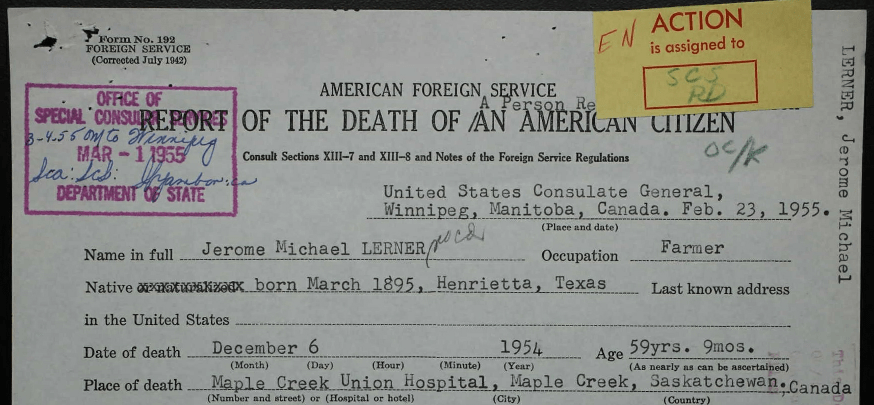
Not only was Jerome’s branch lost to the family, he seems to have been lost by both the United States and Canada. Upon learning of Jerome’s death, the US consulate in Winnipeg submitted a “Report of the Death of An American Citizen” to the American Foreign Service. The Foreign Service stated that it did not have any evidence that Jerome had American citizenship beyond the statement in the registration of death issued by the province of Saskatchewan. This, despite the fact the United States issued Jerome a passport when he first left for Saskatchewan in 1916. Meanwhile, there is no indication that Jerome was ever naturalized as a Canadian (or, at the time, as a British subject in Canada) or that he had renounced his American citizenship (which he was, as evidenced by his US passport).
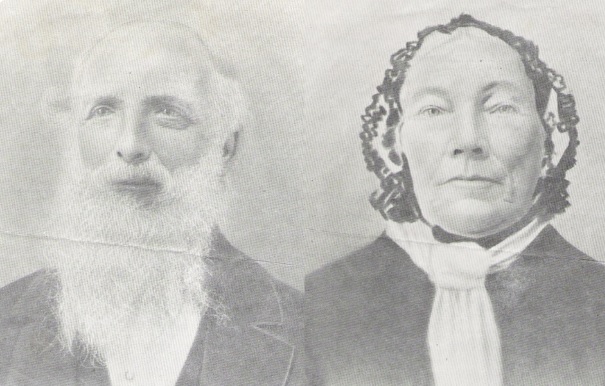
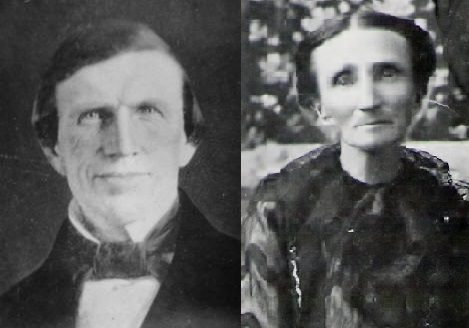
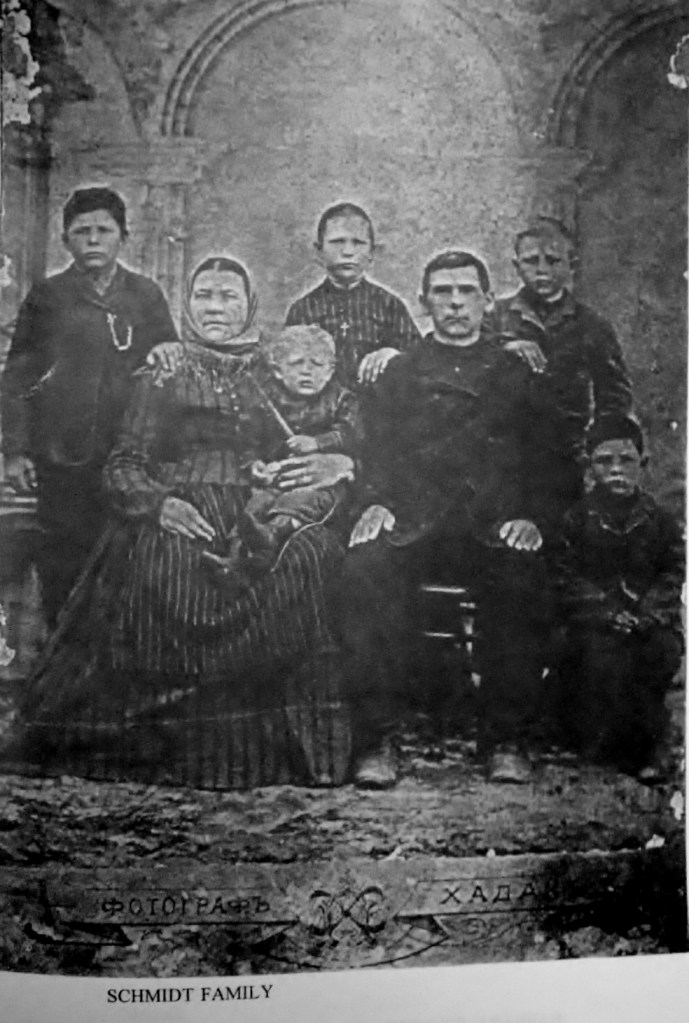
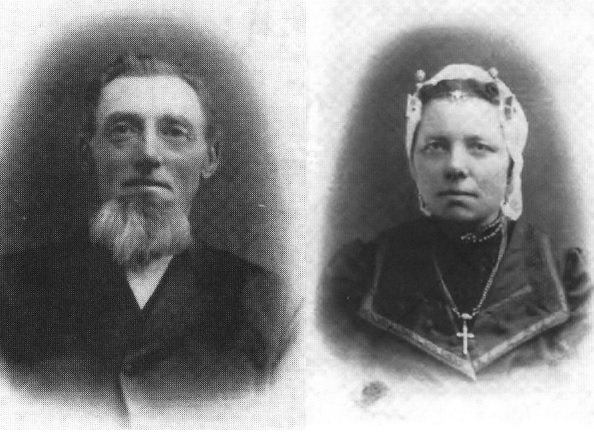
Twelve weeks of genealogy, my true love gave to me: the theme “Joined Together” for the 52 Ancestors Challenge. Rather than a lot of discussion, I thought this week I’d post photos of some of the couples whose unions ultimately resulted in…me!
While I have photos of other (great) grandparents, I will only post for those of whom I have the pair. First, my maternal great great great grandparents.
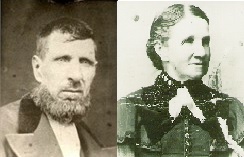
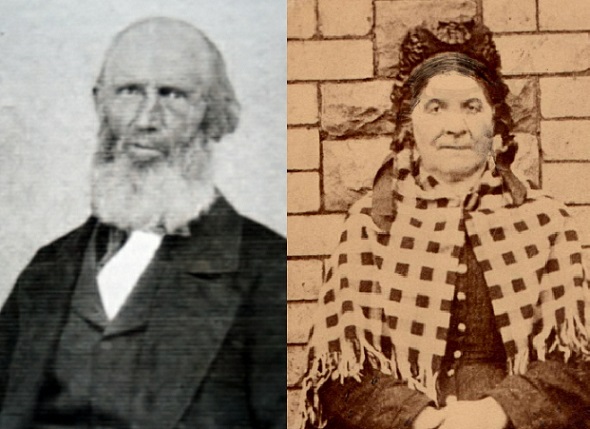
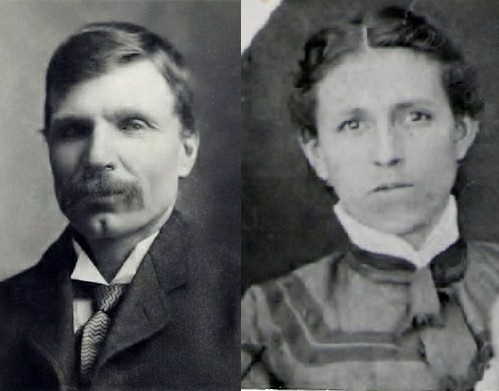
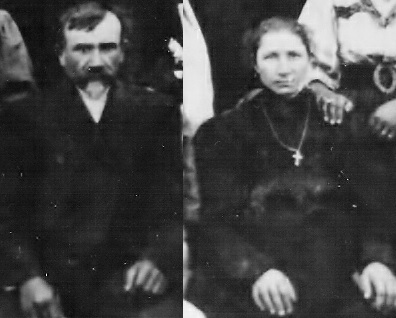
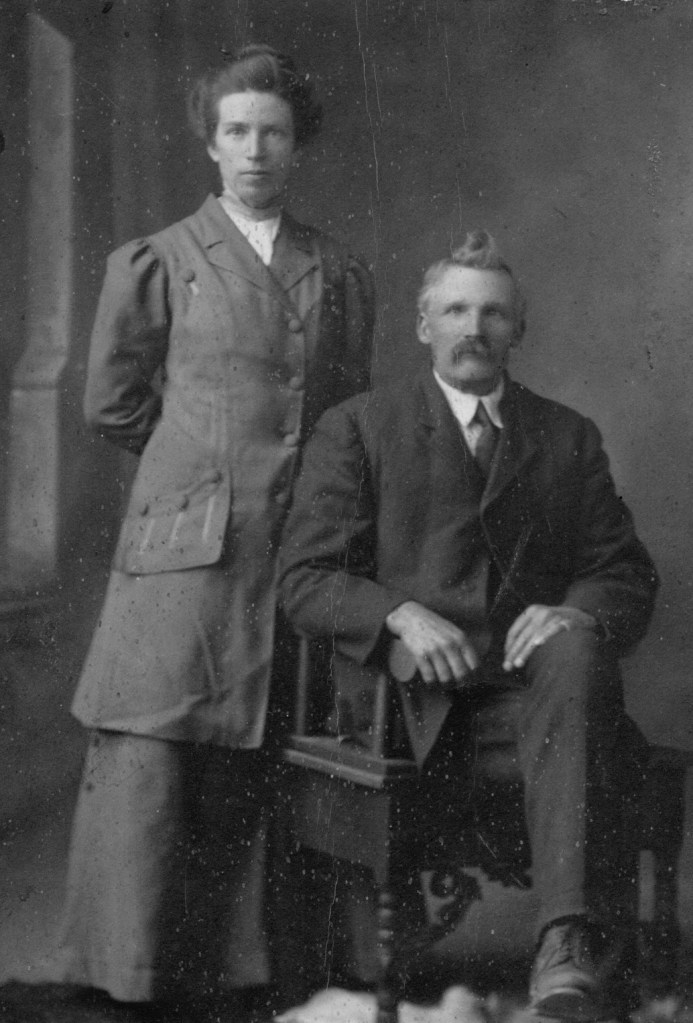
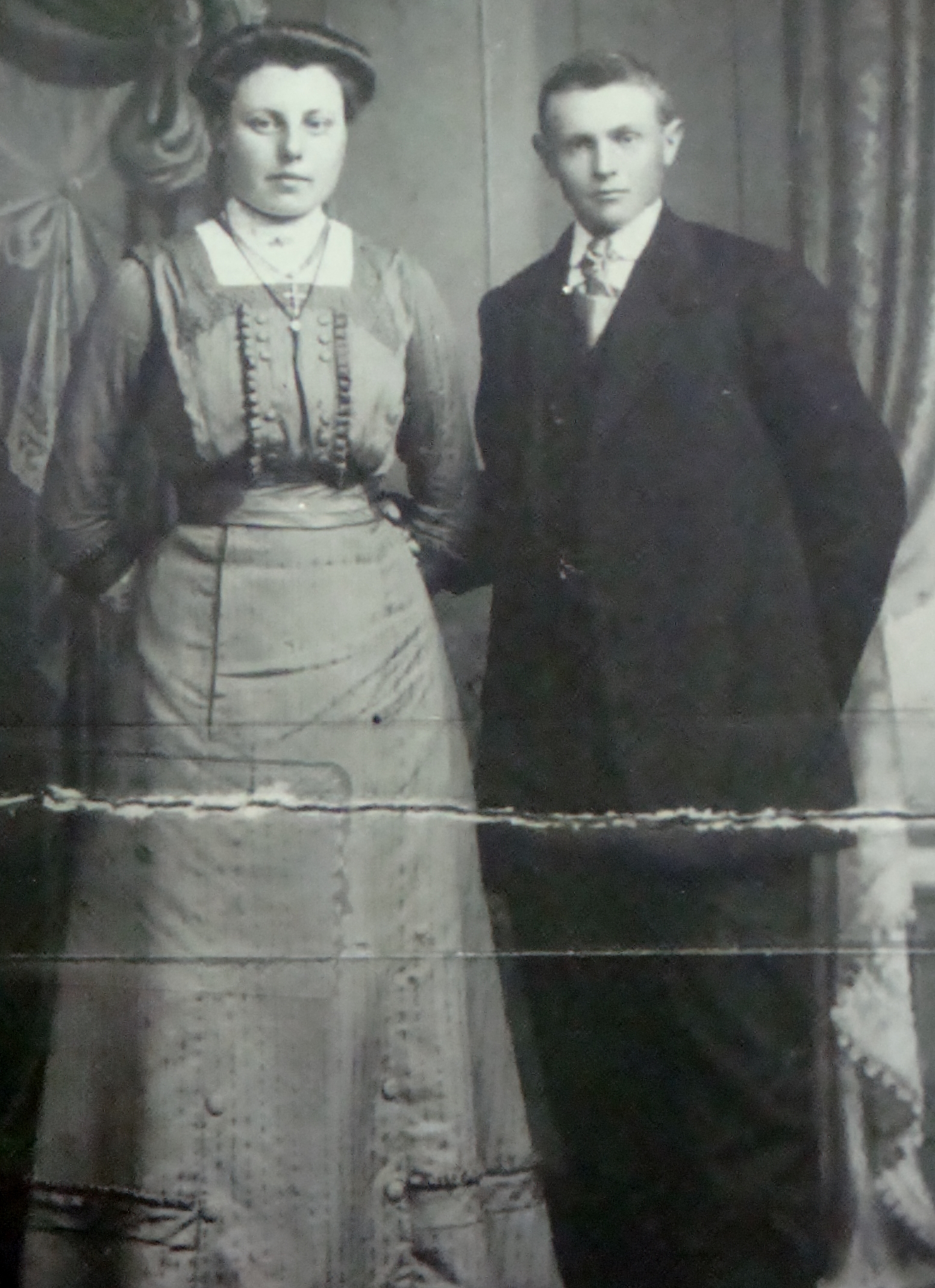
William Burgess (1822 – 1904) Charlotte Liggett (1837 – 1909)Henry Lyman Cook (1803 – 1869) Susan Turple (1818 – 1906)Robert Nelson (1818 – 1902) Elizabeth Joseph (1818 – 1902)Preston Thomas (1814 – 1877) Maria Hadlond (1838 – 1907)
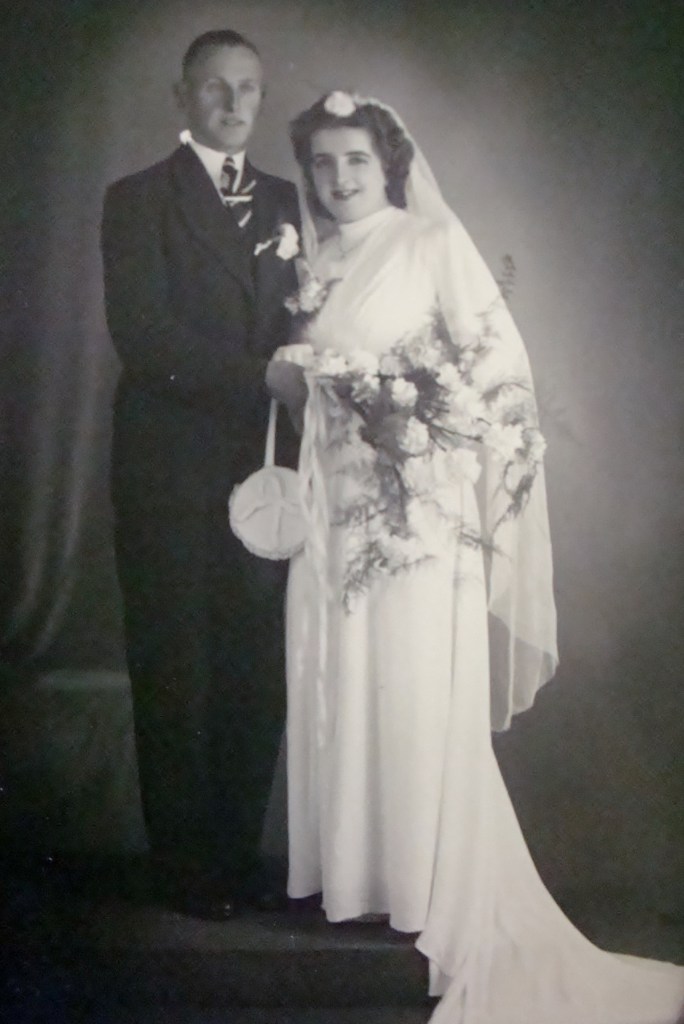
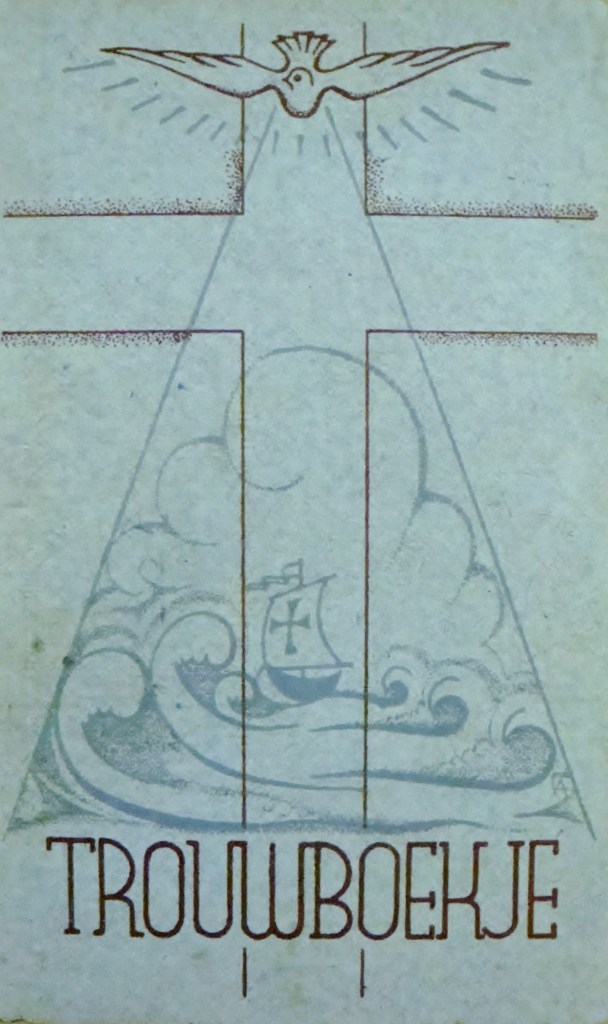
Adrianus Joseph “Arie” van der Fluit (1923 – 2002) Christina Komen (1923 – 2000)
“Trouwboekje” means “marriage booklet” in Dutch. In the Netherlands, only a civil marriage is legally valid. A church ceremony can take place afterward, but is not recognized by the state. The registry office would issue one to a couple at they time they were married. They typically include an extract of the marriage registration. While they can vary from one municipality to another, a trouwboekje usually will include space for the birth information of the couple, as well as for the children of the marriage. They can also include information about religious matters, such as information about the church wedding and baptisms of the couple and their children.
My maternal grandparents.
Leo Cleveland Burgess (1920- 1995) Helen Lerner (1921 – 1984) October 1971
Helen and Leo around 1947.
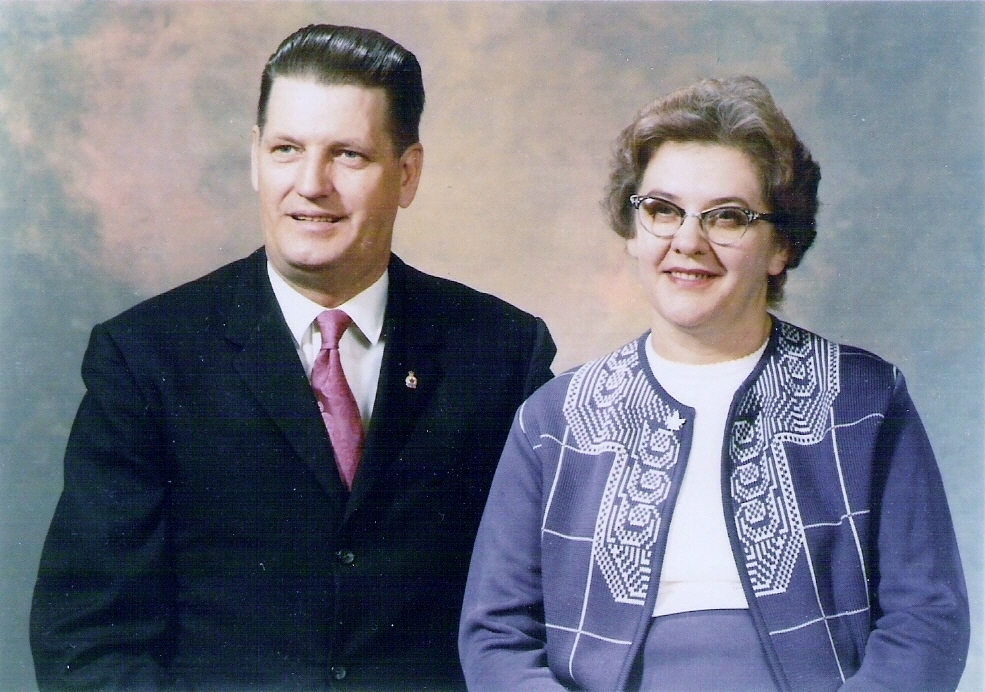
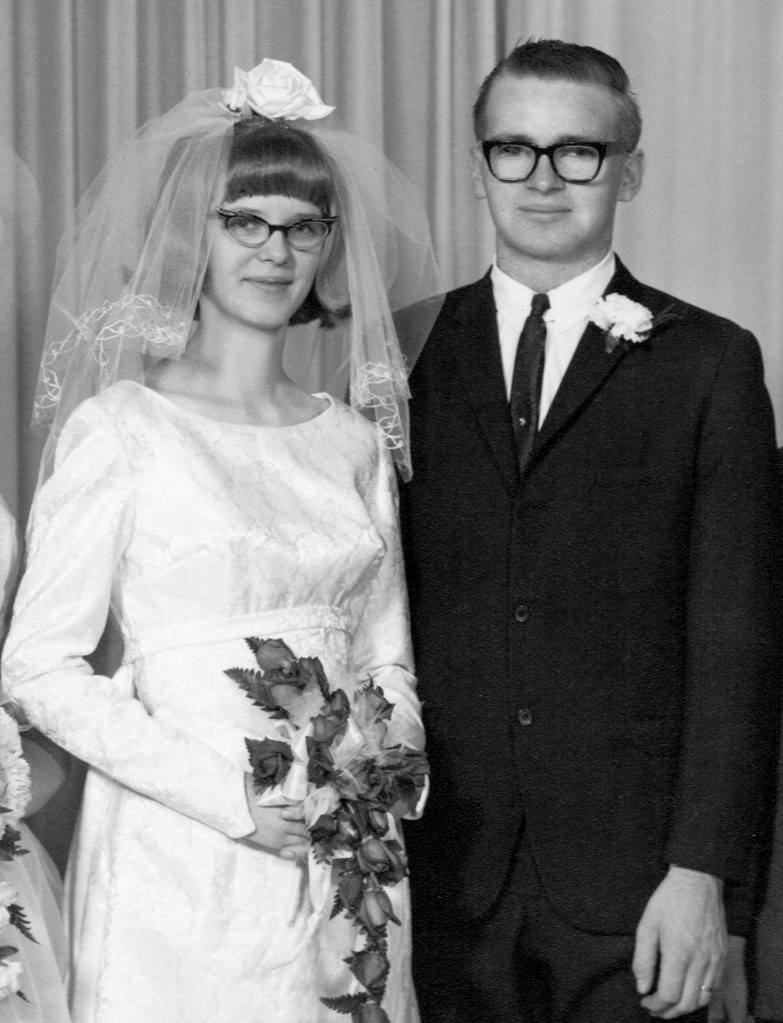
My parents. Married crazy young by current standards and still together, modelling what a great marriage should be.
Week six of the 52 Ancestors Challenge has us navigating maps. Like the Favourite Photo challenge, I had a hard time choosing. So this week I’ll be doing two entries.
Beautiful downtown Rastadt, Saskatchewan. If the middle of nowhere has a middle of nowhere, this is it. (Actually, this is suburban Rastadt, but no one really is counting.) Where I am standing once stood the farmhouse where my maternal grandmother, Helen Lerner, was born. (Section 7, Township 17, Range 24, West 3)
My maternal grandmother, Helen Lerner, was born at the family farmhouse near Rastadt, Saskatchewan, which is about 16 kilometers (10 miles) east of Fox Valley. It’s where her her parents and grandparents – Germans from Russia – settled upon moving to Canada. There’s nothing left of Rastadt now other than the old schoolhouse and the cemetery.
Rastadt, Saskatchewan Cemetery, April 1, 1997. Located at 50°30’00.9″N 109°15’32.3″W You can find the cemetery listing here.
In early 1997, I had a few months off after having left a job for a new endeavor. I visited my folks, who live in southern Alberta, during that time off. I had not been to Fox Valley since I was a kid, so while visiting my folks I thought it might be a fun family history road trip to do with my mother.
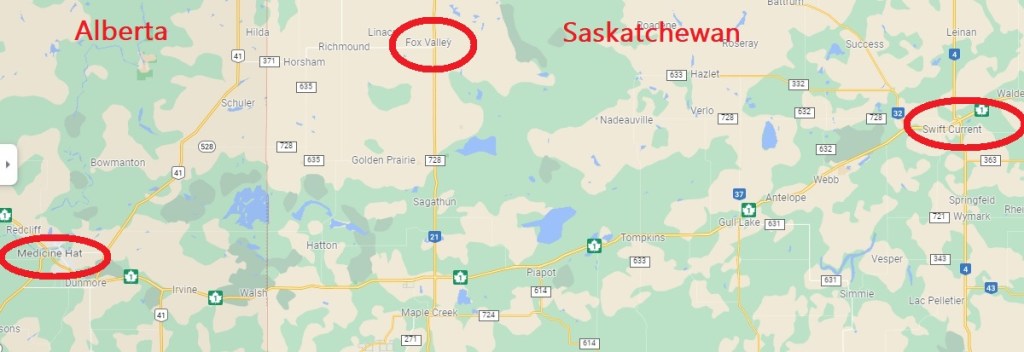
Fox Valley is about midway between Medicine Hat, Alberta and Swift Current, Saskatchewan.
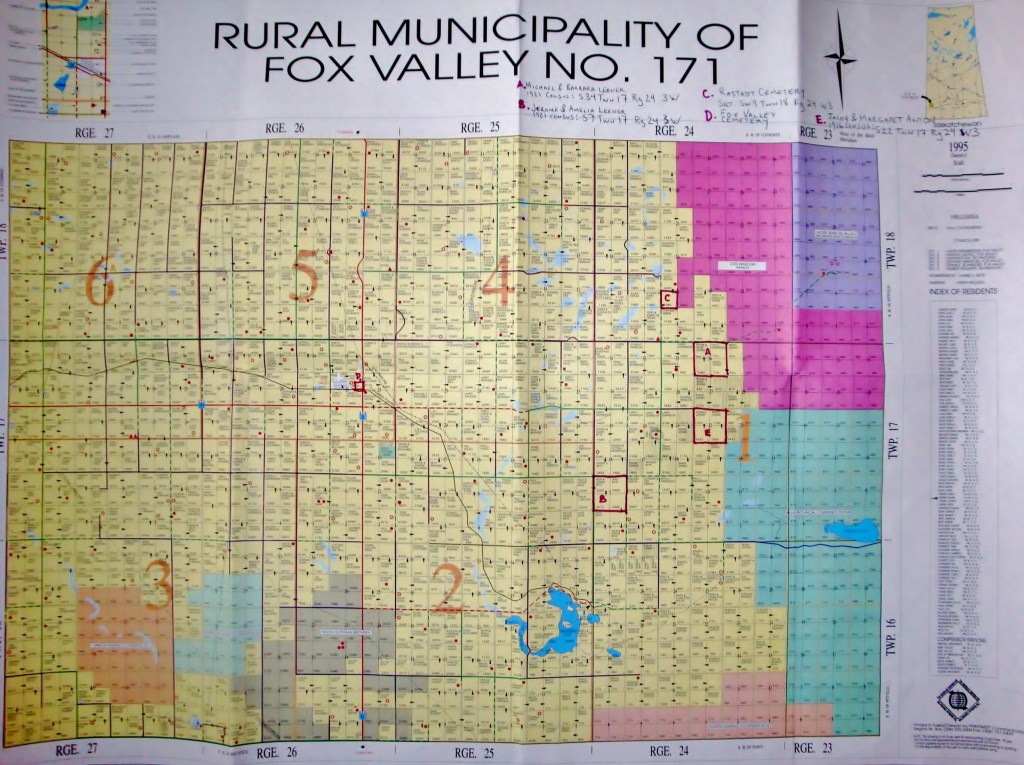
One of the first things I did upon arriving at Fox Valley was visit the village hall. It was a wise decision. Not only were the staff extremely helpful, they had maps of all the farms in the district, labelled with the current owners and occupants of each section of land. It was an amazing thing to see, because many of the surnames on the map were in my family tree database.
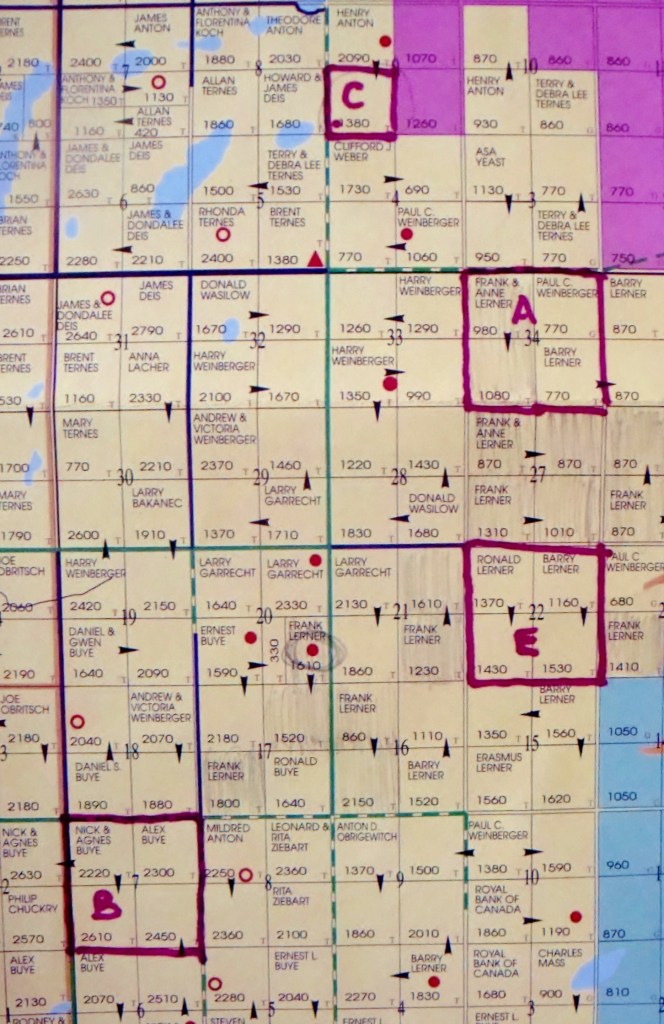
Map of the farms and residents surrounding Fox Valley, Saskatchewan as of 1997. Fox Valley is just below and to the right of the large number “5”. While not easy to see, the Fox Valley Cemetery is marked with a small red box labelled “D”. The larger boxes to the east are where my great grand parents and great great grandparents farmed, along with the Rastadt Cemetery.
The same area, as seen on Google Maps. Fox Valley is in the oval on the left. My ancestors’ farms are on the right, along with the Rastadt Cemetery.
A history of Fox Valley was published in 2004, Fox Valley and Liebenthal, Saskatchewan: Remember When… In addition to the family history of the village’s residents, this extremely useful book includes a section in which it records all the residents of these parcels of land throughout most of the 20th Century. In conjunction with this map, the book, and census records, I’ve been able to plot out where my ancestors lived and farmed.
Detail from the map above.
The locations I’ve marked are based upon the 1921 census, except for Jacob Anton, who died a month before that census was taken. For him I used the 1916 census. My grandmother’s parents were Jerome and Emelia Lerner, whose farm is the southernmost one marked on the map.
A: Michael Lerner and Barbara Schmidt (my grandmother’s paternal grandparents)
B: Heronimus “Michael” Lerner and Emelia Anton (m grandmother’s parents, and where my grandmother was born.
C: The Rastadt Cemetery. (D, not seen in the detail, is the Fox Valley Cemetery.)
E: Jacob Anton and Margaretha (“Margaret”) Heck, my grandmother’s maternal grandparents.
Serendipity
My mother and I used this map to visit the schoolhouse, cemetery, and plot of land where my grandmother’s house had once been. After taking the photo of me, we drove a bit down the road where I used a driveway of a farmhouse to turn around. The farmer who lived there saw me and came out, thinking anyone he didn’t know who was out there must be lost.
After explaining that I actually meant to be in his part of the world, we got to talking. It turned out he was a cousin of my grandmother’s. He and his wife invited us in for coffee and they showed us all sorts of interesting family photos and mementos. Talk about serendipity! He even told me the farmhouse my grandmother was born in still existed – a farmer had bought the building and moved it to his land.
Even more fortuitous, he told me that a family history was being put together of the Boechler family, the Boechler Family History. Barbara Schmidt’s mother was a Boechler. The farmer gave me the contact information for the author. My timing was another stroke of luck. I made the call not long afterward and learned that the book was being finalized and would be going to press in a matter of days. It also turned out that Emelia’s branch of the family – from which I am descended – was a huge mystery. I was able to supply most of the information about Emelia and her descendants in time for publication.
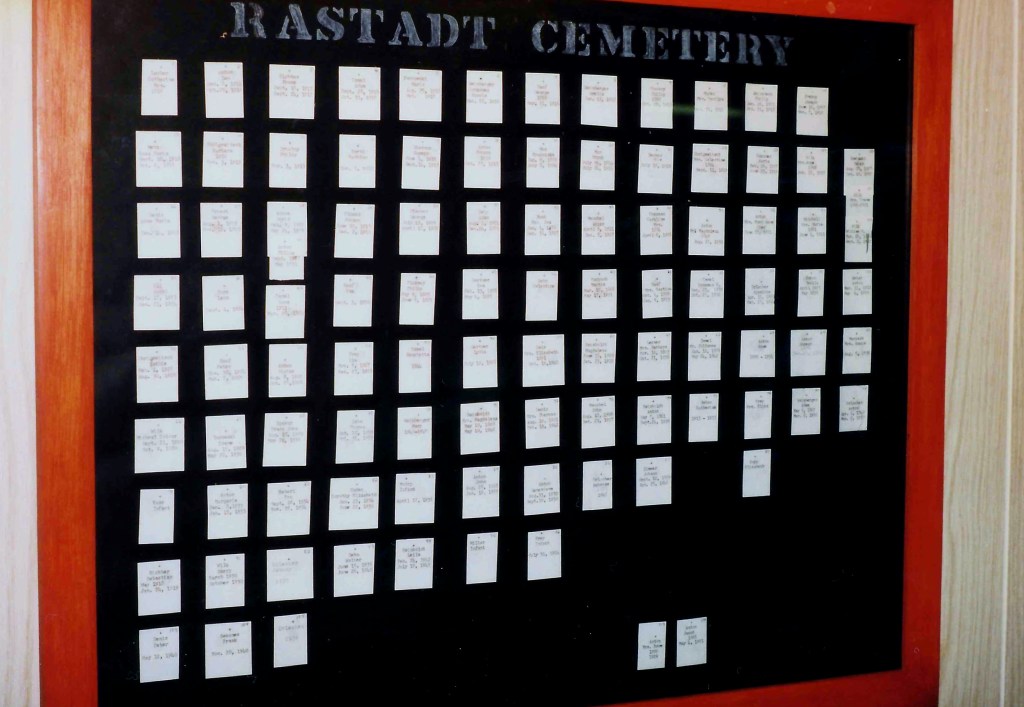
Another form of map. This was taken inside St. Mary’s Church in Fox Valley, showing the location of each person interred at the Rastadt Cemetery.
In Part Two, I’ll be looking at another piece of prairie farmland, this time in Alberta on my mother’s paternal side.

 A Deck of Ancestors