For decades I’ve been reading the same stories about my great x3 grandparents, Robert Nelson and Elizabeth Joseph. I have written about them before (such as here and here). They were both born in Muff, Donegal, Ireland in 1818, two weeks apart. Robert and Elizabeth married in 1842 and within two years they were living in Scotland, near Glasgow. In 1850 they emigrated to the United States. They both died in Smithfield, Utah in 1902: Robert in February and Elizabeth in May.
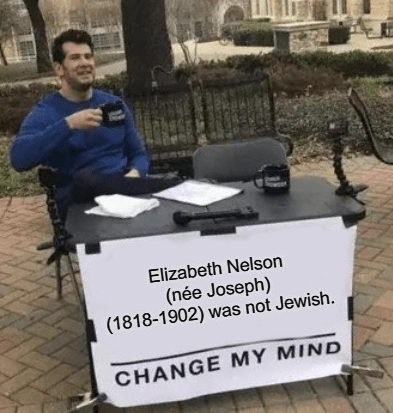
The oft-repeated story is that Elizabeth was Jewish. The related story is that Robert and Elizabeth were picnicking on an island, where they were trapped by a storm and had to spend the night. The next morning they returned home in disgrace and because they had spent the night together were forced to marry. Moreover, because Robert was Christian, Elizabeth’s parents disowned her.
Needless to say, I don’t believe a word of it.
Not once in over thirty years have I ever seen a shred of evidence supporting this story or the proposition that Elizabeth was Jewish. The conclusion that she was could not be further from the Genealogical Proof Standard if one tried.
When Elizabeth was born, the Jewish population of the entirety of Ireland was extremely small, and mainly centred in Dublin and Belfast. It had not really been established by the time Elizabeth and Robert left Ireland for Scotland. By the mid-1800s, there were only a couple hundred Jews in the entire country. According to the 1881 census, there were fewer than 400 Jews in all of Ireland. Muff, Donegal is on the northern outskirts of Londonderry, where there was no Jewish community prior to 1893. In 1894, there were only 43 Jews in Londonderry.
It is not entirely impossible that Elizabeth was Jewish, but it is extremely unlikely. Absent any evidence to support the claim, I don’t accept it.
UPDATE: Since going live with this, a reader suggested that a DNA test might help put this story to rest. Great idea, I don’t know why I didn’t think of it. This might be an unpopular thing for a genealogist to admit, but I’ve never taken one for a lot of reasons I really don’t feel like explaining right now. However, one of my brothers took a DNA test and he sent me the results. They were everything I expected and, frankly, boring! I took a look at it again, and there is no indication of even a trace amount of Jewish ancestry. To me, this reinforces my disbelief that Elizabeth was Jewish.
I originally wrote this for Week 1: Family Lore. Shortly after posting, I went through some draft posts I had written weeks ago and realized that the story about my great x3 grandparents, Robert Nelson and Elizabeth Joseph, was a much better fit for that prompt. So I deleted the original Week 1 post, replaced it with Robert and Elizabeth’s story, and repurposed this story for Week 9: Changing Names.
Schulor Barry McGene (formerly John Warkentin)
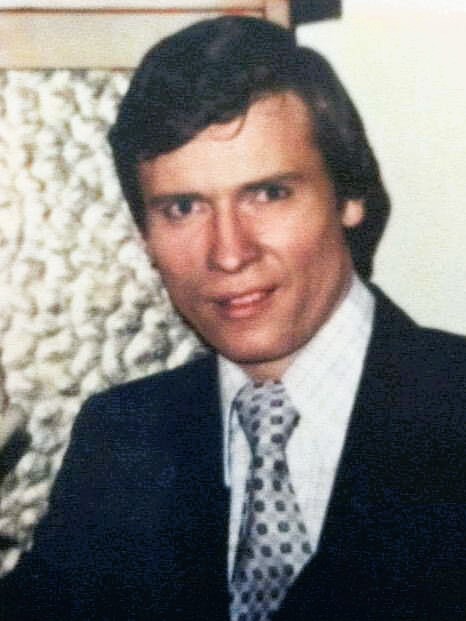
When I was a kid, sometimes I’d hear talk about one of my mother’s first cousins, John Warkentin (1942-2003). The family referred to him as “Hollywood Jack”. The family lore was that he had always dreamed of moving to Hollywood and becoming a star. My mother said that when Jack was still a teenager, he left home for California and changed his name.
When I was a kid, the stories left me with the impression that Hollywood Jack was never heard from again. When I was older, I learned that John had remained in contact with his family, they knew his whereabouts, and knew his new name.
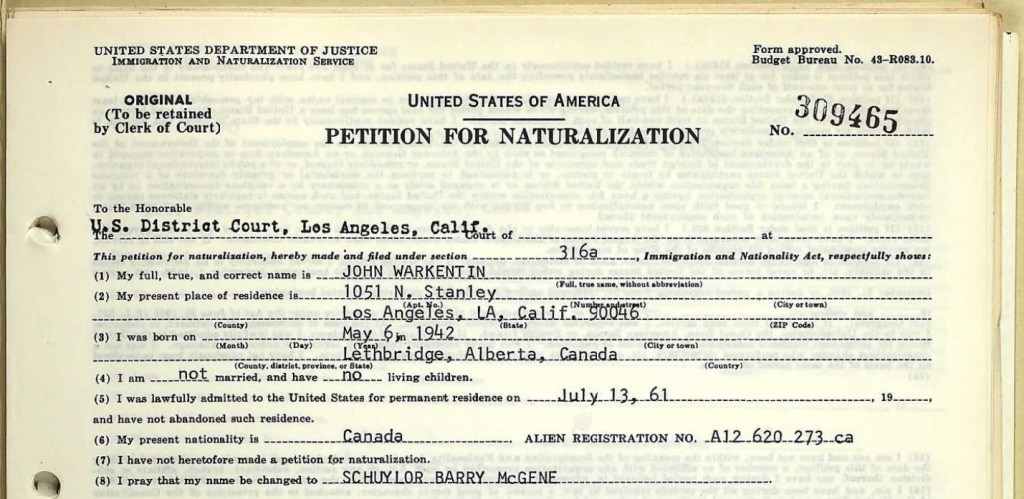
John’s Petition for Naturalization filed with the U.S. District Court in Central California shows that he landed in the United States on July 13, 1961, shortly after he turned 19. The Petition showed that John was living in Los Angeles, half a block from Santa Monica Boulevard. That area is now part of West Hollywood, which separated from Los Angeles and incorporated as a city in 1984. John was granted U.S. citizenship on November 21, 1969. He married for the first time one month later.
What I was surprised to discover was that in the United States – at least at the time John moved there – you can apply for a legal change of name in your Petition for Naturalization. (However, they did not change your ancestor’s name at Ellis Island!!) In his Petition, John asked for his name to be changed to “Schuylor Barry McGene”. It seems he also went by “Skyler”, which is how he was named in his brother Frank’s obituary. I have no idea why John chose that name, but I would love to know the story behind it. (For ease of reference, I will continue to refer to him as John.)
For the life of me I still can’t figure out why WordPress won’t centre an image even when it is marked as centred.
Another fascinating aspect of John’s Petition are the affiants who were witnesses to John’s Petition. What caught my eye is that one affiant, Luthor Lindstrom, lived near John, on North Sweetzer Avenue in West Hollywood, while the other affiant was named Chase Sweetser. Chase lived about 25 kilometers away from John, in Redondo Beach. It should be no surprise that one affiant lived in John’s neighbourhood; it is a complete mystery to me how John knew Chase.
I spent a very brief amount of time trying to find out more about the affiants to see if this coincidence might be something other than happenstance. I also did do in hope of learning more about John. Always remember to research the FAN (“Friends, Associates, and Neighbours”) club! While I know John married twice and had children with both wives, I know nothing about what he did for work or how he otherwise spent his life.
I have not find anything on Luthor Lindstrom.
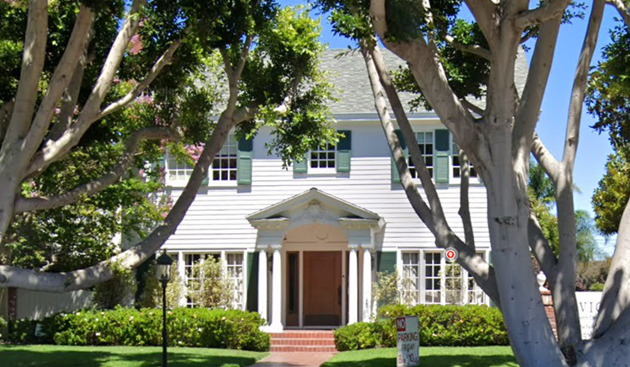
However, I found a newspaper article from 1988 about the address Chase Sweetser provided. The house at that address was built in the American Colonial Revival style by Chase Sweetser Sr. Since this person died in 1947, I assumed that he must be the father of the Chase Sweetser who swore the affidavit in support of John’s Petition. Further research confirmed that suspicion.
Chase Sr. apparently made his fortune as a “grocer”, provisioning ships in the nearby harbour. Chase Sr. also built his fortune through shares he owned in Coca-Cola as one of its early investors; he was also on its board of directors. The article said that his son Chase Jr. had been the president of the local Coca-Cola bottler.
The house went up for sale in the 1980s, after Chase Jr. died. It was newsworthy because it was listed on the National Register in 1985. The article noted that despite being on the National Register, there were no restrictions on tearing the house down and redeveloping the property. The house was listed for US$1.275 million (US$3.14 million in 2024 dollars).
Other articles I found show that the house was never torn down and still stands. Rather, the property sold a number of times (first in 1989 at well below the asking price) and currently serves as the offices of a wealth management firm. The firm’s website even provides a photo and brief history of the house.
417 Beryl St, Redondo Beach, California
My next thought was to research how Sweetzer Avenue in West Hollywood got its name. On top of that idea, my wife suggested that maybe Chase Sweetser was John’s landlord and Sweetzer Avenue was named as such because the Sweetsers owned property there. It turns out that Sweetzer Avenue is likely named after Edward Healey Sweetser. While my search was brief, I found no connection between Chase Sweetser and Edward Healey Sweetser. However, there still remains the possibility that Chase Sweetser was John’s landlord.
Another possibility is that John worked for Chase; however, I have not yet found any information as to what John might have done for a living in Los Angeles. Other than his marriages, the only other thing I know about John is that he died in July 2003 – in La Cañada Flintridge, California. Born in Canada, died in La Cañada!
I have a couple other theories about John (and his FANs) to research, but as of yet they’re speculative. While sites like Ancestry and FamilySearch do not include living persons, some of the records available there do identify living people, which provide some clues for research. As well, bits and pieces I’ve gathered through Google and other search engines have given me a few bits of additional details about John. However, given that they involve living persons, I will simply leave it at that.
Needless to say, in trying to answer a few questions about the family lore, I am left with many more than I started with!
Addendum
For the brief period of time this was live someone posted a comment asking about John’s choice of new name. In the time since I posted this and took it down, I asked my mother what she knew. Bear in mind John’s mother – my mom’s aunt – passed away when my mother was two months old and she never had much contact with her Warkentin relations.
Most of what my mother knows came from a mutual aunt of John and my mother’s. My mother said that when John first left home, he went to live with this aunt.Their aunt had a son who is also named John, so that’s when they started using “Jack”. Since Jack spoke so often of going to Hollywood, they started calling him Hollywood Jack.
My mom says that John wanted to be an actor and thought Schuylor Barry McGene would be a great name for an actor. He also wanted to make a break from his father, with whom he did not get along. My mom says John remained in contact with their aunt for about a year after he moved to California. After a period of no contact, my mother’s aunt contacted the Red Cross to help track him. About a year or two later John called the aunt. Apparently she was quite shocked when she learned about the name change. My mom tells me that sometime well afterwards John came back to Canada to visit his aunt, at least once, but he otherwise remained in California.
Additional – November 5, 2025
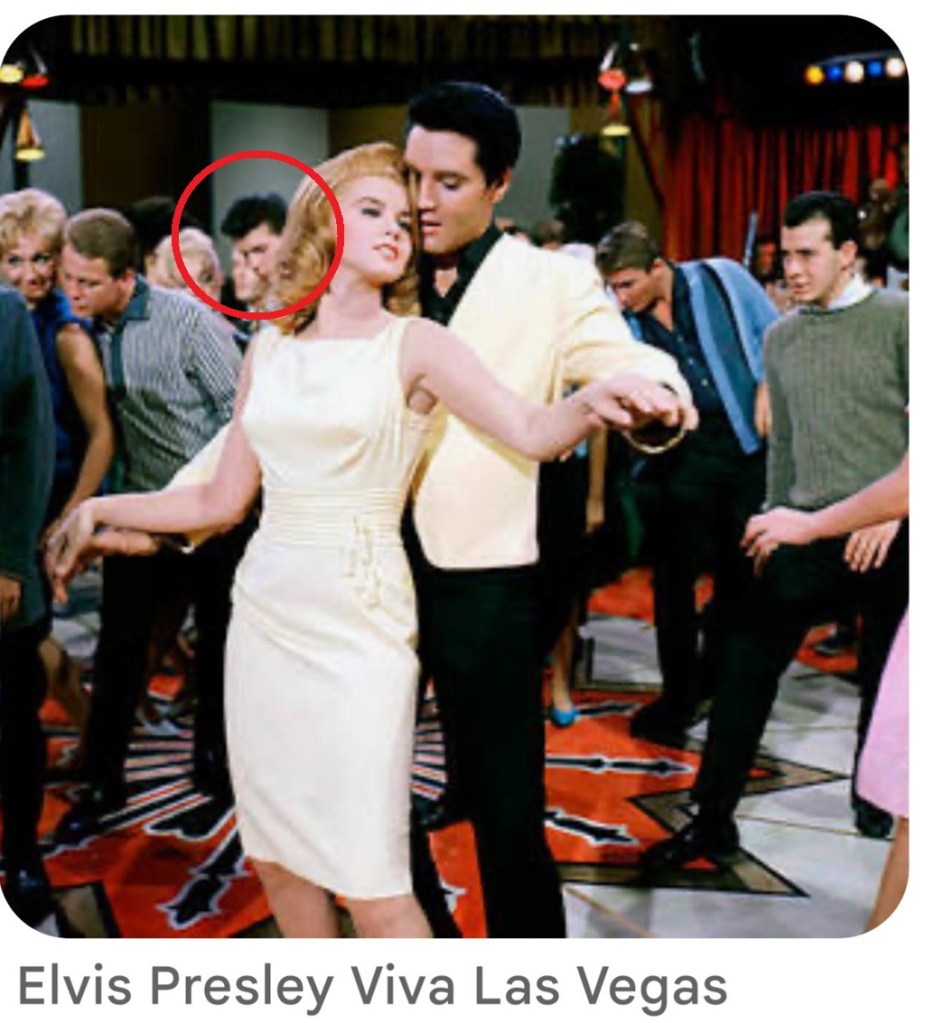
In the last six months, a distant relative came across this post and contacted me. We entered into correspondence and exchanged a fair amount of info. All I will say about it is that Hollywood Jack made it into show business. While not his biggest foray into the industry, one thing he did was to appear on screen with Elvis and Anne Margaret!
After posting last week’s entry, in which I wrote about being my own cousin, I realized that it very well could have fit in with this week’s theme of “Me, Myself, and I”. However, to mark the last (!?!) week of Amy Johnson Crow’s 52 Ancestors Challenge for 2023, the thing I will share about myself is how I have used the challenge to the fullest.
I wrote a family history book!
I originally signed up for the 52 Ancestors Challenge for 2020, but did nothing afterwards. I signed up again for 2021, for which I also did nothing.
Somehow third time was the charm. I know there was something that spurred me on to actually do something for the 2022 challenge, but now for the life of me I can’t recall what that was!
For years I had vaguely pondered a genealogy blog, but really couldn’t think of a niche that wasn’t already being addressed by dozens of other genealogy blogs. However, the 52 Ancestors Challenge was the catalyst to creativity that I needed. So a quarter century after blogging was cool, I created this blog as a means of participating in the challenge.
At the same time, I set up a second Twitter (I refuse to use the “new” name) account that would only be used for genealogy, also named Deck of Ancestors. I’ve since created namesake accounts on Mastodon, the now defunct Pebble, Mastodon, and Bluesky. I’ve largely abandoned Mastodon. I’m active on Bluesky, but it doesn’t seem to be gaining the traction I thought it had when I first joined.
It was hard at times, but I was successful in posting something for all 52 weeks of the challenge. With this post, I’ll be successful for a second year in a row. The second year was more difficult. It felt harder to come up with something I hadn’t written about before and some of the weekly prompts were not easy for me. Nevertheless, I persevered! I’ve signed up for the challenge again for 2024. Looking at the prompts, it looks like it will be another difficult year, but I will try to rise to the challenge.
However, what I’ve always wanted to do is create some sort of family history book. However, I was reluctant to churn out one of those dry tomes that’s just a bunch of pedigree charts and a BMD narrative. I’ve started and stopped all sorts of drafts and have the works in progress still sitting in a folder on my computer.
My real first genealogy book!
Moreover, like a lot of family historians, I had lots of ideas for genealogy-related Christmas presents, but kept putting it off until it was too close to the holiday to get it done.
Thanks to the 52 Ancestors challenge, I inadvertently hit upon what I thought was a winning solution – the blog posts were essentially a book! I had the foresight to start working on this project in the summer, which began with reformatting the blog entries into a book format. The other problem was figuring out how to print it.
Luckily, this year I discovered Lulu, an online self-publishing site. I had used others before, but none worked for this project. In September I ordered a test copy. It passed muster, so I ordered enough copies for my Christmas gift giving – my parents, our kids, my siblings, and my nibblings, plus copies for the Library and Archives Canada. (It may be nerdy, but I was really excited to get an ISBN for the project!)
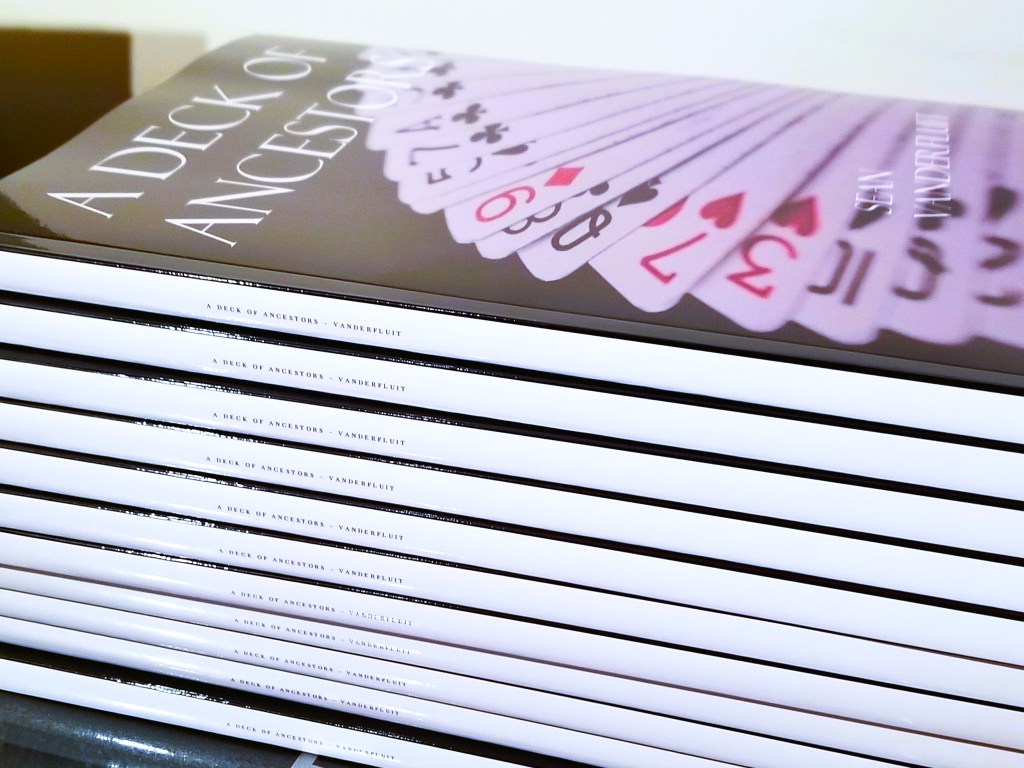
A Stack of Ancestors!
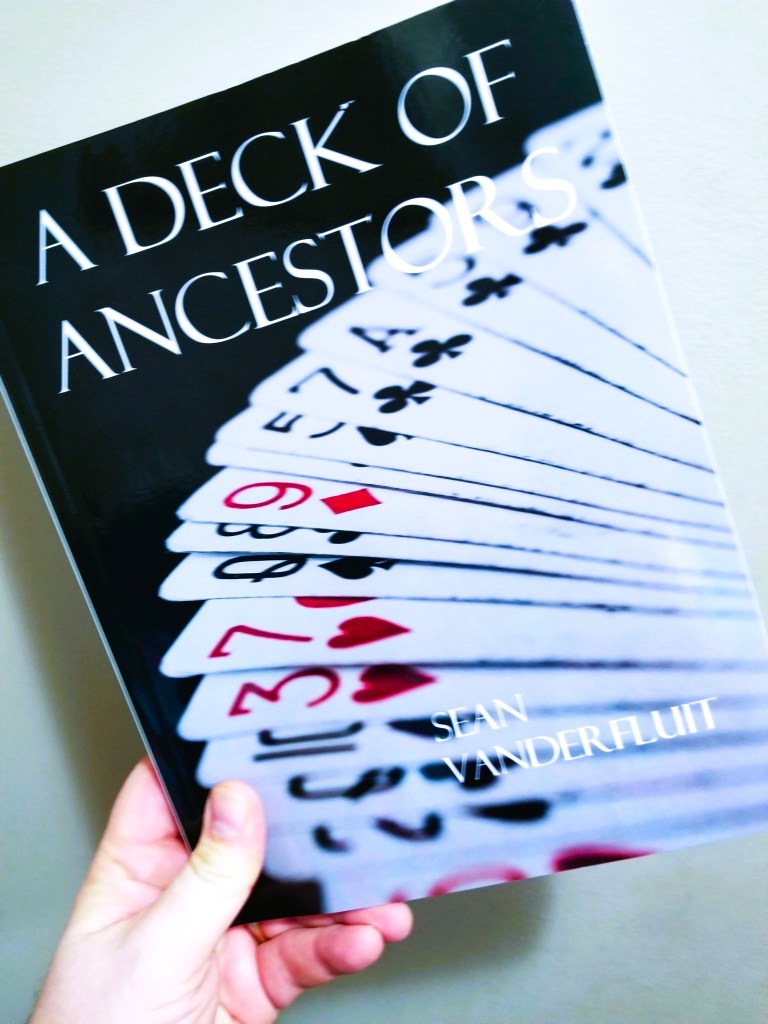
So here it is, my family history book, A Deck of Ancestors, consisting of my 52 posts for the first year I participated in the 52 Ancestors Challenge. One of my sisters and her kids opened theirs early, as they went overseas for the holidays. I just made it a Hanukkah gift instead. The reviews were great. On Christmas Eve, my sister-in-law sent me photos of my father reading the copy I gave my parents. Seeing that was really special. While my father used to be a voracious reader, he doesn’t really read much anymore since his vision has deteriorated terribly over recent years. What I was most excited for was to see our kids open their copy. I was happy to come downstairs on Boxing Day morning to see our eldest engrossed in his.
In addition to the print version, I created an expanded digital edition (with its own unique ISBN, of course), which I sent to everyone after they opened their print copy. Among other things, I added an Ahnentafel, a 17-generation pedigree chart, and a full index. (I hate non-fiction books without an index!) It would have been extremely expensive to include all that in a print version. Plus, the digital version has all the hyperlinks, which are pretty hard to click in a print edition!
So thank you Amy Johnson Crow for creating the 52 Ancestors Challenge and helping me fill the one gap in my years of genealogy practice – writing!
Wow, hard to believe that it’s the penultimate week of Amy Johnson Crow’s 52 Ancestors Challenge!
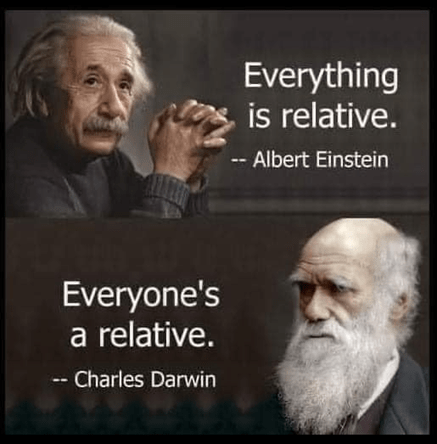
This week we’ve been challenged with the theme “Cousin”. As stated by Amy, “The neat thing about this theme is that we genealogists know that everyone is our cousin! That definitely opens up the possibilities for who to write about!” Thus, no cousin is too distant!
So what do a sixth cousin, ninth cousin, tenth cousin, and fourteenth cousin in my family tree all have in common? They’re all me!
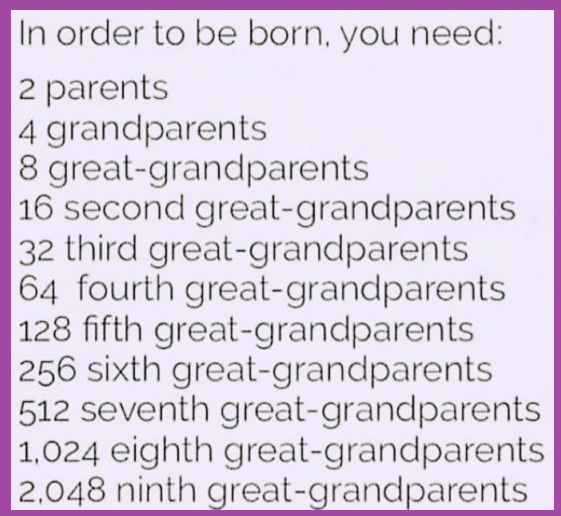
Being one’s own cousin is not unique to me. Most genealogists have seen the posts, memes, and graphics showing how many ancestors we have:
While technically correct – you need all these ancestors to have been born – it gives the impression that these are all separate unique individuals. However, the truth is that somewhere along the line two great x n ancestors are the same person. Otherwise, the math simply does not work out. It would mean that you have 67,108,864 individual great x 25 grandparents, which would have exceeded the population of the Earth at the time they lived. Robin Fox, an anthropology professor at Rutgers estimated that 80% of marriages in history were between second or closer cousins. The resulting phenomenon is referred to as “pedigree collapse“, although I was amused by the term “genealogical shrinkage“.
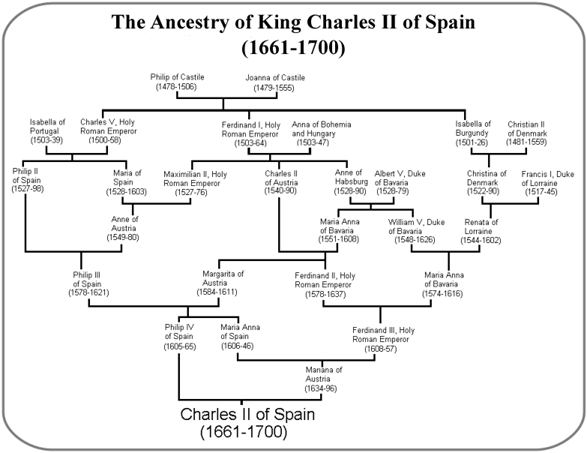
An extreme example of aristocratic pedigree collapse.
It’s well-known that the aristocracy and nobility have had marriages between close relations for diplomatic, political, and financial reasons. However, this practice also occurred at the lower end of the social ladder (here’s an extreme example from Yvette Hoitink, a Dutch genealogist). It’s inevitable to find first, second, and third cousins who are married living in small and isolated communities, and not just in colonial times. Moreover, once you get to a more distant relationship – who really knows (other than genealogists) who their fifth cousins might be – couples might not have even been aware that they were cousins.
A considerable example might be Iceland, a country of fewer than 400,000 people, with a relatively stable population of few immigrants over 1,000 years. Icelanders concerned about their consanguinity can consult an app that helps identify how closely they might be related to a potential partner.
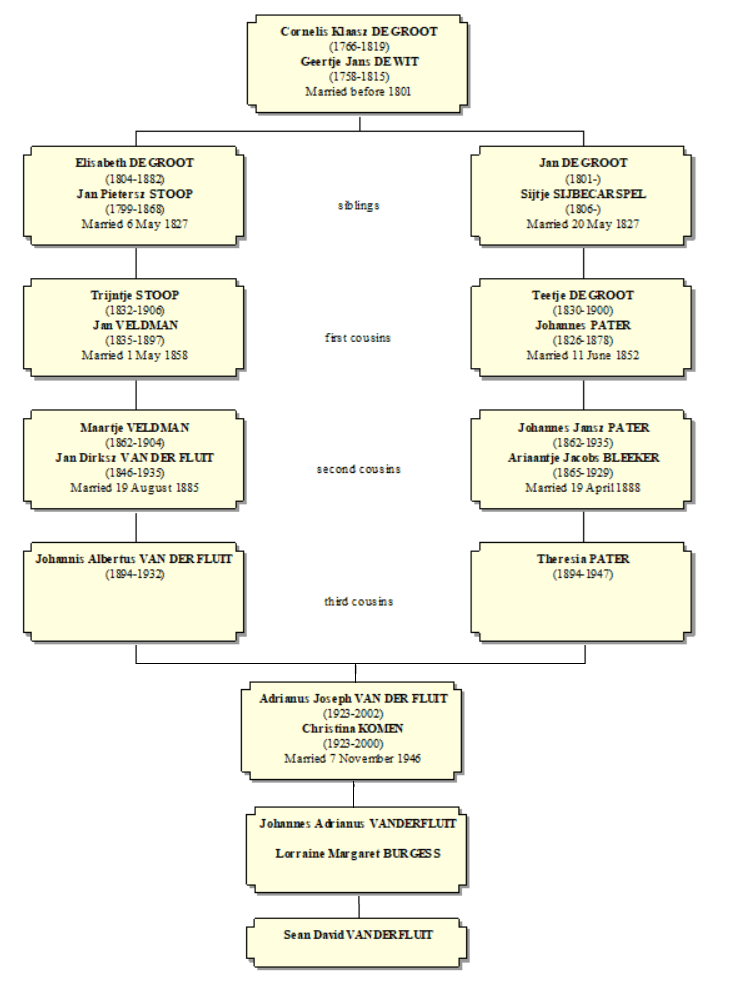
My closest relationship to myself is through my father’s paternal grandparents, Johannis Albertus van der Fluit and Theresia “Teetje” Pater, who were third cousins. They were born in raised in nearby villages in the Netherlands that are less than two kilometers apart. They married on July 20, 1917.
Johannis and Teetje are both descendants of Cornelis Klaasz de Groot and Geertje Jans de Wit, their great great grandparents and my G x 5 grandparents. Teetje is descended from their eldest son, Jan, while Johannis is descended from their youngest daughter, Elisabeth. Johannis and Teetje would have had to have known the surnames of their great grandparents to even have a clue that they might have been related. I doubt they did.
My grandfather is his own fourth cousin, and fourth cousin with his siblings. My father is his own fifth cousin, and fifth cousin with his siblings. I am my own sixth cousin, and sixth cousin with my siblings.
I can hold a family reunion anytime I want, even if I’m the only one there!


 A Deck of Ancestors