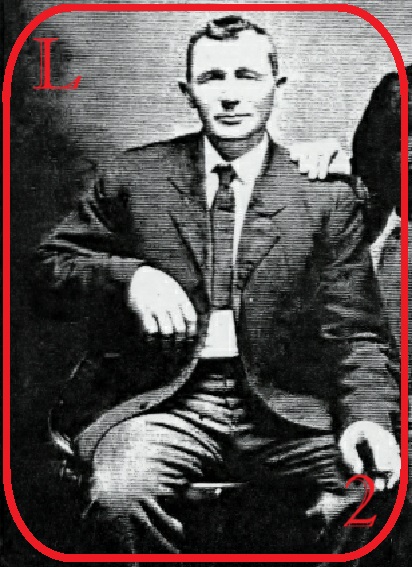
My Michael (“Mike”) Lerner, my Great Great Grandfather, his wife Barbara Schmidt, and their family were the first of my Germans from Russia ancestors to leave the German colonies in the Russian Empire for North America. He spent about a third of his life in Russia, a third in Texas, and a third in Canada, and was a citizen of all three.
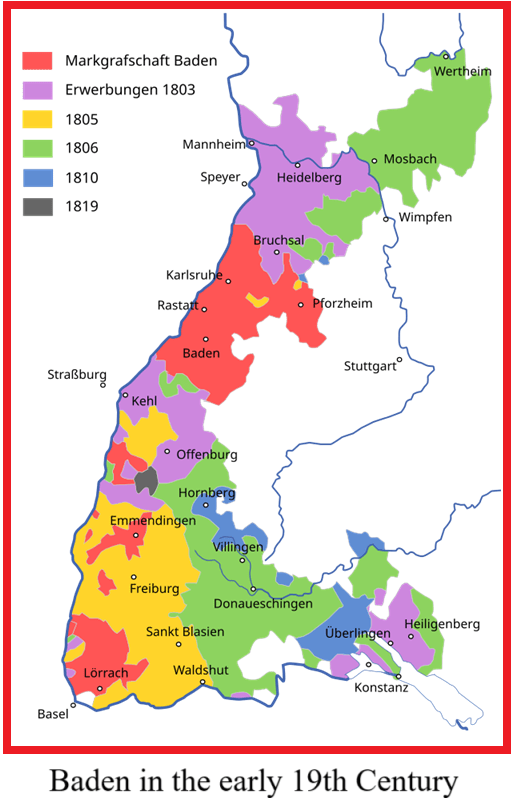
Mike was born on May 2, 1862 in Rastadt, a German colony in the Beresan district of what is now Ukraine, which at the time was part of the Russian Empire. Mike’s paternal line originated in the Karlsruhe area of Baden. In fact, the capital of Baden at the time the Lerners left for Russia was Rastadt.
I don’t know much about Mike’s life in Russia, particularly his childhood. He married Barbara Schmidt in February 1883. Nine months later, they had their first of 14 children. Until the family emigrated in 1893, Mike was a farmer in Rastadt. He may have actually owned his land, as a map of Rastadt in Joseph Height’s book Paradise on the Steppe shows several pieces of land which belonged to individuals with the surname Lerner.
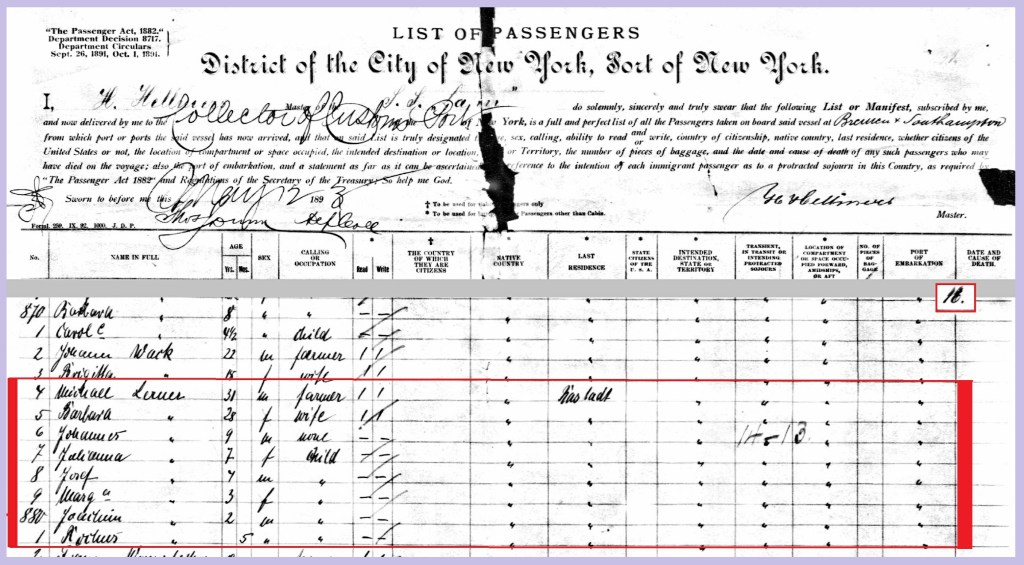
The family departed Bremen aboard the S.S. Lahn in the spring of 1893. By that time, they had six children. Four of those children were aged five and under (the listed age for Joseph is likely incorrect), with the youngest, Rochus, being about five months old at the time. The ship landed at Ellis Island on May 12, 1893. From there, the family made their way to Clay County, Texas, arriving there by June 1893.
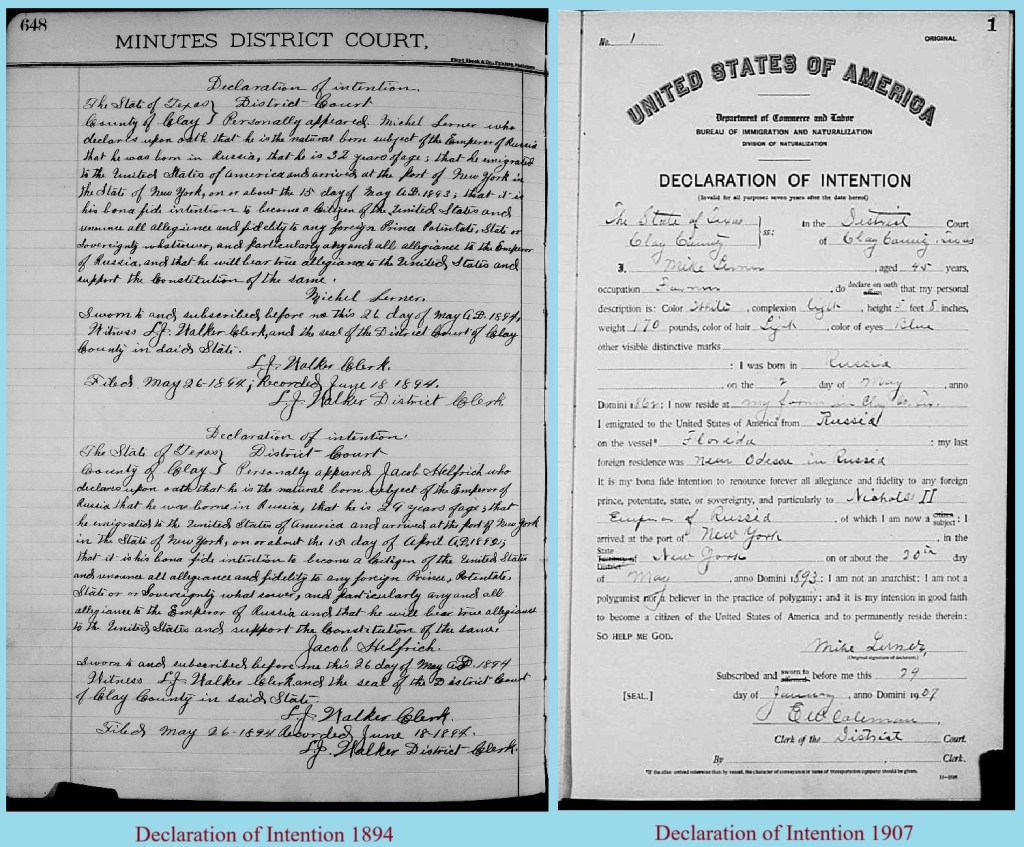
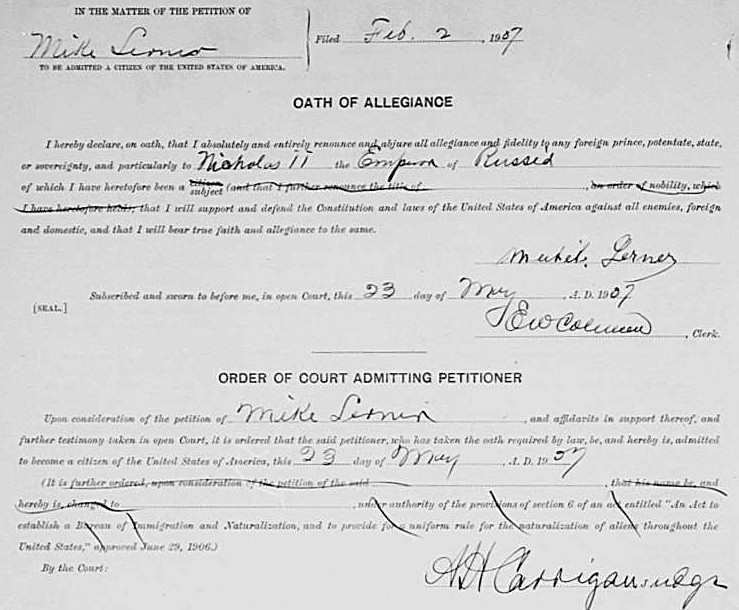
A year later, on June 18, 1894, at the Clay County District Court, Mike made a Declaration of Intention to become an American citizen. However, it seems that he was in no hurry to follow through. Mike did not take any further steps towards citizenship until January 29, 1907, when he filed a new Declaration of Intention. Soon after, on May 23, 1907, Mike took an Oath of Allegiance and became an American citizen.
Also shortly after arriving in Clay county, and no later than 1894, Mike had established himself as a farmer. By 1910, Michael owned his farm, free of any mortgage, on Jacksonboro Road. In that time, he and Barbara had eight more children.
In 1912, Mike’s son Joseph had migrated to Maple Creek, Saskatchewan. Sons Rochus and Jerome (my Great Grandfather) followed suit, in 1913 and 1917, respectively. In 1918, Mike made the move to Canada and began farming outside Fox Valley, Saskatchewan. He continued farming there well into his 60s. When Mike became a Canadian citizen on December 5, 1929 when he was 67, he was still farming.
In fact, Mike was still farming into his 80s. After his son Jerome (my Great Grandfather) separated from his wife Emelia (my Great Grandmother), he moved in with Mike. Sometime around 1944, Jerome’s daughter, Adeline Lerner, came to live with Mike and her grandfather. Mike was a widower by then, as Barbara passed away in 1936. According to Adeline, her grandfather was still running the farm at the time. Adeline told me that her grandfather generally spoke German, but could speak English as well.
Mike died in Fox Valley on January 16, 1947. He is buried at the Fox Valley Cemetery, next to Barbara.
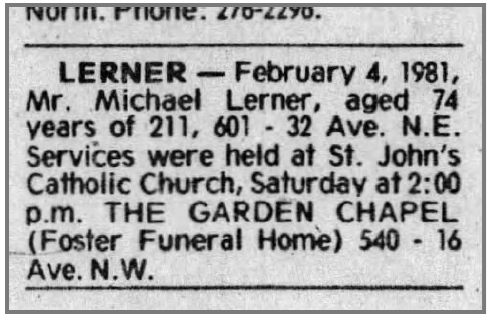
Calgary Herald, February 9, 1981, page 45
“Baden in the early 19th Century” image attribution: Creative Commons Attribution 2.5 Generic license via Wikimedia Commons. Author: ziegelbrenner.
Heronimus Michael “Jerome” Lerner (1895-1954) Emelia Anton (1903-1997)
Welcome to the last suit of the deck of ancestors I’ve been writing about for the 2025 edition of the 52 Ancestors Challenge – with the unique spin I’ve given the challenge this year. This final suit relates to my mother’s maternal grandparents, Heronimus Michael “Jerome” Lerner (1895-1954) and Emelia Anton (1903-1997). Both were Germans from Russia. I never met my great grandfather – neither did my mother – but I knew my great grandmother very well, who passed away shortly before I turned 30.
Very long story short, just after Catherine the Great, Empress of Russia, came to power in 1762, she issued a manifesto inviting foreign settlement in lands controlled by Russia. A significant number of those who responded to the offer were German peoples (as there was no “Germany” at the time). Even a summary of the reasons behind Catherine’s invitation and why so many Germans responded would significantly detract from the topic at hand.
There are some similarities between what Catherine promised in her manifesto (and subsequent manifestos by future Czars) and what later was promised to homesteaders by the United States and Canada. Catherine’s incentives included free transportation to Russia, free land, freedom from taxes for 10 to 30 years, interest-free loans to buy equipment, freedom of religion, exemption from military service, retaining their language, and local self-government. However, circumstances changed, so in the late 19th and early 20th centuries the descendants of those original colonists left to homestead in the United States and Canada.
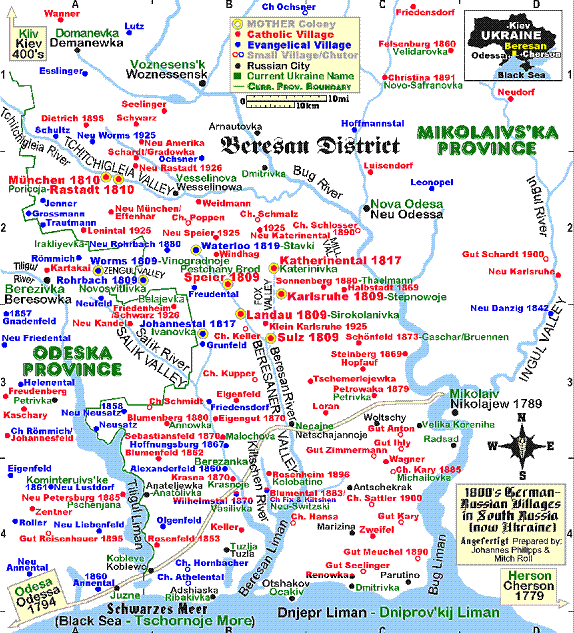
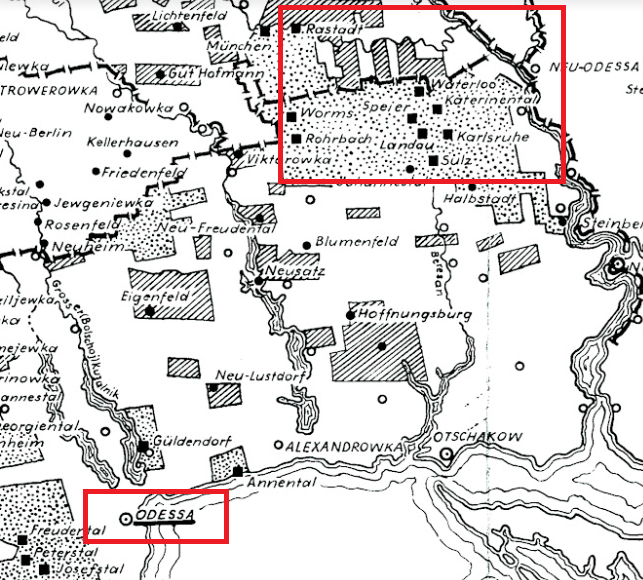
Both Jerome and Emelia’s ancestors originally hailed from what is now western Germany, particularly the Rhineland-Palatinate and Baden-Württemberg. Those ancestors all settled in colonies located in what is now the Ukraine (“Odessa” or “Black Sea” Germans), particularly what was known as the Beresan District, north-east of Odessa. Most of the colonies took the names of the German cities and towns from which the settlers came. Many of my German-Russian ancestors were located in Rastadt and Karlsruhe.
The Beresan in the 1800s (source: http://www.rollroots.com/beresanmap.htm). Essentially all colonies were based upon the religion of the settlers. Rastadt is in the upper right corner; Karlsruhe is close to the centre. Both were Roman Catholic colonies.
The Beresan District in relation to Odessa, in what is now Ukraine.
Neither Jerome nor Emelia were born in the Beresan, where each of their parents were born. Jerome was born in Henrietta, Texas on March 12, 1895, less than two years after his parents emigrated from the Beresan. Emelia was born in Selo Suchoi, Veronesch, Russia on January 1, 1903. I assume that date is under the Julian calendar. Emelia’s parents had left the Beresan sometime around 1899 and remained in Russia until 1912, when they left for Canada.
Emelia’s family first settled near Maple Creek, Saskatchewan. By 1920, they were living in Rastadt. Just as the German place names followed the colonists to Russia, they followed them to the new world as well. In the meantime, Jerome’s older brother had moved to the area, starting a gradual migration of the Lerner’s to and from Saskatchewan. Jerome came to Canada in 1917 and settled near Fox Valley, not far from Rastadt, taking up farming like he had in Texas. Jerome never obtained Canadian citizenship; I don’t know if Emelia ever did.
Jerome and Emelia married in Rastadt on August 3, 1920. Jerome continued to farm land south of Rastadt throughout the marriage. They had six children together over their 17 year marriage.
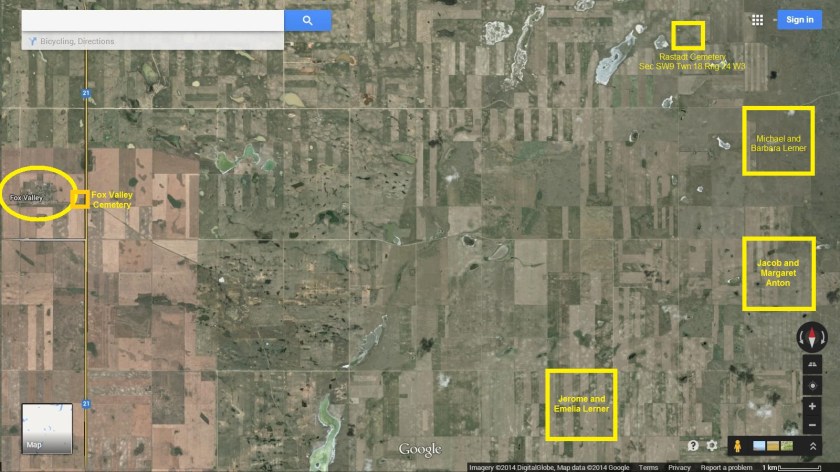
This map shows where Jerome and Emelia lived while they were together. Fox Valley is in the circle on the left. Michael and Barbara Lerner (née Schmidt) were Jerome’s parents; Jacob and Margaret Anton (née Heck) were Emelia’s parents.
Unfortunately, Jerome developed a mental health condition*, which contributed to the breakdown of his marriage with Emelia. Their daughter, my Aunt Adeline (“Addie”), told me that she believed her father had schizophrenia, although I doubt there was ever any formal diagnosis.
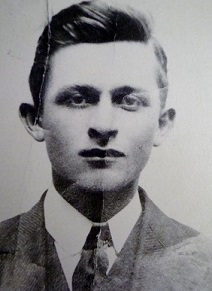
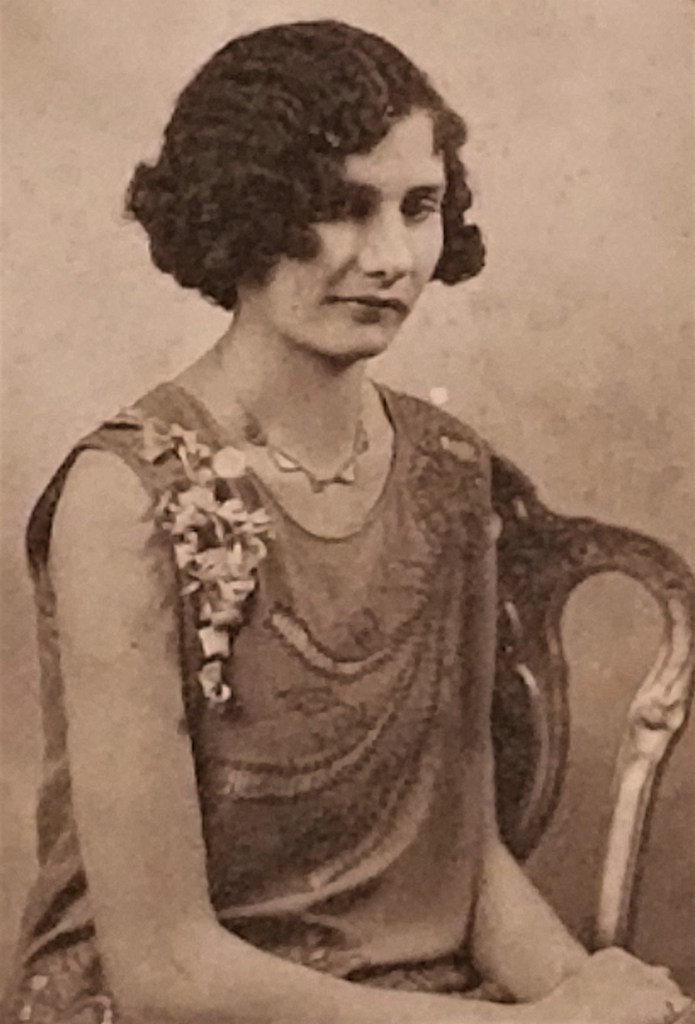
Jerome Lerner and Emelia Anton. The photo of Jerome is from his application for an American passport in 1917, when he was 22. My guess is that the photo of Emelia was taken when she was in her mid-teens.
My great grandparents separated sometime between 1937, when their youngest son Herb was born. My guess is that when the 1931 census is released in 2033, it will show them as having been separated. Jerome and Emilia most likely did not file for divorce. They do not come up on the Library and Archives Canada divorce database. Being Catholic, they might have simply separated without divorcing. However, my Aunt Addie told me it had nothing to do with being Catholic, it was because it was so difficult to get a divorce at the time they separated. (It was not until 1968 that the divorce laws in Canada were liberalized to make it easier to obtain a divorce.)
My mother once told me that a rift developed between the Lerners and my great grandmother over her separation from Jerome. It seems there was some sort of expectation that my great grandmother should have remained with Jerome despite his troubles.
After they separated, Jerome continued farming in the Rastadt area. Aunt Addie told me that after her parents separated, her father lived with his father, Michael Lerner. Michael had become a widower not long before Jerome and Emelia separated. Aunt Addie told me that her father was still able to care for himself, such as dressing himself and cooking, but he needed some guidance.
When her parents separated, Aunt Addie went with her mother, but when she was about 13 years old (around 1944), she moved in with her father and grandfather for about a year. Aunt Addie described her father as quiet and intelligent, and was able to reason through things quite well. He did not talk much, but would “explain stuff” to Addie from time to time. Addie remembers that he read the newspaper a lot. Aunt Addie added that he could become upset very quickly, which she attributed to his mental condition. Addie said that her Grandfather took care not to upset Jerome or “push his buttons.”
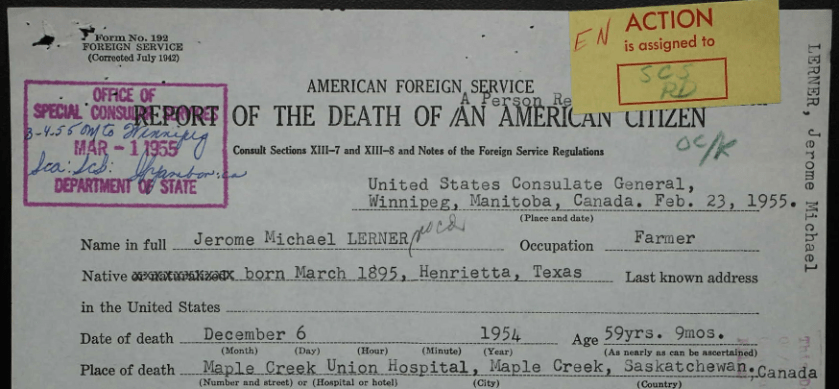
When I asked Aunt Addie whether her father was still working at the time, she told me that he didn’t really work and that work would upset him. He would help with the harvest, but he would “moan and groan all night.” Aunt Addie believed he wasn’t used to that kind of regular work and it really wore out his muscles. To whatever degree Jerome was still able to work, I note that the registration of his death stated that he was a farmer at the time.
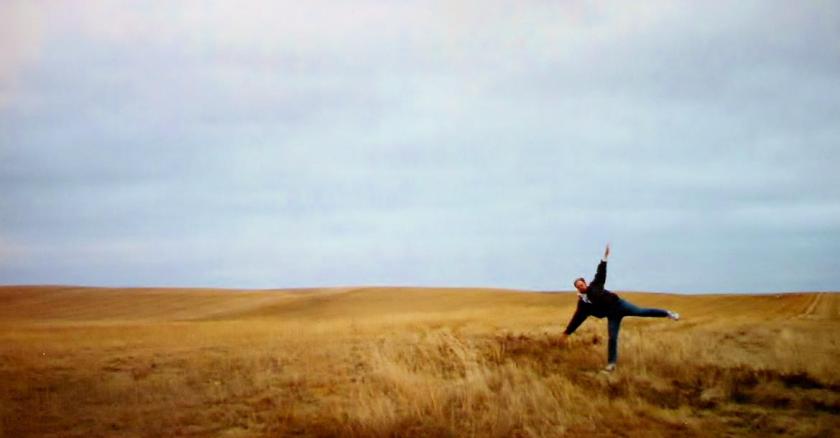
This is me on the land my Great Grandfather Jerome farmed. This was taken in April 1997, only a few months after my Great Grandmother Emelia passed away. The house they lived in – where my grandma Helen Lerner was born – stood around here. At the time, the house still existed, but had been moved elsewhere.
Aunt Addie said that her father spoke both English and German. Her grandfather mostly spoke German, but could understand English. So both languages were used at home. Aunt Addie said that her Addie said that this meant she grew up speaking both languages, although she had lost her ability to speak German later in life. mother mostly spoke to her in German, because it was better than her English. She added that her mother also spoke some Russian, which my mother had told me as well. As my mother described it, when her grandmother was still living in Russia, she’d speak German with her family and Russian with people working the farm.
When I told Aunt Addie that I was 13 before I learned her mother could speak German (which caught me quite by surprise!), she commented on how her mother spoke with an accent that wasn’t quite German and not quite Russian. She concluded it was its own thing. I concurred, because I could never tell what kind of accent my great grandmother had before I learned she was multilingual. In fact, I don’t recall thinking she had an accent; I think I thought she sounded the way she did because of her age.
According to Aunt Adeline, it sounds like her mother remained at the home she had shared with Jerome after their separation. Addie said that her mother leased out the farm land. How long my great grandmother remained there, I do not know. However, Emelia was still there when Aunt Addie moved in with her father in 1944. Sometime afterwards, Emelia moved to Alberta, likely first to Medicine Hat, and then on to Lethbridge.
Jerome passed away in hospital in Maple Creek on December 6, 1854, due to kidney disease. He was buried at the Fox Valley Community Cemetery. Meanwhile, by the mid-1950s Emelia was working as a chambermaid at the Alexander Hotel in Lethbridge. By 1958 Emelia had largely retired. She was collecting a pension and was living off an inheritance she had received from her father. She bought a house on 19th Street in Lethbridge.
Sometime in 1958 or 1959, Emelia married Walter Henry Wright. He died on December 4, 1978. While I saw him every time we visited my great grandmother, I don’t really know much about him. Most of what I learned about him is from his obituary, from when he died in December 1978. Other than the fact Walter served in World War II, I have no idea about his life before marrying my great grandmother or what he did for a living.
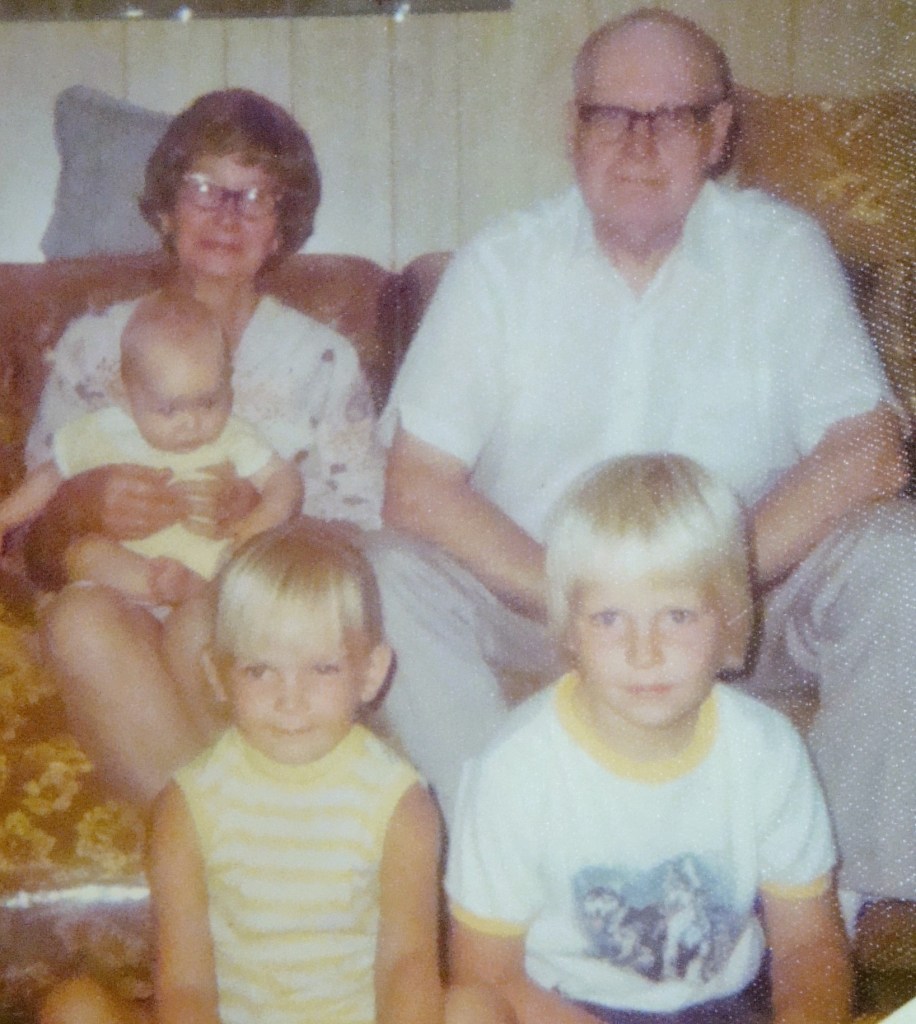
Me and two of my siblings with Emelia and Walter.
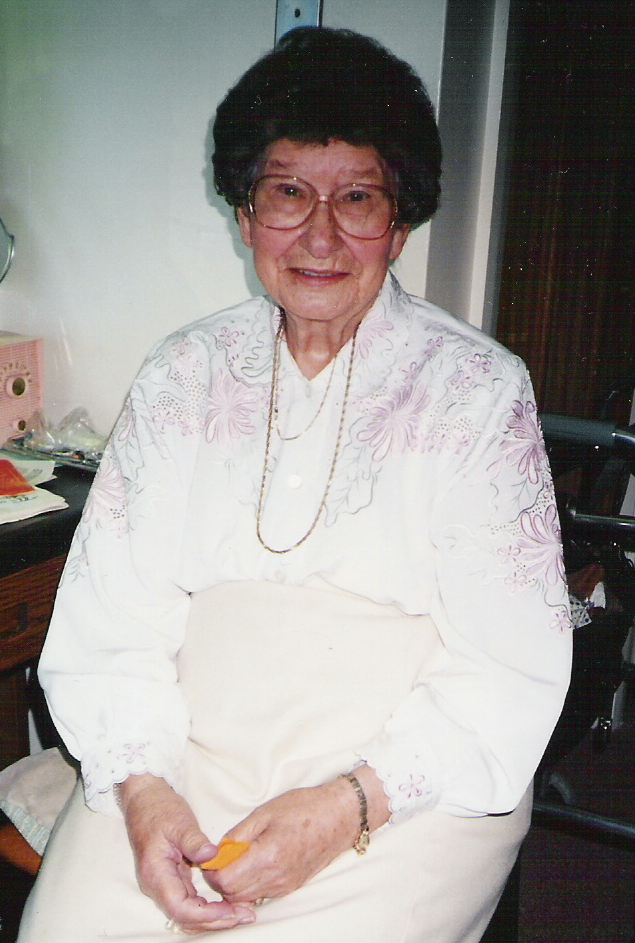
Emelia survived Jerome by fifty years and Walter by twenty years. She even outlived my grandmother, Helen Lerner, by more than ten years. Emelia continued to live on her own at home for many years after Walter’s death, but ultimately moved into a nursing home. I honestly cannot remember when she moved. She was there at least by her late 80s – I know she was there before she turned 90. I messaged my mother to ask if she could recall when, but couldn’t. I thought one of my sisters had a reason to remember, but she couldn’t recall it either.
In the last years of her life, Emelia’s activities included bridge and bingo. She was proud of her mental acuity and ability to play the game, but was always unhappy that her peers did not. My grandfather, Leo Burgess, often took Emelia to bingo. I remember my grandfather “complaining” that he was in his mid-70s and still had mother-in-law problems.
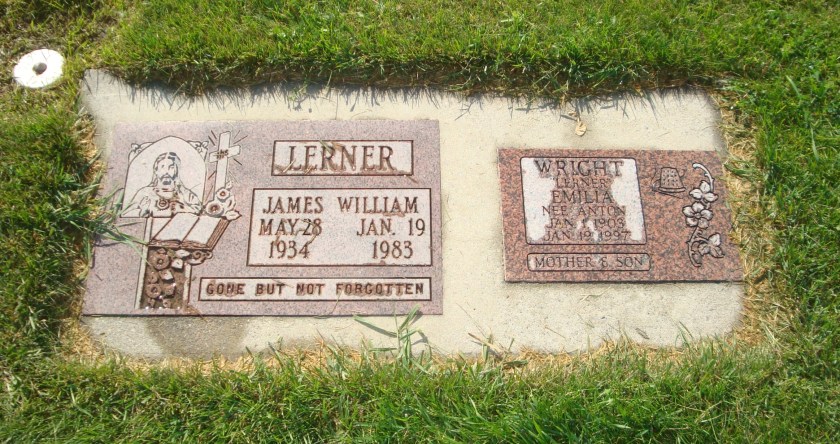
Emelia died on January 19, 1997 in Lethbridge. The memorial mass was held at St. Basil’s Catholic Church in Lethbridge and my mother gave the eulogy. Emelia was cremated and buried at Mountain View Cemetery, alongside her son Jim, who died in 1983.
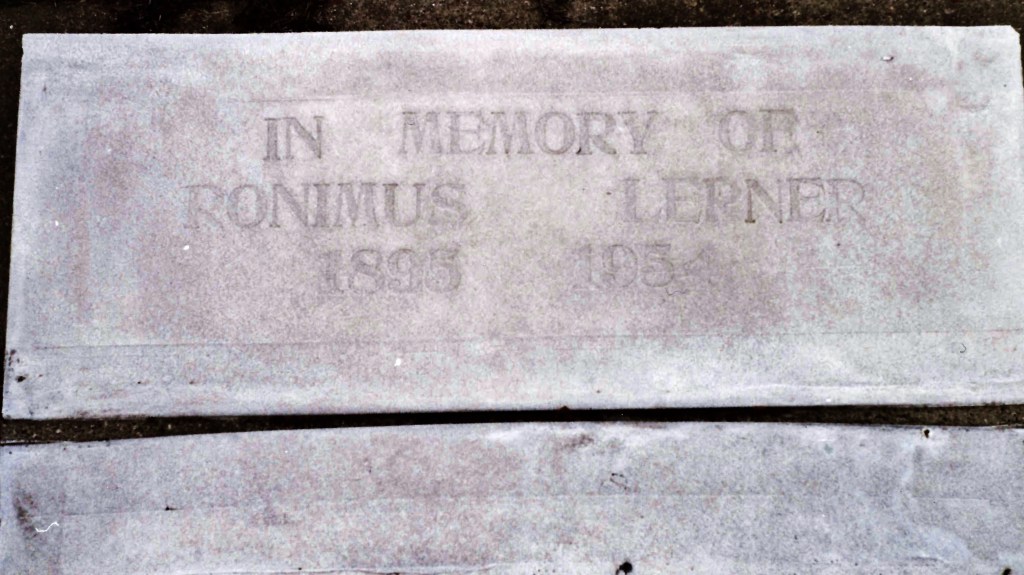
Jerome’s grave at the Fox Valley Community Cemetery
Emelia’s grave at the Mountain View Cemetery in Lethbridge, alongside her son Jim.
* There are resources available if you need help with your mental health. In British Columbia, where I live, this includes:
→ Calling 2-1-1 will connect you with community and social services.
We’ve reached the last card in the deck for my mother’s paternal line and the last of my Mormon ancestors who I’ll be looking at for this year’s 52 Ancestors Challenge.
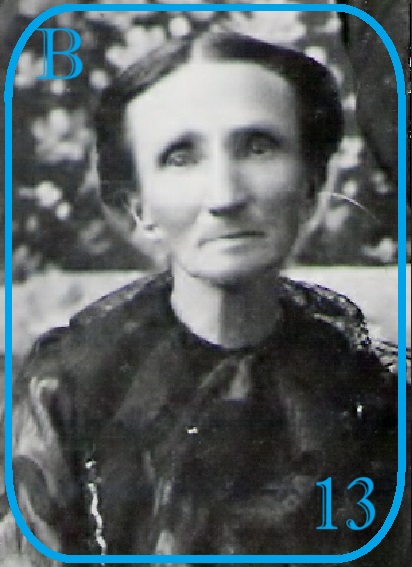
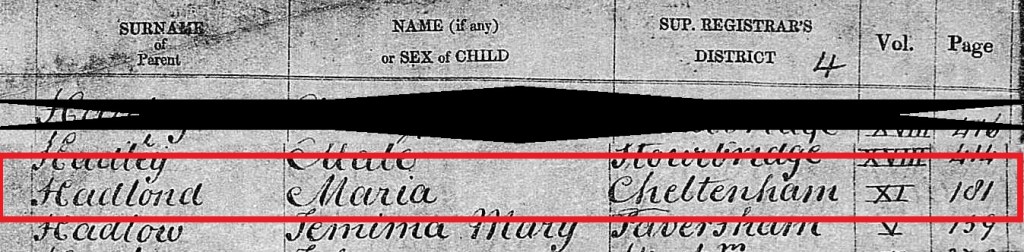
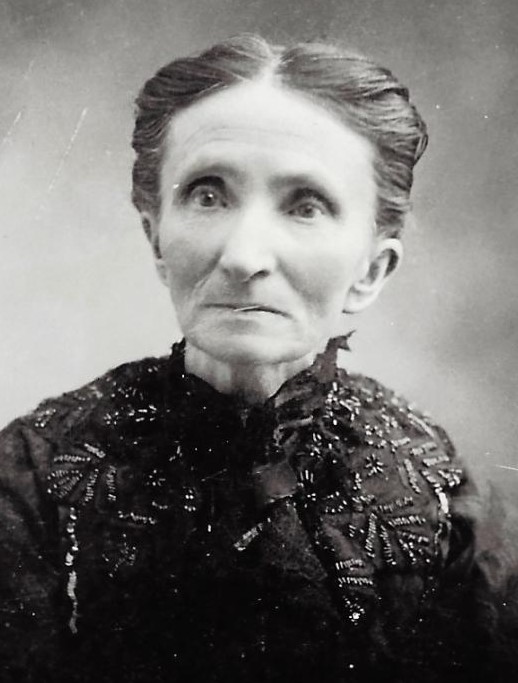
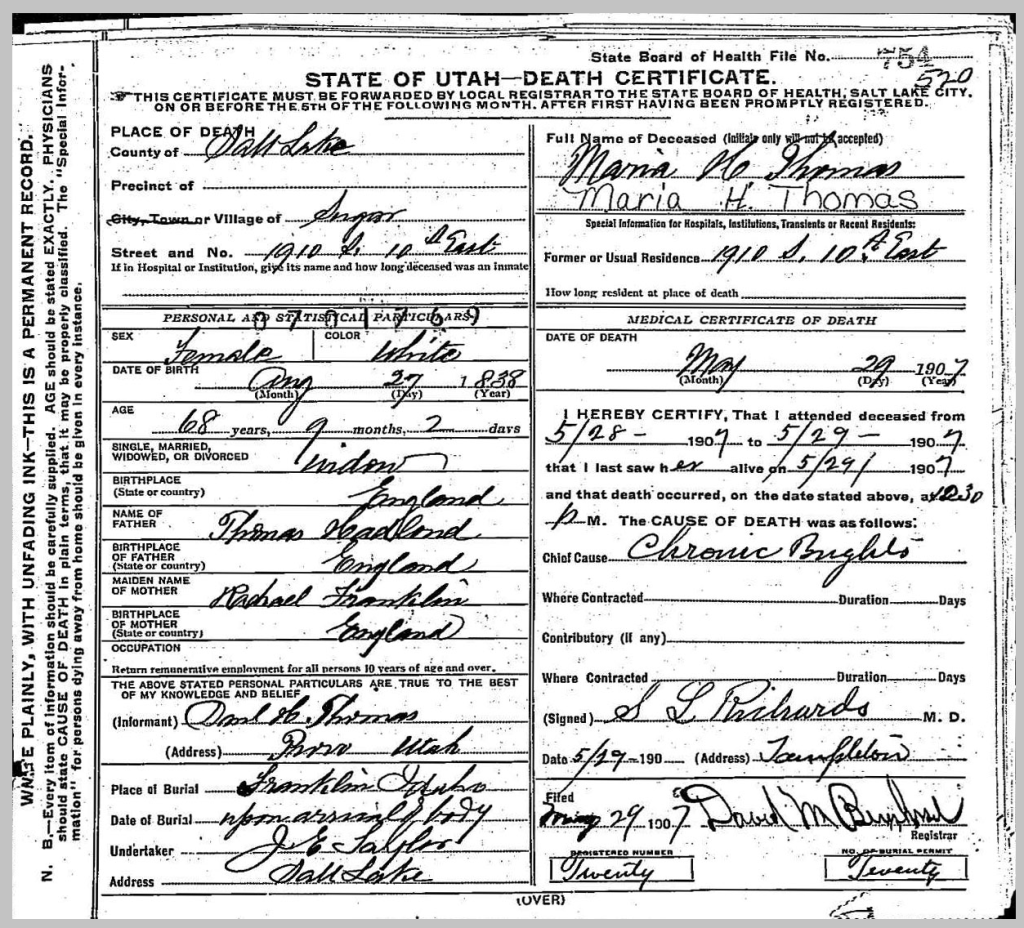
Maria Hadlond, my Gx3 Grandmother, is my most recent ancestor from England. I have to go back another five generations on some of my other maternal lines before I can come upon anyone else from Old Blighty. Maria was born in Cheltenham, Gloucester, England on August 27, 1838, to Thomas Hadlond (1814-1892) and Rachel Franklin (1817-1879).
Thomas and Rachel were originally from West Oxfordshire, but were living in Cheltenham, on the edge of the Cotswolds, in the years before they emigrated. At the time, Thomas was working as a domestic servant.
Sometime in the late 1840s, the Hadlonds heard the preaching of some Mormon missionaries. On November 23, 1846, Rachel was baptized into the church. Several of their older children were baptized in the next two years, including Maria who was baptized on December 21, 1848, when she was 10 years old. I have the impression that while Rachel was a fervent convert, Thomas wasn’t too taken with the new religion and never actually joined it in his lifetime. He wasn’t baptized until 1893, a year after his death.
Whatever Thomas’s beliefs, the family left England for America to join the migration of Mormon converts who hoped to join the settlement in Utah. It is most likely the family left England sometime after September 1850, when their daughter Alice was born, and before June 1853, when their son Franklin was born. In fact, while their destination was ultimately the United States, it seems that the family entered North America through Canada, as Franklin was born in the Province of Canada (likely Canada West, which is modern-day Ontario).
By no later than 1856, the Hadlonds were in St. Louis, Missouri. It seems that the family’s circumstances were such that they did not plan to move to Utah anytime soon. However, I have not been able to determine whether this was because of finances (many Mormon migrants took years moving west while saving up for the trip) or because Thomas was not an adherent or all that serious about the church.
When Maria was 16, her mother met a Mormon missionary by the name of Preston Thomas who was passing through St. Louis on his way to Texas. When Rachel learned that Preston planned to arrange for a company of Texan converts to migrate to Utah, she “begged” him to take her three oldest children with him. This included Maria. Thomas did as requested and took the three Hadlond children to Utah. Ultimately, Maria’s two siblings returned to St. Louis and lived out the rest of their lives there. Maria remained in Utah.
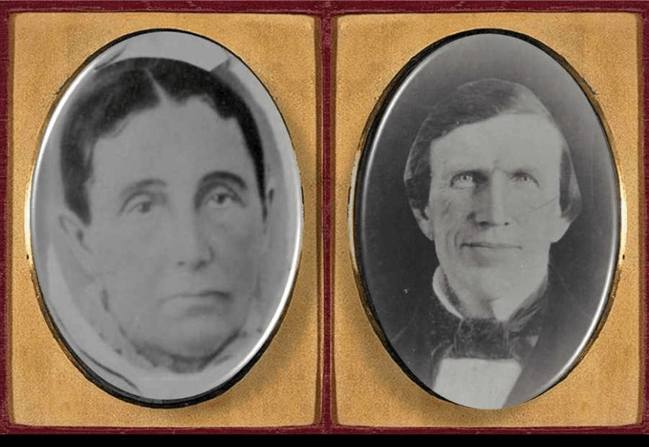
Two years later, on October 8, 1856, Maria married Preston in Brigham Young’s office in Salt Lake City, with Young himself officiating. Preston was 42 years old at the time; Maria was 18. Moreover, this was a plural (polygamous) marriage, as Preston had two other wives. Preston’s first wife, Sarah Jane Morehead, was born the same year as Maria’s mother and they had a daughter only a few months younger than Maria. Preston’s second wife, Maria Foscue, was 16 years older than Maria. In order to avoid confusion between the two wives, Maria went by “Molly”. Molly and Preston had nine children together. This was in addition to the nine Preston fathered with Sarah Jane and four he fathered with Maria.
For the first four years after Molly married Preston, the entire family lived in Lehi, Utah, where Molly gave birth to her first two children. This included Ella Thomas, my Gx2 Grandmother.
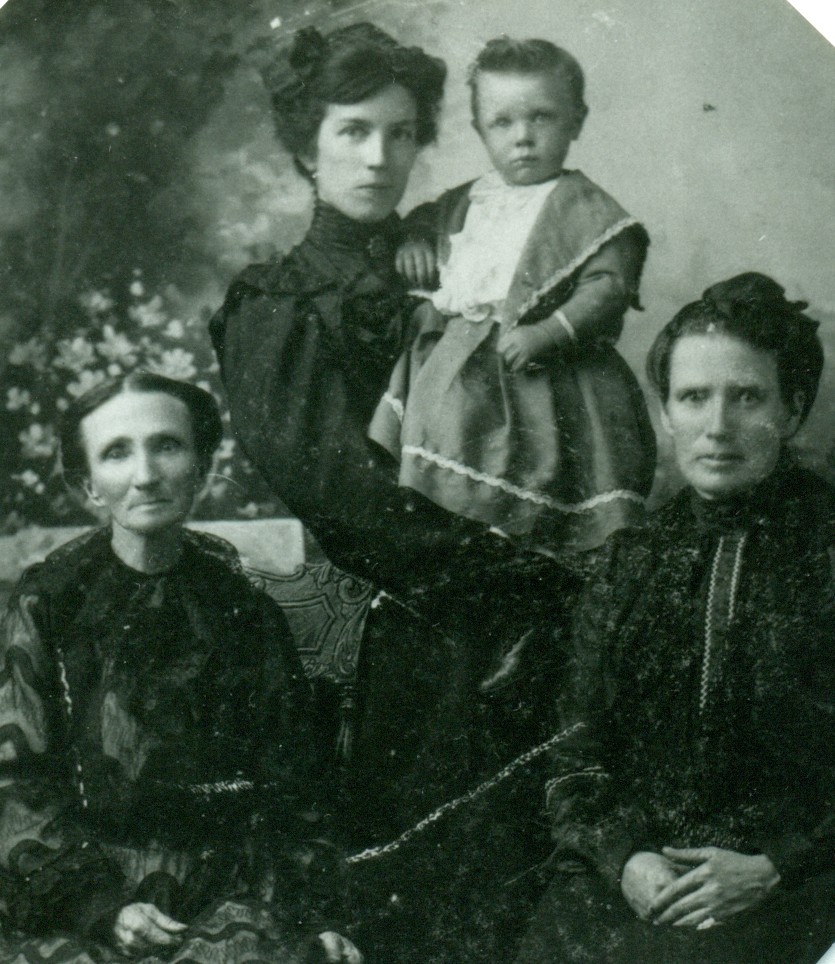
Four generations: Maria with her granddaughter Maria (“Mimie”) Lamb (née Thomas) holding great granddaughter Rulon Lamb, and Ella Nelson (née Thomas), my Gx3 Grandmother.
In 1860, Brigham Young had Preston join a team exploring an area in northern Utah, where Young intended to form a new settlement that is now Franklin, Idaho. However, at the time, and for many years afterwards, the inhabitants thought they were in Utah. They only discovered later that the town was a mile north of the Utah-Idaho border.
Young directed Preston to return to Lehi to collect his family and join the first settlers. In addition, Young appointed Preston as the first Bishop of Franklin. Preston did as he was asked (today we might say “voluntold”), but it appears that Maria Foscue might have refused and remained in Lehi with her children.
In 1863, Brigham Young formed a team of 12 to 15 men to explore the Bear Lake Valley in Idaho, not far from Franklin. This group included Preston. By September 1863 a settlement had been erected in Bear Lake Valley where Paris, Idaho now stands. Preston moved the family there in the spring of 1864. A few years later, Preston moved the family to Fish Haven, about 20 kilometers south of Paris.
During the family’s time in Idaho, Preston carried out at least one more major mission to the South. This was in addition to Preston’s other endeavors, which included a term as a judge of the Utah Probate Court (when it was still believed that Franklin was in Utah) and a run for office for the Idaho territorial legislature (after the discovery Franklin was in Utah). This obviously left Sarah Jane and Molly without his support while they raised a significantly large household of children.
Preston’s absences from home were compounded when he left this world following an accident that occurred in 1877 while he was building a house on his property. Molly’s youngest child was seven months old at the time.
Maria with her three youngest children: Daniel, Letitia, and Rosabell (seated).
I have not yet tracked where Molly lived in the years immediately following Preston’s death, so I don’t know if she remained in Idaho or moved back to Utah. However, over the years several of her children joined the Mormons who were settling in Canada, in what is now the southern part of the province of Alberta. For example, her daughter Ella had moved there with her husband John Nelson. So in 1896, Molly and four of her children – all of whom were now adults – moved to Cardston, Alberta. Census records show that in 1901 Molly (who was going by Maria again) was a neighbour of one of her sons.
In 1902, Maria moved back to the United States and settled in the “Sugar House” neighbourhood of Salt Lake City, one of the oldest neighbourhoods in the city. Maria remained at the same house for the rest of her life. She passed away at home on May 29, 1907. She is interred in Franklin at the Franklin Cemetery.
Next week we start the last suit, covering my mother’s maternal line, who are Germans from Russia.
TL;DR: My Gx3 Grandfather Preston Thomas was first a slave owner and later a polygamist. I don’t like him.
Of course, that comes with the bias of my point in time. The longer story is that in his time Preston was well-respected by his community, his church, and his family. He was acting on the norms of his time and his community. In addition to many different occupational pursuits during his life, Preston a leader, a teacher, a politician, and a judge.
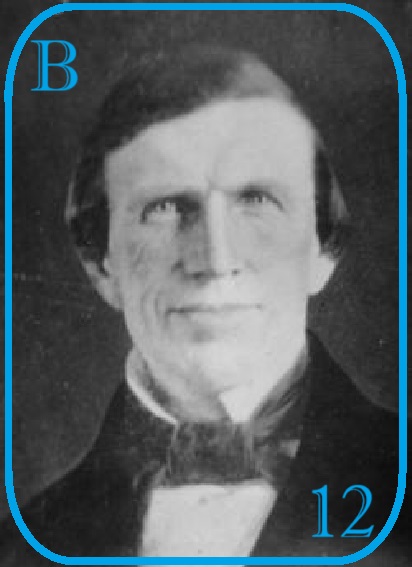
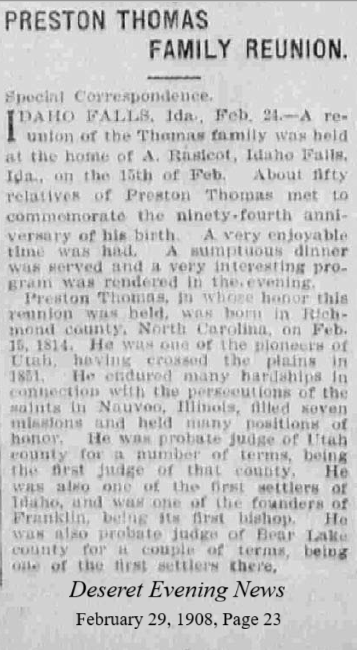
Preston’s story begins in Rockingham, North Carolina, where he was born on February 15, 1814 to Daniel Thomas and Nancy Ann Morehead. Daniel was the son of a Baptist minister and was an affluent slaveowner with a 3000 acre plantation with a carpenter shop, blacksmith shop, a cotton gin, and a shad fishery. Daniel owned about 30 slaves, many of whom were passed onto his sons.
Needless to say, with the stature of his father, Preston was well-educated. Apparently he spent some time in New Jersey as part of his schooling, although I do not know what kind of school he attended or when. Preston was 16 when his father passed away on November 7, 1830. By the time he was 21, Preston’s endeavours included operating a sawmill he owned in Covington, North Carolina.
Sometime after Daniel died, Preston, his mother Nancy, and his older brother Joseph, and younger sister Elizabeth (“Betsy”) all relocated to Tipton, Tennessee. Joseph was married at the time; Preston and Betsy were not. Needless to say, the family brought their slaves with them. It seems Joseph bought some land that he farmed. Preston’s pursuits included the study of law, but I don’t know if he actually practiced. By 1838, Preston also owned a mill in Tipton.
In Tipton, Preston married Sarah Ann Jane Morehead on May 10, 1838. Sarah – who went by Jane – was a cousin of Preston’s to some degree, but I haven’t researched their exact relationship. From 1839 to 1860, over four states, Preston and Jane had nine children.
Sarah Ann Jane Morehead and Preston Thomas
Sometime in mid-1835, Preston’s brother Joseph had relocated to Somerville, Mississippi. Years later, Joseph returned to Tennessee and persuaded his mother and siblings Betsy and Daniel to join him in Mississippi. Preston remained in Tipton. However, after Preston’s mother died on November 7, 1843, he moved to Somerville. Part of the move was to help settle his mother’s estate. Preston build a mill upon moving to Somerville; presumably a sawmill as he had done in North Carolina.
It was in Mississippi that Preston and his family first encountered some Mormon missionaries. Eventually, Preston and all his siblings joined the church; in fact, years later on a mission to Texas, Preston converted his brother Daniel. Preston was baptised into the church January 13, 1844 and became one of its most ardent evangelists. He served on six major missions, primarily to Texas. Preston travelled the Mississippi river nearly thirty times as part of his missionary work. Thomas sold his slaves to his uncle, Benjamin Thomas, and moved his family to Nauvoo, Illinois, settling there by 1845.
When the Mormons were driven out of Nauvoo in 1846, Preston initially moved his family to Memphis, Tennessee. In part, it was because they still had family in Tennessee; as well, Preston was serving another mission. They remained there for at least a year. By 1848, Preston and family had joined the Mormon migration in Winter Quarters in Nebraska, which the Saints had set up as a temporary community on their way to Utah.
However, before proceeding to Utah, Preston was called to another mission to Texas. As well, in 1850, the family briefly lived in Freemont, Iowa, where Preston carried out farming. While residing there, Preston and Sarah Jane took in two of Preston’s nephews, whose parents had passed away. By 1851, Preston and his family had settled in Lehi, Utah, where they remained for the next nine years.
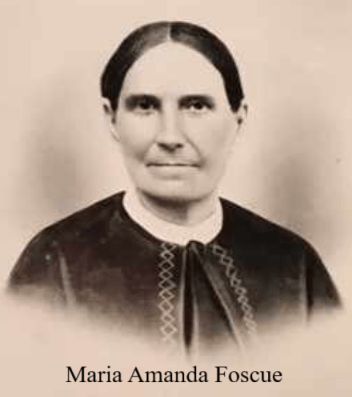
Sometime in 1949, during one of his missions to Texas, Preston met John Smith and Maria Amanda Foscue (1822-1885), a couple with seven children. John was originally from Alabama, Maria was from Florida. During this mission, Preston converted the couple, who undertook the trek to Utah. John did not survive. Maria ultimately ended up in Salt Lake City and came back into contact with Preston, who she married on November 17, 1851. Bear in mind that Preston was still married to Sarah Jane at the time, and he remained so until he died. With Maria, Preston had four children, all of whom were born in Lehi.
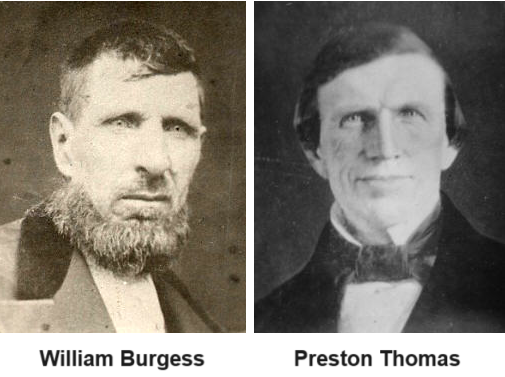
Besides providing for his large and growing family, Preston was a busy man in Lehi. The town established a school in 1851. Preston and his sister Betsy were its first teachers. Preston taught the boys on one side of the school room; Betsy taught the girls on the other side. A school board was established on February 20, 1854. Preston was one of three men elected as the first trustees. Another was William Burgess. My grandfather, Leo Burgess, is a direct descendant of William and Preston – William on his father’s side and Preston on his mother’s. A month after becoming a member of the school board, Preston was elected as an alderman of Lehi.
Two of Lehi’s first school board trustees, and great grandfathers of Leo Burgess, my maternal grandfather
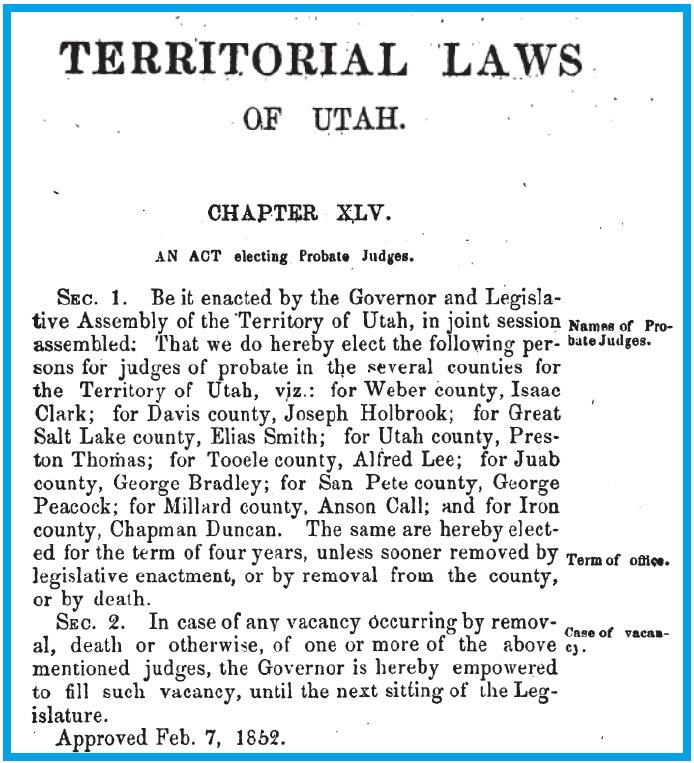
On top of all that, Preston was one of the first Probate Judges in Utah. He was appointed when the court was created and was the first judge for Utah County (Salt Lake City). Preston’s appointment was approved by an Act of the territorial legislature on February 7, 1852 (Laws of the Territory of Utah, Chapter XLV).
At the time of its creation, the Probate Court in Utah had a much broader jurisdiction than simply the estates of the deceased and those under guardianship. In addition, the territorial legislature granted the court jurisdiction over civil, criminal, chancery, and divorce matters. As well, the Probate Court heard appeals from the county Justice of the Peace courts. In 1874, the federal government revoked the Probate Court’s jurisdiction over all matters except for divorce and probate matters and in 1877, it revoked the court’s authority in divorce matters. When Utah became a state in 1896, the Probate Court was abolished.
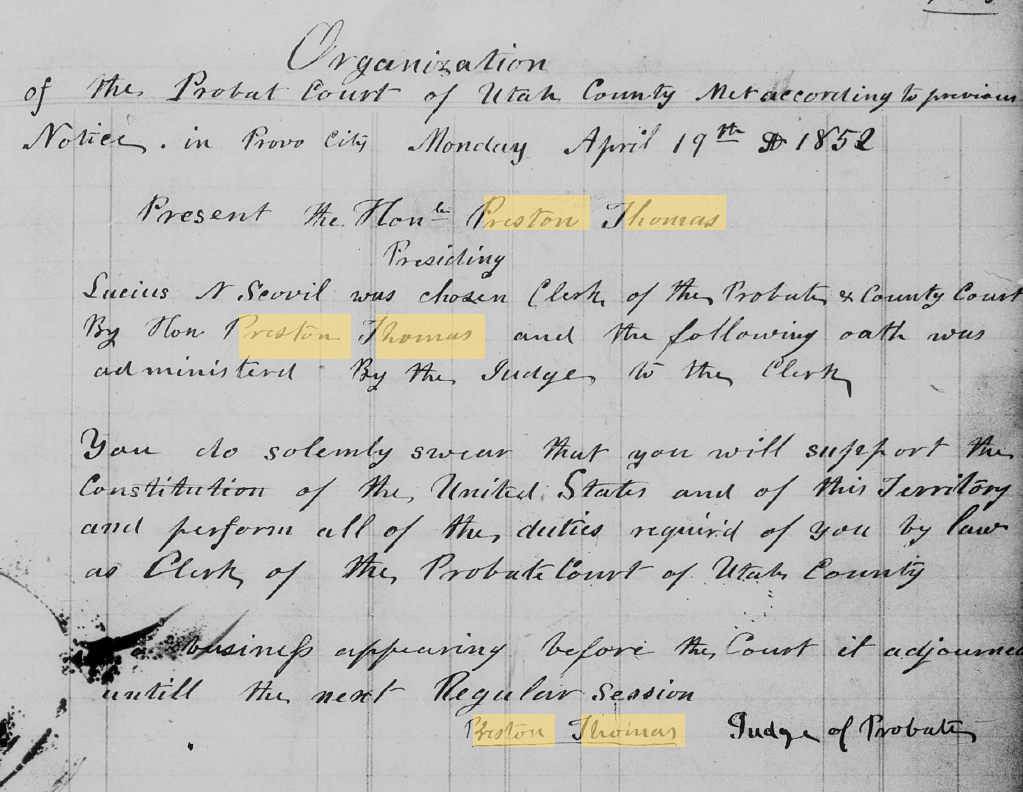
Docket and Journal of the Probate Court, 1852, showing Judge Preston Thomas swearing in the Clerk of the Court.
It appears that Preston’s tenure was a short one, as he was succeeded by Isaac Higbee on December 27, 1852. Not surprising, since Preston was called to serve yet another mission in Texas, from August 1852 to November 1853. Preston served yet another mission in Texas from September 1854 to September 1856.
During that latter mission, Preston made his way to Texas through St. Louis, Missouri. There he met Rachel Hadlond (née Franklin), an English immigrant who had joined the Mormon church. When Rachel learned Preston was arranging for a company of Texan converts to migrate to Utah, Rachel “begged” him to take her three oldest children, Charlotte, Maria (“Molly”), and Edward with him. The children were ages 18, 16, and 14 at the time. While Molly remained in Utah, Charlotte and Edward ultimately returned to St. Louis.
Two years later, on October 8, 1856, Preston married Molly. Apparently Brigham Young himself was the officiant, and conducted the ceremony in his office in Salt Lake City. Preston was 42, Molly was 18. Preston fathered 9 children with Molly. All together, Preston fathered 22 children with his three wives. Preston and Molly’s first child was a daughter, who they named Sarah Ann Jane, after Preston’s first – and still – wife.
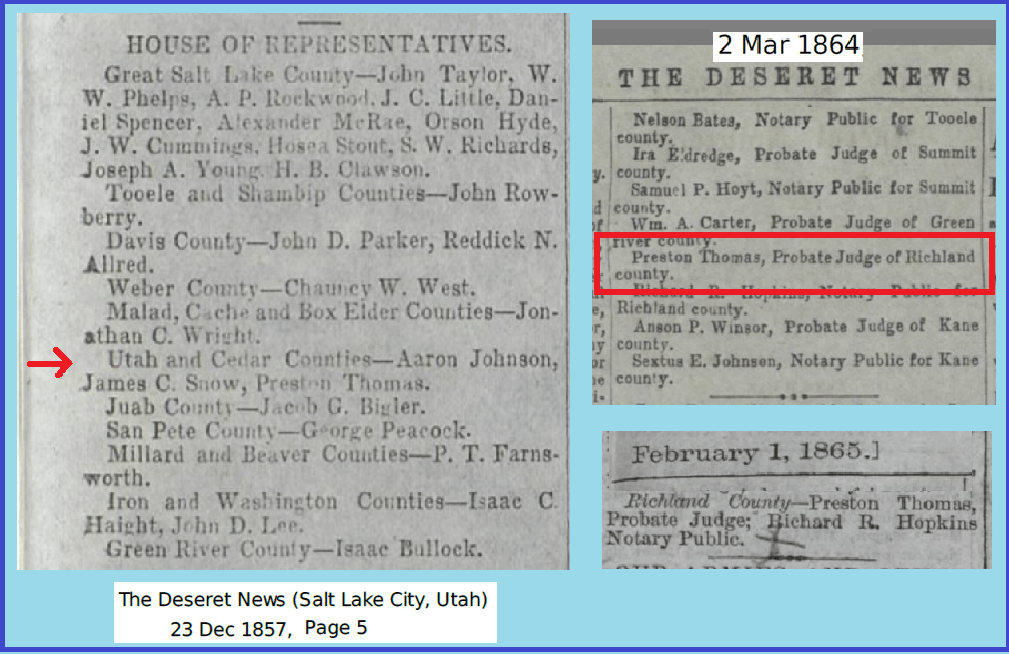
During his final years in Lehi, Preston was elected to the Utah Territorial House of Representatives, serving for three sessions from 1857 to 1859. Preston was first elected as one of three representatives of Utah and Cedar Counties, along with Aaron Johnson and James C. Snow. During his first term, he served on two Select Standing Committees: Elections, as well as Agriculture, Trade, and Manufacture. The first session took place in Fillmore, which was originally the territorial capital. The next two took place in Salt Lake City.
Some of Preston’s legislative and judicial positions
In June 1860, Preston accompanied Brigham Young as part of a team exploring a site in northern Utah. Young planned for a settlement at the site. During the trip, Young told Preston that he wanted him to be the Bishop of the new settlement and directed Preston to go home and get his family. It was a two-week trip to make the move. Maria and her children remained behind in Lehi, as she was about to give birth to her youngest child.
By September, a settlement was established at the location, which became Franklin, Idaho. When it was established, the founders believed the site was in Utah. Long afterwards they discovered that it was inside Idaho, about a mile north of the border. In the meantime, Franklin was administered as if it was in Utah. Preston served as bishop in Franklin for three years. In 1863, Preston was reappointed to the Probate Court of Utah, where he served until 1865.
In 1863, Brigham Young directed a team of 12 to 15 men to explore the Bear Lake Valley in Idaho, not too far from Franklin. This group included Preston. The team completed its survey and by September 1863 a settlement had been erected where Paris, Idaho now stands. Preston built a log cabin at the time and then returned to Franklin for the winter. He then moved to Bear Valley with his family the following spring.
After living in Paris for a while, Preston moved the family about 20 kilometers south, to Fish Haven. During the time he lived in Bear Valley, Preston was called to serve another mission in 1869 and 1870, which included Alabama and Tennessee.
In 1873, Preston moved his family back to Franklin. Upon his return, Preston oversaw the construction of a canal, which was nicknamed Thomas Ditch. The name was probably an apt one as it seems calling it a canal might have overstated its stature. Regardless, it remained in use for 60 years and was subsequently expanded. Preston settled on a homestead of 160 acres, alongside the canal.
In 1876, Preston once again stood for election to a territorial legislature. However, by that time, it had been discovered that Franklin was inside Idaho, so Preston was nominated to run for the Territorial Council of Idaho for Franklin County. It does not appear that he was successful.
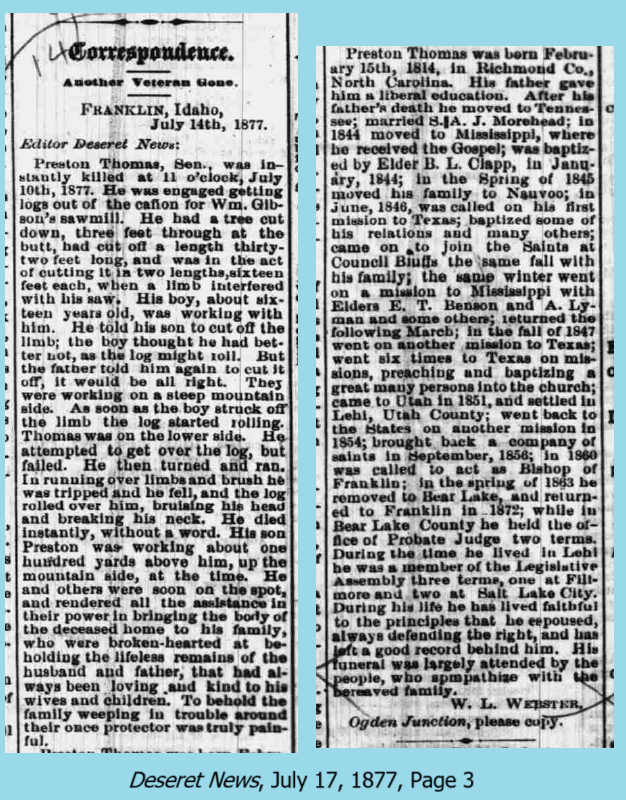
A year later, on July 10, 1877 Preston was killed as a result of an accident while working with his son Preston Pinkney, who was 16 at the time. Preston had felled a pine tree that he intended to mill into lumber for a house he was building on his property. Preston was cutting the tree into lengths when it began to roll downhill. While trying to move out of the way, Preston’s feet became entangled in the brush, and he fell. While he was rolling down the hill, the tree rolled over him and killed him instantly. Preston was interred at the Franklin Cemetery.
I acknowledge that my dislike for Preston might smack of presentism, which involves applying modern values and perspectives to historical analysis. As someone who majored in history, I am well-aware of the viewpoints for and against presentism. It is also a question debated by genealogists in writing about our ancestors.
However, we are also allowed our feelings about past norms that are now seen as historic wrongs. Moreover, while it is important remember our ancestors in the context of their time and what might have been considered right or wrong, I am not convinced that absolves the slaveholders and bigamists of my past. Avoiding presentism does not mean avoiding the application of a critical mind.
While it might not be appropriate to judge Preston, especially by modern standards, it does not mean I have to like him.
One thing that researching Preston has instilled in me is understanding the responsibility I have in doing something positive with the knowledge that Preston was a slaveowner. For example, researching slaveowners can help the descendants of the enslaved learn more about their ancestors. That’s an area of genealogical research I haven’t done much of and involves a steep learning curve. Time, distance, access to records, and resources are also hurdles. Nevertheless, I have started investigating what tools and techniques I can employ in that research.


 A Deck of Ancestors