52W Mark III – Week 35: All Mixed Up

Imagine changing municipalities several times in your life while living in the same house the entire time. With the ever changing municipal boundaries of the Netherlands, it can become All Mixed Up – which is the prompt for this week’s 52 Ancestors Challenge!

The Netherlands has thousands of villages, towns, and cities; however, the smallest administrative unit of government is the gemeente, which roughly translates as “municipality” or “local authority”. They are the third and lowest level of government after the national and provincial governments. Some gemeentes (in Dutch the plural is “gemeenten”) consist of a single community, such as gemeente Amsterdam. Many consist of multiple villages and towns.
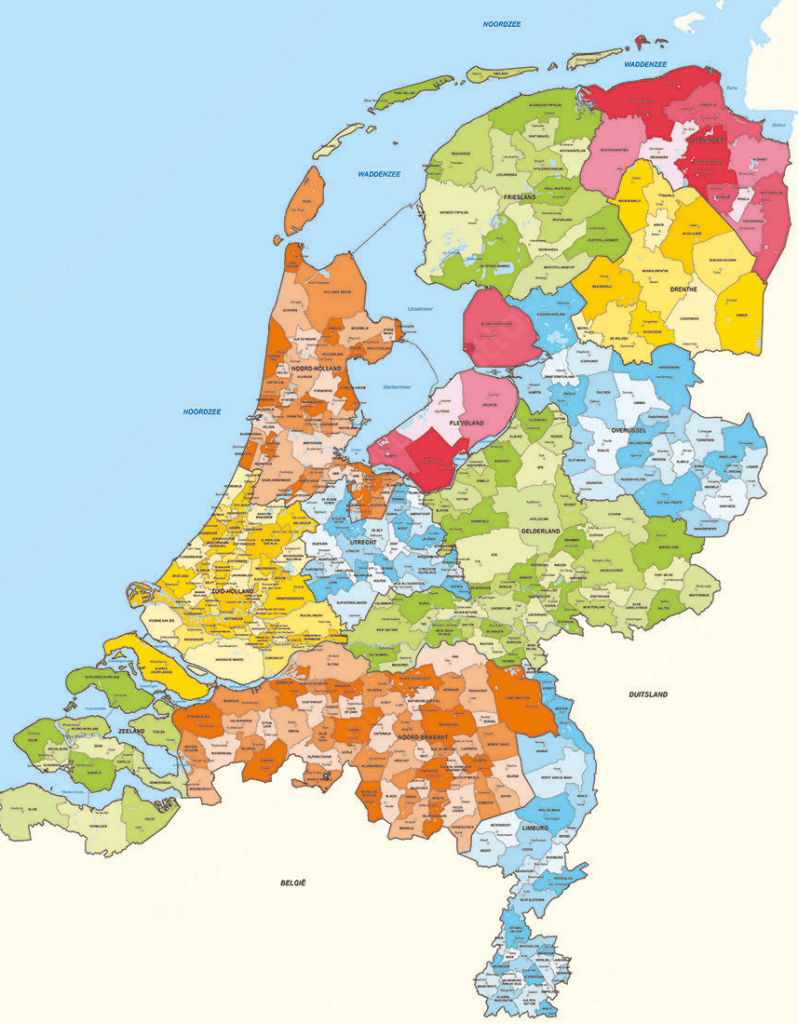
The gemeentes of the Netherlands as of 2024. The colour groups indicate the provinces of the Netherlands.

In 1812, immediately after the end of Napoleonic rule, the Netherlands had more than 1,100 gemeentes. I don’t know if that includes or excludes modern-day Belgium, which until 1830 was part of the Netherlands. Over the following two centuries, the municipal map was revised many times. Gemeentes expanded, shrank, divided, and merged, such that almost 1,700 different gemeentes have existed over time.

Since January 1, 2023, the most recent reorganization, there are 342 gemeentes in the European part of the Netherlands. There are three in the Caribbean Netherlands, except there they are a “Caribisch openbaar lichaam” (“Caribbean Public Body”).

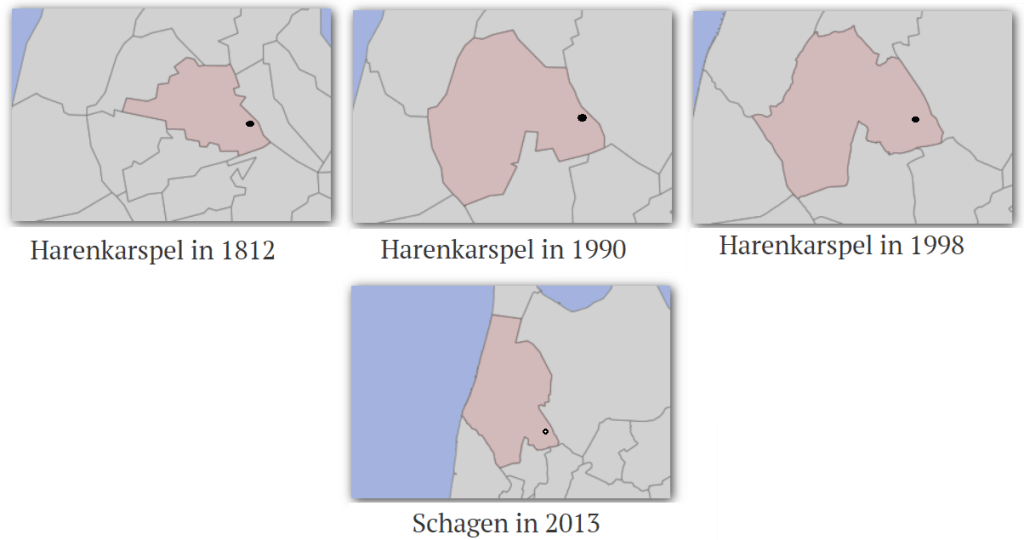
My father was born in Waarland, a village that currently has about 2,700 inhabitants. When my father was born, it was in gemeente Harenkarspel, which had been in existence for centuries. Its boundaries changed twice after my father was born.
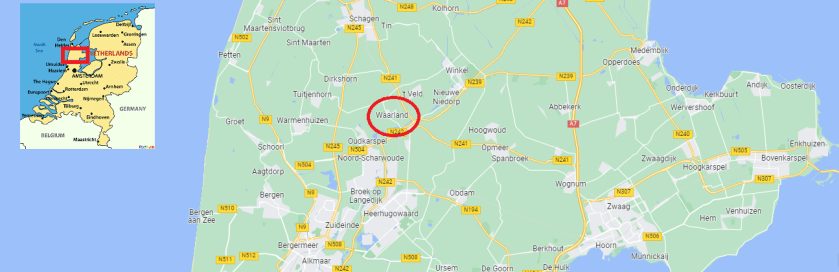
Waarland’s location in the Netherlands.
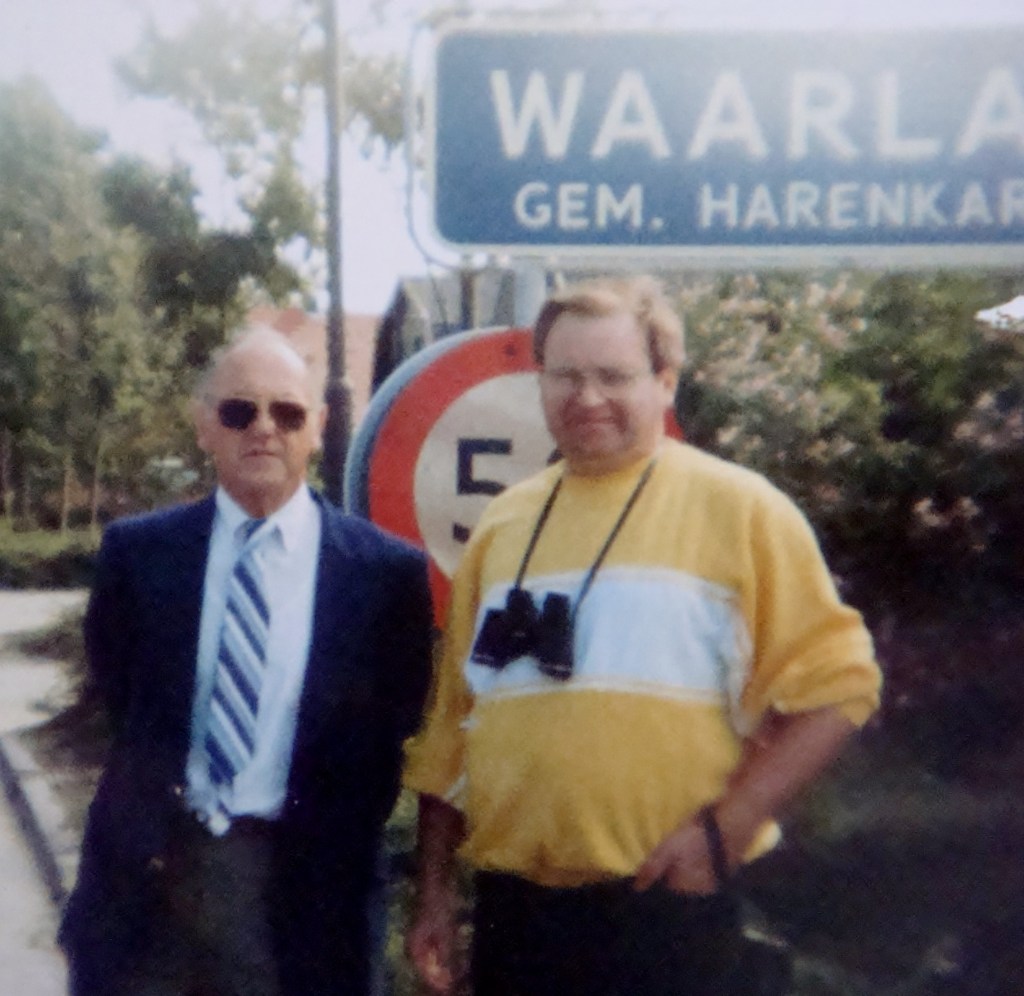
My grandfather and father visiting Waarland in the late 1980s. It was my father’s first time back since they emigrated to Canada. The sign says “Waarland Gemeente Harenkarspel”. Waarland was in Harenkarspel the first time I visited it; it was in Schagen the next time I was there.

In 2013, Harenkarspel merged with Zijpe and Schagen and ceased to exist as a separate gemeente. Since the merger, the gemeente is simply Schagen. Zijpe itself had six different iterations between its creation in 1817 and its merger with Schagen in 2013.
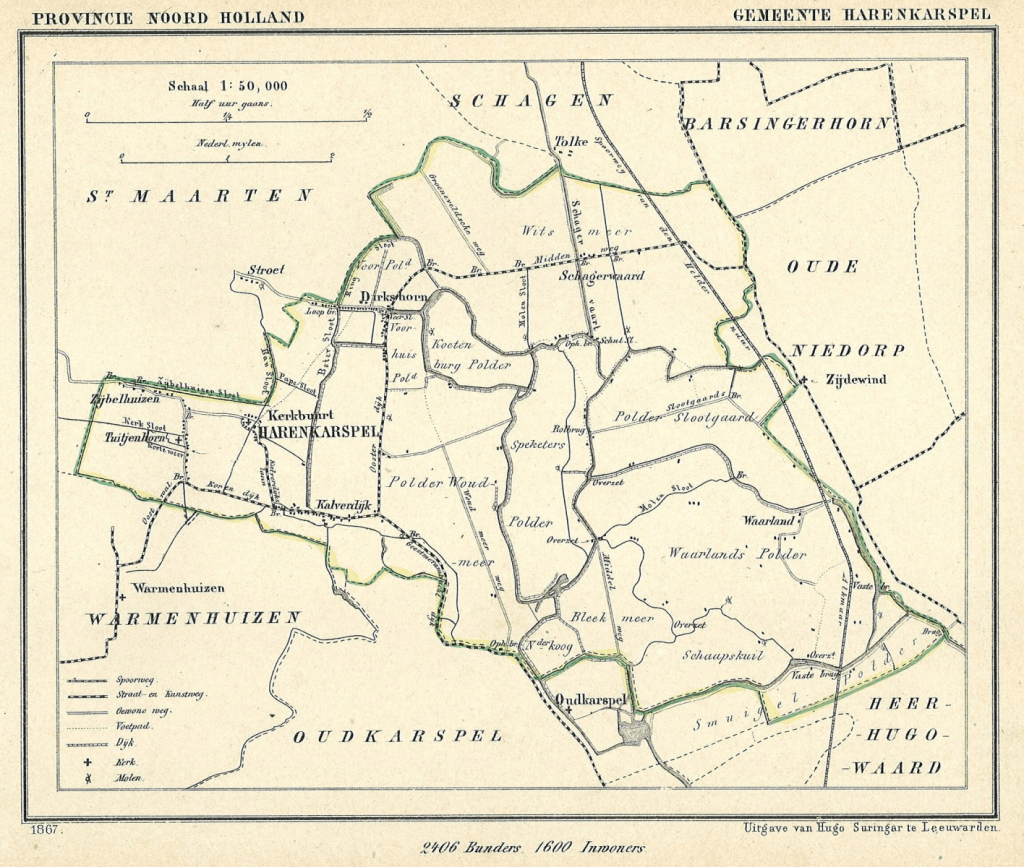
Harenkarspel in 1867. Waarland is in the south-east, near the border with Niedorp.
Waarland’s location within Harenkarspel and, now, Schagen.

When I enter a Dutch location into my database for any particular fact, I always use the smallest unit, even if it is not an independent administrative body. While gemeentes come and go, or expand and contract, the villages, towns, and cities largely stay the same. Thus Waarland is Waarland, regardless of what gemeente it is in. Fortunately, there is a website that helps track all the gemeentes that have existed “from ancient times” to present: “Gemeentegeschiedenis” (“Municipal History”). With it, you can find which gemeente a place might have been at any time in Netherlands history. No need to be all mixed up!
52W Mark III – Week 33: Favourite Discovery

While the prompt for this week’s 52 Ancestors Challenge is “Favourite Discovery”, I’m hard pressed to choose just one. Rather, what immediately comes to mind is my Favourite Exploration, when I visited the farmhouse where my father was born, Waarland, North Holland. At the time it was part of Gemeente Harenkarspel (Municipality of Harenkarspel), but now Waarland is part of Gemeente Schagen.

Waarland’s location in the Netherlands

The first time I visited the Netherlands was part of a post-university backpacking tour through Europe with one of my friends. In the Netherlands, we stayed with one of my grandmother’s sisters and her husband, Tante Anny and Ome Nic, who lived in Zuid-Scharwoude, Gemeente Langedijk (which is now part of Dijk en Waard). It’s only a few kilometers from Waarland. Near the end of our stay in Langedijk, Ome Nic and I went for a bicycle ride to Waarland so I could meet my grandfather’s (van der Fluit) side of the family.

Waarland

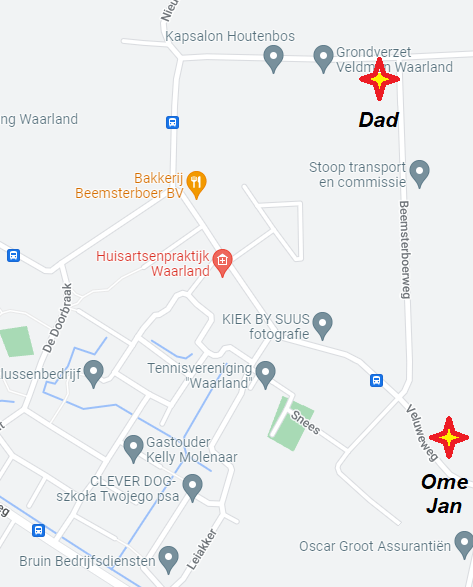
Once in Waarland, we went to the home of my grandfather’s oldest brother and his wife, Ome Jan and Tante Marie. Their house is less than two kilometers due south of the house where my father was born. Ome Jan’s house was also the place where he and and my grandfather were both born. Many of Jan and Marie’s children and grandchildren were there for our visit.

One of Jan and Marie’s children (my father’s cousin), Pieter, took me on a short bike ride up the road to the house where my dad was born. Not only that, he knew the current owner, so we were able to go inside. That was incredibly special. I was even in the room where my father was born!

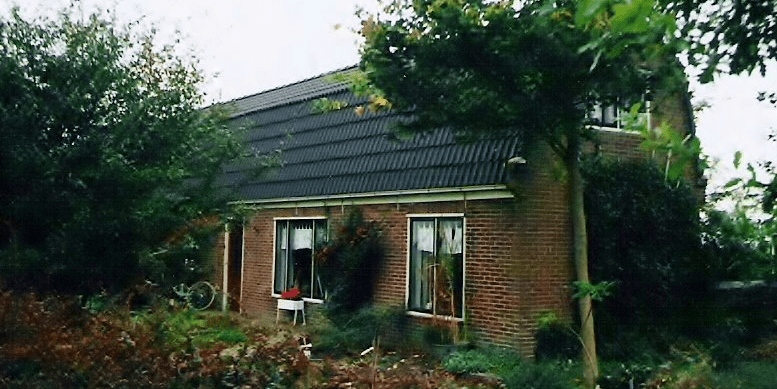
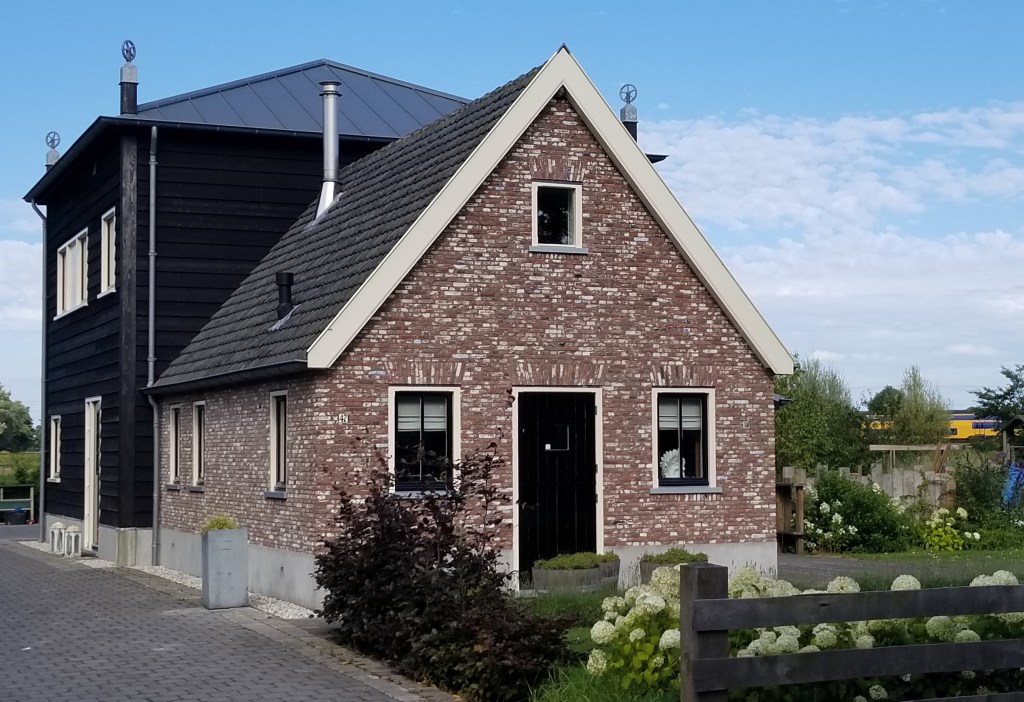
The house where my father was born, the first time I visited Waarland

Many many years later, in 2017, my parents planned to take a cruise that departed out of Amsterdam, so they went early so they could spend time with our family in Noord Holland. I had always wanted to visit the Netherlands with my father, so I made the trip over there.

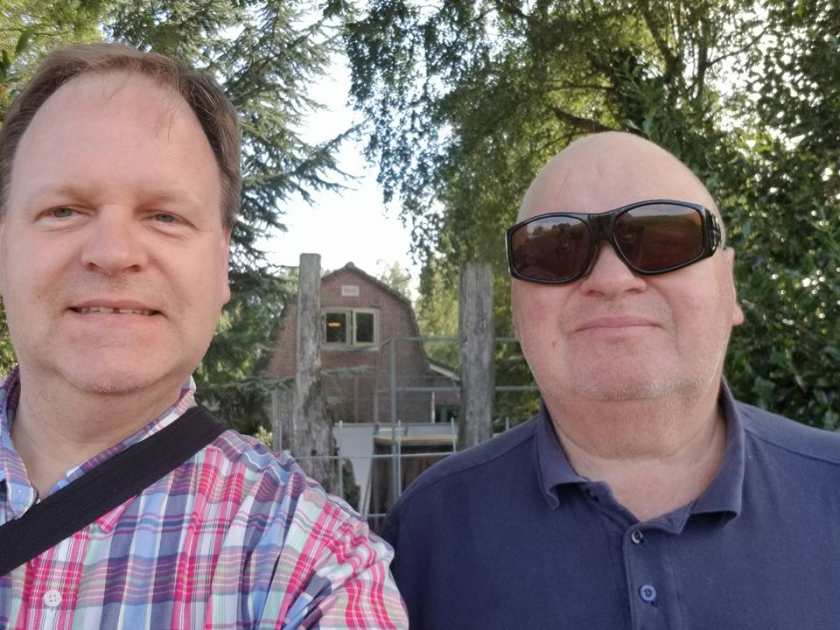
With my father outside the house here he was born. He’s more than happy to say, yes, he was born in a barn.

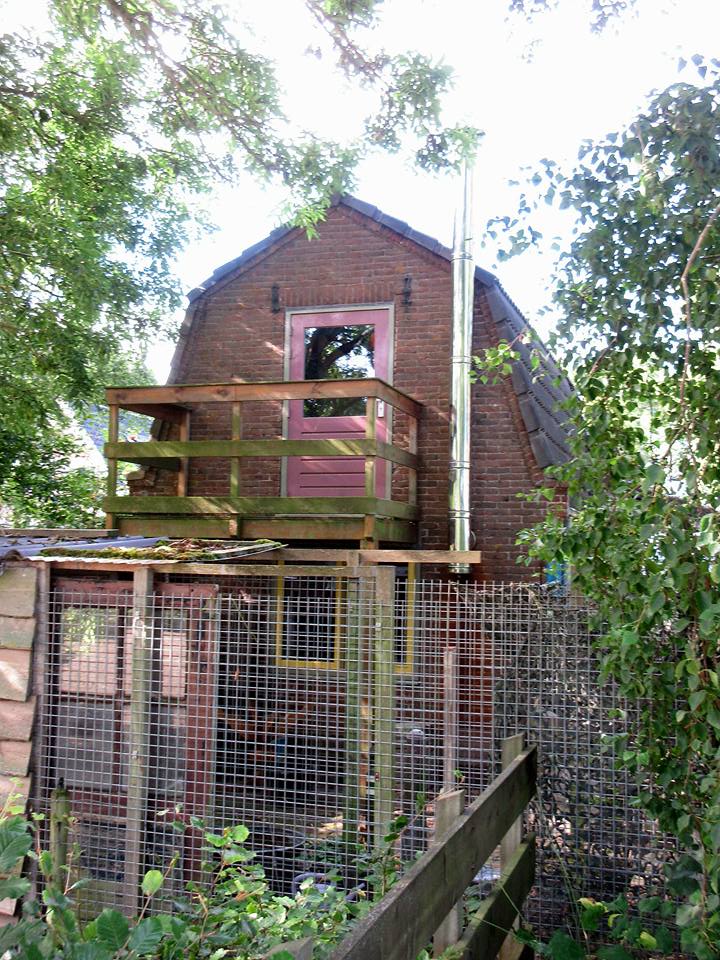
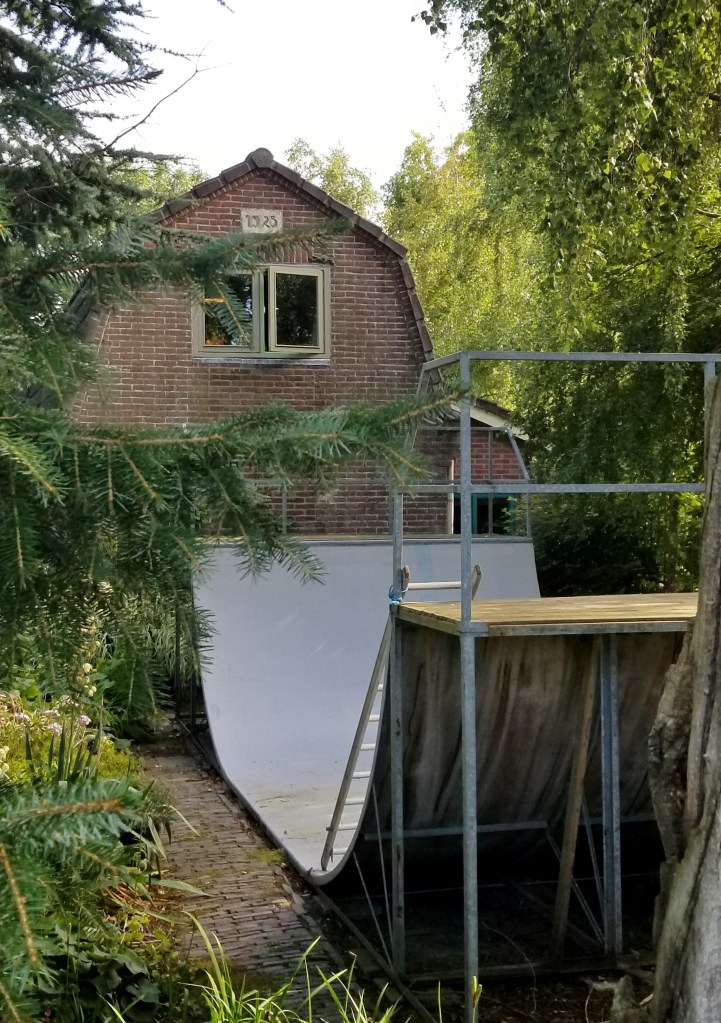
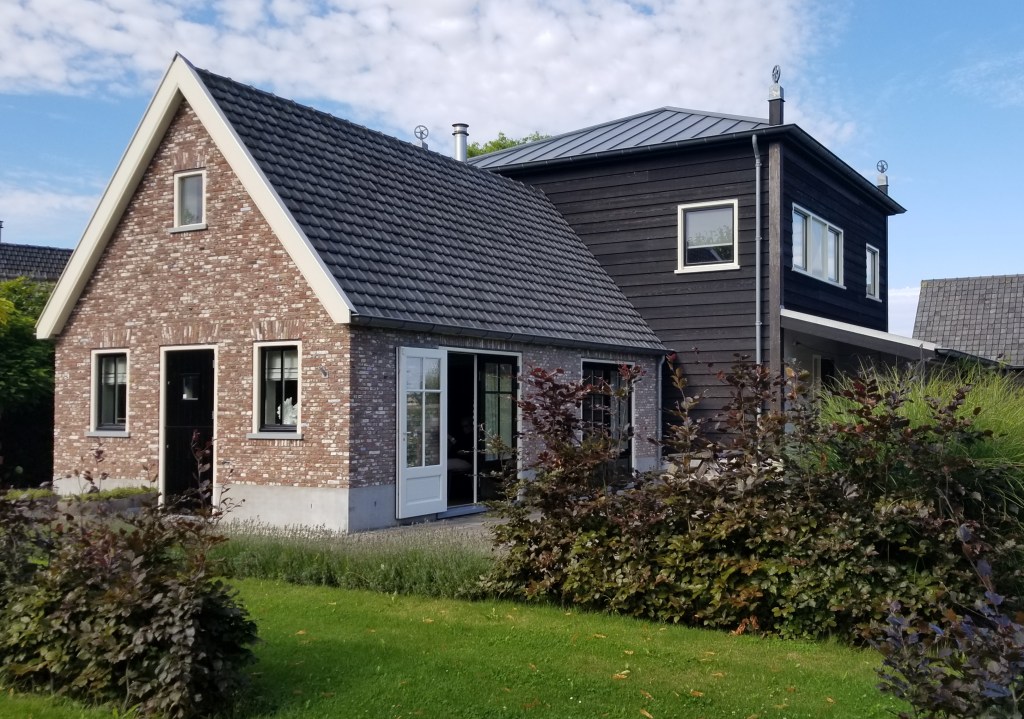
Of course, the trip would not have been complete without a visit to Waarland. After a short visit with one of my father’s cousins, we made our way to the house where my father was born. It looked as if the place had not been well maintained by its current owners. It looked quite run down since the last time I was there. I also had to tease my father by asking him whether he remembered the skateboard halfpipe that was in the back yard.

We then made our way to Ome Jan’s and Tante Marie’s house. Ome Jan had passed away in 2011 and Tante Marie died in 2013, so the house had a new owner. In fact, it was an entirely new house. The old one had been demolished, but the new one that replaced it looked almost identical. 

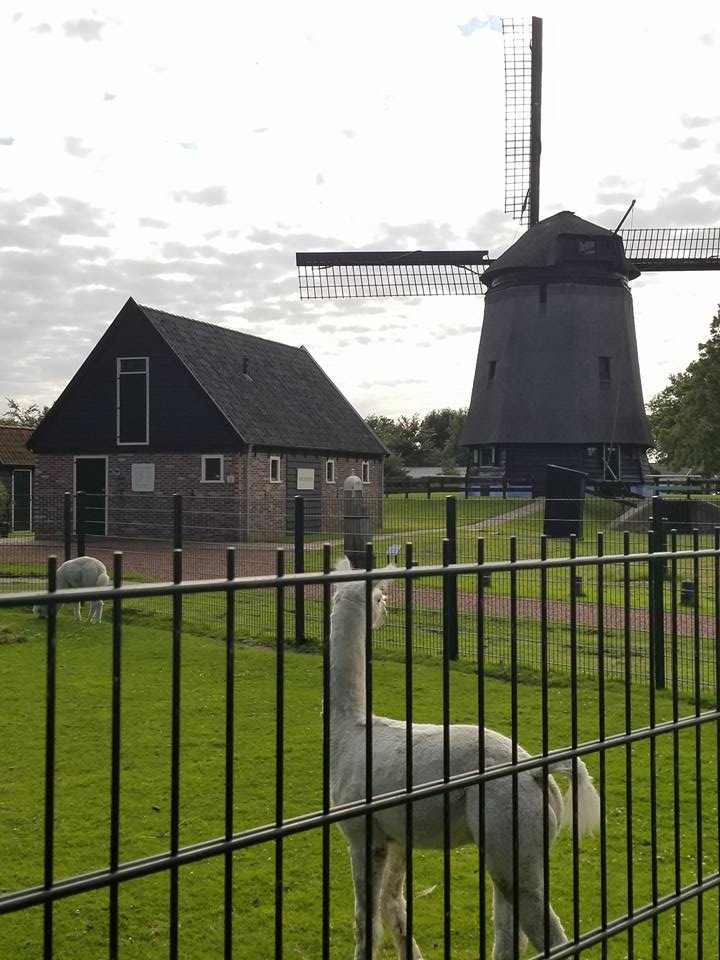
We also passed by the church where my father was baptized. Unfortunately, there wasn’t time to go inside. As well, we stopped by a 450-year-old windmill that has been a museum since 1920, where I suppose I did make a surprising discovery – llamas! They were grazing on the property immediately adjacent to the windmill.

52W Mark III – Week 32: Free Space

I had originally drafted this as a post separate from the 52 Ancestors Challenge, but then I noted “Free Space” as an upcoming post. So nice to be ahead of the prompt for a change!

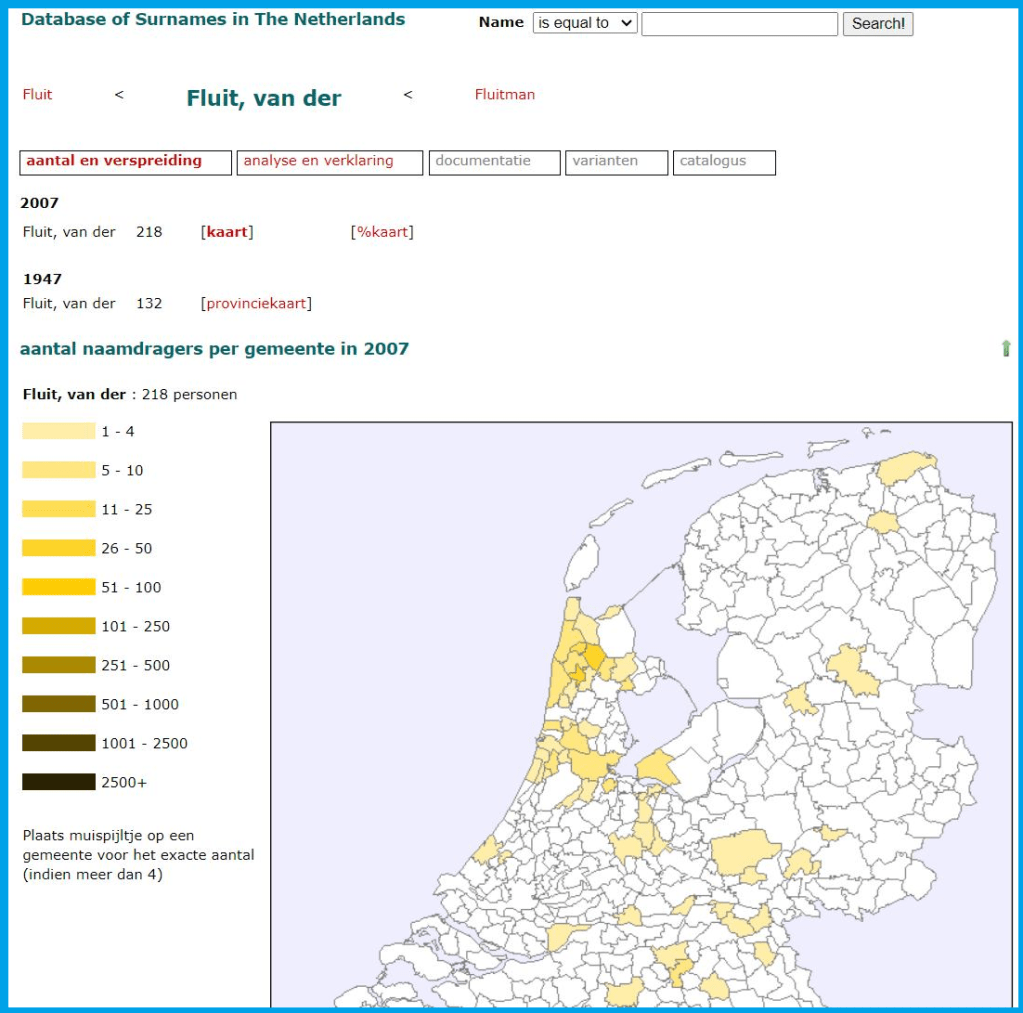
The Database of Surnames in The Netherlands contains about 300,000 surnames found in the Netherlands in 2007, with similar data for 1947. It is maintained by the CBG Centrum voor familiegeschiedenis (“CBG Centre for Family History”) in the Netherlands, formerly called the Centraal Bureau voor Genealogie (“Central Bureau for Genealogy”).

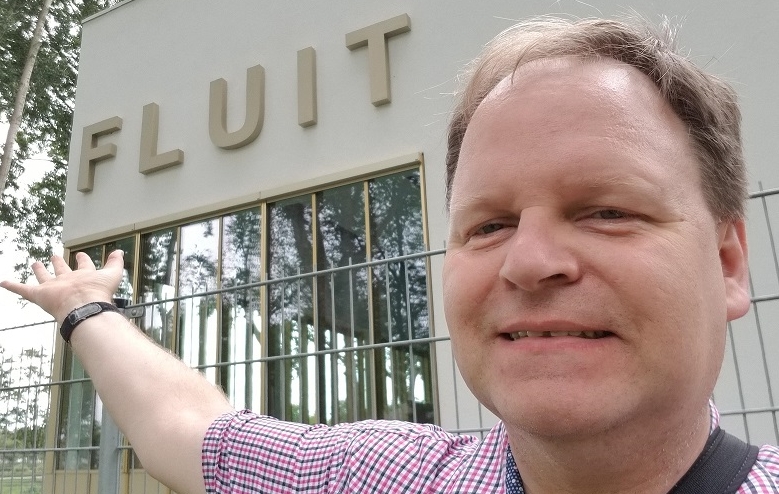
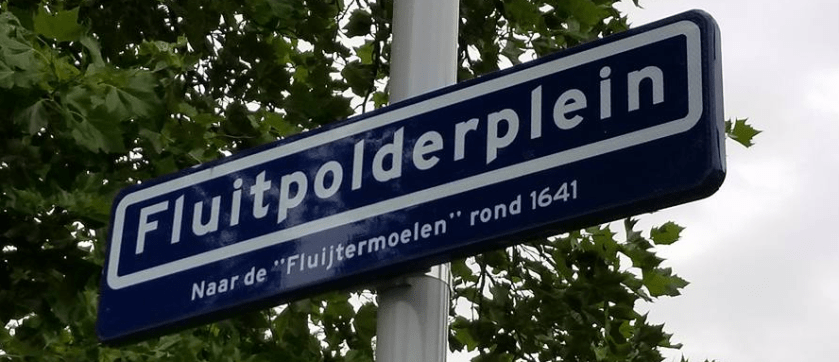
swimming pool with my surname on it, located on Fluitpolderplein in Leidschendam, Zuid Holland. Our surname either comes from the polder on which this pool is located, or the polder is named after my ancestor. There’s also an adjacent library, where I tried to do a bit of family history research.

You’d be hard pressed to find many Vanderfluits/van der Fluits in North America. Yes, there are a few of us, mostly in New Brunswick and Alberta, and some in British Columbia (like me!). There are also a few in the United States.

Fluitpolderplein in Leidschendam, Zuid Holland.

There aren’t many van der Fluits in the Netherlands, either, but 218 (in 2007) seems like a huge number when I think of how few are on this side of the Atlantic.

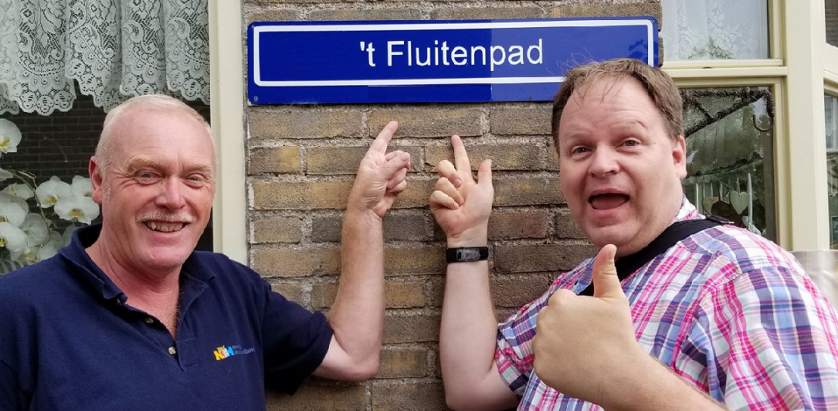
Visiting my cousin in the Netherlands, whose house is on “‘t Fluitnpad” – which is actually the name he gave his driveway. In English, it says “The Fluit Path”.

It’s no surprise to me to find the concentration in Noord Holland (the bit below Texel, the largest of the islands on the map). It’s where my father was born and pretty much where all the van der Fluits who I know in the Netherlands live. What’s surprising are the pockets of van der Fluits in Gelderland and Noord Brabant (the south-east). I have no idea who they are or how they got there. Even more surprising is the dearth of van der Fluits in Zuid Holland (around The Hague and Leiden), especially since that is the primary source of the surname. There are *zero* in many of the municipalities where my ancestors came from.

52W Mark III – Week 30: Boats

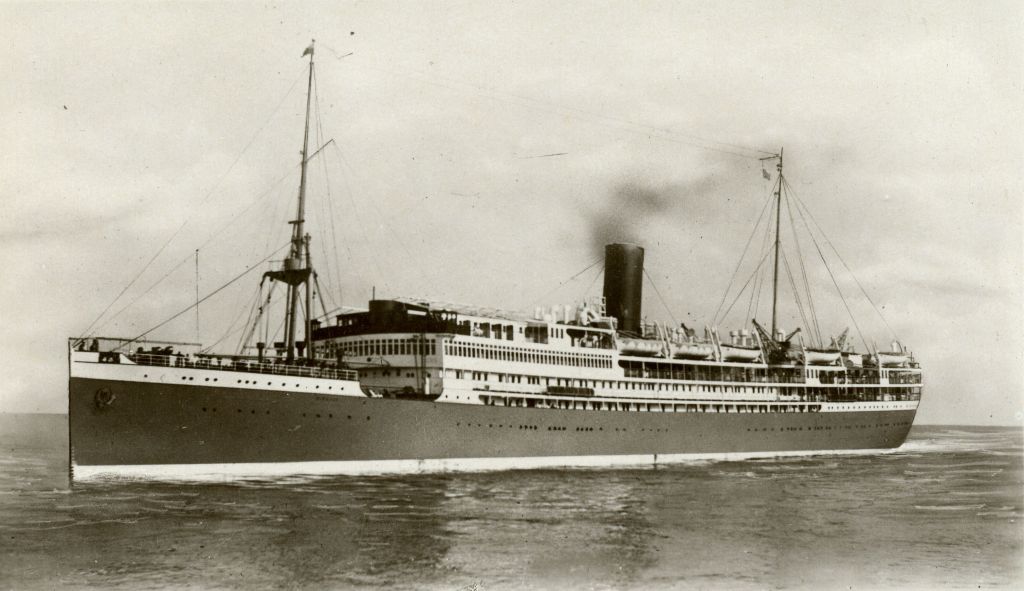
Like many immigrants, my father came to Canada on a boat; in his case, the M.S. Sibajak.

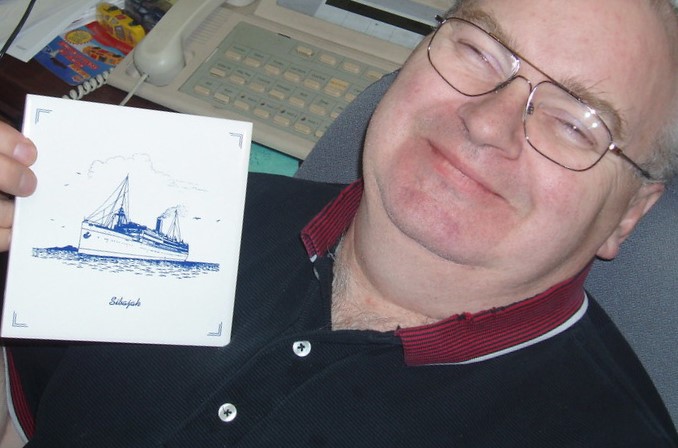
My father holding a Delft tile of the Sibajak, the ship on which he immigrated to Canada in 1954. This one is actually a replacement, as the original one I gave him had chipped. I was lucky to find this, as these tiles are no longer available.

The Sibajak was named after a volcano in Sumatra. it was built for Koninklijke Rotterdamsche Lloyd (Royal Rotterdam Lloyd) at the De Schelde shipyards in Vlissingen, Zeeland. Construction began in 1926 and completed in 1927. Royal Rotterdam Lloyd received the Sibajak in January 1928. At launch, it could carry 527 passengers and had a crew of just over 200. It departed on its maiden voyage on February 8, 1928, leaving Rotterdam for Batavia, Dutch East Indies (now Jakarta, Indonesia).

The M.S. Sibajak when it launched in 1927.

During World War II, the Sibajak ended up in Liverpool after the Dutch fell to the Nazis at home and to the Japanese in the East Indies. The Dutch government in exile seized the ship, which was re-registered in Curaçao. The British navy took control of the Sibajak, but its Dutch and Indonesian crew continued to operate the ship. After modifications were made in Singapore, the Sibajak served as a troop ship during the war. It was capable of carrying up to 2,300 troops. The British returned control of the ship back to the Dutch in 1946.

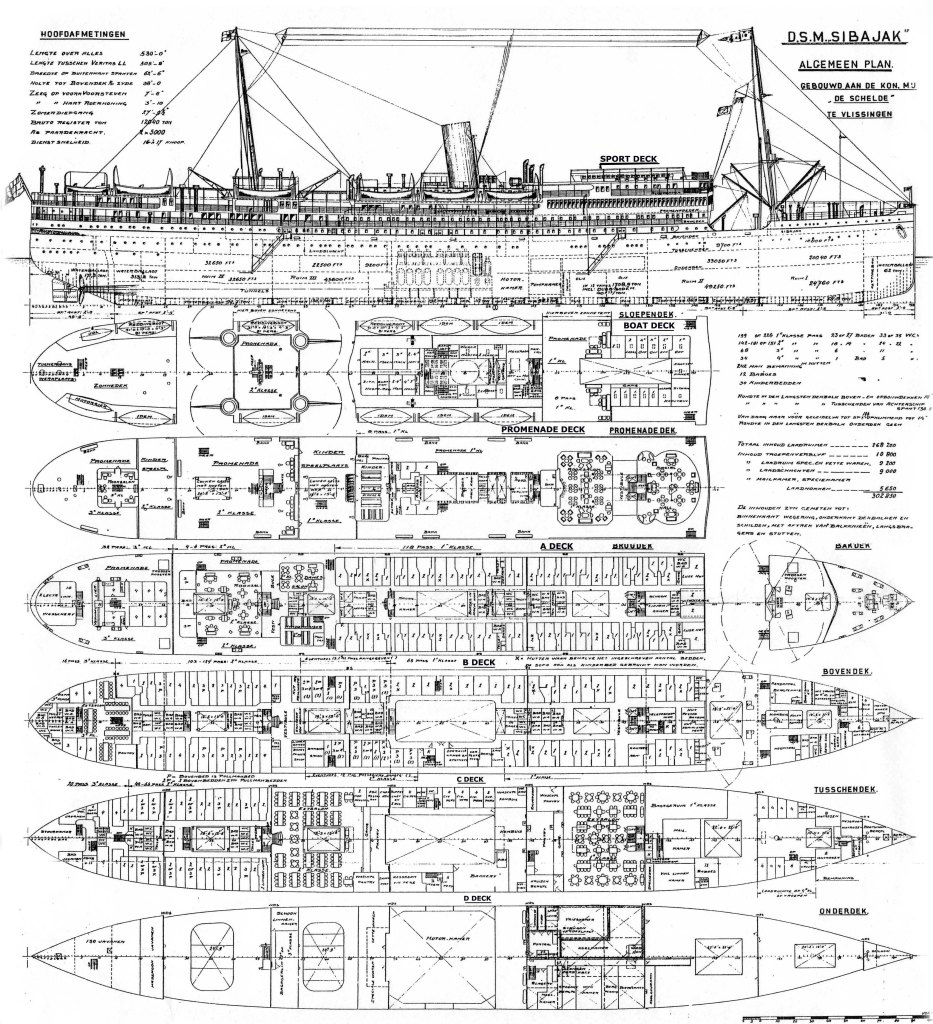
The original plans for the Sibajak.
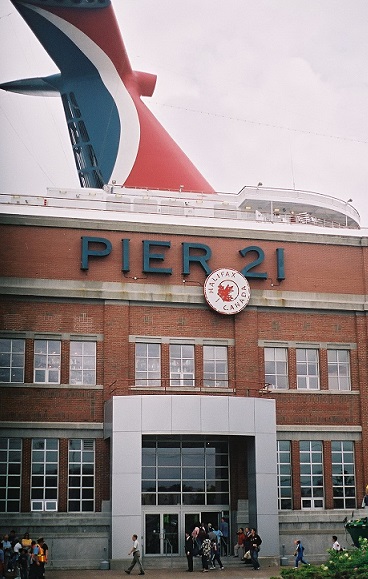
Pier 21 in Halifax, which is now a museum that I have visited twice.

The Sibajak was converted back into a passenger ship in 1950. It had the capacity to carry 956 passengers. Its first voyage after the retrofit was in April 1950, transporting Dutch emigrants departing from Rotterdam for Melbourne, Australia. It also served to repatriate Dutch citizens after Indonesia’s independence. In 1952, the Sibajak also carried passengers to New Zealand, Canada, and the United States.

In 1959, Royal Rotterdam Lloyd sold the Sibajak to a company in Hong Kong. The Sibajak’s last voyage as a passenger ship ended in July 1959, travelling from Rotterdam to Melbourne via Curaçao, the Panama Canal, Wellington, New Zealand and Sydney, Australia. In August 1959, the new owners transported the ship to Hong Kong, where it was stripped of all salvageable materials and scrapped. My understanding was that the remains were scuttled somewhere in the waters around Hong Kong. When I visited the city in 1996, I wondered how close I had come to it on the many different boats and ferries I rode on at the time.

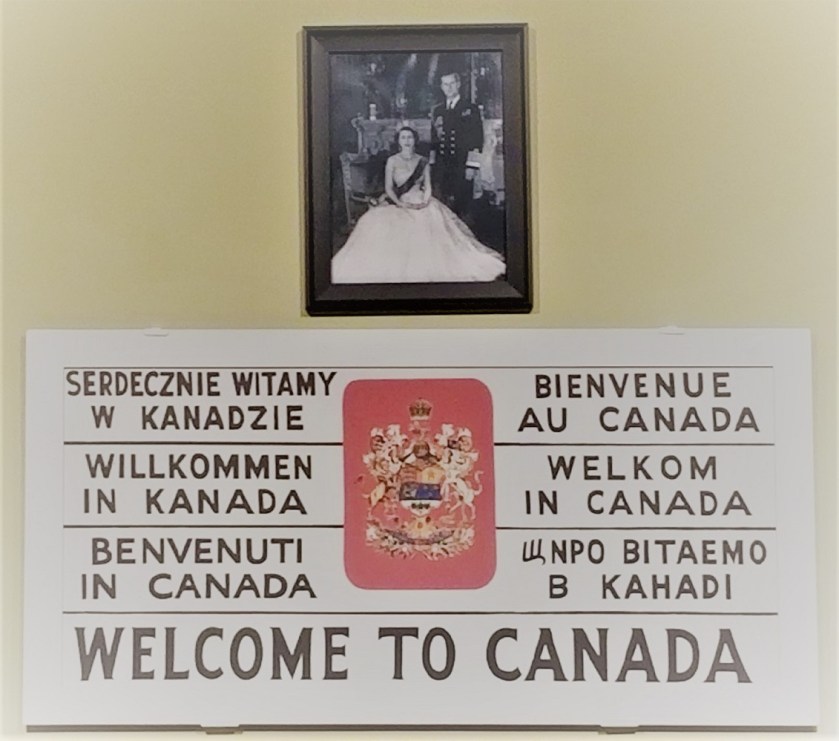
This hangs on the wall in front of the seating area in Pier 21 where immigrants waited to be interviewed by immigration officials.

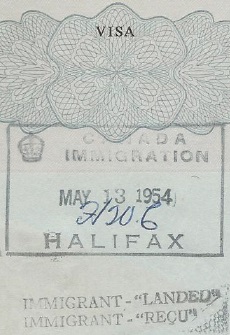
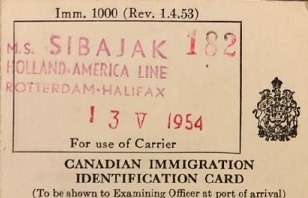
My father and his family departed Rotterdam on May 5, 1954 and arrived at Pier 21 in Halifax, Nova Scotia on May 13, 1954. Pier 21 is analogous to Ellis Island in the United States. My father’s aunt and uncle came over four months earlier, in January 1954 on the Groote Beer, while another aunt and uncle followed in late May 1954, on board the Castel Felice.

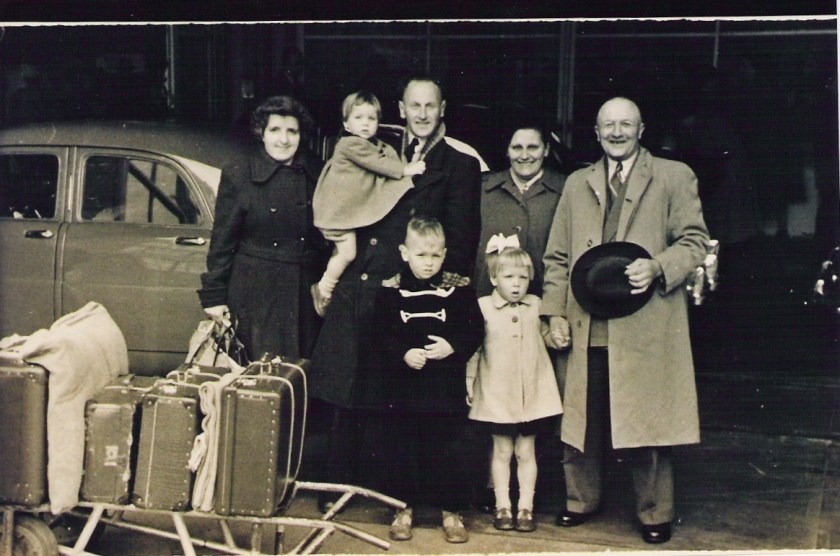
My father with my grandparents and his sisters at the Rotterdam pier on the day of their departure for Canada aboard the Sibajak. My father is standing in the centre, in front of my grandfather. The couple on the right are family friends who drove my family to the pier. At the time, my grandmother was two months pregnant with my father’s youngest brother!
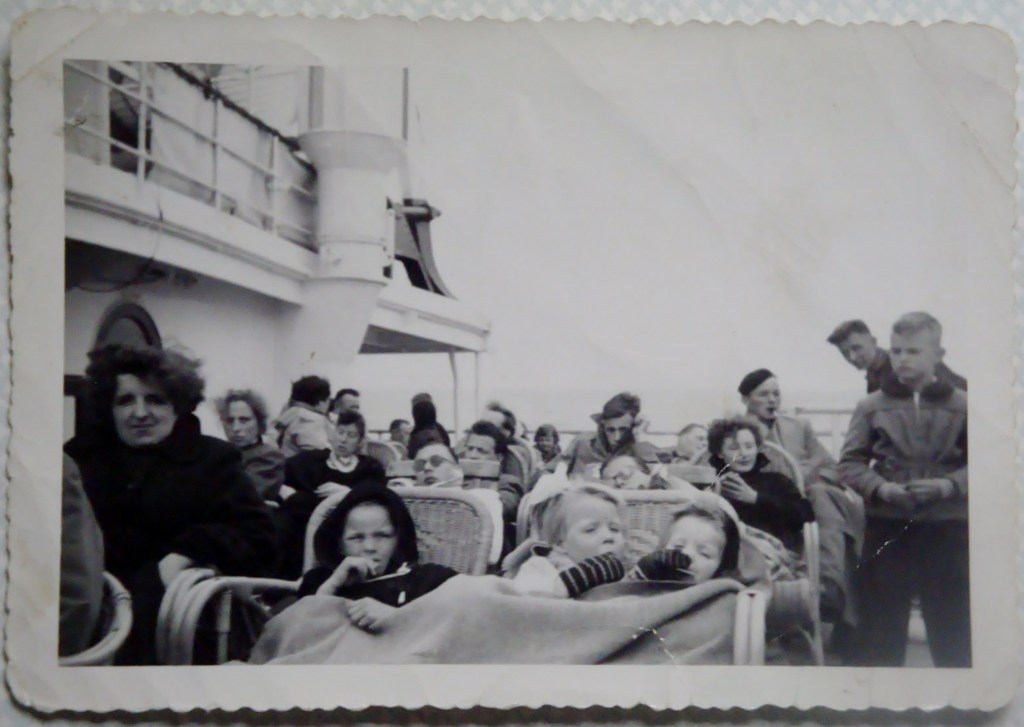
My grandmother, my father, and his two sisters seated on the deck of the Sibajak somewhere on the Atlantic Ocean between the Netherlands and Canada.

From Halifax the family took the train from Halifax to Alberta. On often-told story recounts my grandmother becoming separated from the family and lost during a stop in Montreal. Happily, she found her way back to the train before departure. he train went through Maine, U.S.A., and through Montreal. My grandfather originally planned on settling in Manitoba. However, his sister encouraged him to continue on to Alberta, where she and my great uncle had settled.

They made it!

In the late 1990s, my parents went on an Alaskan cruise on a Holland America ship. During the trip, my father, who loves to talk to people, fell into a conversation with one of the older hands on deck. My father mentioned having come to Canada on the Sibajak. After a few questions from the crew member, my dad learned that the man had been on the Sibajak during my father’s trip, in his first year or two of service.

This is a fascinating short documentary about a voyage the Sibajak made to Australia carrying Dutch emigrants. The video is in Dutch, but the images convey a lot of meaning. My father recognized many of the scenes in this video.