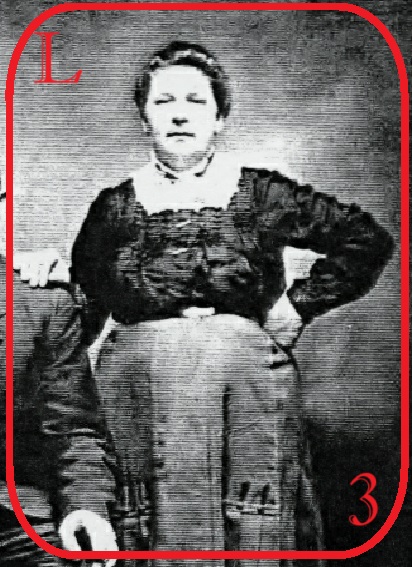
52W Mark IV – Week 42: Card L3 Barbara Schmidt

Barbara Schmidt (1865-1936)

My Great Great Grandmother, Barbara Schmidt, was born to Valentine Schmidt and Margaretha Boechler on October 25, 1865 in Karlsruhe, Beresan, Ukraine, Russian Empire. Karlsruhe was one of the colonies established by German settlers who responded to the manifestos issued by Catherine the Great and, later, her grandson Czar Alexander I. Since Karlsruhe was founded in 1809, it is most likely that its founders were responding to a manifesto issued by Alexander I in 1804.

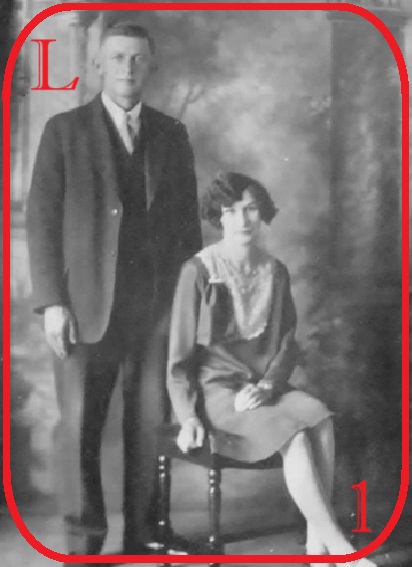
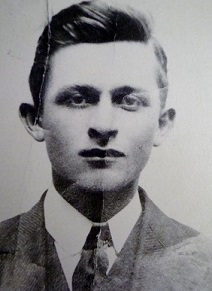
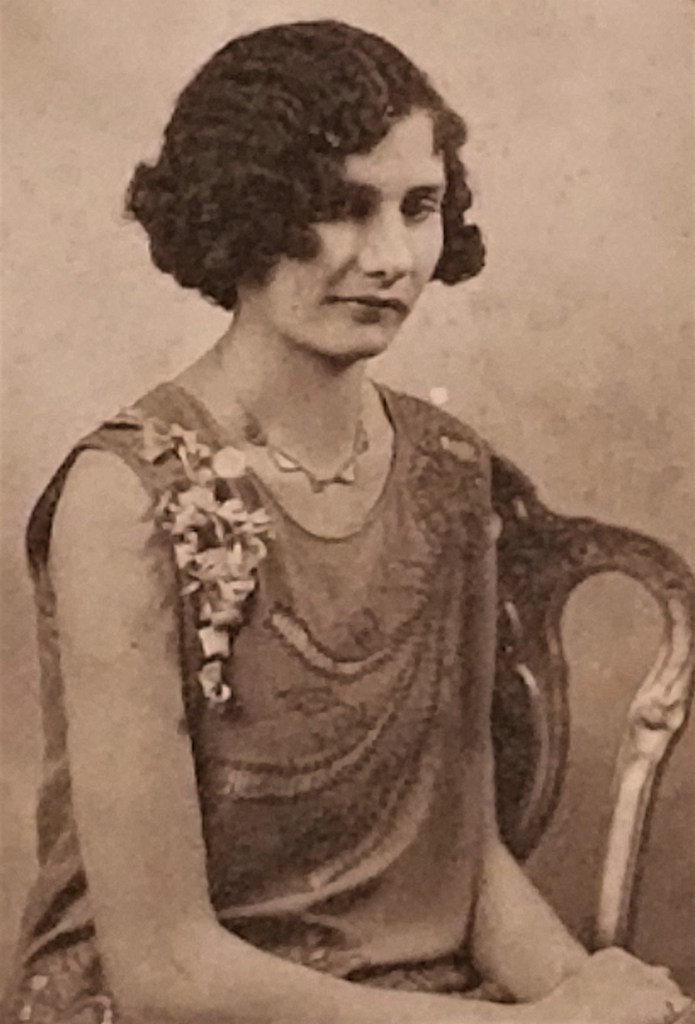
I know almost nothing about Barbara before she married Michael Lerner, said to have been in February 1883. There’s only one clue about her childhood, which is from a photo I first saw in a book in 1997. I’ve since seen it other places. I can’t even recall when or how I came across it. I think I was probably still using Windows 95 and Netscape. One of the later iterations I have of it came with additional information, which is in the bottom left of this graphic:
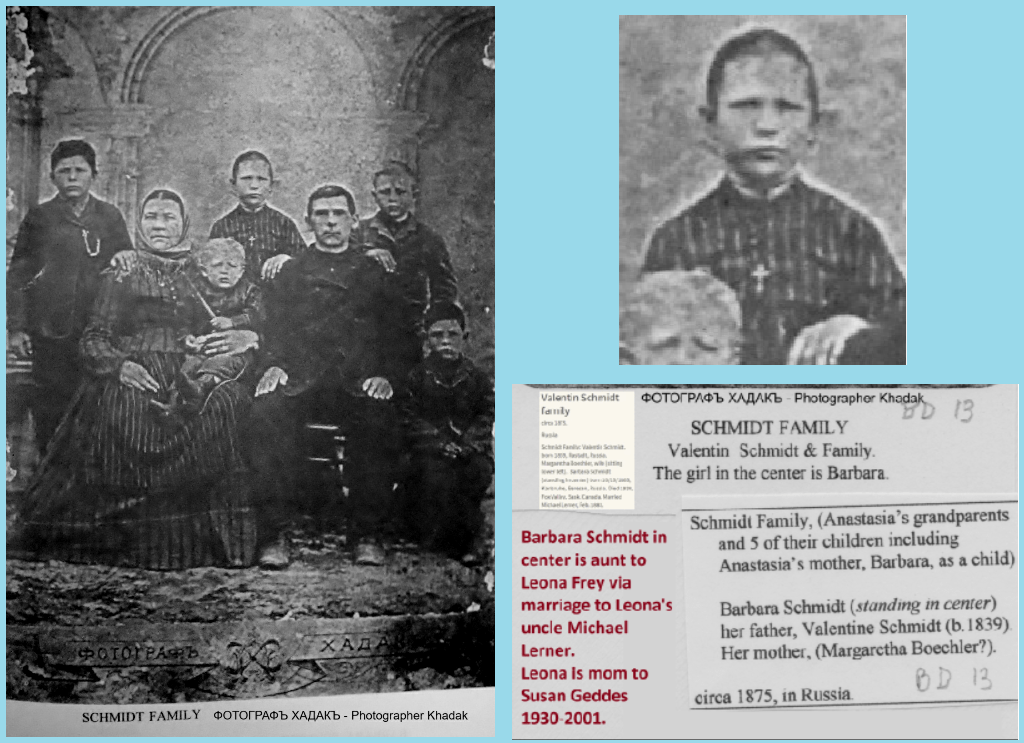
The one alteration I made to each image was to add “ФОТОГРАФЪ ХАДАКЪ Photographer Khadak” (or “Hadak”). It is what you can see in the bottom of the photo. I googled the phrase using the Cyrillic, without the translation/transliteration. The results included a photograph that was listed for sale on a Russian website that sells collectibles, which had the same caption at the bottom.
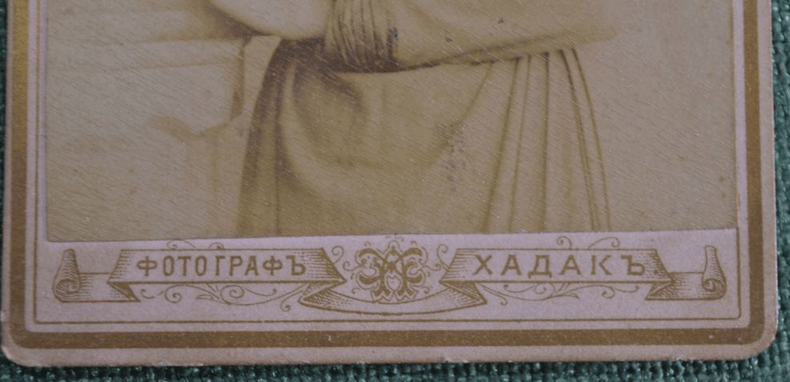
The photos of the item included this:
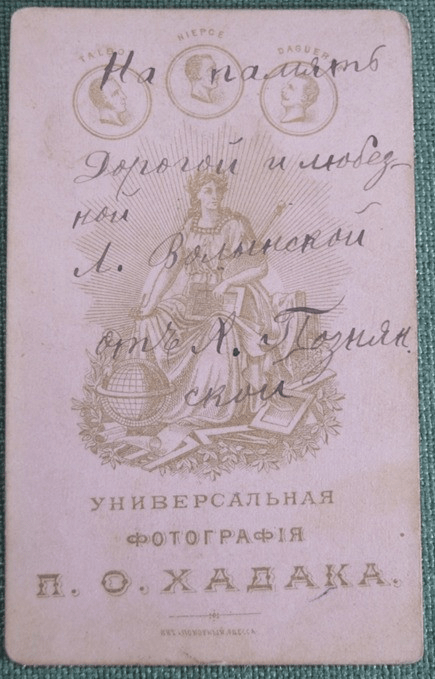
My Google results also included a Russian-language Wikipedia article, Хадак, Павел Иосифович (Khadak, Pavel Iosifovich). If the person in the article is the person who took the photograph, I have a real timeline problem.

The article says that Pavel Khadak was born in 1863 – two years before Barbara. So if the photo was taken when Barbara was 10, in 1875, Pavel would have been 12 years old. The Wiki article also says that Pavel took up photography sometime after 1881, and only later attended photography school. This means that Pavel likely couldn’t have taken the photo until the early to mid-1880s.

I also considered whether Barbara could have been born much later than 1865. If so, if she was 10 in a photo taken around 1885, she’d have been born in 1875. The problem is she’d have been eight years old when she married and had her first child.

Update: So often I find what I’m looking for after I click “publish”. Sigh. Better late than never! I’ve since come across transcriptions/translations of church records, which include baptismal registrations for Karlsruhe. Amongst these is an entry showing that Barbara was born on October 17, 1864, not October 25 as I found in many other secondary sources. Barbara was baptized on October 18, 1864. Interestingly, her godparents were Franz Böhm and…Barbara Schmidt! My guess is that Godmother Barbara might be an aunt. Of course, this supports the original estimate that the family photo was taken in 1875which weighs against it having been taken by Pavel Khadak of the Wikipedia article.

I have no idea how Barbara and Michael came to be together, as Michael was from Rastadt, Beresan, which was about 50 kilometers from Karlsruhe. After the marriage, the couple lived in Rastadt, where Michael was a farmer. The couple had six children in Rastadt.

In 1893, Michael and Barbara moved the family family from the Beresan and relocated to the United States. Their youngest child was only five months old at the time, with three three others being aged 5 and under. Poor Barbara – I’m pretty sure the childcare would have all fallen upon her.

The Lerners landed at Ellis Island on May 12, 1893 and quickly settled in Clay County, Texas, where Michael started a farm outside of Henrietta, the county seat. Meanwhile, Barbara gave birth to eight more children. The first of their child born in the United States was my Great Grandfather, Heronimus (“Jerome” or “Jerry”) Lerner. According to the 1910 US Census, Barbara only spoke German. However, according to Canadian census records, Barbara was able to speak English by 1921.

The family remained in Texas for 25 years, until 1918. By that time, several of Barbara’s older children, including Jerry, had relocated to Saskatchewan, near Fox Valley. Michael moved Barbara and most of their other children to Rastadt, Saskatchewan, not far from Fox Valley. Only one of their daughters remained in Texas. Once in Rastadt, Michael again took up farming. Barbara became a nationalized Canadian (although technically a British subject – Canadian citizenship separate from British nationality did not occur until 1947).

In 2000 or 2001, I was doing a series of job interviews. I included genealogy as one of my interests in my resume. One of my interviews was at a firm where I didn’t have much of an expectation of succeeding (there were good reasons), but I went to it anyway. Can’t score if you don’t take the shot!

One of the interviewers took great interest in my hobby, and I ended up talking about a trip to a small town in Saskatchewan that I had done a few years ago, meaning my trip to Fox Valley and Rastadt in 1997. The panelist asked me to name the towns anyway, and he said that he had heard of them. It instantly clicked as to why – his last name was Schmidt! After comparing notes, we figured out that we were third or fourth cousins of some degree.

As expected, I didn’t get the job – although I was successful elsewhere. But I found a cousin!

Barbara died on October 21, 1936, four days shy of her 71st birthday. Her death occurred in Liebenthal, Saskatchewan, a village about 25 kilometers north of Fox Valley and Rastadt. Other than the proximity, I haven’t found Barbara’s connection to Liebenthal. Her husband, who survived her, was still farming in Rastadt. Barbara might have had family in Liebenthal, but her children had largely moved to larger places like Regina, Saskatchewan and Medicine Hat, Alberta.

The larger mystery for some time was where Barbara was buried. When I first started investigating this in the late 1990s, the sources available to me had her interred at either the Fox Valley Cemetery or the Rastadt Cemetery. After further investigation, and a trip to Fox Valley and Rastadt in 1997, I determined that she must be buried at the Fox Valley Cemetery.

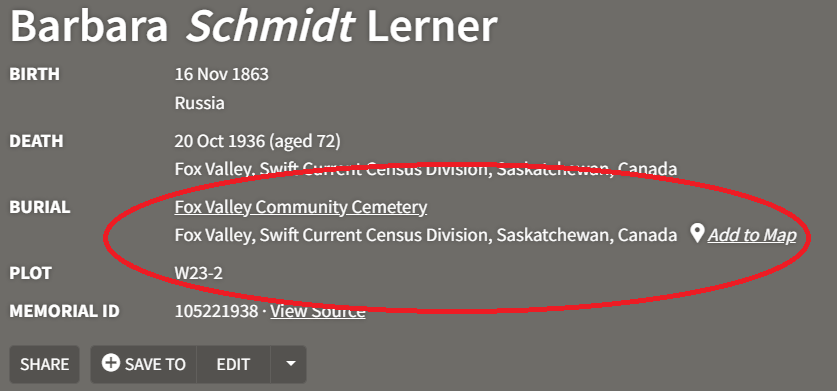
While there is no marker for her at Fox Valley, the cemetery records show that she is buried in plot as W23-2, which is right beside where her husband, Michael, is buried (plot W23-3). As well, other close Lerner family members are buried in Fox Valley Cemetery, including their son Jerome Lerner (plot W13-1).

On the contrary, there are no other Lerners buried in the Rastadt cemetery. As well, there appears to be inconsistency in the plot in which she is supposedly interred in Rastadt. An older listing from 1997 indicated plot 61; in 2004, it was said to be plot 70. This inconsistency casts doubt on the possibility Barbara is interred at Rastadt. In any event, the Fox Valley Cemetery records far outweigh the secondary sources for Rastadt Cemetery.
52W Mark IV – Week 41: Card L2 Michael Lerner

Michael Lerner (1862-1947)

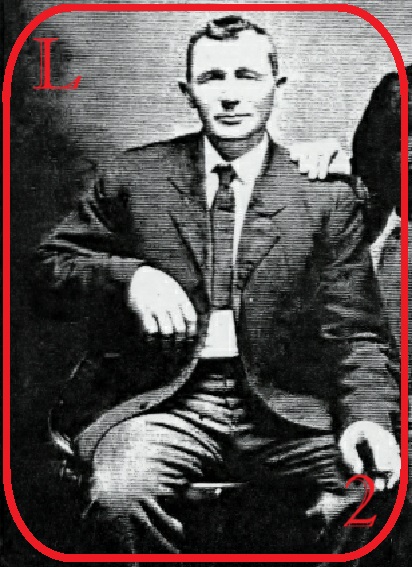
My Michael (“Mike”) Lerner, my Great Great Grandfather, his wife Barbara Schmidt, and their family were the first of my Germans from Russia ancestors to leave the German colonies in the Russian Empire for North America. He spent about a third of his life in Russia, a third in Texas, and a third in Canada, and was a citizen of all three.

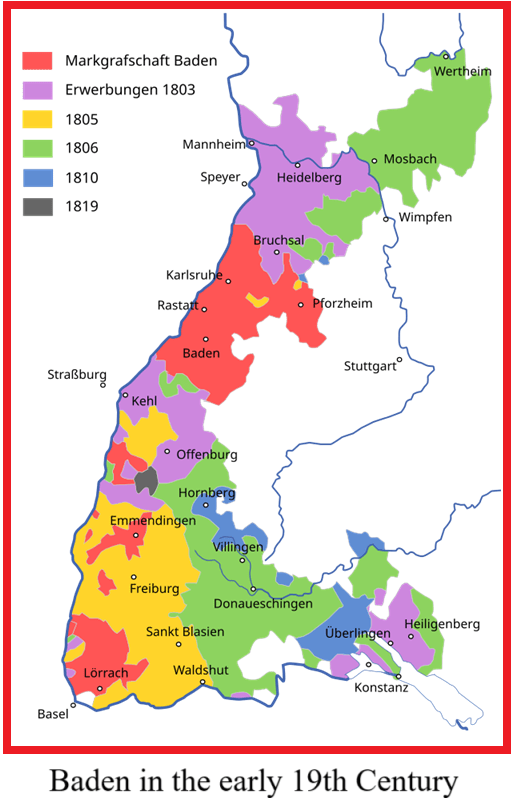
Mike was born on May 2, 1862 in Rastadt, a German colony in the Beresan district of what is now Ukraine, which at the time was part of the Russian Empire. Mike’s paternal line originated in the Karlsruhe area of Baden. In fact, the capital of Baden at the time the Lerners left for Russia was Rastadt.

I don’t know much about Mike’s life in Russia, particularly his childhood. He married Barbara Schmidt in February 1883. Nine months later, they had their first of 14 children. Until the family emigrated in 1893, Mike was a farmer in Rastadt. He may have actually owned his land, as a map of Rastadt in Joseph Height’s book Paradise on the Steppe shows several pieces of land which belonged to individuals with the surname Lerner.

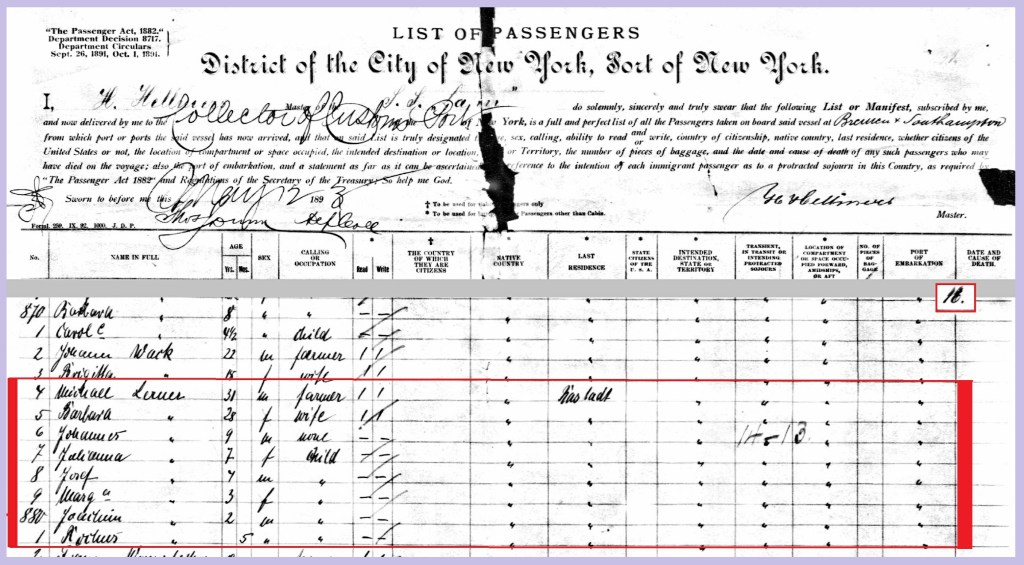
The family departed Bremen aboard the S.S. Lahn in the spring of 1893. By that time, they had six children. Four of those children were aged five and under (the listed age for Joseph is likely incorrect), with the youngest, Rochus, being about five months old at the time. The ship landed at Ellis Island on May 12, 1893. From there, the family made their way to Clay County, Texas, arriving there by June 1893.

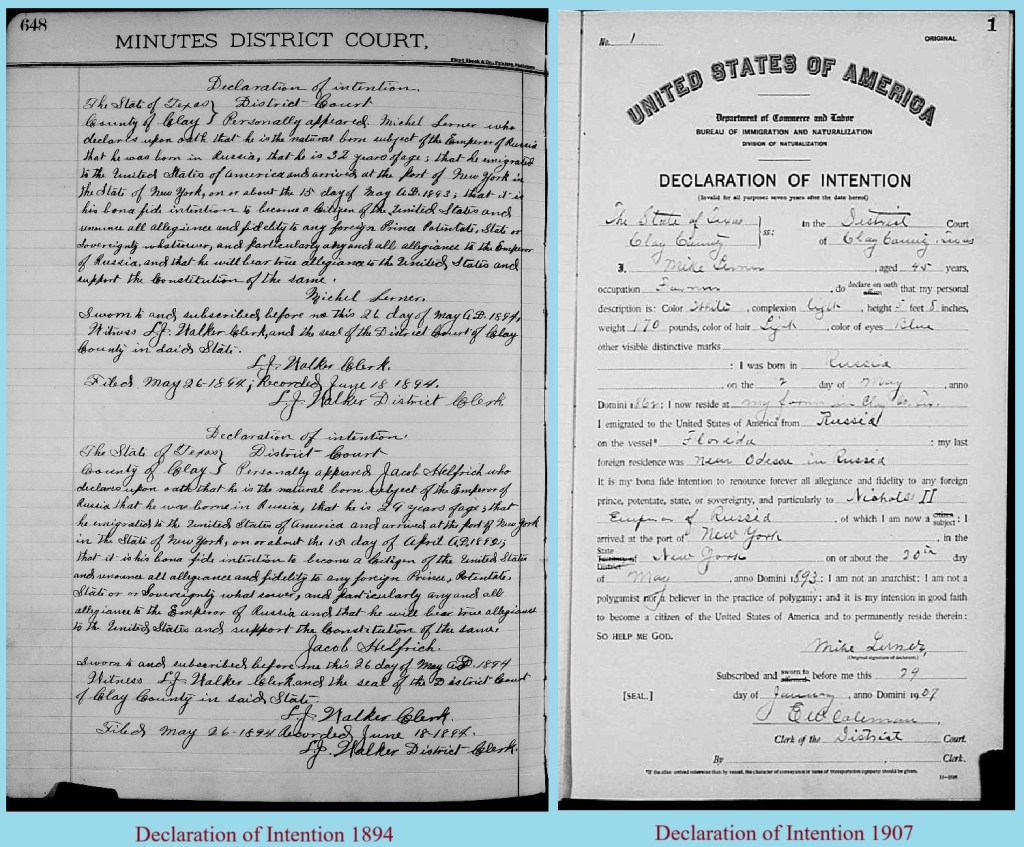
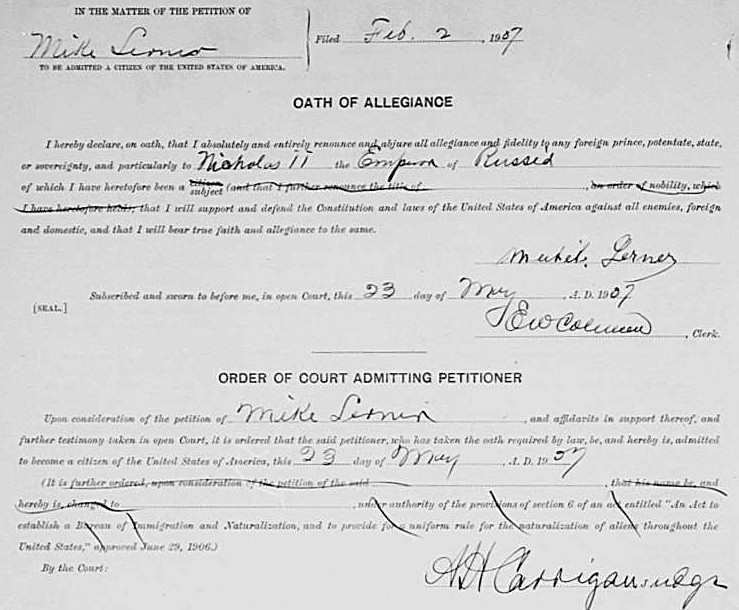
A year later, on June 18, 1894, at the Clay County District Court, Mike made a Declaration of Intention to become an American citizen. However, it seems that he was in no hurry to follow through. Mike did not take any further steps towards citizenship until January 29, 1907, when he filed a new Declaration of Intention. Soon after, on May 23, 1907, Mike took an Oath of Allegiance and became an American citizen.

Also shortly after arriving in Clay county, and no later than 1894, Mike had established himself as a farmer. By 1910, Michael owned his farm, free of any mortgage, on Jacksonboro Road. In that time, he and Barbara had eight more children.

In 1912, Mike’s son Joseph had migrated to Maple Creek, Saskatchewan. Sons Rochus and Jerome (my Great Grandfather) followed suit, in 1913 and 1917, respectively. In 1918, Mike made the move to Canada and began farming outside Fox Valley, Saskatchewan. He continued farming there well into his 60s. When Mike became a Canadian citizen on December 5, 1929 when he was 67, he was still farming.

In fact, Mike was still farming into his 80s. After his son Jerome (my Great Grandfather) separated from his wife Emelia (my Great Grandmother), he moved in with Mike. Sometime around 1944, Jerome’s daughter, Adeline Lerner, came to live with Mike and her grandfather. Mike was a widower by then, as Barbara passed away in 1936. According to Adeline, her grandfather was still running the farm at the time. Adeline told me that her grandfather generally spoke German, but could speak English as well.

Mike died in Fox Valley on January 16, 1947. He is buried at the Fox Valley Cemetery, next to Barbara.

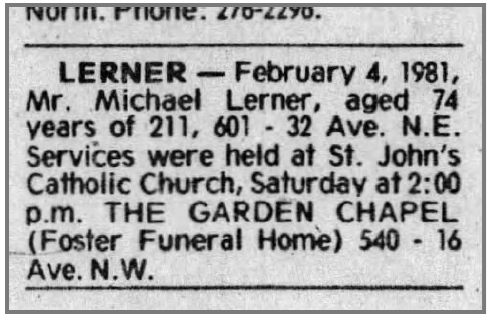
Calgary Herald, February 9, 1981, page 45
  • Baden in the early 19th Century” image attribution: Creative Commons Attribution 2.5 Generic license via Wikimedia Commons. Author: ziegelbrenner.

52W Mark IV – Week 40: Card L1 Heronimus Michael “Jerome” Lerner and Emelia Anton

Heronimus Michael “Jerome” Lerner (1895-1954)
Emelia Anton (1903-1997)

Welcome to the last suit of the deck of ancestors I’ve been writing about for the 2025 edition of the 52 Ancestors Challenge – with the unique spin I’ve given the challenge this year. This final suit relates to my mother’s maternal grandparents, Heronimus Michael “Jerome” Lerner (1895-1954) and Emelia Anton (1903-1997). Both were Germans from Russia. I never met my great grandfather – neither did my mother – but I knew my great grandmother very well, who passed away shortly before I turned 30.

Very long story short, just after Catherine the Great, Empress of Russia, came to power in 1762, she issued a manifesto inviting foreign settlement in lands controlled by Russia. A significant number of those who responded to the offer were German peoples (as there was no “Germany” at the time). Even a summary of the reasons behind Catherine’s invitation and why so many Germans responded would significantly detract from the topic at hand.

There are some similarities between what Catherine promised in her manifesto (and subsequent manifestos by future Czars) and what later was promised to homesteaders by the United States and Canada. Catherine’s incentives included free transportation to Russia, free land, freedom from taxes for 10 to 30 years, interest-free loans to buy equipment, freedom of religion, exemption from military service, retaining their language, and local self-government. However, circumstances changed, so in the late 19th and early 20th centuries the descendants of those original colonists left to homestead in the United States and Canada.

Both Jerome and Emelia’s ancestors originally hailed from what is now western Germany, particularly the Rhineland-Palatinate and Baden-Württemberg. Those ancestors all settled in colonies located in what is now the Ukraine (“Odessa” or “Black Sea” Germans), particularly what was known as the Beresan District, north-east of Odessa. Most of the colonies took the names of the German cities and towns from which the settlers came. Many of my German-Russian ancestors were located in Rastadt and Karlsruhe.

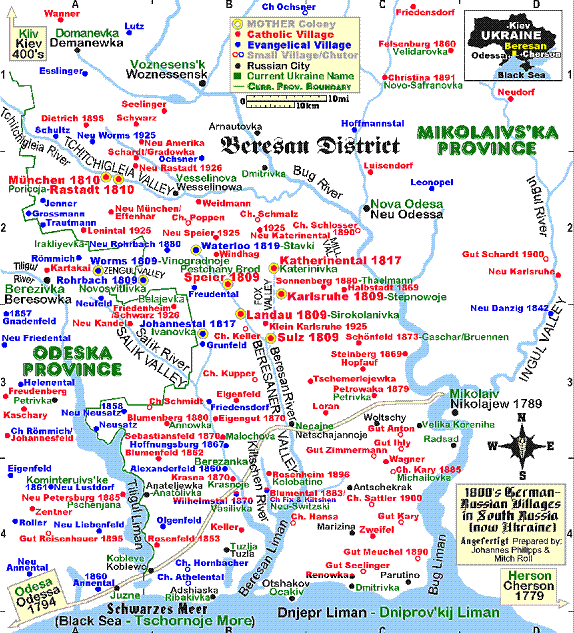
The Beresan in the 1800s (source: http://www.rollroots.com/beresanmap.htm). Essentially all colonies were based upon the religion of the settlers. Rastadt is in the upper right corner; Karlsruhe is close to the centre. Both were Roman Catholic colonies.

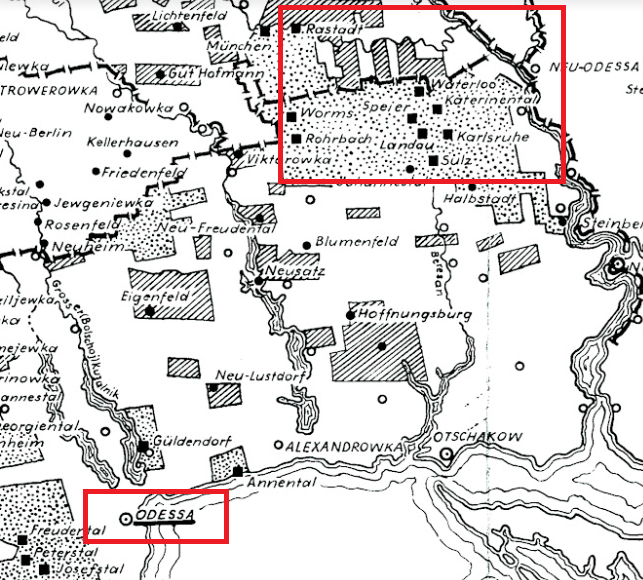
The Beresan District in relation to Odessa, in what is now Ukraine.

Neither Jerome nor Emelia were born in the Beresan, where each of their parents were born. Jerome was born in Henrietta, Texas on March 12, 1895, less than two years after his parents emigrated from the Beresan. Emelia was born in Selo Suchoi, Veronesch, Russia on January 1, 1903. I assume that date is under the Julian calendar. Emelia’s parents had left the Beresan sometime around 1899 and remained in Russia until 1912, when they left for Canada.

Emelia’s family first settled near Maple Creek, Saskatchewan. By 1920, they were living in Rastadt. Just as the German place names followed the colonists to Russia, they followed them to the new world as well. In the meantime, Jerome’s older brother had moved to the area, starting a gradual migration of the Lerner’s to and from Saskatchewan. Jerome came to Canada in 1917 and settled near Fox Valley, not far from Rastadt, taking up farming like he had in Texas. Jerome never obtained Canadian citizenship; I don’t know if Emelia ever did.

Jerome and Emelia married in Rastadt on August 3, 1920. Jerome continued to farm land south of Rastadt throughout the marriage. They had six children together over their 17 year marriage.

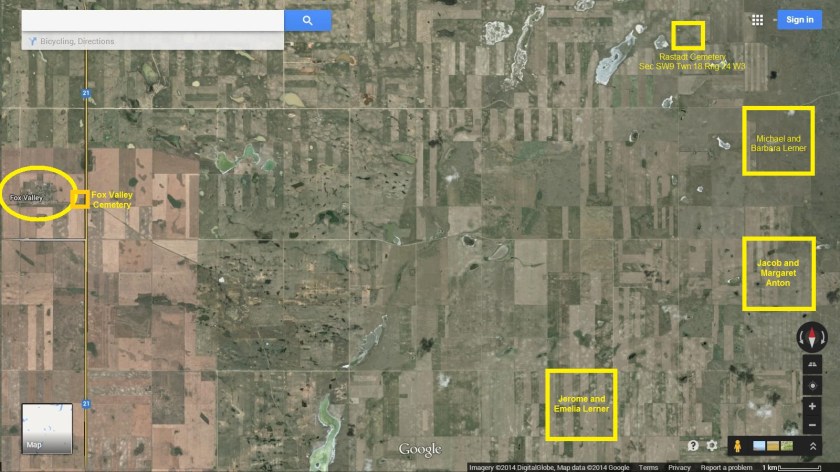
This map shows where Jerome and Emelia lived while they were together. Fox Valley is in the circle on the left. Michael and Barbara Lerner (née Schmidt) were Jerome’s parents; Jacob and Margaret Anton (née Heck) were Emelia’s parents.

Unfortunately, Jerome developed a mental health condition*, which contributed to the breakdown of his marriage with Emelia. Their daughter, my Aunt Adeline (“Addie”), told me that she believed her father had schizophrenia, although I doubt there was ever any formal diagnosis.

My great grandparents separated sometime between 1937, when their youngest son Herb was born. My guess is that when the 1931 census is released in 2033, it will show them as having been separated. Jerome and Emilia most likely did not file for divorce. They do not come up on the Library and Archives Canada divorce database. Being Catholic, they might have simply separated without divorcing. However, my Aunt Addie told me it had nothing to do with being Catholic, it was because it was so difficult to get a divorce at the time they separated. (It was not until 1968 that the divorce laws in Canada were liberalized to make it easier to obtain a divorce.)

My mother once told me that a rift developed between the Lerners and my great grandmother over her separation from Jerome. It seems there was some sort of expectation that my great grandmother should have remained with Jerome despite his troubles.

After they separated, Jerome continued farming in the Rastadt area. Aunt Addie told me that after her parents separated, her father lived with his father, Michael Lerner. Michael had become a widower not long before Jerome and Emelia separated. Aunt Addie told me that her father was still able to care for himself, such as dressing himself and cooking, but he needed some guidance.

When her parents separated, Aunt Addie went with her mother, but when she was about 13 years old (around 1944), she moved in with her father and grandfather for about a year. Aunt Addie described her father as quiet and intelligent, and was able to reason through things quite well. He did not talk much, but would “explain stuff” to Addie from time to time. Addie remembers that he read the newspaper a lot. Aunt Addie added that he could become upset very quickly, which she attributed to his mental condition. Addie said that her Grandfather took care not to upset Jerome or “push his buttons.”

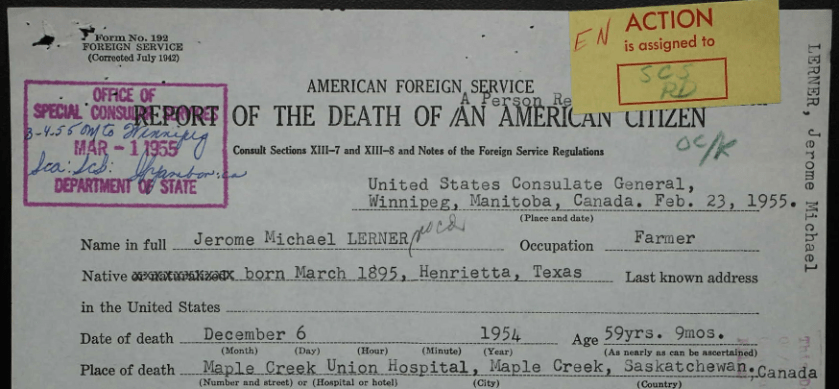
When I asked Aunt Addie whether her father was still working at the time, she told me that he didn’t really work and that work would upset him. He would help with the harvest, but he would “moan and groan all night.” Aunt Addie believed he wasn’t used to that kind of regular work and it really wore out his muscles. To whatever degree Jerome was still able to work, I note that the registration of his death stated that he was a farmer at the time.

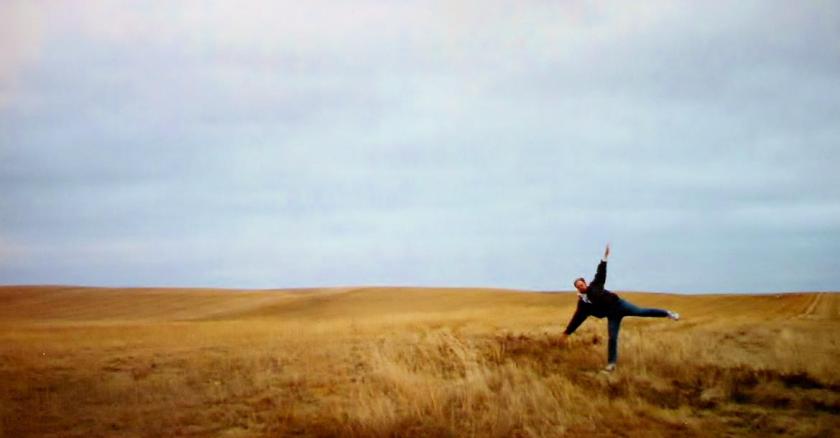
This is me on the land my Great Grandfather Jerome farmed. This was taken in April 1997, only a few months after my Great Grandmother Emelia passed away. The house they lived in – where my grandma Helen Lerner was born – stood around here. At the time, the house still existed, but had been moved elsewhere.

Aunt Addie said that her father spoke both English and German. Her grandfather mostly spoke German, but could understand English. So both languages were used at home. Aunt Addie said that her Addie said that this meant she grew up speaking both languages, although she had lost her ability to speak German later in life. mother mostly spoke to her in German, because it was better than her English. She added that her mother also spoke some Russian, which my mother had told me as well. As my mother described it, when her grandmother was still living in Russia, she’d speak German with her family and Russian with people working the farm.

When I told Aunt Addie that I was 13 before I learned her mother could speak German (which caught me quite by surprise!), she commented on how her mother spoke with an accent that wasn’t quite German and not quite Russian. She concluded it was its own thing. I concurred, because I could never tell what kind of accent my great grandmother had before I learned she was multilingual. In fact, I don’t recall thinking she had an accent; I think I thought she sounded the way she did because of her age.

According to Aunt Adeline, it sounds like her mother remained at the home she had shared with Jerome after their separation. Addie said that her mother leased out the farm land. How long my great grandmother remained there, I do not know. However, Emelia was still there when Aunt Addie moved in with her father in 1944. Sometime afterwards, Emelia moved to Alberta, likely first to Medicine Hat, and then on to Lethbridge.

Jerome passed away in hospital in Maple Creek on December 6, 1854, due to kidney disease. He was buried at the Fox Valley Community Cemetery. Meanwhile, by the mid-1950s Emelia was working as a chambermaid at the Alexander Hotel in Lethbridge. By 1958 Emelia had largely retired. She was collecting a pension and was living off an inheritance she had received from her father. She bought a house on 19th Street in Lethbridge.

Sometime in 1958 or 1959, Emelia married Walter Henry Wright. He died on December 4, 1978. While I saw him every time we visited my great grandmother, I don’t really know much about him. Most of what I learned about him is from his obituary, from when he died in December 1978. Other than the fact Walter served in World War II, I have no idea about his life before marrying my great grandmother or what he did for a living.

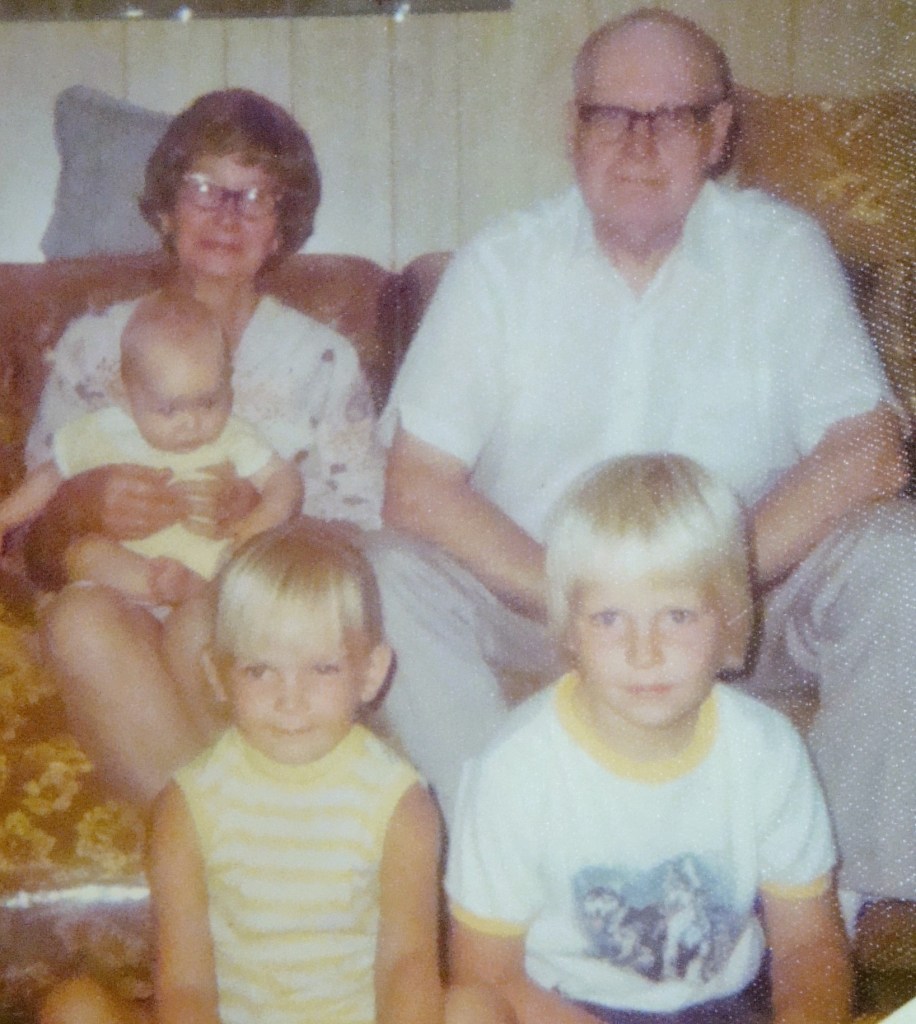
Me and two of my siblings with Emelia and Walter.

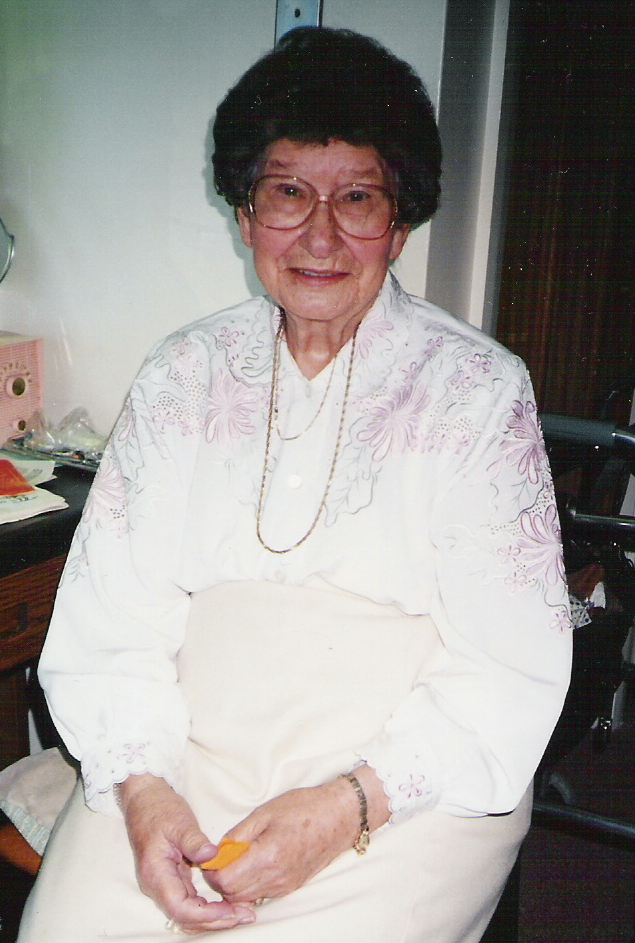
Emelia survived Jerome by fifty years and Walter by twenty years. She even outlived my grandmother, Helen Lerner, by more than ten years. Emelia continued to live on her own at home for many years after Walter’s death, but ultimately moved into a nursing home. I honestly cannot remember when she moved. She was there at least by her late 80s – I know she was there before she turned 90. I messaged my mother to ask if she could recall when, but couldn’t. I thought one of my sisters had a reason to remember, but she couldn’t recall it either.

In the last years of her life, Emelia’s activities included bridge and bingo. She was proud of her mental acuity and ability to play the game, but was always unhappy that her peers did not. My grandfather, Leo Burgess, often took Emelia to bingo. I remember my grandfather “complaining” that he was in his mid-70s and still had mother-in-law problems.

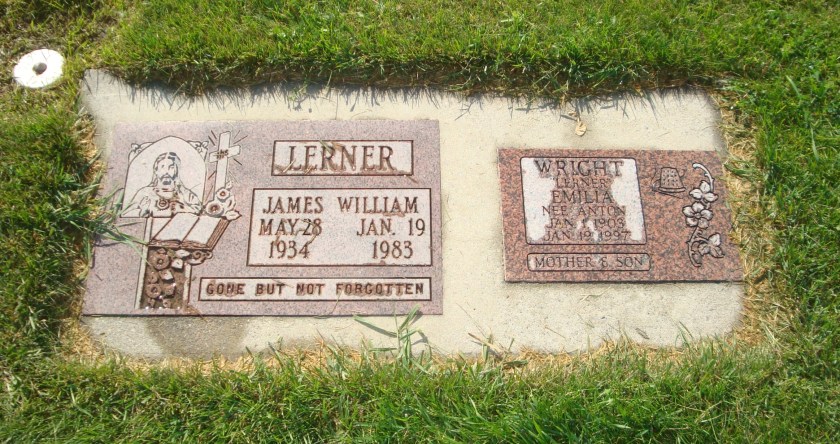
Emelia died on January 19, 1997 in Lethbridge. The memorial mass was held at St. Basil’s Catholic Church in Lethbridge and my mother gave the eulogy. Emelia was cremated and buried at Mountain View Cemetery, alongside her son Jim, who died in 1983.

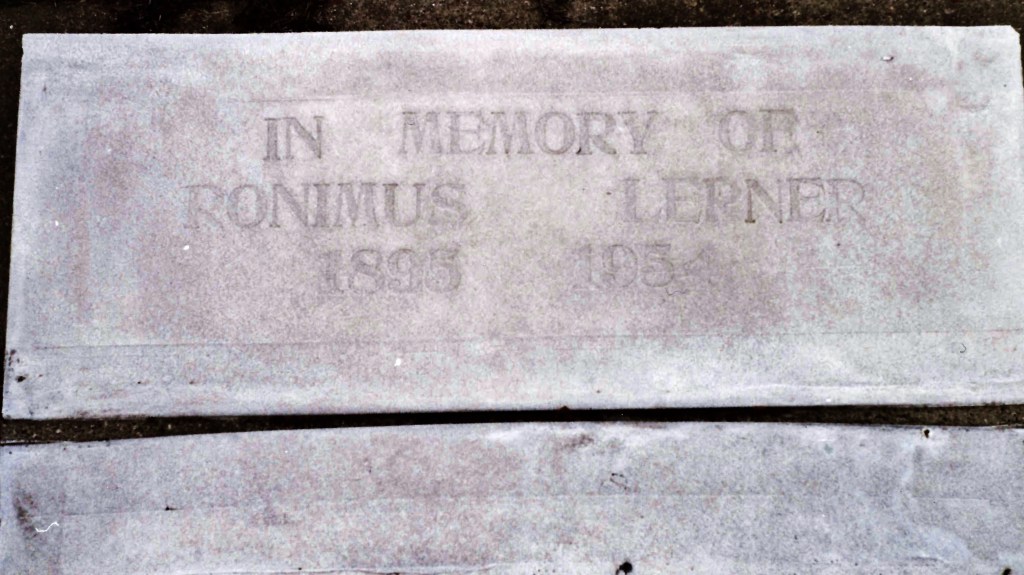
Jerome’s grave at the Fox Valley Community Cemetery
Emelia’s grave at the Mountain View Cemetery in Lethbridge, alongside her son Jim.

* There are resources available if you need help with your mental health. In British Columbia, where I live, this includes:

→  Calling 2-1-1 will connect you with community and social services.

→  9-8-8 is the Suicide & Crisis Lifeline

https://www2.gov.bc.ca/gov/content/health/managing-your-health/mental-health-substance-use

https://www.canada.ca/en/public-health/services/mental-health-services/mental-health-get-help.html

52W Mark III – Week 29: Automobiles

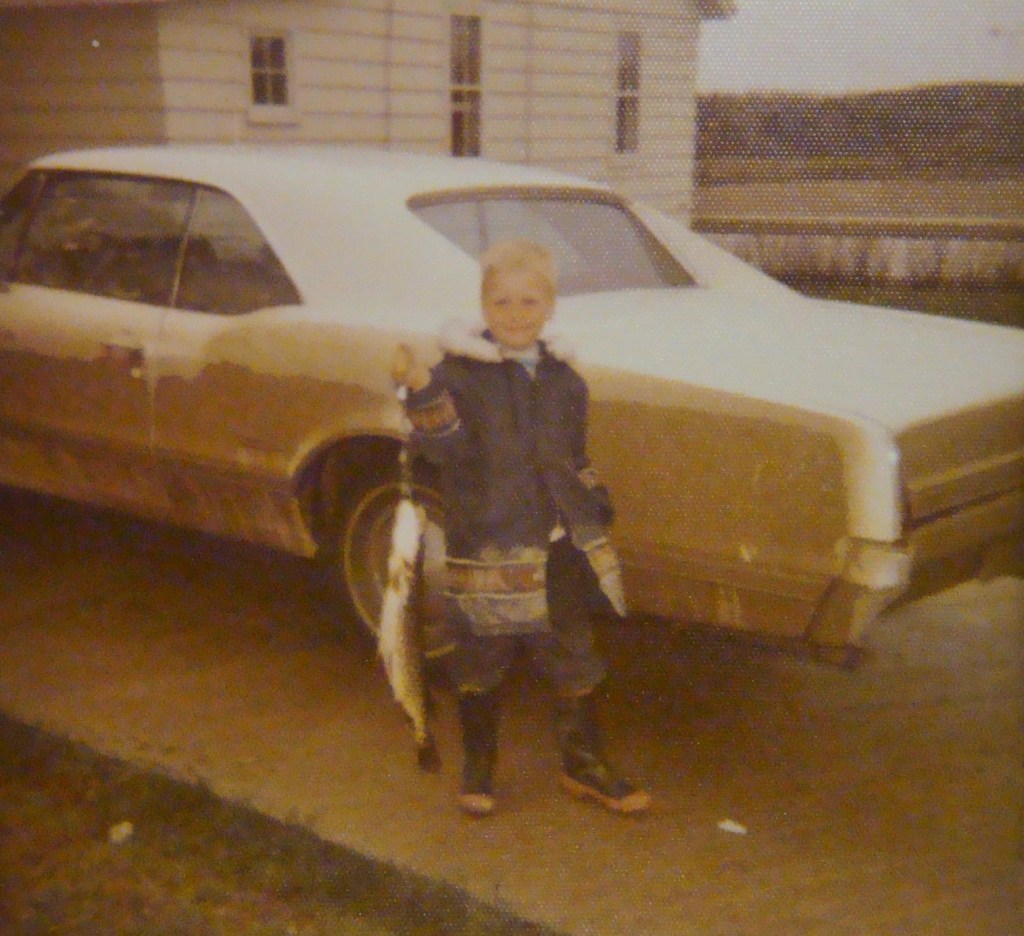
I don’t know if my father acquired it before or after I was born, but for us the first family car was a 1966 Oldsmobile Cutlass. Or, as my father called it, The Hutless Cutlass.

Me in front of the Hutless Cutlass a month before my fifth birthday, in Creighton, Saskatchewan. My father often took me fishing. When we lived in Creighton, we usually went fishing at the lakes and rivers right over the border in Manitoba. Here I’m holding a jackfish (northern pike), but what I really preferred to catch were pickerel (walleye).

My father bought it when we were living in Lethbridge, Alberta. The Hutless Cutlass travelled all over western Canada, both as we moved around the country and for many family road trips. With my youngest sister, it meant that there were six people packed into that car (dad sold it before my youngest brother was born). Invariably, whether we were in Creighton, Saskatchewan (on the border with Manitoba, next to Flin Flon) or Duncan, British Columbia, the road trip was to Lethbridge to visit family. Since my dad loves exploring, that car has probably driven over nearly every primary, secondary, and tertiary highway from the Pacific to Manitoba.

The Hutless Cutlass was old school – no power steering, no power brakes, no air conditioning. I remember it had a choke. From time to time, while checking under the hood, he’d have me open or close the choke, or rev the engine.

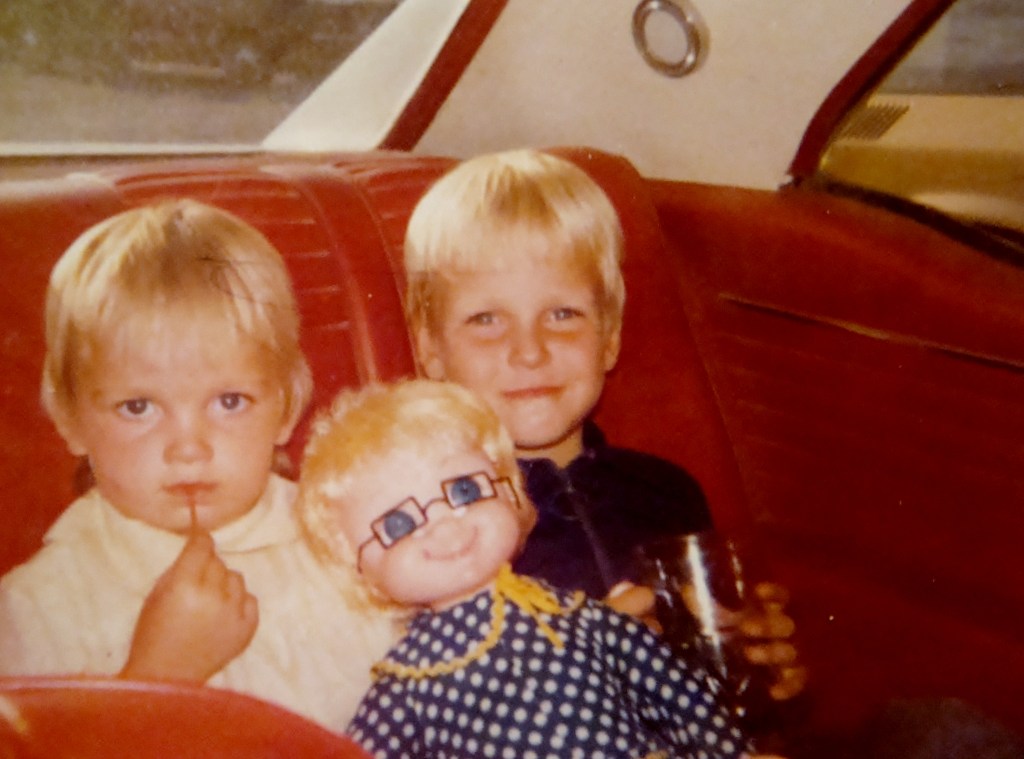
At the A&W Drive In in Terrace, British Columbia, with my sister and Mrs. Beasley.

One night, when I was about 13, my dad and I went to a hockey game in the small prairie town where we were living at the time. We got home pretty late. We didn’t pull into the driveway. Instead, we parked in front of the house, with the engine running. If memory serves, we were listening to the sports highlights on the radio. Somehow the conversation turned to me telling my dad what I knew about operating a car. I then bragged that I probably could even drive it. Dad doesn’t let it slide; rather, he says show me. So we switch seats and I drove very slowly and tentatively down our empty street at the edge of town.

Sometime when I was 13 or 14, my father traded the Hutless Cutlass in for an Oldsmobile Delta 88. It was a real land yacht, and the car in which I learned to drive and took my driving test. (I am always quick to point out I took my driving test during a blizzard – how Canadian!) When I was in grade eight or nine, sometime after my dad traded it in, I saw our old Hutless Cutlass parked downtown. Of course, I had to check it out. The interior had been completely redone in some sort of heavy metal decor. I particularly remember that the steering wheel had been replaced with a metal chain with the links welded together so that it formed a circle. That poor car.