52W Mark II – Week 40: Longevity

With this week’s 52 Ancestors Challenge theme of “Longevity”, I suspect the inclination would be to write about those who have lived the longest, or perhaps were married the longest. I’ve tried to think about this from another perspective involving length of time spent.

To that end, I’ve tried to determine who might have experienced longevity in their occupation. I have many ancestors who spent their entire lives in a single occupation, particularly farming or agricultural work, or as labourers. However, what I have been pondering is someone who remained in the same occupation at the same place the longest, preferably with the same employer.

Of those who worked outside of farmwork and labouring, two ancestors stood out to me, both on my father’s side of the family: Cornelis Jan Bakker (my Gx2 grandfather) and Reijer Ran (my Gx4 grandfather).

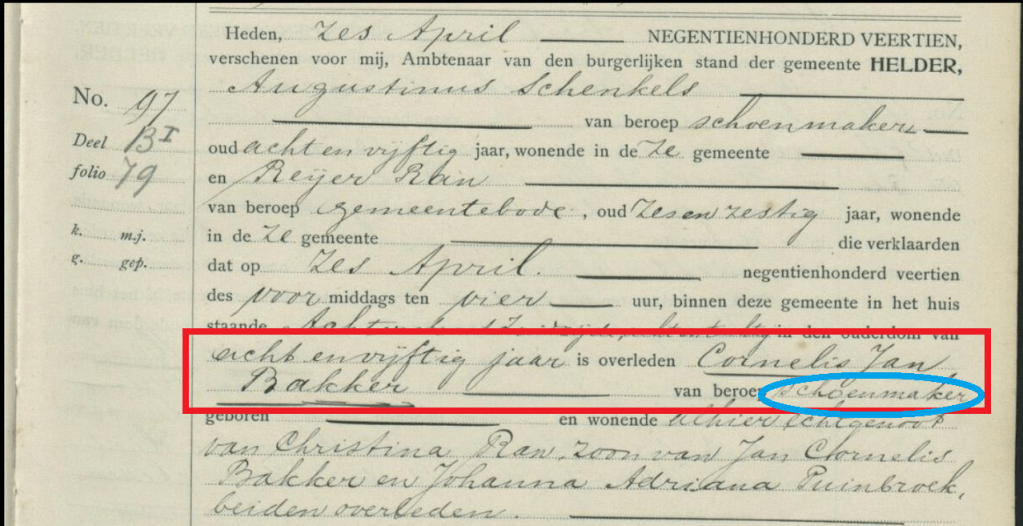
Cornelis (1855-1914) was a cobbler and shoemaker in Den Helder, Noord Holland, Netherlands. Despite this description, I doubt that Cornelis did anything similar to that of a cordwainer. A cobbler largely repaired old shoes, while a cordwainer makes new shoes from new material, usually based on patterns they design themselves. I have few details of Cornelis’s work, other than he carried out his trade in Den Helder. His occupation is simply listed as a fact in various records. Cornelis was a cobbler from at least 39 years, from about 1875 to 1914, when he passed away.
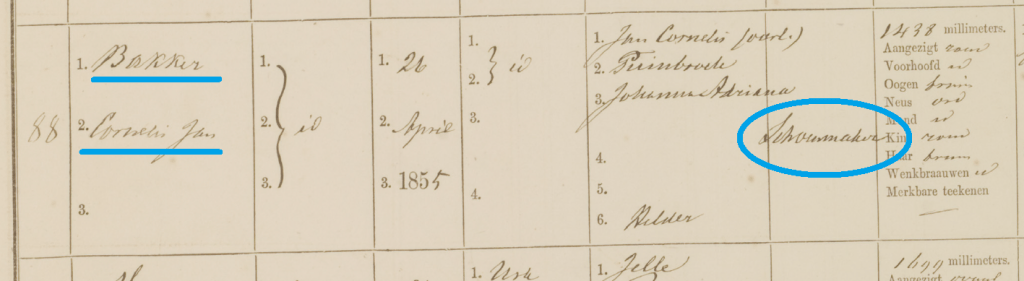
Record of Cornelis’s conscription into the military showing his occupation as a shoemaker. While conscripted, he was released from service.
Cornelis’s death registration, showing his occupation as shoemaker.

Reijer (1792-1860) was a sailor. It appears that his largely worked as a harbour and channel pilot. He was born and raised on Texel, the largest of the Wadden Sea islands on the north coast of the Netherlands, although he was living in Den Helder when he died. However, I am unable to determine whether he was based out of Texel or Den Helder, the mainland city closest to Texel. Like Cornelis, the information I have about Reijer’s occupation is largely a statement of fact in various birth, marriage, and death records. Reijer was a sailor for at least 41 years, from 1813 to 1854. It is possible that Reijer worked later than 1854, that is simply the last year I have mention of him still working as a sailor.
52W Mark II – Week 39: Surprise!

Okay, I added the exclamation point to the theme of this week’s  52 Ancestors Challenge. However, the first thing that came to mind is what you’d yell for the guests of honour when they arrive for a party they weren’t expecting. So of course you need the exclamation point!

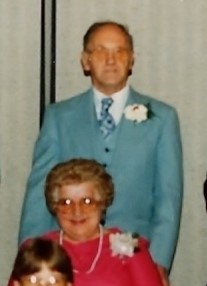
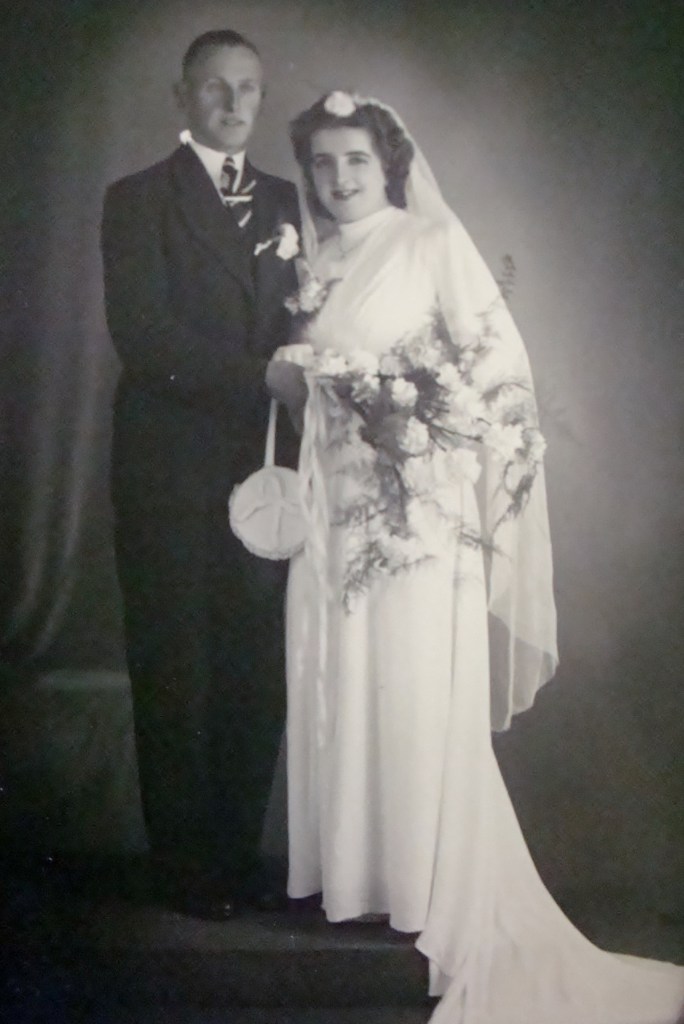
Adrianus Joseph “Arie” van der Fluit (1923 – 2002) and Christina Komen (1923 – 2000)

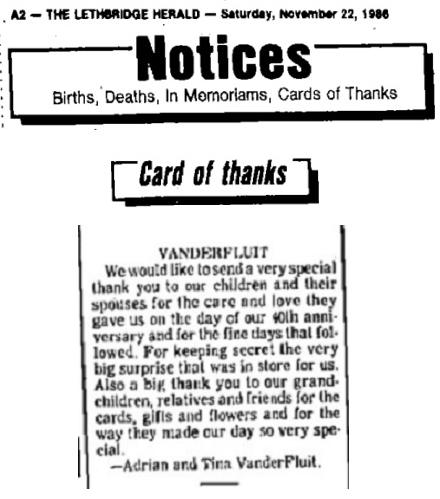
My paternal grandparents married on November 7, 1946, almost 77 years ago. For their fortieth anniversary, my aunts and uncles arranged a surprise party. All their children were in attendance, as were most of their grandchildren. I was attending second year university in Vancouver at the time, so I flew out for the event. As well, some of my father’s cousins (my grandparent’s nieces) came to Canada for the celebration.

This is cropped from the group photo taken during the celebration. I had neither the time not the interest in asking everyone’s permission to post the photo online.

While I grew up in the Canadian prairies and northern British Columbia, by my second year I had gotten used to the mild Vancouver weather and forgot to bring proper winter gear with me. Brrr!! Why on Earth did my grandparents marry in November? Why did they not marry in May? (For what it’s worth, their eldest child – my father – was born over a year after my grandparents married!)

52W Mark II – Week 38: Adversity

In which my grandparents unwittingly recreate the Four Yorkshiremen sketch

My paternal grandparents were 16 and 17 years old when the Nazis invaded the Netherlands in 1940. The occupation was a difficult one. My grandfather and his brothers were all rounded up to work as forced labourers in Germany; somehow my grandfather escaped. Only a few weeks ago I found records about one of my great uncle’s time as a forced labourer through the Arolsen Archives – International Center on Nazi Persecution. I was surprised to find that discovery, only because I was expecting to find records about one of the other brothers.

Needless to say, my grandparents rarely spoke about the war in my presence. In particular, the two times I ever heard my grandmother speak about it were astonishing because it was so rare it was for her to do so. My grandfather must have spoken about it more often, because I have heard several stories about the hardships he endured and the close scrapes he had with the Nazi occupiers. My father also tells the tale of when he was a boy, after his family had immigrated to Canada, about walking in a farm field with my grandfather. While they were walking, a small airplane flew overhead. My grandfather instinctively dove to the ground for cover. The war would have been over for at least ten years at the time, but clearly it had left its scars.

While the war was generally a proscribed topic, much to my amazement it came up during a visit I had with them in the late 90s, shortly before my grandmother passed away. I can’t remember how the topic came up, but I remember being absolutely gobsmacked that it did. It was particularly stunning that my grandmother participated in the discussion. Even more amazing was that the topic of conversation was the Hongerwinter (“Hunger Winter”), a famine the Nazis imposed on the Netherlands during the last winter of the war. However, what started off as a very somber recollection of their experience quickly spiraled into the famous Monty Python sketch.

The Allied strategy in the Netherlands was to get to Germany as quickly and directly as possible. This meant bypassing large parts of the northwest part of the country, including Amsterdam and the province of Noord-Holland. The Germans retained control of those areas until they surrendered on May 5, 1945. Over the winter of 1944-1945, which was particularly harsh, the Nazis deliberately blockaded the food and fuel supplies into the occupied portions of the Netherlands, resulting in the Hongerwinter. Malnutrition was rampant and about 22,000 people died of starvation.

My grandparents both lived in the central part of Noord-Holland and experienced full effects of the Hongerwinter. The famine occurred before they were married, so they experienced the hardship with their families.

When the topic came up, my grandparents began discussing how hard that winter had been and how they had each suffered. What caused the discussion to go sideways was when my grandmother said to my grandfather, “At least you lived on a farm!”

My grandfather countered by acknowledging the fact, but adding that my grandmother’s family was much better off economically. My grandmother reciprocated by pointing out some other advantage she believed my grandfather had that she did not. I am certain that my grandfather added that his mother was raising the family on her own, as his father had passed away in 1932.

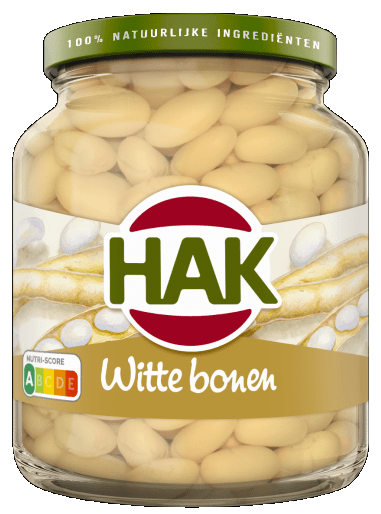
They then began countering with what foodstuffs the other had access to, which they themselves did not. Finally, one of them said, “all we had to eat was the white beans!”, to which the other responded in a somewhat overdramatic voice, “oh, if only we had the white beans!”

I am certain that the competition to outdo the other’s hardship was black humor that served to ameliorate the trauma they had both experienced, even though it had been fifty years in the past.

I feel nothing but love and empathy for my grandparents when I think back on this. To this day, whenever I am in a Dutch store (my favourites are the Holland Shopping Centre in New Westminster and Coombs Wooden Shoe on Vancouver Island), I always make a point of buying a jar of white beans in their honour.

White Beans

52W Mark II – Week 37: Prosperity

This week’s theme for the 52 Ancestors Challenge is “Prosperity”. While for the most part my ancestors over the centuries were largely working class and labourers, I have some that might have been described as “comfortable”. Thinking about it, the only ancestors who I might describe as “prosperous” are largely on the maternal branch of my family tree.

Despite this, the couple that come to mind for this week’s challenge are my Gx3 Grandparents on my father’s side of the family, Jan Gerritsz Veldman and Trijntje Stoop. I think of them primarily because of the amount of time I spent translating a pair of newspaper items describing their estate. Not only was it somewhat difficult because the items were written in an older form of Dutch, but because there was more to interpret than just the foreign language. In particular, the values were reported in guilders, the Dutch currency prior to the introduction of the euro; as well, the land was measured in terms that were not immediately familiar.

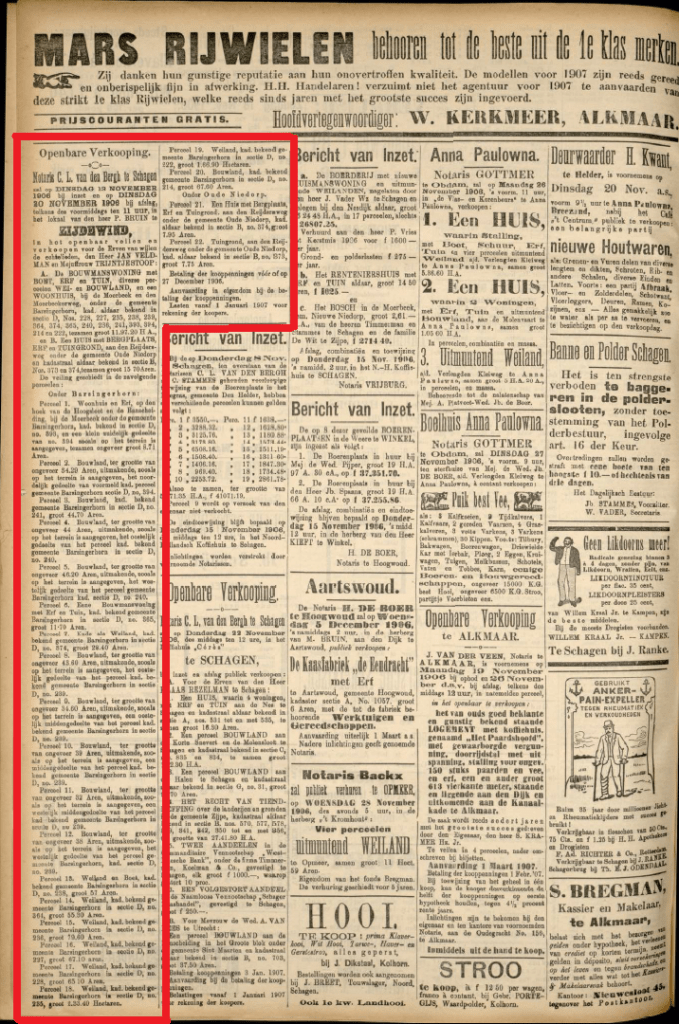
Schager Courant, Schagen, Noord Holland, Netherlands, November 11, 1906, page 4.
“Openbare Verkooping” (“Public Sale”). This is an itemized list of the two pieces of property, consisting of 20 and 2 lots respectively, that went up for public auction after Trijntje died.

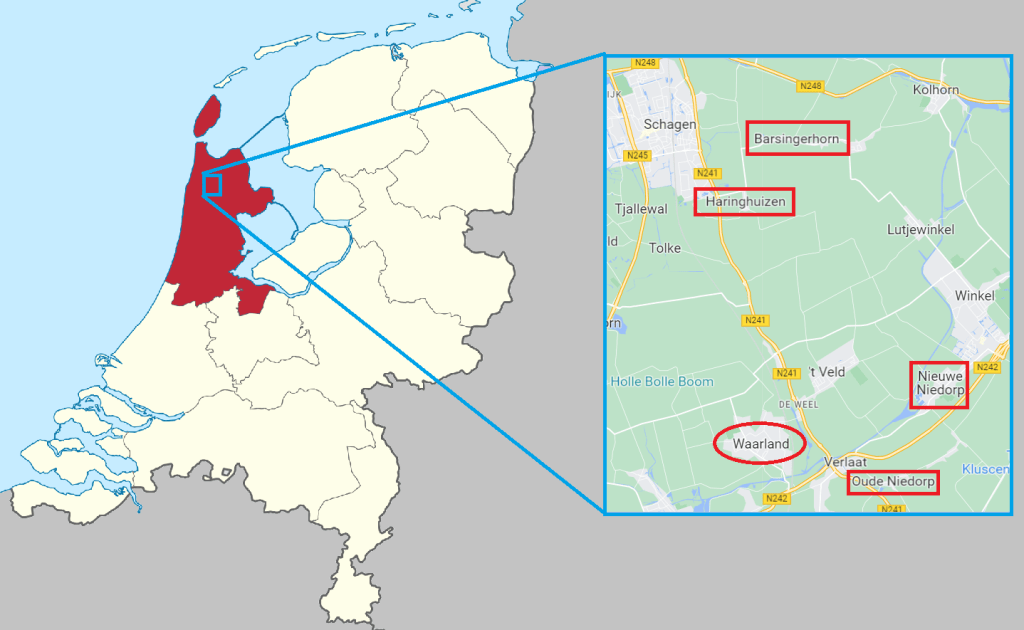
Trijntje was born October 30, 1832 in Haringhuizen, Noord Holland, Netherlands. Jan was born November 27, 1835 in Nieuwe Niedorp, Noord Holland, Netherlands. The two villages are about five kilometers apart. They married in Nieuwe Niedorp on May 1, 1858. They were living in Nieuwe Niedorp as late as 1866, when their fifth child was born. However, by 1873, they were living in Barsingerhorn, Noord Holland, Netherlands, where their tenth and last child was born. Barsingerhorn and Haringhuizen are relatively close to each other, situated about a kilometer and a half apart.

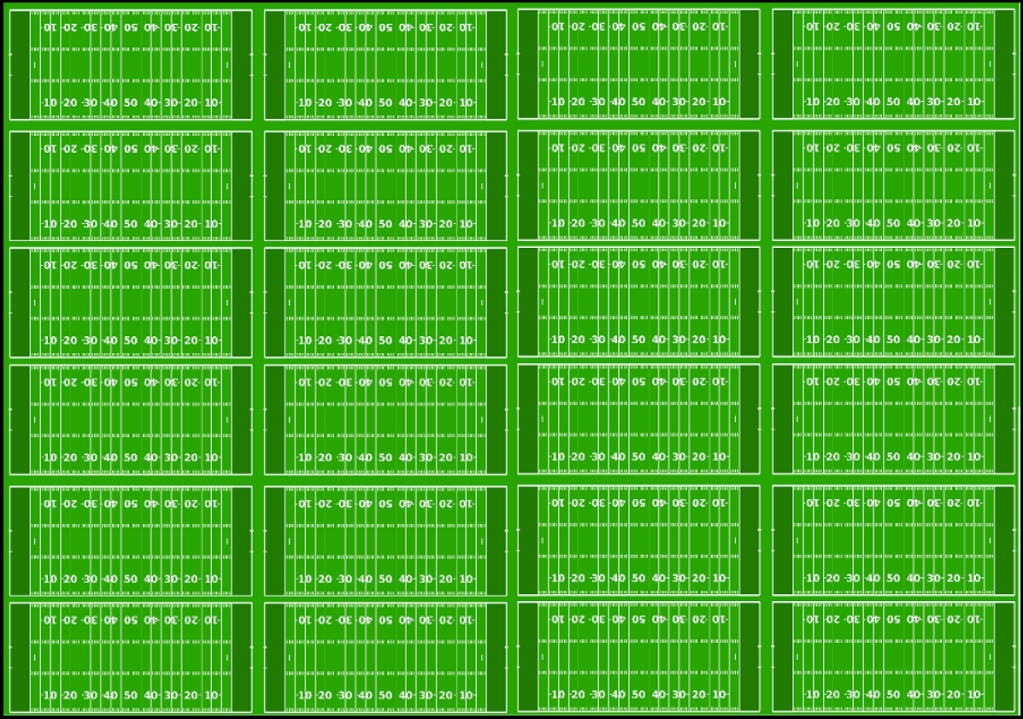
Jan died on May 21, 1897 while Trijntje passed away on January 27, 1906. The couple owned two pieces of property which Trijntje still possessed at the time of her death. One was a house comprised of two lots in Oude Niedorp, Noord Holland, Netherlands, together measuring 15.7 ares (just under 0.4 acres). [“Are” = 100 square meters. 100 Ares = 1 hectare. 1 hectare is just under 2.5 acres.] The other was a farm consisting of 2o lots in Barsingerhorn, which included a farmhouse, pastures, farmland, and a boat, totalling 11.9 hectares (just under 3o acres).

Map of the Netherlands with the province of Noord-Holland in red. The inset shows where Jan and Trijntje lived and owned property. I’ve circled Waarland because that is where my father was born. He did not live far from where his great great grandparents lived.
Schager Courant, Schagen, Noord Holland, Netherlands, November 18, 1906, page 4.
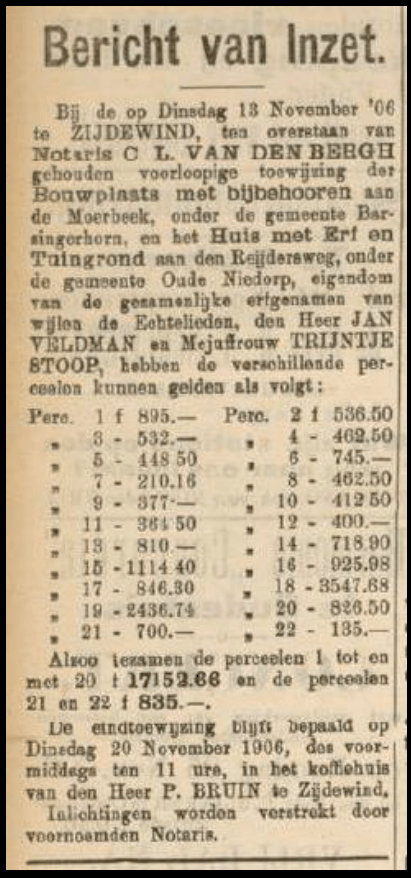
“Bericht van Inzet” (“Notice of Commitment”).

According to both articles, the auction was scheduled to begin on November 13, 1906, although the second indicated that it was to have remained open until November 20, 1906. The second article set out the proposed value of each lot. Lots 1 to 20, the Barsingerhorn farm, had a total proposed value of ƒ17,152.66. Lots 21 and 22, the house in Oude Niedorp, were ƒ835.

By my calculations, these currently amount to €269,971.80 and €13,142.87 respectively, for a total of €283,114.67. (CDN$389,369.30 and CDN$18,955.42. Total: $408,324.72.) That might seem like a lot, but that’s barely enough to get a 500 square foot (0.01 acre) one bedroom condo apartment in Vancouver.

Approximate size of total land on offer: 24 American football fields (FYI, Canadian football fields are longer.)