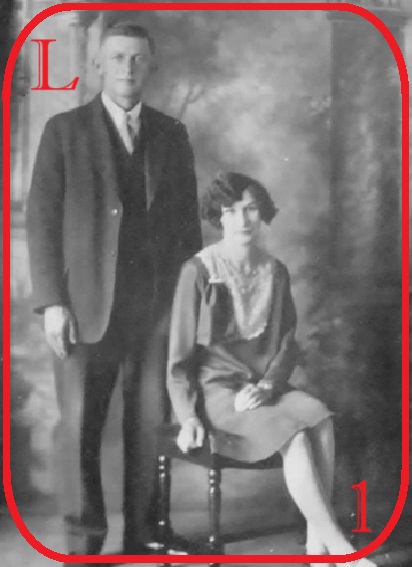
Emelia Anton (1903-1997)
Welcome to the last suit of the deck of ancestors I’ve been writing about for the 2025 edition of the 52 Ancestors Challenge – with the unique spin I’ve given the challenge this year. This final suit relates to my mother’s maternal grandparents, Heronimus Michael “Jerome” Lerner (1895-1954) and Emelia Anton (1903-1997). Both were Germans from Russia. I never met my great grandfather – neither did my mother – but I knew my great grandmother very well, who passed away shortly before I turned 30.
Very long story short, just after Catherine the Great, Empress of Russia, came to power in 1762, she issued a manifesto inviting foreign settlement in lands controlled by Russia. A significant number of those who responded to the offer were German peoples (as there was no “Germany” at the time). Even a summary of the reasons behind Catherine’s invitation and why so many Germans responded would significantly detract from the topic at hand.
There are some similarities between what Catherine promised in her manifesto (and subsequent manifestos by future Czars) and what later was promised to homesteaders by the United States and Canada. Catherine’s incentives included free transportation to Russia, free land, freedom from taxes for 10 to 30 years, interest-free loans to buy equipment, freedom of religion, exemption from military service, retaining their language, and local self-government. However, circumstances changed, so in the late 19th and early 20th centuries the descendants of those original colonists left to homestead in the United States and Canada.
Both Jerome and Emelia’s ancestors originally hailed from what is now western Germany, particularly the Rhineland-Palatinate and Baden-Württemberg. Those ancestors all settled in colonies located in what is now the Ukraine (“Odessa” or “Black Sea” Germans), particularly what was known as the Beresan District, north-east of Odessa. Most of the colonies took the names of the German cities and towns from which the settlers came. Many of my German-Russian ancestors were located in Rastadt and Karlsruhe.
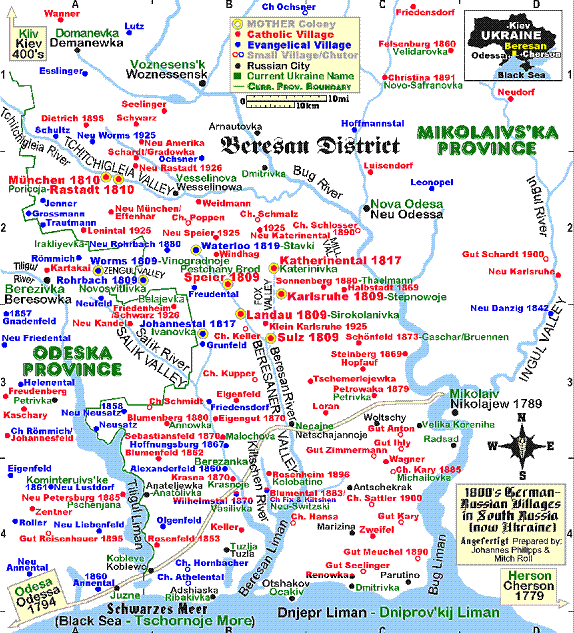
The Beresan in the 1800s (source: http://www.rollroots.com/beresanmap.htm). Essentially all colonies were based upon the religion of the settlers. Rastadt is in the upper right corner; Karlsruhe is close to the centre. Both were Roman Catholic colonies.
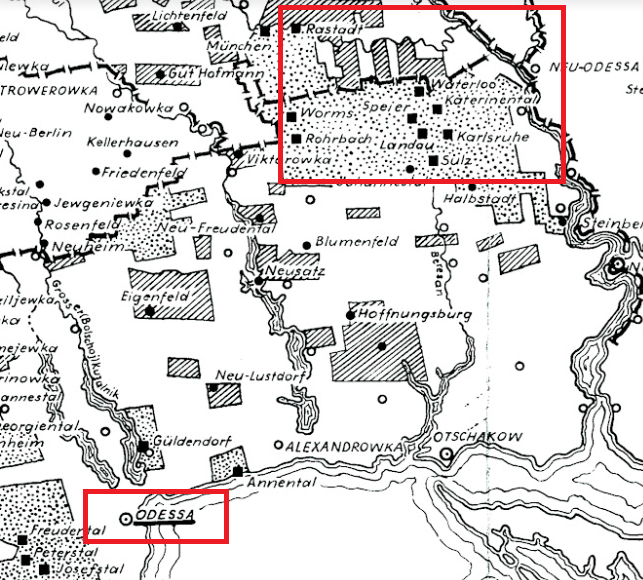
The Beresan District in relation to Odessa, in what is now Ukraine.
Neither Jerome nor Emelia were born in the Beresan, where each of their parents were born. Jerome was born in Henrietta, Texas on March 12, 1895, less than two years after his parents emigrated from the Beresan. Emelia was born in Selo Suchoi, Veronesch, Russia on January 1, 1903. I assume that date is under the Julian calendar. Emelia’s parents had left the Beresan sometime around 1899 and remained in Russia until 1912, when they left for Canada.
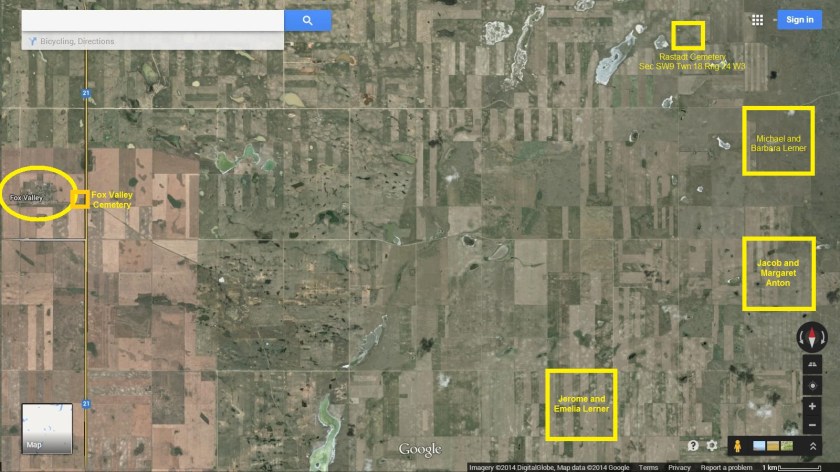
Emelia’s family first settled near Maple Creek, Saskatchewan. By 1920, they were living in Rastadt. Just as the German place names followed the colonists to Russia, they followed them to the new world as well. In the meantime, Jerome’s older brother had moved to the area, starting a gradual migration of the Lerner’s to and from Saskatchewan. Jerome came to Canada in 1917 and settled near Fox Valley, not far from Rastadt, taking up farming like he had in Texas. Jerome never obtained Canadian citizenship; I don’t know if Emelia ever did.
Jerome and Emelia married in Rastadt on August 3, 1920. Jerome continued to farm land south of Rastadt throughout the marriage. They had six children together over their 17 year marriage.
Unfortunately, Jerome developed a mental health condition*, which contributed to the breakdown of his marriage with Emelia. Their daughter, my Aunt Adeline (“Addie”), told me that she believed her father had schizophrenia, although I doubt there was ever any formal diagnosis.
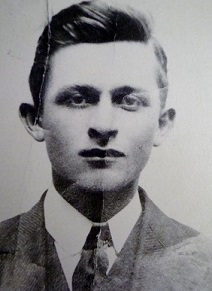
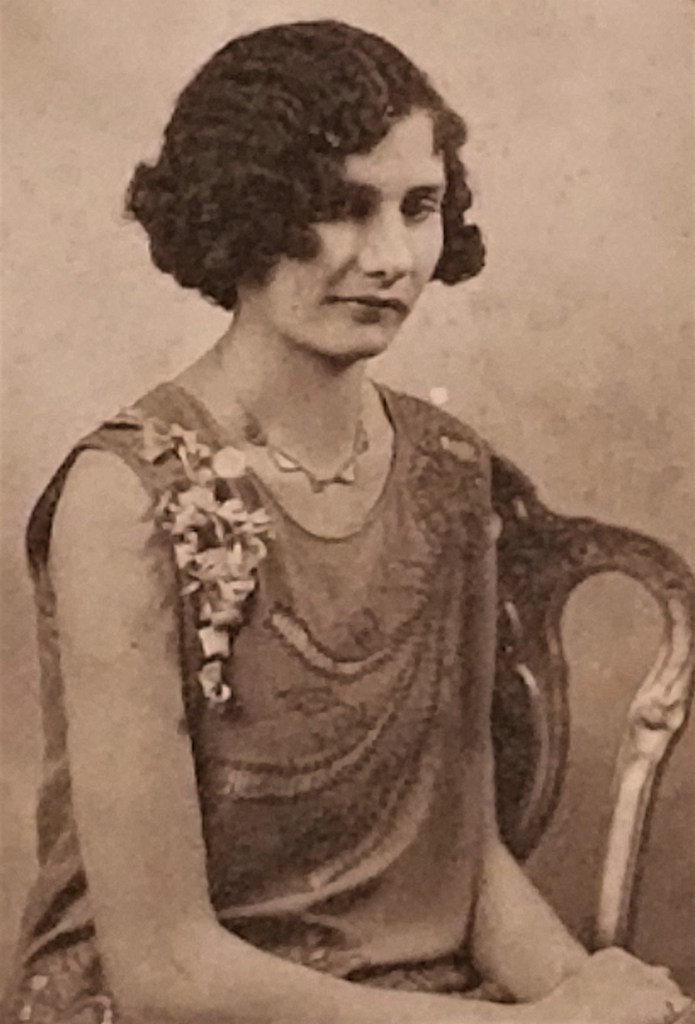
My great grandparents separated sometime between 1937, when their youngest son Herb was born. My guess is that when the 1931 census is released in 2033, it will show them as having been separated. Jerome and Emilia most likely did not file for divorce. They do not come up on the Library and Archives Canada divorce database. Being Catholic, they might have simply separated without divorcing. However, my Aunt Addie told me it had nothing to do with being Catholic, it was because it was so difficult to get a divorce at the time they separated. (It was not until 1968 that the divorce laws in Canada were liberalized to make it easier to obtain a divorce.)
My mother once told me that a rift developed between the Lerners and my great grandmother over her separation from Jerome. It seems there was some sort of expectation that my great grandmother should have remained with Jerome despite his troubles.
After they separated, Jerome continued farming in the Rastadt area. Aunt Addie told me that after her parents separated, her father lived with his father, Michael Lerner. Michael had become a widower not long before Jerome and Emelia separated. Aunt Addie told me that her father was still able to care for himself, such as dressing himself and cooking, but he needed some guidance.
When her parents separated, Aunt Addie went with her mother, but when she was about 13 years old (around 1944), she moved in with her father and grandfather for about a year. Aunt Addie described her father as quiet and intelligent, and was able to reason through things quite well. He did not talk much, but would “explain stuff” to Addie from time to time. Addie remembers that he read the newspaper a lot. Aunt Addie added that he could become upset very quickly, which she attributed to his mental condition. Addie said that her Grandfather took care not to upset Jerome or “push his buttons.”
When I asked Aunt Addie whether her father was still working at the time, she told me that he didn’t really work and that work would upset him. He would help with the harvest, but he would “moan and groan all night.” Aunt Addie believed he wasn’t used to that kind of regular work and it really wore out his muscles. To whatever degree Jerome was still able to work, I note that the registration of his death stated that he was a farmer at the time.
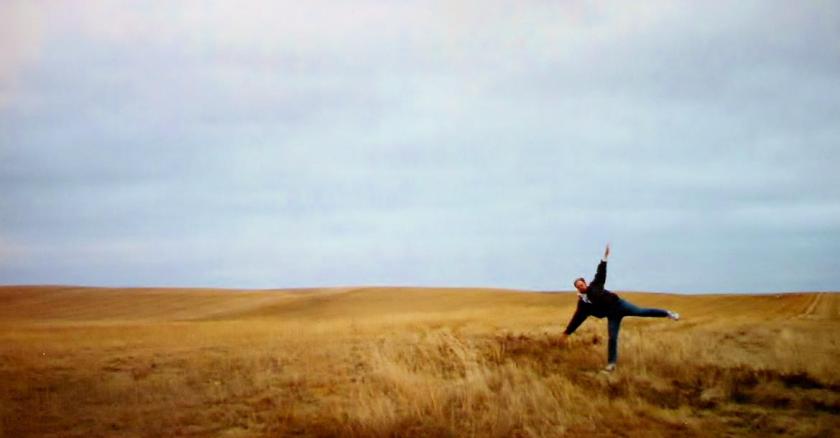
Aunt Addie said that her father spoke both English and German. Her grandfather mostly spoke German, but could understand English. So both languages were used at home. Aunt Addie said that her Addie said that this meant she grew up speaking both languages, although she had lost her ability to speak German later in life. mother mostly spoke to her in German, because it was better than her English. She added that her mother also spoke some Russian, which my mother had told me as well. As my mother described it, when her grandmother was still living in Russia, she’d speak German with her family and Russian with people working the farm.
When I told Aunt Addie that I was 13 before I learned her mother could speak German (which caught me quite by surprise!), she commented on how her mother spoke with an accent that wasn’t quite German and not quite Russian. She concluded it was its own thing. I concurred, because I could never tell what kind of accent my great grandmother had before I learned she was multilingual. In fact, I don’t recall thinking she had an accent; I think I thought she sounded the way she did because of her age.
According to Aunt Adeline, it sounds like her mother remained at the home she had shared with Jerome after their separation. Addie said that her mother leased out the farm land. How long my great grandmother remained there, I do not know. However, Emelia was still there when Aunt Addie moved in with her father in 1944. Sometime afterwards, Emelia moved to Alberta, likely first to Medicine Hat, and then on to Lethbridge.
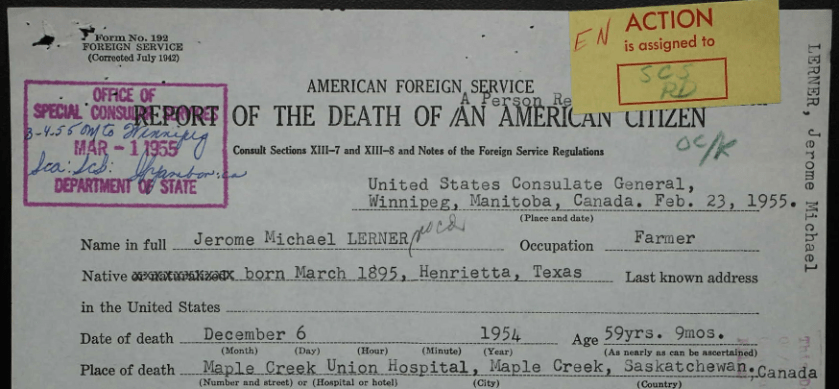
Jerome passed away in hospital in Maple Creek on December 6, 1854, due to kidney disease. He was buried at the Fox Valley Community Cemetery. Meanwhile, by the mid-1950s Emelia was working as a chambermaid at the Alexander Hotel in Lethbridge. By 1958 Emelia had largely retired. She was collecting a pension and was living off an inheritance she had received from her father. She bought a house on 19th Street in Lethbridge.
Sometime in 1958 or 1959, Emelia married Walter Henry Wright. He died on December 4, 1978. While I saw him every time we visited my great grandmother, I don’t really know much about him. Most of what I learned about him is from his obituary, from when he died in December 1978. Other than the fact Walter served in World War II, I have no idea about his life before marrying my great grandmother or what he did for a living.
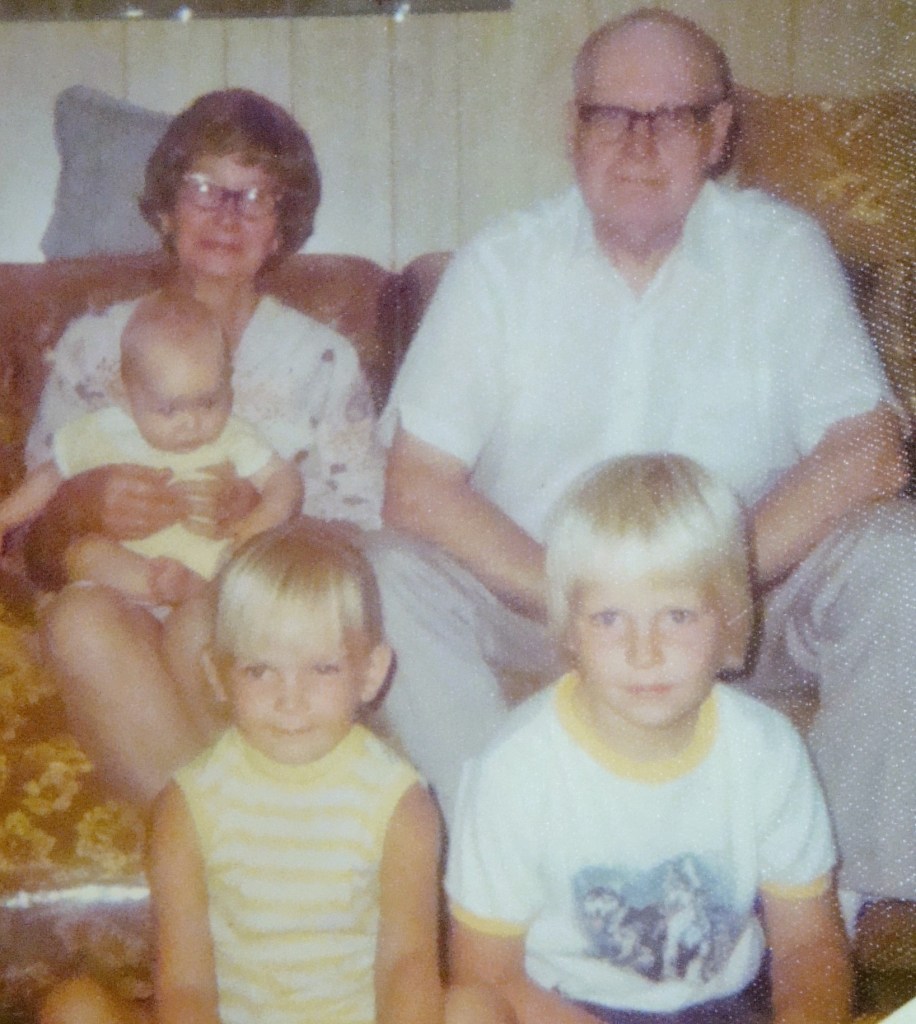
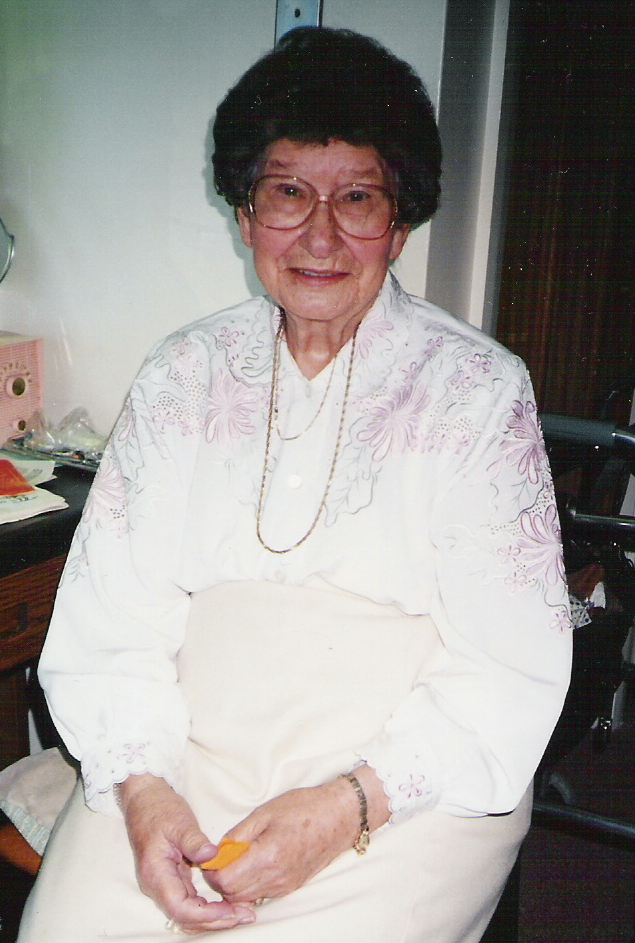
Emelia survived Jerome by fifty years and Walter by twenty years. She even outlived my grandmother, Helen Lerner, by more than ten years. Emelia continued to live on her own at home for many years after Walter’s death, but ultimately moved into a nursing home. I honestly cannot remember when she moved. She was there at least by her late 80s – I know she was there before she turned 90. I messaged my mother to ask if she could recall when, but couldn’t. I thought one of my sisters had a reason to remember, but she couldn’t recall it either.
In the last years of her life, Emelia’s activities included bridge and bingo. She was proud of her mental acuity and ability to play the game, but was always unhappy that her peers did not. My grandfather, Leo Burgess, often took Emelia to bingo. I remember my grandfather “complaining” that he was in his mid-70s and still had mother-in-law problems.
Emelia died on January 19, 1997 in Lethbridge. The memorial mass was held at St. Basil’s Catholic Church in Lethbridge and my mother gave the eulogy. Emelia was cremated and buried at Mountain View Cemetery, alongside her son Jim, who died in 1983.
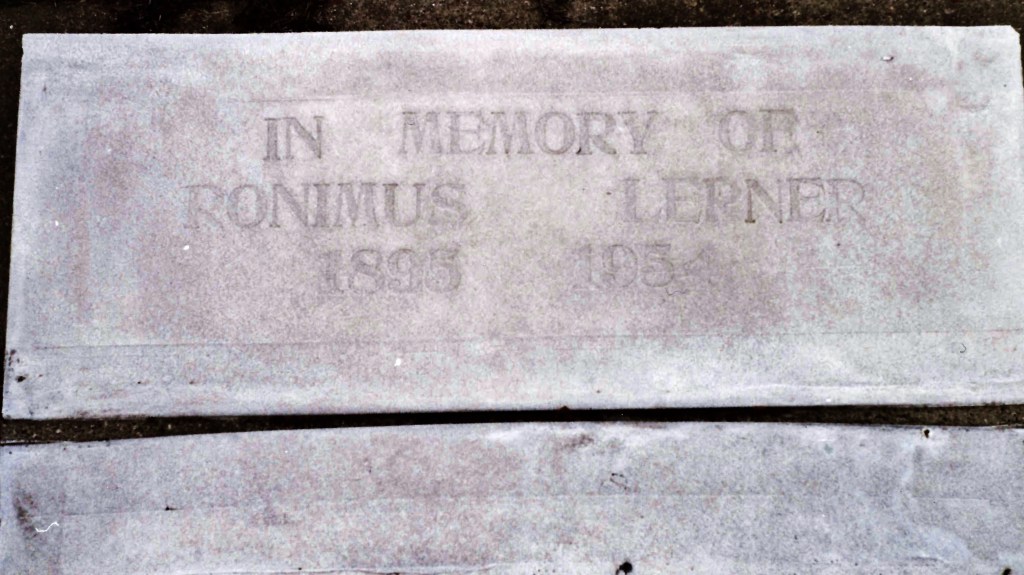
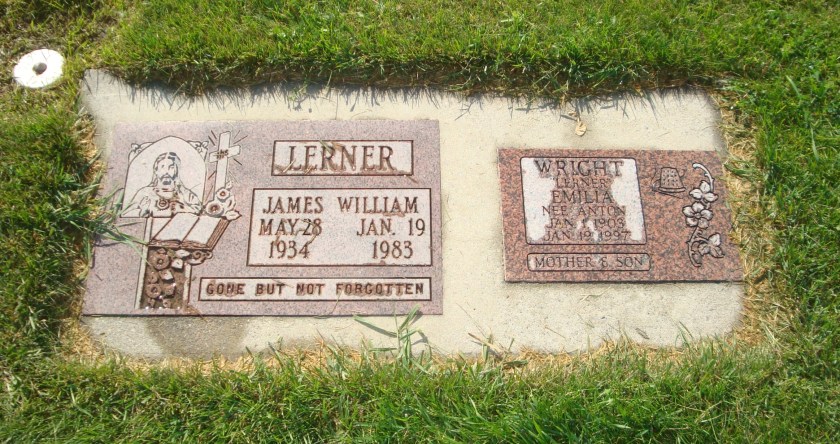
* There are resources available if you need help with your mental health. In British Columbia, where I live, this includes:
→ Calling 2-1-1 will connect you with community and social services.
→ 9-8-8 is the Suicide & Crisis Lifeline
→ https://www2.gov.bc.ca/gov/content/health/managing-your-health/mental-health-substance-use
→ https://www.canada.ca/en/public-health/services/mental-health-services/mental-health-get-help.html
 A Deck of Ancestors