For decades I’ve been reading the same stories about my great x3 grandparents, Robert Nelson and Elizabeth Joseph. I have written about them before (such as here and here). They were both born in Muff, Donegal, Ireland in 1818, two weeks apart. Robert and Elizabeth married in 1842 and within two years they were living in Scotland, near Glasgow. In 1850 they emigrated to the United States. They both died in Smithfield, Utah in 1902: Robert in February and Elizabeth in May.
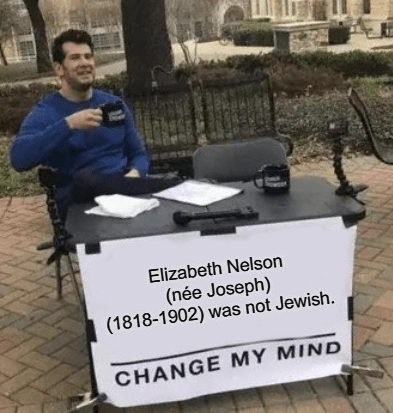
The oft-repeated story is that Elizabeth was Jewish. The related story is that Robert and Elizabeth were picnicking on an island, where they were trapped by a storm and had to spend the night. The next morning they returned home in disgrace and because they had spent the night together were forced to marry. Moreover, because Robert was Christian, Elizabeth’s parents disowned her.
Needless to say, I don’t believe a word of it.
Not once in over thirty years have I ever seen a shred of evidence supporting this story or the proposition that Elizabeth was Jewish. The conclusion that she was could not be further from the Genealogical Proof Standard if one tried.
When Elizabeth was born, the Jewish population of the entirety of Ireland was extremely small, and mainly centred in Dublin and Belfast. It had not really been established by the time Elizabeth and Robert left Ireland for Scotland. By the mid-1800s, there were only a couple hundred Jews in the entire country. According to the 1881 census, there were fewer than 400 Jews in all of Ireland. Muff, Donegal is on the northern outskirts of Londonderry, where there was no Jewish community prior to 1893. In 1894, there were only 43 Jews in Londonderry.
It is not entirely impossible that Elizabeth was Jewish, but it is extremely unlikely. Absent any evidence to support the claim, I don’t accept it.
UPDATE: Since going live with this, a reader suggested that a DNA test might help put this story to rest. Great idea, I don’t know why I didn’t think of it. This might be an unpopular thing for a genealogist to admit, but I’ve never taken one for a lot of reasons I really don’t feel like explaining right now. However, one of my brothers took a DNA test and he sent me the results. They were everything I expected and, frankly, boring! I took a look at it again, and there is no indication of even a trace amount of Jewish ancestry. To me, this reinforces my disbelief that Elizabeth was Jewish.
My great x3 grandparents, Robert Nelson and Elizabeth Joseph, were originally from Ireland. Shortly after they married in 1842, they moved to Scotland and lived in Renfrew. Their first three children were born there. In December 1848 Robert and Elizabeth joined the Mormon church. They emigrated in 1850, with the intention of travelling to Utah.
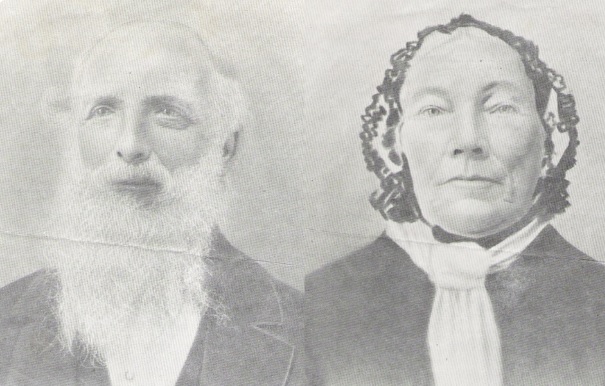
Robert Nelson (1818 – 1902) and Elizabeth Joseph (1818 – 1902)
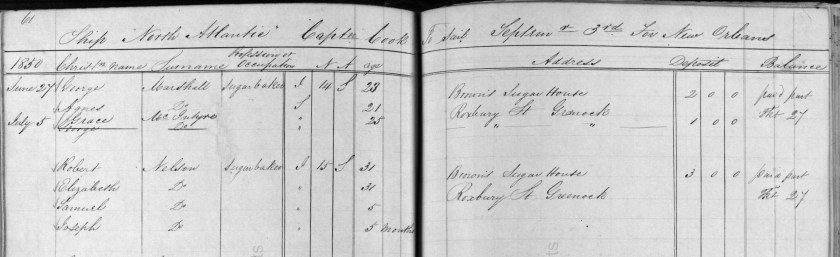
For years, the only information I could find was that they had travelled the North Atlantic. It was a few years before I learned that “North Atlantic” wasn’t their route – it was the name of the ship on which they travelled! The North Atlantic sailed from Liverpool to New Orleans.
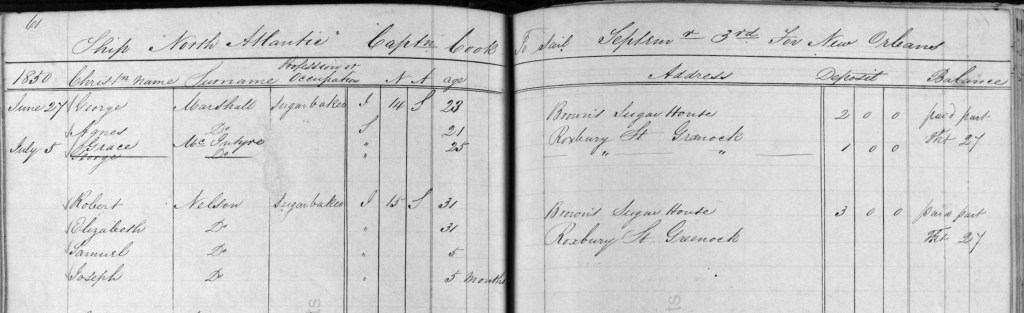
Excerpt of the “Invoice of Passengers” for the ship North Atlantic, which left Liverpool on September 3, 1850
At first I was surprised to learn that the family had landed at New Orleans. Without giving it much thought, I had expected that they would have sailed to the Atlantic seaboard – someplace like Boston, New York, or Philadelphia. Sailing around Florida would have added thousands of miles to the trip. However, I quickly realized that New Orleans was closer to their ultimate destination and saved them hundreds of miles of overland travel.
After arriving in Louisiana, the family travelled up the Mississippi to St. Louis, Missouri, where they lived for a year or two. Robert and Elizabeth’s first daughter, Mary Elizabeth Nelson, was born in 1852 during the sojourn in St. Louis. Shortly afterwards, the family finally relocated to Utah. My great great grandfather, John Alexander Nelson, was Robert and Elizabeth’s first child born in Utah. Later in life, John found his place in Cardston, Alberta.
A few weeks before I turned 19, I visited Ottawa for the first time, during a student conference. I took the opportunity to visit my aunt, who by that time was well-established in the capital. I had already been actively working on my family tree for at least ten years by then, so our conversation turned to our family history.
We ended up talking about our Nelson ancestors. I knew nothing about them beyond my great great grandfather, John Alexander Nelson. My family and I had gone to a family reunion of his descendants in Big Fork, Montana when I was 13.
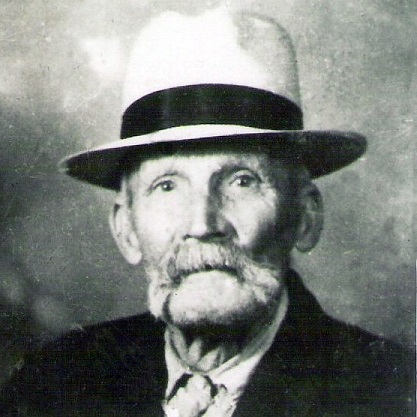
John A. Nelson, circa 1930s.
My aunt told me that John’s parents, Robert Nelson and Elizabeth Joseph, had emigrated from Scotland to the United States. My aunt then volunteered two pieces of information that I found particularly exciting.
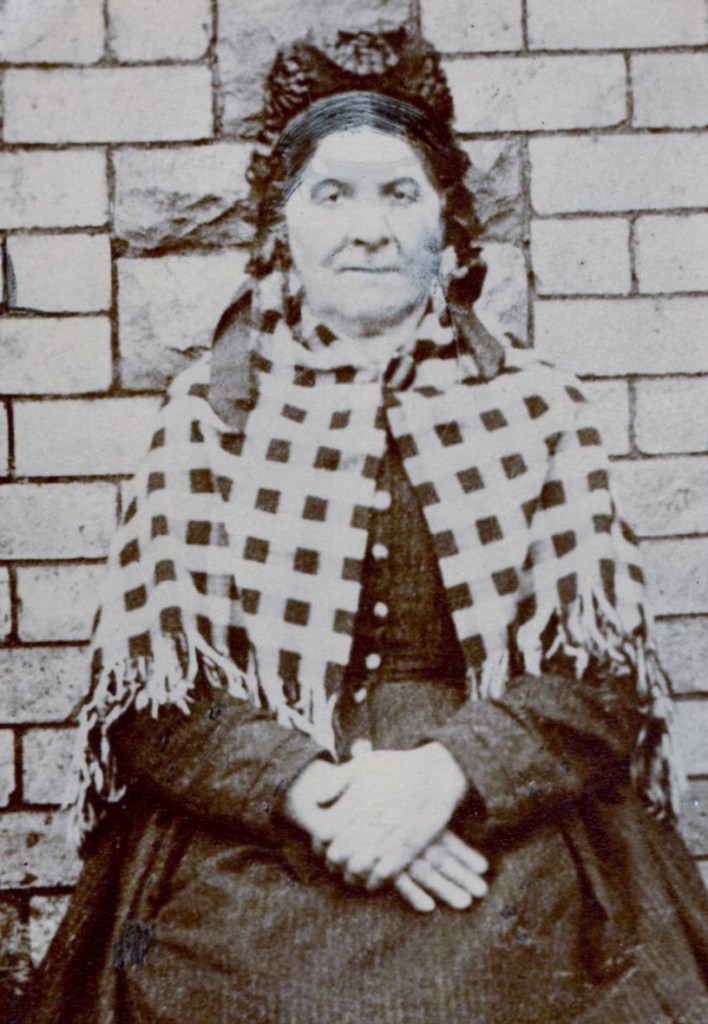
Joseph Nelson (1818-1902) and Elizabeth Joseph (1818-1902)
First, she said that the belief was that the Nelson name in Scotland had Viking origins. Vikings? That was even cooler than if she had told me they were descended from pirates. Second, she said that through the Nelson line we might be descendants of Robbie Burns. I was thrilled by that possibility, because Burns was one of my favourite poets.
I knew enough at the time not to accept the idea unconditionally. I had already honed an overdeveloped sense of skepticism. I already knew a few family legends and their lack of veracity, so I had no reason to believe these legends would turn out to be any different. Moreover, while the initial development of the Genealogical Proof Standard was many years in the future, I was well into my undergraduate degree in history and knew full well the importance of proof.
However, I received these pieces of information back at a time when genealogy was done the old-fashioned way. Personal computers were still largely a relatively new and novel thing and it would be a few years before most of us even heard of the internet. It would have taken a lot of time and effort to verify or debunk what I had learned. Besides, the ideas were so cool that I was really not in a hurry to burst the bubble.
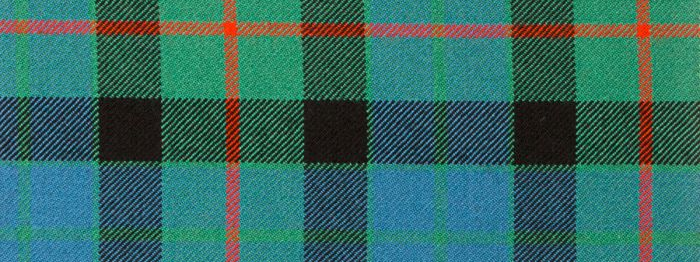
In the meantime, I reveled in the prospect of a Scottish connection. I learned that the Nelsons had connections to Clan Gunn. Shortly afterwards, I spotted a necktie patterned on the Gunn tartan and bought it mostly out of amusement. Plus, I enjoyed bewildering people as to why someone with a Dutch surname was wearing a tartan tie.
Alas, all good things come to an end.
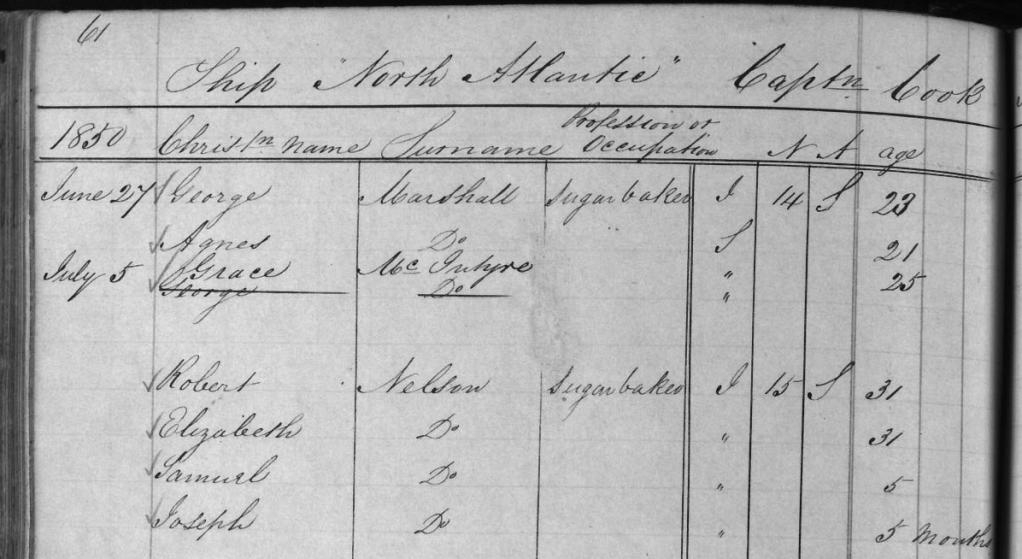
While Robert and Elizabeth had lived in Scotland, they weren’t Scottish. They were Irish. They were both born in Muff, Donegal in 1818 and married there in 1842. Sometime in the early 1840s, likely around 1844, they relocated to Renfrewshire, Scotland. By 1850, Robert was working at Brown’s Sugar House, on Roxburgh Street in Greenock, Scotland as a sugar baker. Sugar bakers usually refined muscovado sugar, an unrefined brown sugar imported from Barbados. In 1848, they joined the Latter Day Saints (“Mormons”). On September 3, 1850 Robert and Elizabeth, along with their three children, departed Liverpool on board the ship “North Atlantic” bound for New Orleans. By 1854, they had settled in Salt Lake City where John, my great great grandfather, was born.
Passenger list for the North Atlantic showing the Nelson family travelling from Liverpool to New Orleans.
As for the Burns connection, it really did not take much to dispel that myth. Robert Nelson’s mother was a woman named Martha Burns. Martha was born in 1787. So while her surname was Burns and she was born at a time Robbie Burns was busy fathering numerous children, that is where the correlation ends. None of Burns’ children – legitimate and illegitimate – were named Martha. Moreover, Martha was born in Muff, Donegal, not Scotland.
I’m starting to realize that when I choose a topic for the theme of the week for the 52 Ancestors Challenge, I should look ahead to see what other topics are coming up. That way I can avoid getting to a topic like this week’s, “Landed”, and seeing that I’ve written on the topic before. Then again, a little repetition here and there won’t hurt.
If I had approached this topic a few hours ago, I would probably be sitting here casting about in my mind as to what “landed” means to me. Fortunately, our eldest son inadvertently gave me a focus to write about. During dinner, out of the blue, he asked “besides Opa, did any of our ancestors come to Canada on steamships?”
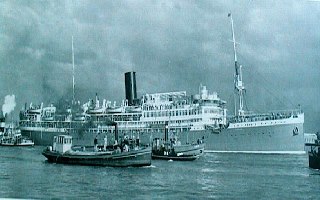
The Sibajak, which brought my father and his family to Canada.
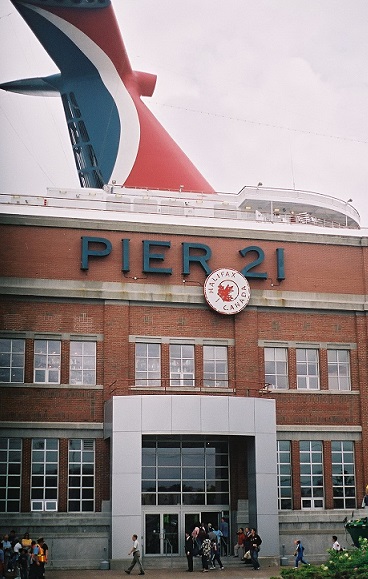
Pier 21, Halifax
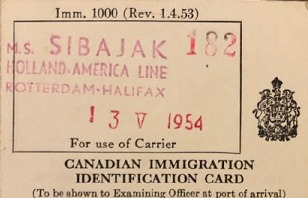
Opa is my father, the Dutch side of my family. I’ve already written about his coming to Canada on the Sibajak. He and his family came in early May 1954, travelling from Rotterdam to Halifax. They landed at Pier 21, which could be described as the Canadian equivalent of Ellis Island. My father’s aunt and uncle came over four months earlier, in January 1954 on the Groote Beer, while another aunt and uncle followed in late May 1954, on board the Castel Felice.
While it was a Holland America ship during his crossing, built and originally operated by Rotterdam Lloyd, along with other ships that they mainly used to go to the East Indies. Built in 1927, the Sibajak served as a troop ship during World War II. After the war, the Sibajak was one of a number of ships operated by Holland America that were used almost entirely for Dutch emigrants, along with the Grote Beer, Waterman, and Zuiderkruis. It was sold and scrapped in Hong Kong in 1959. When I was in Hong Kong in 1996, while travelling around the harbour and between its islands, I wondered how close I might have come to what scraps of it might remain.
This is a fascinating short documentary about a voyage the Sibajak made to Australia carrying Dutch emigrants. The video is in Dutch, but the images convey a lot of meaning.
In the late 1990s, my parents went on an Alaskan cruise on a Holland America ship. During the trip, my father, who loves to talk to people, fell into a conversation with one of the older hands on deck. My father mentioned having come to Canada on the Sibajak. After a few questions from the crew member, my dad learned that the man had been on the Sibajak during my father’s trip, in his first year or two of service.
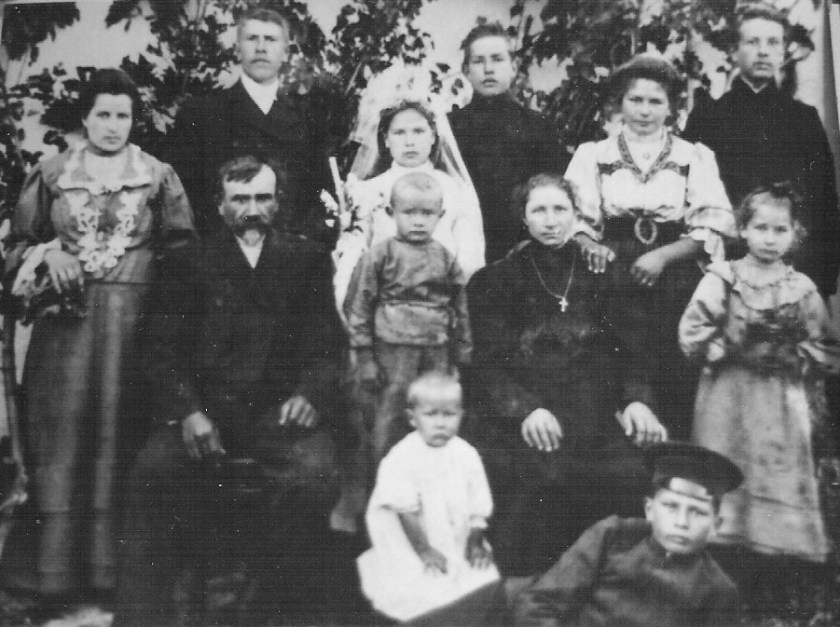
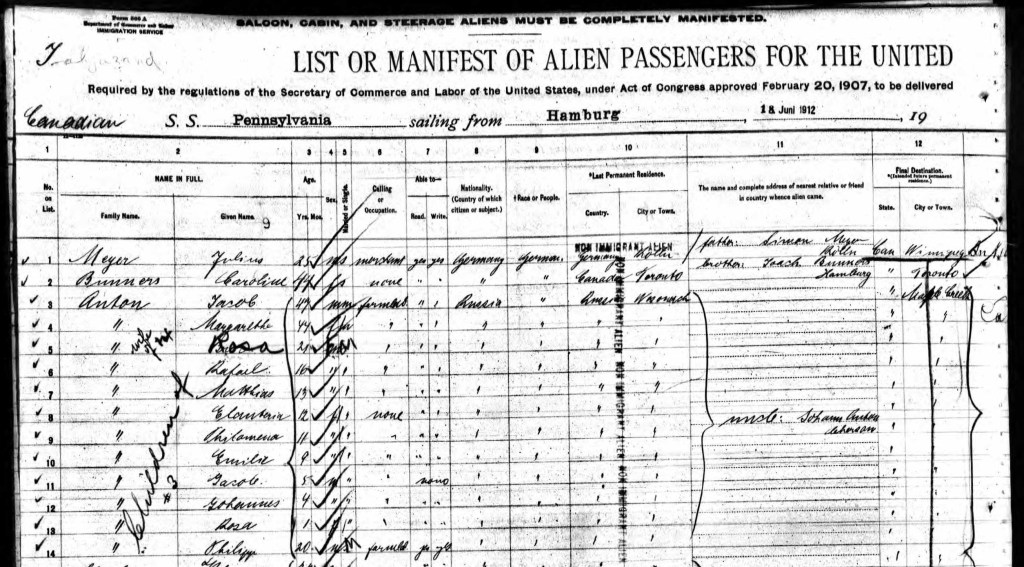
On my mother’s side, the most recent ancestor to arrive by steamship was my great grandmother, Emelia Anton. She came to Canada at the age of nine, with several of her siblings and her parents, Jacob Anton and Margaretha “Margaret” Heck. They were Germans from Russia. The family sailed out of Hamburg on June 18, 1912 aboard the S.S. Pennsylvania. They arrived at the Port of New York (Ellis Island) on July 1, 1912. Their declared destination was Maple Creek, Saskatchewan, to join Emelia’s older brother, Rochus. The passenger manifest stated that Jacob paid for the entire family’s transport, other than that of one of his daughters-in-law, whose passage had been paid by her father.
The Anton family, circa 1910. Likely taken in Selo Suchoi, Veronesch, Russia.
Emelia had not had much schooling before coming to North America, but was very religious. She said that she was frightened and nervous during the journey, as she did not know anything about where she was going and did not fully understand what was going on. However, on reaching New York, she said her fears subsided when she saw “the Madonna”. When she saw that, she knew she would be safe and all would be well. Of course, the “Madonna” was the Statue of Liberty. As she had never heard of it before, she thought it was a statue of the Virgin Mary.
Passenger list for the S.S. Pennsylvania showing the Antons.
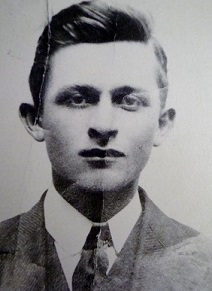
Jerome Lerner (1895-1954)
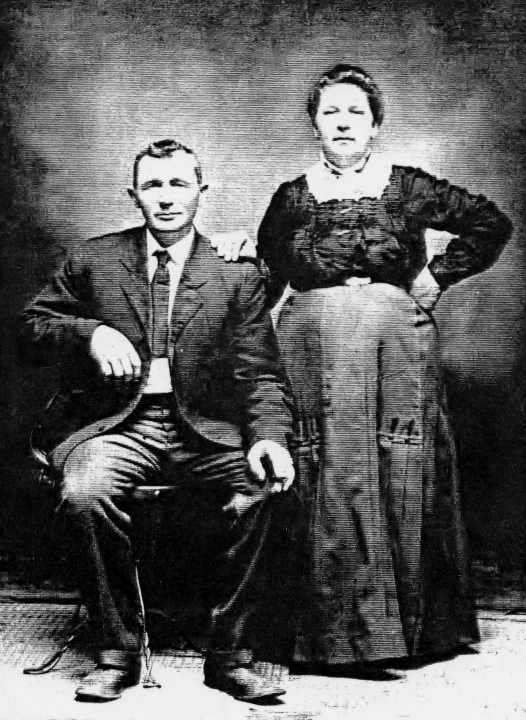
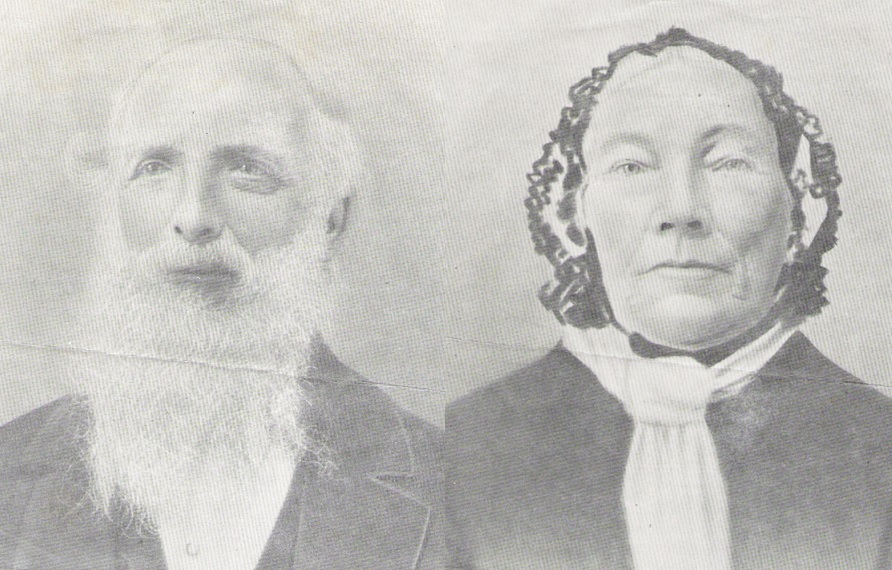
Michael Lerner (1862-1947) and Barbara Schmidt (1865-1936)
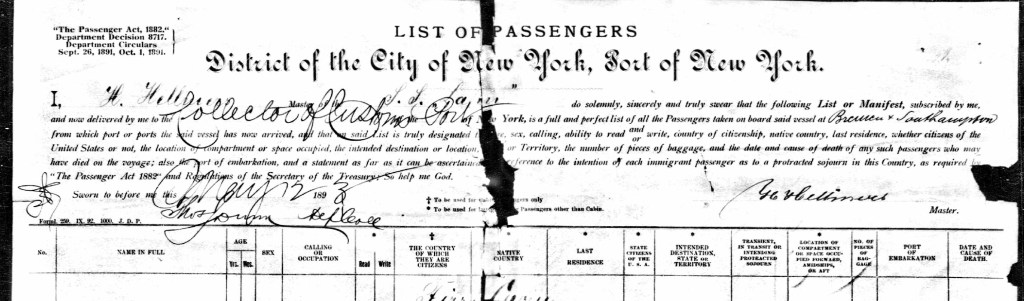
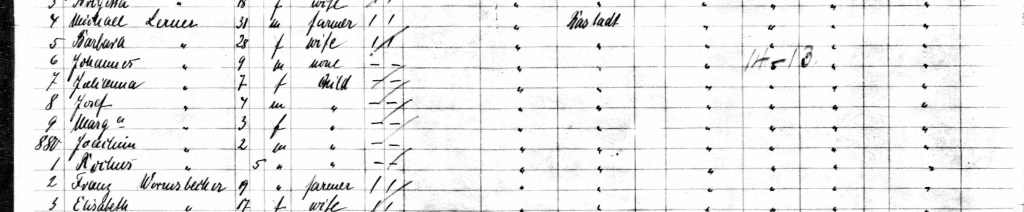
Emelia’s husband, Heronimus “Jerome” Lerner, was born to parents who were also Germans from Russia, Michael Lerner and Barbara Schmidt. Michael and Barbara came to the United States in May 1893 aboard the S.S. Lahn, with the five children they had at the time. They landed at Ellis Island and made their way to Clay County, Texas. Jerome was the first child born to Michael and Barbara in the United States. They had seven other children in Texas after Jerome was born. Jerome moved to Saskatchwan in 1917, preceded by an older brother. Jerome’s parents followed a year later. Other siblings came north at other times.
Passenger list for the Lahn showing the Lerners
The ancestors furthest back in time that I can find who came to North America on a steamship were my great x3 grandparents, Robert Nelson and Elizabeth Joseph. They were both born in Muff, Donegal, Ireland in 1818 and married there in 1842.
Joseph Nelson (1818-1902) and Elizabeth Joseph (1818-1902)
Sometime in the early 1840s they had moved to Linwood, Renfrew, Scotland. They were there at least by January 1844, when their first son, Samuel, was born. By 1850, Robert was working at Brown’s Sugar House, on Roxburgh Street in Greenock, Scotland as a sugar baker. Sugar bakers usually refined muscovado sugar, an unrefined brown sugar imported from Barbados.
On September 3, 1850 Robert and Elizabeth, along with their three children, departed Liverpool on board the ship “North Atlantic” bound for New Orleans. For a long time I had been confused by references I had seen to them coming over on “the north Atlantic”, thinking it meant the route they travelled. It wasn’t until I came across the passenger list that I realized that “North Atlantic” was the name of the ship. Having a name like that makes it difficult refine a search to distinguish the ship from where it sailed. However, while I have not found very good sources, it appears that the North Atlantic was a steam powered ship.
Passenger list for the North Atlantic showing the Nelson family
The records show that there was at least one other family headed by a sugar baker from Brown’s on the same voyage. Robert and Elizabeth were part of a company of Latter Day Saints (Mormon) converts travelling from the United Kingdom to Utah. The family spent a short period of time in Missouri, where in 1852 Elizabeth had her first child born in America. By late 1854 they were in Farmington, Utah, where my great great grandfather John Alexander Nelson was born.
Looking at my pedigree for this post, I realized I might have one other ancestor who might have travelled from the United Kingdom to the United States by means of a steam powered ship. That would be my great x3 grandmother, Maria Hadlond, who was born in Cheltenham, Gloucester, England in 1838 and who emigrated sometime in the 1850s. I have not really researched this branch of my family beyond collecting names and basic vital stats. For whatever reason, it has never caught my interest.
Susan Turple (1818-1906)
I also have a great x3 grandmother, Susan Turple, whose family had been in Nova Scotia since the 18th century, who would have travelled by means of a ship with sails. In 1849, Susan joined the Mormon church in 1849. In 1852, she went from Halifax to Boston to join a westward migration of Mormons. It is most likely that the initial part of Susan’s travels was by means of steam powered ship.
Before these people, any ancestors I have who crossed the Atlantic would have done aboard ships with sails.
Speaking of looking ahead, I see that next week’s theme is “Courting”. Since I am writing this on February 14, I wonder if that should have been this week’s theme!


 A Deck of Ancestors